EIF2AK2 (eukaryotic translation initiation factor 2-alpha kinase 2)
2012-03-01 William L Blalock , Lucio Cocco AffiliationIGM-CNR, Bologna, Rizzoli Orthopedic Institute,via di Barbiano, 1\\\/10, 40136 Bologna, Italy (WLB); Cellular Signalling Laboratory, Department of Anatomical Sciences, University of Bologna, Via Irnerio, 48 I-40126 Bologna, Italy (LC)
Identity
DNA/RNA
Description
Transcription
1. KCS (Kinase Conserved Sequence): Nucleotides -67 to -81 from the transcriptional start site. Required for basal expression utilizing Sp factors. Also required in combination with the ISRE for interferon-stimulated expression (Kuhen and Samuel, 1997; Kuhen et al., 1998; Kuhen and Samuel, 1999; Ward and Samuel, 2002).
2. ISRE (Interferon-stimulated response element): Nucleotides -50 to -62 from the transcriptional start site. Required for the interferon-inducible expression of EIF2AK2. Regulated by the binding of STAT1, STAT2 and IRF9 (Kuhen and Samuel, 1997; Kuhen and Samuel, 1999; Ward and Samuel, 2002; Ward and Samuel, 2003).
3. P53RE (p53 response element): Two p53RE domains were identified flanking the ISRE. Acts to enhance EIF2AK2 expression following genotoxic stress (Yoon et al., 2009).
Transcripts:
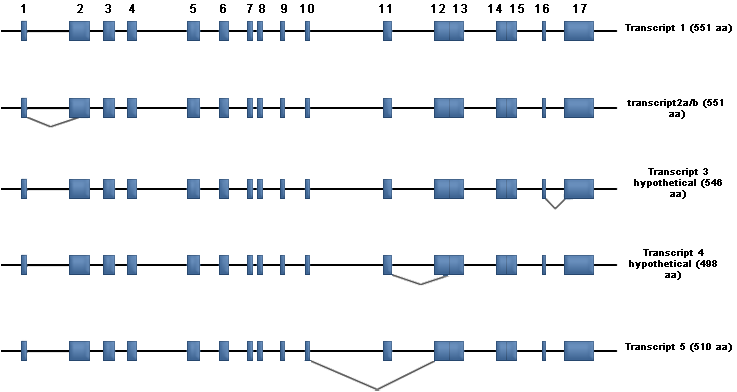
Three (3) transcripts have been identified based on alternate splicing of exon 1 with exon 2 in the 5UTR. No change to the protein is observed with these transcripts (Kawakubo et al., 1999).
One (1) alternately spliced transcript (Tissue: Placenta) resulting in the loss of exon 12 (Gerhard et al., 2004).
One (1) alternately spliced transcript (Tissue: Brain/Lung) resulting in the loss of exon 11 (Gerhard et al., 2004).
One (1) transcript (Tissue: Brain) which results from an alternate splice acceptor site in exon 17 (Gerhard et al., 2004).
Pseudogene
Proteins
Note
Description

Expression
Localisation
Function
The double-stranded RNA dependent kinase (PKR) was initially identified as an innate immune anti-viral protein approximately 35 years ago (Roberts et al., 1976b; Roberts et al., 1976a). Since then PKR has been linked to normal cell growth and differentiation, inflammation, cytokine signaling and apoptosis (Garcia et al., 2006). Altered PKR activity has been shown to play a role in neurodegenerative diseases (Alzheimers, Huntingtons and Parkinsons) and cancer (Peel et al., 2001; Peel and Bredesen, 2003; Onuki et al., 2004; Peel, 2004; Bando et al., 2005; Eley et al., 2009). PKR belongs to the eIF2α kinase family which also includes PKR-like endoplasmic reticulum kinase (PERK), general amino acid control of gene expression, non-derepressing 2 (GCN2) and heme-regulated kinase (HRI). Whereas the activation of PERK, GCN2 and HRI are in response to more specific stresses; PKR is activated in response to diverse stress signals (Shi et al., 1998; Berlanga et al., 1999; Williams, 1999; Chen, 2007).
As the first known substrate of PKR was eIF2α, much of the research involving PKR has centered on its ability to regulate translation under varying conditions. Within the past ten years, PKR has been shown to play a significant role in signaling pathways involved in other cellular process such as cell proliferation, differentiation, metabolism, DNA repair and apoptosis (Garcia et al., 2006). Among the targets that PKR has been demonstrated to phosphorylate or directly influence the phosphorylation of are: p53, signal transducer and activators of transcription factors STAT1 and STAT3, inhibitor κB kinase (IKK)-β, inhibitor κB (IκB)-β, the B56α regulatory subunit of PP2A, and RNA helicase (Garcia et al., 2006; Sadler et al., 2009). In addition to these targets, PKR has been shown to influence signaling through the phosphatidylinositol-3 kinase (PI3K)/AKT pathway and transcription factors NF-κB, C/EBPα, C/EBPβ and ATF3. PKR also influences signaling through the MAPK signal transduction pathways. PKR activity is required for activation of p38MAPK and JNK in response to particular stresses, and signaling through these MAPKs is defective in PKR-/- cells. The PKR dependent mechanism involved in p38MAPK and JNK activation may involve the interaction of PKR with ASK1 or MKK6. Additionally, inhibition of protein synthesis may reduce the level of negative regulators of these kinases (Garcia et al., 2006).
Activation
PKR activation was originally thought to occur only in the presence of double-stranded RNA (ex. viral infection). Over time increasing evidence has indicated that PKR activation is induced by cytotoxic cytokines (tumor necrosis factor (TNF)-α and IFNγ), growth factor deprivation, oxidative stress and DNA damage (Garcia et al., 2006).
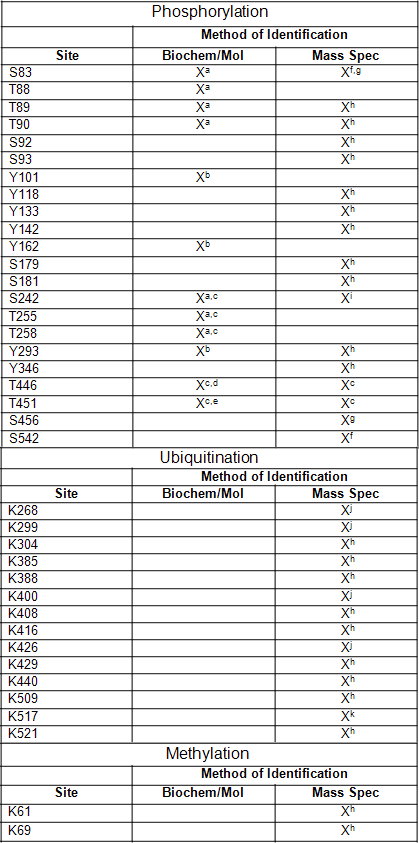
PKR is potentially serine/threonine and tyrosine phosphorylated on 105 different sites (54 Ser, 33 Thr and 18 Tyr), including 15 suspected autophosphorylation sites. Of these, only 8 sites have so far been identified, and their significance to PKR activation determined. Phosphorylation of Thr451 in the catalytic domain of PKR is required for minimal kinase activity (Romano et al., 1998; Zhang et al., 2001). An additional phosphorylation of PKR on Thr446 serves to augment PKR activity (Romano et al., 1998; Alisi et al., 2005).
In addition to Thr446/451 phosphorylation, phosphorylation on three key tyrosine residues (Tyr101/162/293) is also required for maximal PKR activity (Su et al., 2006). In cell culture, PKR appears to be constitutively tyrosine phosphorylated, but the exact tyrosine sites that are phosphorylated have not been determined nor has the kinase(s) responsible for these phosphorylations. PKR kinase assays using wild-type eIF2α or mutants Ser51Thr or Ser51Tyr revealed that PKR could phosphorylate the residue at position 51 equally (Lu et al., 1999). One suggestion is that PKR possess tyrosine kinase ability and is able to autophosphorylate (Lu et al., 1999). This is supported by the finding that a catalytically-inactive mutant (K296R) of PKR is not tyrosine phosphorylated in vitro and in vivo (Su et al., 2006). More recent, findings indicate PKR is associated with JAK1 and TYK2 kinases in resting cells. Following interferon stimulation, exogenously expressed JAK1 and TYK2 were demonstrated to phosphorylate Tyr101 and Tyr293 (Su et al., 2007). Similarly the catalytic mutant of PKR was also tyrosine phosphorylated by the JAK kinases. As tyrosine phosphorylation of PKR in response to dsRNA is not affected in cells deficient in JAK kinases, other tyrosine kinases may potentially phosphorylate these sites in response to different stresses (Su et al., 2007). The role of PKR as a non-receptor tyrosine kinase remains controversial.
eIF2α
In order to properly initiate translation, the eIF2 complex must hydrolyze GTP to GDP in the presence of Met-tRNA and the 40S ribosomal subunit. Efficient recycling of the complex then involves the removal of GDP and the re-loading of GTP to the eIF2 complex; a process carried-out by the GTP-exchange factor, eIF2B (Kimball et al., 1998). Phosphorylation of the eIF2α subunit turns the eIF2 complex into a competitive inhibitor. Those eIF2 complexes containing phosphorylated eIF2α demonstrate increased affinity for eIF2B and associate, blocking the eIF2 complex in the GDP bound state (Krishnamoorthy et al., 2001). As the eIF2 complex is in excess of eIF2B, a small amount of phosphorylated eIF2α can result in a shut-off of general translation (Kimball et al., 1998; Sudhakar et al., 2000; Krishnamoorthy et al., 2001; Nika et al., 2001; Wek et al., 2006). The inhibition of general translation is mainly thought to be pro-apoptotic, but recent evidence has suggested that this may be a cellular defense mechanism against stresses (Wek et al., 2006).
Phosphorylation of eIF2α results in a shut-off of general translation but at the same time allows for efficient translation of uORFs in particular mRNAs, such as ATF4, due to their 5 structure; or through what is termed internal ribosome entry site (IRES)-mediated translation (Fernandez et al., 2002; Gerlitz et al., 2002; Yaman et al., 2003). Many of these mRNAs encode proteins involved in the stress response (Koschmieder et al., 2007; van den Beucken et al., 2007; Lee et al., 2009). Short-term inhibition of general translation through eIF2α phosphorylation may in fact be pro-survival by allowing for cellular repair following a particular stress (Donze et al., 2004).
p53
PKR was shown to phosphorylate cytoplasmic p53 on Ser392 enhancing p53 tetramer stability and transcriptional activation of p53 targeted genes (Sakaguchi et al., 1997; Cuddihy et al., 1999; Keller et al., 2001). Among these are p21Cip1, BAX, PUMA and several pro-caspases. The implications of this phosphorylation are a PKR-mediated cell cycle arrest and induction of apoptosis. Inhibition of constitutive PKR activity in several acute leukemia cells lines with a small molecule inhibitor has been observed to lead to p53 degradation (Unpublished results). Although the exact mechanism for p53 degradation has not been determined, it likely involves the activation of AKT, whose phosphorylation and activity are observed to increase, and AKT effects upon MDM2 (Blalock et al., 2009). Additionally, the cellular PKR activator RAX/PACT was demonstrated to result in increased cellular levels of p53, p53 transcriptional activity and growth arrest in a PKR dependent manner (Bennett et al., 2012). Expression of a siRNA to RAX, which blocks the ability of most stresses to activate PKR, resulted in the decreased expression of several p53 regulated genes such as p21Cip1 and PUMA and lower constitutive levels of p53. RAX resulted in the SUMOylation of p53 in a PKR independent manner, through direct interaction and activation of the E2 ligase Ubc9 (Bennett et al., 2012).
NF-κB
PKR association with inhibitor κB kinase (IKK) was demonstrated to induce NF-κB nuclear translocation and transcriptional activity (Gil et al., 2000; Zamanian-Daryoush, et al., 2000). While initially PKR kinase activity was implicated in the activation of NF-κB, PKR catalytic activity is not a requirement. Truncated forms of PKR consisting of the amino terminus were shown to associate with the IKK complex and stimulate IκBβ phosphorylation (Bonnet et al., 2000; Bonnet et al., 2006). Later, Donze et al. showed that PKR irregardless of catalytic activity could induce NF-κB activation and the synthesis of some NF-κB dependent transcripts, but NF-κB activity and transcription of other NF-κB dependent genes was greatly potentiated when PKR kinase activity remained intact (Donze et al., 2004). These data suggest that both PKR association with IKK and PKR catalytic activity are important for PKR mediated effects on NF-κB. To this end the current understanding is that PKR activity is required for the full effects of PKR on NF-κB, although whether PKR catalytic activity influences NF-κB activation at the point of IκB phosphorylation and release or at later points, has not been sorted-out.
STATs
PKR has also been demonstrated to affect the transactivation of STATs 1 and 3 (Karehed et al., 2007). STAT1 activity is enhanced by phosphorylation on Ser727. Phosphorylation of this site is defective in PKR-/- fibroblasts resulting in a decrease of STAT1 transactivation (Ramana et al., 2000). PKR kinase activity is not necessary for PKR effects on STAT1 (Wong et al., 1997); instead, PKR associates through its NH2-terminus with STAT1, which apparently enhances mitogen activated protein kinase (MAPK)-mediated phosphorylation of STAT1 on Ser727 (Deb et al., 2001). Similar to STAT1, PKR has also been demonstrated to be required for proper phosphorylation and transactivation of STAT3. Like STAT1, PKR effects were mediated through MAPK-dependent phosphorylation of STAT3 (Deb et al., 2001). In the absence of PKR, activation of STAT3 by platelet derived growth factor (PDGF) is impaired (Deb et al., 2001).
PP2A
PKR was shown in a yeast-two hybrid system to associate with B56α in a manner dependent on PKR catalytic activity. PKR phosphorylated B56α at multiple sites in vitro (among these Ser28) leading to enhanced PP2A activity (Xu and Williams, 2000). The enhancement of PP2A activity via PKR phosphorylation of B56α resulted in decreased phosphorylation of eIF4E and a lower rate of translation. More recently additional effects of PKR on PP2A activity have been observed. The lymphocytic leukemia cell line REH contains both elevated levels of active PKR and a BCL2 targeted phosphatase activity. PKR was shown to phosphorylate B56α on Ser28 in REH cells which led to PP2A targeting to the mitochondria and dephosphorylation of BCL2 (Ruvolo et al., 2008). PKR activity was also shown to stabilize B56α, but this stabilization was not dependent on Ser28 phosphorylation but instead on eIF2α phosphorylation.
CDK1
Yoon et al. demonstrated that during genotoxic stress PKR is responsible for phosphorylating Cdc2 (CDK1) on Tyr4. Phosphorylation at this site was shown to result in ubiquitination and proteosomal degradation of Cdc2 thus resulting in a G2 arrest (Yoon et al., 2010).
IRS-1
PKR was found to link chronic inflammatory responses to metabolic signaling through the phosphorylation of the insulin response substrate (IRS)-1 on Ser312. Phosphorylation at this site inhibits the phosphorylation of key tyrosine residues required for insulin induced signaling (Nakamura et al., 2010; Yang et al., 2010a).
Homology
P. troglodytes: (98%)
C. lupus: (55%)
B. taurus: (62%)
M. musculus: (58%)
R. norvegicus: (51%)
G. gallus: (39%)
D. rerio: (30%)
Mutations
Note
A single nucleotide mutation was documented in a single pediatric T-ALL patient. The mutation occurred in the first double-stranded RNA binding domain and resulted in a protein that could not be activated by polyI:C (Murad et al., 2005).
In a murine model of chronic lymphocytic leukemia (CLL), a rearrangement in one locus of EIF2AK2 results in the deletion of 550 nucleotides and the production of a truncated protein with dominant-negative activity (Abraham et al., 1998).
Germinal
Somatic
- DNA: nt1872 (C to G); Protein: aa439 (Leu to Val); Source: adenocarcinoma; Influence on pathology not determined.
Single Nucleotide Polymorphisms
SNP analysis revealed V428E (T1840A; source unknown), I506V (A2073G; source unknown).
Additional polymorphisms (1084) identified in the genomic sequence in the locus of EIF2AK2 can be found at PheGenI.
Implicated in
Inhibition of PKR kinase activity or expression reverses the suppressive effects of IFNγ and TNFα on colony formation from CD34+ hematopoietic progenitors and increases hematopoietic colony formation from human isolated MDS progenitors (Sharma et al., 2011).
Loss of PKR expression is observed in 5q- and 5q:31-33 myelodysplasias (Green et al., 1999; Giagounidis et al., 2004).
The presence of p-T451 PKR in the nucleus is associated with high-risk disease and thus an enhanced probability of progression to acute myelogenous leukemia (AML).
Loss of PKR in 5q- and 5q32-33 myelodysplasias is associated with low-risk disease, while loss of PKR in 5q31 myelodysplasias with complex cytogenetics is associated with high-risk disease.
A somatic point mutation was detected in the coding region of dsRNA-binding domain I (coding nucleotide 50 (A to G); amino acid Y17C) of PKR in a patient with T-ALL. Although activation of the mutant PKR kinase by polyI:C was impaired, the exact role of this mutation in the T-ALL was not determined (Murad et al., 2005).
In contrast to NSCLC, a high level of PKR expression was associated with shorter overall survival in patients with small-size lung adenocarcinomas (Roh et al., 2005).
PKR expression in small-size lung adenocarcinomas is associated with a poor prognosis.
Elevated PKR activity is further linked to macrophage-migration inhibitory factor (MIF) expression which favors breast cancer cell growth, but also sensitizes breast cancer cells to PKR-mediated killing as the system is already primed (Armstrong et al., 2008; Pervin et al., 2008).
PKR may assist in the therapeutic response of 5Florourocil (5FU) in p53-null breast cancer (Garcia et al., 2011).
The activation state of PKR also influences the drug sensitivity of colon cancer cells (Yoon et al., 2009; Yang et al., 2010b; Garcia et al., 2011).
The core protein of hepatitis C virus (HCV), a major contributor to HCC, was seen to bind to and activate PKR (pT446) in HCC cells and tissue (Delhem et al., 2001; Alisi et al., 2005). In contrast, hepatitis B virus infected HCC liver tissue showed decreased PKR expression as determined by real-time PCR and immunohistochemistry and no association between the status of tumor differentiation was observed (Chen et al., 2004).
Phospho-PKR is associated with phospho-Tau and phospho-p38 in AD brain (Peel and Bredesen, 2003). Inhibition of PKR attenuates inflammation as well as TNFα, IL-1α, IL-1β, IL-6 expression and apoptosis stimulated by Aβ peptide (Couturier et al., 2010b; Couturier et al., 2011).
Elevated levels of p-PKR, p-eIF2α and secretion of TNFα, IL-1α, IL-1β and IL-6 are observed in peripheral blood mononuclear cells from AD patients (Morel et al., 2009a; Couturier et al., 2010b).
An EIF2AK2 SNP (C/T; rs2254958) at position 250 in the 5UTR was found to be associated with Alzheimers disease (Bullido et al., 2008).
Article Bibliography
| Pubmed ID | Last Year | Title | Authors |
|---|---|---|---|
| 9806790 | 1998 | The murine PKR tumor suppressor gene is rearranged in a lymphocytic leukemia. | Abraham N et al |
| 15880455 | 2005 | Thr 446 phosphorylation of PKR by HCV core protein deregulates G2/M phase in HCC cells. | Alisi A et al |
| 18490711 | 2008 | Small interfering RNAs induce macrophage migration inhibitory factor production and proliferation in breast cancer cells via a double-stranded RNA-dependent protein kinase-dependent mechanism. | Armstrong ME et al |
| 15567511 | 2005 | Double-strand RNA dependent protein kinase (PKR) is involved in the extrastriatal degeneration in Parkinson's disease and Huntington's disease. | Bando Y et al |
| 9041199 | 1997 | Role of double-stranded RNA-activated protein kinase in human hematological malignancies. | Basu S et al |
| 22214662 | 2012 | The RAX/PACT-PKR stress response pathway promotes p53 sumoylation and activation, leading to G₁ arrest. | Bennett RL et al |
| 10504407 | 1999 | Characterization of a mammalian homolog of the GCN2 eukaryotic initiation factor 2alpha kinase. | Berlanga JJ et al |
| 19507191 | 2009 | PKR activity is required for acute leukemic cell maintenance and growth: a role for PKR-mediated phosphatase activity to regulate GSK-3 phosphorylation. | Blalock WL et al |
| 16600570 | 2006 | The N-terminus of PKR is responsible for the activation of the NF-kappaB signaling pathway by interacting with the IKK complex. | Bonnet MC et al |
| 10848580 | 2000 | PKR stimulates NF-kappaB irrespective of its kinase function by interacting with the IkappaB kinase complex. | Bonnet MC et al |
| 17420072 | 2008 | Double stranded RNA activated EIF2 alpha kinase (EIF2AK2; PKR) is associated with Alzheimer's disease. | Bullido MJ et al |
| 15122791 | 2004 | Reduction of double-stranded RNA-activated protein kinase in hepatocellular carcinoma associated with hepatitis B virus. | Chen GG et al |
| 17110456 | 2007 | Regulation of protein synthesis by the heme-regulated eIF2alpha kinase: relevance to anemias. | Chen JJ et al |
| 20363803 | 2010 | Quantitative phosphoproteomics dissection of seven-transmembrane receptor signaling using full and biased agonists. | Christensen GL et al |
| 3609013 | 1987 | Structure and regulation of eukaryotic initiation factor eIF-2. Sequence of the site in the alpha subunit phosphorylated by the haem-controlled repressor and by the double-stranded RNA-activated inhibitor. | Colthurst DR et al |
| 21699726 | 2011 | Prevention of the β-amyloid peptide-induced inflammatory process by inhibition of double-stranded RNA-dependent protein kinase in primary murine mixed co-cultures. | Couturier J et al |
| 10348343 | 1999 | The double-stranded RNA activated protein kinase PKR physically associates with the tumor suppressor p53 protein and phosphorylates human p53 on serine 392 in vitro. | Cuddihy AR et al |
| 11350938 | 2001 | Protein kinase PKR is required for platelet-derived growth factor signaling of c-fos gene expression via Erks and Stat3. | Deb A et al |
| 17936498 | 2007 | Knockdown of PKR expression by RNAi reduces pulmonary metastatic potential of B16-F10 melanoma cells in mice: possible role of NF-kappaB. | Delgado André N et al |
| 11593389 | 2001 | Activation of the interferon-inducible protein kinase PKR by hepatocellular carcinoma derived-hepatitis C virus core protein. | Delhem N et al |
| 18669648 | 2008 | A quantitative atlas of mitotic phosphorylation. | Dephoure N et al |
| 14749731 | 2004 | The protein kinase PKR: a molecular clock that sequentially activates survival and death programs. | Donzé O et al |
| 18553083 | 2009 | Inhibition of activation of dsRNA-dependent protein kinase and tumour growth inhibition. | Eley HL et al |
| 18087277 | 2008 | Increased expression of phosphorylated forms of RNA-dependent protein kinase and eukaryotic initiation factor 2alpha may signal skeletal muscle atrophy in weight-losing cancer patients. | Eley HL et al |
| 11684693 | 2002 | Regulation of internal ribosome entry site-mediated translation by eukaryotic initiation factor-2alpha phosphorylation and translation of a small upstream open reading frame. | Fernandez J et al |
| 18496558 | 2008 | PKR is activated in MDS patients and its subcellular localization depends on disease severity. | Follo MY et al |
| 21887339 | 2011 | The chemotherapeutic drug 5-fluorouracil promotes PKR-mediated apoptosis in a p53-independent manner in colon and breast cancer cells. | García MA et al |
| 17158706 | 2006 | Impact of protein kinase PKR in cell biology: from antiviral to antiproliferative action. | García MA et al |
| 15489334 | 2004 | The status, quality, and expansion of the NIH full-length cDNA project: the Mammalian Gene Collection (MGC). | Gerhard DS et al |
| 12047392 | 2002 | Phosphorylation of initiation factor-2 alpha is required for activation of internal translation initiation during cell differentiation. | Gerlitz G et al |
| 14586479 | 2004 | Clinical, morphological, cytogenetic, and prognostic features of patients with myelodysplastic syndromes and del(5q) including band q31. | Giagounidis AA et al |
| 10723127 | 2000 | Activation of NF-kappa B by the dsRNA-dependent protein kinase, PKR involves the I kappa B kinase complex. | Gil J et al |
| 10602416 | 1999 | Lack of IRF-1 expression in acute promyelocytic leukemia and in a subset of acute myeloid leukemias with del(5)(q31). | Green WB et al |
| 22102852 | 2011 | The role of PKR/eIF2α signaling pathway in prognosis of non-small cell lung cancer. | He Y et al |
| 14638359 | 2003 | Protein kinase R is increased and is functional in hepatitis C virus-related hepatocellular carcinoma. | Hiasa Y et al |
| 14961569 | 2004 | Loss of PKR activity in chronic lymphocytic leukemia. | Hii SI et al |
| 12675919 | 2003 | Protein kinase and protein phosphatase expression in amyotrophic lateral sclerosis spinal cord. | Hu JH et al |
| 16516295 | 2007 | IFN-gamma-induced upregulation of Fcgamma-receptor-I during activation of monocytic cells requires the PKR and NFkappaB pathways. | Kårehed K et al |
| 10544135 | 1999 | Alternative splice variants of the human PKR protein kinase possessing different 5'-untranslated regions: expression in untreated and interferon-treated cells and translational activity. | Kawakubo K et al |
| 11239457 | 2001 | A DNA damage-induced p53 serine 392 kinase complex contains CK2, hSpt16, and SSRP1. | Keller DM et al |
| 10871861 | 2000 | Human breast cancer cells contain elevated levels and activity of the protein kinase, PKR. | Kim SH et al |
| 12483527 | 2002 | Neoplastic progression in melanoma and colon cancer is associated with increased expression and activity of the interferon-inducible protein kinase, PKR. | Kim SH et al |
| 21906983 | 2011 | Systematic and quantitative assessment of the ubiquitin-modified proteome. | Kim W et al |
| 9582312 | 1998 | Regulation of guanine nucleotide exchange through phosphorylation of eukaryotic initiation factor eIF2alpha. Role of the alpha- and delta-subunits of eiF2b. | Kimball SR et al |
| 17671235 | 2007 | CDDO induces granulocytic differentiation of myeloid leukemic blasts through translational up-regulation of p42 CCAAT enhancer binding protein alpha. | Koschmieder S et al |
| 11438658 | 2001 | Tight binding of the phosphorylated alpha subunit of initiation factor 2 (eIF2alpha) to the regulatory subunits of guanine nucleotide exchange factor eIF2B is required for inhibition of translation initiation. | Krishnamoorthy T et al |
| 9927585 | 1999 | Mechanism of interferon action: functional characterization of positive and negative regulatory domains that modulate transcriptional activation of the human RNA-dependent protein kinase Pkr promoter. | Kuhen KL et al |
| 8812437 | 1996 | Structural organization of the human gene (PKR) encoding an interferon-inducible RNA-dependent protein kinase (PKR) and differences from its mouse homolog. | Kuhen KL et al |
| 9811730 | 1998 | Mechanism of interferon action: identification of essential positions within the novel 15-base-pair KCS element required for transcriptional activation of the RNA-dependent protein kinase pkr gene. | Kuhen KL et al |
| 16148023 | 2005 | Expression of double-stranded RNA-activated protein kinase (PKR) and its prognostic significance in lymph node negative rectal cancer. | Kwon HC et al |
| 19131336 | 2009 | An upstream open reading frame regulates translation of GADD34 during cellular stresses that induce eIF2alpha phosphorylation. | Lee YY et al |
| 10542257 | 1999 | The interferon-induced double-stranded RNA-activated protein kinase PKR will phosphorylate serine, threonine, or tyrosine at residue 51 in eukaryotic initiation factor 2alpha. | Lu J et al |
| 19631745 | 2009 | Evidence of molecular links between PKR and mTOR signalling pathways in Abeta neurotoxicity: role of p53, Redd1 and TSC2. | Morel M et al |
| 15607693 | 2005 | A point mutation in the RNA-binding domain I results in decrease of PKR activation in acute lymphoblastic leukemia. | Murad JM et al |
| 20144759 | 2010 | Double-stranded RNA-dependent protein kinase links pathogen sensing with stress and metabolic homeostasis. | Nakamura T et al |
| 11042214 | 2001 | Biochemical analysis of the eIF2beta gamma complex reveals a structural function for eIF2alpha in catalyzed nucleotide exchange. | Nika J et al |
| 12860279 | 2003 | Transcriptional upregulation of interferon-induced protein kinase, PKR, in breast cancer. | Nussbaum JM et al |
| 20068231 | 2010 | Quantitative phosphoproteomics reveals widespread full phosphorylation site occupancy during mitosis. | Olsen JV et al |
| 14765129 | 2004 | An RNA-dependent protein kinase is involved in tunicamycin-induced apoptosis and Alzheimer's disease. | Onuki R et al |
| 11238103 | 2001 | Role of double-stranded RNA-dependent protein kinase in mediating hypersensitivity of Fanconi anemia complementation group C cells to interferon gamma, tumor necrosis factor-alpha, and double-stranded RNA. | Pang Q et al |
| 19151623 | 2009 | Neuronal phosphorylated RNA-dependent protein kinase in Creutzfeldt-Jakob disease. | Paquet C et al |
| 20930042 | 2010 | Prognostic significance of RNA-dependent protein kinase on non-small cell lung cancer patients. | Pataer A et al |
| 13678666 | 2003 | Activation of the cell stress kinase PKR in Alzheimer's disease and human amyloid precursor protein transgenic mice. | Peel AL et al |
| 11468270 | 2001 | Double-stranded RNA-dependent protein kinase, PKR, binds preferentially to Huntington's disease (HD) transcripts and is activated in HD tissue. | Peel AL et al |
| 14989595 | 2004 | PKR activation in neurodegenerative disease. | Peel AL et al |
| 18559534 | 2008 | Increased susceptibility of breast cancer cells to stress mediated inhibition of protein synthesis. | Pervin S et al |
| 10637230 | 2000 | Regulation of c-myc expression by IFN-gamma through Stat1-dependent and -independent pathways. | Ramana CV et al |
| 1004583 | 1976 | Interferon-mediated protein kinase and low-molecular-weight inhibitor of protein synthesis. | Roberts WK et al |
| 16271080 | 2005 | Expression of double-stranded RNA-activated protein kinase in small-size peripheral adenocarcinoma of the lung. | Roh MS et al |
| 9528799 | 1998 | Autophosphorylation in the activation loop is required for full kinase activity in vivo of human and yeast eukaryotic initiation factor 2alpha kinases PKR and GCN2. | Romano PR et al |
| 18957415 | 2008 | PKR regulates B56(alpha)-mediated BCL2 phosphatase activity in acute lymphoblastic leukemia-derived REH cells. | Ruvolo VR et al |
| 19229320 | 2009 | An antiviral response directed by PKR phosphorylation of the RNA helicase A. | Sadler AJ et al |
| 9254608 | 1997 | Phosphorylation of serine 392 stabilizes the tetramer formation of tumor suppressor protein p53. | Sakaguchi K et al |
| 21659535 | 2011 | Protein kinase R as mediator of the effects of interferon (IFN) gamma and tumor necrosis factor (TNF) alpha on normal and dysplastic hematopoiesis. | Sharma B et al |
| 9819435 | 1998 | Identification and characterization of pancreatic eukaryotic initiation factor 2 alpha-subunit kinase, PEK, involved in translational control. | Shi Y et al |
| 9766675 | 1998 | Aberrant expression of double-stranded RNA-dependent protein kinase in hepatocytes of chronic hepatitis and differentiated hepatocellular carcinoma. | Shimada A et al |
| 17290288 | 2007 | Interferons induce tyrosine phosphorylation of the eIF2alpha kinase PKR through activation of Jak1 and Tyk2. | Su Q et al |
| 11041858 | 2000 | Phosphorylation of serine 51 in initiation factor 2 alpha (eIF2 alpha) promotes complex formation between eIF2 alpha(P) and eIF2B and causes inhibition in the guanine nucleotide exchange activity of eIF2B. | Sudhakar A et al |
| 12975376 | 2003 | Upstream signaling pathways leading to the activation of double-stranded RNA-dependent serine/threonine protein kinase in beta-amyloid peptide neurotoxicity. | Suen KC et al |
| 11152499 | 2001 | Hepatitis C virus envelope protein E2 does not inhibit PKR by simple competition with autophosphorylation sites in the RNA-binding domain. | Taylor DR et al |
| 10923918 | 2000 | Protein expression of double-stranded RNA-activated protein kinase in thyroid carcinomas: correlations with histologic types, pathologic parameters, and Ki-67 labeling. | Terada T et al |
| 11169059 | 2000 | Protein expression of double-stranded RNA-activated protein kinase (PKR) in intrahepatic bile ducts in normal adult livers, fetal livers, primary biliary cirrhosis, hepatolithiasis and intrahepatic cholangiocarcinoma. | Terada T et al |
| 21890473 | 2011 | A proteome-wide, quantitative survey of in vivo ubiquitylation sites reveals widespread regulatory roles. | Wagner SA et al |
| 12954221 | 2003 | The PKR kinase promoter binds both Sp1 and Sp3, but only Sp3 functions as part of the interferon-inducible complex with ISGF-3 proteins. | Ward SV et al |
| 16246168 | 2006 | Coping with stress: eIF2 kinases and translational control. | Wek RC et al |
| 10557102 | 1999 | PKR; a sentinel kinase for cellular stress. | Williams BR et al |
| 9135145 | 1997 | Physical association between STAT1 and the interferon-inducible protein kinase PKR and implications for interferon and double-stranded RNA signaling pathways. | Wong AH et al |
| 10866685 | 2000 | The B56alpha regulatory subunit of protein phosphatase 2A is a target for regulation by double-stranded RNA-dependent protein kinase PKR. | Xu Z et al |
| 12757712 | 2003 | The zipper model of translational control: a small upstream ORF is the switch that controls structural remodeling of an mRNA leader. | Yaman I et al |
| 20130018 | 2010 | The integrated stress response-associated signals modulates intestinal tumor cell growth by NSAID-activated gene 1 (NAG-1/MIC-1/PTGF-beta). | Yang H et al |
| 20685959 | 2010 | The double-stranded RNA-dependent protein kinase differentially regulates insulin receptor substrates 1 and 2 in HepG2 cells. | Yang X et al |
| 19416861 | 2009 | PKR, a p53 target gene, plays a crucial role in the tumor-suppressor function of p53. | Yoon CH et al |
| 20395957 | 2010 | New Cdc2 Tyr 4 phosphorylation by dsRNA-activated protein kinase triggers Cdc2 polyubiquitination and G2 arrest under genotoxic stresses. | Yoon CH et al |
| 10648614 | 2000 | NF-kappaB activation by double-stranded-RNA-activated protein kinase (PKR) is mediated through NF-kappaB-inducing kinase and IkappaB kinase. | Zamanian-Daryoush M et al |
| 11337501 | 2001 | Binding of double-stranded RNA to protein kinase PKR is required for dimerization and promotes critical autophosphorylation events in the activation loop. | Zhang F et al |
| 15299030 | 2004 | The Fanconi anemia proteins functionally interact with the protein kinase regulated by RNA (PKR). | Zhang X et al |
| 10070309 | 1998 | Expression of p68 protein kinase and its prognostic significance during IFN-alpha therapy in patients with carcinoid tumours. | Zhou Y et al |
| 17499866 | 2007 | Regulation of Cited2 expression provides a functional link between translational and transcriptional responses during hypoxia. | van den Beucken T et al |
Other Information
Locus ID:
NCBI: 5610
MIM: 176871
HGNC: 9437
Ensembl: ENSG00000055332
Variants:
dbSNP: 5610
ClinVar: 5610
TCGA: ENSG00000055332
COSMIC: EIF2AK2
RNA/Proteins
Expression (GTEx)
Pathways
Protein levels (Protein atlas)
References
| Pubmed ID | Year | Title | Citations |
|---|---|---|---|
| 38953267 | 2024 | [Research Advances in the Association Between Alzheimer's Disease and Double-Stranded RNA-Dependent Protein Kinase]. | 0 |
| 38953267 | 2024 | [Research Advances in the Association Between Alzheimer's Disease and Double-Stranded RNA-Dependent Protein Kinase]. | 0 |
| 36651716 | 2023 | The double-stranded RNA-dependent protein kinase PKR negatively regulates the protein expression of IFN-β induced by RIG-I signaling. | 2 |
| 36683218 | 2023 | Chemotherapy-Induced Senescence Reprogramming Promotes Nasopharyngeal Carcinoma Metastasis by circRNA-Mediated PKR Activation. | 5 |
| 37146409 | 2023 | Structural study of novel vaccinia virus E3L and dsRNA-dependent protein kinase complex. | 1 |
| 37463546 | 2023 | The role of protein kinase R in placental inflammation, mtUPR and apoptosis. | 0 |
| 37615898 | 2023 | Involvement of Protein Kinase R in Double-Stranded RNA-Induced Proteasomal Degradation of Hypoxia Inducible Factor-1α. | 0 |
| 36651716 | 2023 | The double-stranded RNA-dependent protein kinase PKR negatively regulates the protein expression of IFN-β induced by RIG-I signaling. | 2 |
| 36683218 | 2023 | Chemotherapy-Induced Senescence Reprogramming Promotes Nasopharyngeal Carcinoma Metastasis by circRNA-Mediated PKR Activation. | 5 |
| 37146409 | 2023 | Structural study of novel vaccinia virus E3L and dsRNA-dependent protein kinase complex. | 1 |
| 37463546 | 2023 | The role of protein kinase R in placental inflammation, mtUPR and apoptosis. | 0 |
| 37615898 | 2023 | Involvement of Protein Kinase R in Double-Stranded RNA-Induced Proteasomal Degradation of Hypoxia Inducible Factor-1α. | 0 |
| 35148201 | 2022 | Protein kinase R is an innate immune sensor of proteotoxic stress via accumulation of cytoplasmic IL-24. | 19 |
| 35708211 | 2022 | YTHDF3 Facilitates eIF2AK2 and eIF3A Recruitment on mRNAs to Regulate Translational Processes in Oxaliplatin-Resistant Colorectal Cancer. | 12 |
| 35148201 | 2022 | Protein kinase R is an innate immune sensor of proteotoxic stress via accumulation of cytoplasmic IL-24. | 19 |
Citation
William L Blalock ; Lucio Cocco
EIF2AK2 (eukaryotic translation initiation factor 2-alpha kinase 2)
Atlas Genet Cytogenet Oncol Haematol. 2012-03-01
Online version: http://atlasgeneticsoncology.org/gene/41866/eif2ak2
