ST6GALNAC1 (ST6 (alpha-N-acetyl-neuraminyl-2,3-beta-galactosyl-1,3)-N-acetylgalactosaminide alpha-2,6-sialyltransferase 1)
2008-03-01 Philippe Delannoy , Anne Harduin-Lepers , Marie-Ange Krzewinski-Recchi AffiliationStructural, Functional Glycobiology Unit, UMR CNRS 8576, University of Lille, Villeneuve dAscq, France
Identity
HGNC
LOCATION
17q25.1
LOCUSID
ALIAS
HSY11339,SIAT7A,ST6GalNAcI,STYI
FUSION GENES
DNA/RNA
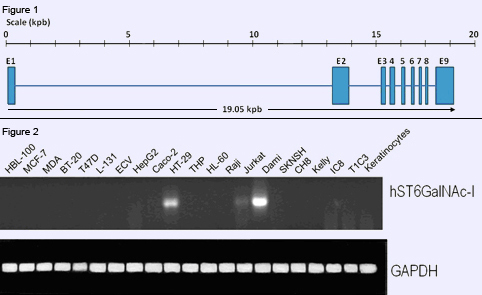
Figure 1. Genomic organization of human ST6GalNAc I gene. The gene is located on chromosome 17q25.1, spans 19.05 kb and contains 9 exons labeled El E9.
Figure 2. RT-PCR analysis of the expression of hST6GalNAc I in various human cancer lines
Description
ST6GalNAc I gene is located on chromosome 17, at location 72,132,442-72,151,489, spans 19.05 kb and contains 9 exons. The start of this gene is located in Contig AC005837.1.1.163218.
Transcription
Northern blot analysis has shown that ST6GalNAc I gene is expressed in pyloric mucosa as a single 2.5 kb transcript, but it is not expressed in spleen, brain, or pancreas. ST6GalNAc I transcripts were also detected in intestinal metaplasia and duodenal mucosa. In situ hybridization demonstrated that the localization of transcripts correlated well with that of STn antigen in gastric cancer cells and Goblet cells in intestinal metaplastic glands (Ikehara et al., 1999).
RT-PCR analysis shows that ST6GalNAc I gene is expressed only in a limited number of cultured cancer cells, including HT29 and Dami cells (Figure 2). ST6GalNAc I ESTs have been obtained in bone marrow, cervix, esophagus, intestine, skeletal muscle, prostate, spleen, stomach, tongue and trachea, and in several cancer tissues, including cervical, esophageal, prostate, stomach and uterine cancers.
Two cDNA of about 2.5 and 2.3 kp have been isolated. The longer cDNA encodes a 600 amino acids protein (DDBJ/EMBL/GenBank # Y11339). The shorter cDNA shows a nucleotide sequence identical to that of the longer form except for the lack of a 234 bp segment at nucleotide positions 652-885 (relative to the ATG of the long-form (# Y11339)). The short-form cDNA would encode a protein that lacks a 78 amino acid fragment at positions 218-295 in the catalytic region (Ikehara et al., 1999).
RT-PCR analysis shows that ST6GalNAc I gene is expressed only in a limited number of cultured cancer cells, including HT29 and Dami cells (Figure 2). ST6GalNAc I ESTs have been obtained in bone marrow, cervix, esophagus, intestine, skeletal muscle, prostate, spleen, stomach, tongue and trachea, and in several cancer tissues, including cervical, esophageal, prostate, stomach and uterine cancers.
Two cDNA of about 2.5 and 2.3 kp have been isolated. The longer cDNA encodes a 600 amino acids protein (DDBJ/EMBL/GenBank # Y11339). The shorter cDNA shows a nucleotide sequence identical to that of the longer form except for the lack of a 234 bp segment at nucleotide positions 652-885 (relative to the ATG of the long-form (# Y11339)). The short-form cDNA would encode a protein that lacks a 78 amino acid fragment at positions 218-295 in the catalytic region (Ikehara et al., 1999).
Pseudogene
No ST6GalNAc I pseudogene has been identified in the human genome.
Proteins
Note
CMP-NeuAc: N-acetyl-galactosaminide-alpha1-O-Ser/Thr alpha2,6-sialyltransferase 1; synonyms: SIAT7A, HSY11339, hSTYI, ST6GalNAc I
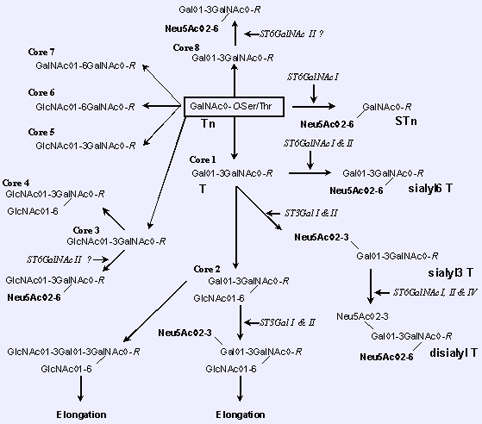
Figure 3. Logos representing the ST6GalNAc A family-motifs. (Patel & Balaji, 2006).
Figure 4. Sialylation reactions in the initial steps of the O-glycans biosynthesis. The name of the compound is indicated underneath the glycan structure. The sialic acid residue transferred is indicated in bold characters. The enzymes are indicated in italic and the question mark indicates that the enzyme is not characterized (from Harduin-Lepers et al. 2001).
Description
The human ST6GalNAc I (EC 2.4.99.3, CAZy Family GT29, CMP-NeuAc R-GalNAc-alpha1-O-Ser/Thr alpha2,6-sialyltransferase, with R = H, Gal-beta1-3, or NeuAc-alpha2-3Gal-beta1-3) is a 600 AA type II membrane-bound sialyltransferase. It shares the same typical organization with other Golgi glycosyltransferases with a short N-terminal domain in the cytoplasm of the cell, a trans-membrane domain (TMD), an unusually long stem region and a catalytic domain oriented in the lumen of Golgi cisternae. The enzyme possess the 4 signature motifs (sialylmotifs L, S, VS and motif III) of mammalian sialyltransferases (Harduin-Lepers et al., 2005; Jeanneau et al., 2004) and the ST6GalNAc A family-motifs (Patel & Balaji, 2006). No 3D structure is available. The enzyme transfers a sialic acid (N-acetylneuraminic acid) from CMP-NeuAc in the 6-position of a GalNAc residue linked to a serine or a threonine residue of a mucin-type glycopeptide or glycoprotein. The human ST6GalNAc I accepts the following structures as acceptor substrate: GalNAc-alpha-O-Ser/Thr, Gal-beta1-3GalNAc-alpha-O-Ser/Thr and Neu5Ac-alpha2-3Gal-beta1-3GalNAc-alpha-O-Ser/Thr (Ikehara et al., 1999).
Expression
The stable transfection of MDA-MB-231 or T47D breast cancer cells with an expression vector encoding ST6GalNAc I induces the expression of STn antigen at the cell surface, which is carried by several high molecular weight membrane bound O-glycoproteins, including MUC1 (Julien et al., 2001; Julien et al., 2005). Sialyl-Tn expression is associated with morphological changes, decreased growth and adhesion, and increased cell migration of sialyl-Tn positive clones. STn positive MDA-MB-231 breast cancer cells exhibit an increased tumor growth in SCID mice (Julien et al., 2006). The MKN45 gastric cell line stably transfected with the full length ST6GalNAc-I also showed high expression of Sialyl-Tn antigen (Marcos et al., 2004). In breast carcinomas, a complete correlation between the expression of ST6GalNAc-I and the expression of sialyl-Tn has been shown (Sewell et al., 2006).
Localisation
ST6GalNAc I is a Golgi-resident glycosyltransferase.
Function
The Human ST6GalNAc I is a sialyltransferase involved in the biosynthesis of the carbohydrate moiety of mucin-type O-linked glycan chains, transferring a sialic acid residue in 6-position of the first GalNAc residue linked to the peptide aglycone. ST6GalNAc I is particularly involved in the biosynthesis of the sialyl-Tn antigen (STn, NeuAc-alpha2-6GalNAc-alpha1-O-Ser/Thr) and also participates to the biosynthesis of sialyl-6-T (Gal-beta1-3[NeuAc-alpha2-6]GalNAc-alpha1-O-Ser/Thr) and disialyl-T antigens (NeuAc-alpha2-3Gal-beta1-3[NeuAc-alpha2-6]GalNAc-alpha1-O-Ser/Thr) (Figure 4).
ST6GalNAc I compete with O-glycans elongating glycosyltransferases and prevent cancer cells to exhibit longer O-glycans. While fetal and normal adult tissues weakly express STn, the antigen is over-expressed in a wide range of epithelial cancers and is considered as a good maker of tumor. The prognostic value of STn expression has been widely studied, especially in gastric, colorectal, ovarian and breast cancers, and is correlated to a decreased survival of the patients.
ST6GalNAc I compete with O-glycans elongating glycosyltransferases and prevent cancer cells to exhibit longer O-glycans. While fetal and normal adult tissues weakly express STn, the antigen is over-expressed in a wide range of epithelial cancers and is considered as a good maker of tumor. The prognostic value of STn expression has been widely studied, especially in gastric, colorectal, ovarian and breast cancers, and is correlated to a decreased survival of the patients.
Homology
ST6GalNAc I is a sialyltransferase (GT-family #29 in the CAZy classification) belonging to the ST6GalNAc family . The amino acid sequence in the catalytic region of human ST6GalNAc I (250 amino acid residues from the C-terminal end) shows sequence identity to mouse ST6GalNAc I (85%), chick ST6GalNAc I (67.2%), 62% homology to human ST6GalNAc II, 36.4% to human ST6GalNAc III, 35.5% to human ST6GalNAc IV, 37.6% to human ST6GalNAc V, and 36.6% to human ST6GalNAc VI.
Mutations
Note
Mutation analysis showed a heterozygous transition (g.136T→C) leading to p.V80A with a frequency of 9.3% in 32 unrelated control individuals. No other exonic sequence variations were found. In addition, one intronic (g.IVS8 24G→A) and one 3UTR SNP (g.1653A→G) were found (Meuleman et al., 2001).
Implicated in
Entity name
Pancreas Cancer
Note
Enhanced expression of Tn and STn antigens is usually observed in pancreas cancer. STn is expressed in intra-epithelial neoplasms of the pancreas concomitantly with aberrant expression of MUC5AC and MUC6 gastric mucins (Kim et al., 2002). High serum concentrations of STn are also observed in pancreas carcinomas (Nanashima et al., 1999). STn appears to be a more specific tumor marker in pancreas cancer than Tn antigen (Ching et al., 1994). STn has been also reported in benign pancreatic intraepithelial neoplasia stage III (PanIN3), the last histologic grade relevant to benign tumor before that the tumor become invasive (Hruban et al., 2000; Kim et al., 2002).
Prognosis
Poor, decreased survival of the patients
Entity name
Gastric Cancer
Note
STn antigen is over-expressed in gastric carcinomas and associated with MUC1 mucin VNTR polymorphism (Santos-Silva et al., 2005). STn is also a useful predictor of poor prognosis in patients with advanced stomach cancer (Terashima et al., 1998). In particular, pre-operative serum levels of STn predict liver metastasis and poor prognosis in patients with gastric cancer (Nakagoe et al., 2001). STn is able to modulate the malignant phenotype inducing a more aggressive cell behavior, a decreased cell-cell aggregation and an increased ECM adhesion, migration and invasion (Pinho et al., 2007). However, the expression of ST6GalNAc I is low in gastric carcinoma cell lines, in accordance with the low/absent expression of the STn (Ogata et al., 2001).
Prognosis
Poor, decreased survival of the patients
Entity name
Colorectal Cancer
Note
STn is strongly expressed in a large number of colorectal carcinomas. However, not correlation was found between STn antigen tissue expression and ST6GalNAc I activity levels in colorectal cancer, in spite of the overexpression of the antigen in tumorous and transitional tissue (Vázquez-Martìn et al., 2004). The activity of core 1 beta3-Gal-transferase seems to be an important determinant of the STn phenotype of colon cancer cells (Brockhausen et al., 2001). Cell surface-expressed STn in colon cancer is predominantly carried on high molecular weight splice variants of CD44 (Singh et al., 2001). Pre-operative serum level of STn predicts recurrence after curative surgery in node-negative colorectal cancer patients (Takahashi et al., 1993).
Prognosis
Poor, decreased survival of the patients
Entity name
Breast Cancer
Note
ST6GalNAc I is responsible for the synthesis of the tumor-associated STn O-glycan in human breast cancer (Sewell et al., 2006). However, established breast cancer cell-lines express neither ST6GalNAc I nor STn (Julien et al., 2001). Stable transfection of MDA-MB-231 cells with ST6GalNAc I cDNA induces STn antigen expression together with important modifications of the O-glycosylation pattern of MUC1 in MDA-MB-231 and T-47D cells (Julien et al., 2001; Julien et al., 2005). ST6GalNAc I expression induces a decrease of adhesion and an increase of migration of MDA-MB-231. Moreover, ST6GalNAc I positive clones exhibit an increased tumor growth in SCID mice, suggesting that ST6GalNAc I expression is sufficient to enhance the tumorigenicity of MDA-MB-231 breast cancer cells (Julien et al., 2006).
Prognosis
Poor, decreased survival of the patients
Article Bibliography
| Pubmed ID | Last Year | Title | Authors |
|---|---|---|---|
| 11308020 | 2001 | Pathways of mucin O-glycosylation in normal and malignant rat colonic epithelial cells reveal a mechanism for cancer-associated Sialyl-Tn antigen expression. | Brockhausen I et al |
| 7846011 | 1994 | Blood-group sialyl-Tn antigen is more specific than Tn as a tumor marker in the pancreas. | Ching CK et al |
| 15843597 | 2005 | The animal sialyltransferases and sialyltransferase-related genes: a phylogenetic approach. | Harduin-Lepers A et al |
| 10955772 | 2000 | Progression model for pancreatic cancer. | Hruban RH et al |
| 10536037 | 1999 | Cloning and expression of a human gene encoding an N-acetylgalactosamine-alpha2,6-sialyltransferase (ST6GalNAc I): a candidate for synthesis of cancer-associated sialyl-Tn antigens. | Ikehara Y et al |
| 14722111 | 2004 | Structure-function analysis of the human sialyltransferase ST3Gal I: role of n-glycosylation and a novel conserved sialylmotif. | Jeanneau C et al |
| 16135558 | 2006 | ST6GalNAc I expression in MDA-MB-231 breast cancer cells greatly modifies their O-glycosylation pattern and enhances their tumourigenicity. | Julien S et al |
| 12820722 | 2001 | Expression of sialyl-Tn antigen in breast cancer cells transfected with the human CMP-Neu5Ac: GalNAc alpha2,6-sialyltransferase (ST6GalNac I) cDNA. | Julien S et al |
| 15770530 | 2005 | Stable expression of sialyl-Tn antigen in T47-D cells induces a decrease of cell adhesion and an increase of cell migration. | Julien S et al |
| 12360467 | 2002 | Aberrant expression of MUC5AC and MUC6 gastric mucins and sialyl Tn antigen in intraepithelial neoplasms of the pancreas. | Kim GE et al |
| 12386459 | 2001 | Gene therapy of cystic fibrosis (CF) airways: a review emphasizing targeting with lactose. | Klink DT et al |
| 15466199 | 2004 | Role of the human ST6GalNAc-I and ST6GalNAc-II in the synthesis of the cancer-associated sialyl-Tn antigen. | Marcos NT et al |
| 11409865 | 2001 | Mutation analysis of 4 candidate genes for hereditary neuralgic amyotrophy (HNA). | Meuleman J et al |
| 11735169 | 2001 | Pre-operative serum levels of sialyl Tn antigen predict liver metastasis and poor prognosis in patients with gastric cancer. | Nakagoe T et al |
| 10664288 | 1999 | High serum concentrations of sialyl Tn antigen in carcinomas of the biliary tract and pancreas. | Nanashima A et al |
| 16207893 | 2006 | Identification of linkage-specific sequence motifs in sialyltransferases. | Patel RY et al |
| 16965854 | 2007 | Biological significance of cancer-associated sialyl-Tn antigen: modulation of malignant phenotype in gastric carcinoma cells. | Pinho S et al |
| 15604091 | 2005 | Thomsen-Friedenreich antigen expression in gastric carcinomas is associated with MUC1 mucin VNTR polymorphism. | Santos-Silva F et al |
| 16319059 | 2006 | The ST6GalNAc-I sialyltransferase localizes throughout the Golgi and is responsible for the synthesis of the tumor-associated sialyl-Tn O-glycan in human breast cancer. | Sewell R et al |
| 11447138 | 2001 | Cell surface-expressed Thomsen-Friedenreich antigen in colon cancer is predominantly carried on high molecular weight splice variants of CD44. | Singh R et al |
| 8364861 | 1993 | Predictive value of preoperative serum sialyl Tn antigen levels in prognosis of patients with gastric cancer. | Takahashi I et al |
| 9697259 | 1998 | Sialyl-Tn antigen as a useful predictor of poor prognosis in patients with advanced stomach cancer. | Terashima S et al |
| 15539921 | 2004 | Correlation analysis between tumor-associated antigen sialyl-Tn expression and ST6GalNAc I activity in human colon adenocarcinoma. | Vázquez-Martín C et al |
Other Information
Locus ID:
NCBI: 55808
MIM: 610138
HGNC: 23614
Ensembl: ENSG00000070526
Variants:
dbSNP: 55808
ClinVar: 55808
TCGA: ENSG00000070526
COSMIC: ST6GALNAC1
RNA/Proteins
Expression (GTEx)
Pathways
Protein levels (Protein atlas)
References
| Pubmed ID | Year | Title | Citations |
|---|---|---|---|
| 35303419 | 2022 | Mucus sialylation determines intestinal host-commensal homeostasis. | 49 |
| 35303419 | 2022 | Mucus sialylation determines intestinal host-commensal homeostasis. | 49 |
| 33792183 | 2021 | ST6GalNAc-I promotes lung cancer metastasis by altering MUC5AC sialylation. | 12 |
| 33792183 | 2021 | ST6GalNAc-I promotes lung cancer metastasis by altering MUC5AC sialylation. | 12 |
| 30854566 | 2020 | Sialyltransferase7A promotes angiotensin II-induced cardiomyocyte hypertrophy via HIF-1α-TAK1 signalling pathway. | 7 |
| 31831633 | 2020 | Cross-talk between Colon Cells and Macrophages Increases ST6GALNAC1 and MUC1-sTn Expression in Ulcerative Colitis and Colitis-Associated Colon Cancer. | 34 |
| 30854566 | 2020 | Sialyltransferase7A promotes angiotensin II-induced cardiomyocyte hypertrophy via HIF-1α-TAK1 signalling pathway. | 7 |
| 31831633 | 2020 | Cross-talk between Colon Cells and Macrophages Increases ST6GALNAC1 and MUC1-sTn Expression in Ulcerative Colitis and Colitis-Associated Colon Cancer. | 34 |
| 28035351 | 2017 | Downregulation of ST6GALNAC1 is associated with esophageal squamous cell carcinoma development. | 5 |
| 28035351 | 2017 | Downregulation of ST6GALNAC1 is associated with esophageal squamous cell carcinoma development. | 5 |
| 25532910 | 2016 | RNAi-mediated gene silencing of ST6GalNAc I suppresses the metastatic potential in gastric cancer cells. | 25 |
| 25532910 | 2016 | RNAi-mediated gene silencing of ST6GalNAc I suppresses the metastatic potential in gastric cancer cells. | 25 |
| 25860962 | 2015 | Sialyltransferase7A, a Klf4-responsive gene, promotes cardiomyocyte apoptosis during myocardial infarction. | 20 |
| 25860962 | 2015 | Sialyltransferase7A, a Klf4-responsive gene, promotes cardiomyocyte apoptosis during myocardial infarction. | 20 |
| 24840470 | 2014 | Comprehensive glycomics comparison between colon cancer cell cultures and tumours: implications for biomarker studies. | 31 |
Citation
Philippe Delannoy ; Anne Harduin-Lepers ; Marie-Ange Krzewinski-Recchi
ST6GALNAC1 (ST6 (alpha-N-acetyl-neuraminyl-2,3-beta-galactosyl-1,3)-N-acetylgalactosaminide alpha-2,6-sialyltransferase 1)
Atlas Genet Cytogenet Oncol Haematol. 2008-03-01
Online version: http://atlasgeneticsoncology.org/gene/44087/st6galnac1
