DUSP1 (dual specificity phosphatase 1)
2012-05-01 Mark Kristiansen AffiliationMolecular Haematology, Cancer Biology Unit, UCL Institute of Child Health, 30 Guilford Street, London WC1N 1EH, UK
Identity
HGNC
LOCATION
5q35.1
IMAGE

LEGEND
Figure 1. Genomic context of the human DUSP1 gene. Figure 1 shows the location of DUSP1 on chromosome 5 which is located between the NEURL1B and ERGIC1 genes. Arrows indicate the 5 to 3 orientation of each gene. Adapted from the NCBI Map Viewer.
LOCUSID
ALIAS
CL100,HVH1,MKP-1,MKP1,PTPN10
FUSION GENES
DNA/RNA
Note
The human DUSP1 gene spans 3111 bases, telomere to centromere orientation.
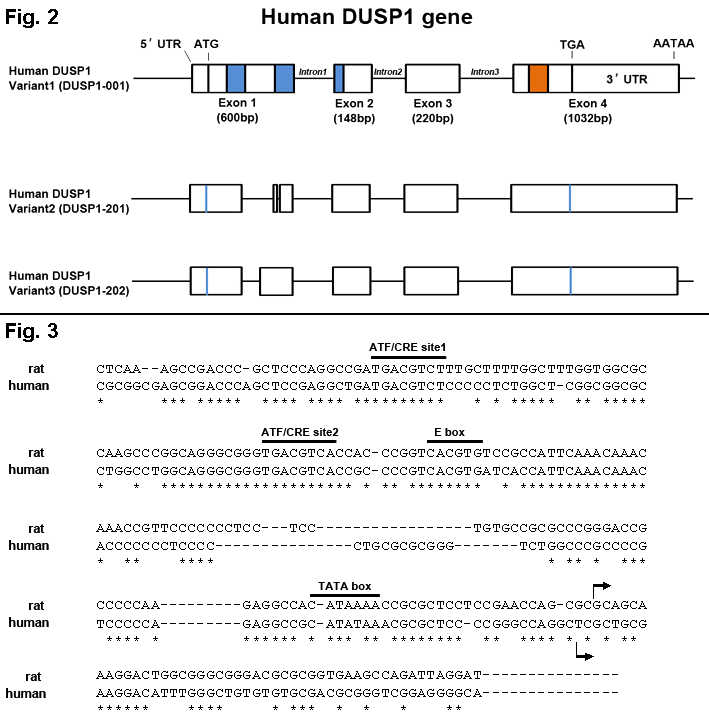
Figure 2. Structure of the human DUSP1 gene and its variants. The full length human DUSP1 transcript (Variant1) is 2019 nucleotides long and consists of four exons separated by three introns of 400-500 bp. The DUSP1 gene is approximately 3.8 kb from the putative transcription initiation site to the end of exon 4. The 5 untranslated region (5 UTR) and the putative translational start site (ATG) can be found in exon 1. The non-catalytic region homologous to Cdc25, also known as the CH2 domain, is represented by the blue regions and is found in exons 1 and 2. Exon 4 contains the sequence encoding the active site cysteine for PTPase activity (orange region) and also contains > 660 nt of 3 UTR and the polyadenylation signal (AATAA). According to Ensembl, there are two other DUSP1 variants with transcript lengths of 1394 bp (Variant2) and 1854 bp (Variant3).
Figure 3. Alignment of the promoter sequences for the rat and human DUSP1 genes. There are two conserved, potential ATF binding sites in the DUSP1 promoter. ATF site 1 is located at position 172 to 165 in relation to the transcriptional start site and is one base different from the ATF/CRE consensus site. ATF site 2, is located at position 124 to 117 and is an exact match for the ATF/CRE consensus site. A TATA box and a conserved E box are also highlighted. * represent bases conserved between the human and rat gene. The transcriptional start site of the DUSP1 gene in each species is indicated by an arrow. Adapted from Kristiansen et al., 2010.
Description
The human DUSP1 gene is located on chromosome 5q35.1 and consists of 4 exons separated by three relatively small introns (400-500 bp) (Figure 2). The full length coding sequence of DUSP1 contains 2019 nucleotides. The human DUSP1 gene contains four exons and three introns coding for an inducible mRNA with an approximate size of 2.4 kb (Kwak et al., 1994). The first domain which is located towards the C-terminus (Exon 4) contains the active site motif common to all PTPases, and the second domain (termed CH2) resides at the N-terminus (exons 1-2) and exhibits two segments of similarity to the region surrounding the Cdc25 active site.
Transcription
Studies using northern blots have shown that high levels of DUSP1 mRNA were detected in lung, liver, placenta, and pancreas whereas moderate levels of DUSP1 mRNA were found in the heart and skeletal muscle (Kwak et al., 1994). Low levels were detected in the brain and kidney. Nevertheless, an abundance of factors can upregulate DUSP1 mRNA levels in a variety of cell types. DUSP1 is a transcriptional target of p53 which binds to the p53 binding site located in the second intron which was first shown in a human glioblastoma cell line (Li et al., 2003). DUSP1 is also upregulated in response to a variety of cellular stress conditions including oxidative stress and DNA damaging agents in human skin cells (Keyse and Emslie, 1992). DUSP1 mRNA is also upregulated in response to hypoxia at levels found in solid tumours (Laderoute et al., 1999). A strong induction of the DUSP1 gene was seen in neuroendocrine cells by thyrotropin-releasing hormone (TRH) and epidermal growth factor (EGF) (Ryser et al., 2001; Ryser et al., 2002).
The initial 1 kb region upstream of exon 1 in the DUSP1 promoter contains elements important for the control of DUSP1 transcription (Figure 3). However, as well as a TATA box, an E-box and 2 conserved and functionally important ATF binding sites, this region also contains three GC boxes and an NF1 site (Kwak et al., 1994; Pursiheimo et al., 2002; Ryser et al., 2004; Kristiansen et al., 2010). The two ATF sites have been shown to bind c-Jun and ATF2 which is important for the activation of DUSP1 transcription by the JNK pathway following survival factor withdrawal in neurons (Kristiansen et al., 2010).
The initial 1 kb region upstream of exon 1 in the DUSP1 promoter contains elements important for the control of DUSP1 transcription (Figure 3). However, as well as a TATA box, an E-box and 2 conserved and functionally important ATF binding sites, this region also contains three GC boxes and an NF1 site (Kwak et al., 1994; Pursiheimo et al., 2002; Ryser et al., 2004; Kristiansen et al., 2010). The two ATF sites have been shown to bind c-Jun and ATF2 which is important for the activation of DUSP1 transcription by the JNK pathway following survival factor withdrawal in neurons (Kristiansen et al., 2010).
Pseudogene
There are no known pseudogenes for DUSP1.
Proteins
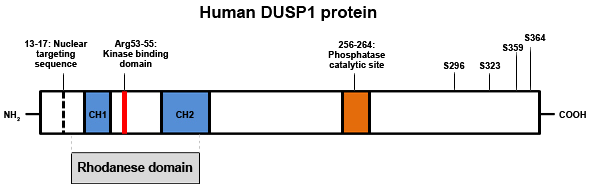
Figure 4. The structural features of the DUSP1 protein. The highly conserved C-terminal domain of DUSP1 contains the catalytic and stabilisation and destabilisation domains of the protein. The catalytic domain contains the active site sequence for the dephosphorylation of tyrosine/threonine residues of target substrates. The N-terminal domain of DUSP1 is mainly responsible for nuclear localisation through its leucine-rich nuclear targeting sequence (LXXLL) (Wu et al., 2005) and the binding of MAPK through its specific arginine-rich kinase binding domain. According to UniProtKB/Swiss-Prot, the catalytically inactive rhodanese domain is located within residues 20-137.
Description
DUSP family members share a common structure comprising a C-terminal cysteine-dependent protein tyrosine phosphatase active site sequence (Camps et al., 2000). The structure of DUSP proteins confers phosphatase activity for both phospho-serine/threonine and phospho-tyrosine residues. The non-catalytic N-terminal region contains a rhodanese domain which is known to catalyse a sulphur transfer reaction. Also in this domain are two regions of homology with sequences flanking the active site of the Cdc25 cell cycle regulatory phosphatase (Keyse and Ginsberg, 1993). The full-length human DUSP1 protein (Transcript variant 1) contains 367 amino acids and has a molecular weight of 39 kDa (Figure 4). Two further transcripts have been described. Transcript variant 2 codes for a shorter protein of 302 amino acids with a molecular weight of 32 kDa. Transcript variant 3 encodes for a protein of 340 amino acids with a molecular weight of 36 kDa.
Expression
Increases in DUSP1 protein expression have been seen in a variety of cell types in response to various signals (Table 1) such as EGF-treated mouse embryonic fibroblasts (Wu and Bennett, 2005) and NGF-deprived rat sympathetic neurons (Kristiansen et al., 2010). The half life of DUSP1 has been found to vary between 40 and 120 minutes (Charles et al., 1992; Noguchi et al., 1993).
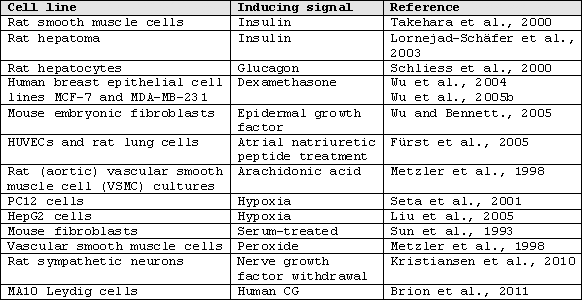
Table 1. Regulation of DUSP1 expression levels. Table 1 shows a some examples of how DUSP1 protein expression levels can be increased in a range of cell types in response to various signals.
Localisation
DUSP1 is primarily a nuclear dual specificity protein phosphatase.
Function
Mitogen activated protein kinases (MAPK) are a family of kinases that include the extracellular signal regulated kinases (ERKs), p38 and c-Jun NH2-terminal kinase (JNKs). They play an important role in regulation and are activated by a number of stimuli such as growth factors, cytokines or stress conditions. This in turn regulates a variety of processes including proliferation, apoptosis, survival and the production of inflammatory molecules. As a result the regulation of MAPKs is important and so an equilibrium between the activation of MAPKs and their deactivation is vital.
Dual-specificity phosphatases (DUSP) are a large family of phosphatases that include the subset of MAPK phosphatases (MKPs). In particular, DUSP1 is a nuclear mitogen-activated protein kinase (MAPK) phosphatase with substrate specificity for p38 kinases and JNKs and to a lesser extent ERK (Franklin and Kraft, 1997; Camps et al., 2000; Farooq and Zhou, 2004) and functions by dephosphorylating the phospho-threonine and phospho-tyrosine residues located in the activation loop of their target substrates (Patterson et al., 2009) to negatively regulate MAPK signalling (Sun et al., 1993; Keyse, 2000; Kristiansen et al., 2010).
DUSP1 is a negative regulator of cellular proliferation but also has other functions such as the regulation of cytokine biosynthesis in response to bacterial lipopolysaccharide (LPS) (Huang et al., 2011). DUSP1 plays a significant role in immune regulation (reviewed in Wancket et al., 2012) and it has been shown that the half lives of several cytokines can be reduced by the overexpression of DUSP1 mRNA (Yu et al., 2011a). DUSP1 has also been shown to play a part in mediating the anti-inflammatory response to glucocorticoids (Chi et al., 2006; Hammer et al., 2005; Abraham et al., 2006; Zhao et al., 2006). DUSP1 has an important role in metabolic homeostasis, as studies have shown that mice lacking the DUSP1 gene are resistant to obesity induced by a high fat diet (Zhang et al., 2004). Furthermore, DUSP1 can play a role in altering lipid metabolism in multiple tissues when a high fat diet is consumed (Flach et al, 2011; Wu et al., 2006). DUSP1 protects mice from lethal endotoxic shock (Hammer et al., 2006) and it has also been shown that DUSP1 can protect the oral cavity against inflammation triggered by bacterial ligands (Sartori et al., 2009; Yu et al., 2011b). In rodent stroke models, DUSP1 overexpression has been shown to suppress neuronal death in a negative feedback manner (Koga et al., 2012).
Dual-specificity phosphatases (DUSP) are a large family of phosphatases that include the subset of MAPK phosphatases (MKPs). In particular, DUSP1 is a nuclear mitogen-activated protein kinase (MAPK) phosphatase with substrate specificity for p38 kinases and JNKs and to a lesser extent ERK (Franklin and Kraft, 1997; Camps et al., 2000; Farooq and Zhou, 2004) and functions by dephosphorylating the phospho-threonine and phospho-tyrosine residues located in the activation loop of their target substrates (Patterson et al., 2009) to negatively regulate MAPK signalling (Sun et al., 1993; Keyse, 2000; Kristiansen et al., 2010).
DUSP1 is a negative regulator of cellular proliferation but also has other functions such as the regulation of cytokine biosynthesis in response to bacterial lipopolysaccharide (LPS) (Huang et al., 2011). DUSP1 plays a significant role in immune regulation (reviewed in Wancket et al., 2012) and it has been shown that the half lives of several cytokines can be reduced by the overexpression of DUSP1 mRNA (Yu et al., 2011a). DUSP1 has also been shown to play a part in mediating the anti-inflammatory response to glucocorticoids (Chi et al., 2006; Hammer et al., 2005; Abraham et al., 2006; Zhao et al., 2006). DUSP1 has an important role in metabolic homeostasis, as studies have shown that mice lacking the DUSP1 gene are resistant to obesity induced by a high fat diet (Zhang et al., 2004). Furthermore, DUSP1 can play a role in altering lipid metabolism in multiple tissues when a high fat diet is consumed (Flach et al, 2011; Wu et al., 2006). DUSP1 protects mice from lethal endotoxic shock (Hammer et al., 2006) and it has also been shown that DUSP1 can protect the oral cavity against inflammation triggered by bacterial ligands (Sartori et al., 2009; Yu et al., 2011b). In rodent stroke models, DUSP1 overexpression has been shown to suppress neuronal death in a negative feedback manner (Koga et al., 2012).
Homology
DUSPs contain two regions of homology with the cell cycle regulatory phosphatase Cdc25 in their NH2-terminal domain. A conserved catalytic domain in the C-terminal region, contains an active site with a sequence related to the VH-1 DUSP encoded by the vaccina virus. A kinase interactive motif (KIM) also resides in the NH2 terminal domain. This conserved cluster of basic amino acids distinguishes the specificity of MPKs for their MAPK targets. A localisation sequence is also found in the NH2 terminal domain and this determines their cellular localisation. These differences give rise to three groups based on their sequence similarity, structure, substrate specificity and localisation. DUSP1 along with DUSP2, DUSP4 and DUSP5 are known as inducible nuclear phosphatases (Keyse, 2008). DUSP6, DUSP7 and DUSP9 are the closely related ERK-specific and cytoplasmic MKPs whilst DUSP8, DUSP10 and DUSP16 preferentially inactivate p38 and JNK MAP kinases (Keyse, 2008).
Mutations
Note
A SNP in the DUSP1 gene was identified in intron 1 in a Japanese subpopulation but because this polymorphic site is not within a coding region, it is not likely to influence the function of the gene product (Suzuki et al., 2001).
Implicated in
Entity name
Various cancers
Note
MAP kinase activities impinge on many of the processes involved in the initiation and genesis of cancer and therefore abnormalities in MAPK signalling pathways have been implicated in a wide range of human malignancies, such as cancer of the colon, prostate, bladder, ovary, breast and also in NSCLC. DUSP1 has conflicting roles depending upon the level of its expression which has been seen to be increased in early stages of cancer of the prostate, bladder and colon but whose level decreases at later stages. Conversely, downregulation of DUSP1 could increase apoptosis. Pharmacological targeting of DUSP1 could be considered as a useful tool for improving cancer treatments and maintaining metabolic homeostasis (Flach et al., 2012).
Entity name
Human epithelial tumours
Note
In human epithelial tumours (colon, bladder and prostate), early studies have shown an increase in the DUSP1 mRNA in the early stages of the disease (Loda et al., 1996). Interestingly, DUSP1 mRNA overexpression falls as the tumour becomes more aggressive and hence with disease progression and was confirmed in transcriptional profiling studies (Zhang et al., 1997).
In prostate cancer an increase in DUSP1 levels showed inverse correlation with JNK activity and apoptotic markers suggesting that DUSP1 could be anti-apoptotic (Magi-Galuzzi et al., 1997; Magi-Galuzzi et al., 1998). Furthermore, human prostate cancer cells overexpressing DUSP1 are resistant to apoptosis induced by Fas-ligand (Srikanth et al., 1999).
In prostate cancer an increase in DUSP1 levels showed inverse correlation with JNK activity and apoptotic markers suggesting that DUSP1 could be anti-apoptotic (Magi-Galuzzi et al., 1997; Magi-Galuzzi et al., 1998). Furthermore, human prostate cancer cells overexpressing DUSP1 are resistant to apoptosis induced by Fas-ligand (Srikanth et al., 1999).
Entity name
Ovarian cancer
Note
Varying levels of DUSP1 protein expression have been seen in a range of models of ovarian cancer. In low grade malignant tumours, the level of DUSP1 protein expression was reduced when compared with benign cysts and normal surface epithelium. Conversely, in primary ovarian tumours, moderate to strong expression of DUSP1 was detected in almost 60% of invasive ovarian cancers and there was a significant correlation between DUSP1 expression and a shorter progressive free survival (Denkert et al., 2002).
Entity name
Breast cancer
Note
Studies have shown an increase in DUSP1 expression in the late stages of breast cancer (Loda et al., 1996). The high levels of DUSP1 correlated with a reduction in JNK activity. This could mean that therapeutically targeting DUSP1 would increase JNK activity and hence pro-apoptotic signals in malignant cells (Wang et al., 2003). Studies show that DUSP1 overexpression decreases JNK activity whilst DUSP1 knockdown using siRNA enhanced JNK activity (Small et al., 2007). Recently, it has been shown in human T47D breast cancer cells that DUSP1 is a target gene for Progesterone Receptor (PR) and may have a role in its anti-proliferative and anti-inflammatory actions (Chen et al., 2011).
Entity name
Non-small cell lung cancer (NSCLC)
Note
In NSCLC, DUSP1 protein levels are increased (Vicent et al., 2004; Lim et al., 2003). The localisation of DUSP1 is predominantly in the nucleus in NSCLC tumour tissue compared to normal bronchial epithelium where the protein is localised in both the cytoplasm and the nucleus. DUSP1 overexpression increased resistance to cisplatin, a drug which can be used to treat the disease (Wang et al., 2006).
Entity name
Other cancers
Note
An increase in the level of DUSP1 protein has also been shown in gastric adenocarcinoma (Bang et al., 1998). In nude mice, downregulation of DUSP1 expression leads to a reduction of tumorigenicity of pancreatic cancer cells (Liao et al., 2003). Interestingly, in hepatocellular carcinoma, DUSP1 levels are decreased which could suggest an opposite role for DUSP1 in tumour progression (Tsujita et al., 2005). In lung squamous cell carcinoma (SCC), it has been reported that levels of DUSP1 expression decrease with cancer progression (Wang et al., 2011). DUSP1 is upregulated by hypoxia, which is seen in many grown tumours (Brahimi-Horn et al., 2007).
Article Bibliography
| Pubmed ID | Last Year | Title | Authors |
|---|---|---|---|
| 16880258 | 2006 | Antiinflammatory effects of dexamethasone are partly dependent on induction of dual specificity phosphatase 1. | Abraham SM et al |
| 9735328 | 1998 | Increased MAPK activity and MKP-1 overexpression in human gastric adenocarcinoma. | Bang YJ et al |
| 18026916 | 2007 | Hypoxia and cancer. | Brahimi-Horn MC et al |
| 21558315 | 2011 | MAPK phosphatase-1 (MKP-1) expression is up-regulated by hCG/cAMP and modulates steroidogenesis in MA-10 Leydig cells. | Brion L et al |
| 10627275 | 2000 | Dual specificity phosphatases: a gene family for control of MAP kinase function. | Camps M et al |
| 1741163 | 1992 | cDNA sequence of a growth factor-inducible immediate early gene and characterization of its encoded protein. | Charles CH et al |
| 22020934 | 2011 | Progesterone receptor inhibits proliferation of human breast cancer cells via induction of MAPK phosphatase 1 (MKP-1/DUSP1). | Chen CC et al |
| 16461893 | 2006 | Dynamic regulation of pro- and anti-inflammatory cytokines by MAPK phosphatase 1 (MKP-1) in innate immune responses. | Chi H et al |
| 12432554 | 2002 | Expression of mitogen-activated protein kinase phosphatase-1 (MKP-1) in primary human ovarian carcinoma. | Denkert C et al |
| 15115656 | 2004 | Structure and regulation of MAPK phosphatases. | Farooq A et al |
| 21521693 | 2011 | Loss of mitogen-activated protein kinase phosphatase-1 protects from hepatic steatosis by repression of cell death-inducing DNA fragmentation factor A (DFFA)-like effector C (CIDEC)/fat-specific protein 27. | Flach RJ et al |
| 9501207 | 1998 | Conditional expression of mitogen-activated protein kinase phosphatase-1, MKP-1, is cytoprotective against UV-induced apoptosis. | Franklin CC et al |
| 15569826 | 2005 | Atrial natriuretic peptide induces mitogen-activated protein kinase phosphatase-1 in human endothelial cells via Rac1 and NAD(P)H oxidase/Nox2-activation. | Fürst R et al |
| 16380512 | 2006 | Dual specificity phosphatase 1 (DUSP1) regulates a subset of LPS-induced genes and protects mice from lethal endotoxin shock. | Hammer M et al |
| 21723158 | 2011 | Signaling by the phosphatase MKP-1 in dendritic cells imprints distinct effector and regulatory T cell fates. | Huang G et al |
| 1406996 | 1992 | Oxidative stress and heat shock induce a human gene encoding a protein-tyrosine phosphatase. | Keyse SM et al |
| 8256285 | 1993 | Amino acid sequence similarity between CL100, a dual-specificity MAP kinase phosphatase and cdc25. | Keyse SM et al |
| 18330678 | 2008 | Dual-specificity MAP kinase phosphatases (MKPs) and cancer. | Keyse SM et al |
| 22197701 | 2012 | Over-expression of map kinase phosphatase-1 (MKP-1) suppresses neuronal death through regulating JNK signaling in hypoxia/re-oxygenation. | Koga S et al |
| 20702711 | 2010 | Mkp1 is a c-Jun target gene that antagonizes JNK-dependent apoptosis in sympathetic neurons. | Kristiansen M et al |
| 8106404 | 1994 | Isolation and characterization of a human dual specificity protein-tyrosine phosphatase gene. | Kwak SP et al |
| 10212278 | 1999 | Mitogen-activated protein kinase phosphatase-1 (MKP-1) expression is induced by low oxygen conditions found in solid tumor microenvironments. A candidate MKP for the inactivation of hypoxia-inducible stress-activated protein kinase/c-Jun N-terminal protein kinase activity. | Laderoute KR et al |
| 12890671 | 2003 | The phosphatase MKP1 is a transcriptional target of p53 involved in cell cycle regulation. | Li M et al |
| 12806617 | 2003 | Down-regulation of the dual-specificity phosphatase MKP-1 suppresses tumorigenicity of pancreatic cancer cells. | Liao Q et al |
| 14676123 | 2003 | Feasibility of using low-volume tissue samples for gene expression profiling of advanced non-small cell lung cancers. | Lim EH et al |
| 16081065 | 2005 | Dual-specificity phosphatase DUSP1 protects overactivation of hypoxia-inducible factor 1 through inactivating ERK MAPK. | Liu C et al |
| 8909245 | 1996 | Expression of mitogen-activated protein kinase phosphatase-1 in the early phases of human epithelial carcinogenesis. | Loda M et al |
| 12529177 | 2003 | Osmotic regulation of insulin-induced mitogen-activated protein kinase phosphatase (MKP-1) expression in H4IIE rat hepatoma cells. | Lornejad-Schäfer MR et al |
| 9645439 | 1998 | Mitogen-activated protein kinases and apoptosis in PIN. | Magi-Galluzzi C et al |
| 9837905 | 1998 | Induction of mitogen-activated protein kinase phosphatase-1 by arachidonic acid in vascular smooth muscle cells. | Metzler B et al |
| 8355678 | 1993 | Structure, mapping, and expression of erp, a growth factor-inducible gene encoding a nontransmembrane protein tyrosine phosphatase, and effect of ERP on cell growth. | Noguchi T et al |
| 19228121 | 2009 | Dual-specificity phosphatases: critical regulators with diverse cellular targets. | Patterson KI et al |
| 12067709 | 2002 | Protein kinase A balances the growth factor-induced Ras/ERK signaling. | Pursiheimo JP et al |
| 14609431 | 2004 | Stimulated initiation of mitogen-activated protein kinase phosphatase-1 (MKP-1) gene transcription involves the synergistic action of multiple cis-acting elements in the proximal promoter. | Ryser S et al |
| 12503606 | 2002 | Map kinase phosphatase-1 gene expression and regulation in neuroendocrine cells. | Ryser S et al |
| 19864641 | 2009 | MAP kinase phosphatase-1 protects against inflammatory bone loss. | Sartori R et al |
| 10784592 | 2000 | Glucagon-induced expression of the MAP kinase phosphatase MKP-1 in rat hepatocytes. | Schliess F et al |
| 11577072 | 2001 | Hypoxia-induced regulation of MAPK phosphatase-1 as identified by subtractive suppression hybridization and cDNA microarray analysis. | Seta KA et al |
| 17483361 | 2007 | Mitogen-activated protein kinase phosphatase-1 is a mediator of breast cancer chemoresistance. | Small GW et al |
| 10544965 | 1999 | Human DU145 prostate cancer cells overexpressing mitogen-activated protein kinase phosphatase-1 are resistant to Fas ligand-induced mitochondrial perturbations and cellular apoptosis. | Srikanth S et al |
| 8221888 | 1993 | MKP-1 (3CH134), an immediate early gene product, is a dual specificity phosphatase that dephosphorylates MAP kinase in vivo. | Sun H et al |
| 11310585 | 2001 | Identification and allelic frequencies of novel single-nucleotide polymorphisms in the DUSP1 and BTG1 genes. | Suzuki C et al |
| 10903429 | 2000 | High glucose attenuates insulin-induced mitogen-activated protein kinase phosphatase-1 (MKP-1) expression in vascular smooth muscle cells. | Takehara N et al |
| 16293973 | 2005 | Suppressed MKP-1 is an independent predictor of outcome in patients with hepatocellular carcinoma. | Tsujita E et al |
| 15173070 | 2004 | Mitogen-activated protein kinase phosphatase-1 is overexpressed in non-small cell lung cancer and is an independent predictor of outcome in patients. | Vicent S et al |
| 22197448 | 2012 | Mitogen-activated protein kinase phosphatase (MKP)-1 in immunology, physiology, and disease. | Wancket LM et al |
| 12618338 | 2003 | Overexpression of mitogen-activated protein kinase phosphatases MKP1, MKP2 in human breast cancer. | Wang HY et al |
| 21960346 | 2011 | Imbalanced expression of mitogen-activated protein kinase phosphatase-1 and phosphorylated extracellular signal-regulated kinases in lung squamous cell carcinoma. | Wang K et al |
| 16951204 | 2006 | Mitogen-activated protein kinase phosphatase-1 is required for cisplatin resistance. | Wang Z et al |
| 15722358 | 2005 | Essential role for mitogen-activated protein (MAP) kinase phosphatase-1 in stress-responsive MAP kinase and cell survival signaling. | Wu JJ et al |
| 16814733 | 2006 | Mice lacking MAP kinase phosphatase-1 have enhanced MAP kinase activity and resistance to diet-induced obesity. | Wu JJ et al |
| 15899879 | 2005 | The noncatalytic amino terminus of mitogen-activated protein kinase phosphatase 1 directs nuclear targeting and serum response element transcriptional regulation. | Wu JJ et al |
| 14996737 | 2004 | Microarray analysis reveals glucocorticoid-regulated survival genes that are associated with inhibition of apoptosis in breast epithelial cells. | Wu W et al |
| 15590693 | 2005 | Glucocorticoid receptor-induced MAPK phosphatase-1 (MPK-1) expression inhibits paclitaxel-associated MAPK activation and contributes to breast cancer cell survival. | Wu W et al |
| 21068780 | 2011 | Anti-inflammatory effect of MAPK phosphatase-1 local gene transfer in inflammatory bone loss. | Yu H et al |
| 21733716 | 2011 | MKP-1 regulates cytokine mRNA stability through selectively modulation subcellular translocation of AUF1. | Yu H et al |
| 14578290 | 2003 | Parathyroid hormone-related protein induces insulin expression through activation of MAP kinase-specific phosphatase-1 that dephosphorylates c-Jun NH2-terminal kinase in pancreatic beta-cells. | Zhang B et al |
| 9157888 | 1997 | Gene expression profiles in normal and cancer cells. | Zhang L et al |
| 16380513 | 2006 | MAP kinase phosphatase 1 controls innate immune responses and suppresses endotoxic shock. | Zhao Q et al |
Other Information
Locus ID:
NCBI: 1843
MIM: 600714
HGNC: 3064
Ensembl: ENSG00000120129
Variants:
dbSNP: 1843
ClinVar: 1843
TCGA: ENSG00000120129
COSMIC: DUSP1
RNA/Proteins
| Gene ID | Transcript ID | Uniprot |
|---|---|---|
| ENSG00000120129 | ENST00000239223 | P28562 |
Expression (GTEx)
Pathways
PharmGKB
| Entity ID | Name | Type | Evidence | Association | PK | PD | PMIDs |
|---|---|---|---|---|---|---|---|
| PA443450 | Asthma | Disease | ClinicalAnnotation | associated | PD | 20673984 | |
| PA448068 | salbutamol | Chemical | ClinicalAnnotation | associated | PD | 20673984 |
References
| Pubmed ID | Year | Title | Citations |
|---|---|---|---|
| 37878495 | 2024 | CIRCUSP42 AMELIORATES LPS-INDUCED HUMAN RENAL EPITHELIAL CELLS IN VITRO BY REGULATING THE MIR-182-5P/DUSP1 AXIS. | 0 |
| 38082211 | 2024 | CSGALNACT2 restricts ovarian cancer migration and invasion by modulating MAPK/ERK pathway through DUSP1. | 0 |
| 38951654 | 2024 | DUSP1 and SOX2 expression determine squamous cell carcinoma of the salivary gland progression. | 0 |
| 37878495 | 2024 | CIRCUSP42 AMELIORATES LPS-INDUCED HUMAN RENAL EPITHELIAL CELLS IN VITRO BY REGULATING THE MIR-182-5P/DUSP1 AXIS. | 0 |
| 38082211 | 2024 | CSGALNACT2 restricts ovarian cancer migration and invasion by modulating MAPK/ERK pathway through DUSP1. | 0 |
| 38951654 | 2024 | DUSP1 and SOX2 expression determine squamous cell carcinoma of the salivary gland progression. | 0 |
| 37215986 | 2023 | YAP1 synergize with YY1 transcriptional co-repress DUSP1 to induce osimertinib resistant by activating the EGFR/MAPK pathway and abrogating autophagy in non-small cell lung cancer. | 2 |
| 37511459 | 2023 | Extracellular Heat Shock Protein 70 Increases the Glucocorticoid Receptor and Dual-Specificity Phosphatase 1 via Toll-like Receptor 4 and Attenuates Inflammation in Airway Epithelial Cells. | 4 |
| 37715430 | 2023 | DUSP1 regulates the JAK2/STAT3 signaling pathway through targeting miR-21 in cervical cancer cells. | 1 |
| 37814866 | 2023 | [Hsa-miR-148a-3p promotes malignant behavior of breast cancer cells by downregulating DUSP1]. | 0 |
| 37215986 | 2023 | YAP1 synergize with YY1 transcriptional co-repress DUSP1 to induce osimertinib resistant by activating the EGFR/MAPK pathway and abrogating autophagy in non-small cell lung cancer. | 2 |
| 37511459 | 2023 | Extracellular Heat Shock Protein 70 Increases the Glucocorticoid Receptor and Dual-Specificity Phosphatase 1 via Toll-like Receptor 4 and Attenuates Inflammation in Airway Epithelial Cells. | 4 |
| 37715430 | 2023 | DUSP1 regulates the JAK2/STAT3 signaling pathway through targeting miR-21 in cervical cancer cells. | 1 |
| 37814866 | 2023 | [Hsa-miR-148a-3p promotes malignant behavior of breast cancer cells by downregulating DUSP1]. | 0 |
| 34778900 | 2022 | MiR-34a-3p suppresses pulmonary vascular proliferation in acute pulmonary embolism rat by targeting DUSP1. | 5 |
Citation
Mark Kristiansen
DUSP1 (dual specificity phosphatase 1)
Atlas Genet Cytogenet Oncol Haematol. 2012-05-01
Online version: http://atlasgeneticsoncology.org/gene/40371/dusp1
