E2F4 (E2F transcription factor 4, p107/p130-binding)
2012-03-01 Marie-Christine Paquin , Nathalie Rivard AffiliationCIHR Team on Digestive Epithelium, Departement dAnatomie et Biologie Cellulaire, Faculte de Medecine et des Sciences de la Sante, Universite de Sherbrooke, Sherbrooke, QC, Canada
DNA/RNA
Description
Transcription
| Exon/Intron | Start | End | Length (bp) |
| 5 upstream | |||
| Exon 1 | 67,226,068 | 67,226,265 | 198 |
| Intron 1-2 | 67,226,266 | 67,226,663 | 398 |
| Exon 2 | 67,226,664 | 67,226,773 | 110 |
| Intron 2-3 | 67,226,774 | 67,226,911 | 138 |
| Exon 3 | 67,226,912 | 67,227,073 | 162 |
| Intron 3-4 | 67,227,074 | 67,227,374 | 301 |
| Exon 4 | 67,227,375 | 67,227,418 | 44 |
| Intron 4-5 | 67,227,419 | 67,228,300 | 882 |
| Exon 5 | 67,228,301 | 67,228,362 | 62 |
| Intron 5-6 | 67,228,363 | 67,228,588 | 226 |
| Exon 6 | 67,228,589 | 67,228,883 | 295 |
| Intron 6-7 | 67,228,884 | 67,229,684 | 801 |
| Exon 7 | 67,229,685 | 67,229,909 | 225 |
| Intron 7-8 | 67,229,910 | 67,231,501 | 1592 |
| Exon 8 | 67,231,502 | 67,231,549 | 48 |
| Intron 8-9 | 67,231,550 | 67,231,769 | 220 |
| Exon 9 | 67,231,770 | 67,231,814 | 45 |
| Intron 9-10 | 67,231,815 | 67,231,910 | 96 |
| Exon 10 | 67,231,911 | 67,232,821 | 911 |
| 3 downstream | |||
Pseudogene
Location: 6p21.2 (39521587-39522719).
Proteins
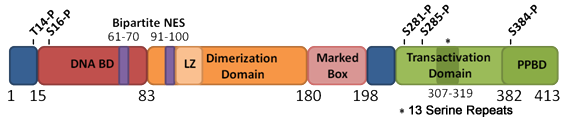
Description
Unlike E2F1, E2F2 and E2F3, which exhibit a cyclin A binding domain at their N-terminus, E2F4 has a truncated N-terminus and therefore does not harbor this domain (Beijersbergen et al., 1994; Sardet et al., 1995). The full E2F transcriptional activity requires its heterodimerization with a DP partner, although E2F transcription factors have been reported to bind DNA as homodimers (Bandara et al., 1993; Helin et al., 1993b; Huber et al., 1993; Krek et al., 1993). The DNA-binding domain of E2F4 was originally viewed as a helix-loop-helix DNA-binding motif (Kaelin et al., 1992; Cress et al., 1993). However, the crystal structure of E2F4-DP2 dimer by Zheng et al. rather reveals a structure related to the winged-helix DNA-binding motif. E2F4 and its DP partner bind to the E2F-consensus DNA sequence TTTC/GC/GCGC/G (Nevins, 1992; Slansky et al., 1993) by means of a conserved Arg-Arg-Xxx-Tyr-Asp sequence (Zheng et al., 1999). Binding specificity of E2F transcription factors to different target gene promoters is affected by the DNA sequence itself, E2F transcription factors, DP partners as well as other factors (Karlseder et al., 1996; Lin et al., 1996; Shin et al., 1996; Wells et al., 1997; Le Cam et al., 1999; Chen et al., 2002; Schlisio et al., 2002; Araki et al., 2003; Giangrande et al., 2003; Giangrande et al., 2004; Zhu et al., 2004).
The transactivation domain of E2F transcription factors, including E2F4, mediates target gene transcription through two distinct mechanisms: 1- by recruiting general transcription machinery such as TBP/TFIID, TFIIA and TFIIH which promote RNA pol II pre-initiation complex (PIC) assembly (Hagemeier et al., 1993; Emili and Ingles, 1995; Pearson and Greenblatt, 1997; Ross et al., 1999; Vandel and Kouzarides., 1999) and 2- by relaxing chromatin structure at promoters by interacting with histone acetyltransferases (HAT) such as Tip60 (Taubert et al., 2004), p300/CBP (Trouche and Kouzarides, 1996; Trouche et al., 1996; Martinez-Balbas et al., 2000; Marzio et al., 2000) and PCAF/GCN5 (Martinez-Balbas et al., 2000; Marzio et al., 2000; Lang et al., 2001). The transactivation domain also includes a pocket protein interacting domain. E2F4 interacts primarily with p130/RBL2, p107/RBL1 and to a lesser extent with Rb/RB1 (Beijersbergen et al., 1994; Ginsberg et al., 1994; Ikeda et al., 1996; Moberg et al., 1996; Li et al., 1997). Pocket proteins modulate E2F transcription factor activity via two different mechanisms: 1- by preventing general transcription machinery and chromatin-remodeling protein recruitment (Helin et al., 1992; Flemington et al., 1993; Hagemeier et al., 1993; Helin et al., 1993a; Pearson and Greenblatt., 1997) and 2- by actively repressing gene transcription (Harbour and Dean, 2000; Singh et al., 2010). In fact, pocket proteins have been shown to recruit histone deacetylase enzymes (HDACs) (Brehm et al., 1998; Luo et al., 1998; Dahiya et al., 2000), the histone methyltransferase SUV39H1 (Nielsen et al., 2001; Vandel et al., 2001), SWI/SNF family members (BRG1, Brm) (Dunaief et al., 1994; Singh et al., 1995; Strobeck et al., 2000; Zhang et al., 2000; Iakova et al., 2003), the Sin3B repressor complex (via RBP1 and SAP30) (David et al., 2008; Grandinetti and David., 2008) and the ErbB3 binding protein Ebp1 (Zhang et al., 2003), all of which contribute to chromatin compaction and thus, to transcriptional repression (Kouzarides, 2007).
During quiescence, E2F transcription factors are sequestered by hypophosphorylated forms of pocket proteins (pRb, p130 and p107) which prevent the activation of their target genes. Upon G1 progression, cyclin-dependent kinases (cdk)-cyclin complexes are activated and phosphorylate pocket proteins leading to the release of E2F transcription factors. Indeed, activation of cdk4 and cdk6, in association with cyclin D, leads to partial inactivation of Rb-like proteins. Further phosphorylation by cyclin E/cdk2 complex is required for total pocket protein inactivation and full release of E2F transcription factors. Thereafter, genes required for DNA synthesis and cell cycle progression are induced, allowing cells to enter S-phase and pursue their cell cycle (Cobrinik, 2005; Malumbres and Barbacid, 2009).
In addition to pocket protein-mediated regulation, E2F4 is also controlled by other mechanisms such as phosphorylation, antisenses (Yochum et al., 2007), reactive oxygen species (Kim and Lee, 2010), cofactors and mainly by its subcellular localization. Indeed, E2F4 protein levels are not significantly modulated during cell cycle progression; however, its nuclear localization is tightly regulated (Lindeman et al., 1997; Verona et al., 1997; Deschenes et al., 2004) (see below). Furthermore, many studies have reported E2F4 phosphorylation but only a few have associated these phosphorylation events with a specific function (Beijersbergen et al., 1994; Ginsberg et al., 1994; Vairo et al., 1995; Gaubatz et al., 2001; Popov et al., 2005; Araki et al., 2008; Scime et al., 2008; Van Hoof et al., 2009; Litovchick et al., 2011). For example, Araki et al., 2008 showed that E2F4 phosphorylation by IKKα and/or IKKβ leads to increased binding of the E2F4/p130 complex to DNA in TIG-3 human primary fibroblasts.
Finally, Balciunaite et al., 2005 suggested that in early G1, both p107 and p130 are absent of certain repressed E2F4 target promoters, suggesting that another repression mechanism must be implicated. Moreover, Rayman et al., 2002 reported that pocket proteins are not required for mSin3B recruitment to certain E2F-regulated promoters reinforcing the notion of a pocket protein-independent repression mechanism. Indeed, E2F4 can also recruit Host cell factor-1 (HCF-1), an important cell cycle regulator, which brings Sin3/HDAC complexes to E2F target gene promoters, repressing their transcription independently of pocket proteins (Tyagi et al., 2007).
Expression
Localisation
A number of studies have highlighted the importance of regulating the subcellular localization of E2F4 (Magae et al., 1996; Lindeman et al., 1997; Muller et al., 1997; Verona et al., 1997; Puri et al., 1997; Puri et al., 1998; Gill and Hamel, 2000; Deschenes et al., 2004). In immortalized fibroblasts and certain cancer cells, E2F4 is expressed in the nucleus of quiescent cells and as cells progress through G1 and enter the S phase, E2F4 translocates to the cytoplasm (Lindeman et al., 1997; Muller et al., 1997; Verona et al., 1997). In addition, overexpression of E2F4 in certain asynchronously growing cancer cells or fibroblasts revealed that E2F4 is primarily expressed in the cytoplasm (Magae et al., 1996; Lindeman et al., 1997; Muller et al., 1997; Verona et al., 1997). By contrast, endogenous E2F4 is found in the nucleus of proliferating basal epidermal cells (Paramio et al., 2000), proliferating intestinal crypt cells (Deschenes et al., 2004) and proliferating cardiomyocytes (van Amerongen et al., 2009). Likewise, overexpression of E2F4 in mice epidermis under the K5 promoter leads to E2F4 expression in the nucleus of cycling keratinocytes in the basal cell layer and the hair follicle resulting in hyperplasia and increased tumor formation in a mouse skin model of multistage carcinogenesis (Wang et al., 2000). Moreover, endogenous E2F4 is observed in the nucleus of many differentiated cells including ciliated epithelial cells (Danielian et al., 2007), myotubes (Puri et al., 1997; Puri et al., 1998) and neurons (Persengiev et al., 1999). Overall, these results suggest that E2F4 can act as either an activator or an inhibitor of transcription, proliferation and differentiation. Therefore, E2F4 localization control must be tightly regulated in a timely and restricted manner.
Function
Interestingly, loss of p107 and p130 triggers a massive E2F4 relocalization to the cytoplasm accompanied by a hyperacetylation of nucleosomes proximal to E2F binding sites, producing an important de-repression of E2F target genes (Rayman et al., 2002). Indeed, during quiescence, E2F4/p130 or E2F4/p107 complexes are associated with E2F-responsive genes and repress their transcription (Takahashi et al., 2000; Wells et al., 2000; Rayman et al., 2002). Recent data also implicate E2F4 as part of a multiprotein complex referred to as the DREAM complex (DP, RB-like, E2F4 and MuvB). In fact, the DREAM complex binds to the promoters of more than 800 cell cycle-regulated genes during quiescence and favors their repression (Litovchick et al., 2007; Schmit et al., 2007). This E2F4 repressing effect is also observed during cell cycle arrest associated with aging and differentiation. For example, in aging mice, reduced proliferation of hepatocytes is accompanied by the association of Brm1/C/EBPα/E2F4/Rb repressive complex to E2F target genes (Iakova et al., 2003). In keratinocytes, E2F4 in complex with p130 recruits HDAC1 and represses Cdc25A, correlating with cell cycle arrest (Iavarone and Massague, 1999).
In keeping with the above concept, (Grandinetti and David, 2008) proposed the following model. Upon entry into quiescence, repression of E2F responsive genes responsible for cell cycle progression is initiated by the recruitment of E2F4/5 bound to a Rb-like protein (pRb, p130, p107) to target promoters. Sin3B recruitment to the pocket protein is then brought by Retinoblastoma Binding protein 1 (RBP1) and Sin3 Associated Protein 30 (SAP30) adaptor proteins. Thereafter, Sin3B recruits HDACs, which desacetylate histones, and RBP2, a histone demethylase responsible for demethylation of histones on lysine 4. All of these events promote nucleosome assembly rendering chromatin less permissive to transcription. Upon permanent cell cycle withdrawal (terminal differentiation or senescence), further recruitment of SUV39H1 enables methylation of histones on lysine 9 creating docking sites for HP1 protein and thus driving heterochromatinization and stable repression of E2F target genes (Narita et al., 2003; Grandinetti and David, 2008).
Although E2F4 has been particularly described as a repressor of both transcription and cell cycle progression (Vairo et al., 1995; Muller et al., 1997; Rayman et al., 2002), several studies have reported other roles such as 1- its binding to E2F-responsive elements as a pocket protein-free E2F during S phase, 2- its capacity to induce E2F target genes and 3- its implication in proliferation. Hence, these studies suggest that E2F4 can also act as a transcriptional activator (Verona et al., 1997; Wells et al., 1997; Ross et al., 1999; Lang et al., 2001; Garneau et al., 2009; van Amerongen et al., 2009). For example, studies carried out by Lo et al., 2011 demonstrated that the majority of E2F4 binding sites are located proximal to transcription start sites. There, E2F4 has been shown to stabilize TFIID/TFIIA complex thereby preventing Rb repressor effect and promoting PIC assembly (Ross et al., 1999). E2F4 can recruit the potent acetyltransferase GCN5 and the cofactor TRRAP which promote E2F4 transcriptional activity (Lang et al., 2001). Host cell factor-1 also interacts with E2F4 and plays both co-activator (Knez et al., 2006) or co-repressor (Tyagi et al., 2007) roles in the regulation of E2F4-controlled promoters. Accordingly, forced expression of nuclear E2F4 promotes S-phase entry into cardiomyocytes (Ebelt et al., 2005; van Amerongen et al., 2009). Moreover, nuclear E2F4 expression is associated with proliferation of rapid renewing tissues such as bone marrow (Kinross et al., 2006; Zhang et al., 2010), digestive tract (Rempel et al., 2000; Garneau et al., 2009) and skin (Wang et al., 2000; Wang et al., 2001).
Many in vivo and in vitro studies have led to the identification of numerous roles of E2F4 in different cellular processes such as nervous system development, intestinal homeostasis, bone development, myogenesis, adipogenesis and erythropoiesis, to name a few. E2F4 gene deletion in mice leads to important neonatal lethality due to chronic rhinitis and increased susceptibility to opportunistic infections (Humbert et al., 2000). Many factors contribute to the observed neonatal lethality in these mice. First, ciliated cells are absent from the entire airway epithelium and are replaced by mucin-secreting cells, creating a mucus overflow in the nasal cavities allowing microbial colonization (Danielian et al., 2007). Secondly, sonic hedgehog (Shh) signaling is dysregulated which impairs eye patterning, self-renewal capacity of neural progenitor cells and ventral telencephalic structure formation during brain development (Ruzhynsky et al., 2007; Ruzhynsky et al., 2009; Swiss and Casaccia, 2010). Studies also highlighted E2F4 requirement for proper bone development, especially for calvarial ossification (Humbert et al., 2000; Miller et al., 2010). These generated craniofacial defects are thought to contribute to the aberrant accumulation of proteinaceous secretions in nasal cavities leading to lethality (Humbert et al., 2000). Thirdly, recall proliferation of CD8+ T-lymphocytes, which participate in viral infections control, is impaired (Bancos et al., 2009).
Aside from its role during brain development, implication of E2F4 in neuronal differentiation has been strengthened by in vitro studies using the pheochromocytoma line (PC-12 cells), which show reduced neuronal differentiation following E2F4 depletion and accelerated NGF-induced neuronal maturation with E2F4 overexpression (Persengiev et al., 1999). Other laboratories have also documented a role for E2F4 in repressing adipocyte differentiation independently of its cell cycle regulation properties but through PPARγ repression, a primordial factor in adipogenesis (Fajas et al., 2002; Landsberg et al., 2003; Tseng et al., 2005).
E2F4 also appears to play a critical role in rapid renewing tissues. In the gut, E2F4 is highly and preferentially expressed in the nucleus of proliferative cells (Dagnino et al., 1997b; Deschenes et al., 2004; Garneau et al., 2009). Loss of E2F4 in the small intestine results in a significant decline in proliferative zones (crypts) and a shortening and a reduction in the number of intestinal villi (Rempel et al., 2000). The role of E2F4 in maintaining intestinal homeostasis is also reinforced by the fact that it is overexpressed in the nucleus of colorectal cancer cells, contributing to hyperproliferation (Mady et al., 2002; Garneau et al., 2007; Garneau et al., 2009). In human and mouse epidermis, E2F4 is expressed in the basal and the immediately suprabasal cells, fading in upper cell layers (Dagnino et al., 1997b; Paramio et al., 2000; Wang et al., 2000; DSouza et al., 2001). Although E2F4 has been reported to contribute to cell cycle arrest and differentiation in keratinocytes (Iavarone and Massague., 1999; Paramio et al., 2000), overexpressed E2F4 increases keratinocyte proliferation leading to hyperplasia and to an increased response to a two-step skin carcinogenesis assay (Wang et al., 2000; Wang et al., 2001). Finally, E2F4-deficient mice display a marked macrocytic anemia caused by impaired cell cycle progression and proliferation of fetal erythroid precursors also accompanied by maturation defects in multiple other hematopoietic lineages (Rempel et al., 2000; Kinross et al., 2006; Zhang et al., 2010).
In addition to the roles identified in proliferation, differentiation and development, other unconventional functions have been attributed to E2F4. Indeed, E2F4 binds various genes having functions in mitochondrial biogenesis, metabolism, cytoskeleton and mRNA processing (Cam et al., 2004). Moreover, E2F4 is thought to regulate the expression of certain miRNAs (Lee et al., 2011), control DNA repair (Ren et al., 2002; DuPree et al., 2004; Bindra and Glazer, 2007; Crosby et al., 2007; Dominguez-Brauer et al., 2009; Hegan et al., 2010; Lee et al., 2011), control survival in certain specific cell contexts (Chang et al., 2000; Wang et al., 2000; Ebelt et al., 2005; Garneau et al., 2007; Yang et al., 2008; Lee et al., 2011) as well as regulate aging and senescence (Iakova et al., 2003; Litovchick et al., 2011; Martin et al., 2011). Lastly, although the majority of E2F4 binding sites are located near transcription start sites and contribute to direct activation or repression of transcription (Lee et al., 2011; Lo et al., 2011), many sites are frequently localized more than 20 kb away from any annotated transcription start sites, suggesting that E2F4 can also act as a long-range transcriptional regulator (Lee et al., 2011).
Homology
Implicated in
Many studies have reported the presence of mutations in E2F4 AGC trinucleotide repeats in colorectal cancer bearing microsatellite instability (MSI). The more frequent mutations observed are the deletion or the addition of a trinucleotide AGC and the deletion of 7 trinucleotides (Yoshitaka et al., 1996; Souza et al., 1997; Ikeda et al., 1998; Moriyama et al., 2002). Furthermore, Takashima et al., 2001, studied the impact of E2F4 mutations and observed an increase in nuclear expression, in transcriptional activity as well as in proliferation rate of fibroblasts overexpressing these mutants.
Kim et al., 1999, analyzed 56 gastric adenomas and 167 gastric carcinomas and found that frameshift mutations in E2F4 were more frequent in gastric adenomas than in carcinomas.
Comparative genomic hybridization (CGH) analysis revealed amplifications of chromosome arm 16q in 6/12 human transitional cell carcinoma (TCC) lines (more frequent in low-grade tumors) (Yu et al., 2001).
Using restriction fragment length polymorphism (RFLP) analysis on sixty-eight HCC specimens and their corresponding non-tumor liver tissues, a loss of heterozygosity was frequently observed on chromosome 16: specifically the MT2 locus at 16q21-22.1 (15%) and the HP locus at 16q22.1-22.2 (39%) (Sakai et al., 1992).
Loss of chromosomal material at 16q22.1 is one of the most frequent genetic aberrations found in breast carcinogenesis suggesting the presence of a tumor suppressor gene (TSG) at this region (Dorion-Bonnet et al., 1995; Iida et al., 1997; Cleton-Jansen et al., 2001). E2F4 is one of the candidate genes localized in this region and therefore was analyzed in different studies.
Ho et al., 2001, studied E2F4 protein expression in 10 primary breast carcinomas and 10 metastatic nodal tissues. The authors found a lower E2F4 protein expression in 7/10 primary breast carcinomas and in all (10/10) metastatic nodal tissues when compared to corresponding normal breast tissues. No tumor-specific mutation was detected, but polymorphisms were identified in the polyserine tract of E2F4 (3/11). Ho et al., 2001, further suggested that E2F4 is likely to function as a tumor suppressor in breast cancer.
Another group published two complementary and more in-depth studies arguing against the role of E2F4 as a TSG in breast cancer. Indeed, Rakha et al., 2005, used a Multiplex Amplifiable Probe Hybridization (MAPH) method to measure DNA copy-number at chromosome arm 16q22.1 in forty-nine invasive lobular, low-grade invasive ductal or tubular breast carcinoma samples. No correlation was detected between the expression of E2F4 with its genes copy number. Likewise, no significant loss or decrease in E2F4 protein levels was observed in malignant tissues. However, the authors did describe a correlation between increased nuclear expression of E2F4 and tumors with higher histological grade and positive lymph node disease whereas E2F4 was expressed in both the nuclei and cytoplasm in normal mammary epithelial cells, thus suggesting an oncogenic rather than a tumor suppressor role for this factor in breast cancer. The same group (Rakha et al., 2004) also analyzed 265 breast carcinomas for E2F4 protein expression and found a correlation between increased nuclear expression of E2F4 and indicators of poor prognosis including larger tumor size, grade 3 lesions, lymph node stage and poorer Nottingham prognostic index group. Increased E2F4 expression was also seen in association with the development of recurrent disease, distant metastasis and poorer outcome including poorer overall survival time and shorter disease-free interval.
Using serial analysis of gene expression (SAGE), Waghray et al., 2001, found that E2F4 was overexpressed by more than five-fold in prostate tumor tissues compared to the normal surrounding tissues. Immunohistochemistry analysis further revealed strong E2F4 staining in epithelial cells of tumor glands as opposed to weak to no staining in normal glands.
Komatsu et al., 2000, analyzed nine childhood acute lymphoblastic leukemia (ALL) samples, five acute myelocytic leukemia (AML) samples and ten adult T-cell leukemia (ATL) samples: frameshift mutations were found in E2F4 trinucleotide AGC repeats in 20% of ATL samples (3 AGC codon insertions) and in 11% of childhood ALL samples (6 AGC codon deletions).
Article Bibliography
| Pubmed ID | Last Year | Title | Authors |
|---|---|---|---|
| 12089160 | 2002 | Active nuclear import and export pathways regulate E2F-5 subcellular localization. | Apostolova MD et al |
| 18542057 | 2008 | IKK/NF-kappaB signaling pathway inhibits cell-cycle progression by a novel Rb-independent suppression system for E2F transcription factors. | Araki K et al |
| 14576826 | 2003 | Distinct recruitment of E2F family members to specific E2F-binding sites mediates activation and repression of the E2F1 promoter. | Araki K et al |
| 16135806 | 2005 | Pocket protein complexes are recruited to distinct targets in quiescent and proliferating cells. | Balciunaite E et al |
| 19306992 | 2009 | Dysfunctional memory CD8+ T cells after priming in the absence of the cell cycle regulator E2F4. | Bancos S et al |
| 8223441 | 1993 | Functional synergy between DP-1 and E2F-1 in the cell cycle-regulating transcription factor DRTF1/E2F. | Bandara LR et al |
| 7958925 | 1994 | E2F-4, a new member of the E2F gene family, has oncogenic activity and associates with p107 in vivo. | Beijersbergen RL et al |
| 17001309 | 2007 | Repression of RAD51 gene expression by E2F4/p130 complexes in hypoxia. | Bindra RS et al |
| 9468139 | 1998 | Retinoblastoma protein recruits histone deacetylase to repress transcription. | Brehm A et al |
| 15525513 | 2004 | A common set of gene regulatory networks links metabolism and growth inhibition. | Cam H et al |
| 11032021 | 2000 | Caspase-dependent apoptosis by ectopic expression of E2F-4. | Chang YC et al |
| 12150994 | 2002 | E2F4/5 and p107 as Smad cofactors linking the TGFbeta receptor to c-myc repression. | Chen CR et al |
| 19851314 | 2009 | Emerging roles of E2Fs in cancer: an exit from cell cycle control. | Chen HZ et al |
| 11221848 | 2001 | Loss of heterozygosity mapping at chromosome arm 16q in 712 breast tumors reveals factors that influence delineation of candidate regions. | Cleton-Jansen AM et al |
| 15838516 | 2005 | Pocket proteins and cell cycle control. | Cobrinik D et al |
| 8413230 | 1993 | A genetic analysis of the E2F1 gene distinguishes regulation by Rb, p107, and adenovirus E4. | Cress WD et al |
| 17043659 | 2007 | E2F4 regulates a stable G2 arrest response to genotoxic stress in prostate carcinoma. | Crosby ME et al |
| 11319226 | 2001 | Ca2+ and BMP-6 signaling regulate E2F during epidermal keratinocyte differentiation. | D'Souza SJ et al |
| 9149906 | 1997 | Expression patterns of the E2F family of transcription factors during murine epithelial development. | Dagnino L et al |
| 10958676 | 2000 | Role of the LXCXE binding site in Rb function. | Dahiya A et al |
| 17383628 | 2007 | E2f4 is required for normal development of the airway epithelium. | Danielian PS et al |
| 18332431 | 2008 | Specific requirement of the chromatin modifier mSin3B in cell cycle exit and cellular differentiation. | David G et al |
| 12020800 | 2002 | The genetics of the E2F family of transcription factors: shared functions and unique roles. | DeGregori J et al |
| 15040009 | 2004 | The nucleocytoplasmic shuttling of E2F4 is involved in the regulation of human intestinal epithelial cell proliferation and differentiation. | Deschênes C et al |
| 19644500 | 2009 | ARF stimulates XPC to trigger nucleotide excision repair by regulating the repressor complex of E2F4. | Dominguez-Brauer C et al |
| 8589033 | 1995 | Allelic imbalance study of 16q in human primary breast carcinomas using microsatellite markers. | Dorion-Bonnet F et al |
| 15231644 | 2004 | Genotoxic stress induces expression of E2F4, leading to its association with p130 in prostate carcinoma cells. | DuPree EL et al |
| 7923370 | 1994 | The retinoblastoma protein and BRG1 form a complex and cooperate to induce cell cycle arrest. | Dunaief JL et al |
| 15718499 | 2005 | Divergent siblings: E2F2 and E2F4 but not E2F1 and E2F3 induce DNA synthesis in cardiomyocytes without activation of apoptosis. | Ebelt H et al |
| 7775419 | 1995 | Promoter-dependent photocross-linking of the acidic transcriptional activator E2F-1 to the TATA-binding protein. | Emili A et al |
| 12110166 | 2002 | E2Fs regulate adipocyte differentiation. | Fajas L et al |
| 8346196 | 1993 | E2F-1-mediated transactivation is inhibited by complex formation with the retinoblastoma susceptibility gene product. | Flemington EK et al |
| 15126619 | 2004 | Molecular mechanisms of E2F-dependent activation and pRB-mediated repression. | Frolov MV et al |
| 17656449 | 2007 | Nuclear expression of E2F4 induces cell death via multiple pathways in normal human intestinal epithelial crypt cells but not in colon cancer cells. | Garneau H et al |
| 19562678 | 2009 | E2F4 expression is required for cell cycle progression of normal intestinal crypt cells and colorectal cancer cells. | Garneau H et al |
| 11158323 | 2001 | E2F4 is exported from the nucleus in a CRM1-dependent manner. | Gaubatz S et al |
| 15014447 | 2004 | Combinatorial gene control involving E2F and E Box family members. | Giangrande PH et al |
| 10725332 | 2000 | Subcellular compartmentalization of E2F family members is required for maintenance of the postmitotic state in terminally differentiated muscle. | Gill RM et al |
| 7958924 | 1994 | E2F-4, a new member of the E2F transcription factor family, interacts with p107. | Ginsberg D et al |
| 18469515 | 2008 | Sin3B: an essential regulator of chromatin modifications at E2F target promoters during cell cycle withdrawal. | Grandinetti KB et al |
| 8255752 | 1993 | The retinoblastoma protein binds E2F residues required for activation in vivo and TBP binding in vitro. | Hagemeier C et al |
| 11018009 | 2000 | The Rb/E2F pathway: expanding roles and emerging paradigms. | Harbour JW et al |
| 20133863 | 2010 | Inhibition of poly(ADP-ribose) polymerase down-regulates BRCA1 and RAD51 in a pathway mediated by E2F4 and p130. | Hegan DC et al |
| 8413249 | 1993 | Inhibition of E2F-1 transactivation by direct binding of the retinoblastoma protein. | Helin K et al |
| 1638634 | 1992 | A cDNA encoding a pRB-binding protein with properties of the transcription factor E2F. | Helin K et al |
| 8405995 | 1993 | Heterodimerization of the transcription factors E2F-1 and DP-1 leads to cooperative trans-activation. | Helin K et al |
| 11759817 | 2001 | Expression of E2F-1 and E2F-4 is reduced in primary and metastatic breast carcinomas. | Ho GH et al |
| 8475102 | 1993 | Transcription factor E2F binds DNA as a heterodimer. | Huber HE et al |
| 10983976 | 2000 | E2F4 is essential for normal erythrocyte maturation and neonatal viability. | Humbert PO et al |
| 12757710 | 2003 | Aging reduces proliferative capacities of liver by switching pathways of C/EBPalpha growth arrest. | Iakova P et al |
| 9858615 | 1999 | E2F and histone deacetylase mediate transforming growth factor beta repression of cdc25A during keratinocyte cell cycle arrest. | Iavarone A et al |
| 9010036 | 1997 | Localization of a breast cancer tumour-suppressor gene to a 3-cM interval within chromosomal region 16q22. | Iida A et al |
| 9485005 | 1998 | Close correlation between mutations of E2F4 and hMSH3 genes in colorectal cancers with microsatellite instability. | Ikeda M et al |
| 8622916 | 1996 | A unique role for the Rb protein in controlling E2F accumulation during cell growth and differentiation. | Ikeda MA et al |
| 1638635 | 1992 | Expression cloning of a cDNA encoding a retinoblastoma-binding protein with E2F-like properties. | Kaelin WG Jr et al |
| 8657141 | 1996 | Interaction of Sp1 with the growth- and cell cycle-regulated transcription factor E2F. | Karlseder J et al |
| 10496529 | 1999 | Accumulated frameshift mutations at coding nucleotide repeats during the progression of gastric carcinoma with microsatellite instability. | Kim JJ et al |
| 21311680 | 2010 | Curcumin Induces Downregulation of E2F4 Expression and Apoptotic Cell Death in HCT116 Human Colon Cancer Cells; Involvement of Reactive Oxygen Species. | Kim KC et al |
| 16861343 | 2006 | E2f4 regulates fetal erythropoiesis through the promotion of cellular proliferation. | Kinross KM et al |
| 16633736 | 2006 | Host cell factor-1 and E2F4 interact via multiple determinants in each protein. | Knez J et al |
| 10666234 | 2000 | Mutations of the E2F4 gene in hematological malignancies having microsatellite instability. | Komatsu N et al |
| 17320507 | 2007 | Chromatin modifications and their function. | Kouzarides T et al |
| 8248803 | 1993 | Binding to DNA and the retinoblastoma gene product promoted by complex formation of different E2F family members. | Krek W et al |
| 12604789 | 2003 | The role of E2F4 in adipogenesis is independent of its cell cycle regulatory activity. | Landsberg RL et al |
| 11418595 | 2001 | E2F transcriptional activation requires TRRAP and GCN5 cofactors. | Lang SE et al |
| 10202151 | 1999 | Timing of cyclin E gene expression depends on the regulated association of a bipartite repressor element with a novel E2F complex. | Le Cam L et al |
| 21247883 | 2011 | Wide-ranging functions of E2F4 in transcriptional activation and repression revealed by genome-wide analysis. | Lee BK et al |
| 9144170 | 1997 | E2F4-RB and E2F4-p107 complexes suppress gene expression by transforming growth factor beta through E2F binding sites. | Li JM et al |
| 8657142 | 1996 | Cell cycle-regulated association of E2F1 and Sp1 is related to their functional interaction. | Lin SY et al |
| 9144196 | 1997 | The subcellular localization of E2F-4 is cell-cycle dependent. | Lindeman GJ et al |
| 21498570 | 2011 | DYRK1A protein kinase promotes quiescence and senescence through DREAM complex assembly. | Litovchick L et al |
| 21655096 | 2011 | Genome-wide profiling of H3K56 acetylation and transcription factor binding sites in human adipocytes. | Lo KA et al |
| 15169882 | 2004 | ACTR/AIB1 functions as an E2F1 coactivator to promote breast cancer cell proliferation and antiestrogen resistance. | Louie MC et al |
| 9491888 | 1998 | Rb interacts with histone deacetylase to repress transcription. | Luo RX et al |
| 12373148 | 2002 | Expression of E2F-4 gene in colorectal adenocarcinoma and corresponding covering mucosa: an immunohistochemistry, image analysis, and immunoblot study. | Mady HH et al |
| 8832394 | 1996 | Nuclear localization of DP and E2F transcription factors by heterodimeric partners and retinoblastoma protein family members. | Magae J et al |
| 19238148 | 2009 | Cell cycle, CDKs and cancer: a changing paradigm. | Malumbres M et al |
| 22002537 | 2012 | Physical and functional interaction between PML and TBX2 in the establishment of cellular senescence. | Martin N et al |
| 10675335 | 2000 | Regulation of E2F1 activity by acetylation. | Martínez-Balbás MA et al |
| 10753885 | 2000 | E2F family members are differentially regulated by reversible acetylation. | Marzio G et al |
| 9708738 | 1998 | The novel ATM-related protein TRRAP is an essential cofactor for the c-Myc and E2F oncoproteins. | McMahon SB et al |
| 20581455 | 2010 | Disruption of calvarial ossification in E2f4 mutant embryos correlates with increased proliferation and progenitor cell populations. | Miller ES et al |
| 8657117 | 1996 | E2F-4 switches from p130 to p107 and pRB in response to cell cycle reentry. | Moberg K et al |
| 12148576 | 2002 | E2F-4 mutation in hereditary non-polyposis colorectal cancer. | Moriyama H et al |
| 9271426 | 1997 | Induction of S-phase entry by E2F transcription factors depends on their nuclear localization. | Müller H et al |
| 12809602 | 2003 | Rb-mediated heterochromatin formation and silencing of E2F target genes during cellular senescence. | Narita M et al |
| 1411535 | 1992 | E2F: a link between the Rb tumor suppressor protein and viral oncoproteins. | Nevins JR et al |
| 11484059 | 2001 | Rb targets histone H3 methylation and HP1 to promoters. | Nielsen SJ et al |
| 11439366 | 2001 | Microsatellite alterations and target gene mutations in the early stages of multiple gastric cancer. | Ogata S et al |
| 11005809 | 2000 | Opposite functions for E2F1 and E2F4 in human epidermal keratinocyte differentiation. | Paramio JM et al |
| 9400991 | 1997 | Modular organization of the E2F1 activation domain and its interaction with general transcription factors TBP and TFIIH. | Pearson A et al |
| 10454552 | 1999 | E2F4 actively promotes the initiation and maintenance of nerve growth factor-induced cell differentiation. | Persengiev SP et al |
| 16153605 | 2005 | Cell cycle-related transformation of the E2F4-p130 repressor complex. | Popov B et al |
| 9121766 | 1997 | MyoD prevents cyclinA/cdk2 containing E2F complexes formation in terminally differentiated myocytes. | Puri PL et al |
| 9537223 | 1998 | Regulation of E2F4 mitogenic activity during terminal differentiation by its heterodimerization partners for nuclear translocation. | Puri PL et al |
| 15609312 | 2005 | High-resolution analysis of 16q22.1 in breast carcinoma using DNA amplifiable probes (multiplex amplifiable probe hybridization technique) and immunohistochemistry. | Rakha EA et al |
| 15221934 | 2004 | Expression of E2F-4 in invasive breast carcinomas is associated with poor prognosis. | Rakha EA et al |
| 11959842 | 2002 | E2F mediates cell cycle-dependent transcriptional repression in vivo by recruitment of an HDAC1/mSin3B corepressor complex. | Rayman JB et al |
| 10983977 | 2000 | Loss of E2F4 activity leads to abnormal development of multiple cellular lineages. | Rempel RE et al |
| 11799067 | 2002 | E2F integrates cell cycle progression with DNA repair, replication, and G(2)/M checkpoints. | Ren B et al |
| 10078202 | 1999 | Mechanism of transcriptional repression of E2F by the retinoblastoma tumor suppressor protein. | Ross JF et al |
| 19325228 | 2009 | E2F4 is required for early eye patterning. | Ruzhynsky VA et al |
| 1351753 | 1992 | Loss of heterozygosity on chromosome 16 in hepatocellular carcinoma. | Sakai K et al |
| 7892279 | 1995 | E2F-4 and E2F-5, two members of the E2F family, are expressed in the early phases of the cell cycle. | Sardet C et al |
| 12411495 | 2002 | Interaction of YY1 with E2Fs, mediated by RYBP, provides a mechanism for specificity of E2F function. | Schlisio S et al |
| 17671431 | 2007 | LINC, a human complex that is related to pRB-containing complexes in invertebrates regulates the expression of G2/M genes. | Schmit F et al |
| 17894419 | 2008 | Cyclin D1/cdk4 can interact with E2F4/DP1 and disrupts its DNA-binding capacity. | Scimè A et al |
| 8647824 | 1996 | The N-terminal region of E2F-1 is required for transcriptional activation of a new class of target promoter. | Shin EK et al |
| 7700385 | 1995 | A role for retinoblastoma protein in potentiating transcriptional activation by the glucocorticoid receptor. | Singh P et al |
| 20637913 | 2010 | Small molecule regulators of Rb-E2F pathway as modulators of transcription. | Singh S et al |
| 8441401 | 1993 | A protein synthesis-dependent increase in E2F1 mRNA correlates with growth regulation of the dihydrofolate reductase promoter. | Slansky JE et al |
| 9192806 | 1997 | Frequent mutation of the E2F-4 cell cycle gene in primary human gastrointestinal tumors. | Souza RF et al |
| 12667479 | 2003 | E2F and cell cycle control: a double-edged sword. | Stevens C et al |
| 10884406 | 2000 | BRG-1 is required for RB-mediated cell cycle arrest. | Strobeck MW et al |
| 19795505 | 2010 | Cell-context specific role of the E2F/Rb pathway in development and disease. | Swiss VA et al |
| 10766737 | 2000 | Analysis of promoter binding by the E2F and pRB families in vivo: distinct E2F proteins mediate activation and repression. | Takahashi Y et al |
| 11706064 | 2001 | Effect of naturally occurring E2F-4 alterations on transcriptional activation and proliferation in transfected cells. | Takashima H et al |
| 15121871 | 2004 | E2F-dependent histone acetylation and recruitment of the Tip60 acetyltransferase complex to chromatin in late G1. | Taubert S et al |
| 11823794 | 2002 | Sibling rivalry in the E2F family. | Trimarchi JM et al |
| 8932363 | 1996 | The CBP co-activator stimulates E2F1/DP1 activity. | Trouche D et al |
| 8643650 | 1996 | E2F1 and E1A(12S) have a homologous activation domain regulated by RB and CBP. | Trouche D et al |
| 16213134 | 2005 | Involvement of E2F transcription factor family in cancer. | Tsantoulis PK et al |
| 15895078 | 2005 | Prediction of preadipocyte differentiation by gene expression reveals role of insulin receptor substrates and necdin. | Tseng YH et al |
| 17612494 | 2007 | E2F activation of S phase promoters via association with HCF-1 and the MLL family of histone H3K4 methyltransferases. | Tyagi S et al |
| 7705662 | 1995 | Functional interaction between E2F-4 and p130: evidence for distinct mechanisms underlying growth suppression by different retinoblastoma protein family members. | Vairo G et al |
| 19664995 | 2009 | Phosphorylation dynamics during early differentiation of human embryonic stem cells. | Van Hoof D et al |
| 10428966 | 1999 | Residues phosphorylated by TFIIH are required for E2F-1 degradation during S-phase. | Vandel L et al |
| 11533237 | 2001 | Transcriptional repression by the retinoblastoma protein through the recruitment of a histone methyltransferase. | Vandel L et al |
| 9372959 | 1997 | E2F activity is regulated by cell cycle-dependent changes in subcellular localization. | Verona R et al |
| 11358857 | 2001 | Identification of differentially expressed genes by serial analysis of gene expression in human prostate cancer. | Waghray A et al |
| 11429786 | 2001 | Deregulated expression of DP1 induces epidermal proliferation and enhances skin carcinogenesis. | Wang D et al |
| 10913163 | 2000 | Target gene specificity of E2F and pocket protein family members in living cells. | Wells J et al |
| 9020173 | 1997 | Accumulation of E2F-4.DP-1 DNA binding complexes correlates with induction of dhfr gene expression during the G1 to S phase transition. | Wells JM et al |
| 18504435 | 2008 | Rb/E2F4 and Smad2/3 link survivin to TGF-beta-induced apoptosis and tumor progression. | Yang J et al |
| 17121828 | 2007 | An antisense transcript induced by Wnt/beta-catenin signaling decreases E2F4. | Yochum GS et al |
| 8878551 | 1996 | Mutations of E2F-4 trinucleotide repeats in colorectal cancer with microsatellite instability. | Yoshitaka T et al |
| 11412232 | 2001 | Detection of chromosomal alterations in bladder cancer by comparative genomic hybridization. | Yu DS et al |
| 11420730 | 2001 | Rb-mediated chromatin structure regulation and transcriptional repression. | Zhang HS et al |
| 10778858 | 2000 | Exit from G1 and S phase of the cell cycle is regulated by repressor complexes containing HDAC-Rb-hSWI/SNF and Rb-hSWI/SNF. | Zhang HS et al |
| 20023434 | 2010 | pRB and E2F4 play distinct cell-intrinsic roles in fetal erythropoiesis. | Zhang J et al |
| 12682367 | 2003 | Repression of E2F1-mediated transcription by the ErbB3 binding protein Ebp1 involves histone deacetylases. | Zhang Y et al |
| 10090723 | 1999 | Structural basis of DNA recognition by the heterodimeric cell cycle transcription factor E2F-DP. | Zheng N et al |
| 15510213 | 2004 | E2Fs link the control of G1/S and G2/M transcription. | Zhu W et al |
| 19955219 | 2010 | E2F4 is required for cardiomyocyte proliferation. | van Amerongen MJ et al |
Other Information
Locus ID:
NCBI: 1874
MIM: 600659
HGNC: 3118
Ensembl: ENSG00000205250
Variants:
dbSNP: 1874
ClinVar: 1874
TCGA: ENSG00000205250
COSMIC: E2F4
RNA/Proteins
Expression (GTEx)
Pathways
References
| Pubmed ID | Year | Title | Citations |
|---|---|---|---|
| 37349788 | 2023 | Enhancer-driven transcription of MCM8 by E2F4 promotes ATR pathway activation and glioma stem cell characteristics. | 0 |
| 37567906 | 2023 | Transcriptional induction of NF-κB-inducing kinase by E2F4/5 facilitates collective invasion of GBM cells. | 2 |
| 37349788 | 2023 | Enhancer-driven transcription of MCM8 by E2F4 promotes ATR pathway activation and glioma stem cell characteristics. | 0 |
| 37567906 | 2023 | Transcriptional induction of NF-κB-inducing kinase by E2F4/5 facilitates collective invasion of GBM cells. | 2 |
| 35262965 | 2022 | E2F4 may be a core transcription factor in the lncRNA-TF regulatory network in cervical cancer. | 3 |
| 35840663 | 2022 | E2F4 transcription factor is a prognostic biomarker related to immune infiltration of head and neck squamous cell carcinoma. | 0 |
| 36567912 | 2022 | High Expression of E2F4 Is an Adverse Prognostic Factor and Related to Immune Infiltration in Oral Squamous Cell Carcinoma. | 1 |
| 35262965 | 2022 | E2F4 may be a core transcription factor in the lncRNA-TF regulatory network in cervical cancer. | 3 |
| 35840663 | 2022 | E2F4 transcription factor is a prognostic biomarker related to immune infiltration of head and neck squamous cell carcinoma. | 0 |
| 36567912 | 2022 | High Expression of E2F4 Is an Adverse Prognostic Factor and Related to Immune Infiltration in Oral Squamous Cell Carcinoma. | 1 |
| 33609534 | 2021 | Involvement of TFAP2A in the activation of GSDMD gene promoter in hyperoxia-induced ALI. | 2 |
| 33767277 | 2021 | Genome-wide transcriptome study in skin biopsies reveals an association of E2F4 with cadasil and cognitive impairment. | 4 |
| 34260288 | 2021 | E2F4's cytoplasmic role in multiciliogenesis is mediated via an N-terminal domain that binds two components of the centriole replication machinery, Deup1 and SAS6. | 2 |
| 33609534 | 2021 | Involvement of TFAP2A in the activation of GSDMD gene promoter in hyperoxia-induced ALI. | 2 |
| 33767277 | 2021 | Genome-wide transcriptome study in skin biopsies reveals an association of E2F4 with cadasil and cognitive impairment. | 4 |
Citation
Marie-Christine Paquin ; Nathalie Rivard
E2F4 (E2F transcription factor 4, p107/p130-binding)
Atlas Genet Cytogenet Oncol Haematol. 2012-03-01
Online version: http://atlasgeneticsoncology.org/gene/40385/e2f4
