HSPD1 (Heat Shock 60kDa Protein 1)
2014-10-01 Cappello Francesco , Conway de Macario Everly , Macario Alberto JL AffiliationIdentity

Abstract
The HSPD1 gene encodes a protein known as HSP60 or Hsp60, also commonly referred to as Cpn60. This protein is a molecular chaperone typically localized inside mitochondria where it forms a chaperoning machine with HSP10 (encoded by the HSPE1 gene), also called Cpn10, to assist protein folding inside the organelle. Hsp60 also occurs in the cytosol, plasma-cell membrane, intercellular space, and blood. Its functions in all these extramitochondrial locations are poorly understood. While the canonical functions of Hsp60 are considered to be cytoprotective, anti-stress and maintenance of protein homeostasis, other roles are currently being investigated. For example, Hsp60 participates in the pathogenesis of diseases in various ways in certain types of cancer, and chronic inflammatory and autoimmune pathological conditions. These are considered chaperonopathies by mistake, in which a normal chaperone (normal at least as far as it can be determined by current methods to study the structure of a molecule available only at extremely low concentrations and quantities) turns against the organism instead of protecting it, favouring the growth and dissemination of cancer cells, or the initiation-progression of inflammation, for instance. In addition, Hsp60 mutations cause at least two types of severe genetic chaperonopathies. All this knowledge is expanding nowadays clearly pointing to Hsp60 as a potential target for chaperonotherapy by replacement when it is defective or by inhibition when it is pathogenic.
DNA/RNA
Description
Transcription
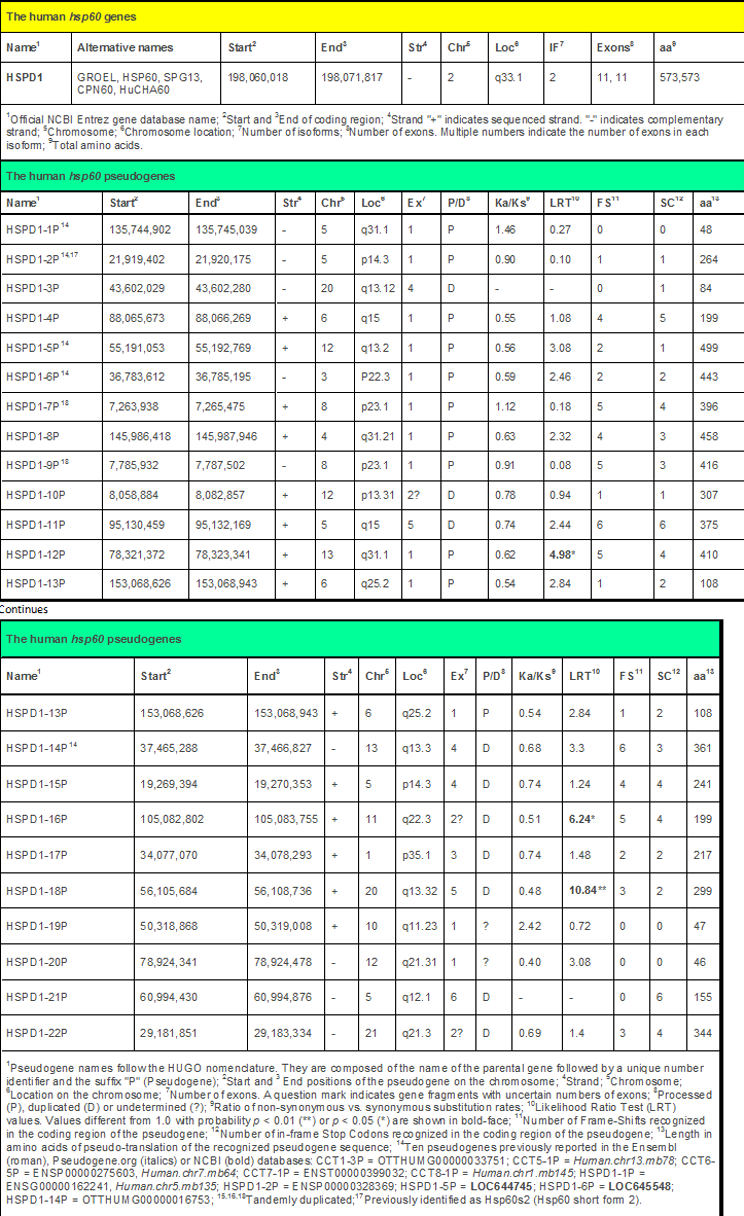
Pseudogene
Proteins
Description
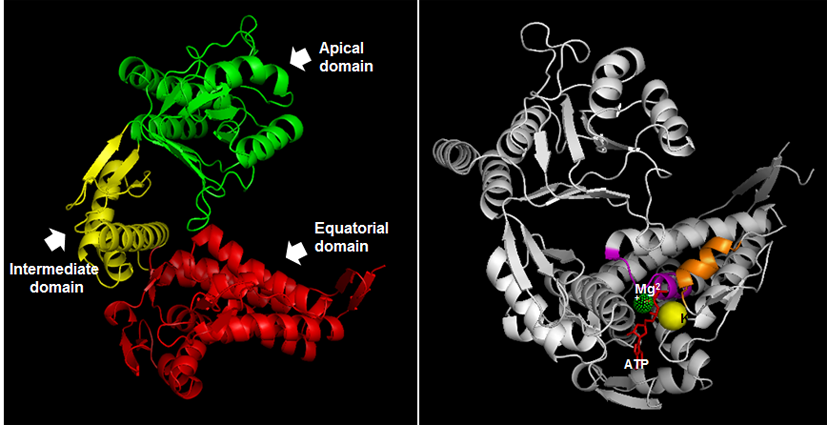
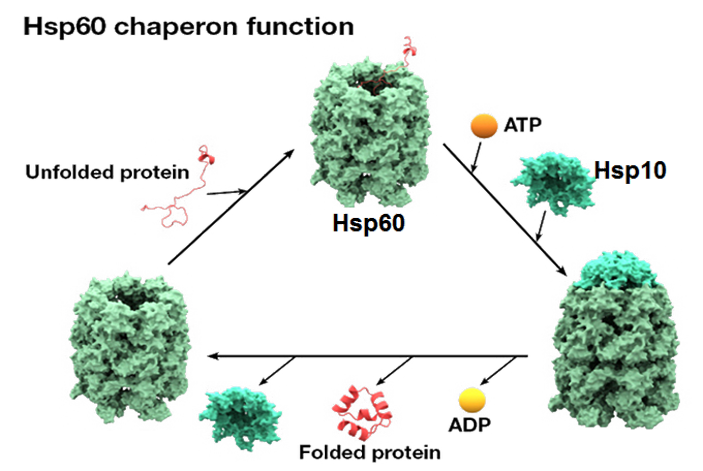
HSP60 belongs to the chaperone subgroup called chaperonins, of which two varieties are known: chaperonins of Group I and chaperonins of Group II. The former include the human HSP60 typically present in the mitochondria (but also occurring in other locations as described above) and the bacterial GroEL. Chaperonins of Group II include the archaeal thermosome subunits and the cytosolic chaperonin CCT (Chaperonin-containing TCP-1). The human HSP60 and the bacterial GroEL form oligomers: seven monomers associate to form a ring and two rings associate end to end to build a large chaperoning machine of fourteen subunits, all identical. This tetradecamer is the HSP60 functional chaperoning complex that associates with Hsp60 and requires ATP and ATPase activity for the folding of substrates (Cappello et al., 2014).
Expression
Localisation
Function
Homology
Mutations
Germinal
Somatic
General note:
HSP60 expression (mRNA) and levels (protein) were elevated, decreased or without changes in a number of cancers studied by independent groups with various techniques. For a review on this topic see: Czarnecka et al., 2006; Cappello et al., 2008; Rappa et al., 2012; Macario et al., 2013). Moreover, cancer cells, but not the normal counterparts release HSP60 via exosomes (Merendino et al., 2010; Campanella et al., 2012). Further studies on this topic are currently under way to better understand why Hsp60 levels change during carcinogenesis and what is the role of this protein in cancer progression
Epigenetics
Implicated in
Article Bibliography
| Pubmed ID | Last Year | Title | Authors |
|---|---|---|---|
| 22212075 | 2012 | Precursors of prostate cancer. | Bostwick DG et al |
| 9476895 | 1998 | The Hsp70 and Hsp60 chaperone machines. | Bukau B et al |
| 22848686 | 2012 | The odyssey of Hsp60 from tumor cells to other destinations includes plasma membrane-associated stages and Golgi and exosomal protein-trafficking modalities. | Campanella C et al |
| 24286280 | 2014 | Hsp60 chaperonopathies and chaperonotherapy: targets and agents. | Cappello F et al |
| 20708221 | 2010 | Immunohistochemical expression of Hsp60 correlates with tumor progression and hormone resistance in prostate cancer. | Castilla C et al |
| 16112431 | 2005 | Immunohistochemical evaluation of heat shock proteins in normal and preinvasive lesions of the cervix. | Castle PE et al |
| 11156417 | 2000 | Heat shock protein expression independently predicts clinical outcome in prostate cancer. | Cornford PA et al |
| 19913561 | 2010 | Human Hsp10 and Early Pregnancy Factor (EPF) and their relationship and involvement in cancer and immunity: current knowledge and perspectives. | Corrao S et al |
| 16861898 | 2006 | Mitochondrial chaperones in cancer: from molecular biology to clinical diagnostics. | Czarnecka AM et al |
| 22458905 | 2012 | Implications of the International Society of Urological Pathology modified Gleason grading system. | Egevad L et al |
| 10221986 | 1999 | Chaperone-mediated protein folding. | Fink AL et al |
| 22258649 | 2012 | The molecular anatomy of human Hsp60 and its similarity with that of bacterial orthologs and acetylcholine receptor reveal a potential pathogenetic role of anti-chaperonin immunity in myasthenia gravis. | Gammazza AM et al |
| 23337842 | 2013 | Abnormal cytology in 2012: management of atypical squamous cells, low-grade intraepithelial neoplasia, and high-grade intraepithelial neoplasia. | Garrett LA et al |
| 19132982 | 2008 | Heat shock proteins 27, 60 and 70 as prognostic markers of prostate cancer. | Glaessgen A et al |
| 18575266 | 2008 | Unusual cellular disposition of the mitochondrial molecular chaperones Hsp60, Hsp70 and Hsp10. | Gupta RS et al |
| 15784164 | 2005 | HSP60, Bax, apoptosis and the heart. | Gupta S et al |
| 21973086 | 2011 | Identification and verification of heat shock protein 60 as a potential serum marker for colorectal cancer. | Hamelin C et al |
| 12483302 | 2003 | Genomic structure of the human mitochondrial chaperonin genes: HSP60 and HSP10 are localised head to head on chromosome 2 separated by a bidirectional promoter. | Hansen JJ et al |
| 11898127 | 2002 | Hereditary spastic paraplegia SPG13 is associated with a mutation in the gene encoding the mitochondrial chaperonin Hsp60. | Hansen JJ et al |
| 21136683 | 2007 | Proteomics-based identification of HSP60 as a tumor-associated antigen in colorectal cancer. | He Y et al |
| 16705742 | 2006 | Proteomic comparison of prostate cancer cell lines LNCaP-FGC and LNCaP-r reveals heatshock protein 60 as a marker for prostate malignancy. | Johansson B et al |
| 8466626 | 1993 | Sequence homologies between hsp60 and autoantigens. | Jones DB et al |
| 19875724 | 2009 | Extracellular heat shock protein 60, cardiac myocytes, and apoptosis. | Kim SC et al |
| 12070120 | 2002 | Cytosolic heat shock protein 60, apoptosis, and myocardial injury. | Kirchhoff SR et al |
| 9602430 | 1998 | Differential expression of heat shock proteins in normal and failing human hearts. | Knowlton AA et al |
| 12942564 | 2003 | Heat shock proteins HSP27, HSP60, HSP70, and HSP90: expression in bladder carcinoma. | Lebret T et al |
| 17675567 | 2007 | HSP60 in heart failure: abnormal distribution and role in cardiac myocyte apoptosis. | Lin L et al |
| 25457014 | 2015 | Active surveillance for prostate cancer: a systematic review of clinicopathologic variables and biomarkers for risk stratification. | Loeb S et al |
| 18571143 | 2008 | Mitochondrial hsp60 chaperonopathy causes an autosomal-recessive neurodegenerative disorder linked to brain hypomyelination and leukodystrophy. | Magen D et al |
| 24057177 | 2014 | Elevated blood Hsp60, its structural similarities and cross-reactivity with thyroid molecules, and its presence on the plasma membrane of oncocytes point to the chaperonin as an immunopathogenic factor in Hashimoto's thyroiditis. | Marino Gammazza A et al |
| 20169074 | 2010 | Hsp60 is actively secreted by human tumor cells. | Merendino AM et al |
| 16308103 | 2005 | Differential expression of Janus kinase 3 (JAK3), matrix metalloproteinase 13 (MMP13), heat shock protein 60 (HSP60), and mouse double minute 2 (MDM2) in human colorectal cancer progression using human cancer cDNA microarrays. | Mori D et al |
| 20193073 | 2010 | Chaperonin genes on the rise: new divergent classes and intense duplication in human and other vertebrate genomes. | Mukherjee K et al |
| 23225410 | 2012 | HSP-molecular chaperones in cancer biogenesis and tumor therapy: an overview. | Rappa F et al |
| 20390473 | 2010 | Hsp60 and Hsp10 increase in colon mucosa of Crohn’s disease and ulcerative colitis. | Rodolico V et al |
| 18229457 | 2007 | Plasma heat shock protein 60 and cardiovascular disease risk: the role of psychosocial, genetic, and biological factors. | Shamaei-Tousi A et al |
| 20977276 | 2011 | Proteomics profiling of microdissected low- and high-grade prostate tumors identifies Lamin A as a discriminatory biomarker. | Skvortsov S et al |
| 11525836 | 2001 | Unfolding the role of chaperones and chaperonins in human disease. | Slavotinek AM et al |
| 10322429 | 1999 | Mitochondrial-matrix proteins at unexpected locations: are they exported? | Soltys BJ et al |
| 11340060 | 2001 | Chaperonin-mediated protein folding. | Thirumalai D et al |
| 21441812 | 2011 | Changes in immunohistochemical levels and subcellular localization after therapy and correlation and colocalization with CD68 suggest a pathogenetic role of Hsp60 in ulcerative colitis. | Tomasello G et al |
| 17095522 | 2007 | HSP60 may predict good pathological response to neoadjuvant chemoradiotherapy in bladder cancer. | Urushibara M et al |
| 25027488 | 2014 | The role of heat shock proteins in atherosclerosis. | Wick G et al |
| 21671464 | 2011 | Heat shock protein-60 expression was significantly correlated with the prognosis of lung adenocarcinoma. | Xu X et al |
Other Information
Locus ID:
NCBI: 3329
MIM: 118190
HGNC: 5261
Ensembl: ENSG00000144381
Variants:
dbSNP: 3329
ClinVar: 3329
TCGA: ENSG00000144381
COSMIC: HSPD1
RNA/Proteins
Expression (GTEx)
Pathways
Protein levels (Protein atlas)
References
| Pubmed ID | Year | Title | Citations |
|---|---|---|---|
| 37694354 | 2024 | Potential association of HSPD1 with dysregulations in ribosome biogenesis and immune cell infiltration in lung adenocarcinoma: An integrated bioinformatic approach. | 1 |
| 38663552 | 2024 | Knockdown of heat shock protein family D member 1 (HSPD1) in lung cancer cell altered secretome profile and cancer-associated fibroblast induction. | 1 |
| 37694354 | 2024 | Potential association of HSPD1 with dysregulations in ribosome biogenesis and immune cell infiltration in lung adenocarcinoma: An integrated bioinformatic approach. | 1 |
| 38663552 | 2024 | Knockdown of heat shock protein family D member 1 (HSPD1) in lung cancer cell altered secretome profile and cancer-associated fibroblast induction. | 1 |
| 36520371 | 2023 | Reactivity to neural tissue epitopes, aquaporin 4 and heat shock protein 60 is associated with activated immune-inflammatory pathways and the onset of delirium following hip fracture surgery. | 0 |
| 36625202 | 2023 | Ectopic CH60 mediates HAPLN1-induced cell survival signaling in multiple myeloma. | 2 |
| 36692509 | 2023 | Chaperonin counteracts diet-induced non-alcoholic fatty liver disease by aiding sirtuin 3 in the control of fatty acid oxidation. | 2 |
| 36852893 | 2023 | Human Mitochondrial Protein HSPD1 Binds to and Regulates the Repair of Deoxyinosine in DNA. | 1 |
| 36889194 | 2023 | Cuproptosis-related gene PDHX and heat stress-related HSPD1 as potential key drivers associated with cell stemness, aberrant metabolism and immunosuppression in esophageal carcinoma. | 1 |
| 37087461 | 2023 | Knockdown of heat shock protein family D member 1 (HSPD1) promotes proliferation and migration of ovarian cancer cells via disrupting the stability of mitochondrial 3-oxoacyl-ACP synthase (OXSM). | 4 |
| 36520371 | 2023 | Reactivity to neural tissue epitopes, aquaporin 4 and heat shock protein 60 is associated with activated immune-inflammatory pathways and the onset of delirium following hip fracture surgery. | 0 |
| 36625202 | 2023 | Ectopic CH60 mediates HAPLN1-induced cell survival signaling in multiple myeloma. | 2 |
| 36692509 | 2023 | Chaperonin counteracts diet-induced non-alcoholic fatty liver disease by aiding sirtuin 3 in the control of fatty acid oxidation. | 2 |
| 36852893 | 2023 | Human Mitochondrial Protein HSPD1 Binds to and Regulates the Repair of Deoxyinosine in DNA. | 1 |
| 36889194 | 2023 | Cuproptosis-related gene PDHX and heat stress-related HSPD1 as potential key drivers associated with cell stemness, aberrant metabolism and immunosuppression in esophageal carcinoma. | 1 |
Citation
Cappello Francesco ; Conway de Macario Everly ; Macario Alberto JL
HSPD1 (Heat Shock 60kDa Protein 1)
Atlas Genet Cytogenet Oncol Haematol. 2014-10-01
Online version: http://atlasgeneticsoncology.org/gene/40888/hspd1
Historical Card
2007-02-01 HSPD1 (Heat Shock 60kDa Protein 1) by Ahmad Faried,Leri S Faried Affiliation
