PLAUR (plasminogen activator, urokinase receptor)
2009-09-01 Benedikte Jacobsen , Martin Illemann , Michael Ploug AffiliationFinsen Laboratory 3735, Rigshospitalet, Copenhagen Biocenter, 2200 Copenhagen N, Denmark
Identity
HGNC
LOCATION
19q13.31
LOCUSID
ALIAS
CD87,U-PAR,UPAR,URKR
FUSION GENES
DNA/RNA
Note
The gene for human urokinase-type plasminogen activator receptor (uPAR) is located on chromosome 19q13 within a 2 Mb cluster harbouring all presently known glycosylphosphatidylinositol (GPI)-anchored, multi-domain proteins of the Ly6/uPAR/alpha-neurotoxin (LU) domain family (Kjaergaard et al., 2008).
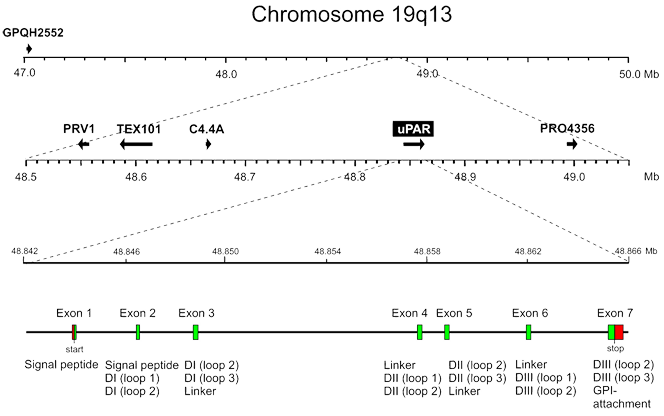
Figure 1: Location of the uPAR gene in the uPAR-like gene cluster on chromosome 19q13.
Each of the three LU domains of uPAR is encoded by separate exon sets, flanked by phase-1 introns (Casey et al., 1994). The introns dividing these 3 exon sets are also phase-1 and are located at a position corresponding to the surface-exposed tip of loop 2 in the three-finger fold of the LU domains (Ploug, 2003).
The other known multi LU-domain members of this protein family, which are all present within this gene cluster, are: PRV1/CD177, TEX101, C4.4A, PRO4356 and GPQH2552.
Description
24254 bp; 7 exons (Figure 1).
Transcription
Transcription of the uPAR gene is regulated by a TATA-less proximal promoter, partly through binding to SP1 (Soravia et al., 1995).
Proteins
Note
uPAR was originally identified on the monocyte-like human cell line U937 as the membrane receptor for the serine protease urokinase-type plasminogen activator (uPA) (Vassalli et al., 1985). It has since been implicated in a large number of physiological and pathological conditions, including cancer invasion and metastasis.
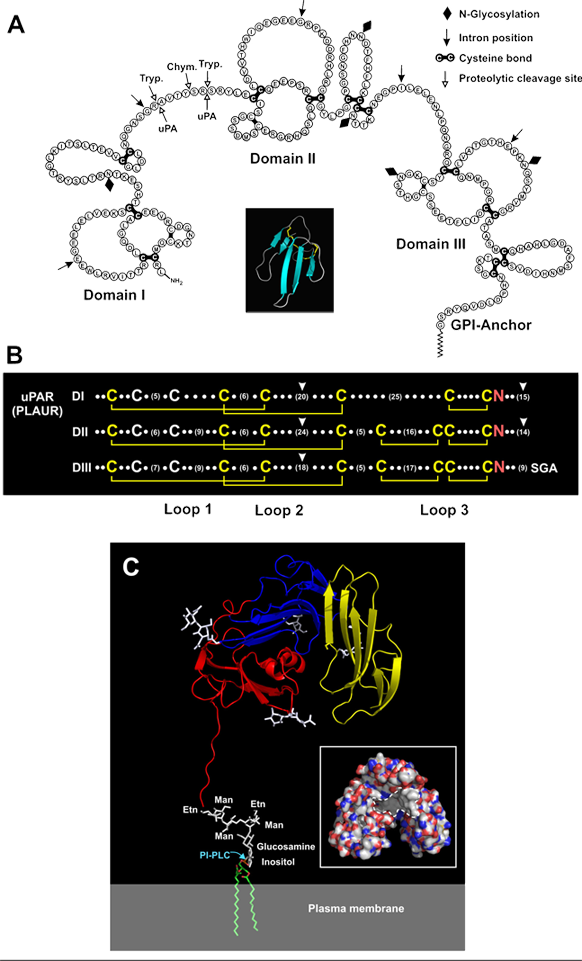
Figure 2: Structure of the uPAR protein.
Panel A - Schematic representation of the amino acid sequence of human uPAR showing its three homologous LU domains. Consensus disulfide bonds defining the LU domains are coloured black. The position of the C-terminal glycolipid anchor (GPI) is shown (modified from Ploug and Ellis, 1994, with permission). Insert: The archetypical three-finger fold is illustrated by a ribbon diagram for a single secreted LU-domain protein (snake venom toxin-a) using the PDB coordinates 1NEA and PyMOLTM (DeLano Scientific).
Panel B - LU domain signatures in the primary sequence of human uPAR. The three LU domains (DI, DII and DIII) of uPAR are aligned with the consensus structures being highlighted (disulfide bonds in yellow and the invariant asparagines in red). The number of residues between the individual cysteines is represented by dots or numbers in brackets (modified from Kjaergaard et al., 2008).
Panel C - The crystal structure solved for uPAR in complex with a peptide antagonist is shown as a ribbon diagram (Llinas et al., 2005). The individual LU domains are colour-coded (DI in yellow, DII in blue and DIII in red), and N-linked carbohydrates are shown as white sticks. The attachment to the cell surface by a glycolipid anchor is modelled in this cartoon. The insert shows uPAR in a surface representation, with the hydrophobic ligand-binding cavity marked with hatched lines; carbon, nitrogen and oxygen atoms are coloured white, blue and red, respectively. These structures are visualized by PyMOLTM (DeLano Scientific), using the PDB coordinates 1YWH (reproduced from Kjaergaard et al., 2008).
Description
uPAR is a multi-domain member of the Ly6/uPAR/alpha-neurotoxin (LU) protein family (Ploug, 2003), containing three of these LU domains (DI, DII and DIII; Figure 2), each of ~ 90 amino acids, adopting a "three-fingered" folding topology, and encompassing 4 consensus disulfide bonds and an invariant C-terminal asparagine (Figure 2B). Intriguingly, one of the consensus disulfide bonds, which is crucial to the proper folding of the single domain LU proteins, is missing in the N-terminal LU domain of uPAR. As evident from the crystal structures solved for human uPAR, the three LU domains cooperate in creating a deep and hydrophobic ligand-binding cavity (Figure 2C), in which the growth factor-like domain (GFD) of the cognate protease ligand uPA (Huai et al., 2006; Barinka et al., 2006) or synthetic peptide antagonists (Llinas et al., 2005) are buried during formation of the corresponding high-affinity receptor complexes.
The 335 amino acid residue long single polypeptide chain of human uPAR is processed to a mature protein of only 283 residues after post-translational excision of signal peptides at the N- and C-termini, the latter event being responsible for tethering uPAR to the cell membrane via a GPI moiety (Figure 2A+C; Ploug et al 1991). Human uPAR contains 5 potential N-glycosylation sites, of which only four are utilized (Ploug et al., 1998; Gårdsvoll et al., 2004).
The 335 amino acid residue long single polypeptide chain of human uPAR is processed to a mature protein of only 283 residues after post-translational excision of signal peptides at the N- and C-termini, the latter event being responsible for tethering uPAR to the cell membrane via a GPI moiety (Figure 2A+C; Ploug et al 1991). Human uPAR contains 5 potential N-glycosylation sites, of which only four are utilized (Ploug et al., 1998; Gårdsvoll et al., 2004).
Expression
Under normal homeostatic conditions, uPAR is expressed by the following bone marrow-derived blood cells: monocytes, neutrophils, eosinophils and macrophages. In the bone marrow itself, uPAR has been demonstrated in myelocytes, mature myeloid elements and monocytes. Expression of the receptor is significantly upregulated upon cytokine stimulation of various monocyte-derived cell lines in vitro (Plesner et al., 1994a). Consistent with these observations, uPAR is classified as a differentiation antigen and is also denoted CD87. The amount of uPAR in homeostatic organs is in general low, and when present, usually associated to quiescent endothelial cells, as demonstrated in e.g. the lung, kidney, thymus, liver and heart of normal mice (Solberg et al., 2001). Expression of uPAR in kidney and thymus has also been recapitulated in human samples (Wei et al., 2008; Plesner et al., 1994a).
Whereas uPAR is scarce under normal conditions, pronounced receptor expression has been observed in various non-homeostatic tissue remodeling processes. First, during wound healing, strong uPAR immunoreactivity is found in migrating keratinocytes at the leading re-epithelialization edge of the wound, while non-migrating keratinocytes are negative (Rømer et al., 1994). In addition, uPAR is located in infiltrating granulocytes located underneath the wound crush, and in endothelial cells in the wound area (Solberg et al., 2001). In squamous cell carcinoma of the skin, uPAR mRNA and protein is seen in well-differentiated cancer cells at the invasive front of the tumour lesion (Rømer et al., 2001; Ferrier et al., 2002). In view of the localization of uPAR in the leading-edge keratinocytes in regenerating epidermis during mouse skin wound healing, it has been proposed that similarities exist between the mechanisms of generation and regulation of extracellular proteolysis during skin re-epithelialization and squamous cell carcinoma invasion (Rømer et al., 2001). As a second example of tissue remodeling, late pregnancy in mouse shows uPAR expression in spongiotrophoblasts and endothelial cells in the placenta (Solberg et al., 2001). In the human counterpart, uPAR was encountered in endothelial cells and macrophages in association with fibrinoid deposits, suggesting a participation of uPAR in placental development and fibrin surveillance (Pierleoni et al., 1998 and 2003). Third, uPAR is present in the regression of mammary glands in post-lactational involution in mice (Solberg et al., 2001). These three processes mimic some of the characteristics of cancer invasion and can accordingly be used as model systems for the elucidation of the role of uPAR in malignant transformation. Indeed, the receptor is upregulated in several cancer types, expression often being confined to stromal cells associated with the tumour, as detailed later for gastro-intestinal, breast and squamous cell cancers (Figure 3). Other examples conforming to this pattern include hepatocellular carcinoma, where uPAR has been found in macrophages and fibroblasts, as well as in a subpopulation of rare CK7-positive tumoural hepatocytes (Akahane et al., 1998; Dubuisson et al., 2000). In invasive lesions of human prostate adenocarcinoma, uPAR mRNA and protein is also expressed by macrophages, located throughout the interstitial tissue of tumours (Figure 3D), whereas in benign lesions, it is confined to intraluminal macrophages (Usher et al., 2005). A summary of uPAR expression patterns in various cancer forms can be found in Table 1.
Whereas uPAR is scarce under normal conditions, pronounced receptor expression has been observed in various non-homeostatic tissue remodeling processes. First, during wound healing, strong uPAR immunoreactivity is found in migrating keratinocytes at the leading re-epithelialization edge of the wound, while non-migrating keratinocytes are negative (Rømer et al., 1994). In addition, uPAR is located in infiltrating granulocytes located underneath the wound crush, and in endothelial cells in the wound area (Solberg et al., 2001). In squamous cell carcinoma of the skin, uPAR mRNA and protein is seen in well-differentiated cancer cells at the invasive front of the tumour lesion (Rømer et al., 2001; Ferrier et al., 2002). In view of the localization of uPAR in the leading-edge keratinocytes in regenerating epidermis during mouse skin wound healing, it has been proposed that similarities exist between the mechanisms of generation and regulation of extracellular proteolysis during skin re-epithelialization and squamous cell carcinoma invasion (Rømer et al., 2001). As a second example of tissue remodeling, late pregnancy in mouse shows uPAR expression in spongiotrophoblasts and endothelial cells in the placenta (Solberg et al., 2001). In the human counterpart, uPAR was encountered in endothelial cells and macrophages in association with fibrinoid deposits, suggesting a participation of uPAR in placental development and fibrin surveillance (Pierleoni et al., 1998 and 2003). Third, uPAR is present in the regression of mammary glands in post-lactational involution in mice (Solberg et al., 2001). These three processes mimic some of the characteristics of cancer invasion and can accordingly be used as model systems for the elucidation of the role of uPAR in malignant transformation. Indeed, the receptor is upregulated in several cancer types, expression often being confined to stromal cells associated with the tumour, as detailed later for gastro-intestinal, breast and squamous cell cancers (Figure 3). Other examples conforming to this pattern include hepatocellular carcinoma, where uPAR has been found in macrophages and fibroblasts, as well as in a subpopulation of rare CK7-positive tumoural hepatocytes (Akahane et al., 1998; Dubuisson et al., 2000). In invasive lesions of human prostate adenocarcinoma, uPAR mRNA and protein is also expressed by macrophages, located throughout the interstitial tissue of tumours (Figure 3D), whereas in benign lesions, it is confined to intraluminal macrophages (Usher et al., 2005). A summary of uPAR expression patterns in various cancer forms can be found in Table 1.
Table 1
| Cancer type | Cancer cells | Macrophages | Fibroblast-like cells | Neutrophils | Endothelial cells | Nerves | References |
| Breast | + | + | + | + | Pyke et al., 1993; Nielsen et al., 2007 | ||
| Colon | + | + | + | + | Pyke et al., 1994; Illemann et al., 2009 | ||
| Gastric | + | + | + | + | Migita et al., 1999; Zhang et al., 2006; Alpízar-Alpízar et al., 2009 | ||
| Glioblastoma | + | + | Yamamoto et al., 1994 | ||||
| Liver | + | + | Dubuisson et al., 2000 | ||||
| Lung | + | + | + | Pappot et al., 1997; Morita et al., 1998 | |||
| Oral | + | + | + | + | Lindberg et al., 2006 | ||
| Prostate | + | + | Usher et al., 2005 | ||||
| Skin | + | + | Rømer et al., 2001; Ferrier et al., 2002 |
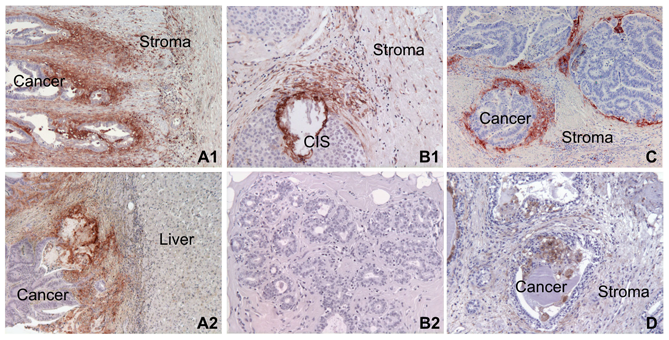
Figure 3: Expression of uPAR in cancer tissue.
Peroxidase stainings with the same batch of a polyclonal antibody against uPAR produced at the Finsen Laboratory (Copenhagen, Denmark), showing reactivity in stromal cells associated with the tumour. Panel A - Primary colorectal adenocarcinoma (1) and a corresponding liver metastasis (2) (reproduced from Illemann et al., 2009). Panel B - Ductal carcinoma in situ lesion of the breast with microinvasion (1) and normal breast (2) (reproduced from Nielsen et al., 2007). Panel C - Gastric cancer, intestinal subtype (courtesy of W. Alpízar-Alpízar, Finsen Laboratory, Copenhagen, Denmark). Panel D - Prostate carcinoma (reproduced from Usher et al., 2005, Copyright (2004, Wiley-Liss, Inc.), with permission of John Wiley & Sons, Inc.).
Localisation
The cell membrane attachment of uPAR via GPI implicates a differential partitioning of the receptor into detergent-resistant microdomain lipid rafts that are enriched in cholesterol and sphingolipids. In complex with uPA and the plasminogen activator inhibitor type 1, uPAR can also be internalized (Cubellis et al., 1990), and later recycled back to the membrane (Nykjær et al., 1997). Interestingly, upon stimulation of resting neutrophils, uPAR is rapidly translocated from secretory vesicles to the cell surface (Plesner et al., 1994b). Proteolytic cleavage of the receptor either in the linker region between DI and DII, e.g. by its own ligand uPA (Høyer-Hansen et al., 1992), or between domain III and the GPI-anchor, yield various soluble uPAR fragments that are detectable in body fluids such as plasma and urine, the levels of which have been shown to correlate to overall survival in several human cancers (Høyer-Hansen and Lund, 2007).
Function
Through its high-affinity interaction with the serine protease urokinase-type plasminogen activator (uPA), uPAR plays a central role in cell surface-associated plasminogen activation, entailing proteolytic degradation of the extracellular matrix surrounding the cells (Ellis et al., 1989; Stephens et al., 1989). This cascade, mediated by the broad-spectrum serine protease plasmin, is involved in several tissue remodeling processes such as wound healing and mammary gland involution (Ploug, 2003; Danø et al., 2005). The proteolytic role of uPAR in tumour invasion and metastasis is reflected by the frequently encountered expression of uPAR at the invasive front of cancer tissue, and by the impact of uPAR status in malignant cells disseminated to the bone marrow on the prognosis of gastric cancer patients (Heiss et al., 2002).
Other ligands with which uPAR allegedly also interacts include the matrix component vitronectin (Waltz and Chapman, 1994; Wei et al., 1994; Gårdsvoll and Ploug, 2007; Huai et al., 2008), various integrins (Wei et al., 1996; Aguirre Ghiso et al., 1999) and the G-protein coupled receptor FPRL1 (Resnati et al., 1996), affecting cell adhesion and migration, as well as signal transduction (Figure 4; for reviews, see Ossowski and Aguirre-Ghiso, 2000; Blasi and Carmeliet, 2002; Kjøller, 2002; Kugler et al., 2003; Ragno, 2006; Tang and Wei, 2008).
Other ligands with which uPAR allegedly also interacts include the matrix component vitronectin (Waltz and Chapman, 1994; Wei et al., 1994; Gårdsvoll and Ploug, 2007; Huai et al., 2008), various integrins (Wei et al., 1996; Aguirre Ghiso et al., 1999) and the G-protein coupled receptor FPRL1 (Resnati et al., 1996), affecting cell adhesion and migration, as well as signal transduction (Figure 4; for reviews, see Ossowski and Aguirre-Ghiso, 2000; Blasi and Carmeliet, 2002; Kjøller, 2002; Kugler et al., 2003; Ragno, 2006; Tang and Wei, 2008).
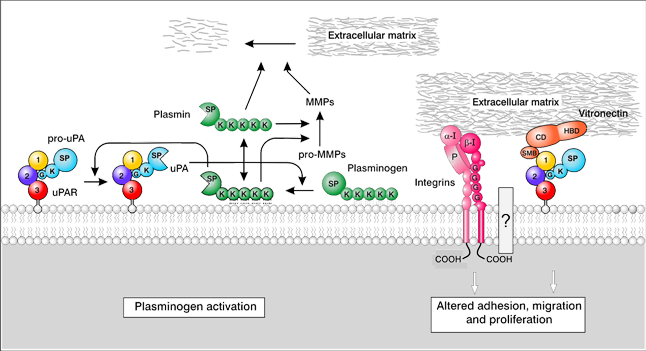
Figure 4: uPAR ligands.
Schematic representation of the functions of uPAR via its interaction with uPA, integrins, and vitronectin (modified from Kjaergaard et al., 2008).
Homology
uPAR is homologous to the other multi-domain proteins of the Ly6/uPAR/alpha-neurotoxin protein domain family (C4.4A, PRV-1/CD177, TEX101, PRO4356, GPQH2552), of which C4.4A is the best-studied until now (Jacobsen and Ploug, 2008), and to a vast number of single LU-domain proteins such as the Ly-6 antigens, CD59, SLURP 1 and SLURP 2, the extracellular ligand-binding domains of the TGF-receptor family and the snake venom alpha-neurotoxins (Ploug and Ellis, 1994; Ploug, 2003).
Mutations
Note
An mRNA splice variant of uPAR, lacking exons 4 and 5, which encode domain II of the receptor, has recently been shown to have prognostic relevance in breast cancer (Kotzsch et al., 2008). Restriction fragment length polymorphisms of the uPAR gene have been identified by EcoRI and PstI (Børglum et al., 1991 and 1992), and a highly polymorphic CA/GT repeat is present in intron 3 (Kohonen-Corish et al., 1996). In a comparison of the latter in colon cancer patients and controls, however, there were no significant differences in the frequencies of alleles (Przybylowska et al., 2008; Kohonen-Corish et al., 1998). Genetic linkage and association analyses on 587 families with high incidences of asthma have revealed a correlation between asthma/lung function decline and certain SNP in the uPAR gene (Barton et al., 2009).
Implicated in
Entity name
Colon cancer
Note
The first study on uPAR expression was performed by in situ hybridization on samples of human colon cancer (Pyke et al., 1991), which revealed the presence of uPAR mRNA both in stromal cells and some cancer cells located at the invasive foci. Using immunohistochemistry and antibodies raised against recombinant human uPAR protein, this finding was substantiated, and demonstrated that uPAR is expressed primarily by macrophages, some a-smooth-muscle-actin (a-SMA)-positive myofibroblasts, a few endothelial cells located at the front of the cancer, as well as by some so-called budding cancer cells (Figure 3A1; Pyke et al., 1994; Ohtani et al., 1995; Illemann et al., 2009). Interestingly, these uPAR-positive budding cancer cells also produce the 2-chain of laminin 5 (LN5.2), which has been shown to correlate with poor prognosis in colon cancer, in addition to being a marker of early invasion of cervix cancers (Pyke et al., 1995; Lenander et al., 2001; Skyldberg et al., 1999). Furthermore, by combining immunohistochemistry and in situ hybridization, it became clear that these uPAR- and LN5.2-positive budding cancer cells produce uPA mRNA, thus linking uPA and its receptor to cancer cells with high invasive potential (Illemann et al., 2009). uPAR is also found in neutrophils scattered throughout colon cancer tissue and in nerve bundles located in muscularis propia (Pyke et al., 1994; Illemann et al., 2009). In fact, immunohistochemical staining in neutrophils represents a valuable internal positive control, as uPAR is synthesized in these cells during differentiation in the bone marrow and is present in all circulating neutrophils (Plesner et al., 1994a). In colon cancer liver metastasis with encapsulation of the secondary tumour, uPAR expression is in general very similar to that found in the primary tumour (Figure 3A2; Illemann et al., 2009).
Prognosis
The high expression of uPAR encountered in malignant tissue can be furthered into its potential as a prognostic marker in several cancer forms, including colon cancer. Preoperative levels of soluble uPAR is an independent predictor of survival in patients with colorectal cancer, as observed in a study encompassing 591 patients (Stephens et al., 1999), with highest clinical utility in early stage disease (Dukes stage B).
Entity name
Gastro-intestinal cancer
Note
In adenocarcinomas of the lower esophagus/gastroesophageal junction, the pattern of uPAR is reminiscent of that described in colon cancer (Laerum et al., 2009), which is also the case for adenocarcinomas of the lower stomach (Figure 3C; Heiss et al., 1995; Migita et al., 1999; Alpízar-Alpízar et al., 2009), i.e. expression by invasive cancer cells, macrophages, a-SMA-positive myofibroblasts, and some endothelial cells, as well as scattered neutrophils and nerves bundles in the muscularis propia. Interestingly, in these two cancer types, a much higher number of invasive cancer cells are found to contain uPAR as compared to colon cancer, which, in view of the poorer prognosis of these patients, points to an association of uPAR cancer cell expression with a higher invasive potential (Alpízar-Alpízar et al., 2009). In the lower esophagus and gastroesophageal junction, uPAR expression is confined to invasive foci (Laerum et al., 2009), whereas in the lower stomach, uPAR is also present in benign lesions (Alpízar-Alpízar et al., 2009). Cancer in the latter region is believed to be caused by infection of Helicobacter pylori (Suzuki et al., 2007). As non-neoplastic mucosa infected with H. pylori has been shown to be positive for uPAR, in both the epithelial cells and macrophages, the receptor appears to be present in the tissue already at the onset of tumourigenesis (Alpízar-Alpízar et al., 2009; Kenny et al., 2008).
Prognosis
Importantly, in metastatic disease, uPAR positivity in tumour cells that have disseminated to the bone marrow is a strong negative prognostic indicator for disease-free and overall survival in curatively resected gastric cancer patients (Heiss et al., 2002).
Entity name
Breast cancer
Note
In human ductal breast carcinomas, uPAR is primarily expressed by tumour-associated macrophages and a-SMA-positive myofibroblasts (Pyke et al., 1993; Nielsen et al., 2007), whereas normal breast tissue is devoid of reactivity (Figure 3B2). In some biopsies, uPAR has in addition been found in invasive tumour cells and a few endothelial cells. As for other solid cancer forms, neutrophils also display uPAR immunoreactivity in the breast. In early invasive ductal carcinoma in situ (DCIS) lesions without microinvasion, the receptor is confined to ductal macrophages and few neoplastic cells within the epithelial lesion. The advent of microinvasion is accompanied by a strong uPAR signal in several layers of tumour-associated macrophages and a-SMA-positive myofibroblasts surrounding the DCIS lesions (Figure 3B1). These results indicate that restricted expression of uPAR in myofibroblasts and macrophages is an early event in breast carcinogenesis, which is strongly amplified after transition to invasive ductal carcinoma. Furthermore, uPAR and uPA co-localize in both macrophages and myofibroblasts located at the front of collapsed ducts in DCIS lesions with microinvasion (Nielsen et al., 2007).
Prognosis
uPAR has shown potential as a prognostic marker in breast cancer, with high levels of uPAR in cytosolic extracts from primary breast tumours significantly correlating with a shorter overall survival (Grøndahl-Hansen et al., 1995). Similarly, there was a significant association between age-adjusted levels of the receptor in preoperative serum from breast cancer patients and their relapse-free and overall survival, independent of lymph node status, tumour size, and estrogen receptor status (Riisbro et al., 2002).
Entity name
Oral cancer
Note
In squamous cell carcinoma (SCC) of the oral cavity, uPAR is strongly upregulated in areas with incipient and invasive SCC compared to areas with dysplastic and normal epithelium. The receptor is predominantly observed in stromal cells, primarily macrophages, but also in fibroblasts as well as neutrophils. uPAR-positive neoplastic cells found in areas with incipient and invasive SCC are also reported to express LN5.2 (Lindberg et al., 2006), which as mentioned above is a marker for invasiveness.
Entity name
Glioblastoma
Note
Presence of uPAR at the invasive edge of the cancer, as seen in colon, breast and skin cancer, is recapitulated in human glioblastomas, but with the notable difference that the mRNA for uPAR in this particular case is predominantly expressed by tumour cells, as well as in some endothelial cells, indicating that uPAR is related to tumour cell invasiveness and endothelial cell migration (Yamamoto et al., 1994).
Entity name
Lung cancer
Prognosis
The prognostic significance of uPAR in non-small cell lung cancer is apparent for patients with the histologic subtype of squamous cell carcinoma, where high levels of uPAR is an independent marker of prognosis, as evaluated in tumour extracts (Pedersen et al., 1994). Measuring the levels of uPAR domain I alone in these same extracts similarly predicted overall survival (Almasi et al., 2005).
Entity name
Ovarian cancer
Prognosis
Like in non-small cell lung cancer, uPAR domain I present in high concentrations in preoperative plasma independently predicts poor survival of patients with ovarian cancer. Furthermore, soluble full-length uPAR + the soluble fragment of uPAR domains II+III can, together with CA125 in plasma collected preoperatively, serve as a diagnostic tool, discriminating between malignant and benign ovarian tumours (Henic et al., 2008).
Entity name
Prostate cancer
Prognosis
As described for breast, colon and lung cancer, uPAR also correlates with shorter survival of patients with prostate cancer, where serum levels of the receptor are elevated as compared to healthy controls (Miyake et al., 1999).
Entity name
Haematological malignancies
Note
In line with its expression in normal hematopoietic cells, uPAR is also observed in various hematopoietic disorders, most importantly acute leukemia and multiple myeloma, and its level could have diagnostic and prognostic implications for these diseases (Béné et al., 2004).
Entity name
Paroxysmal nocturnal haemoglobinuria
Note
As a consequence of being a GPI-anchored protein, membranous uPAR is absent from blood cells derived from clonally expanded bone marrow cells affected by point mutations causing the haematological disease paroxysmal nocturnal haemoglobinuria, PNH (Ploug et al., 1992).
Entity name
Inflammatory conditions
Note
In inflammatory conditions such as Crohns disease and chronic ulcerative colitis, uPAR immunoreactivity is seen in numerous macrophages, including granulomas and granulocytes located throughout the whole intestinal wall, as well as in nerve bundles (Laerum et al., 2008), providing a possible link between uPAR and inflammation.
Article Bibliography
| Pubmed ID | Last Year | Title | Authors |
|---|
Other Information
Locus ID:
NCBI: 5329
MIM: 173391
HGNC: 9053
Ensembl: ENSG00000011422
Variants:
dbSNP: 5329
ClinVar: 5329
TCGA: ENSG00000011422
COSMIC: PLAUR
RNA/Proteins
Expression (GTEx)
Pathways
Protein levels (Protein atlas)
References
| Pubmed ID | Year | Title | Citations |
|---|---|---|---|
| 37661069 | 2024 | Enhancing the invasive traits of breast cancers by CYP1B1 via regulation of p53 to promote uPAR expression. | 1 |
| 37850521 | 2024 | A case of mosaic deletion of paternally-inherited PLAGL1 and two cases of upd(6)mat add to evidence for PLAGL1 under-expression as a cause of growth restriction. | 1 |
| 37973717 | 2024 | Soluble urokinase plasminogen activator receptor (suPAR) in bronchoalveolar fluid and blood in critically ill patients-a prospective cohort study. | 0 |
| 38042098 | 2024 | Soluble urokinase plasminogen activator receptor, platelet aggregation, and carotid plaque thickness in diabetes: A cross-sectional analysis. | 0 |
| 38073374 | 2024 | Circulating miR-10b, soluble urokinase-type plasminogen activator receptor, and plasminogen activator inhibitor-1 as predictors of non-small cell lung cancer progression and treatment response. | 0 |
| 38200448 | 2024 | Soluble urokinase plasminogen activator receptor in vaginally collected amniotic fluid predicting fetal inflammatory response syndrome: a prospective cohort study. | 0 |
| 38396677 | 2024 | uPAR (PLAUR) Marks Two Intra-Tumoral Subtypes of Glioblastoma: Insights from Single-Cell RNA Sequencing. | 0 |
| 38669542 | 2024 | Gene Association Study of the Urokinase Plasminogen Activator and Its Receptor Gene in Alzheimer's Disease. | 0 |
| 37661069 | 2024 | Enhancing the invasive traits of breast cancers by CYP1B1 via regulation of p53 to promote uPAR expression. | 1 |
| 37850521 | 2024 | A case of mosaic deletion of paternally-inherited PLAGL1 and two cases of upd(6)mat add to evidence for PLAGL1 under-expression as a cause of growth restriction. | 1 |
| 37973717 | 2024 | Soluble urokinase plasminogen activator receptor (suPAR) in bronchoalveolar fluid and blood in critically ill patients-a prospective cohort study. | 0 |
| 38042098 | 2024 | Soluble urokinase plasminogen activator receptor, platelet aggregation, and carotid plaque thickness in diabetes: A cross-sectional analysis. | 0 |
| 38073374 | 2024 | Circulating miR-10b, soluble urokinase-type plasminogen activator receptor, and plasminogen activator inhibitor-1 as predictors of non-small cell lung cancer progression and treatment response. | 0 |
| 38200448 | 2024 | Soluble urokinase plasminogen activator receptor in vaginally collected amniotic fluid predicting fetal inflammatory response syndrome: a prospective cohort study. | 0 |
| 38396677 | 2024 | uPAR (PLAUR) Marks Two Intra-Tumoral Subtypes of Glioblastoma: Insights from Single-Cell RNA Sequencing. | 0 |
Citation
Benedikte Jacobsen ; Martin Illemann ; Michael Ploug
PLAUR (plasminogen activator, urokinase receptor)
Atlas Genet Cytogenet Oncol Haematol. 2009-09-01
Online version: http://atlasgeneticsoncology.org/gene/41741/plaur
