VCP (valosin containing protein)
2013-02-01 Yalcin Erzurumlu , Recep Ilhan , Oguz Gozen , Petek Ballar AffiliationEge University, Faculty of Pharmacy, Biochemistry Department, Bornova, 35100, Izmir, Turkey (YE, RI, PB); Ege University, Faculty of Medicine, Department of Physiology, Bornova, 35100, Izmir, Turkey (OG)
Identity
HGNC
LOCATION
9p13.3
IMAGE

LEGEND
Genomic location of VCP/p97 gene at chromosome 9p13.3 (minus strand).
LOCUSID
ALIAS
CDC48,FTDALS6,TERA,p97
FUSION GENES
DNA/RNA
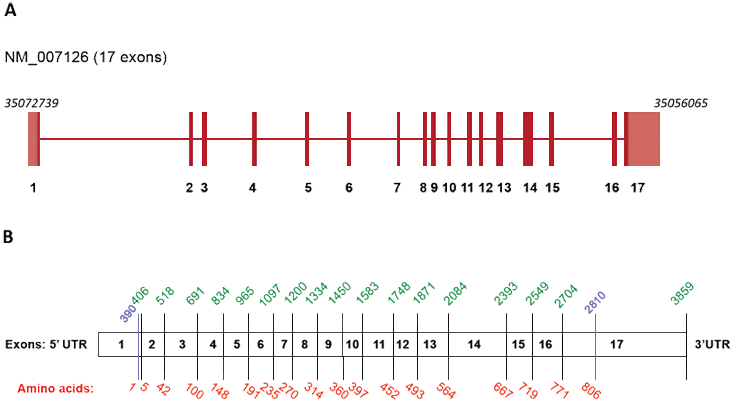
A. The alignment of VCP/p97 mRNA to its genomic sequence. B. VCP/p97 mRNA and its amino acid coding.
Description
The p97/VCP gene spans a genomic region of 16674 bases on minus strand. The DNA of p97/VCP consists of 17 exons and the coding sequence starts in the first exon.
Transcription
The p97/VCP gene has one protein coding transcript which is 3859 bp long (Accession Number: NM_007126.3). The DNA has been cloned and sequenced by Koller and Brownstein in 1987 (Koller and Brownstein, 1987).
Proteins

A schematic representation of the domain structure.
Description
VCP (Ter94 in D. melanogaster and CDC48 in S. cerevisiae) is a member of the AAA (ATPase associated with various cellular activities) ATPase family. It is one of the most abundant cytosolic proteins conserved throughout evolution from archaea to mammals. The complete protein contains 806 amino acids. The calculated molecular weight of p97/VCP is 89322 Da and the basal isoelectric point is 5.14.
p97/VCP functions as a homohexamer composed of six subunits. Each protomer composed of four domains vital for its proper functioning, namely the N domain (1-187), D1 weak ATPase (209-460), D2 the major ATPase (481-761), and C (762-806) domains (DeLaBarre et al., 2006; Pye et al., 2007). p97/VCP gene consists of 17 coding exons. Its N domain is encoded by exons 1, 2, 3, 4 and 5, while the D1 and D2 domains are encoded by exons 6, 7, 8, 9, 10 and 12, 13, 14, respectively. There are two linker domains in the protein: N-D1 linker and flexible D1-D2 linker.
The N domain of p97/VCP is responsible for the cofactor and ubiquitin binding function (Wang et al., 2003; Ye et al., 2003). While the D1 domain mediates oligomerization independent nucleotide binding, the D2 domain confers most of the ATPase activity (Wang et al., 2003). The two AAA domains contain the conserved Walker A, Walker B and a second region of homology (SRH). Walker A is required for nucleotide binding, whereas Walker B and SRH motifs mediate efficient ATP hydrolysis. ATP binding and hydrolysis lead to changes in the conformation of the hexameric ring, which is consistent with its role as a chaperone in disassembling protein complexes and mediating extraction of ubiquitinated proteins from the ER (Bays and Hampton, 2002; Rouiller et al., 2002).
p97/VCP functions as a homohexamer composed of six subunits. Each protomer composed of four domains vital for its proper functioning, namely the N domain (1-187), D1 weak ATPase (209-460), D2 the major ATPase (481-761), and C (762-806) domains (DeLaBarre et al., 2006; Pye et al., 2007). p97/VCP gene consists of 17 coding exons. Its N domain is encoded by exons 1, 2, 3, 4 and 5, while the D1 and D2 domains are encoded by exons 6, 7, 8, 9, 10 and 12, 13, 14, respectively. There are two linker domains in the protein: N-D1 linker and flexible D1-D2 linker.
The N domain of p97/VCP is responsible for the cofactor and ubiquitin binding function (Wang et al., 2003; Ye et al., 2003). While the D1 domain mediates oligomerization independent nucleotide binding, the D2 domain confers most of the ATPase activity (Wang et al., 2003). The two AAA domains contain the conserved Walker A, Walker B and a second region of homology (SRH). Walker A is required for nucleotide binding, whereas Walker B and SRH motifs mediate efficient ATP hydrolysis. ATP binding and hydrolysis lead to changes in the conformation of the hexameric ring, which is consistent with its role as a chaperone in disassembling protein complexes and mediating extraction of ubiquitinated proteins from the ER (Bays and Hampton, 2002; Rouiller et al., 2002).
Expression
Northern blot analyses showed that p97/VCP was ubiquitously expressed in all tissues and throughout the brain (Hirabayashi et al., 2001).
Localisation
Cytosol, nucleus. p97/VCP is recruited to the cytoplasmic surface of the ER via interaction with Endoplasmic reticulum-ubiquitin ligases.
Function
p97/VCP functions as segregase or unfoldase by utilizing the energy derived from ATP hydrolysis for conformational changes of target proteins. It is an essential protein having many roles in diverse biological processes, such as endoplasmic reticulum-associated degradation (ERAD), homotypic membrane fusion, transcriptional control, cell cycle regulation, autophagy, endosomal sorting and regulating protein degradation at the outer mitochondrial membrane (Woodman, 2003; Wang et al., 2004; Meyer et al., 2012).
The diversity in cellular functions of p97/VCP is dictated by the variety of its interacting partner proteins. For example, p97/VCP has function in membrane fusion function via two different cofactors p47 and p37 (Uchiyama et al., 2006). The UBX-containing protein p47 functions together with p97/VCP in the fragmentation process of Golgi stacks during mitosis and for their reassembly after mitosis (Uchiyama et al., 2002; Uchiyama et al., 2003). The p97/VCP-p37 complex also brings about Golgi membrane fusion, however it might be required for organelle maintenance during interphase as well as their reassembly during mitosis (Uchiyama et al., 2006). p97/VCP has critical roles not only in Golgi membrane fusion but also in ER membrane fusion and nuclear assembly (Latterich et al., 1995; Hetzer et al., 2001).
p97/VCP forms another complex with Ufd1-Npl4 dimer (Ye et al., 2001; Braun et al., 2002; Jarosch et al., 2002; Rabinovich et al., 2002). This complex is involved in regulating spindle disassembly at the end of mitosis, assembly of the nuclear envelope and retro-translocation during ERAD by binding ubiquitinated proteins and exporting them from the ER to the cytoplasm (Hetzer et al., 2001; Cao et al., 2003).
Another molecular machinery where p97/VCP interacts with ubiquitin ligases, gp78 and Hrd1 functions in ERAD (Zhong et al., 2004; Lilley and Ploegh, 2005). Through this interaction p97/VCP is recruited from cytosol to the ER. The role of p97/VCP in ERAD is to interact with polyubiquitinated proteins and retrotranslocate them from ER to the cytosol. It has been recently suggested that Hrd1-mediated ERAD requires well-established retrotranslocation machinery, the p97/VCP-Ufd1-Npl4 complex, whereas the gp78 pathway needs only p97/VCP and Npl4 (Ballar et al., 2011). Another role of p97/VCP in ERAD is to bridge the ER to the proteasome by forming a complex with mHR23B (homolog of yeast Rad23)-PNGase (Li et al., 2005).
p97/VCP is also indicated in autophagy where it is required for the autophagosome and lysosome fusion and this function is impaired with mutations in IBMPFD disease (Ju and Weihl, 2010; Tresse et al., 2010).
Additionally, p97/VCP has role in endolysosomal sorting, where it binds to monoubiquitinated cargo, cavealin, on endosomes and functions in Cav1 transport to the endolysosomes (Ritz et al., 2011).
There are several reports linking p97/VCP to the DNA repair mechanism (Ramadan, 2012). Ubiquitin binding domain containing DVC1 protein recruits p97/VCP to DNA damage sites, where p97/VCP facilitates the extraction of the translesion synthesis (TLS) polymerase (Pol) η during DNA repair (Davis et al., 2012). p97/VCP also promotes recruitment of human tumor suppressor 53BP1 by removing Polycomb protein L3MBTL1 from chromatin (Acs et al., 2011).
p97/VCP has an essential role in DNA replication and cell cycle progression (Deichsel et al., 2009; Mouysset et al., 2008). Moreover, p97/VCP has a central regulatory role in the coordination of licensing and elongation events during eukaryotic DNA replication (Franz et al., 2011).
A recently identified role of p97/VCP is related to mitophagy (Tanaka et al., 2010). The Vms-Npl4-Cdc48 complex organized upon mitochondrial stress plays a role in maintaining the mitochondrial function via protein quality control (Heo et al., 2010). p97/VCP also functions in degradation of mitochondrial proteins and retrotranslocates these proteins from mitochondria to the cytosol for proteasomal degradation (Xu et al., 2011).
The diversity in cellular functions of p97/VCP is dictated by the variety of its interacting partner proteins. For example, p97/VCP has function in membrane fusion function via two different cofactors p47 and p37 (Uchiyama et al., 2006). The UBX-containing protein p47 functions together with p97/VCP in the fragmentation process of Golgi stacks during mitosis and for their reassembly after mitosis (Uchiyama et al., 2002; Uchiyama et al., 2003). The p97/VCP-p37 complex also brings about Golgi membrane fusion, however it might be required for organelle maintenance during interphase as well as their reassembly during mitosis (Uchiyama et al., 2006). p97/VCP has critical roles not only in Golgi membrane fusion but also in ER membrane fusion and nuclear assembly (Latterich et al., 1995; Hetzer et al., 2001).
p97/VCP forms another complex with Ufd1-Npl4 dimer (Ye et al., 2001; Braun et al., 2002; Jarosch et al., 2002; Rabinovich et al., 2002). This complex is involved in regulating spindle disassembly at the end of mitosis, assembly of the nuclear envelope and retro-translocation during ERAD by binding ubiquitinated proteins and exporting them from the ER to the cytoplasm (Hetzer et al., 2001; Cao et al., 2003).
Another molecular machinery where p97/VCP interacts with ubiquitin ligases, gp78 and Hrd1 functions in ERAD (Zhong et al., 2004; Lilley and Ploegh, 2005). Through this interaction p97/VCP is recruited from cytosol to the ER. The role of p97/VCP in ERAD is to interact with polyubiquitinated proteins and retrotranslocate them from ER to the cytosol. It has been recently suggested that Hrd1-mediated ERAD requires well-established retrotranslocation machinery, the p97/VCP-Ufd1-Npl4 complex, whereas the gp78 pathway needs only p97/VCP and Npl4 (Ballar et al., 2011). Another role of p97/VCP in ERAD is to bridge the ER to the proteasome by forming a complex with mHR23B (homolog of yeast Rad23)-PNGase (Li et al., 2005).
p97/VCP is also indicated in autophagy where it is required for the autophagosome and lysosome fusion and this function is impaired with mutations in IBMPFD disease (Ju and Weihl, 2010; Tresse et al., 2010).
Additionally, p97/VCP has role in endolysosomal sorting, where it binds to monoubiquitinated cargo, cavealin, on endosomes and functions in Cav1 transport to the endolysosomes (Ritz et al., 2011).
There are several reports linking p97/VCP to the DNA repair mechanism (Ramadan, 2012). Ubiquitin binding domain containing DVC1 protein recruits p97/VCP to DNA damage sites, where p97/VCP facilitates the extraction of the translesion synthesis (TLS) polymerase (Pol) η during DNA repair (Davis et al., 2012). p97/VCP also promotes recruitment of human tumor suppressor 53BP1 by removing Polycomb protein L3MBTL1 from chromatin (Acs et al., 2011).
p97/VCP has an essential role in DNA replication and cell cycle progression (Deichsel et al., 2009; Mouysset et al., 2008). Moreover, p97/VCP has a central regulatory role in the coordination of licensing and elongation events during eukaryotic DNA replication (Franz et al., 2011).
A recently identified role of p97/VCP is related to mitophagy (Tanaka et al., 2010). The Vms-Npl4-Cdc48 complex organized upon mitochondrial stress plays a role in maintaining the mitochondrial function via protein quality control (Heo et al., 2010). p97/VCP also functions in degradation of mitochondrial proteins and retrotranslocates these proteins from mitochondria to the cytosol for proteasomal degradation (Xu et al., 2011).
Homology
Human p97/VCP gene is homolog to murine and rattus p97/VCP with 99.9pc.
Mutations
Somatic
There are several p97/VCP mutations identified related with Inclusion body myopathy associated with Paget disease of the bone and frontotemporal dementia (IBMPFD) and amyotrophic lateral sclerosis (ALS).
Implicated in
Entity name
Inclusion body myopathy associated with Paget disease of the bone and frontotemporal dementia (IBMPFD)
Note
This rare proteinopathy, affecting mainly muscle, brain and bone, is associated with mutations in the p97/VCP gene (Watts et al., 2004). Muscle biopsies in IBMPFD patients have revealed the presence of rimmed vacuoles, cytoplasmic inclusion bodies and p97/VCP aggregates in scattered muscle fibers (Watts et al., 2004). IBMPFD neuropathologic changes are characterized by ubiquitin-positive neuronal intranuclear inclusions and dystrophic neurites mainly abundant in the neocortex (Forman et al., 2006). There are 26 mutations in p97/VCP identified so far in IBMPFD patients and these mutations are primarily in the N-terminal domain involved in ubiquitin binding and protein-protein interactions (Nalbandian et al., 2012).
Entity name
Amyotrophic lateral sclerosis (ALS)
Note
Mutations in p97/VCP gene have been recently found also in familial cases of amyotrophic lateral sclerosis (ALS). A study using whole exome sequencing identified a pathogenic p97/VCP variant in an autosomal dominant Italian family with an ALS phenotype, and subsequently found that p97/VCP mutations were present in ~1-2% of our large cohort of familial ALS cases from unrelated families (Johnson et al., 2010). Whereas, no mutations were identified indicating that p97/VCP mutations do not have main contribution of classic ALS among Australian cases and Italian population (Tiloca et al., 2012; Williams et al., 2012). The p97/VCP expression was found to be increased in the skin of ALS patients (Ishikawa et al., 2012).
Entity name
Hepatocellular carcinoma
Note
miRNA-129-5p downregulates p97/VCP expression and this regulation plays an important role in the progression of hepatacellular carcinoma (Liu et al., 2012). p97/VCP expression was found to be prognostic significant for disease-free and overall survival of patients with hepatocellular carcinoma (Yamamoto et al., 2003).
Entity name
Colorectal carcinoma
Note
There is one study with 129 patients showing an association between high level-expression of p97/VCP with colorectal cancer prognosis (Yamamoto et al., 2004d).
Entity name
Esophageal carcinoma
Note
The prognostic significance of p97/VCP expression in 156 esophageal squamous cell carcinoma (ESCC) patients has been revealed by Yamamoto et al. in 2004 (Yamamoto et al., 2004b).
Entity name
Prostate cancer
Note
Elevated expression of p97/VCP has been associated with poor prognosis of prostate cancer with the study performed by analyzing p97/VCP expression in 136 patients (Tsujimoto et al., 2004).
Entity name
Breast cancer
Note
The p97/VCP gene is underexpressed in patients who died of breast cancer within 5 years of surgery compared to patients who survived disease-free for more than 5 years (Asaka et al., 2006). Increased serum p97/VCP levels were observed in clinically significant proportions of breast cancer patients (Laguë et al., 2012).
Entity name
Pancreatic cancer
Note
A global genomic analysis of pancreatic cancer has confirmed p97/VCP overexpression and association with tumor metastasis by Serial Analysis of Gene Expression (SAGE). Other studies have indicated the generalized role of UPS in regulating the metastatic potential of pancreatic cancer (Jones et al., 2008). Increased expression of p97/VCP is associated with lymph node metastasis and prognosis of pancreatic ductal adenocarcinoma (Yamamoto et al., 2004a). Moreover, elevated serum p97/VCP levels were detected in clinically significant proportions of patients with pancreatic cancer (8 of 12) (Laguë et al., 2012). p97/VCP was also found to be a useful marker in detecting malignant behavior of pancreatic endocrine neoplasms (Yamamoto et al., 2004f).
Entity name
Gingival squamous cell carcinoma
Note
It has been shown that the expression level of p97/VCP may be used as prognostic marker for gingival squamous cell carcinoma (GSCC) (Yamamoto et al., 2004e). Moreover, the expression patterns of PBX2, a strong prognostic factor in GSCC, and p97/VCP proteins were evaluated in 66 subjects with GSCC who underwent curative surgery, and high PBX2 expression was associated with high p97/VCP expression (Qiu et al., 2012).
Entity name
Thyroid carcinoma
Note
A study examining the p97/VCP expression in 332 patients who underwent operation for differentiated thyroid carcinoma showed that increased expression of valosin-containing protein (p97) is correlated with disease recurrence in follicular thyroid cancer (Yamamoto et al., 2005).
Entity name
Non-small cell lung carcinoma
Note
Elevated p97/VCP expression is correlated with the progression and clinical prognosis of non-small cell lung carcinoma (NSCLC) (Yamamoto et al., 2004c). Moreover, p97/VCP inhibition suppressed proliferation, induced G0/G1-phase cell cycle arrest of NSCLCs and migration in H1299 cells and reduced NSCLC tumor growth in both in vitro and xenograft murine (athymic-nude) models after EerI treatment (Valle CW et al., 2011).
Entity name
Gastric cancer
Note
Expression level of p97/VCP was found to be associated with prognosis and progression of gastric cancer (Yamamoto et al., 2003).
Entity name
Leukemia
Note
Monocytic differentiation and G0/G1 growth arrest in human U937 leukemia cells is accompanied by an increase in VCP/p97 expression and a distinct subcellular distribution to be reverted during retrodifferentiation (Bertram et al., 2008). Furthermore, high p97/VCP expression has been shown to be associated with poor prednisone response in childhood acute lymphoblastic leukaemia patients (Lauten et al., 2006).
Entity name
Note
A study on osteosarcoma indicates the function of p97/VCP as a regulator of NFkB mediated tumor metastasis (Asai et al., 2002).
Entity name
Neurodegeneration
Note
Excessive accumulation of misfolded proteins may inactivate p97/VCP in several neurodegenerative disorders, eventually leading to the neurodegenerations (Hirabayashi et al., 2001; Hsueh, 2012).
Entity name
Note
It has been proposed that a novel role for p97/VCP in the DNA damage response pathway via modulating the availabilty of Werner protein, mutations of which causes Werner syndrome, a genetic disorder characterized by premature onset of aging symptoms (Partridge et al., 2003; Indig et al., 2004).
Entity name
Machado-joseph disease
Note
Expansion of a polyglutamine tract in ataxin-3 (AT3), a deubiquitylating enzyme, results in spinocerebellar ataxia type 3/Machado-Joseph disease. AT3 interacts with p97/VCP and regulates flow through the ERAD pathway by modulating VCP-dependent extraction of proteins from the ER (Zhong and Pittman, 2006). Furthermore, p97/VCP was shown to be an activator specifically of wild-type ataxin-3, exhibiting no effect on expanded ataxin-3 (Laco et al., 2012).
Entity name
Hepatitis
Note
Hepatitis B virus X protein (HBx protein) transactivates NF-kB, which is important in the pathogenesis of HBV-related diseases. It has been shown that Hbx interacts with VCP, and enhances the VCP-mediated activation of NF-kB (Jiao et al., 2011).
Entity name
Chronic obstructive pulmonary disease and emphysema
Note
There is a study correlating the higher expression of valosin-containing protein (VCP) retrograde translocation complex (VCP-Rma1-gp78) with severity of emphysema in chronic obstructive pulmonary disease (COPD) lung tissues and over-expression of inflammatory, ER stress and apoptotic mediators like NFκB, GADD-153/CHOP, and p-eIF2α (Min et al., 2011).
Entity name
Cholesterol
Note
Insig-1, a negative regulator of cholesterol synthesis is rapidly degraded by proteasomes when cells lack of cholesterol, and its degradation is inhibited when sterols accumulate. p97/VCP was shown to recruit proteasomes to Insig-1 before extraction from membrane (Ikeda et al., 2009). It is also known that ubiqitinated 3-hydroxy-3-methylglutaryl coenzyme A reductase (HMGCR) is recognized by the ATPase VCP/p97, which mediates extraction and delivery of reductase from ER membranes to cytosolic 26 S proteasomes for degradation (Hartman et al., 2010).
Entity name
Antiviral immunity
Note
p97/VCP is implicated as a host factor in antiviral immunity, where depletion or catalytic inhibition of p97/VCP prevents capsid degradation and reduces neutralization (Hauler et al., 2012).
Article Bibliography
| Pubmed ID | Last Year | Title | Authors |
|---|---|---|---|
| 22120668 | 2011 | The AAA-ATPase VCP/p97 promotes 53BP1 recruitment by removing L3MBTL1 from DNA double-strand breaks. | Acs K et al |
| 11927012 | 2002 | VCP (p97) regulates NFkappaB signaling pathway, which is important for metastasis of osteosarcoma cell line. | Asai T et al |
| 16937283 | 2006 | Genetic prognostic index influences patient outcome for node-positive breast cancer. | Asaka S et al |
| 21199683 | 2011 | Different p97/VCP complexes function in retrotranslocation step of mammalian ER-associated degradation (ERAD). | Ballar P et al |
| 12015140 | 2002 | Cdc48-Ufd1-Npl4: stuck in the middle with Ub. | Bays NW et al |
| 18279508 | 2008 | The differentiation/retrodifferentiation program of human U937 leukemia cells is accompanied by changes of VCP/p97. | Bertram C et al |
| 11847109 | 2002 | Role of the ubiquitin-selective CDC48(UFD1/NPL4 )chaperone (segregase) in ERAD of OLE1 and other substrates. | Braun S et al |
| 14636562 | 2003 | The AAA-ATPase Cdc48/p97 regulates spindle disassembly at the end of mitosis. | Cao K et al |
| 23042607 | 2012 | DVC1 (C1orf124) recruits the p97 protein segregase to sites of DNA damage. | Davis EJ et al |
| 19158489 | 2009 | The ubiquitin-selective chaperone CDC-48/p97, a new player in DNA replication. | Deichsel A et al |
| 21981920 | 2011 | CDC-48/p97 coordinates CDT-1 degradation with GINS chromatin dissociation to ensure faithful DNA replication. | Franz A et al |
| 20406816 | 2010 | Sterol-induced dislocation of 3-hydroxy-3-methylglutaryl coenzyme A reductase from endoplasmic reticulum membranes into the cytosol through a subcellular compartment resembling lipid droplets. | Hartman IZ et al |
| 23091005 | 2012 | AAA ATPase p97/VCP is essential for TRIM21-mediated virus neutralization. | Hauler F et al |
| 21070972 | 2010 | A stress-responsive system for mitochondrial protein degradation. | Heo JM et al |
| 11781570 | 2001 | Distinct AAA-ATPase p97 complexes function in discrete steps of nuclear assembly. | Hetzer M et al |
| 11598795 | 2001 | VCP/p97 in abnormal protein aggregates, cytoplasmic vacuoles, and cell death, phenotypes relevant to neurodegeneration. | Hirabayashi M et al |
| 9321476 | 1997 | Mapping the valosin-containing protein (VCP) gene on human chromosome 9 and mouse chromosome 4, and a likely pseudogene on the mouse X chromosome. | Hoyle J et al |
| 22449146 | 2012 | From neurodevelopment to neurodegeneration: the interaction of neurofibromin and valosin-containing protein/p97 in regulation of dendritic spine formation. | Hsueh YP et al |
| 19815544 | 2009 | Regulated endoplasmic reticulum-associated degradation of a polytopic protein: p97 recruits proteasomes to Insig-1 before extraction from membranes. | Ikeda Y et al |
| 15037256 | 2004 | Werner syndrome protein directly binds to the AAA ATPase p97/VCP in an ATP-dependent fashion. | Indig FE et al |
| 22321369 | 2012 | Increased expression of valosin-containing protein in the skin of patients with amyotrophic lateral sclerosis. | Ishikawa H et al |
| 11813000 | 2002 | Protein dislocation from the ER requires polyubiquitination and the AAA-ATPase Cdc48. | Jarosch E et al |
| 21918864 | 2011 | Hepatitis B virus X protein enhances activation of nuclear factor κB through interaction with valosin-containing protein. | Jiao BY et al |
| 21145000 | 2010 | Exome sequencing reveals VCP mutations as a cause of familial ALS. | Johnson JO et al |
| 18772397 | 2008 | Core signaling pathways in human pancreatic cancers revealed by global genomic analyses. | Jones S et al |
| 20410287 | 2010 | Inclusion body myopathy, Paget's disease of the bone and fronto-temporal dementia: a disorder of autophagy. | Ju JS et al |
| 3468358 | 1987 | Use of a cDNA clone to identify a supposed precursor protein containing valosin. | Koller KJ et al |
| 22970133 | 2012 | Valosin-containing protein (VCP/p97) is an activator of wild-type ataxin-3. | Laço MN et al |
| 22870330 | 2012 | Proteomic profiling of a mouse model for ovarian granulosa cell tumor identifies VCP as a highly sensitive serum tumor marker in several human cancers. | Laguë MN et al |
| 7553849 | 1995 | Membrane fusion and the cell cycle: Cdc48p participates in the fusion of ER membranes. | Latterich M et al |
| 16541142 | 2006 | Unsupervised proteome analysis of human leukaemia cells identifies the Valosin-containing protein as a putative marker for glucocorticoid resistance. | Lauten M et al |
| 16249333 | 2005 | Multiple modes of interaction of the deglycosylation enzyme, mouse peptide N-glycanase, with the proteasome. | Li G et al |
| 16186509 | 2005 | Multiprotein complexes that link dislocation, ubiquitination, and extraction of misfolded proteins from the endoplasmic reticulum membrane. | Lilley BN et al |
| 22536440 | 2012 | VCP/p97, down-regulated by microRNA-129-5p, could regulate the progression of hepatocellular carcinoma. | Liu Y et al |
| 22298039 | 2012 | Emerging functions of the VCP/p97 AAA-ATPase in the ubiquitin system. | Meyer H et al |
| 21318260 | 2011 | Critical role of proteostasis-imbalance in pathogenesis of COPD and severe emphysema. | Min T et al |
| 18728180 | 2008 | Cell cycle progression requires the CDC-48UFD-1/NPL-4 complex for efficient DNA replication. | Mouysset J et al |
| 23029473 | 2012 | The homozygote VCP(R¹⁵⁵H/R¹⁵⁵H) mouse model exhibits accelerated human VCP-associated disease pathology. | Nalbandian A et al |
| 12937274 | 2003 | DNA damage modulates nucleolar interaction of the Werner protein with the AAA ATPase p97/VCP. | Partridge JJ et al |
| 17202270 | 2007 | Structural insights into the p97-Ufd1-Npl4 complex. | Pye VE et al |
| 22374608 | 2012 | Expression level of pre-B-cell leukemia transcription factor 2 (PBX2) as a prognostic marker for gingival squamous cell carcinoma. | Qiu Y et al |
| 11756557 | 2002 | AAA-ATPase p97/Cdc48p, a cytosolic chaperone required for endoplasmic reticulum-associated protein degradation. | Rabinovich E et al |
| 22391235 | 2012 | p97/VCP- and Lys48-linked polyubiquitination form a new signaling pathway in DNA damage response. | Ramadan K et al |
| 21822278 | 2011 | Endolysosomal sorting of ubiquitylated caveolin-1 is regulated by VCP and UBXD1 and impaired by VCP disease mutations. | Ritz D et al |
| 12434150 | 2002 | Conformational changes of the multifunction p97 AAA ATPase during its ATPase cycle. | Rouiller I et al |
| 21173115 | 2010 | Proteasome and p97 mediate mitophagy and degradation of mitofusins induced by Parkin. | Tanaka A et al |
| 22137929 | 2012 | Mutational analysis of VCP gene in familial amyotrophic lateral sclerosis. | Tiloca C et al |
| 20104022 | 2010 | VCP/p97 is essential for maturation of ubiquitin-containing autophagosomes and this function is impaired by mutations that cause IBMPFD. | Tresse E et al |
| 15131036 | 2004 | Elevated expression of valosin-containing protein (p97) is associated with poor prognosis of prostate cancer. | Tsujimoto Y et al |
| 17141156 | 2006 | p37 is a p97 adaptor required for Golgi and ER biogenesis in interphase and at the end of mitosis. | Uchiyama K et al |
| 22216170 | 2011 | Critical role of VCP/p97 in the pathogenesis and progression of non-small cell lung carcinoma. | Valle CW et al |
| 15037236 | 2004 | Molecular perspectives on p97-VCP: progress in understanding its structure and diverse biological functions. | Wang Q et al |
| 22196955 | 2012 | Mutation analysis of VCP in familial and sporadic amyotrophic lateral sclerosis. | Williams KL et al |
| 14514884 | 2003 | p97, a protein coping with multiple identities. | Woodman PG et al |
| 21118995 | 2011 | The AAA-ATPase p97 is essential for outer mitochondrial membrane protein turnover. | Xu S et al |
| 16189643 | 2005 | Increased expression of valosin-containing protein (p97) is correlated with disease recurrence in follicular thyroid cancer. | Yamamoto S et al |
| 12847084 | 2003 | Function of the p97-Ufd1-Npl4 complex in retrotranslocation from the ER to the cytosol: dual recognition of nonubiquitinated polypeptide segments and polyubiquitin chains. | Ye Y et al |
| 16822850 | 2006 | Ataxin-3 binds VCP/p97 and regulates retrotranslocation of ERAD substrates. | Zhong X et al |
| 15331598 | 2004 | AAA ATPase p97/valosin-containing protein interacts with gp78, a ubiquitin ligase for endoplasmic reticulum-associated degradation. | Zhong X et al |
Other Information
Locus ID:
NCBI: 7415
MIM: 601023
HGNC: 12666
Ensembl: ENSG00000165280
Variants:
dbSNP: 7415
ClinVar: 7415
TCGA: ENSG00000165280
COSMIC: VCP
RNA/Proteins
| Gene ID | Transcript ID | Uniprot |
|---|---|---|
| ENSG00000165280 | ENST00000358901 | P55072 |
| ENSG00000165280 | ENST00000358901 | V9HW80 |
| ENSG00000165280 | ENST00000417448 | C9JUP7 |
| ENSG00000165280 | ENST00000448530 | C9IZA5 |
Expression (GTEx)
Pathways
Protein levels (Protein atlas)
References
| Pubmed ID | Year | Title | Citations |
|---|---|---|---|
| 38081446 | 2024 | Proteomics analysis of serum and urine identifies VCP and CTSA as potential biomarkers associated with multiple myeloma. | 0 |
| 38335961 | 2024 | ALS-related p97 R155H mutation disrupts lysophagy in iPSC-derived motor neurons. | 0 |
| 38467645 | 2024 | Bone scan findings of Paget's disease of bone in patients with VCP Multisystem Proteinopathy 1. | 0 |
| 38537699 | 2024 | Structural insight into the ZFAND1-p97 interaction involved in stress granule clearance. | 0 |
| 38758288 | 2024 | Tau filaments with the chronic traumatic encephalopathy fold in a case of vacuolar tauopathy with VCP mutation D395G. | 1 |
| 38081446 | 2024 | Proteomics analysis of serum and urine identifies VCP and CTSA as potential biomarkers associated with multiple myeloma. | 0 |
| 38335961 | 2024 | ALS-related p97 R155H mutation disrupts lysophagy in iPSC-derived motor neurons. | 0 |
| 38467645 | 2024 | Bone scan findings of Paget's disease of bone in patients with VCP Multisystem Proteinopathy 1. | 0 |
| 38537699 | 2024 | Structural insight into the ZFAND1-p97 interaction involved in stress granule clearance. | 0 |
| 38758288 | 2024 | Tau filaments with the chronic traumatic encephalopathy fold in a case of vacuolar tauopathy with VCP mutation D395G. | 1 |
| 36695651 | 2023 | A novel VCP::TFE3 gene fusion resulting from t(X;9)(p11.23;p13.3) chromosome translocation in TFE3 rearranged renal cancer cell carcinoma. | 0 |
| 36880596 | 2023 | The p97/VCP segregase is essential for arsenic-induced degradation of PML and PML-RARA. | 3 |
| 36980948 | 2023 | Novel Variants in the VCP Gene Causing Multisystem Proteinopathy 1. | 5 |
| 37002192 | 2023 | Novel variants, muscle imaging, and myopathological changes in Chinese patients with VCP-related multisystem proteinopathy. | 2 |
| 37287368 | 2023 | Valosin-containing protein (VCP/p97) is prognostically unfavorable in pediatric AML, and negatively correlates with unfolded protein response proteins IRE1 and GRP78: A report from the Children's Oncology Group. | 0 |
Citation
Yalcin Erzurumlu ; Recep Ilhan ; Oguz Gozen ; Petek Ballar
VCP (valosin containing protein)
Atlas Genet Cytogenet Oncol Haematol. 2013-02-01
Online version: http://atlasgeneticsoncology.org/gene/42786/vcp
