ANG (angiogenin, ribonuclease, RNase A family, 5)
2010-06-01 Shouji Shimoyama AffiliationGastrointestinal Unit, Settlement Clinic, 4-20-7, Towa, Adachi-ku, Tokyo, 120-0003, Japan

DNA/RNA

Proteins
Description
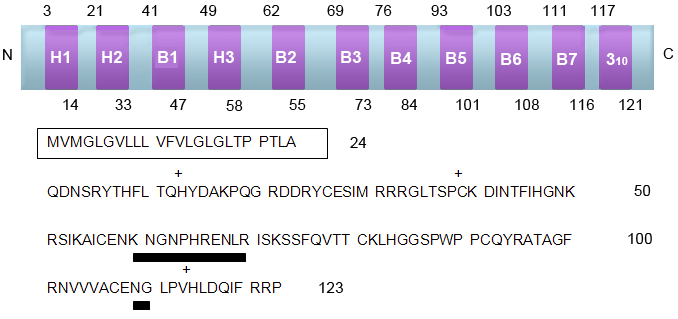
ANG is a basic, single chain potent blood-vessel inducing protein with a molecular weight of 14 kDa which was originally discovered in conditioned media of a human colon carcinoma cell line HT-29. ANG belongs to the RNAse superfamily, being 35% identical and 68% homologous to the pancreatic RNAse A sequence. The overall crystal structure of ANG shows a similarity to, but the biological actions of ANG differ distinctly from those of RNAse A. ANG possesses two distinct regions: a ribonucleolytic and a noncatalytic site, both being critical for angiogenic activity. Besides the ribonucleolytic activity, ANG differs from RNAse A in noncatalytic activities such as interactions with endothelial and smooth muscle cells and subsequent cellular responses in the events of neovascularization, including basement membrane degradation, signal transduction, and nuclear translocation.
Expression
Localisation
Function
The catalytic activity of ANG is several orders of magnitude weaker than that of RNAse A, this being partly due to the partial occupation of the pyrimidine-binding pocket of RNAse A by glutamine-117 residue so that the substrate binding is compromised. Key amino acids for the ribonucleolytic activity of ANG are His13, Lys40, or His114 of ANG, a catalytic triad, but mutations of these amino acids also reduce ANG induced angiogenesis, suggesting that the ribonucleolytic activity of ANG, although weak, is necessary for the angiogenic activity of ANG. Furthermore, several arginines are essential for ribonucleolytic and angiogenic activities.
II. Angiogenic activity
In addition to the catalytic activity, cell binding sites which encompass residues 60-68 of the surface loop as well as asparagine-109 are necessary for angiogenesis. The variants undergoing alterations of these residues lack any angiogenic activity while the enzymatic activity remains intact. Inversely, replacing the surface loop in RNAse A (residues 59-73) with the corresponding region of ANG (residue 57-70) bestows a neovascularization activity to the RNAse A.
1) Basement membrane degradation
Amino acid residues from Lys60 to Asn68 of the ANG constitute a cell surface receptor binding site. Accordingly, a 42 kDa endothelial cell surface protein was identified as an ANG binding protein, which was later found to be a smooth muscle type alpha-actin. The ANG-actin complex dissociates from the cell surface and activates a tissue type plasminogen activator, thus accelerating degradation of the basement membrane and extracellular matrix that allows endothelial cells to penetrate or migrate through the extracellular matrix more easily, an initial step of neovascularization. Furthermore, fibulin-1, an important molecule for stabilization of the blood vessel wall, binds to ANG, suggesting that the ANG-fibulin-1 complex modulates new blood vessel formation and stabilization.
2) Signal transduction
Besides the 42 kDa ANG receptor, a 170 kDa molecule later found on the endothelial surface is responsible for signal transduction, an important process leading to cell proliferation. ANG activates several secondary message cascades such as extracellular signal related kinase 1/2 (ERK1 and ERK2), protein kinase B/Akt, and stress-associated protein kinase/c-Jun N-terminal kinase (SAPK/JNK).
3) Nuclear translocation
The nuclear mechanisms underlying the function of ANG remain elusive. Internalization could involve cell surface ANG binding to proteins as well as to other molecules such as proteoglycans, followed by endocytosis. In this event, ANG interacts directly with intracellular protein alpha-actinin-2 followed by translocation into the nucleus through the nuclear pore in a passive manner. After nuclear retention, ANG binds to carrier proteins through a sequence 29-IMRRRGL-35 (nuclear localization signal) of ANG and to the ANG-binding element of ribosomal DNA (CTCT repeats) and subsequently, stimulates ribosomal RNA transcription. Nuclear translocation is essential for cell proliferation since it is considered a third messenger and promotes gene activation and transcription events, and inhibition of the nuclear translocation of angiogenin abolishes ANG-induced angiogenesis. Interestingly, the expression of cell surface receptors responsible for internalization as well as for the nuclear translocation of ANG also depends on the cell density.
III. Roles of ANG in physiological angiogenesis
The above biological events, which are distinct from those of RNAse A, are regulated tightly by the cell density-dependent expression of ANG receptors. The discovery of the uniquely regulated expression of ANG receptors provides us with the following conceivable mechanisms for ANG related angiogenesis. In the region where neovascularization is required, ANG binds to the endothelial surface 42 kDa receptor, and the ANG-42 kDa receptor complex dissociates from the cell surface and stimulates proteolytic activity, thus facilitating the penetration of endothelial cells through the extracellular matrix. After the leading cells migrate away, the endothelial cell density in the vicinity of migrating cells might be sparse, and such cell sparsity triggers the endothelial proliferation machinery that includes signal transduction, ANG internalization, and nuclear translocation. A 170 kDa receptor is one of the receptors responsible for this orchestrated process. Once the microenvironment is filled up with the sufficient amount of endothelial cells and the vascular network is established, such cell proliferating events diminish. Therefore, the above cell density dependent biological events are intelligent mechanisms where the proliferation machinery and subsequent angiogenic switch are on when neovascularization is needed while they are off to prevent unwanted angiogenesis.
Homology
Implicated in
Several ANG antagonists have been introduced and some have proved to be effective inhibitors for the establishment or metastasis of human tumors in athymic mice. These compounds include a monoclonal antibody, antisense oligonucleotides complementary to the AUG translational start site region of ANG, translocation blocker, enzymatic inhibitor targeting ANG enzymatic active site, ANG binding polypeptide complementary to the receptor binding site of ANG, and internalization pathway blocker.
Article Bibliography
| Pubmed ID | Last Year | Title | Authors |
|---|---|---|---|
| 8159679 | 1994 | Crystal structure of human angiogenin reveals the structural basis for its functional divergence from ribonuclease. | Acharya KR et al |
| 9815846 | 1997 | Angiogenic protein expression in advanced epithelial ovarian cancer. | Barton DP et al |
| 10460612 | 1999 | Angiogenic growth factors and endostatin in non-Hodgkin's lymphoma. | Bertolini F et al |
| 12380045 | 2002 | Melanoma incidence trends. | Bevona C et al |
| 11299848 | 2001 | Serum levels of angiogenin (ANG) in invasive cervical cancer and in cervical intraepithelial neoplasia (CIN). | Bodner-Adler B et al |
| 11847008 | 2002 | Blood levels of angiogenin and vascular endothelial growth factor are elevated in myelodysplastic syndromes and in acute myeloid leukemia. | Brunner B et al |
| 18599152 | 2009 | Exhaled breath analysis: novel approach for early detection of lung cancer. | Chan HP et al |
| 12734082 | 2003 | Prognostic significance of vascular endothelial growth factor, basic fibroblast growth factor, and angiogenin in patients with resectable hepatocellular carcinoma after surgery. | Chao Y et al |
| 16937522 | 2006 | Increased expression of angiogenin in gastric carcinoma in correlation with tumor angiogenesis and proliferation. | Chen Y et al |
| 15676279 | 2005 | The ribonuclease A superfamily of mammals and birds: identifying new members and tracing evolutionary histories. | Cho S et al |
| 9541628 | 1998 | Circulating serum levels of cytokines and angiogenic factors in patients with cervical cancer. | Chopra V et al |
| 18996696 | 2009 | Serum levels of angiogenic factors in early breast cancer remain close to normal. | Duranyildiz D et al |
| 19185322 | 2009 | A panel of angiogenic factors for early bladder cancer detection: enzyme immunoassay and Western blot. | Eissa S et al |
| 9738585 | 1998 | Markers of tumor angiogenesis and proteolysis independently define high- and low-risk subsets of node-negative breast cancer patients. | Eppenberger U et al |
| 10999742 | 2000 | Angiogenin expression in human colorectal cancer: the role of focal macrophage infiltration. | Etoh T et al |
| 19647334 | 2010 | Angiogenic markers in breath condensate identify non-small cell lung cancer. | Gessner C et al |
| 9305884 | 1997 | Anti-angiogenin activity of the peptides complementary to the receptor-binding site of angiogenin. | Gho YS et al |
| 11782452 | 2002 | Antiplasmin activity of a peptide that binds to the receptor-binding site of angiogenin. | Gho YS et al |
| 15120936 | 2004 | Clinical relevance of circulating angiogenic factors in patients with non-Hodgkin's lymphoma or Hodgkin's lymphoma. | Giles FJ et al |
| 12209593 | 2002 | Serum levels of angiogenin, basic fibroblast growth factor and endostatin in patients receiving intensive chemotherapy for acute myelogenous leukemia. | Glenjen N et al |
| 19649207 | 2009 | Circulating endothelial cells and circulating progenitor cells in breast cancer: relationship to endothelial damage/dysfunction/apoptosis, clinicopathologic factors, and the Nottingham Prognostic Index. | Goon PK et al |
| 1380830 | 1992 | Importance of asparagine-61 and asparagine-109 to the angiogenic activity of human angiogenin. | Hallahan TW et al |
| 10647931 | 2000 | The hallmarks of cancer. | Hanahan D et al |
| 10103013 | 1999 | Expression of receptors for human angiogenin in vascular smooth muscle cells. | Hatzi E et al |
| 10673358 | 2000 | Internalization and processing of human angiogenin by cultured aortic smooth muscle cells. | Hatzi E et al |
| 16361562 | 2005 | Neamine inhibits xenografic human tumor growth and angiogenesis in athymic mice. | Hirukawa S et al |
| 14581357 | 2003 | Increased expression of angiogenin in hepatocellular carcinoma in correlation with tumor vascularity. | Hisai H et al |
| 7991590 | 1994 | Angiogenin promotes invasiveness of cultured endothelial cells by stimulation of cell-associated proteolytic activities. | Hu G et al |
| 10649442 | 2000 | Human angiogenin is rapidly translocated to the nucleus of human umbilical vein endothelial cells and binds to DNA. | Hu Gf et al |
| 2006162 | 1991 | An angiogenin-binding protein from endothelial cells. | Hu GF et al |
| 9122172 | 1997 | A putative angiogenin receptor in angiogenin-responsive human endothelial cells. | Hu GF et al |
| 7679494 | 1993 | Actin is a binding protein for angiogenin. | Hu GF et al |
| 9707554 | 1998 | Neomycin inhibits angiogenin-induced angiogenesis. | Hu GF et al |
| 15737636 | 2005 | Alpha-actinin-2, a cytoskeletal protein, binds to angiogenin. | Hu H et al |
| 19276260 | 2009 | Neamine inhibits prostate cancer growth by suppressing angiogenin-mediated rRNA transcription. | Ibaragi S et al |
| 20044956 | 2009 | Role of the surface loop on the structure and biological activity of angiogenin. | Jang SH et al |
| 16682732 | 2006 | Patterns of cancer incidence, mortality, and prevalence across five continents: defining priorities to reduce cancer disparities in different geographic regions of the world. | Kamangar F et al |
| 12118120 | 2002 | A small-molecule inhibitor of the ribonucleolytic activity of human angiogenin that possesses antitumor activity. | Kao RY et al |
| 16322296 | 2005 | Elevated expression of angiogenin in prostate cancer and its precursors. | Katona TM et al |
| 17270024 | 2007 | Highly tumorigenic human androgen receptor-positive prostate cancer cells overexpress angiogenin. | Kawada M et al |
| 17125737 | 2007 | Angiogenin-induced protein kinase B/Akt activation is necessary for angiogenesis but is independent of nuclear translocation of angiogenin in HUVE cells. | Kim HM et al |
| 17044060 | 2007 | Analysis of chromosomal changes in serous ovarian carcinoma using high-resolution array comparative genomic hybridization: Potential predictive markers of chemoresistant disease. | Kim SW et al |
| 2866795 | 1985 | Sequence of the cDNA and gene for angiogenin, a human angiogenesis factor. | Kurachi K et al |
| 8311843 | 1994 | From receptor internalization to nuclear translocation. New targets for long-term pharmacology. | Laduron PM et al |
| 11802736 | 2002 | The ribonucleolytic activity of angiogenin. | Leland PA et al |
| 11549292 | 2001 | Angiogenin activates Erk1/2 in human umbilical vein endothelial cells. | Liu S et al |
| 11374889 | 2001 | Novel properties of the nucleolar targeting signal of human angiogenin. | Lixin R et al |
| 17175373 | 2007 | Chromosome abnormalities in advanced stage lymphoblastic lymphoma of children and adolescents: a report from CCG-E08. | Lones MA et al |
| 12799464 | 2003 | Prostate intraepithelial neoplasia induced by prostate restricted Akt activation: the MPAKT model. | Majumder PK et al |
| 10421268 | 1999 | Increased angiogenin expression in the tumor tissue and serum of urothelial carcinoma patients is related to disease progression and recurrence. | Miyake H et al |
| 7528139 | 1994 | The widespread expression of angiogenin in different human cells suggests a biological function not only related to angiogenesis. | Moenner M et al |
| 15182336 | 2004 | Serum angiogenin is not elevated in patients with early B-cell chronic lymphocytic leukemia but is prognostic factor for disease progression. | Molica S et al |
| 9748135 | 1998 | Angiogenin expression and prognosis in primary breast carcinoma. | Montero S et al |
| 7945327 | 1994 | Identification of the nucleolar targeting signal of human angiogenin. | Moroianu J et al |
| 15128420 | 2004 | Levels of soluble angiogenin in chronic myeloid malignancies: clinical implications. | Musolino C et al |
| 12376746 | 2002 | Molecular cloning and characterization of a novel human Rab ( Rab2B) gene. | Ni X et al |
| 16740712 | 2006 | Identification of specific gene copy number changes in asbestos-related lung cancer. | Nymark P et al |
| 11948474 | 2002 | Inhibition of prostate carcinoma establishment and metastatic growth in mice by an antiangiogenin monoclonal antibody. | Olson KA et al |
| 8062244 | 1994 | A monoclonal antibody to human angiogenin suppresses tumor growth in athymic mice. | Olson KA et al |
| 19684604 | 2009 | Loci on 7p12.2, 10q21.2 and 14q11.2 are associated with risk of childhood acute lymphoblastic leukemia. | Papaemmanuil E et al |
| 18190463 | 2008 | Angiogenesis-related growth factors and cytokines in the serum of patients with B non-Hodgkin lymphoma; relation to clinical features and response to treatment. | Passam FH et al |
| 11328412 | 2001 | Hypoxia-stimulated expression of angiogenic growth factors in cervical cancer cells and cervical cancer-derived fibroblasts. | Pilch H et al |
| 7615514 | 1995 | Replacing a surface loop endows ribonuclease A with angiogenic activity. | Raines RT et al |
| 2457389 | 1988 | Human angiogenin, an organogenic protein. | Riordan JF et al |
| 8159680 | 1994 | Role of glutamine-117 in the ribonucleolytic activity of human angiogenin. | Russo N et al |
| 3619929 | 1987 | Angiogenin mRNA in human tumor and normal cells. | Rybak SM et al |
| 2497770 | 1989 | Role of lysines in human angiogenin: chemical modification and site-directed mutagenesis. | Shapiro R et al |
| 3663649 | 1987 | Isolation of angiogenin from normal human plasma. | Shapiro R et al |
| 1281426 | 1992 | Identification of functional arginines in human angiogenin by site-directed mutagenesis. | Shapiro R et al |
| 11205216 | 2000 | Serum level of angiogenin in breast cancer. | Sheen-Chen SM et al |
| 12684892 | 2003 | Angiogenin in sera as an independent prognostic factor in gastric cancer. | Shimoyama S et al |
| 16567967 | 2006 | Influence of angiogenin on the growth of A375 human melanoma cells and the expression of basic fibroblast growth factor. | Song J et al |
| 2866794 | 1985 | Amino acid sequence of human tumor derived angiogenin. | Strydom DJ et al |
| 12057119 | 2001 | Metastatic melanoma. | Sun W et al |
| 18271875 | 2008 | Whole-genome profiling of chromosomal aberrations in hepatoblastoma using high-density single-nucleotide polymorphism genotyping microarrays. | Suzuki M et al |
| 17013089 | 2006 | Circulating serum levels of angiogenic factors and vascular endothelial growth factor receptors 1 and 2 in melanoma patients. | Tas F et al |
| 15735021 | 2005 | Angiogenin is translocated to the nucleus of HeLa cells and is involved in ribosomal RNA transcription and cell proliferation. | Tsuji T et al |
| 11208853 | 2001 | Increased serum concentration of angiogenic factors in malignant melanoma patients correlates with tumor progression and survival. | Ugurel S et al |
| 11529846 | 2001 | Significance of angiogenin plasma concentrations in patients with acute myeloid leukaemia and advanced myelodysplastic syndrome. | Verstovsek S et al |
| 17762972 | 2007 | Serum angiogenin levels predict treatment response in patients with stage IV melanoma. | Vihinen P et al |
| 10365140 | 1999 | Renal cell carcinoma: relevance of angiogenetic factors. | Wechsel HW et al |
| 1978563 | 1990 | Localization of the human angiogenin gene to chromosome band 14q11, proximal to the T cell receptor alpha/delta locus. | Weremowicz S et al |
| 11467837 | 2001 | Angiogenin activates human umbilical artery smooth muscle cells. | Xu Z et al |
| 12515546 | 2003 | Identification and characterization of an angiogenin-binding DNA sequence that stimulates luciferase reporter gene expression. | Xu ZP et al |
| 16971483 | 2006 | A therapeutic target for prostate cancer based on angiogenin-stimulated angiogenesis and cancer cell proliferation. | Yoshioka N et al |
| 19423182 | 2009 | Angiogenin is involved in lung adenocarcinoma cell proliferation and angiogenesis. | Yuan Y et al |
| 18465022 | 2008 | Interaction between angiogenin and fibulin 1: evidence and implication. | Zhang H et al |
| 15912517 | 2005 | Increased plasma levels of angiogenin and the risk of bladder carcinoma: from initiation ot recurrence. | Zhao H et al |
Other Information
Locus ID:
NCBI: 283
MIM: 105850
HGNC: 483
Ensembl: ENSG00000214274
Variants:
dbSNP: 283
ClinVar: 283
TCGA: ENSG00000214274
COSMIC: ANG
RNA/Proteins
| Gene ID | Transcript ID | Uniprot |
|---|---|---|
| ENSG00000214274 | ENST00000336811 | P03950 |
| ENSG00000214274 | ENST00000336811 | W0UV28 |
| ENSG00000214274 | ENST00000397990 | P03950 |
| ENSG00000214274 | ENST00000397990 | W0UV28 |
Expression (GTEx)
Pathways
References
| Pubmed ID | Year | Title | Citations |
|---|---|---|---|
| 38180358 | 2024 | Neural stem cell homeostasis is affected in cortical organoids carrying a mutation in Angiogenin. | 0 |
| 38295715 | 2024 | Colorectal Cancer-Associated Myofibroblasts Exhibit Enhanced Angiogenin Expression and Signaling via the PLXNB2 Receptor. | 0 |
| 38621442 | 2024 | Long-timescale atomistic simulations uncover loss-of-function mechanisms of uncharacterized Angiogenin mutants associated with ALS. | 0 |
| 38718836 | 2024 | Structural mechanism of angiogenin activation by the ribosome. | 1 |
| 38180358 | 2024 | Neural stem cell homeostasis is affected in cortical organoids carrying a mutation in Angiogenin. | 0 |
| 38295715 | 2024 | Colorectal Cancer-Associated Myofibroblasts Exhibit Enhanced Angiogenin Expression and Signaling via the PLXNB2 Receptor. | 0 |
| 38621442 | 2024 | Long-timescale atomistic simulations uncover loss-of-function mechanisms of uncharacterized Angiogenin mutants associated with ALS. | 0 |
| 38718836 | 2024 | Structural mechanism of angiogenin activation by the ribosome. | 1 |
| 36592684 | 2023 | Non-enzymatic glycation of human angiogenin: Effects on enzymatic activity and binding to hRI and DNA. | 0 |
| 37861896 | 2023 | Angiogenin as a Possible Mediator of Macrophage-Mediated Regulation of Fibroblast Functions. | 0 |
| 36592684 | 2023 | Non-enzymatic glycation of human angiogenin: Effects on enzymatic activity and binding to hRI and DNA. | 0 |
| 37861896 | 2023 | Angiogenin as a Possible Mediator of Macrophage-Mediated Regulation of Fibroblast Functions. | 0 |
| 34784565 | 2022 | Oxaliplatin inhibits angiogenin proliferative and cell migration effects in prostate cancer cells. | 9 |
| 35045729 | 2022 | Endothelial Intracellular ANG (Angiogenin) Protects Against Atherosclerosis by Decreasing Endoplasmic Reticulum Stress. | 5 |
| 35119039 | 2022 | Angiogenin and MMP-2 as potential biomarkers in the differential diagnosis of gestational trophoblastic diseases. | 4 |
Citation
Shouji Shimoyama
ANG (angiogenin, ribonuclease, RNase A family, 5)
Atlas Genet Cytogenet Oncol Haematol. 2010-06-01
Online version: http://atlasgeneticsoncology.org/gene/635/ang
