Von Hippel-Lindau
2001-01-01 Stéphane Richard AffiliationGénétique Oncologique EPHE, Faculté de Médecine Paris-Sud, 63 av Gabriel Péri, 94276 LE KREMLIN BICETRE, France
Identity
Name
Von Hippel-Lindau
Note
Von Hippel-Lindau (VHL) disease is a hereditary devastating cancer syndrome, predisposing to the development of various benign and malignant tumours (Central Nervous System [CNS] and retinal hemangioblastomas, endolymphatic sac tumours, renal cell carcinoma (RCC) and\/or renal cysts, pheochromocytomas, pancreatic cysts and neuroendocrine tumours, endolymphatic sac tumours, epididymal and broad ligament cystadenomas). VHL disease is the first cause of hereditary kidney cancer
Inheritance
an autosomal dominant disorder with high penetrance (increasing with age: 97% by age 60 yrs) but variable expressivity (with phenotype\/genotype correlations); frequency is estimated at about 2.5\/105; neomutations represent about 20% of cases.
Omim
193300
Mesh
D006623
Orphanet
892 Von Hippel-Lindau disease
Umls
C0019562
Clinics
Phenotype and clinics
onset of the disease usually occurs between 18 and 30 yrs, often with retinal or cerebellar hemangioblastomas, but can also manifests in children, especially by retinal hemangioblastomas and pheochromocytoma.
Central nervous system (CNS) hemangioblastomas occur in 60-80% of patients (infratentorial localisation in 60 % of cases, intraspinal in 30-40%; supratentorial in 1%). Multiple tumours are frequent (hemangioblastomatosis). Retinal hemangioblastomas, often multiple and bilateral, occur in about 50% of patients. Most retinal hemangioblastomas occur peripherally but optic disc (papillary or juxtapapillary) locations are encountered in almost 15% of cases. Renal cell carcinomas occur in up to 75% of cases. They are mostly multifocal and bilateral. Tumors have a classical solid or a more specific mixed cystic\/solid appearance and are always of clear cell subtype. Multiple benign cysts are also observed. Pheochromocytomas, often bilateral, are mostly found in a subset of families, where it can be the only sign of VHL. Extraadrenal paragangliomas are sometimes encountered. Pancreas manifestations occur in up to 77% of patients: isolated or multiple cysts and serous cystadenomas are the most frequent lesions, neuroendocrine tumours occur in about 10-15 % of cases. Endolymphatic sac tumours, only recently recognised as a manifestation of VHL disease, occur in up to 11% of cases. Epididymal cysts, often bilateral, occur in about 54% of men. Cystadenomas of the broad ligament (\"adnexal papillary tumour of probable mesonephric origin\") are extremely rare but highly specific.
There are two main clinical types of VHL according to the absence (type 1) or presence of pheochromocytoma (type 2). The type 2 is subdivised in three subtypes, 2A (with low risk of renal cancer and pancreatic tumors); 2B (the full multi-tissues subtype), and 2C (pheochromocytomas only, recently individualised by molecular genetics).
There are two main clinical types of VHL according to the absence (type 1) or presence of pheochromocytoma (type 2). The type 2 is subdivised in three subtypes, 2A (with low risk of renal cancer and pancreatic tumors); 2B (the full multi-tissues subtype), and 2C (pheochromocytomas only, recently individualised by molecular genetics).
Neoplastic risk
Treatment
Regular clinical follow-up of patients and gene-carriers is imperative in order to detect manifestations early and to avoid complications;
Treatment of symptomatic CNS hemangioblastoma remains mainly neurosurgical, often in emergency, but stereotactic radiosurgery is emerging as an alternative therapeutic procedure in patients with multifocal solid hemangioblastomas. Retinal hemangioblastoma are treated by cryotherapy or laser depending on the location, size and number of tumours. Endolymphatic sac tumours require surgical treatment with the help of ENT specialists as soon as possible in order to prevent definitive hearing loss. Preoperative embolisation is sometimes performed to avoid bleeding. Renal cell carcinomas have to be treated when their size is about 3 cm in diameter. Nephron sparing surgery is the choice method and may delay bilateral nephrectomy and dialysis. When binephrectomy is inevitable, renal transplantation can be discussed after a 2 year period without metastasis Pheochromocytomas have to be surgically removed, preferentially with the use of laparoscopy. When possible, partial adrenalectomy appears to be a safe method of preserving adrenocortical function and quality of life. Pancreatic neuroendocrine tumours require surgical removal at a 2-3 cm size in order to avoid metastatic dissemination. Pancreatic cysts and serous cystadenomas do not require resection but sometimes a percutaneous drainage or endoscopic implantation of a biliary stent is indicated in cases of compression. Surgery is indicated for broad ligament cystadenomas and for symptomatic epididymal cystadenomas. Medical perspectives: several clinical studies are on-going with specific drugs that block VEGF in the hope of causing stabilisation or recession of CNS and retinal hemangioblastomas. Such clinical trials are in processing in France, England and Poland.
Prognosis
according to the severity of the disease in a given patient, and to the quality of a regular follow up. Mean age at death is about 50 yrs and renal cell carcinomas and CNS hemangioblastomas are the major causes of death. As treatment of VHL manifestations in first stages will improve significantly the clinical outcome and the quality of life of patients, early and unambiguous diagnosis is mandatory. Thus, DNA testing is emerging as a major progress in this consideration, pawing the way to an effective presymptomatic diagnosis.
Genes involved and Proteins
Description
3 exons
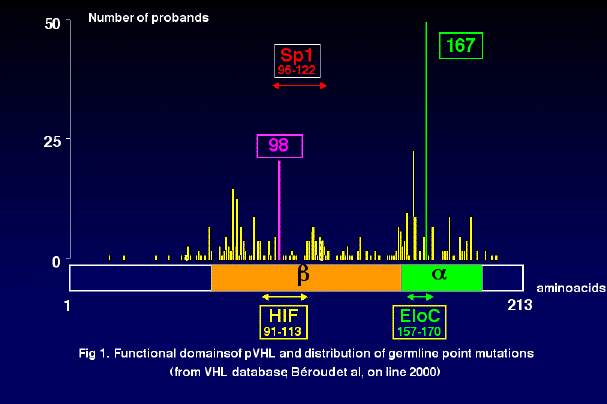
Functional domains of pVHL and distribution of germline point mutations.
Description
213 amino acids
Expression
wide
Function
tumour-suppressor gene. pVHL interacts with elongins B and C and cullin 2 through a complex exhibiting ubiquitine ligase activity. Its main function is to negatively regulate VEGF mRNAs (and angiogenesis as a result) by targeting hypoxia inducible transcription factors HIF for degradation by the proteasome. pVHL has also major functions in extra cellular matrix formation and cell cycle control.
Germinal
causes VHL disease.
more than 400 mutations have been identified, comprising for more than 150 independent intragenic mutational events; virtually 100% of mutations are detectable. The majority of mutations are represented by point mutations including missense, nonsense mutations, splicing, microinsertions or microdeletions. In about 25 % of cases, a large deletion of the VHL gene is observed.
Mutations resulting in a truncated protein are mostly associated with type 1 VHL. In type 2, mutations are generally missense mutations affecting preferentially the critical contact region between pVHL and elongin C (residues 157-171) with an hot-spot at codon 167. In type 2A there is a founder effect for a specific missense mutation at codon 98. In type 2C, mutations occur in regions potentially involved in critical function exclusive to the adrenals (as codon 188). Last, patients with identical VHL germline mutations may display different phenotypes, indicating that the issue of genotype-phenotype correlations is complex in VHL. Evidence was recently provided that unknown modifier genes and environmental influences could play an additional role in the clinical expression of the disease.
more than 400 mutations have been identified, comprising for more than 150 independent intragenic mutational events; virtually 100% of mutations are detectable. The majority of mutations are represented by point mutations including missense, nonsense mutations, splicing, microinsertions or microdeletions. In about 25 % of cases, a large deletion of the VHL gene is observed.
Mutations resulting in a truncated protein are mostly associated with type 1 VHL. In type 2, mutations are generally missense mutations affecting preferentially the critical contact region between pVHL and elongin C (residues 157-171) with an hot-spot at codon 167. In type 2A there is a founder effect for a specific missense mutation at codon 98. In type 2C, mutations occur in regions potentially involved in critical function exclusive to the adrenals (as codon 188). Last, patients with identical VHL germline mutations may display different phenotypes, indicating that the issue of genotype-phenotype correlations is complex in VHL. Evidence was recently provided that unknown modifier genes and environmental influences could play an additional role in the clinical expression of the disease.
Somatic
Somatic VHL gene inactivation is frequent in sporadic hemangioblastomas and moreover in sporadic renal cell carcinoma, representing a significant event in the development of these tumors. Different mutational mechanisms lead to the inactivation of the VHL gene including loss of heterozygosity, small intragenic mutations or hypermethylation of the promoter.
To be noted
Hgmd
120488
Associations
http:\/\/www.vhl.org\/ VHL Famimy Alliance
Databases
http:\/\/www.umd.necker.fr:2005\/ VHL mutation database
Article Bibliography
| Pubmed ID | Last Year | Title | Authors |
|---|---|---|---|
| 9399847 | 1998 | Software and database for the analysis of mutations in the VHL gene. | Béroud C et al |
| 7759077 | 1995 | Von Hippel-Lindau (VHL) disease with pheochromocytoma in the Black Forest region of Germany: evidence for a founder effect. | Brauch H et al |
| 9012411 | 1997 | Clustering of Caucasian Leber hereditary optic neuropathy patients containing the 11778 or 14484 mutations on an mtDNA lineage. | Brown MD et al |
| 8872970 | 1996 | Renal involvement in von Hippel-Lindau disease. | Chauveau D et al |
| 9187702 | 1997 | Epididymal cystadenomas in von Hippel-Lindau disease. | Choyke PL et al |
| 10725953 | 2000 | von Hippel-Lindau disease. | Couch V et al |
| 9062583 | 1997 | The von Hippel-Lindau tumor suppressor gene. A rare and intriguing disease opening new insight into basic mechanisms of carcinogenesis. | Decker HJ et al |
| 10630173 | 1999 | Von Hippel-Lindau syndrome. A pleomorphic condition. | Friedrich CA et al |
| 10408776 | 1999 | Mutations of the VHL gene in sporadic renal cell carcinoma: definition of a risk factor for VHL patients to develop an RCC. | Gallou C et al |
| 10567493 | 1999 | The impact of molecular genetic analysis of the VHL gene in patients with haemangioblastomas of the central nervous system. | Gläsker S et al |
| 11040195 | 2000 | Pancreatic involvement in von Hippel-Lindau disease. The Groupe Francophone d'Etude de la Maladie de von Hippel-Lindau. | Hammel PR et al |
| 10804089 | 2000 | von Hippel-Lindau syndrome: target for anti-vascular endothelial growth factor (VEGF) receptor therapy. | Harris AL et al |
| 10092992 | 1999 | Management of renal cell carcinoma in von Hippel-Lindau disease. | Hes FJ et al |
| 9820032 | 1998 | The VHL tumour-suppressor gene paradigm. | Kaelin WG Jr et al |
| 2642584 | 1989 | von Hippel-Lindau disease affecting 43 members of a single kindred. | Lamiell JM et al |
| 8493574 | 1993 | Identification of the von Hippel-Lindau disease tumor suppressor gene. | Latif F et al |
| 10928862 | 2000 | Attitudes of von Hippel-Lindau disease patients towards presymptomatic genetic diagnosis in children and prenatal diagnosis. | Levy M et al |
| 7837390 | 1995 | Identification of the von Hippel-Lindau (VHL) gene. Its role in renal cancer. | Linehan WM et al |
| 8929948 | 1996 | A genetic register for von Hippel-Lindau disease. | Maddock IR et al |
| 9413424 | 1997 | von Hippel-Lindau disease. | Maher ER et al |
| 2274658 | 1990 | Clinical features and natural history of von Hippel-Lindau disease. | Maher ER et al |
| 9145719 | 1997 | Endolymphatic sac tumors. A source of morbid hearing loss in von Hippel-Lindau disease. | Manski TJ et al |
| 10353251 | 1999 | The tumour suppressor protein VHL targets hypoxia-inducible factors for oxygen-dependent proteolysis. | Maxwell PH et al |
| 9751329 | 1998 | Prevalence, morphology and biology of renal cell carcinoma in von Hippel-Lindau disease compared to sporadic renal cell carcinoma. | Neumann HP et al |
| 10366821 | 1999 | The von Hippel-Lindau tumour suppressor protein: new perspectives. | Ohh M et al |
| 9651579 | 1998 | The von Hippel-Lindau tumor suppressor protein is required for proper assembly of an extracellular fibronectin matrix. | Ohh M et al |
| 9829912 | 1998 | Germline mutation profile of the VHL gene in von Hippel-Lindau disease and in sporadic hemangioblastoma. | Olschwang S et al |
| 10554035 | 1999 | Constitutional von Hippel-Lindau (VHL) gene deletions detected in VHL families by fluorescence in situ hybridization. | Pack SD et al |
| 9448273 | 1998 | The von Hippel-Lindau tumor suppressor gene is required for cell cycle exit upon serum withdrawal. | Pause A et al |
| 10809480 | 2000 | Central nervous system hemangioblastomas, endolymphatic sac tumors, and von Hippel-Lindau disease. | Richard S et al |
| 10416685 | 1999 | Expression of von Hippel-Lindau protein in normal and pathological human tissues. | Sakashita N et al |
| 10631138 | 2000 | Mosaicism in von Hippel-Lindau disease: lessons from kindreds with germline mutations identified in offspring with mosaic parents. | Sgambati MT et al |
| 10205047 | 1999 | Structure of the VHL-ElonginC-ElonginB complex: implications for VHL tumor suppressor function. | Stebbins CE et al |
| 9829911 | 1998 | Improved detection of germline mutations in the von Hippel-Lindau disease tumor suppressor gene. | Stolle C et al |
| 10944113 | 2000 | Mechanism of regulation of the hypoxia-inducible factor-1 alpha by the von Hippel-Lindau tumor suppressor protein. | Tanimoto K et al |
| 10458336 | 1999 | Clinical and genetic characterization of pheochromocytoma in von Hippel-Lindau families: comparison with sporadic pheochromocytoma gives insight into natural history of pheochromocytoma. | Walther MM et al |
| 10088816 | 1999 | Clinical characteristics of ocular angiomatosis in von Hippel-Lindau disease and correlation with germline mutation. | Webster AR et al |
| 10857749 | 2000 | Comparative sequence analysis of the VHL tumor suppressor gene. | Woodward ER et al |
| 10232616 | 1999 | Third International Meeting on von Hippel-Lindau disease. | Zbar B et al |
| 8956040 | 1996 | Germline mutations in the Von Hippel-Lindau disease (VHL) gene in families from North America, Europe, and Japan. | Zbar B et al |
External Links
Citation
Stéphane Richard
Von Hippel-Lindau
Atlas Genet Cytogenet Oncol Haematol. 2001-01-01
Online version: http://atlasgeneticsoncology.org/cancer-prone-disease/10010/new-content/gene-fusions-explorer/
Historical Card
1998-04-01 Von Hippel-Lindau by Anne Marie Capodano Affiliation
Laboratoire de Cytogénétique Oncologique, Hôpital de la Timone, 264 rue Saint Pierre, 13005 Marseille, France
