GSTM1 (Glutathione S-transferase M1)
2014-12-01 Marija Pljesa-Ercegovac , Marija Matic AffiliationInstitute of Medical, Clinical Biochemistry, Faculty of Medicine, University of Belgrade, Serbia. [email protected]; [email protected]
Identity
HGNC
LOCATION
1p13.3
LOCUSID
ALIAS
GST1,GSTM1-1,GSTM1a-1a,GSTM1b-1b,GTH4,GTM1,H-B,MU,MU-1
FUSION GENES
Abstract
Review on GSTM1, with data on DNA, on the protein encoded, and where the gene is implicated.
DNA/RNA
Note
In humans, five GSTM genes are encoded by a 100-kb gene cluster on chromosome 1p13.3 arranged as 5?-GSTM4-GSTM2-GSTM1-GSTM5-GSTM3-3?, known to be highly polymorphic (Pearson et al., 1993).
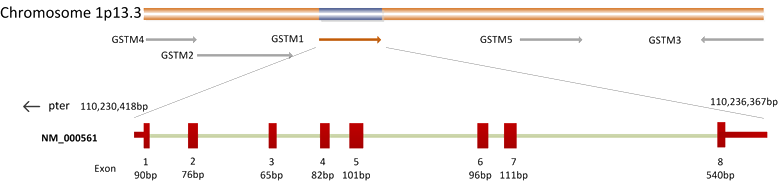
GSTM1 gene. The GSTM1 gene spans a region of 21,244 bases, composed of the eights exons (red) and seven introns (green). Exons 1, 2, 3, 4, 5, 6, 7 and 8 are 90bp, 76bp, 65bp, 82bp, 101bp, 96bp, 111bp and 540bp in length, respectively.
Description
The GSTM1 gene is composed of 8 exons spanning a region of 21,244 bases, with transcript length of 1,161 bps and translation length of 218 residues (according to ensembl GRCh37 release 78). The GSTM1 gene is approximately 20 kb in length and is closely flanked by other mu class gene sequences. The end points of the polymorphic GSTM1 deletion are: the left repeated region 5 kb downstream from the 3?-end of the GSTM2 gene and 5 kb upstream from the beginning of the GSTM1 gene; the right repeated region 5 kb downstream from the 3?-end of the GSTM1 and 10 kb upstream from the 5?-end of the GSTM5 gene (Xu et al., 1998). The cDNAs encoded by GSTM1 and GSTM2 share a remarkable 99% sequence identity (Vorachek et al., 1991). The fact that GSTM1 and GSTM2 are physically linked suggests that the frequent deletion of the GSTM1 locus is caused by unequal crossing-over (Pearson et al., 1993). Furthermore, in HeLa cells, it has been confirmed that GSTM2 overexpression, following transient knockdown of GSTM1 and the absence of GSTM1 activity, may be compensated by the overexpression of GSTM2 (Bhattacharjee et al., 2013). Moreover, existence of linkage disequilibrium between GSTM1 and GSTM3 suggests that association between phenotype and GSTM1 genotypes may also reflect polymorphism in GSTM3 or even other GSTM genes (Wu et al., 2012).
Polymorphisms: The restriction mapping data revealed the presence of a GST mu cluster with two GSTM1 genes in tandem situated between the GSTM2 and GSTM5 genes (McLellan et al., 1997). The GSTM1 gene contains four different alleles, leading to several M1 class polymorphisms, designated as GSTM1-0, GSTM1-A, GSTM1-B and GSTM1-1x2 alleles (Wu et al., 2012; Board PG, 1981). GSTM1-0 (GSTM1 null allele) arose from a recombination event during evolution between 2 highly homologous regions flanking this locus, resulting in deletion of a 20-kb segment (Xu et al., 1998). This deletion produces a novel 7.4-kb HindIII fragment with the loss of 10.3- and 11.4-kb HindIII fragments, hence homozygotes for GSTM1 null allele produce no GSTM1 protein. The prevalence of GSTM1 deletion polymorphisms varies across ethnic groups, from 18% to 66% (median, 50%), with the exception of Asians, for whom it is 38%-58% (Wu et al., 2012). GSTM1-A and GSTM1-B differ by a single base in exon 7 (Seidegard et al., 1988). Namely, GSTM1-A and GSTM1-B differ by a C?G substitution at base position 534, resulting in a substitution of Lys?Asn at amino acid 172 (Widersten et al., 1991). The substitution further results in formation of monodimers (GSTM1A-1A, GSTM1B-1B) or heterodimers (GSTM1A-1B), although in vitro studies suggest that their activities are similar (Widersten et al., 1991). In Saudi Arabian population, a unique GSTM1 variant dGSTM1-1x2, containing a duplicated GSTM1 gene has been identified (Evans et al., 1996).
Polymorphisms: The restriction mapping data revealed the presence of a GST mu cluster with two GSTM1 genes in tandem situated between the GSTM2 and GSTM5 genes (McLellan et al., 1997). The GSTM1 gene contains four different alleles, leading to several M1 class polymorphisms, designated as GSTM1-0, GSTM1-A, GSTM1-B and GSTM1-1x2 alleles (Wu et al., 2012; Board PG, 1981). GSTM1-0 (GSTM1 null allele) arose from a recombination event during evolution between 2 highly homologous regions flanking this locus, resulting in deletion of a 20-kb segment (Xu et al., 1998). This deletion produces a novel 7.4-kb HindIII fragment with the loss of 10.3- and 11.4-kb HindIII fragments, hence homozygotes for GSTM1 null allele produce no GSTM1 protein. The prevalence of GSTM1 deletion polymorphisms varies across ethnic groups, from 18% to 66% (median, 50%), with the exception of Asians, for whom it is 38%-58% (Wu et al., 2012). GSTM1-A and GSTM1-B differ by a single base in exon 7 (Seidegard et al., 1988). Namely, GSTM1-A and GSTM1-B differ by a C?G substitution at base position 534, resulting in a substitution of Lys?Asn at amino acid 172 (Widersten et al., 1991). The substitution further results in formation of monodimers (GSTM1A-1A, GSTM1B-1B) or heterodimers (GSTM1A-1B), although in vitro studies suggest that their activities are similar (Widersten et al., 1991). In Saudi Arabian population, a unique GSTM1 variant dGSTM1-1x2, containing a duplicated GSTM1 gene has been identified (Evans et al., 1996).
Transcription
The 1161-nucleotide transcript encodes a protein of 218 amino acid residues
Pseudogene
At least one other mu class GST gene or pseudogene exists and is found on chromosome 3, probably in the region 3p24-3pter (Pearson et al., 1993; McLellan et al., 1997).
Proteins
Note
Glutathione S-transferase M1 describes 2 isoforms produced by alternative splicing (UNIPROT).
Ligand-free human glutathione S-transferase M1-1: http://www.pdb.org/pdb/explore/explore.do?structureId=1GTU (Patskovsky et al., 1999) ; Structure of human glutathione transferase (GST) M1-1 in complex with glutathione: http://www.pdb.org/pdb/explore/jmol.do?structureId=1XW6&bionumber=1 (Patskovsky et al., 2006)
Description
Amino acids: 218. Calculated molecular mass: 25.712 Da. Isoelectric point: at pH 6.6 (Mannervik B, 1985). The active GSTM1 enzyme results from the homo- or heterodimeric combination of the products of the 2 alleles. Namely, in GSTM1 examples of gene duplication, as well as, three alleles have been described (GSTM1 null, GSTM1-A and GSTM1-B) (Hayes and Strange, 2000). GSTM1-A and GSTM1-B alleles encode proteins that are catalytically identical (Widersten et al., 1991), while the null allele and gene duplication confer marked differences in enzyme activity (Hayes and Strange, 2000). This difference in enzyme activity is due to the fact that the null phenotype is characterized by an absence of near-neutral enzymes, whereas individuals with either GSTM1-A or GSTM1-B phenotype each express one near-neutral transferase (Vos and Van Bladeren, 1990). Regarding the subunit composition, each subunit contains a glutathion-binding site (G-site) and a second adjacent hydrophobic-binding site for the electrophilic substrate (H-site) (Ji et al., 1992), located in a deep cavity, composed of three relatively mobile structural elements. Fifteen hydrogen bonds or salt-bridge contacts are involved in interaction between glutathione and enzyme (Ji et al., 1992).
Expression
Quantitative analysis of GSTM1 protein in various human tissues showed that the richest source of cytosolic GSTM1 is the liver. The other sources include testis, lungs, stomach, intestine, spleen, brain, kidneys, heart, breast, colon, pituitary and the lymphocytes (Vos and Van Bladeren, 1990; Eaton and Bammler, 1999). Binding of the transcription factor AP1 has been suggested as a common mechanism for up-regulation of GSTs (Hayes and Pulford, 1995).
Localisation
Cytosolic.
Function
Human GSTM1 enzyme catalyzes the glutathione-dependent detoxification of electrophiles, showing highly promiscuous substrate selectivity for many structurally unrelated chemicals, including environmental carcinogens (e.g. benzo(a)pyrene diol epoxides) and several chemotherapeutic agents (such as BCNU, brostallicin, ethacrinic acid, thiopurines, vincristine and chlorambucil) (Depeille et al., 2004; Lo and Ali-Osman, 2007). In addition to enzymatic detoxification, GSTM1 acts as a modulator of mitogen-activated protein kinase (MAPK) signal transduction pathway and mediates apoptosis via a mechanism involving protein-protein interactions. Namely, GSTM1 forms complexes with apoptosis signal-regulating kinase 1 (ASK1), inhibiting ASK1 activation during cellular stress (Cho et al., 2001; Townsend and Tew, 2003). This suggests that GSTM1 might confer drug resistance by two distinct means: by direct inactivation (detoxification) of chemotherapeutic drugs and/or by acting as inhibitor of MAPK pathway.
Homology
The close physical proximity exists between the GSTM1 and GSTM2 loci, which share 99% nucleotide sequence identity over 460 nucleotides of 3-untranslated mRNA (Pearson et al., 1993).
Mutations
Germinal
None described so far.
Somatic
21 mutations (COSMIC): 15 substitution-missense, 5 substitution-synonimous, 1 unknown type.
Implicated in
Entity name
Lung cancer
Note
: It has been suggested that GSTM1-null genotype may be associated with the risk of lung cancer, however there is a possibility that the magnitude of the association varies significantly by characteristics, such as ethnic background (Ye et al., 2006). Furthermore, observations from a large pooled analysis strongly suggest the existence of gene-gene interactions in lung carcinogenesis, leading to an increased risk of lung cancer in case of the double deletion of both GSTM1 and GSTT1, which is even more potentiated when CYP1A1-4 is included (Vineis et al., 2007). In studies conducted in populations where tobacco use is likely to be the primary cause of lung cancer, the GSTM1-null genotype was associated with a significantly increased lung cancer risk, as well as, in populations exposed to sources of indoor air pollution from cooking and heating (Hosgood et al., 2007).
Entity name
Breast cancer
Note
Only a slightly higher breast cancer risk has been suggested among women with GSTM1 deletion, more significant in post-menopausal women, as well as, in populations with a lower frequency of GSTM1 deficiency (Sull et al., 2004). Further analysis showed that increased breast cancer risk was associated with GSTM1-null genotype in Caucasian and Asian women, suggesting GSTM1-null genotype as a low-penetrant risk factor for developing breast cancer (Qiu et al., 2010). The GSTM1-null genotype is also recognized as a risk factor for synchronous breast cancers and for breast cancer associated with one extramammary cancer (Chiril? et al., 2014). Recently, GSTM1 polymorphism has been suggested as a prognostic factor in women with breast cancer (Oliveira et al., 2014).
Entity name
Oral and pharyngeal cancers
Note
Although an association between the GSTM1-null genotype and head and neck tumors has been suggested, the meta-analysis of Varela-Lema et al. (2008) showed that GSTM1-null genotype could not be associated with oral and pharyngeal tumors in Caucasians, possibly due to the fact that previous meta- and pooled analysis did not analyze ethnic specificity. However, polymorphic deletion of the GSTM1 gene seems to markedly alter the alcohol-tobacco interaction, contributing to susceptibility to oral and pharyngeal cancer (Peters et al., 2006).
Entity name
Esophageal cancer
Note
There are contradictory findings regarding the role of GSTM1 polimorphism in susceptibility to esophageal cancer. Namely, it seems that ethnic specificity plays a role, since no significant association between GST genotypes and esophageal squamous cell or adenocarcinoma risk in Caucasian was found (Dura et al., 2013), while association between GSTM1-null genotype and risk of esophageal carcinoma has been confirmed in Chinese population (Zhong et al., 2013).
Entity name
Gastric cancer
Note
It has been found that GSTM1-null genotype is associated with increased risk of gastric cancer. When analyzed according to ethnicities, increased risk of gastric cancer was only observed in Asians, while no significant association was found in Caucasians or Latin Americans. GSTM1-null genotype increases susceptibility to gastric cancer both in ever-smokers and non-smokers, while the significant association was only observed in Helicobacter pylori positive population (Zhao et al., 2013; Lao et al., 2014).
Entity name
Liver cancer
Note
GSTM1-null genotype is associated with significantly increased risk of hepatocellular carcinoma only among East Asians and Indians, while the association is lacking among Caucasian and African populations (Shen et al., 2014). This is further confirmed by results on association between GSTM1-null genotype and an increased risk of hepatocellular carcinoma in Chinese population (Liu et al., 2013).
Entity name
Pancreatic cancer
Note
Available data are not sufficient to identify the association between the GSTM1 polymorphism and pancreatic cancer risk (Fan et al., 2013).
Entity name
Renal cell carcinoma
Note
Recent meta-analysis of 11 case-control studies showed that the dual null genotype of GSTM1/GSTT1 is significantly associated with an increased risk of renal cell carcinoma (Jia et al., 2014). However, deletion polymorphism of GSTM1 does not contribute individually to susceptibility to renal cell carcinoma (Yang et al., 2013; Salinas-Sánchez et al., 2012)
Entity name
Bladder cancer
Note
Recent investigation indicates that the GSTM1-null genotype in combination with the GSTA1-low activity genotype significantly increases the risk of bladder cancer in smokers (Matic et al., 2013). In addition, it seems that GSTM1-null and GSTA1-low activity genotypes are associated with enhanced oxidative damage in bladder cancer (Savic-Radojevic et al., 2013). Furthermore, latest results of Wang et al. (2014) suggested that GSTM1-null genotype is among seven bladder cancer risk-associated variants (rs9642880, rs2294008, rs798766, rs1495741, GSTM1-null, rs17674580 and rs10936599) that may be used, collectively, to effectively measure inherited risk for bladder cancer.
Entity name
Prostatic cancer
Note
It has been shown that GSTM1 gene polymorphism contributes to prostatic cancer susceptibility (Cai et al., 2014). Furthermore, Chen et al. (2013) identified a possible association between GSTM1-null genotype and prostate cancer recurrence risk with borderline significance. As suggested by Acevedo et al. (2014), GSTM1-active genotype may also be a good prognosis marker, particularly in patients with high-risk tumors.
Entity name
Ovarian cancer
Note
Available meta-analysis show that GSTM1-null genotype is not associated with ovarian cancer risk (Yin et al., 2013; Xu et al., 2014).
Entity name
Leukemia
Note
Results of recent meta-analysis suggested that heritable GST status could influence the risk of developing acute myeloid leukemia, based on the finding that the GSTM1-null genotype was associated with an increased risk of acute myeloid leukemia in East Asians, with a predilection towards the female gender. Furthermore, the double-null genotypes (GSTM1-null and GSTT1-null) increased the risk of acute myeloid leukemia in both Caucasians and East Asians (He et al., 2014). Regarding chronic myeloid leukemia, Banescu et al. (2014) found no association with susceptibility to this type of leukemia.
Entity name
Melanoma
Note
The results reported in the latest meta-analysis suggested that the GSTM1 polymorphism is not a risk factor for developing melanoma (Nie et al., 2011). On the other hand, the association has been shown between GSTM1-null and GSTT1-null genotypes and sunburns in childhood. Namely, it has been suggested that carriers of GSTM1-null and GSTT1-null genotypes, with history of sunburns in childhood, are in increased risk of melanoma (Fortes et al., 2011).
Entity name
Basal cell carcinoma and squamous cell carcinoma
Note
Available data suggest that GSTM1 polymorphism is not associated with risks of basal and squamous cell carcinomas (Peng et al., 2013).
Entity name
Thyroid cancer
Note
Regarding the role of GSTM1 polymorphism in the risk of thyroid cancer, the results are still inconclusive. Several studies found the GSTM1-null genotype to be associated with an increased risk of thyroid cancer, while some showed protective effect or lack of association. However, the latest meta-analysis suggested that GSTM1-null genotype does not affect susceptibility to thyroid cancer (Li et al., 2012; Gonalves et al., 2009).
Entity name
Colorectal cancer
Note
Regarding the role of GSTM1 polymorphism in colorectal cancer, results of comprehensive meta-analysis conducted on forty-four studies (11,998 colorectal cancer cases, 17,552 controls) showed that GSTM1-null allele carriers exhibit increased colorectal cancer risk in Caucasian population, while no significant association was detected for Chinese subjects (Economopoulos and Sergentanis, 2010). When analyzed with respect to smoking, no interactions between GSTM1/smoking and colorectal cancer risk have been reported. One polyp study suggests an interaction between GSTM1 genotype and smoking (Cotton et al., 2000).
Entity name
Glaucoma
Note
In their meta-analysis, Huang et al. (2013) suggested that GSTM1-null genotype is associated with increased primary open-angle glaucoma risk in Asian populations, but not in Caucasian and mixed populations. Furthermore, dual null genotype of GSTM1/GSTT1 is also associated with increased risk of primary open-angle glaucoma (Huang et al., 2013).
Entity name
Endometriosis
Note
Available data suggest increased risk for development of endometriosis among Caucasians and Asians, carriers of GSTM1-null genotype (Ding et al., 2014).
Article Bibliography
| Pubmed ID | Last Year | Title | Authors |
|---|---|---|---|
| 24508281 | 2014 | Impact of CYP1A1, GSTM1, and GSTT1 polymorphisms in overall and specific prostate cancer survival. | Acevedo CA et al |
| 25436036 | 2014 | CAT, GPX1, MnSOD, GSTM1, GSTT1, and GSTP1 genetic polymorphisms in chronic myeloid leukemia: a case-control study. | Bănescu C et al |
| 24048194 | 2013 | Functional compensation of glutathione S-transferase M1 (GSTM1) null by another GST superfamily member, GSTM2. | Bhattacharjee P et al |
| 7319029 | 1981 | Gene deletion and partial deficiency of the glutathione S-transferase (ligandin) system in man. | Board PG et al |
| 23888321 | 2014 | Association between glutathione S-transferases M1 and T1 gene polymorphisms and prostate cancer risk: a systematic review and meta-analysis. | Cai Q et al |
| 24086370 | 2013 | Impact of glutathione-S-transferases (GST) polymorphisms and hypermethylation of relevant genes on risk of prostate cancer biochemical recurrence: a meta-analysis. | Chen R et al |
| 25375048 | 2014 | GSTM1, GSTT1 and GSTP1 in patients with multiple breast cancers and breast cancer in association with another type of cancer. | Chirilă DN et al |
| 11278289 | 2001 | Glutathione S-transferase mu modulates the stress-activated signals by suppressing apoptosis signal-regulating kinase 1. | Cho SG et al |
| 10625170 | 2000 | Glutathione S-transferase polymorphisms and colorectal cancer: a HuGE review. | Cotton SC et al |
| 15044619 | 2004 | Glutathione S-transferase M1 and multidrug resistance protein 1 act in synergy to protect melanoma cells from vincristine effects. | Depeille P et al |
| 25461363 | 2014 | Polymorphisms of glutathione S-transferase M1 (GSTM1) and T1 (GSTT1) and endometriosis risk: a meta-analysis. | Ding B et al |
| 23731957 | 2013 | No role for glutathione S-transferase genotypes in Caucasian esophageal squamous cell or adenocarcinoma etiology: an European case-control study. | Dura P et al |
| 10416260 | 1999 | Concise review of the glutathione S-transferases and their significance to toxicology. | Eaton DL et al |
| 20207535 | 2010 | GSTM1, GSTT1, GSTP1, GSTA1 and colorectal cancer risk: a comprehensive meta-analysis. | Economopoulos KP et al |
| 8873224 | 1996 | The GSTM1 genetic polymorphism in healthy Saudi Arabians and Filipinos, and Saudi Arabians with coronary atherosclerosis. | Evans DA et al |
| 21461548 | 2011 | Polymorphisms of GSTM1 and GSTT1, sun exposure and the risk of melanoma: a case-control study. | Fortes C et al |
| 19629346 | 2009 | [GST genes expression as prognostic factor in papillary thyroid cancer]. | Gonçalves AJ et al |
| 8770536 | 1995 | The glutathione S-transferase supergene family: regulation of GST and the contribution of the isoenzymes to cancer chemoprotection and drug resistance. | Hayes JD et al |
| 10971201 | 2000 | Glutathione S-transferase polymorphisms and their biological consequences. | Hayes JD et al |
| 25145382 | 2014 | Glutathione S-transferase gene polymorphisms and susceptibility to acute myeloid leukemia: meta-analyses. | He HR et al |
| 17428724 | 2007 | GST genotypes and lung cancer susceptibility in Asian populations with indoor air pollution exposures: a meta-analysis. | Hosgood HD 3rd et al |
| 23747403 | 2013 | Association of glutathione S-transferase polymorphisms (GSTM1 and GSTT1) with primary open-angle glaucoma: an evidence-based meta-analysis. | Huang W et al |
| 1420139 | 1992 | The three-dimensional structure of a glutathione S-transferase from the mu gene class. Structural analysis of the binary complex of isoenzyme 3-3 and glutathione at 2.2-A resolution. | Ji X et al |
| 24337975 | 2014 | Association of glutathione S-transferase M1, T1, and P1 polymorphisms with renal cell carcinoma: evidence from 11 studies. | Jia CY et al |
| 25477765 | 2014 | Glutathione S-transferase gene GSTM1, gene-gene interaction, and gastric cancer susceptibility: evidence from an updated meta-analysis. | Lao X et al |
| 22765906 | 2012 | Glutathione S-transferase M1, T1, and P1 polymorphisms and thyroid cancer risk: a meta-analysis. | Li J et al |
| 23437305 | 2013 | Association of GST genetic polymorphisms with the susceptibility to hepatocellular carcinoma (HCC) in Chinese population evaluated by an updated systematic meta-analysis. | Liu K et al |
| 17681492 | 2007 | Genetic polymorphism and function of glutathione S-transferases in tumor drug resistance. | Lo HW et al |
| 3898742 | 1985 | The isoenzymes of glutathione transferase. | Mannervik B et al |
| 24075358 | 2013 | GSTA1, GSTM1, GSTP1, and GSTT1 polymorphisms and susceptibility to smoking-related bladder cancer: a case-control study. | Matic M et al |
| 9415705 | 1997 | Characterization of a human glutathione S-transferase mu cluster containing a duplicated GSTM1 gene that causes ultrarapid enzyme activity. | McLellan RA et al |
| 21563941 | 2011 | Absence of association between GSTM1 and GSTT1 polymorphisms and melanoma susceptibility: a meta-analysis. | Nie F et al |
| 24535908 | 2014 | GSTT1, GSTM1, and GSTP1 polymorphisms as a prognostic factor in women with breast cancer. | Oliveira AL et al |
| 16548513 | 2006 | Transition state model and mechanism of nucleophilic aromatic substitution reactions catalyzed by human glutathione S-transferase M1a-1a. | Patskovsky Y et al |
| 8317488 | 1993 | Identification of class-mu glutathione transferase genes GSTM1-GSTM5 on human chromosome 1p13. | Pearson WR et al |
| 17119046 | 2006 | Glutathione S-transferase polymorphisms and the synergy of alcohol and tobacco in oral, pharyngeal, and laryngeal carcinoma. | Peters ES et al |
| 21458313 | 2012 | GSTT1, GSTM1, and CYP1B1 gene polymorphisms and susceptibility to sporadic renal cell cancer. | Salinas-Sánchez AS et al |
| 23394311 | 2013 | GSTM1-null and GSTA1-low activity genotypes are associated with enhanced oxidative damage in bladder cancer. | Savic-Radojevic A et al |
| 3174634 | 1988 | Hereditary differences in the expression of the human glutathione transferase active on trans-stilbene oxide are due to a gene deletion. | Seidegård J et al |
| 24399650 | 2014 | Quantitative assessment of the effect of glutathione S-transferase genes GSTM1 and GSTT1 on hepatocellular carcinoma risk. | Shen YH et al |
| 15344211 | 2004 | Glutathione S-transferase M1 status and breast cancer risk: a meta-analysis. | Sull JW et al |
| 14576844 | 2003 | The role of glutathione-S-transferase in anti-cancer drug resistance. | Townsend DM et al |
| 18496222 | 2008 | Meta-analysis and pooled analysis of GSTM1 and CYP1A1 polymorphisms and oral and pharyngeal cancers: a HuGE-GSEC review. | Varela-Lema L et al |
| 17307802 | 2007 | Evidence of gene gene interactions in lung carcinogenesis in a large pooled analysis. | Vineis P et al |
| 2034681 | 1991 | Cloning, expression, and characterization of a class-mu glutathione transferase from human muscle, the product of the GST4 locus. | Vorachek WR et al |
| 2199083 | 1990 | Glutathione S-transferases in relation to their role in the biotransformation of xenobiotics. | Vos RM et al |
| 24740636 | 2014 | Cumulative effect of genome-wide association study-identified genetic variants for bladder cancer. | Wang M et al |
| 1959651 | 1991 | Cysteine residues are not essential for the catalytic activity of human class Mu glutathione transferase M1a-1a. | Widersten M et al |
| 22683820 | 2012 | Role of GSTM1 in resistance to lung inflammation. | Wu W et al |
| 25450282 | 2014 | Quantitative assessment of the influence of glutathione S-transferase M1 null variant on ovarian cancer risk. | Xu C et al |
| 9452477 | 1998 | Characterization of the human class Mu glutathione S-transferase gene cluster and the GSTM1 deletion. | Xu S et al |
| 23717494 | 2013 | Glutathione S-transferase polymorphisms (GSTM1, GSTT1 and GSTP1) and their susceptibility to renal cell carcinoma: an evidence-based meta-analysis. | Yang X et al |
| 16509765 | 2006 | Five glutathione s-transferase gene variants in 23,452 cases of lung cancer and 30,397 controls: meta-analysis of 130 studies. | Ye Z et al |
| 23884605 | 2013 | Association between glutathione S-transferase M 1 null genotype and risk of ovarian cancer: a meta-analysis. | Yin Y et al |
| 24244742 | 2013 | The GSTM1 null genotype increased risk of gastric cancer: a meta-analysis based on 46 studies. | Zhao Y et al |
| 23625656 | 2013 | Glutathione S-transferase M1 null genotype contributes to increased risk of esophageal carcinoma in Chinese population. | Zhong S et al |
Other Information
Locus ID:
NCBI: 2944
MIM: 138350
HGNC: 4632
Ensembl: ENSG00000134184
Variants:
dbSNP: 2944
ClinVar: 2944
TCGA: ENSG00000134184
COSMIC: GSTM1
RNA/Proteins
Expression (GTEx)
Pathways
Protein levels (Protein atlas)
PharmGKB
| Entity ID | Name | Type | Evidence | Association | PK | PD | PMIDs |
|---|---|---|---|---|---|---|---|
| PA10804 | imatinib | Chemical | VariantAnnotation | not associated | PD | 25188725 | |
| PA10832 | corticosteroids | Chemical | VariantAnnotation | not associated | PD | 26644204 | |
| PA128406956 | fluorouracil | Chemical | VariantAnnotation | ambiguous | PD | 27785604 | |
| PA130232992 | bevacizumab | Chemical | VariantAnnotation | not associated | PD | 27995989 | |
| PA130620651 | anthracyclines and related substances | Chemical | VariantAnnotation | associated | PD | 27785604 | |
| PA131285527 | oxaliplatin | Chemical | ClinicalAnnotation, VariantAnnotation | ambiguous | PD | 20530282, 24842074, 26571237, 26803611, 27636246, 27995989 | |
| PA150481189 | taxanes | Chemical | VariantAnnotation | associated | PD | 27785604 | |
| PA162263534 | Ototoxicity | Disease | ClinicalAnnotation, VariantAnnotation | ambiguous | PD | 17228018, 23274376 | |
| PA162316739 | Maculopapular Exanthema | Disease | VariantAnnotation | not associated | PD | 20036620 | |
| PA164712505 | Antivirals for treatment of HIV infections, combinations | Chemical | VariantAnnotation | not associated | PD | 26667829 | |
| PA164712708 | Drugs For Treatment Of Tuberculosis | Chemical | ClinicalAnnotation, VariantAnnotation | ambiguous | PK | PD | 11595069, 18397238, 18544910, 20036620, 20819434, 20853551, 21753138, 22012226, 22335459, 22788240, 22845549, 24637014 |
| PA164713176 | Platinum compounds | Chemical | VariantAnnotation | associated | PD | 26803611 | |
| PA164784021 | ethambutol | Chemical | ClinicalAnnotation, VariantAnnotation | ambiguous | PK | PD | 11595069, 18397238, 18544910, 20036620, 20819434, 20853551, 21753138, 22012226, 22335459, 22788240, 22845549, 24637014 |
| PA164925725 | Toxic liver disease | Disease | VariantAnnotation | ambiguous | PD | 11595069, 18397238, 21753138, 22335459, 24637014, 26667829, 28689274 | |
| PA166120929 | severe cutaneous adverse reactions | Disease | VariantAnnotation | associated | PD | 11191886 | |
| PA166122986 | radiotherapy | Chemical | VariantAnnotation | associated | PD | ||
| PA443250 | Acquired Immunodeficiency Syndrome | Disease | ClinicalAnnotation, VariantAnnotation | associated | PD | 11191886 | |
| PA443560 | Breast Neoplasms | Disease | VariantAnnotation | associated | PD | 27785604 | |
| PA443622 | Carcinoma, Non-Small-Cell Lung | Disease | VariantAnnotation | not associated | PK | 21590444 | |
| PA443685 | Uterine Cervical Neoplasms | Disease | VariantAnnotation | associated | PD | ||
| PA443840 | Deafness | Disease | ClinicalAnnotation | associated | PD | 17228018, 23274376 | |
| PA443842 | Death | Disease | VariantAnnotation | associated | PD | ||
| PA443937 | Drug Toxicity | Disease | VariantAnnotation | ambiguous | PD | 22845549, 23323945, 26644204, 27995989 | |
| PA444059 | Epidermal Necrolysis, Toxic | Disease | ClinicalAnnotation, VariantAnnotation | associated | PD | 28689274 | |
| PA444442 | Hepatitis, Toxic | Disease | VariantAnnotation | not associated | PD | 20036620, 20819434, 20853551, 22012226 | |
| PA444485 | Hodgkin Disease | Disease | VariantAnnotation | associated | PD | 23323945 | |
| PA444760 | Leukemia, Myeloid, Acute | Disease | ClinicalAnnotation | associated | PK | 23677058 | |
| PA445062 | Neoplasms | Disease | ClinicalAnnotation, VariantAnnotation | ambiguous | PD | 20530282, 23274376, 24842074, 26571237, 26803611, 27636246 | |
| PA445113 | Neutropenia | Disease | VariantAnnotation | associated | PD | 27168101 | |
| PA445204 | Ovarian Neoplasms | Disease | VariantAnnotation | associated | PD | 26803611 | |
| PA445506 | Recurrence | Disease | VariantAnnotation | associated | PD | ||
| PA445738 | Stevens-Johnson Syndrome | Disease | ClinicalAnnotation, VariantAnnotation | associated | PD | 28689274 | |
| PA445742 | Stomach Neoplasms | Disease | VariantAnnotation | not associated | PD | 27995989 | |
| PA445828 | Testicular Neoplasms | Disease | ClinicalAnnotation, VariantAnnotation | associated | PD | 17228018, 23274376 | |
| PA445941 | Tuberculosis | Disease | ClinicalAnnotation, VariantAnnotation | ambiguous | PK | PD | 11595069, 18397238, 18544910, 20036620, 20819434, 20853551, 21753138, 22012226, 22335459, 22788240, 22845549, 24637014 |
| PA446108 | Colorectal Neoplasms | Disease | VariantAnnotation | ambiguous | PD | 24842074, 27636246 | |
| PA446116 | Inflammatory Bowel Diseases | Disease | VariantAnnotation | associated | PK | PD | 23787247 |
| PA446155 | Precursor Cell Lymphoblastic Leukemia-Lymphoma | Disease | VariantAnnotation | not associated | PD | 26644204 | |
| PA446171 | Leukemia, Myelogenous, Chronic, BCR-ABL Positive | Disease | VariantAnnotation | not associated | PD | 25188725 | |
| PA447230 | HIV | Disease | ClinicalAnnotation, VariantAnnotation | ambiguous | PD | 26667829, 28689274 | |
| PA448515 | azathioprine | Chemical | VariantAnnotation | associated | PK | PD | 23787247 |
| PA448645 | bleomycin | Chemical | ClinicalAnnotation, VariantAnnotation | associated | PD | 23323945 | |
| PA448691 | busulfan | Chemical | ClinicalAnnotation, Pathway | associated | PK | 23677058 | |
| PA448771 | capecitabine | Chemical | VariantAnnotation | ambiguous | PD | 27785604, 27995989 | |
| PA449014 | cisplatin | Chemical | ClinicalAnnotation, VariantAnnotation | ambiguous | PD | 17228018, 20530282, 23274376, 24842074, 26571237, 26803611, 27636246, 27995989 | |
| PA449061 | clozapine | Chemical | ClinicalAnnotation, VariantAnnotation | associated | PD | 27168101 | |
| PA449165 | cyclophosphamide | Chemical | VariantAnnotation | associated | PD | 27785604 | |
| PA449197 | dacarbazine | Chemical | ClinicalAnnotation, VariantAnnotation | associated | PD | 23323945 | |
| PA449383 | docetaxel | Chemical | VariantAnnotation | not associated | PD | 27995989 | |
| PA449412 | doxorubicin | Chemical | ClinicalAnnotation, VariantAnnotation | associated | PD | 23323945 | |
| PA449476 | epirubicin | Chemical | VariantAnnotation | not associated | PD | 27995989 | |
| PA449748 | gemcitabine | Chemical | VariantAnnotation | not associated | PK | 21590444 | |
| PA450085 | irinotecan | Chemical | VariantAnnotation | not associated | PD | ||
| PA450112 | isoniazid | Chemical | ClinicalAnnotation, VariantAnnotation | ambiguous | PK | PD | 11595069, 18397238, 18544910, 20036620, 20819434, 20853551, 21753138, 22012226, 22335459, 22788240, 22845549, 24637014 |
| PA450616 | nevirapine | Chemical | ClinicalAnnotation, VariantAnnotation | ambiguous | PD | 28689274 | |
| PA450761 | paclitaxel | Chemical | VariantAnnotation | associated | PD | 26803611 | |
| PA451182 | pyrazinamide | Chemical | ClinicalAnnotation, VariantAnnotation | ambiguous | PK | PD | 11595069, 18397238, 18544910, 20036620, 20819434, 20853551, 21753138, 22012226, 22335459, 22788240, 22845549, 24637014 |
| PA451250 | rifampin | Chemical | ClinicalAnnotation, VariantAnnotation | ambiguous | PK | PD | 11595069, 18397238, 18544910, 20036620, 20819434, 20853551, 21753138, 22012226, 22335459, 22788240, 22845549, 24637014 |
| PA451512 | streptomycin | Chemical | ClinicalAnnotation, VariantAnnotation | ambiguous | PK | PD | 11595069, 18397238, 18544910, 20036620, 20819434, 20853551, 21753138, 22012226, 22335459, 22788240, 22845549, 24637014 |
| PA451544 | sulfamethoxazole | Chemical | ClinicalAnnotation, VariantAnnotation | associated | PD | 11191886 | |
| PA451743 | trastuzumab | Chemical | VariantAnnotation | not associated | PD | 27995989 | |
| PA451788 | trimethoprim | Chemical | ClinicalAnnotation, VariantAnnotation | associated | PD | 11191886 | |
| PA451846 | valproic acid | Chemical | VariantAnnotation | not associated | PD | ||
| PA451877 | vinblastine | Chemical | ClinicalAnnotation, VariantAnnotation | associated | PD | 23323945 | |
| PA452621 | antineoplastic agents | Chemical | VariantAnnotation | not associated | PD | 26644204 |
References
| Pubmed ID | Year | Title | Citations |
|---|---|---|---|
| 37891380 | 2024 | Potential role of glutathione S‑transferase M1 gene polymorphism in kidney calcium oxalate stone formation. | 0 |
| 38178055 | 2024 | Factors associated with blood mercury concentrations and their interactions with three glutathione S-transferase genes (GSTT1, GSTM1, and GSTP1): an exposure assessment study of typically developing Jamaican children. | 0 |
| 38402986 | 2024 | Genomic investigation on genes related to mercury metabolism in Amazonian indigenous populations. | 0 |
| 38419025 | 2024 | Glutathione S-transferase M1, T1, and P1 polymorphisms and periodontitis in a Caucasian population: a case-control study. | 0 |
| 38462864 | 2024 | Association of Oral Submucous Fibrosis Risk with GSTM1 and GSTT1 Gene Polymorphisms. | 0 |
| 39044272 | 2024 | Exploring the impact of GSTM1 as a novel molecular determinant of survival in head and neck cancer patients of African descent. | 0 |
| 37891380 | 2024 | Potential role of glutathione S‑transferase M1 gene polymorphism in kidney calcium oxalate stone formation. | 0 |
| 38178055 | 2024 | Factors associated with blood mercury concentrations and their interactions with three glutathione S-transferase genes (GSTT1, GSTM1, and GSTP1): an exposure assessment study of typically developing Jamaican children. | 0 |
| 38402986 | 2024 | Genomic investigation on genes related to mercury metabolism in Amazonian indigenous populations. | 0 |
| 38419025 | 2024 | Glutathione S-transferase M1, T1, and P1 polymorphisms and periodontitis in a Caucasian population: a case-control study. | 0 |
| 38462864 | 2024 | Association of Oral Submucous Fibrosis Risk with GSTM1 and GSTT1 Gene Polymorphisms. | 0 |
| 39044272 | 2024 | Exploring the impact of GSTM1 as a novel molecular determinant of survival in head and neck cancer patients of African descent. | 0 |
| 36305131 | 2023 | Impact of GSTT1 and GSTM1 Polymorphisms in the Susceptibility to Philadelphia Negative Chronic Myeloid Leukaemia. | 0 |
| 36703205 | 2023 | Air pollution associated acute respiratory inflammation and modification by GSTM1 and GSTT1 gene polymorphisms: a panel study of healthy undergraduates. | 2 |
| 36833382 | 2023 | Association of GSTTI, M1 and Polymorphism in GSTPI with Chronic Periodontal Disease in a Pakistani Population. | 1 |
Citation
Marija Pljesa-Ercegovac ; Marija Matic
GSTM1 (Glutathione S-transferase M1)
Atlas Genet Cytogenet Oncol Haematol. 2014-12-01
Online version: http://atlasgeneticsoncology.org/gene/40768/gstm1-(glutathione-s-transferase-m1)
