KDR (kinase insert domain receptor)/Vascular Endothelial Growth Factor Receptor 2 (VEGFR2)
2015-10-01 Noah Sorrelle , Rolf Brekken AffiliationUniversity of Texas Southwestern Medical Center [email protected], [email protected]
Identity
HGNC
LOCATION
4q12
LOCUSID
ALIAS
CD309,FLK1,VEGFR,VEGFR2
FUSION GENES
Abstract
This is a concise review of the KDR\/VEGFR2 gene, including expression, function, and implications of VEGFR2 expression in cancer.
DNA/RNA
Description
The human KDR/VEGFR2 gene was cloned in 1991 and mapped in 1992 (Terman BI et al., 1991, Terman BI et al., 1992). The human gene (Kdr/VEGFR2) maps to human chromosome 4. The mouse gene (Kdr/Vegfr2/Flk-1) was cloned in 1991(Matthews W et al., 1991). The mouse gene (Flk-1/Vegfr2) is located on mouse chromosome 5.
Transcription
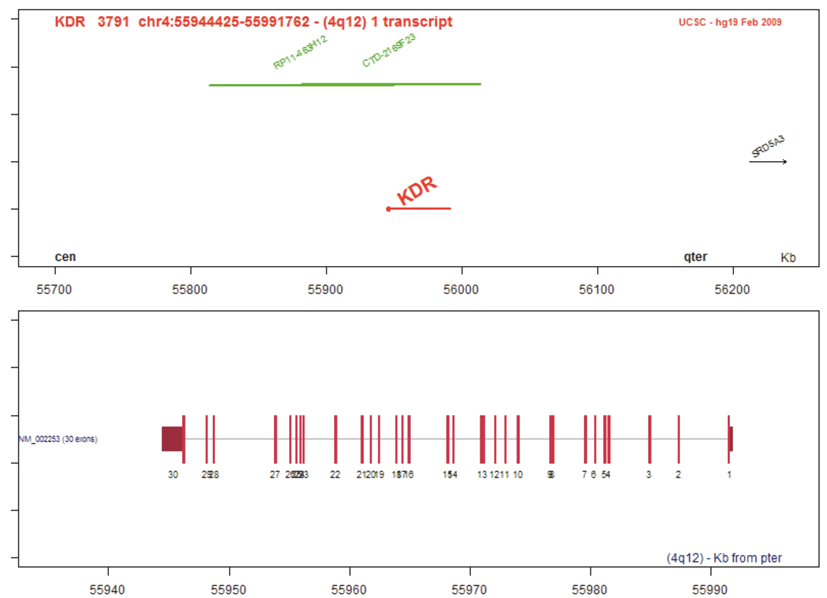
In humans, the KDR gene consists of 30 exons, spanning 47,337 bp of DNA on the reverse strand of Chromosome 4. Exon 1 contains 5 UTR and exon 30 contains 3 UTR. All 30 exons contain translated sequence. Three splice variants have been reported in Ensembl. Alternative splicing results in partial retention of intron 13 and an alternative stop codon, encoding a unique C-terminal sequence. Transcription factors regulating Vegfr2 expressing include ETS1 and ETS2 (Elvert G et al., 2003, Kappel A et al., 2000), EPAS1 (hypoxia inducible factor 2 alpha) (Elvert G et al., 2003), ETV2 (ER71/etsrp) (Lee D et al., 2008), and OVOL2 (Kim JY et al., 2014).
Proteins

Description
The canonical form of VEGFR2 comprises 1356 amino acids in humans and 1345 in mice. VEGFR2 is translated into a 150 kDa protein. Glycosylation of the extracellular domain results in the mature form at the cell surface which migrates at 230 kDa via western blot.
VEGFR2 is composed of three domains: an extracellular domain, transmembrane domain, and a cytosolic domain. The extracellular domain (including N-terminus) is composed of a signal peptide (aa: 1-20) and seven Ig-like subdomains (aa: 20-764). The second and third Ig-like subdomains (aa: 141-207, 224-320) facilitate binding of the principal VEGFR2 ligand, VEGFA (Fug G et al., 1998, Shinkai A et al., 1998). This is followed by a single-pass type I transmembrane domain (aa: 765-785).
The intracellular region (aa: 786-1356) consists of a juxtamembrane domain (JMD) and kinase domain. Biochemical analyses by Solowiej et al. (2009) determined that the JMD promotes autophosphorylation of the kinase domain, which is preceded by phosphorylation of the JMD residue, Y801(Solowiej J et al., 2009). Replacing the VEGFR2 JMD with the VEGFR1 JMD reduces the kinase activity of VEGFR2 in vitro. Conversely, replacing the VEGFR1 JMD with the VEGFR2 JMD increases the kinase activity of VEGFR1(Gille H et al., 2000). These data suggest that the higher kinase activity of VEGFR2 relative to VEGFR1 may be partially explained by differences in the JMD.
The kinase domain (KD; aa: 834-1162) is split by a 70 amino acid insert (aa: 930-1000). Phosphorylation of the KD activation loop residues Y1054 and Y1059 is required for kinase activity(Kendall RL et al., 1999). Additional phosphorylation sites in the intracellular domain facilitate specific interactions of between VEGFR2 and signaling mediators, including PLC gamma, SHB, SCK, SHCA, GRB2, son of sevenless (SOS), and NCK. For further review, see S. Koch and L. Claesson-Welsh, 2012, and Claesson-Welsh and Welsh, 2013 (Claesson-Welsh L et al., 2013, Koch S et al., 2012).
Co-receptors:
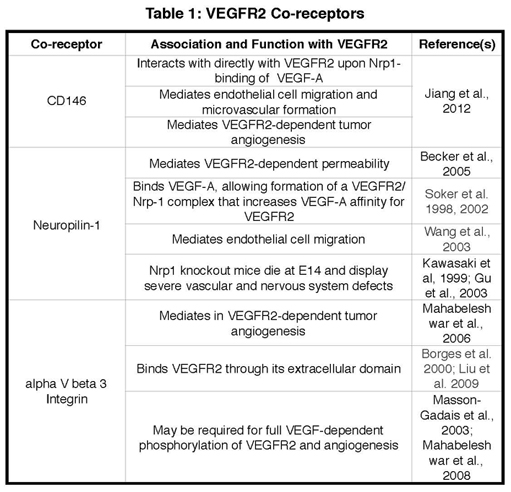
Integrins, neuropilin-1, and CD146 promote VEGFR2 activation, and mediate VEGFR2 activities, including endothelial cell migration, permeability, and angiogenesis. For more information, see Table 1 and Koch and Claesson-Welsh, 2012.
Alternative Isoforms:
In 2009, Albuquerque et al. discovered that alternative splicing produces a soluble form of VEGFR2, present in mouse and human cornea (Albuquerque RJ et al., 2009). This isoform results from inclusion of the intron following exon 13 and results in a truncated product which migrates at 75 kDa via western blot. This isoform contains only the extracellular domain of VEGFR2 and a unique C-terminal sequence. Characterization of sVEGFR2 revealed that it may play a role as an endogenous inhibitor of lymphoangiogenesis via antagonizing VEGF-C/VEGFR3 signaling (Albuquerque RJ et al., 2009).
Ligands:
VEGF-A (Terman BI et al., 1992), VEGF-C (Joukov V et al., 1996), VEGF-D (Achen MG et al., 1998), and VEGF-E (M Meyer et al., 1999, Ogawa S et al., 1998). VEGF-A is the primary endogenous ligand activating VEGFR2 signaling, while VEGF-C and VEGF-D signal mostly through VEGFR3. VEGF-E is encoded by the Orf virus and activates VEGFR2 similarly to VEGF-A. Unlike VEGF-A, however, VEGF-E is a VEGFR2-exclusive ligand.
VEGFR2 is composed of three domains: an extracellular domain, transmembrane domain, and a cytosolic domain. The extracellular domain (including N-terminus) is composed of a signal peptide (aa: 1-20) and seven Ig-like subdomains (aa: 20-764). The second and third Ig-like subdomains (aa: 141-207, 224-320) facilitate binding of the principal VEGFR2 ligand, VEGFA (Fug G et al., 1998, Shinkai A et al., 1998). This is followed by a single-pass type I transmembrane domain (aa: 765-785).
The intracellular region (aa: 786-1356) consists of a juxtamembrane domain (JMD) and kinase domain. Biochemical analyses by Solowiej et al. (2009) determined that the JMD promotes autophosphorylation of the kinase domain, which is preceded by phosphorylation of the JMD residue, Y801(Solowiej J et al., 2009). Replacing the VEGFR2 JMD with the VEGFR1 JMD reduces the kinase activity of VEGFR2 in vitro. Conversely, replacing the VEGFR1 JMD with the VEGFR2 JMD increases the kinase activity of VEGFR1(Gille H et al., 2000). These data suggest that the higher kinase activity of VEGFR2 relative to VEGFR1 may be partially explained by differences in the JMD.
The kinase domain (KD; aa: 834-1162) is split by a 70 amino acid insert (aa: 930-1000). Phosphorylation of the KD activation loop residues Y1054 and Y1059 is required for kinase activity(Kendall RL et al., 1999). Additional phosphorylation sites in the intracellular domain facilitate specific interactions of between VEGFR2 and signaling mediators, including PLC gamma, SHB, SCK, SHCA, GRB2, son of sevenless (SOS), and NCK. For further review, see S. Koch and L. Claesson-Welsh, 2012, and Claesson-Welsh and Welsh, 2013 (Claesson-Welsh L et al., 2013, Koch S et al., 2012).
Co-receptors:
Integrins, neuropilin-1, and CD146 promote VEGFR2 activation, and mediate VEGFR2 activities, including endothelial cell migration, permeability, and angiogenesis. For more information, see Table 1 and Koch and Claesson-Welsh, 2012.
Alternative Isoforms:
In 2009, Albuquerque et al. discovered that alternative splicing produces a soluble form of VEGFR2, present in mouse and human cornea (Albuquerque RJ et al., 2009). This isoform results from inclusion of the intron following exon 13 and results in a truncated product which migrates at 75 kDa via western blot. This isoform contains only the extracellular domain of VEGFR2 and a unique C-terminal sequence. Characterization of sVEGFR2 revealed that it may play a role as an endogenous inhibitor of lymphoangiogenesis via antagonizing VEGF-C/VEGFR3 signaling (Albuquerque RJ et al., 2009).
Ligands:
VEGF-A (Terman BI et al., 1992), VEGF-C (Joukov V et al., 1996), VEGF-D (Achen MG et al., 1998), and VEGF-E (M Meyer et al., 1999, Ogawa S et al., 1998). VEGF-A is the primary endogenous ligand activating VEGFR2 signaling, while VEGF-C and VEGF-D signal mostly through VEGFR3. VEGF-E is encoded by the Orf virus and activates VEGFR2 similarly to VEGF-A. Unlike VEGF-A, however, VEGF-E is a VEGFR2-exclusive ligand.
Expression
VEGFR2 is the principal VEGF receptor expressed on blood endothelial cells. Vegfr2-null mice die at E8.5 due to inadequate development of endothelial and hematopoietic cells(Shalaby F et al., 1995). Vegfr2 expression levels peak during embryonic angiogenesis and vasculogenesis(Millauer B et al., 1993, Oelrichs RB et al., 1993). In adults, VEGFR2 is expressed prominently on vascular endothelial cells, where its expression is, in part, regulated by fibroblast growth factor signaling(Michael S. Pepper et al., 1998, Murakami M et al., 2011). Expression is also observed on hematopoietic stem cells and megakaryocytes(Casella I et al., 2003, Katoh O et al., 1995, Larrivée B et al., 2003).
Localisation
Full length VEGFR2 is localized on the plasma membrane and is internalized in a VEGF binding-dependent manner(Koch S et al., 2012, Waltenberger J et al., 1994). Soluble VEGFR2 is secreted from the cell.
Function
VEGFR2 is the premier receptor mediating VEGF-A activity on endothelial cells, where it functions to enhance proliferation, migration, and survival(Gerber HP et al., 1998, Jia H et al., 2004, Terman BI et al., 1992, Waltenberger J et al., 1994). Vegfr2 also promotes the survival of hematopoietic stem cells(Larrivée B et al., 2003).
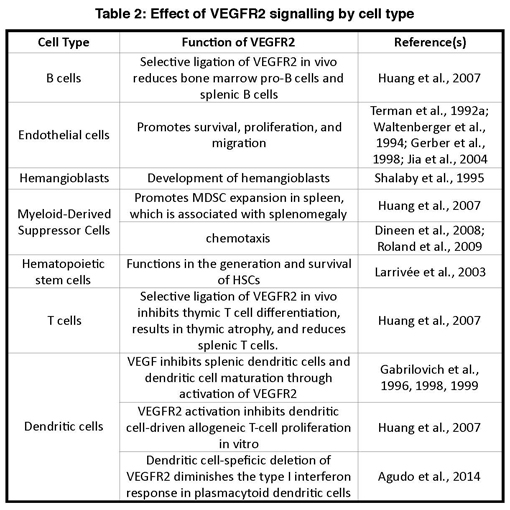
VEGFR2 is the principal VEGF receptor involved in vascular angiogenesis and the regulation of vascular permeability(Kowanetz M et al., 2006, Terman BI et al., 1992). VEGFR2 activity on vascular endothelial cells in tumors promotes tumor angiogenesis(K. H. Plate et al., 1993, Millauer B et al., 1994). For the effects of VEGFR2 signaling on different cell types, see Table 2.
VEGF Signaling Inhibitors:
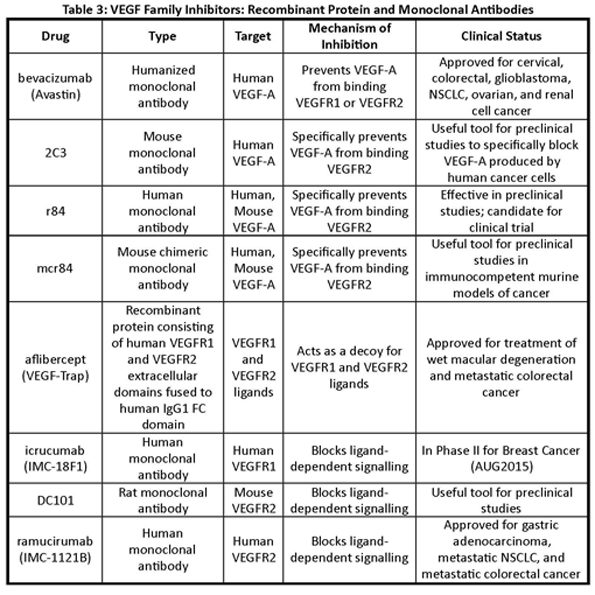
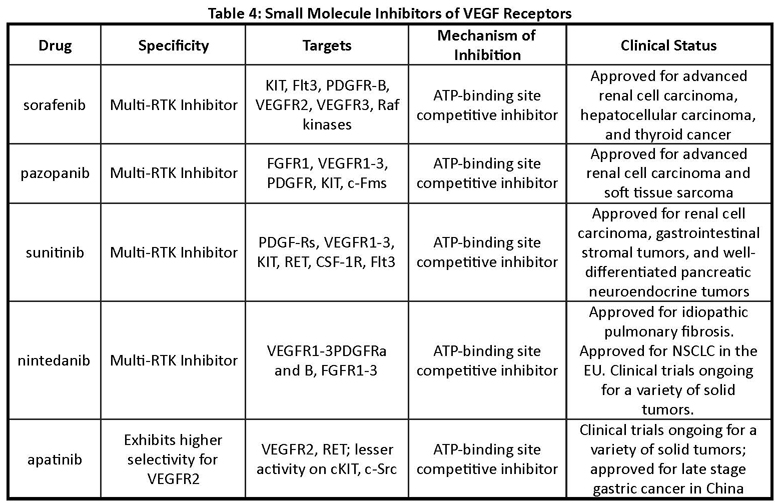
Strategies employed to target VEGF signaling are multifocal, consisting of monoclonal antibodies for both the ligands and VEGFRs, recombinant VEGFR extracellular domain fusion proteins (Table 3), and small molecule receptor tyrosine kinase inhibitors (Table 4)
VEGFR2 is the principal VEGF receptor involved in vascular angiogenesis and the regulation of vascular permeability(Kowanetz M et al., 2006, Terman BI et al., 1992). VEGFR2 activity on vascular endothelial cells in tumors promotes tumor angiogenesis(K. H. Plate et al., 1993, Millauer B et al., 1994). For the effects of VEGFR2 signaling on different cell types, see Table 2.
VEGF Signaling Inhibitors:
Strategies employed to target VEGF signaling are multifocal, consisting of monoclonal antibodies for both the ligands and VEGFRs, recombinant VEGFR extracellular domain fusion proteins (Table 3), and small molecule receptor tyrosine kinase inhibitors (Table 4)
Mutations
Somatic
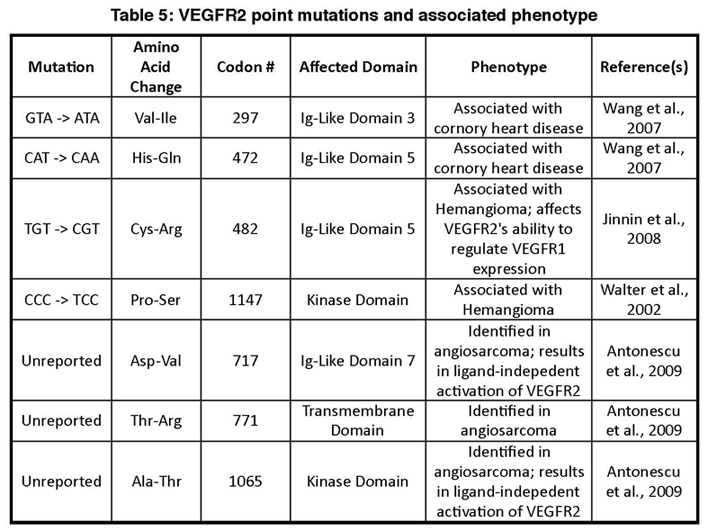
Increased VEGFR2 copy number has been identified in breast(Johansson I et al., 2012), non-small cell lung cancer (Yang F et al., 2011), and neurological malignancies (Blom T et al., 2010, Puputti M et al., 2006). Missense mutations have been identified in hemangioma, leading to constitutive activation of VEGFR2 (Antonescu CR et al., 2009, Jinnin M et al., 2008, Walter JW et al., 2002). Wang et al., 2007, identified that polymorphisms in the VEGFR2 were associated with coronary heart disease(Wang Y et al., 2007) (Table 5).
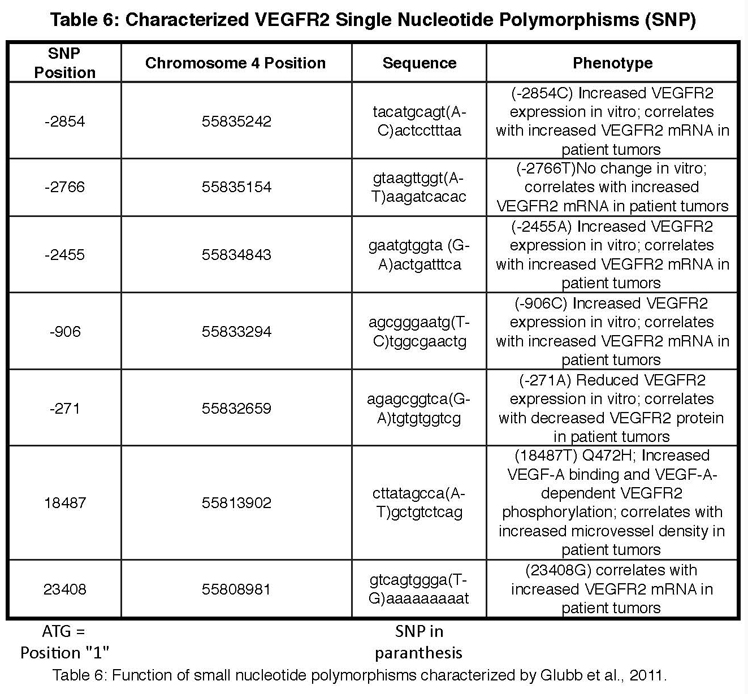
Glubb et al., 2011, characterized the significance of selected single nucleotide polymorphisms on VEGFR2 function and expression (Table 6). Of particular note, Glubb et al., 2011, identified that a SNP that results in the amino acid change Q472H, which was associated with increased VEGFR2 activity, and was correlated with increased microvessel density in non-small cell lung cancer patients (Glubb DM et al., 2011) (Table 6).
Glubb et al., 2011, characterized the significance of selected single nucleotide polymorphisms on VEGFR2 function and expression (Table 6). Of particular note, Glubb et al., 2011, identified that a SNP that results in the amino acid change Q472H, which was associated with increased VEGFR2 activity, and was correlated with increased microvessel density in non-small cell lung cancer patients (Glubb DM et al., 2011) (Table 6).
Implicated in
Entity name
Various Cancers (see Table)
Note
The expression VEGFR2 is increased by endothelial cells during tumor angiogenesis (K. H. Plate et al., 1993, Millauer B et al., 1994). VEGFR2 expression has also been identified on myeloid-derived suppressor cells, where it functions in splenic MDSC expansion and the chemotaxis of MDSCs into tumors (Dineen et al., 2008, Huang Y et al., 2007, Roland CL et al., 2009).
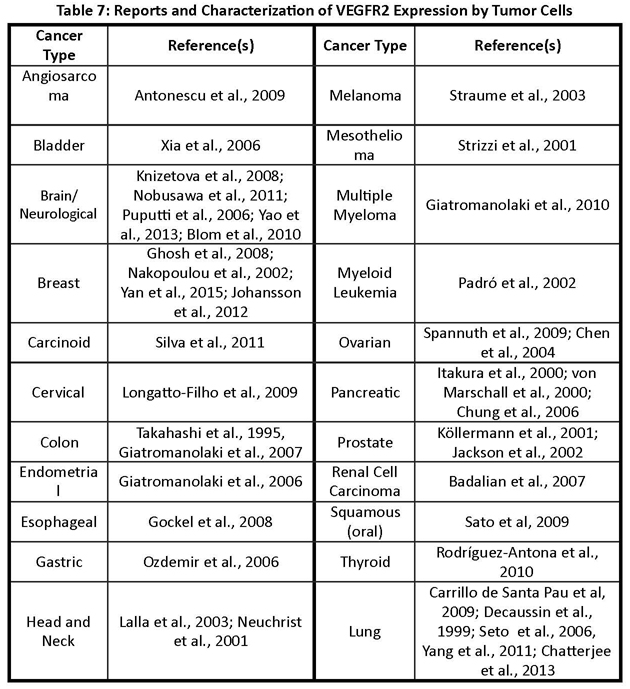
In addition to stromal cells, VEGFR2 expression by tumor cells has been identified in a variety of cancers, including bladder (Xia G et al., 2006), brain (Knizetova P et al., 2008, Nobusawa S1 et al., 2011, Puputti M et al., 2006, Yao X et al., 2013), breast (Ghosh S et al., 2008, Nakopoulou L et al., 2002, Yan JD et al., 2015), carcinoid (Silva SR et al., 2011), cervical (Longatto-Filho A et al., 2009), colon (Giatromanolaki A et al., 2007, Takahashi Y et al., 1995), endometrial ID: 5045> (Giatromanolaki A et al., 2006), esophageal (Gockel I et al., 2008), gastric (Ozdemir F et al., 2006), head and neck (Lalla RV et al., 2003, Neuchrist C et al., 2001), lung (Carrillo de Santa Pau E et al., 2009, Chatterjee S et al., 2013, Decaussin M et al., 1999, Seto T et al., 2006, Yang F et al., 2011), melanoma (Straume O et al., 2003), mesothelioma (Strizzi L et al., 2001), multiple myeloma (Giatromanolaki A et al., 2010), myeloid leukemia (Padró T et al., 2002), ovarian (Chen H et al., 2004, Spannuth WA et al., 2009), pancreatic (Chung GG et al., 2006, Itakura J et al., 2000, von Marschall Z et al., 2000), prostate (Jackson MW et al., 2002, Köllermann J et al., 2001), renal cell carcinoma (Badalian G et al., 2007), squamous (Sato H et al., 2009), and thyroid (Rodrèguez-Antona C et al., 2010), (Table 7).
In some cases, tumor cell expression of VEGFR2 appears to play an important function in tumor progression and correlates with worse prognosis. For example, Yang et al. (2011) identified VEGFR2 copy number gains (CNG) in 32% of tumors, which was associated with increased VEGFR2 protein, tumor angiogenesis, and correlated with poor prognosis(Yang F et al., 2011). Furthermore, Chatterjee et al. (2013) identified that the levels of VEGF/VEGFR2 binding on tumor cells strongly correlated with tumor angiogenesis, and selective VEGFR2 inhibition had a significant combinatorial effect with MEK inhibitors in reducing tumor growth in preclinical models of NSCLC(Chatterjee S et al., 2013).
Yan et al. (2015) found that VEGFR2 expression by breast tumor cells was significantly correlated with increased lymph node metastasis, epithelial to mesenchymal transition (EMT) marker expression, and reduced overall survival(Yan JD et al., 2015).
For further review of expression and function of VEGFR2 in different cancers, see Table 7 and Goel and Mercurio, 2013(Goel HL et al., 2013).
In addition to stromal cells, VEGFR2 expression by tumor cells has been identified in a variety of cancers, including bladder (Xia G et al., 2006), brain (Knizetova P et al., 2008, Nobusawa S1 et al., 2011, Puputti M et al., 2006, Yao X et al., 2013), breast (Ghosh S et al., 2008, Nakopoulou L et al., 2002, Yan JD et al., 2015), carcinoid (Silva SR et al., 2011), cervical (Longatto-Filho A et al., 2009), colon (Giatromanolaki A et al., 2007, Takahashi Y et al., 1995), endometrial ID: 5045> (Giatromanolaki A et al., 2006), esophageal (Gockel I et al., 2008), gastric (Ozdemir F et al., 2006), head and neck (Lalla RV et al., 2003, Neuchrist C et al., 2001), lung (Carrillo de Santa Pau E et al., 2009, Chatterjee S et al., 2013, Decaussin M et al., 1999, Seto T et al., 2006, Yang F et al., 2011), melanoma (Straume O et al., 2003), mesothelioma (Strizzi L et al., 2001), multiple myeloma (Giatromanolaki A et al., 2010), myeloid leukemia (Padró T et al., 2002), ovarian (Chen H et al., 2004, Spannuth WA et al., 2009), pancreatic (Chung GG et al., 2006, Itakura J et al., 2000, von Marschall Z et al., 2000), prostate (Jackson MW et al., 2002, Köllermann J et al., 2001), renal cell carcinoma (Badalian G et al., 2007), squamous (Sato H et al., 2009), and thyroid (Rodrèguez-Antona C et al., 2010), (Table 7).
In some cases, tumor cell expression of VEGFR2 appears to play an important function in tumor progression and correlates with worse prognosis. For example, Yang et al. (2011) identified VEGFR2 copy number gains (CNG) in 32% of tumors, which was associated with increased VEGFR2 protein, tumor angiogenesis, and correlated with poor prognosis(Yang F et al., 2011). Furthermore, Chatterjee et al. (2013) identified that the levels of VEGF/VEGFR2 binding on tumor cells strongly correlated with tumor angiogenesis, and selective VEGFR2 inhibition had a significant combinatorial effect with MEK inhibitors in reducing tumor growth in preclinical models of NSCLC(Chatterjee S et al., 2013).
Yan et al. (2015) found that VEGFR2 expression by breast tumor cells was significantly correlated with increased lymph node metastasis, epithelial to mesenchymal transition (EMT) marker expression, and reduced overall survival(Yan JD et al., 2015).
For further review of expression and function of VEGFR2 in different cancers, see Table 7 and Goel and Mercurio, 2013(Goel HL et al., 2013).
Entity name
Coronary Heart Disease
Note
Wang et al., 2007, identified that polymorphisms in the VEGFR2 were associated with coronary heart disease (Wang Y et al., 2007) (Table 5).
Entity name
Hemangioma
Note
Missense mutations have been identified in hemangioma, leading to constitutive activation of VEGFR2 (Antonescu CR et al., 2009, Jinnin M et al., 2008, Walter JW et al., 2002).
Article Bibliography
| Pubmed ID | Last Year | Title | Authors |
|---|---|---|---|
| 9435229 | 1998 | Vascular endothelial growth factor D (VEGF-D) is a ligand for the tyrosine kinases VEGF receptor 2 (Flk1) and VEGF receptor 3 (Flt4). | Achen MG et al |
| 19723655 | 2009 | KDR activating mutations in human angiosarcomas are sensitive to specific kinase inhibitors. | Antonescu CR et al |
| 17465216 | 2007 | EGFR and VEGFR2 protein expressions in bone metastases of clear cell renal cancer. | Badalian G et al |
| 19779861 | 2010 | Amplification and overexpression of KIT, PDGFRA, and VEGFR2 in medulloblastomas and primitive neuroectodermal tumors. | Blom T et al |
| 19197998 | 2009 | Prognostic significance of the expression of vascular endothelial growth factors A, B, C, and D and their receptors R1, R2, and R3 in patients with nonsmall cell lung cancer. | Carrillo de Santa Pau E et al |
| 12406876 | 2003 | Autocrine-paracrine VEGF loops potentiate the maturation of megakaryocytic precursors through Flt1 receptor. | Casella I et al |
| 23454747 | 2013 | Tumor VEGF:VEGFR2 autocrine feed-forward loop triggers angiogenesis in lung cancer. | Chatterjee S et al |
| 15350351 | 2004 | VEGF, VEGFRs expressions and activated STATs in ovarian epithelial carcinoma. | Chen H et al |
| 16532435 | 2006 | Vascular endothelial growth factor, FLT-1, and FLK-1 analysis in a pancreatic cancer tissue microarray. | Chung GG et al |
| 23216836 | 2013 | VEGFA and tumour angiogenesis. | Claesson-Welsh L et al |
| 10440746 | 1999 | Expression of vascular endothelial growth factor (VEGF) and its two receptors (VEGF-R1-Flt1 and VEGF-R2-Flk1/KDR) in non-small cell lung carcinomas (NSCLCs): correlation with angiogenesis and survival. | Decaussin M et al |
| 18519694 | 2008 | Vascular endothelial growth factor receptor 2 mediates macrophage infiltration into orthotopic pancreatic tumors in mice. | Dineen SP et al |
| 12464608 | 2003 | Cooperative interaction of hypoxia-inducible factor-2alpha (HIF-2alpha ) and Ets-1 in the transcriptional activation of vascular endothelial growth factor receptor-2 (Flk-1). | Elvert G et al |
| 9556609 | 1998 | Requirements for binding and signaling of the kinase domain receptor for vascular endothelial growth factor. | Fuh G et al |
| 9804796 | 1998 | Vascular endothelial growth factor regulates endothelial cell survival through the phosphatidylinositol 3'-kinase/Akt signal transduction pathway. Requirement for Flk-1/KDR activation. | Gerber HP et al |
| 18715621 | 2008 | High levels of vascular endothelial growth factor and its receptors (VEGFR-1, VEGFR-2, neuropilin-1) are associated with worse outcome in breast cancer. | Ghosh S et al |
| 20683019 | 2010 | Hypoxia and activated VEGF/receptor pathway in multiple myeloma. | Giatromanolaki A et al |
| 10921887 | 2000 | A repressor sequence in the juxtamembrane domain of Flt-1 (VEGFR-1) constitutively inhibits vascular endothelial growth factor-dependent phosphatidylinositol 3'-kinase activation and endothelial cell migration. | Gille H et al |
| 21712447 | 2011 | Novel functional germline variants in the VEGF receptor 2 gene and their effect on gene expression and microvessel density in lung cancer. | Glubb DM et al |
| 18813825 | 2008 | Co-expression of receptor tyrosine kinases in esophageal adenocarcinoma and squamous cell cancer. | Gockel I et al |
| 24263190 | 2013 | VEGF targets the tumour cell. | Goel HL et al |
| 16394178 | 2006 | Regulation of the vascular endothelial growth factor (VEGF) receptor Flk-1/KDR by estradiol through VEGF in uterus. | Hervé MA et al |
| 17376891 | 2007 | Distinct roles of VEGFR-1 and VEGFR-2 in the aberrant hematopoiesis associated with elevated levels of VEGF. | Huang Y et al |
| 10585578 | 2000 | Concomitant over-expression of vascular endothelial growth factor and its receptors in pancreatic cancer. | Itakura J et al |
| 11830543 | 2002 | A potential autocrine role for vascular endothelial growth factor in prostate cancer. | Jackson MW et al |
| 15215251 | 2004 | Vascular endothelial growth factor (VEGF)-D and VEGF-A differentially regulate KDR-mediated signaling and biological function in vascular endothelial cells. | Jia H et al |
| 18931684 | 2008 | Suppressed NFAT-dependent VEGFR1 expression and constitutive VEGFR2 signaling in infantile hemangioma. | Jinnin M et al |
| 22170730 | 2012 | Increased gene copy number of KIT and VEGFR2 at 4q12 in primary breast cancer is related to an aggressive phenotype and impaired prognosis. | Johansson I et al |
| 8617204 | 1996 | A novel vascular endothelial growth factor, VEGF-C, is a ligand for the Flt4 (VEGFR-3) and KDR (VEGFR-2) receptor tyrosine kinases. | Joukov V et al |
| 11447740 | 2001 | Expression of vascular endothelial growth factor (VEGF) and VEGF receptor Flk-1 in benign, premalignant, and malignant prostate tissue. | Köllermann J et al |
| 11049987 | 2000 | Role of SCL/Tal-1, GATA, and ets transcription factor binding sites for the regulation of flk-1 expression during murine vascular development. | Kappel A et al |
| 7585655 | 1995 | Expression of the vascular endothelial growth factor (VEGF) receptor gene, KDR, in hematopoietic cells and inhibitory effect of VEGF on apoptotic cell death caused by ionizing radiation. | Katoh O et al |
| 10037737 | 1999 | Vascular endothelial growth factor receptor KDR tyrosine kinase activity is increased by autophosphorylation of two activation loop tyrosine residues. | Kendall RL et al |
| 25267199 | 2014 | OVOL2 is a critical regulator of ER71/ETV2 in generating FLK1+, hematopoietic, and endothelial cells from embryonic stem cells. | Kim JY et al |
| 18719373 | 2008 | Autocrine regulation of glioblastoma cell cycle progression, viability and radioresistance through the VEGF-VEGFR2 (KDR) interplay. | Knizetova P et al |
| 22762016 | 2012 | Signal transduction by vascular endothelial growth factor receptors. | Koch S et al |
| 16951216 | 2006 | Vascular endothelial growth factor signaling pathways: therapeutic perspective. | Kowanetz M et al |
| 12925349 | 2003 | Expression of vascular endothelial growth factor receptors on tumor cells in head and neck squamous cell carcinoma. | Lalla RV et al |
| 18462699 | 2008 | ER71 acts downstream of BMP, Notch, and Wnt signaling in blood and vessel progenitor specification. | Lee D et al |
| 19563658 | 2009 | Molecular characterization of EGFR, PDGFRA and VEGFR2 in cervical adenosquamous carcinoma. | Longatto-Filho A et al |
| 1717995 | 1991 | A receptor tyrosine kinase cDNA isolated from a population of enriched primitive hematopoietic cells and exhibiting close genetic linkage to c-kit. | Matthews W et al |
| 9889193 | 1999 | A novel vascular endothelial growth factor encoded by Orf virus, VEGF-E, mediates angiogenesis via signalling through VEGFR-2 (KDR) but not VEGFR-1 (Flt-1) receptor tyrosine kinases. | Meyer M et al |
| 8107827 | 1994 | Glioblastoma growth inhibited in vivo by a dominant-negative Flk-1 mutant. | Millauer B et al |
| 21633168 | 2011 | FGF-dependent regulation of VEGF receptor 2 expression in mice. | Murakami M et al |
| 12378509 | 2002 | Expression of the vascular endothelial growth factor receptor-2/Flk-1 in breast carcinomas: correlation with proliferation. | Nakopoulou L et al |
| 11801954 | 2001 | Vascular endothelial growth factor receptor 2 (VEGFR2) expression in squamous cell carcinomas of the head and neck. | Neuchrist C et al |
| 21382095 | 2011 | Amplification of the PDGFRA, KIT and KDR genes in glioblastoma: a population-based study. | Nobusawa S et al |
| 8423988 | 1993 | NYK/FLK-1: a putative receptor protein tyrosine kinase isolated from E10 embryonic neuroepithelium is expressed in endothelial cells of the developing embryo. | Oelrichs RB et al |
| 9813035 | 1998 | A novel type of vascular endothelial growth factor, VEGF-E (NZ-7 VEGF), preferentially utilizes KDR/Flk-1 receptor and carries a potent mitotic activity without heparin-binding domain. | Ogawa S et al |
| 16761623 | 2006 | The effects of VEGF and VEGFR-2 on survival in patients with gastric cancer. | Ozdemir F et al |
| 12094254 | 2002 | Overexpression of vascular endothelial growth factor (VEGF) and its cellular receptor KDR (VEGFR-2) in the bone marrow of patients with acute myeloid leukemia. | Padró T et al |
| 7694795 | 1993 | Up-regulation of vascular endothelial growth factor and its cognate receptors in a rat glioma model of tumor angiogenesis. | Plate KH et al |
| 17189383 | 2006 | Amplification of KIT, PDGFRA, VEGFR2, and EGFR in gliomas. | Puputti M et al |
| 19776290 | 2010 | Overexpression and activation of EGFR and VEGFR2 in medullary thyroid carcinomas is related to metastasis. | Rodríguez-Antona C et al |
| 19567820 | 2009 | Inhibition of vascular endothelial growth factor reduces angiogenesis and modulates immune cell infiltration of orthotopic breast cancer xenografts. | Roland CL et al |
| 20032607 | 2009 | VEGFR2 expression and relationship between tumor neovascularization and histologic characteristics in oral squamous cell carcinoma. | Sato H et al |
| 16697074 | 2006 | Prognostic value of expression of vascular endothelial growth factor and its flt-1 and KDR receptors in stage I non-small-cell lung cancer. | Seto T et al |
| 7596435 | 1995 | Failure of blood-island formation and vasculogenesis in Flk-1-deficient mice. | Shalaby F et al |
| 9813036 | 1998 | Mapping of the sites involved in ligand association and dissociation at the extracellular domain of the kinase insert domain-containing receptor for vascular endothelial growth factor. | Shinkai A et al |
| 20473929 | 2011 | VEGFR-2 expression in carcinoid cancer cells and its role in tumor growth and metastasis. | Silva SR et al |
| 19526984 | 2009 | Characterizing the effects of the juxtamembrane domain on vascular endothelial growth factor receptor-2 enzymatic activity, autophosphorylation, and inhibition by axitinib. | Solowiej J et al |
| 19058181 | 2009 | Functional significance of VEGFR-2 on ovarian cancer cells. | Spannuth WA et al |
| 15166498 | 2003 | Increased expression of VEGF-receptors (FLT-1, KDR, NRP-1) and thrombospondin-1 is associated with glomeruloid microvascular proliferation, an aggressive angiogenic phenotype, in malignant melanoma. | Straume O et al |
| 11276005 | 2001 | Vascular endothelial growth factor is an autocrine growth factor in human malignant mesothelioma. | Strizzi L et al |
| 7664263 | 1995 | Expression of vascular endothelial growth factor and its receptor, KDR, correlates with vascularity, metastasis, and proliferation of human colon cancer. | Takahashi Y et al |
| 1656371 | 1991 | Identification of a new endothelial cell growth factor receptor tyrosine kinase. | Terman BI et al |
| 1417831 | 1992 | Identification of the KDR tyrosine kinase as a receptor for vascular endothelial cell growth factor. | Terman BI et al |
| 1324138 | 1992 | The KDR gene maps to human chromosome 4q31.2----q32, a locus which is distinct from locations for other type III growth factor receptor tyrosine kinases. | Terman BI et al |
| 7929439 | 1994 | Different signal transduction properties of KDR and Flt1, two receptors for vascular endothelial growth factor. | Waltenberger J et al |
| 11807987 | 2002 | Somatic mutation of vascular endothelial growth factor receptors in juvenile hemangioma. | Walter JW et al |
| 17707181 | 2007 | Polymorphisms of KDR gene are associated with coronary heart disease. | Wang Y et al |
| 16515971 | 2006 | Expression and significance of vascular endothelial growth factor receptor 2 in bladder cancer. | Xia G et al |
| 25976977 | 2015 | Expression and prognostic significance of VEGFR-2 in breast cancer. | Yan JD et al |
| 21724587 | 2011 | Increased VEGFR-2 gene copy is associated with chemoresistance and shorter survival in patients with non-small-cell lung carcinoma who receive adjuvant chemotherapy. | Yang F et al |
| 23536763 | 2013 | Vascular endothelial growth factor receptor 2 (VEGFR-2) plays a key role in vasculogenic mimicry formation, neovascularization and tumor initiation by Glioma stem-like cells. | Yao X et al |
| 11054395 | 2000 | De novo expression of vascular endothelial growth factor in human pancreatic cancer: evidence for an autocrine mitogenic loop. | von Marschall Z et al |
Other Information
Locus ID:
NCBI: 3791
MIM: 191306
HGNC: 6307
Ensembl: ENSG00000128052
Variants:
dbSNP: 3791
ClinVar: 3791
TCGA: ENSG00000128052
COSMIC: KDR
RNA/Proteins
| Gene ID | Transcript ID | Uniprot |
|---|---|---|
| ENSG00000128052 | ENST00000263923 | P35968 |
| ENSG00000128052 | ENST00000263923 | A0A024RD88 |
Expression (GTEx)
Pathways
Protein levels (Protein atlas)
PharmGKB
| Entity ID | Name | Type | Evidence | Association | PK | PD | PMIDs |
|---|---|---|---|---|---|---|---|
| PA162372840 | sunitinib | Chemical | MultilinkAnnotation, Pathway | associated | 12538485, 19248971, 20124951 | ||
| PA164924492 | brivanib | Chemical | Pathway | associated | 20124951 | ||
| PA164924493 | axitinib | Chemical | Pathway | associated | 20124951 | ||
| PA165291492 | pazopanib | Chemical | ClinicalAnnotation | associated | PD | 25411163 | |
| PA166114377 | hand-foot syndrome | Disease | ClinicalAnnotation | associated | PD | 20630084 | |
| PA166118340 | motesanib | Chemical | Pathway | associated | 20124951 | ||
| PA166118341 | vandetanib | Chemical | Pathway | associated | 20124951 | ||
| PA26946 | CSK | Gene | Pathway | associated | 20124951 | ||
| PA29444 | HRAS | Gene | Pathway | associated | 28362716 | ||
| PA30196 | KRAS | Gene | Pathway | associated | 28362716 | ||
| PA31768 | NRAS | Gene | Pathway | associated | 28362716 | ||
| PA31783 | NRP1 | Gene | Pathway | associated | 20124951 | ||
| PA33304 | PIK3C2A | Gene | Pathway | associated | 28362716 | ||
| PA33305 | PIK3C2B | Gene | Pathway | associated | 28362716 | ||
| PA33308 | PIK3CA | Gene | Pathway | associated | 28362716 | ||
| PA33309 | PIK3CB | Gene | Pathway | associated | 28362716 | ||
| PA33310 | PIK3CD | Gene | Pathway | associated | 28362716 | ||
| PA33311 | PIK3CG | Gene | Pathway | associated | 28362716 | ||
| PA33312 | PIK3R1 | Gene | Pathway | associated | 28362716 | ||
| PA33313 | PIK3R2 | Gene | Pathway | associated | 28362716 | ||
| PA33314 | PIK3R3 | Gene | Pathway | associated | 28362716 | ||
| PA33392 | PLCG1 | Gene | Pathway | associated | 20124951 | ||
| PA33393 | PLCG2 | Gene | Pathway | associated | 20124951 | ||
| PA36528 | TIMP3 | Gene | Pathway | associated | 20124951 | ||
| PA37302 | VEGFA | Gene | Pathway | associated | 20124951 | ||
| PA37303 | VEGFB | Gene | Pathway | associated | 20124951 | ||
| PA37304 | VEGFC | Gene | Pathway | associated | 20124951 | ||
| PA443624 | Carcinoma, Renal Cell | Disease | ClinicalAnnotation | associated | PD | ||
| PA444447 | Carcinoma, Hepatocellular | Disease | ClinicalAnnotation | associated | PD | 25182707 | |
| PA444552 | Hypertension | Disease | ClinicalAnnotation | associated | PD | 20630084 | |
| PA444685 | Kidney Neoplasms | Disease | ClinicalAnnotation | associated | PD | 25411163 | |
| PA7000 | sorafenib | Chemical | ClinicalAnnotation, Pathway | associated | PD | 20124951, 20630084, 24510746, 25182707, 25816720, 28362716 |
References
| Pubmed ID | Year | Title | Citations |
|---|---|---|---|
| 37392242 | 2024 | The Relation of VEGFA, VEGFR2, VEGI, and HIF1A Genetic Variants and Their Serum Protein Levels with Breast Cancer in Egyptian Patients. | 0 |
| 37803932 | 2024 | Association of KDR (rs2071559, rs1870377), CFH (rs1061170, rs1410996) genes variants and serum levels with pituitary adenoma. | 1 |
| 38324585 | 2024 | Trafficking dynamics of VEGFR1, VEGFR2, and NRP1 in human endothelial cells. | 3 |
| 38363405 | 2024 | VEGFR affects miR-3200-3p-mediated regulatory T cell senescence in tumour-derived exosomes in non-small cell lung cancer. | 1 |
| 38491522 | 2024 | Endothelial β-catenin upregulation and Y142 phosphorylation drive diabetic angiogenesis via upregulating KDR/HDAC9. | 0 |
| 38594674 | 2024 | Proteomic studies of VEGFR2 in human placentas reveal protein associations with preeclampsia, diabetes, gravidity, and labor. | 0 |
| 38702818 | 2024 | VEGFR2 blockade inhibits glioblastoma cell proliferation by enhancing mitochondrial biogenesis. | 0 |
| 38918393 | 2024 | The tyrosine kinase KDR is essential for the survival of HTLV-1-infected T cells by stabilizing the Tax oncoprotein. | 0 |
| 38925828 | 2024 | Tumor Infiltrating Effector Regulatory T Cells Express VEGF Receptor 2 in Patients With Colorectal Cancer. | 0 |
| 37392242 | 2024 | The Relation of VEGFA, VEGFR2, VEGI, and HIF1A Genetic Variants and Their Serum Protein Levels with Breast Cancer in Egyptian Patients. | 0 |
| 37803932 | 2024 | Association of KDR (rs2071559, rs1870377), CFH (rs1061170, rs1410996) genes variants and serum levels with pituitary adenoma. | 1 |
| 38324585 | 2024 | Trafficking dynamics of VEGFR1, VEGFR2, and NRP1 in human endothelial cells. | 3 |
| 38363405 | 2024 | VEGFR affects miR-3200-3p-mediated regulatory T cell senescence in tumour-derived exosomes in non-small cell lung cancer. | 1 |
| 38491522 | 2024 | Endothelial β-catenin upregulation and Y142 phosphorylation drive diabetic angiogenesis via upregulating KDR/HDAC9. | 0 |
| 38594674 | 2024 | Proteomic studies of VEGFR2 in human placentas reveal protein associations with preeclampsia, diabetes, gravidity, and labor. | 0 |
Citation
Noah Sorrelle ; Rolf Brekken
KDR (kinase insert domain receptor)/Vascular Endothelial Growth Factor Receptor 2 (VEGFR2)
Atlas Genet Cytogenet Oncol Haematol. 2015-10-01
Online version: http://atlasgeneticsoncology.org/gene/41055/
