Identity
HGNC
LOCATION
14q11.2
IMAGE

LEGEND
Figure 1. Genomic location of PNP (Chromosome 14 - NC_000014.9 Reference GRCh38.p7 Primary Assembly)
LOCUSID
ALIAS
NP,PRO1837,PUNP
Abstract
The purine nucleoside phosphorylase gene (PNP) encodes an enzyme which reversibly catalyzes the phosphorolysis of purine nucleosides. PNP is ubiquitously expressed in mammalian cells and tissues. PNP mutations cause nucleoside phosphorylase deficiency which result in defective T cell mediated immunity but can also affect B cell immunity and antibody responses.
DNA/RNA
Note
The PNP gene is 7,716 bp long (according to UCSC, GRCh38/hg38), located on the plus strandand spans 6 exons (NCBI Homo sapiens Annotation Release 108).
Transcription
The gene has 8 transcripts (Table 1)
Table 1. Transcripts of human PNP gene (Ensemble, GRCh38.p10).
Table 1. Transcripts of human PNP gene (Ensemble, GRCh38.p10).
| Name | Transcript ID | bp | Protein (aa) | Biotype |
| PNP-201 | ENST00000361505.9 | 1509 | 289 | Protein coding |
| PNP-203 | ENST00000553591.1 | 770 | 221 | Protein coding |
| PNP-202 | ENST00000553418.5 | 557 | 93 | Protein coding |
| PNP-205 | ENST00000554065.1 | 554 | 61 | Protein coding |
| PNP-207 | ENST00000556754.1 | 2573 | Retained intron | |
| PNP-204 | ENST00000554056.5 | 1635 | Retained intron | |
| PNP-206 | ENST00000556293.5 | 1023 | Retained intron | |
| PNP-208 | ENST00000557229.5 | 992 | Retained intron |
Pseudogene
A pseudogene has been identified on chromosome 2 (NCBI Homo sapiens Annotation Release 108).
Proteins
Note
PNP encodes purine nucleoside phosphorylase (EC 2.4.2.1) (NCBI Homo sapiens Annotation Release 108). Mammalian PNPs are homotrimers with a monomeric molecular mass of about 31 kDa, each with a substrate-binding site (Figure 2) (Ting et al., 2004; Aust et al., 1992).
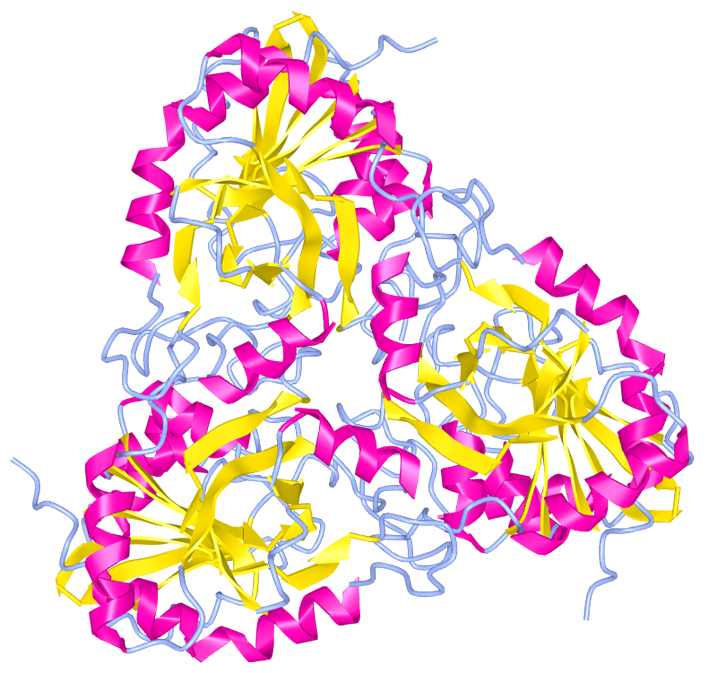
Figure 2. Structure of human purine nucleoside phosphorylase. Structure of human PNP determined using X-ray diffraction (PDB ID: 3BGS) (Rinaldo-Matthis et al., 2008).
Expression
PNP is ubiquitously expressed in human cells and tissues, but the highest activity is found in the peripheral red blood cells, blood granulocytes and lymphoid tissue (Roberts et al., 2004).
Localisation
PNP is present in both the cytosol and the mitochondria (Roberts et al., 2004).
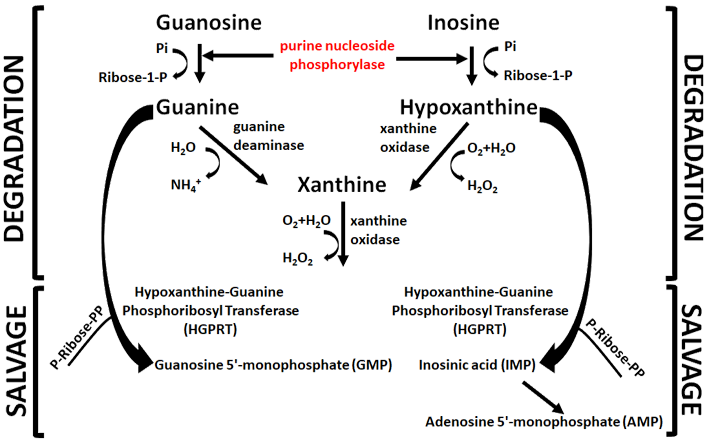
Figure 3. Enzymatic pathways involved in the degradation of purine nucleosides. Thermodynamically, the equilibrium of the reaction is shifted in favor of nucleoside synthesis. However, phosphorolysis is highly favored over nucleoside synthesis, due to coupling with two additional enzymatic reactions: (1) oxidation and (2) phosphoribosylation of the liberated purine bases by xanthine oxidase (Xox) and hypoxanthine-guanine phosphoribosyltransferase (HGPRT), respectively (modified from Giuliani et al., 2016).
Function
The PNP catalyzes the reversible phosphorolysis of purine nucleosides (primarily inosine and guanosine in humans) to generate the corresponding purine base and ribose 1-phosphate inosine in the presence of inorganic orthophosphate (Pi) (Jonsson et al., 1992; Furihata et al., 2014). PNP is a ubiquitous enzyme of purine metabolism that functions in the salvage pathway, thus enabling the cells to synthesize purine nucleotides from purine bases by avoiding the ex-novo synthesis which is energetically expensive (Figure 3). Under normal conditions, phosphorolysis is favored due to the coupling of the PNP reaction with either purine base oxidation by xanthine oxidase or purine base phosphoribosylation by hypoxanthine-guanine phosphoribosyl transferase (HGPRT). On the other hand, nucleoside synthesis is thermodynamically favored over phosphorolysis (Erion et al., 1997; Bzowska et al., 2000).
PNP activity is crucial for cell survival and function. PNP deficiency results in the accumulation of its substrates: inosine, deoxyinosine, guanosine, and deoxyguanosine. Increased phosphorylation of deoxyguanosine leads to dGTP accumulation, a potent feedback inhibitor of human ribonucleotide reductase. dGTP accumulation can also interfere with DNA synthesis or repair directly (Arpaia et al., 2000; Ghodke-Puranik et al., 2017) (Figure 4). Abnormal activity of the enzyme is associated with different pathologies (Giuliani et al., 2016).
PNP activity is crucial for cell survival and function. PNP deficiency results in the accumulation of its substrates: inosine, deoxyinosine, guanosine, and deoxyguanosine. Increased phosphorylation of deoxyguanosine leads to dGTP accumulation, a potent feedback inhibitor of human ribonucleotide reductase. dGTP accumulation can also interfere with DNA synthesis or repair directly (Arpaia et al., 2000; Ghodke-Puranik et al., 2017) (Figure 4). Abnormal activity of the enzyme is associated with different pathologies (Giuliani et al., 2016).
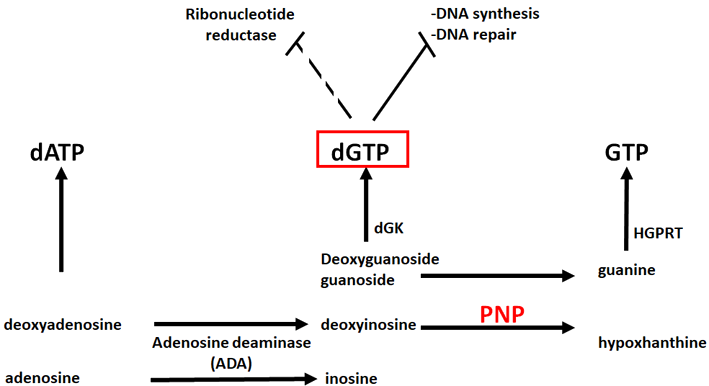
Figure 4. PNP in the degradation and salvage pathways of purine nucleosides. Phosphorolysis of the products of the ADA reaction, inosine and deoxyinosine, is catalyzed by PNP to yield hypoxanthine and ribose-1-phosphate. Of the four PNP substrates, only deoxyguanosine is phosphorylated by the mitochondrial deoxyguanosine kinase (dGK). Further phosphorylation of dGMP results in the accumulation of dGTP, which interferes with DNA synthesis or DNA repair directly or inhibits ribonucleotide reductase activity. The PNP product guanine is salvaged back to the guanine nucleotide pools by HGPRT activity (modified from Arpaia et al., 2000).
Homology
PNP enzyme has been isolated isolated from different species, including bacteria, protozoa, rodents, and mammals. A high degree of homology is found between these PNP enzymes, with human and bovine and murine PNPs demonstrating more than 87% and 84% homology, respectively (Ochs et al., 2013) (Figure 5).
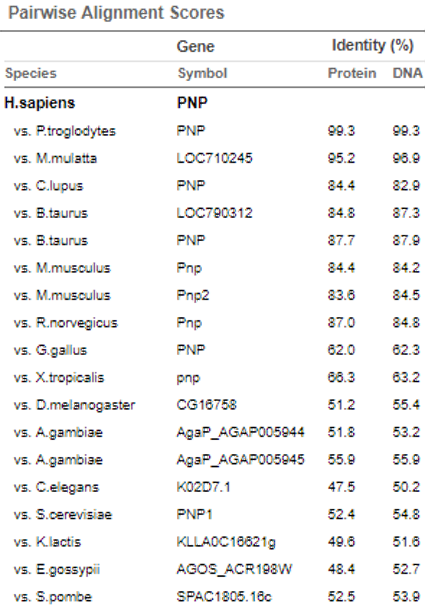
Figure 5. Pairwise alignment of PNP gene and PNP protein sequences (in distance from human) (HomoloGene, NCBI).
Mutations
Note
PNP deficiency is caused by PNP gene mutations. As mentioned before, PNP contains six exons. Exon skipping, missense, and frameshift mutations in these six exons have been found to cause PNP deficiency, and the most frequent mutations are the substitution of A to C or A to G at cDNA position 58 or 234, respectively (Brodszki et al., 2015). Up-to-date and comprehensive list of PNP associated mutations was given in Table 2. Furthermore, it should be also considered that PNP polymorphisms might be associated with variability in the clinical presentation and course of affected patients (Moallem et al., 2002).
Table 2. Purine nucleoside phosphorylase (PNP) deficiency related mutations.
Table 2. Purine nucleoside phosphorylase (PNP) deficiency related mutations.
| # | Location | Mutation | Protein | Reference |
| [1] | Exon 2 | c.59A>C | p.20H>P | Yeates et al., 2017 |
| [2] | Exon 2 | c.70C>T | p.Arg24X | Walker et al., 2011 |
| [3] | Exon 2 | c.172C>T | p.Arg57X | Walker et al., 2011 |
| [4] | Exon 2 | c.181G>T | p.Tyr5AlafsX28 | Walker et al., 2011 |
| [5] | Exon 3 | c.199C>T | p.Arg67X | Walker et al., 2011 |
| [6] | Exon 3 | c.212G>A | p.71Gly>Glu | Walker et al., 2011 |
| [7] | Exon 3 | c.257A>G | p.86His>Arg | Walker et al., 2011 |
| [8] | Exon 3 | c.265G>A | p.89Glu>Lys | Walker et al., 2011 |
| [9] | Exon 4 | c.349G>A | p.117Ala>Thr | Grunebaum et al., 2004 |
| [10] | Exon 4 | c.383A>G | p.128Asp>Gly | Walker et al., 2011 |
| [11] | Exon 4 | c.385 387delATC | p.Ile129del | Walker et al., 2011 |
| [12] | Exon 4 | c.437C>T | p.146Pro>Leu | Alangari et al., 2009 |
| [13] | Exon 5 | c.467G>C | p.156Gly>Ala | Moallem et al., 2002 |
| [14] | Exon 5 | c.475T>G | p.159Phe>Val | Walker et al., 2011 |
| [15] | Exon 5 | c.487T>C | p.163Ser>Pro | Al-Saud et al., 2009 |
| [16] | Exon 5 | c.520G>C | p.174Ala>Pro | Walker et al., 2011 |
| [17] | Exon 5 | c.569G>T | p.190Gly>Val | Walker et al., 2011 |
| [18] | Exon 5 | c.575A>G | p.192Tyr>Cys | Walker et al., 2011 |
| [19] | Exon 6 | c.700C>G | p.Arg234X | Walker et al., 2011 |
| [20] | Exon 6 | c.701G>C | p.234Arg>Pro | Walker et al., 2011 |
| [21] | Exon 6 | c.729C>G | p.Asn243Lys | Brodszki et al., 2015 |
| [22] | Exon 6 | c.730delA | p.Lys244ArgfsX17 | Walker et al., 2011 |
| [23] | Exon 6 | .746A>C | p.Tyr249Cys | Brodszki et al., 2015 |
| [25] | Exon 6 | c.770A>G | p.257His>Arg | Walker et al., 2011 |
| [26] | Intron 3 | c.285+1G>A | p.Val61GlyfsX30 | Walker et al., 2011 |
Implicated in
Top note
Associated Pathologies
When PNP is defective, dGTP accumulation inhibits DNA replication and mitochondrial DNA repair which cause increased sensitivity of T lymphocytes to DNA damage and apoptosis during thymus selection. In addition, the lack of DNA replication is critical especially in the immune system: PNP deficiency leads to S-phase block in 7-11% of circulating lymphocytes. Mutations leading to PNP deficiency result in an autosomal recessive disorder known as severe combined immune deficiency (SCID) characterized by a profound deficiency in T cell function with variable B cell involvement. PNP deficiency is a very rare autosomal recessive condition, accounting for approximately 4% of all SCID cases (Madkaikar et al., 2011; Ghodke-Puranik et al., 2017). Small hypoplastic thymus, reduced T lymphocytes in peripheral blood, abnormal response of T lymphocytes to stimulation, and enlarged spleen are found in most PNP-deficient patients (Toro and Grunebaum, 2006). Lymphopenia, reduced serum uric acid, and abnormal PNP enzymatic activity assist in the diagnosis of PNP deficiency. Patients with SCID lack virtually all immune protection from foreign invaders such as bacteria, viruses, and fungi, therefore they are prone to repeated and persistent infections that can be very detrimental and life threatening. About two-thirds of individuals with PNP deficiency have neurological problems, including hypertonia, spasticity, tremors, ataxia, retarded motor development, behavioral difficulties, and varying degrees of mental retardation. People with PNP deficiency are also at increased risk of developing autoimmune disorders (autoimmune hemolytic anemia, idiopathic thrombocytopenic purpura-ITP, autoimmune neutropenia, thyroiditis, and lupus). Infants with SCID typically grow much more slowly than healthy children and experience pneumonia, chronic diarrhea, and widespread skin rashes. Without successful treatment to restore immune function, children with SCID usually live only into early childhood. Lymphoma and lymphosarcoma have also been reported in children with PNP immunodeficiency (Ghodke-Puranik et al., 2017; Arpaia et al., 2000).
On the other hand, PNP levels are significantly upregulated in several tumor cells (Figure 6). In comparison with healthy individuals, PNP activity was shown to be higher in lymphocytes of patients suffering from bronchogenic carcinoma (Gierek et al., 1987; Rendeková et al., 1983). Sanfilippo et al. claimed a relationship between tissue PNP and tumor invasiveness in human colon carcinoma (Sanfilippo et al., 1994). Furthermore, Roberts et al. showed that plasma PNP activity was higher also in patients with breast, gastric, colon, lung and ovarian cancers and lymphoma (Roberts et al., 2004). From the biomarker perspective, Vareed et al. found that PNP levels were higher in sera from pancreatic adenocarcinoma patients and levels of PNP-regulated metabolites in serum, guanosine and adenosine, were suitable to determine pancreatic adenocarcinoma and distinguish pancreatic adenocarcinoma from benign tumors (Vareed et al., 2011). Plasma PNP activity was also higher in patients with asthma than in either healthy subjects or patients with gout (Yamamoto et al., 1995). However, a low level of PNP activity was found in mononuclear cells from patients with acute myeloid and lymphoblastic leukemia and with chronic lymphocytic leukemia (Morisaki et al., 1986).
Treatment
Bone marrow transplantation in PNP deficiency has been attempted with variable degree of success. However, HLA-matched donors are not readily available, and transplants using HLA incompatible donors are frequently result in procedure-related morbidity, graft-versus-host disease or graft loss (Liao et al., 2008). Myers et al. suggested umbilical cord blood, a readily available and pathogen-free source of stem cells, transplantation as a treatment option for patients with PNP deficiency who do not have a HLA-matched donor (Myers et al., 2004).
Gene therapy with autologous cells, either total bone marrow (BM) or hematopoietic stem cells (HSCs) isolated from the BM, transduced with the normal gene sequence that can express the missing protein represents an attractive option for inherited hematological and immunological defects, including PNP deficiency (Liao et al., 2008). In in vitro, Foresman et al. showed that retroviral-mediated PNP gene transfer and expression correct the metabolic defects caused by PNP deficiency in murine lymphoid cells (Foresman et al., 1992). In PNP -/- mouse model, PNP deficiency was corrected by transplanting BM cells which have been transduced with lentiviral vectors containing the human PNP gene (lentiPNP) (Liao et al., 2008). However, 12 weeks after transplant, benefit of lentiPNP transduced cells decreased, which indicates that an improved gene expression strategy is required to afford a successful gene therapy for PNP deficiency (Liao et al., 2008). Indeed, PNP enzyme replacement therapy has been evaluated in PNP -/- mice by administration of PNP fused trans-activator of transcription (TAT) protein (TAT-PNP). TAT induced rapid and efficient delivery of active PNP into many tissues, including the brain, and TAT-PNP remained effective over 24 weeks post-treatment, and corrected metabolic abnormalities and immunodeficiency, and extended survival (Toro and Grunebaum, 2006). Similarly, PNP fused with protein transduction domain (PTD) from TAT protein was found to rapidly enter PNP deficient lymphocytes and increase intracellular enzyme activity for 96 h, and correct abnormal functions of PNP deficient lymphocytes including their response to stimulation and IL-2 secretion, in vitro (Toro et al., 2006). These results show that fusion protein approach for PNP deficiency is an attractive and promising method for intracellular delivery of PNP.
Since PNP deficiency results in selective cellular immunodeficiency, PNP inhibitors are considered to be potentially effective suppressors of T cell proliferative diseases, such as T cell lymphoma and T cell related autoimmune diseases, and may also be useful for the suppression of the graft-versus-host reaction (Ting et al., 2004). In addition, PNP inhibitors have shown to be promising based on their ability to potentiate the in vivo activity of antiviral and anticancer drugs (Erion et al., 1997). As an enzyme prodrug model, Krais et al. generated a fusion protein called as PNP-AV which is composed of E. coli PNP and human annexin V (AV). AV binds to phosphatidylserine (PS) expressed externally on tumor cells and endothelial cells of tumor vasculature, but not normal vascular endothelial cells. In in vitro, the recombinant fusion protein of PNP-AV was shown to bind and kill breast cancer and endothelial cells when used in the enzyme prodrug therapy with fludarabine. Krais et al. proposed that this approach allows for systemic administration of the fusion protein, with targeted accumulation of PNP in the tumor. After clearance of PNP-AV from the bloodstream, fludarabine, the substrate of E. coli PNP, can be administered systemically, so that 2-fluoroadenine is generated at the surface of the endothelial cells lining the tumor vasculature. This freely diffusible molecule is able to enter the cell and inhibit protein, RNA, and DNA synthesis in endothelial cell of tumor blood vessel. Since fludarabine is not a substrate of human PNP, the conversion of fludarabine to 2-fluoroadenine will not occur in normal tissue. Therefore, authors suggested that this strategy can be successful as a targeted therapy for breast cancer (Krais et al., 2013). More recently, phase I dose-escalating trial of E. coli PNP-fludarabine treatment was demonstrated to be safe and effective in head and neck squamous cell carcinoma, adenoid cystic carcinoma and melanoma. Successful regression of tumors without significant toxicity was shown in this first-in-human study of an effective prodrug activation strategy using E. coli PNP (Rosenthal et al., 2015).
When PNP is defective, dGTP accumulation inhibits DNA replication and mitochondrial DNA repair which cause increased sensitivity of T lymphocytes to DNA damage and apoptosis during thymus selection. In addition, the lack of DNA replication is critical especially in the immune system: PNP deficiency leads to S-phase block in 7-11% of circulating lymphocytes. Mutations leading to PNP deficiency result in an autosomal recessive disorder known as severe combined immune deficiency (SCID) characterized by a profound deficiency in T cell function with variable B cell involvement. PNP deficiency is a very rare autosomal recessive condition, accounting for approximately 4% of all SCID cases (Madkaikar et al., 2011; Ghodke-Puranik et al., 2017). Small hypoplastic thymus, reduced T lymphocytes in peripheral blood, abnormal response of T lymphocytes to stimulation, and enlarged spleen are found in most PNP-deficient patients (Toro and Grunebaum, 2006). Lymphopenia, reduced serum uric acid, and abnormal PNP enzymatic activity assist in the diagnosis of PNP deficiency. Patients with SCID lack virtually all immune protection from foreign invaders such as bacteria, viruses, and fungi, therefore they are prone to repeated and persistent infections that can be very detrimental and life threatening. About two-thirds of individuals with PNP deficiency have neurological problems, including hypertonia, spasticity, tremors, ataxia, retarded motor development, behavioral difficulties, and varying degrees of mental retardation. People with PNP deficiency are also at increased risk of developing autoimmune disorders (autoimmune hemolytic anemia, idiopathic thrombocytopenic purpura-ITP, autoimmune neutropenia, thyroiditis, and lupus). Infants with SCID typically grow much more slowly than healthy children and experience pneumonia, chronic diarrhea, and widespread skin rashes. Without successful treatment to restore immune function, children with SCID usually live only into early childhood. Lymphoma and lymphosarcoma have also been reported in children with PNP immunodeficiency (Ghodke-Puranik et al., 2017; Arpaia et al., 2000).
On the other hand, PNP levels are significantly upregulated in several tumor cells (Figure 6). In comparison with healthy individuals, PNP activity was shown to be higher in lymphocytes of patients suffering from bronchogenic carcinoma (Gierek et al., 1987; Rendeková et al., 1983). Sanfilippo et al. claimed a relationship between tissue PNP and tumor invasiveness in human colon carcinoma (Sanfilippo et al., 1994). Furthermore, Roberts et al. showed that plasma PNP activity was higher also in patients with breast, gastric, colon, lung and ovarian cancers and lymphoma (Roberts et al., 2004). From the biomarker perspective, Vareed et al. found that PNP levels were higher in sera from pancreatic adenocarcinoma patients and levels of PNP-regulated metabolites in serum, guanosine and adenosine, were suitable to determine pancreatic adenocarcinoma and distinguish pancreatic adenocarcinoma from benign tumors (Vareed et al., 2011). Plasma PNP activity was also higher in patients with asthma than in either healthy subjects or patients with gout (Yamamoto et al., 1995). However, a low level of PNP activity was found in mononuclear cells from patients with acute myeloid and lymphoblastic leukemia and with chronic lymphocytic leukemia (Morisaki et al., 1986).
Treatment
Bone marrow transplantation in PNP deficiency has been attempted with variable degree of success. However, HLA-matched donors are not readily available, and transplants using HLA incompatible donors are frequently result in procedure-related morbidity, graft-versus-host disease or graft loss (Liao et al., 2008). Myers et al. suggested umbilical cord blood, a readily available and pathogen-free source of stem cells, transplantation as a treatment option for patients with PNP deficiency who do not have a HLA-matched donor (Myers et al., 2004).
Gene therapy with autologous cells, either total bone marrow (BM) or hematopoietic stem cells (HSCs) isolated from the BM, transduced with the normal gene sequence that can express the missing protein represents an attractive option for inherited hematological and immunological defects, including PNP deficiency (Liao et al., 2008). In in vitro, Foresman et al. showed that retroviral-mediated PNP gene transfer and expression correct the metabolic defects caused by PNP deficiency in murine lymphoid cells (Foresman et al., 1992). In PNP -/- mouse model, PNP deficiency was corrected by transplanting BM cells which have been transduced with lentiviral vectors containing the human PNP gene (lentiPNP) (Liao et al., 2008). However, 12 weeks after transplant, benefit of lentiPNP transduced cells decreased, which indicates that an improved gene expression strategy is required to afford a successful gene therapy for PNP deficiency (Liao et al., 2008). Indeed, PNP enzyme replacement therapy has been evaluated in PNP -/- mice by administration of PNP fused trans-activator of transcription (TAT) protein (TAT-PNP). TAT induced rapid and efficient delivery of active PNP into many tissues, including the brain, and TAT-PNP remained effective over 24 weeks post-treatment, and corrected metabolic abnormalities and immunodeficiency, and extended survival (Toro and Grunebaum, 2006). Similarly, PNP fused with protein transduction domain (PTD) from TAT protein was found to rapidly enter PNP deficient lymphocytes and increase intracellular enzyme activity for 96 h, and correct abnormal functions of PNP deficient lymphocytes including their response to stimulation and IL-2 secretion, in vitro (Toro et al., 2006). These results show that fusion protein approach for PNP deficiency is an attractive and promising method for intracellular delivery of PNP.
Since PNP deficiency results in selective cellular immunodeficiency, PNP inhibitors are considered to be potentially effective suppressors of T cell proliferative diseases, such as T cell lymphoma and T cell related autoimmune diseases, and may also be useful for the suppression of the graft-versus-host reaction (Ting et al., 2004). In addition, PNP inhibitors have shown to be promising based on their ability to potentiate the in vivo activity of antiviral and anticancer drugs (Erion et al., 1997). As an enzyme prodrug model, Krais et al. generated a fusion protein called as PNP-AV which is composed of E. coli PNP and human annexin V (AV). AV binds to phosphatidylserine (PS) expressed externally on tumor cells and endothelial cells of tumor vasculature, but not normal vascular endothelial cells. In in vitro, the recombinant fusion protein of PNP-AV was shown to bind and kill breast cancer and endothelial cells when used in the enzyme prodrug therapy with fludarabine. Krais et al. proposed that this approach allows for systemic administration of the fusion protein, with targeted accumulation of PNP in the tumor. After clearance of PNP-AV from the bloodstream, fludarabine, the substrate of E. coli PNP, can be administered systemically, so that 2-fluoroadenine is generated at the surface of the endothelial cells lining the tumor vasculature. This freely diffusible molecule is able to enter the cell and inhibit protein, RNA, and DNA synthesis in endothelial cell of tumor blood vessel. Since fludarabine is not a substrate of human PNP, the conversion of fludarabine to 2-fluoroadenine will not occur in normal tissue. Therefore, authors suggested that this strategy can be successful as a targeted therapy for breast cancer (Krais et al., 2013). More recently, phase I dose-escalating trial of E. coli PNP-fludarabine treatment was demonstrated to be safe and effective in head and neck squamous cell carcinoma, adenoid cystic carcinoma and melanoma. Successful regression of tumors without significant toxicity was shown in this first-in-human study of an effective prodrug activation strategy using E. coli PNP (Rosenthal et al., 2015).
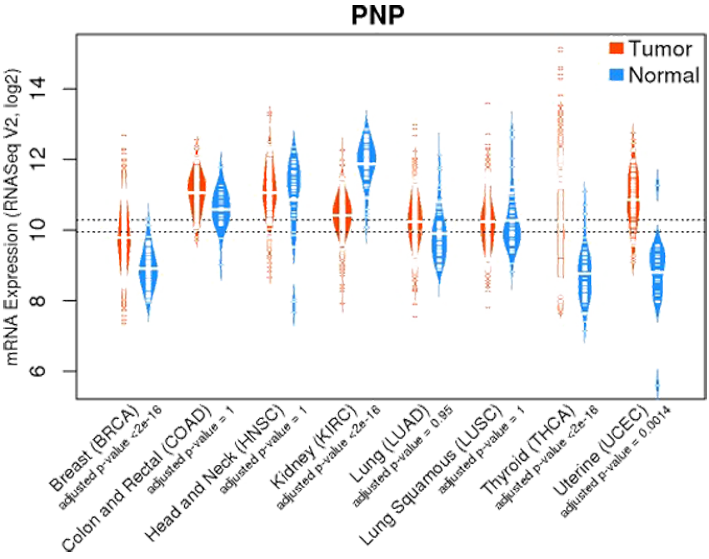
Figure 6. PNP expression in primary tumors. Normalized gene expression data of RNASeqV2 which was extracted from TCGA using R package TCGA-Assembler (t test, adjusted p
Entity name
Lymphoma, Bronchogenic carcinoma, Colon carcinoma, Breast cancer, Gastric cancer, Lung cancer, Ovarian cancer, Pancreatic adenocarcinoma
Note
PNP activity was found higher in patients with indicated cancer types compared to control groups (Roberts et al., 2004; Rendeková et al., 1983; Sanfilippo et al., 1994; Vareed et al., 2011).
Entity name
Acute myeloid leukemia, Lymphoblastic leukemia, Chronic lymphocytic leukemia
Note
A low level of PNP activity was found in mononuclear cells from patients with acute myeloid and lymphoblastic leukemia and with chronic lymphocytic leukemia (Morisaki et al., 1986).
Entity name
Severe Combined Immune Deficiency (SCID)
Note
PNP deficiency is an autosomal recessive enzyme disorder, engaged in four percent of SCID cases in humans (Pannicke et al., 1996).
Entity name
Asthma
Note
PNP activity was higher in patients with asthma than in either healthy subjects or patients with gout (Yamamoto et al., 1995).
Article Bibliography
| Pubmed ID | Last Year | Title | Authors |
|---|---|---|---|
| 19733163 | 2009 | A novel mutation in purine nucleoside phosphorylase in a child with normal uric acid levels. | Al-Saud B et al |
| 10859343 | 2000 | Mitochondrial basis for immune deficiency. Evidence from purine nucleoside phosphorylase-deficient mice. | Arpaia E et al |
| 1384322 | 1992 | Molecular analysis of mutations in a patient with purine nucleoside phosphorylase deficiency. | Aust MR et al |
| 11337031 | 2000 | Purine nucleoside phosphorylases: properties, functions, and clinical aspects. | Bzowska A et al |
| 4582029 | 1972 | [A congenital hyperplasia of Bowman's membrane]. | Daicker B et al |
| 9305962 | 1997 | Purine nucleoside phosphorylase. 1. Structure-function studies. | Erion MD et al |
| 1482702 | 1992 | Correction of purine nucleoside phosphorylase deficiency by retroviral-mediated gene transfer in mouse S49 T cell lymphoma: a model for gene therapy of T cell immunodeficiency. | Foresman MD et al |
| 24107682 | 2014 | Functional analysis of purine nucleoside phosphorylase as a key enzyme in ribavirin metabolism. | Furihata T et al |
| 28859258 | 2017 | Lupus-Associated Functional Polymorphism in PNP Causes Cell Cycle Abnormalities and Interferon Pathway Activation in Human Immune Cells. | Ghodke-Puranik Y et al |
| 3130041 | 1987 | Adenosine deaminase and purine phosphorylase activities in lymphocytes and red blood cells of patients with carcinoma of the larynx. | Gierek T et al |
| 26720700 | 2016 | Development of a new HPLC method using fluorescence detection without derivatization for determining purine nucleoside phosphorylase activity in human plasma. | Giuliani P et al |
| 15571269 | 2004 | Novel mutations and hot-spots in patients with purine nucleoside phosphorylase deficiency. | Grunebaum E et al |
| 1620616 | 1992 | Intron requirement for expression of the human purine nucleoside phosphorylase gene. | Jonsson JJ et al |
| 24098491 | 2013 | Purine nucleoside phosphorylase targeted by annexin v to breast cancer vasculature for enzyme prodrug therapy. | Krais JJ et al |
| 18924118 | 2008 | Lentivirus gene therapy for purine nucleoside phosphorylase deficiency. | Liao P et al |
| 22669887 | 2011 | Purine nucleoside phosphorylase deficiency with a novel PNP gene mutation: a first case report from India. | Madkaikar MR et al |
| 12483996 | 2002 | Purine nucleoside phosphorylase deficiency: a new case report and identification of two novel mutations (Gly156A1a and Val217Ile), only one of which (Gly156A1a) is deleterious. | Moallem HJ et al |
| 3094366 | 1986 | Characterization of purine nucleoside phosphorylase in leukemia. | Morisaki T et al |
| 8931706 | 1996 | Two novel missense and frameshift mutations in exons 5 and 6 of the purine nucleoside phosphorylase (PNP) gene in a severe combined immunodeficiency (SCID) patient. | Pannicke U et al |
| 6405288 | 1983 | Adenosine deaminase and purine nucleoside phosphorylase activities in peripheral blood cells of patients with neoplastic diseases. I. Bronchogenic carcinoma. | Rendeková V et al |
| 18154341 | 2008 | L-Enantiomers of transition state analogue inhibitors bound to human purine nucleoside phosphorylase. | Rinaldo-Matthis A et al |
| 15149878 | 2004 | Plasma purine nucleoside phosphorylase in cancer patients. | Roberts EL et al |
| 25899782 | 2015 | Phase I dose-escalating trial of Escherichia coli purine nucleoside phosphorylase and fludarabine gene therapy for advanced solid tumors. | Rosenthal EL et al |
| 7796389 | 1994 | Relationship between the levels of purine salvage pathway enzymes and clinical/biological aggressiveness of human colon carcinoma. | Sanfilippo O et al |
| 15448350 | 2004 | Identification and characterization of a novel gene of grouper iridovirus encoding a purine nucleoside phosphorylase. | Ting JW et al |
| 16964310 | 2006 | TAT-mediated intracellular delivery of purine nucleoside phosphorylase corrects its deficiency in mice. | Toro A et al |
| 16930574 | 2006 | Intracellular delivery of purine nucleoside phosphorylase (PNP) fused to protein transduction domain corrects PNP deficiency in vitro. | Toro A et al |
| 2841460 | 1988 | Association of human papillomavirus with vulvodynia and the vulvar vestibulitis syndrome. | Turner ML et al |
| 21448452 | 2011 | Metabolites of purine nucleoside phosphorylase (NP) in serum have the potential to delineate pancreatic adenocarcinoma. | Vareed SK et al |
| 22132981 | 2011 | Purine nucleoside phosphorylase deficiency: a mutation update. | Walker PL et al |
| 7668372 | 1995 | Determination of plasma purine nucleoside phosphorylase activity by high-performance liquid chromatography. | Yamamoto T et al |
| 28674683 | 2017 | Infusion of Sibling Marrow in a Patient with Purine Nucleoside Phosphorylase Deficiency Leads to Split Mixed Donor Chimerism and Normal Immunity. | Yeates L et al |
Other Information
Locus ID:
NCBI: 4860
MIM: 164050
HGNC: 7892
Ensembl: ENSG00000198805
Variants:
dbSNP: 4860
ClinVar: 4860
TCGA: ENSG00000198805
COSMIC: PNP
RNA/Proteins
Expression (GTEx)
Pathways
Protein levels (Protein atlas)
References
| Pubmed ID | Year | Title | Citations |
|---|---|---|---|
| 36538016 | 2023 | Connecting Conformational Motions to Rapid Dynamics in Human Purine Nucleoside Phosphorylase. | 7 |
| 38431953 | 2023 | Purine Nucleoside Phosphorylase Deficiency in Two Unrelated Patients with Autoimmune Hemolytic Anemia and Eosinophilia: Two Novel Mutations. | 0 |
| 36538016 | 2023 | Connecting Conformational Motions to Rapid Dynamics in Human Purine Nucleoside Phosphorylase. | 7 |
| 38431953 | 2023 | Purine Nucleoside Phosphorylase Deficiency in Two Unrelated Patients with Autoimmune Hemolytic Anemia and Eosinophilia: Two Novel Mutations. | 0 |
| 32514656 | 2020 | A Case with Purine Nucleoside Phosphorylase Deficiency Suffering from Late-Onset Systemic Lupus Erythematosus and Lymphoma. | 4 |
| 32514656 | 2020 | A Case with Purine Nucleoside Phosphorylase Deficiency Suffering from Late-Onset Systemic Lupus Erythematosus and Lymphoma. | 4 |
| 29915028 | 2018 | Inverse enzyme isotope effects in human purine nucleoside phosphorylase with heavy asparagine labels. | 13 |
| 29915028 | 2018 | Inverse enzyme isotope effects in human purine nucleoside phosphorylase with heavy asparagine labels. | 13 |
| 27976868 | 2017 | Thermodynamics of the Purine Nucleoside Phosphorylase Reaction Revealed by Computer Simulations. | 0 |
| 28859258 | 2017 | Lupus-Associated Functional Polymorphism in PNP Causes Cell Cycle Abnormalities and Interferon Pathway Activation in Human Immune Cells. | 15 |
| 27976868 | 2017 | Thermodynamics of the Purine Nucleoside Phosphorylase Reaction Revealed by Computer Simulations. | 0 |
| 28859258 | 2017 | Lupus-Associated Functional Polymorphism in PNP Causes Cell Cycle Abnormalities and Interferon Pathway Activation in Human Immune Cells. | 15 |
| 26985580 | 2016 | Computer Simulations Reveal Substrate Specificity of Glycosidic Bond Cleavage in Native and Mutant Human Purine Nucleoside Phosphorylase. | 2 |
| 26985580 | 2016 | Computer Simulations Reveal Substrate Specificity of Glycosidic Bond Cleavage in Native and Mutant Human Purine Nucleoside Phosphorylase. | 2 |
| 25338677 | 2015 | Genetic analysis of the pathogenic molecular sub-phenotype interferon-alpha identifies multiple novel loci involved in systemic lupus erythematosus. | 38 |
Citation
Rafig Gurbanov ; Sinem Tunçer
PNP (Purine Nucleoside Phosphorylase)
Atlas Genet Cytogenet Oncol Haematol. 2018-03-01
Online version: http://atlasgeneticsoncology.org/gene/46893/new-content/gene-fusions-explorer/
