Abstract
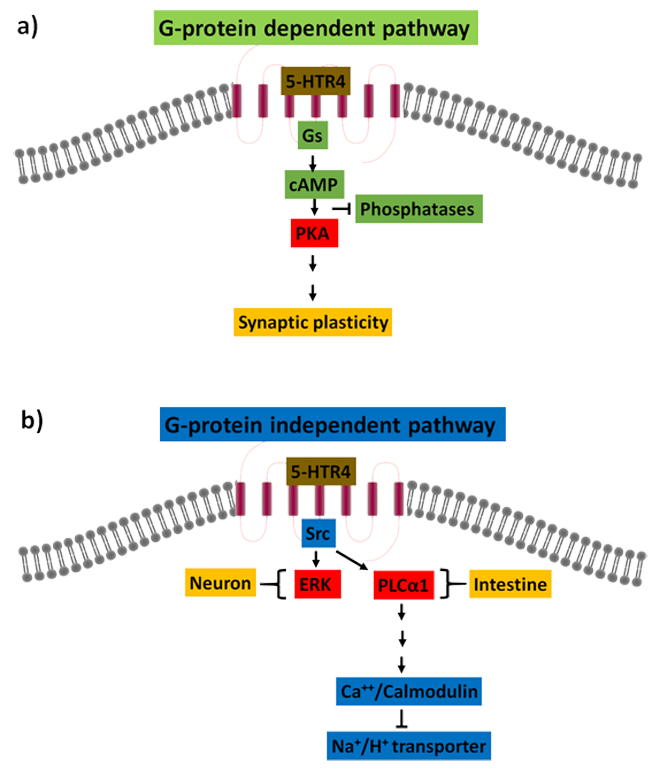
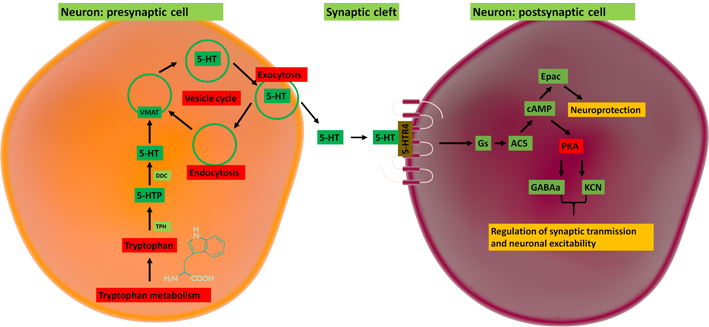
Being a member of the serotonin receptor family, 5-HT4 receptor ties up the neurotransmitter-serotonin (5-hydroxytryptamine\/ 5-HT) in the central nervous system (CNS) of mammals. Commonly 5-HT4 receptors (5-HTR4) are G-protein-coupled receptors (GPCRs), in which the G proteins cause the induction of adenylate cyclase, subsequently leading to cyclic adenosine monophosphate (cAMP) and protein kinase A (PKA) activations. These receptors are commonly expressed in gastrointestinal, cardiovascular, nervous, and urinary systems, as well as the adrenal cortex (Tack et al., 2012). In this review article, the genetic, cellular, and biochemical knowledge of 5-HT4 receptors is deliberated. Besides the emphasis on receptor-ligand interaction with therapeutics, the implication of these receptors in several health disturbances\/diseases is considered on the basis of available literature.
DNA/RNA
Note
Transcription
Table 1. Transcripts of the human 5-HTR4 gene (Ensemble, GRCh38.p12).
| Name | Transcript ID | bp | Protein (aa) | Biotype |
| HTR4-201 | ENST00000360693.7 | 3082 | 428 | Protein coding |
| HTR4-202 | ENST00000362016.6 | 2979 | 428 | Protein coding |
| HTR4-203 | ENST00000377888.7 | 2962 | 388 | Protein coding |
| HTR4-209 | ENST00000521530.5 | 1323 | 387 | Protein coding |
| HTR4-210 | ENST00000521735.5 | 1242 | 378 | Protein coding |
| HTR4-207 | ENST00000520514.5 | 1236 | 411 | Protein coding |
| HTR4-213 | ENST00000631296.1 | 1224 | 388 | Protein coding |
| HTR4-204 | ENST00000517929.5 | 1201 | 360 | Protein coding |
| HTR4-206 | ENST00000520086.1 | 2272 | 87 | Protein coding |
| HTR4-211 | ENST00000522588.5 | 1326 | 378 | Nonsense mediated decay |
| HTR4-212 | ENST00000524063.3 | 2274 | 371 | Nonsense mediated decay |
| HTR4-205 | ENST00000519495.1 | 869 | No protein | Processed transcript |
| HTR4-208 | ENST00000521124.5 | 1221 | No protein | Retained intron |
Proteins
Note
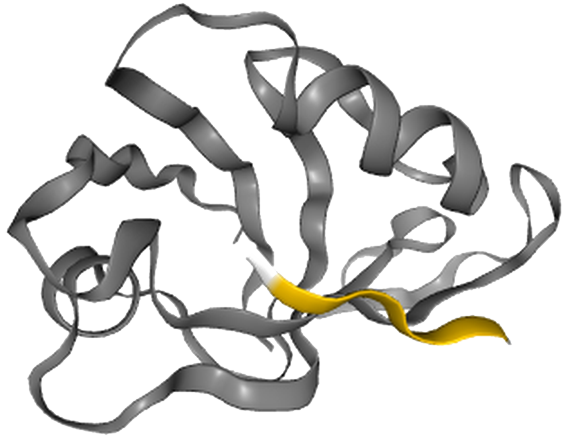
Expression
Function
This receptor was first described in primary cultures of mouse embryonic colliculus neurons based on 5-HT-induced cAMP production (Dumuis et al., 1988). It plays potential roles in the physiology of cardiovascular, urinary, and endocrine systems. It is also implicated in the pathophysiology of diseases occurring in adrenal glands as well as urinary and gastrointestinal systems (Ford and Clarke., 1994). 5-HTR4s are responsive in the events occurring in adrenal glands, colon, cortex (Monferini et al.,1993), and atrial appendages (Kaumann et al., 1990, 1991; Turconi et al., 1991; Quadid et al., 1992) of human tissues by encouraging cAMPs. In turn, cAMP inductions lead to steroid secretion in adrenal glands (Lefebvre et al., 1992) and circular muscle contraction in the colon (Tam et al.,1992).
Therapeutic agents interacting with 5-HTR4
Advances in research on 5-HT set forward the development of therapeutics selectively interacting with 5-HT receptors. In the present day, these ligands mainly divided into 5 categories/classes. They are indoles including 5-HT analogs, indole carboxylates, and indole carboxamides, benzamides, benzoates, aryl ketones, and benzimidazoles (Bockaert et al., 2004).
First-class 5-HTR4 agonists include substituted tryptamines or 5-HT agonists next to the substituted triple-carbazimidamides. 5-MeOtryptamine is an interesting vehicle due to the lack of its affinity to 5-HTR3 (Craig et al., 1990). The indole carbazimidamide derivative, HTF 919 (Tegaserod), has been found to be a potent partial agonist with high affinity to 5-HTR4. In vivo studies show that Tegaserod enhances gastrointestinal motor activity and adjusts impaired motility throughout the gastrointestinal tract. (Bockaert et al., 2004). Tegaserod is a benzamide derivative which was approved by the FDA and other regulatory agencies for the treatment of women with inflammatory bowel disease (IBD) in which the constipation is predominant or functional constipation (Tonini and Pace 2006; Shin et al., 2015). However, it was later withdrawn from the market due to possible cardiovascular side-effects (Chey et al., 2008; Thompson 2007). Three novel 5-HTR4 agonists (Prucaloprid, Naronapride, and Velusetrag) have therapeutic potential for patients with IBD. These alternative drugs have a higher affinity for 5-HTR4 compared to Tegaserod (Halland and Talley, 2013). YKP10811 is a mucosal partial agonist for the 5-HTR4, induces serotonin release, initiates peristaltic reflex, and has a low cardiovascular adverse effect. Unlike traditional prokinetic drugs such as Tegaserod, YKP10811 exhibits an antinociceptive effect on inflammation as well as acute stress-associated colonic hypersensitivity, and also considered as a candidate drug for IBD (Gilet et al., 2014).
The second class of 5-HTR4 agonists includes first-generation benzamides carrying 2-methoxy-4-amino-5-chloro substitution (Dumuis et al., 1989). These benzamides (zacopride, renzapride, and metoclopramide) were found to be non-selective and always cause antagonistic activity at the 5-HTR3 (Bockaert et al., 2004).
The third class of agonists, so-called benzoate derivatives were deliberated with the replacement of benzamides amide bond with an ester one, resulting in increased affinity for 5-HTR4. The first partial and selective drug of this series is ML 10302, which has a high affinity for 5-HTR4 and poor affinity for other 5-HT receptor subtypes including 5-HTR3 (Langlois et al., 1994; Bockaert et al., 2004). Moser and colleagues (2002) synthesized SL65.0155, a novel compound with high affinity for 5-HTR4. Being a benzodioxane derivative, it is particularly effective for learning and memory (Moser et al., 2002).
The fourth class is consist of benzimidazoles (BIMU 8 and BIMU 1), which are potent and effective 5-HTR4 agonists entering CNS (Dumuis et al., 1991; Rizzi et al., 1992). To overcome their metabolic variability, aryl ketones were prepared with 5-HTR4 ester ligands; instead of the ester linkage of the antagonist RS 23597, a partial agonist RS 17017 was synthesized, which has a similar affinity for 5-HTR4 (Clark et al., 1994). Increasing the size of the alkyl group led to an increase in the activity of the agonists RS 67333 and RS 67506 (Eglen et al., 1995). RS 67333, a selective 5-HTR4 partial agonist, is known to easily cross the blood-brain barrier. Systemic administration of selective 5-HT4 receptor partial agonists, like RS 67333 and RS 17017, enhances rodent performance in olfactory relational learning (Marchetti et al., 2004), social-spatial memory tests (Letty et al., 1997), and also improves delayed sample matching in young/ old macaques (Terry et al., 1998). RS 67333 has been shown to inhibit β-amyloid peptide formation in primary cortical neurons (Cho and Hu, 2007). Interestingly, RS 67333 produces a rapid antidepressant effect after only three days of administration to rodents (Lucas et al., 2007). A more recent study comparing RS67333 with antidepressant drug Fluoxetine (FLX) confirmed that RS67333 causes anxiolytic-like effects after only 7 days in several behavioral tests and that 5-HTR4 agonists produce faster effects than currently used antidepressants (Mendez-David et al., 2014). Another interesting agonist is a pyridine carboxamide, a cognitive drug (VRX-03011) for Alzheimers disease (Bockaert et al., 2008).
Fifth class includes indoles such as GR 113808 with high affinity for 5-HTR4, and low affinity for 5-HTR3 (Gale et al., 1994). Further, [3H] GR 113808 is the first commercially available radioligand for 5-HTR4 affinity studies (Grossman et al., 1993). SB 203186 is an indole ester with potent and selective 5-HTR4 antagonistic properties in various physiological assays, but the short half-life limits its in vivo application (Parker et al., 1993). In contrast, SB 207266 is a highly potent and selective antagonist with a long duration of action after oral administration (Gaster et al., 1995). SB 207266 is a very useful vehicle in CNS studies (Wardle et al., 1996; Gaster and King 1997).
Three selective and high-affinity 5-HTR4 antagonists (GR 125487, SB 207266, and ML 10375) have been reported to exhibit reverse agonistic activity (Claeysen et al., 2000; Blondel et al., 1998). Roche Bioscience generated three potent 5-HTR4 reverse agonists, RO 116-2617, RO 116-0086, and RO 116-1148 (Joubert et al., 2002). 5-HTR4 ligands that may be of interest in CNS studies are listed in Table 2.
Table 2. 5-HTR4 ligands used in CNS studies (Adopted from Bockaert et al., 2004).
| Agonists | Antagonists | Reverse Antagonists |
| 5-HT | GR 113308 | RO 116-2617 |
| 5-MeOT | GF 125487 | RO 116-0086 |
| HTF919 | SB 203186 | RO 116-1148 |
| Cisapride | LY 353433 | |
| SC 53 116 | SB 207 266 | |
| SB 205 149 | SB 204070 | |
| Prucalopride | RS 23597 | |
| Mosapride | ML 10375 | |
| Y-34959 | ATBI 221 | |
| ML10302 | RS 39606 | |
| LS-65 0155 | RS 67532 | |
| RS 67333 | RS 100235 | |
| RS 67506 | RS 100302 | |
| BUMI 1 | ||
| BUMI 8 |
Homology
| Pairwise Aligment Scores | |||
| Gene | Identity (%) | ||
| Species | Symbol | Protein | DNA |
| H.sapiens | HTR4 | ||
| vs. P.trogladytes | HTR4 | 99,8 | 99,6 |
| vs. M.mulatta | HTR4 | 98,6 | 98,1 |
| vs. C.lupus | HTR4 | 96,6 | 93,6 |
| vs. B.taurus | HTR4 | 94,8 | 93,7 |
| vs. M.musculus | Htr4 | 93,3 | 90,9 |
| vs. R. norvegicus | Htr4 | 92,7 | 90,6 |
| vs. G. gallus | HTR4 | 88,5 | 82,6 |
| vs. X. tropicalis | LOC100493952 | 83,4 | 74,5 |
| vs. D. rerio | LOC556843 | 75,3 | 71,9 |
| vs. D. melanogaster | Oa2 | 47,5 | 54,3 |
Mutations
Somatic
Implicated in
Article Bibliography
| Pubmed ID | Last Year | Title | Authors |
|---|---|---|---|
| 28844596 | 2017 | Chronic treatments with a 5-HT(4) receptor agonist decrease amyloid pathology in the entorhinal cortex and learning and memory deficits in the 5xFAD mouse model of Alzheimer's disease. | Baranger K et al |
| 17377064 | 2007 | 5-hydroxytryptamine 4 receptor activation of the extracellular signal-regulated kinase pathway depends on Src activation but not on G protein or beta-arrestin signaling. | Barthet G et al |
| 15919661 | 2005 | Uncoupling and endocytosis of 5-hydroxytryptamine 4 receptors. Distinct molecular events with different GRK2 requirements. | Barthet G et al |
| 9174070 | 1997 | Effects of serotonin through serotonin1A and serotonin4 receptors on inhibition in the guinea-pig dentate gyrus in vitro. | Bijak M et al |
| 9831890 | 1998 | The 5-HT4 receptor antagonist ML10375 inhibits the constitutive activity of human 5-HT4(c) receptor. | Blondel O et al |
| 9276448 | 1997 | Molecular and functional characterization of a 5-HT4 receptor cloned from human atrium. | Blondel O et al |
| 21342787 | 2011 | 5-HT(4) receptors, a place in the sun: act two. | Bockaert J et al |
| 22974325 | 2012 | Identification of multiple 5-HT₄ partial agonist clinical candidates for the treatment of Alzheimer's disease. | Brodney MA et al |
| 18061284 | 2008 | Prucalopride and donepezil act synergistically to reverse scopolamine-induced memory deficit in C57Bl/6j mice. | Cachard-Chastel M et al |
| 21107537 | 2011 | The role of serotonin receptor subtypes in treating depression: a review of animal studies. | Carr GV et al |
| 16322401 | 2005 | Expression profile of serotonin4 (5-HT4) receptors in adrenocortical aldosterone-producing adenomas. | Cartier D et al |
| 12519861 | 2003 | Overexpression of serotonin4 receptors in cisapride-responsive adrenocorticotropin-independent bilateral macronodular adrenal hyperplasia causing Cushing's syndrome. | Cartier D et al |
| 18477346 | 2008 | Tegaserod for female patients suffering from IBS with mixed bowel habits or constipation: a randomized controlled trial. | Chey WD et al |
| 16978609 | 2007 | Activation of 5-HT4 receptors inhibits secretion of beta-amyloid peptides and increases neuronal survival. | Cho S et al |
| 9724925 | 1998 | Assignment of the human serotonin 4 receptor gene (HTR4) to the long arm of chromosome 5 (5q31-q33). | Cichon S et al |
| 10860935 | 2000 | Pharmacological properties of 5-Hydroxytryptamine(4) receptor antagonists on constitutively active wild-type and mutated receptors. | Claeysen S et al |
| 15146954 | 2004 | [Feeding disorders in 5-HT4 receptor knockout mice]. | Compan V et al |
| 14724239 | 2004 | Attenuated response to stress and novelty and hypersensitivity to seizures in 5-HT4 receptor knock-out mice. | Compan V et al |
| 16930432 | 2006 | Adaptive changes in serotonin neurons of the raphe nuclei in 5-HT(4) receptor knock-out mouse. | Conductier G et al |
| 7919171 | 1994 | 5-HT4 receptor stimulation facilitates acetylcholine release in rat frontal cortex. | Consolo S et al |
| 2402303 | 1990 | 5-Methoxytryptamine and 2-methyl-5-hydroxytryptamine-induced desensitization as a discriminative tool for the 5-HT3 and putative 5-HT4 receptors in guinea pig ileum. | Craig DA et al |
| 18199093 | 2008 | 5-HT4 receptor agonists: similar but not the same. | De Maeyer JH et al |
| 2849052 | 1988 | A nonclassical 5-hydroxytryptamine receptor positively coupled with adenylate cyclase in the central nervous system. | Dumuis A et al |
| 1650917 | 1991 | Azabicycloalkyl benzimidazolone derivatives as a novel class of potent agonists at the 5-HT4 receptor positively coupled to adenylate cyclase in brain. | Dumuis A et al |
| 8564196 | 1995 | Pharmacological characterization of two novel and potent 5-HT4 receptor agonists, RS 67333 and RS 67506, in vitro and in vivo. | Eglen RM et al |
| 8012715 | 1994 | GR113808: a novel, selective antagonist with high affinity at the 5-HT4 receptor. | Gale JD et al |
| 7490724 | 1995 | N-[(1-butyl-4-piperidinyl)methyl]-3,4dihydro-2H-[1,3]oxazino[3,2- a]indole10-carboxamide hydrochloride: the first potent and selective 5-HT4 receptor antagonist amide with oral activity. | Gaster LM et al |
| 9057164 | 1997 | Serotonin 5-HT3 and 5-HT4 receptor antagonists. | Gaster LM et al |
| 25316608 | 2014 | Influence of a new 5-HT4 receptor partial agonist, YKP10811, on visceral hypersensitivity in rats triggered by stress and inflammation. | Gilet M et al |
| 8358562 | 1993 | Development of a radioligand binding assay for 5-HT4 receptors in guinea-pig and rat brain. | Grossman CJ et al |
| 22709820 | 2012 | Obesity is associated with high serotonin 4 receptor availability in the brain reward circuitry. | Haahr ME et al |
| 23147658 | 2013 | New treatments for IBS. | Halland M et al |
| 23890215 | 2013 | HTR4 gene structure and altered expression in the developing lung. | Hodge E et al |
| 22226658 | 2012 | Activation of colonic mucosal 5-HT(4) receptors accelerates propulsive motility and inhibits visceral hypersensitivity. | Hoffman JM et al |
| 11888546 | 2002 | Molecular, pharmacological and functional diversity of 5-HT receptors. | Hoyer D et al |
| 22408061 | 2012 | The 5-hydroxytryptamine4 receptor agonists prucalopride and PRX-03140 increase acetylcholine and histamine levels in the rat prefrontal cortex and the power of stimulated hippocampal θ oscillations. | Johnson DE et al |
| 11976337 | 2002 | A 5-HT4 receptor transmembrane network implicated in the activity of inverse agonists but not agonists. | Joubert L et al |
| 1658664 | 1991 | A 5-HT4-like receptor in human right atrium. | Kaumann AJ et al |
| 21382128 | 2011 | Association of 5-hydroxytryptamine (serotonin) receptor 4 (5-HTR4) gene polymorphisms with asthma. | Kim TH et al |
| 12052191 | 2002 | Molecular biology of serotonin receptors structure and function at the molecular level. | Kroeze WK et al |
| 10564687 | 1999 | Leuprolide acetate therapy in luteinizing hormone--dependent Cushing's syndrome. | Lacroix A et al |
| 28504917 | 2017 | Modulating 5-HT(4) and 5-HT(6) receptors in Alzheimer's disease treatment. | Lalut J et al |
| 9918900 | 1999 | Human obesity is associated with a chronic elevation in brain 5-hydroxytryptamine turnover. | Lambert GW et al |
| 11889190 | 2002 | Characterization of serotonin(4) receptors in adrenocortical aldosterone-producing adenomas: in vivo and in vitro studies. | Lefebvre H et al |
| 9225294 | 1997 | 5-HT4 receptors improve social olfactory memory in the rat. | Letty S et al |
| 12543273 | 2003 | The serotonin 5-HT4 receptor and the amyloid precursor protein processing. | Lezoualc'h F et al |
| 16563621 | 2006 | Association of attention-deficit/hyperactivity disorder with serotonin 4 receptor gene polymorphisms in Han Chinese subjects. | Li J et al |
| 17785179 | 2007 | Serotonin(4) (5-HT(4)) receptor agonists are putative antidepressants with a rapid onset of action. | Lucas G et al |
| 12819788 | 2003 | Crosstalk between Rap1 and Rac regulates secretion of sAPPalpha. | Maillet M et al |
| 15555636 | 2004 | Modulation of memory processes and cellular excitability in the dentate gyrus of freely moving rats by a 5-HT4 receptors partial agonist, and an antagonist. | Marchetti E et al |
| 24287720 | 2014 | Rapid anxiolytic effects of a 5-HT₄ receptor agonist are mediated by a neurogenesis-independent mechanism. | Mendez-David I et al |
| 17692343 | 2007 | VRX-03011, a novel 5-HT4 agonist, enhances memory and hippocampal acetylcholine efflux. | Mohler EG et al |
| 8437506 | 1993 | Pharmacological characterization of the 5-hydroxytryptamine receptor coupled to adenylyl cyclase stimulation in human brain. | Monferini E et al |
| 12130738 | 2002 | SL65.0155, a novel 5-hydroxytryptamine(4) receptor partial agonist with potent cognition-enhancing properties. | Moser PC et al |
| 12399948 | 2002 | Association between serotonin 4 receptor gene polymorphisms and bipolar disorder in Japanese case-control samples and the NIMH Genetics Initiative Bipolar Pedigrees. | Ohtsuki T et al |
| 1311410 | 1992 | Serotonin increases calcium current in human atrial myocytes via the newly described 5-hydroxytryptamine4 receptors. | Ouadid H et al |
| 15721867 | 2005 | Appearance of a ventricular 5-HT4 receptor-mediated inotropic response to serotonin in heart failure. | Qvigstad E et al |
| 30428567 | 2018 | Alterations of Expression of the Serotonin 5-HT4 Receptor in Brain Disorders. | Rebholz H et al |
| 7780656 | 1995 | 5-Hydroxytryptamine (5-HT)4 receptors in post mortem human brain tissue: distribution, pharmacology and effects of neurodegenerative diseases. | Reynolds GP et al |
| 1578356 | 1992 | Benzimidazolone derivatives: a new class of 5-hydroxytryptamine4 receptor agonists with prokinetic and acetylcholine releasing properties in the guinea pig ileum. | Rizzi CA et al |
| 25148765 | 2015 | A randomized trial of 5-hydroxytryptamine4-receptor agonist, YKP10811, on colonic transit and bowel function in functional constipation. | Shin A et al |
| 10208587 | 1999 | 5-HT4 receptor modulation of acetylcholine outflow in guinea pig brain slices. | Siniscalchi A et al |
| 12898568 | 2003 | Association of a haplotype in the serotonin 5-HT4 receptor gene (HTR4) with Japanese schizophrenia. | Suzuki T et al |
| 22356640 | 2012 | Systematic review: cardiovascular safety profile of 5-HT(4) agonists developed for gastrointestinal disorders. | Tack J et al |
| 7812604 | 1994 | Characterization of the 5-hydroxytryptamine receptor type involved in inhibition of spontaneous activity of human isolated colonic circular muscle. | Tam FS et al |
| 9539266 | 1998 | Enhanced delayed matching performance in younger and older macaques administered the 5-HT4 receptor agonist, RS 17017. | Terry AV Jr et al |
| 17494895 | 2007 | Novartis suspends tegaserod sales at FDA's request. | Thompson CA et al |
| 16185301 | 2005 | 5-Hydroxytryptamine effects in the gut: the 3, 4, and 7 receptors. | Tonini M et al |
| 16699264 | 2006 | Drugs acting on serotonin receptors for the treatment of functional GI disorders. | Tonini M et al |
| 9349523 | 1997 | Cloning and expression of a human serotonin 5-HT4 receptor cDNA. | Van den Wyngaert I et al |
| 8762092 | 1996 | Selective and functional 5-hydroxytryptamine4 receptor antagonism by SB 207266. | Wardle KA et al |
| 29089619 | 2017 | miR-16 and miR-103 impact 5-HT(4) receptor signalling and correlate with symptom profile in irritable bowel syndrome. | Wohlfarth C et al |
| 19131502 | 2009 | Screening for membrane hormone receptor expression in primary aldosteronism. | Zwermann O et al |
Other Information
Locus ID:
NCBI: 3360
MIM: 602164
HGNC: 5299
Ensembl: ENSG00000164270
Variants:
dbSNP: 3360
ClinVar: 3360
TCGA: ENSG00000164270
COSMIC: HTR4
RNA/Proteins
Expression (GTEx)
Pathways
Protein levels (Protein atlas)
PharmGKB
| Entity ID | Name | Type | Evidence | Association | PK | PD | PMIDs |
|---|---|---|---|---|---|---|---|
| PA175 | GNAS | Gene | Pathway | associated | 19741567 |
References
| Pubmed ID | Year | Title | Citations |
|---|---|---|---|
| 34906639 | 2022 | The GG genotype of the serotonin 4 receptor genetic polymorphism, rs1345697, is associated with lower remission rates after antidepressant treatment: Findings from the METADAP cohort. | 1 |
| 35821015 | 2022 | Concurrent anxiety in patients with major depression and cerebral serotonin 4 receptor binding. A NeuroPharm-1 study. | 4 |
| 34906639 | 2022 | The GG genotype of the serotonin 4 receptor genetic polymorphism, rs1345697, is associated with lower remission rates after antidepressant treatment: Findings from the METADAP cohort. | 1 |
| 35821015 | 2022 | Concurrent anxiety in patients with major depression and cerebral serotonin 4 receptor binding. A NeuroPharm-1 study. | 4 |
| 31977880 | 2020 | Association of human serotonin receptor 4 promoter methylation with autism spectrum disorder. | 7 |
| 31977880 | 2020 | Association of human serotonin receptor 4 promoter methylation with autism spectrum disorder. | 7 |
| 31502579 | 2019 | Down-regulation effects of IFN-α on p11, 5-htr1b and 5-HTR4 protein levels were affected by NH(4)CL or MG132 treatment in SH-sy5y cells. | 2 |
| 31502579 | 2019 | Down-regulation effects of IFN-α on p11, 5-htr1b and 5-HTR4 protein levels were affected by NH(4)CL or MG132 treatment in SH-sy5y cells. | 2 |
| 28799255 | 2018 | Synergy between 5-HT(4) receptor stimulation and phosphodiesterase 4 inhibition in facilitating acetylcholine release in human large intestinal circular muscle. | 2 |
| 28799255 | 2018 | Synergy between 5-HT(4) receptor stimulation and phosphodiesterase 4 inhibition in facilitating acetylcholine release in human large intestinal circular muscle. | 2 |
| 28103616 | 2017 | l-Lysine Acts as a Serotonin Type 4 Receptor Antagonist to Counteract In Vitro and In Vivo the Stimulatory Effect of Serotonergic Agents on Aldosterone Secretion in Man. | 4 |
| 28195088 | 2017 | Serotonin receptor 4 (5-hydroxytryptamine receptor Type 4) regulates expression of estrogen receptor beta and cell migration in hormone-naive prostate cancer. | 4 |
| 28413715 | 2017 | Brain serotonin 4 receptor binding is inversely associated with verbal memory recall. | 9 |
| 28426945 | 2017 | Testosterone levels in healthy men correlate negatively with serotonin 4 receptor binding. | 17 |
| 29089619 | 2017 | miR-16 and miR-103 impact 5-HT(4) receptor signalling and correlate with symptom profile in irritable bowel syndrome. | 24 |
Citation
Rafig Gurbanov ; Hazel Karadag
HTR4 (5-hydroxytryptamine receptor 4)
Atlas Genet Cytogenet Oncol Haematol. 2019-08-01
Online version: http://atlasgeneticsoncology.org/gene/52727/htr4-%285-hydroxytryptamine-receptor-4%29
