Langerhans cell histiocytosis
2019-06-01 Ding-Bao Chen Affiliation1.Department of Pathology, Peking University Peoples Hospital, Beijing 100044, Peoples Republic of China; [email protected]
Abstract
Tumours derived from Langerhans cells (LCs) are divided into two main subgroups, according to the degree of cytological atypia and clinical aggressiveness: LC histiocytosis (LCH) and LC sarcoma. Both subgroups maintain the phenotypic profile and ultrastructural features of LCs. LCH is a clonal neoplastic proliferation of Langerhans-type cells that express CD1a, langerin, and S100 protein, showing Birbeck granules by ultrastructural examination. Here the clinicopathological of LCH will be discussed.
Clinics and Pathology
Disease
Phenotype stem cell origin
Epidemiology
Clinics
The disease can be localized to a single site, can occur in multiple sites within a single system (usually bone), or can be more disseminated and multisystem. The dominant sites of involvement in the solitary form are bone and adjacent soft tissue (skull, femur, vertebra, pelvic bones, and ribs) and, less commonly, lymph node, skin, and lung. Multifocal lesions are largely confined to bone and adjacent soft tissue. In multisystem disease, the skin, bone, liver, spleen, and bone marrow are the preferential sites of involvement (Swerdlow, et al ,2008; Swerdlow, et al ,2016).
Pathology
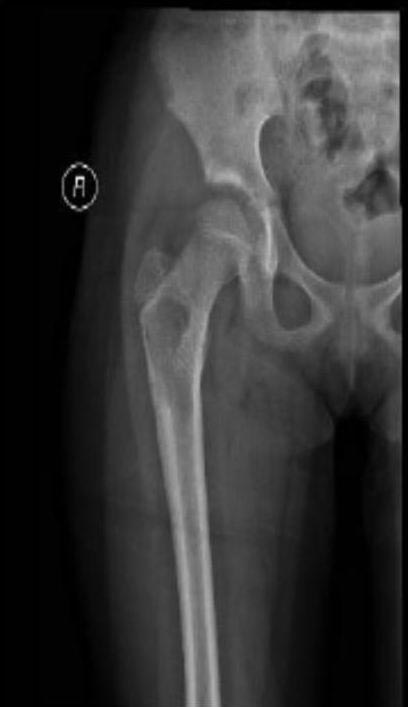
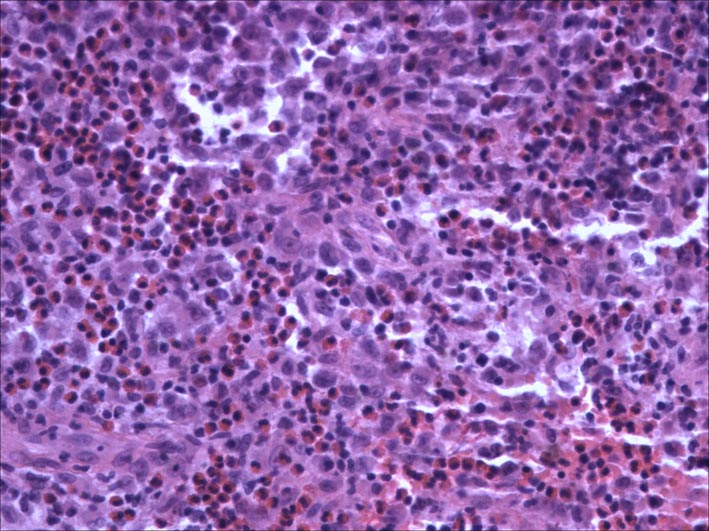
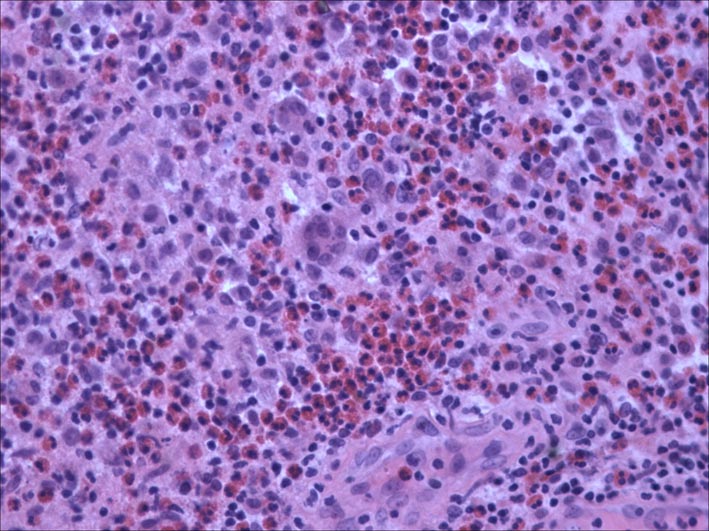
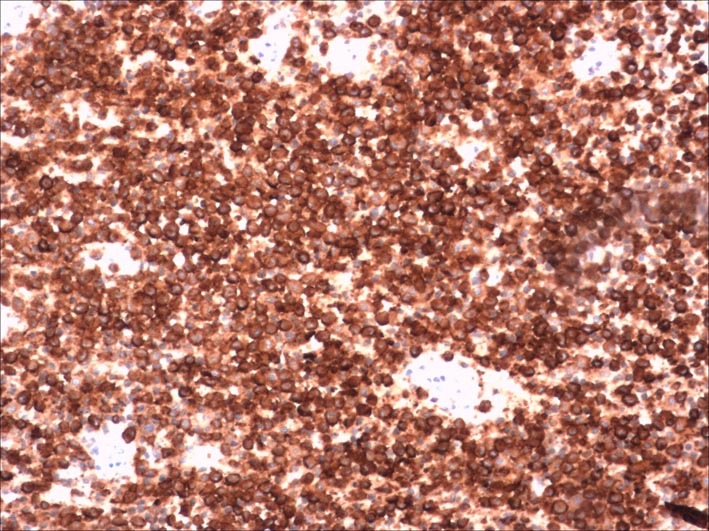
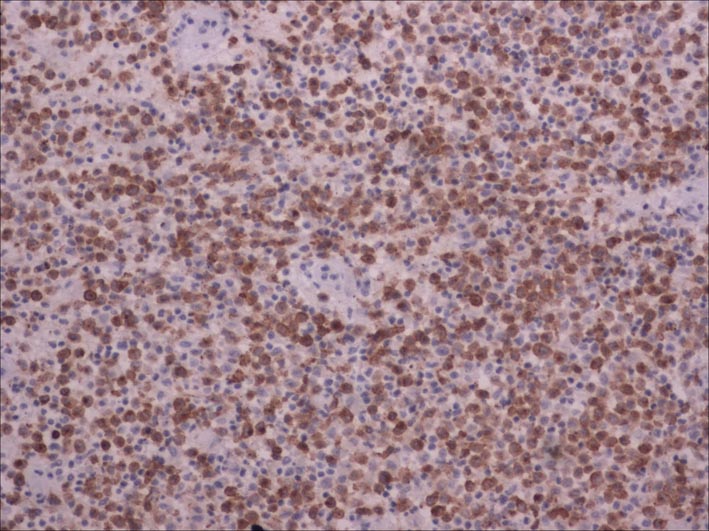
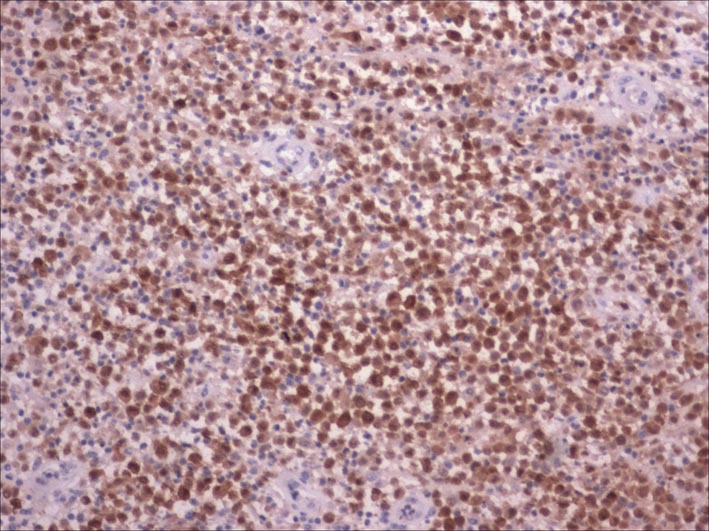
Treatment
Systemic chemotherapy is recommended in the cases of multisystem LCH, with or without the involvement of critical organs, single system LCH with multiple lesions and single system LCH with lesions in specific sites.
There is no established standard of chemotherapy to date. Although in children chemotherapy with vinblastine and prednisone proved to be effective, the results of treatment in adults turned out to be less successful. In patients with multiple bone lesions and affected lungs, significantly higher effectiveness of treatment with cytarabine or cladribine compared to vinblastine and prednisone has been shown. In some cases with solitary bone involvement, surgical removal of the focus is proposed or treatment of lesions with steroid injections. Patients with multiple bone lesions are treated systemically, surgically and/or with biphosphonates. Smoking cessation is the most important recommendation for Pulmonary LCH patients. Some authors recommend systemic steroid therapy in case of intensive symptoms from the respiratory system (Girschikofsky, 2013; Rigaud, 2016). The treatment of progressive Pulmonary LCH is based on cladribineor cytarabine as salvage therapy (Radzikowska, 2017).
Basing on extrapolated observations made during randomised trials in children, various types of cytoreductive therapy (methotrexate, vinblastine, 6 mercaptopurine, etoposide) have been applied in adult LCH patients. However, the disease in adults runs a diverse clinical course and many drugs are differently tolerated. Vemurafenib and other BRAF inhibitors offer new possibilities for targeted LCH therapy in patients with relevant mutations. (Epaud, 2015; Héritier, 2016).
MAP kinase inhibitors (Sorafenib, trametinib and cobimetinib ) have been reported to be effective in patients with aggressive form of histiocytosis. Furthermore, it is vital to remember that presented mutations in Langerhans cells are not excluding mutations, thus, in particular cases, there are recommendations to apply double targeted therapy (Kolenova, 2017).
Prognosis
Genes Involved and Proteins
Article Bibliography
| Pubmed ID | Last Year | Title | Authors |
|---|---|---|---|
| 15630529 | 2004 | Langerin (CD207) staining in normal pediatric tissues, reactive lymph nodes, and childhood histiocytic disorders. | Chikwava K et al |
| 26966089 | 2016 | Revised classification of histiocytoses and neoplasms of the macrophage-dendritic cell lineages. | Emile JF et al |
| 25395031 | 2015 | Cladribine improves lung cysts and pulmonary function in a child with histiocytosis. | Epaud R et al |
| 23672541 | 2013 | Management of adult patients with Langerhans cell histiocytosis: recommendations from an expert panel on behalf of Euro-Histio-Net. | Girschikofsky M et al |
| 27382093 | 2016 | BRAF Mutation Correlates With High-Risk Langerhans Cell Histiocytosis and Increased Resistance to First-Line Therapy. | Héritier S et al |
| 29296950 | 2017 | Targeted inhibition of the MAPK pathway: emerging salvage option for progressive life-threatening multisystem LCH. | Kolenová A et al |
| 12121233 | 2002 | Tumours of histiocytes and accessory dendritic cells: an immunohistochemical approach to classification from the International Lymphoma Study Group based on 61 cases. | Pileri SA et al |
| 29083024 | 2017 | Pulmonary Langerhans' cell histiocytosis in adults. | Radzikowska E et al |
| 27273725 | 2016 | Langerhans cell histiocytosis: therapeutic strategy and outcome in a 30-year nationwide cohort of 1478 patients under 18 years of age. | Rigaud C et al |
| 26980727 | 2016 | The 2016 revision of the World Health Organization classification of lymphoid neoplasms. | Swerdlow SH et al |
Citation
Ding-Bao Chen
Langerhans cell histiocytosis
Atlas Genet Cytogenet Oncol Haematol. 2019-06-01
Online version: http://atlasgeneticsoncology.org/haematological/1730/langerhans-cell-histiocytosis
