BRAF (v-raf murine sarcoma viral oncogene homolog B1)
2020-05-01 Enric Domingo AffiliationOncologia Molecular i Envelliment, Centre dInvestigacions en Bioqumica i Biologia Molecular (CIBBIM) Hospital Universitari Vall dHebron Passeig Vall dHebron 119-129 Barcelona 08035, Catalonia, Spain
Identity
HGNC
LOCATION
7q34
IMAGE

LEGEND
Probe(s) - Courtesy Mariano Rocchi, Resources for Molecular Cytogenetics
LOCUSID
ALIAS
B-RAF1,B-raf,BRAF1,NS7,RAFB1
FUSION GENES
Abstract
Review on BRAF, with data on DNA, on the protein encoded, and where the gene is implicated.
DNA/RNA
Description
The main isoform of the BRAF gene (NM_004333) is composed of 18 exons spanning in a region of 205601 bp.
Transcription
The main transcript NM_004333 has 6459 bp.
Pseudogene
BRAFP1 (alias BRAF2) in Xq13.3
Proteins
Note
The real sequence A31 G32 A33 was erroneously considered R31 P32. As the A33 was missing in previous sequences, some articles have erroneously assigned wrong numbers to coding mutations and amino acids (i.e. V599E mutation instead of V600E).
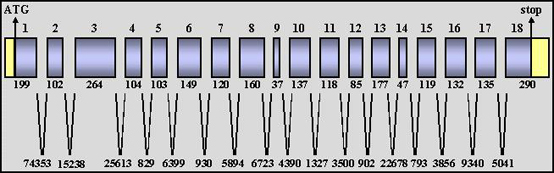
Figure 1. Diagram of the BRAF protein in scale. Numbers inside the blue boxes indicate the exon from which is translated each part of the protein. The three boxes inside represent the conserved regions of the protein with the ARAF and RAF1 genes (CR1, CR2 and CR3). With green bars are represented three different domains: RBD (Ras binding domain), CRD (Cysteine-rich domain) and KD (Kinase domain). A conserved glycine motif (G-loop) in exon 11 is indicated with a red bar and the activation segment (AS) in exon 15 with a pink bar. The black arrows indicate the major phosphorylation sites of the protein. C: Carboxyl-terminal; N: Amino-terminal.
Description
Amino acids: 766. Molecular Weight: 84437 Daltons. The BRAF gene is a proto-oncogene that belongs to the Serine/Threonine Kinase Family. It is also a member of the RAF Subfamily together with the ARAF and RAF1 genes.
Expression
BRAF is expressed in most tissues. Protein expression using antibody staining is not mainly consistent with RNA expression.
Localisation
Cytoplasmic.
Function
BRAF is a serine/threonine kinase that belongs to the RAS/RAF/MEK/ERK/MAPK pathway, which is involved in the transduction of mitogenic signals from the cell membrane to the nucleus. BRAF in its inactive form has region CR1 autoinhibiting region CR3 that contains the Kinase Domain, preventing BRAF kinase abilities. The activated form of BRAF is triggered by Ras proteins. RAS is inactive when bound to GDP, but when it binds to GTP becomes active and promotes phosphorylation and activation of BRAF and the pathway signal. This step is mediated by the Ras Binding Domain (RBD) in CR1 of BRAF, which is released ceasing the kinase inhibition. Several downstream genes have been found to be activated by this pathway, among them, CCND1 (cyclin D1), CCND2 ( cyclin D2) and CCND3 (cyclin D3) (self-sufficiency in growth), VEGF (angiogenesis), MYC (insensitivity to antigrowth signals), ITGB3 (b3-integrin )(tissue invasion and metastasis) and MDM2 (apoptosis evasion, limitless replicative potential and angiogenesis).
Homology
BRAF shares three conserved regions (CR1, CR2 and CR3) with the other two RAF genes: ARAF and RAF1 (Figure 1). CR1, which has 131 aa, contains the cysteine-rich domain (CRD) and most of the Ras binding domain (RBD). These two domains bind to RAS-GTP. CR2, which has 16 aa, is rich in serine and threonine residues, including S365 as an inhibitory phosphorylation site. Finally CR3, which has 293 aa and has the kinase domain, contains also the G-loop GXGXXG motif (highly conserved in most of the human kinases), the activation segment and the regulatory phosphorylation sites S446, S447, D448, D449, T599 and S602. The other two RAF genes do not show pathogenic mutations for unclear reasons.
Mutations
Note
BRAF contains several single nucleotide polymorphisms, both synonymous and non-synonymous. It is unclear whether any of them may impact BRAF function.
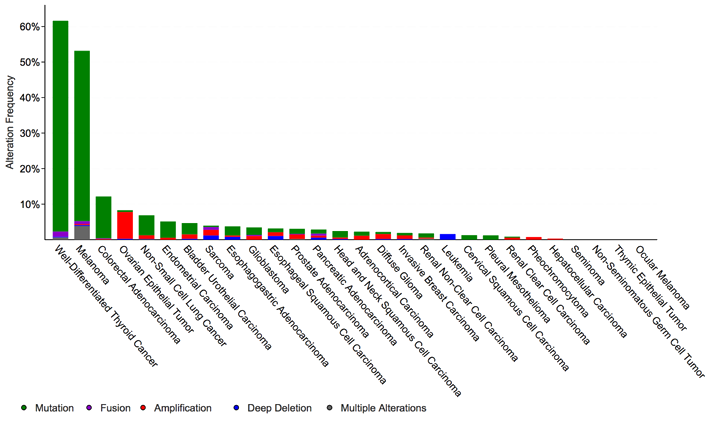
Figure 2. Frequency of BRAF mutations in several tumour types. Data and plot taken from pancancer TCGA in cbioportal.
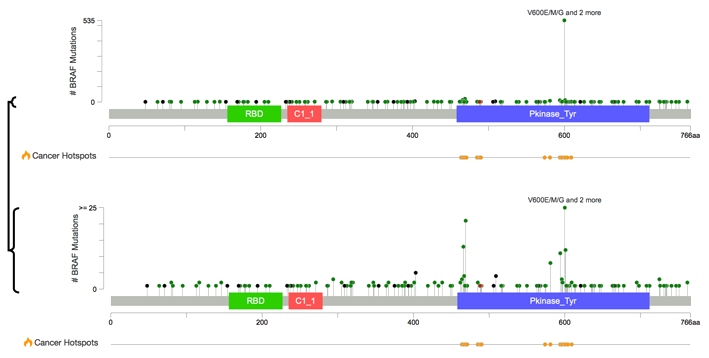
Figure 3. Somatic mutations found in BRAF (taken from cbioportal). The low panel shows the same data decreasing the highest mutation number to better visualise atypical BRAF mutations. Location of cancer hotspot mutations are show in the line below.

Figure 4. Mutations in BRAF, KRAS, NRAS and HRAS genes do not overlap (taken from cbioportal).
Germinal
No germinal mutations described. BRAF germline mutations result in a large proportion of cardiofaciocutaneous syndrome cases, a rare but serious genetic disorder characterised by distinctive craniofacial malformations. A few other germline mutations in BRAF have also been described in similar developmental disorders like Costello, Noonan or Leopard syndromes. These germline mutations are mostly located in exons 6, 12, 15 and 16 affecting residues in the Cysteine-rich or Kinase domains. They have minimal overlap with somatic mutations described in cancer. In addition, carriers of these germline mutations do not seem to show high risk of developing cancer.
Somatic
BRAF presents somatic mutations in different sort of tumours like thyroid cancer, malignant melanoma, sporadic colorectal tumors showing mismatch repair defects in microsatellites (MSI) and low-grade ovarian serous carcinoma (Figure 2). A majority of these mutations correspond to the hotspot transversion mutation T1799A that causes the amino acidic substitution V600E, which is the most common single nucleotide change in cancer (Figure 3a). The other atypical ones account for a wide variable range of missense mutations residing in the glycines of the G-loop in exon 11 or in the activation segment in exon 15 near the V600 residue (Figure 3b). The mutation V600E confers transformant activity to the cells because it mimics the phosphorylation of T599 and/or S602 in the activation segment so BRAF rests constitutively active in a RAS independent manner.
BRAF mutations can be classified into 3 subtypes depending on their effect on BRAF activity. Class 1 mutations function as an active monomer and are Ras-independent as they do not require any upstream signaling from Ras. Mutations in codon 600 like the main hotspot are examples of Class 1 mutations. Class 2 mutations are also Ras-independent but they act as dimers (eg K601E, K601N, K601T, L597Q, L597V, G469A, G469V, G469R, G464V). Class 3 are mutations that inactivate the kinase domain but strikingly result in higher MAPK signalling. This is because these are Ras-dependent mutations that also provide higher affinity to both Ras and RAF1 (CRAF), resulting in increased downstream signalling. Examples of Class 3 mutations are D287H, V459L, G466V, G466E, G466A, S467L, G469E, N581S, N581I, D594N, D594G, D594A, D594H, F595L, G596D.
Mutations in the Ras genes HRAS, KRAS or NRAS are not concomitant with BRAF mutations (Figure 4), strongly suggesting same pathway activation. The exception are Class 3 BRAF mutations, probably because they benefit from upstream pathway overactivation by Ras mutations.
BRAF-V600E is not present in other tumours like high-grade ovarian serous carcinoma, gastric cancer, esophageal cancer, endometrial cancer, uveal melanoma, biliary tract cancer or hepatocellular carcinoma.. Gene fusions retaining an intact kinase domain of BRAF have been found in different tumour types at frequencies below 3%.
BRAF mutations can be classified into 3 subtypes depending on their effect on BRAF activity. Class 1 mutations function as an active monomer and are Ras-independent as they do not require any upstream signaling from Ras. Mutations in codon 600 like the main hotspot are examples of Class 1 mutations. Class 2 mutations are also Ras-independent but they act as dimers (eg K601E, K601N, K601T, L597Q, L597V, G469A, G469V, G469R, G464V). Class 3 are mutations that inactivate the kinase domain but strikingly result in higher MAPK signalling. This is because these are Ras-dependent mutations that also provide higher affinity to both Ras and RAF1 (CRAF), resulting in increased downstream signalling. Examples of Class 3 mutations are D287H, V459L, G466V, G466E, G466A, S467L, G469E, N581S, N581I, D594N, D594G, D594A, D594H, F595L, G596D.
Mutations in the Ras genes HRAS, KRAS or NRAS are not concomitant with BRAF mutations (Figure 4), strongly suggesting same pathway activation. The exception are Class 3 BRAF mutations, probably because they benefit from upstream pathway overactivation by Ras mutations.
BRAF-V600E is not present in other tumours like high-grade ovarian serous carcinoma, gastric cancer, esophageal cancer, endometrial cancer, uveal melanoma, biliary tract cancer or hepatocellular carcinoma.. Gene fusions retaining an intact kinase domain of BRAF have been found in different tumour types at frequencies below 3%.
Epigenetics
BRAF has some CpG sites from upstream the transcription start site to the first exon but no methylation has ever been described.
Implicated in
Entity name
Melanoma
Note
BRAF is mutated in about 60% of malignant melanomas. The mutation V600E is an early event and an oncogenic driver upregulating cellular proliferation. However, BRAF V600E alone is insufficient for the development of melanoma as it is present in 80% of benign and dysplastic melanocytic nevi, which are the first lesions associated with this tumour type. Other alterations might be required to induce malignant transformation. No BRAF mutations are associated with uveal melanoma.
BRAF mutations in melanoma are associated with younger age at diagnosis, superficial spreading or nodular histology, anatomical regions without chronic sun damage and higher chances to metastasise to the brain.
BRAF mutations in melanoma are associated with younger age at diagnosis, superficial spreading or nodular histology, anatomical regions without chronic sun damage and higher chances to metastasise to the brain.
Prognosis
Metastatic melanoma patients with mutations in BRAF show worse overall survival than BRAF wild types. BRAF inhibition has also been tested to treat melanoma patients given the relevance of MAPK pathway and the high frequency of BRAF mutations. As a result, some BRAF inhibitors have been implemented clinically and have improved outcome recently in melanoma. Sorafenib is a multitargeted tyrosine kinase inhibitor for different genes including BRAF (wild type and mutant) and RAF1 (CRAF). However, several studies found it ineffective in melanoma both as single agent or combined with cytotoxic chemotherapy. However, vemurafenib (for V600E mutated BRAF inhibition) is an inhibitor specific for BRAF V600E (and also V600K) that proved to increase survival and response rates. More recently, it has been shown that the combination of BRAF and MEK inhibitors (eg dabrafenib + trametinib or vemurafenib + cobimetinib) provides even better outcomes as it better prevents resistance compared to BRAF inhibition monotherapy. These combinational treatments are currently used as part of the standard of care of BRAF mutant melanoma patients, usually when they are advanced, metastatic or unresectable. Nevertheless, resistance may eventually occur by both unknown and known molecular alterations (eg recovery of MAPK signaling by secondary Ras/Raf mutations, BRAF amplification or changes in RNA expression).
Entity name
Colorectal cancer
Note
BRAF mutation V600E is associated with mismatch repair deficiency (MSI) and found in 40% of the cases while in mismatch repair proficient tumors (MSS) the frequency is around 5%. Gastric and endometrial MSI and MSS tumors do not have BRAF mutations. In sporadic MSI colon cases this mutation is found in proximal colon tumors with MLH1 methylation (80% of cases), while in tumors from the hereditary nonpolyposis colorectal cancer (HNPCC), either with MLH1, MSH2 or MSH6 germline mutations or none, no BRAF mutations are detected. Because of this BRAF V600E mutation is used for HNPCC diagnostic as an exclusion criteria for germline mutation in mismatch repair genes. BRAF V600E associations with MLH1 methylation and MSI are secondary to the main association with CpG Island Methylator Phenotype (CIMP), a form of genome-wide global methylation. These are common features in sessile serrated adenomas, strongly suggesting these may be the precursors of their counterparts in colorectal carcinomas. Due to strong association with MSI, BRAF V600E is also associated with older age, female gender, poor differentiation and mucinous phenotype. The primary reasons for all these associations are unclear. Interestingly, they do not seem to have been identified in other tumour types.
Recently, it has been suggested that BRAF V600E colorectal cancers may be classified in two distinct subtypes based on their RNA expression patterns: BM1 (KRAS/AKT pathway activation, mTOR/4EBP deregulation, epithelial-mesenchymal transition) and BM2 (cell cycle deregulation).
Recently, it has been suggested that BRAF V600E colorectal cancers may be classified in two distinct subtypes based on their RNA expression patterns: BM1 (KRAS/AKT pathway activation, mTOR/4EBP deregulation, epithelial-mesenchymal transition) and BM2 (cell cycle deregulation).
Prognosis
Due to its high association with MSI, a very well-known biomarker for good prognosis, BRAF V600E mutation is more frequent in stages I/II/III (about 10%) than in stage IV (about 5%). However, BRAF V600E mutation provides poor prognosis in the metastatic setting and also in the subset of MSS patients in stage III. This may be due to chemoresistance in these patients routinely treated with adjuvant cytotoxic chemotherapy. Strikingly, BRAF mutations have been linked to nodal and peritoneal metastases but not to lung or liver metastases, suggesting specific biological behavior depending on BRAF status. Surprisingly, atypical non-V600E BRAF mutations may provide longer overall survival than both BRAF-V600E mutants and wild types in the metastatic setting.
Although mutations in the upstream genes KRAS and NRAS are good biomarkers for lack of response to EGFR inhibition, BRAF V600E mutation does not seem to provide such information. Conversely, atypical non-V600E BRAF mutations do seem to be associated with resistance to EGFR inhibition.
Unlike melanoma, BRAF inhibitors in colorectal cancer have not proved to be effective due to rapid feedback activation of the EGFR pathway by a wide range of different molecular alterations. However, the first results of the BEACON clinical trial suggest that combining encorafenib (BRAF inhibitor) and cetuximab (EGFR inhibitor) with or without binimetinib (MEK inhibitor) may improve response and survival than standard therapy in BRAF-V600E metastatic colorectal cancer patients.
Although mutations in the upstream genes KRAS and NRAS are good biomarkers for lack of response to EGFR inhibition, BRAF V600E mutation does not seem to provide such information. Conversely, atypical non-V600E BRAF mutations do seem to be associated with resistance to EGFR inhibition.
Unlike melanoma, BRAF inhibitors in colorectal cancer have not proved to be effective due to rapid feedback activation of the EGFR pathway by a wide range of different molecular alterations. However, the first results of the BEACON clinical trial suggest that combining encorafenib (BRAF inhibitor) and cetuximab (EGFR inhibitor) with or without binimetinib (MEK inhibitor) may improve response and survival than standard therapy in BRAF-V600E metastatic colorectal cancer patients.
Entity name
Ovarian cancer
Note
The only BRAF mutation is V600E which is found in 30% of low-grade serous carcinoma and borderline tumors. The mutation seems to occur very early in the development. High-grade tumors do not show BRAF mutations.
Prognosis
There is evidence that BRAF mutation provides good prognosis in early stage low-grade serous ovarian cancer.
Entity name
Thyroid cancer
Note
In thyroid papillary cancer the only BRAF mutation present is V600E with a frequency around 60%, making it the most common molecular alteration of this tumour type. The K601E mutation has also been found in some cases of the follicular variant of thyroid cancer.
Prognosis
In thyroid papillary cancer BRAF V600E mutation is associated with advanced tumour stage at diagnosis, lymph nodes, distant metastases, high rate of recurrence and shorter overall and disease-free survival. However, it has been suggested it may not be an independent biomarker of poor outcome and its effect should be put in context with other prognostic factors.
Inhibition of BRAF by two multikinase inhibitors, sorafenib and levantinib, are established therapeutic options for papillary thyroid tumours refractory to radioiodine therapy. Single agent inhibition specific for BRAF V600E mutation by vemurafenib and dabrafenib is not used as the clinical benefit was not considered reasonable compared to the toxicity provided. These two agents improved progression free survival but did not have much effect on overall survival. Several clinical trials are underway testing different combinations of BRAF inhibition with other agents targeting pathways related with resistance.
Inhibition of BRAF by two multikinase inhibitors, sorafenib and levantinib, are established therapeutic options for papillary thyroid tumours refractory to radioiodine therapy. Single agent inhibition specific for BRAF V600E mutation by vemurafenib and dabrafenib is not used as the clinical benefit was not considered reasonable compared to the toxicity provided. These two agents improved progression free survival but did not have much effect on overall survival. Several clinical trials are underway testing different combinations of BRAF inhibition with other agents targeting pathways related with resistance.
Entity name
Non-Small Cell Lung cancer
Note
This tumour type shows a modest frequency of BRAF mutations (1-4%). Unlike all the other tumour types, atypical BRAF mutations account for half of all BRAF mutations, the other half being V600E mutations.
Prognosis
BRAF V600E mutation is a marker for worse prognosis in patients treated with platinum-based agents. This outcome is consistent with chemoresistance as suggested in other tumour types. Similarly, dual inhibition of BRAF and MEK by dabrafenib and trametinib respectively improves outcome compared to standard chemotherapy and single agent BRAF inhibition.
Entity name
cell lines
Note
Table 1. BRAF mutational status in cell lines from colorectal, ovarian, skin, thyroid and lung cancer. Data taken from the Cancer Cell Line Encyclopedia in April 2020.
| TISSUE TYPE | CELL LINE | BRAF MUT | TISSUE TYPE | CELL LINE | BRAF MUT |
| SKIN | WM2664 | V600E V600D | LUNG | NCIH650 | WT |
| SKIN | IGR1 | V600E V600K V600M | LUNG | NCIH661 | WT |
| LARGE INTESTINE | MDST8 | V600E V600K V600M | LUNG | CALU1 | WT |
| LARGE INTESTINE | HT55 | N581Y | LUNG | NCIH2405 | L485_P490delinsF P490Yfs*11 L485Yfs*14 |
| THYROID | TT2609C02 | WT |
Article Bibliography
| Pubmed ID | Last Year | Title | Authors |
|---|---|---|---|
| 25417114 | 2014 | Integrated genomic characterization of papillary thyroid carcinoma. | |
| 27354468 | 2017 | BRAF V600E Mutant Colorectal Cancer Subtypes Based on Gene Expression. | Barras D et al |
| 12697856 | 2003 | BRAF mutation in papillary thyroid carcinoma. | Cohen Y et al |
| 31540406 | 2019 | BRAF Inhibitors in Thyroid Cancer: Clinical Impact, Mechanisms of Resistance and Future Perspectives. | Crispo F et al |
| 12068308 | 2002 | Mutations of the BRAF gene in human cancer. | Davies H et al |
| 30042065 | 2018 | Mutation burden and other molecular markers of prognosis in colorectal cancer treated with curative intent: results from the QUASAR 2 clinical trial and an Australian community-based series. | Domingo E et al |
| 14695993 | 2004 | Activated BRAF targets proximal colon tumors with mismatch repair deficiency and MLH1 inactivation. | Domingo E et al |
| 15342696 | 2004 | BRAF screening as a low-cost effective strategy for simplifying HNPCC genetic testing. | Domingo E et al |
| 15782118 | 2005 | BRAF-V600E is not involved in the colorectal tumorigenesis of HNPCC in patients with functional MLH1 and MSH2 genes. | Domingo E et al |
| 23165447 | 2013 | Use of multivariate analysis to suggest a new molecular classification of colorectal cancer. | Domingo E et al |
| 23550210 | 2013 | Integrative analysis of complex cancer genomics and clinical profiles using the cBioPortal. | Gao J et al |
| 31068700 | 2019 | Next-generation characterization of the Cancer Cell Line Encyclopedia. | Ghandi M et al |
| 28486044 | 2017 | (Non-V600) BRAF Mutations Define a Clinically Distinct Molecular Subtype of Metastatic Colorectal Cancer. | Jones JC et al |
| 31566309 | 2019 | Encorafenib, Binimetinib, and Cetuximab in BRAF V600E-Mutated Colorectal Cancer. | Kopetz S et al |
| 21343559 | 2011 | Prognostic and clinicopathologic associations of oncogenic BRAF in metastatic melanoma. | Long GV et al |
| 12781369 | 2003 | Raf proteins and cancer: B-Raf is identified as a mutational target. | Mercer KE et al |
| 32010589 | 2019 | Targeting BRAF mutations in non-small cell lung cancer. | O'Leary CG et al |
| 16953233 | 2007 | KRAS and BRAF oncogenic mutations in MSS colorectal carcinoma progression. | Oliveira C et al |
| 19383313 | 2008 | Human cutaneous melanoma; a review of NRAS and BRAF mutation frequencies in relation to histogenetic subclass and body site. | Platz A et al |
| 12447372 | 2003 | High frequency of BRAF mutations in nevi. | Pollock PM et al |
| 26314551 | 2016 | The distribution of BRAF gene fusions in solid tumors and response to targeted therapy. | Ross JS et al |
| 19206169 | 2009 | Germline BRAF mutations in Noonan, LEOPARD, and cardiofaciocutaneous syndromes: molecular diversity and associated phenotypic spectrum. | Sarkozy A et al |
| 27993800 | 2017 | Investigating the poor outcomes of BRAF-mutant advanced colorectal cancer: analysis from 2530 patients in randomised clinical trials. | Seligmann JF et al |
| 23741067 | 2013 | Somatic profiling of the epidermal growth factor receptor pathway in tumors from patients with advanced colorectal cancer treated with chemotherapy ± cetuximab. | Smith CG et al |
| 31353365 | 2019 | Exploring the best treatment options for BRAF-mutant metastatic colon cancer. | Taieb J et al |
| 20802181 | 2010 | BRAF mutation is rare in advanced-stage low-grade ovarian serous carcinomas. | Wong KK et al |
| 28783719 | 2017 | Tumours with class 3 BRAF mutants are sensitive to the inhibition of activated RAS. | Yao Z et al |
| 31426419 | 2019 | Targeting Oncogenic BRAF: Past, Present, and Future. | Zaman A et al |
Other Information
Locus ID:
NCBI: 673
MIM: 164757
HGNC: 1097
Ensembl: ENSG00000157764
Variants:
dbSNP: 673
ClinVar: 673
TCGA: ENSG00000157764
COSMIC: BRAF
RNA/Proteins
Expression (GTEx)
Pathways
Protein levels (Protein atlas)
PharmGKB
| Entity ID | Name | Type | Evidence | Association | PK | PD | PMIDs |
|---|---|---|---|---|---|---|---|
| PA165946873 | vemurafenib | Chemical | LabelAnnotation, Pathway, VipGene | associated | |||
| PA166114911 | dabrafenib | Chemical | LabelAnnotation, VariantAnnotation, VipGene | associated | PD | ||
| PA166115364 | trametinib | Chemical | LabelAnnotation | associated | |||
| PA166124615 | pembrolizumab | Chemical | LabelAnnotation | associated | |||
| PA166129522 | nivolumab | Chemical | LabelAnnotation | associated | |||
| PA166157522 | rs113488022 | Variant | LabelAnnotation, VipGene | associated | 22535154, 23116250, 12068308 | ||
| PA166160044 | cobimetinib | Chemical | LabelAnnotation | associated | |||
| PA166179867 | binimetinib | Chemical | LabelAnnotation | associated | |||
| PA166179872 | encorafenib | Chemical | LabelAnnotation | associated | |||
| PA212 | KCNH2 | Gene | MultilinkAnnotation | associated | 26431495 | ||
| PA29444 | HRAS | Gene | Pathway | associated | 28362716 | ||
| PA30196 | KRAS | Gene | MultilinkAnnotation, Pathway | associated | 14513361, 28362716 | ||
| PA30584 | MAP2K1 | Gene | Pathway | associated | 28362716 | ||
| PA30587 | MAP2K2 | Gene | Pathway | associated | 28362716 | ||
| PA30932 | MRAS | Gene | Pathway | associated | |||
| PA31768 | NRAS | Gene | Pathway | associated | 28362716 | ||
| PA34861 | RRAS | Gene | Pathway | associated | |||
| PA444903 | Melanoma | Disease | MultilinkAnnotation | associated | 12068308, 12957284 | ||
| PA445062 | Neoplasms | Disease | VipGene | associated | |||
| PA446108 | Colorectal Neoplasms | Disease | MultilinkAnnotation | associated | 12198537 | ||
| PA7000 | sorafenib | Chemical | Pathway | associated | 28362716 |
References
| Pubmed ID | Year | Title | Citations |
|---|---|---|---|
| 37583001 | 2024 | Loss of SATB2 and CDX2 expression is associated with DNA mismatch repair protein deficiency and BRAF mutation in colorectal cancer. | 0 |
| 37771077 | 2024 | Role of gene sequencing in classifying struma ovarii: BRAF p.G469A mutation and TERT promoter alterations favour malignant struma ovarii. | 3 |
| 37940765 | 2024 | The value of Korean, American, and Chinese ultrasound risk stratification systems combined with BRAF(V600E) mutation for detecting papillary thyroid carcinoma in cytologically indeterminate thyroid nodules. | 0 |
| 37943120 | 2024 | Status epilepticus in BRAF-related cardio-facio-cutaneous syndrome: Focus on neuroimaging clues to physiopathology. | 1 |
| 37967234 | 2024 | Effect and Interactions of BRAF on Lymph Node Metastasis in Papillary Thyroid Carcinoma With Hashimoto Thyroiditis. | 0 |
| 38040818 | 2024 | Opposing roles by KRAS and BRAF mutation on immune cell infiltration in colorectal cancer - possible implications for immunotherapy. | 3 |
| 38113409 | 2024 | Genetic trio of BRAF and TERT alterations and rs2853669TT in papillary thyroid cancer aggressiveness. | 2 |
| 38128404 | 2024 | Skeletal involvement in Erdheim-Chester disease: Multimodality imaging features and association with the BRAF(V600E) mutation. | 1 |
| 38191609 | 2024 | Dynamic nature of BRAF or KRAS p.G12C mutations in second-line therapy for advanced colorectal cancer patients: do early and late effects exist? | 1 |
| 38219188 | 2024 | Prognostic Value of BRAF Mutation in Glioblastoma. | 0 |
| 38246222 | 2024 | Ex vivo modeling of acquired drug resistance in BRAF - mutated pancreatic cancer organoids uncovers individual therapeutic vulnerabilities. | 0 |
| 38269481 | 2024 | Transcriptional features of low-grade neuroepithelial tumors with the BRAF V600E mutation associated with epileptogenicity. | 0 |
| 38290660 | 2024 | Exploring the role of sporadic BRAF and KRAS mutations during colorectal cancer pathogenesis: A spotlight on the contribution of the endosome-lysosome system. | 2 |
| 38362771 | 2024 | Is there a prognostic difference among stage I lung adenocarcinoma patients with different BRAF-mutation status? | 1 |
| 38366204 | 2024 | Differentiating BRAF V600E- and RAS-like alterations in encapsulated follicular patterned tumors through histologic features: a validation study. | 0 |
Citation
Enric Domingo
BRAF (v-raf murine sarcoma viral oncogene homolog B1)
Atlas Genet Cytogenet Oncol Haematol. 2020-05-01
Online version: http://atlasgeneticsoncology.org/gene/828/braf
Historical Card
2004-09-01 BRAF (v-raf murine sarcoma viral oncogene homolog B1) by Enric Domingo,Simo Schwartz Jr Affiliation
Oncologia Molecular i Envelliment, Centre dInvestigacions en Bioqumica i Biologia Molecular (CIBBIM) Hospital Universitari Vall dHebron Passeig Vall dHebron 119-129 Barcelona 08035, Catalonia, Spain
