Ocular adnexal marginal zone lymphoma (OAMZL)
2018-11-01 Maurilio Ponzoni , Lucia Bongiovanni Affiliation1.Pathology Unit, IRCCS San Raffaele Scientific Institute, Milan, 20132, Italy. [email protected], [email protected]
Abstract
Ocular adnexal marginal B-cell lymphoma (OAMZL) is the most common type of primary lymphoma of this anatomical site. OAMZL is a rare entity, accounting for 1-2% of all non-Hodgkin lymphomas. A pathogenetic link with chronic infection by Chlamydia psittaci has been demonstrated in some geographical areas. Because of its rarity and the paucity of focused studies the clinical management of OAMZL is still controversial and uniform guidelines are not presently available.
Clinics and Pathology
Phenotype stem cell origin
Etiology
In particular, infection by Chlamydia psittaci (Cp) has been related to OAMZL, even though with a variable geographical distribution (Decaudin et al., 2008; Ferreri et al., 2008). The association between Cp and OAMZL has been proved by PCR either on tumoral tissue, conjunctival swab and peripheral blood mononuclear cells using three different set of primers targeting distinct portions of the Cp genome and, in selected cases, by laser-assisted microdissection (Ponzoni et al., 2008). Direct demonstration of the microorganism in the cytoplasm of lymphoma-associated macrophages by immunohistochemistry has been validated by double immunofluorescence and electron microscopy besides on ex-vivo cultures (Ferreri et al., 2004; Ferreri et al., 2008; Ferreri et al., 2009). Another important proof of a significant association between Cp and OAMZL is represented by the high rate of clinical responses obtained with anti-Cp antibiotic treatment (Ferreri et al., 2012).
A weak association between some autoimmune diseases and the development of OAMZL has been reported. In particular Sjögren disease and autoimmune thyroiditis showed a higher risk of periocular lymphomas (Wöhrer et al., 2007; Nutting et al., 2006). A recent study on patients with marginal zone lymphomas associated with autoimmune disorders showed a shorter median time to relapse and relapse-free survival in patients with autoimmune diathesis compared to patients without autoimmunity (Kleinstern et al., 2018).
Epidemiology
Clinics
Systemic staging and pre-treatment procedures, including bone marrow biopsy, are perfomed. In addition to usual procedures, complete peripheral blood and biochemical profile as well as investigation for infective agents are necessary among which Cp, Helicobacter pylori and hepatitis viruses (Sassone et al., 2017). Breath test followed by gastric biopsy to test Helicobacter pylori status is also indicated (Sassone et al., 2017). Cp infection has to be assessed in peripheral blood and conjunctival swabs by PCR. Imaging analyses include MRI with enhancement of the orbit and adjacent structures, total-body CT scan or PET/CT.
Pathology
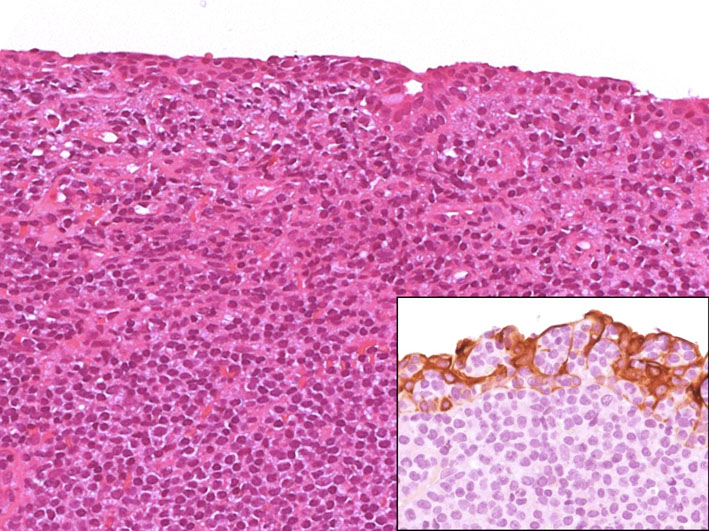
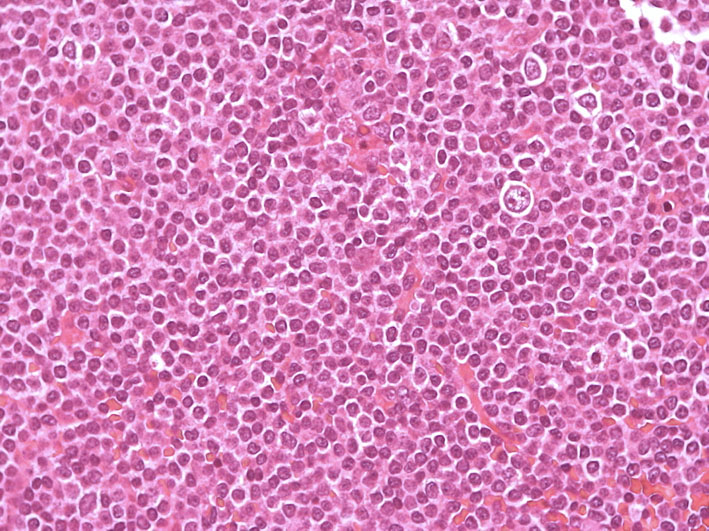
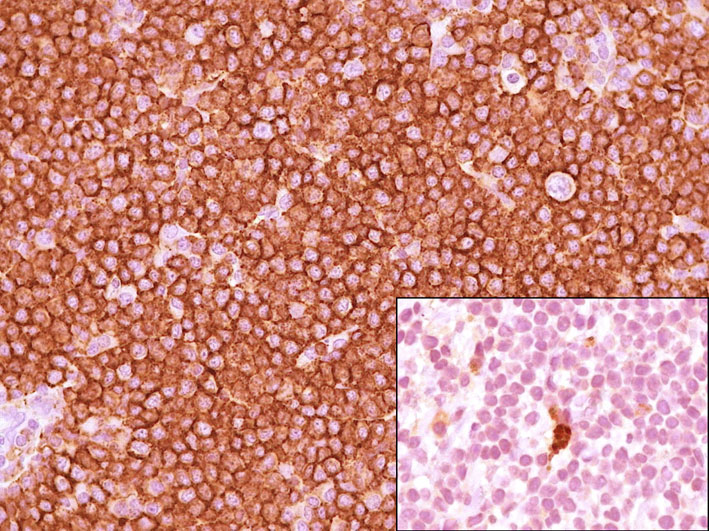
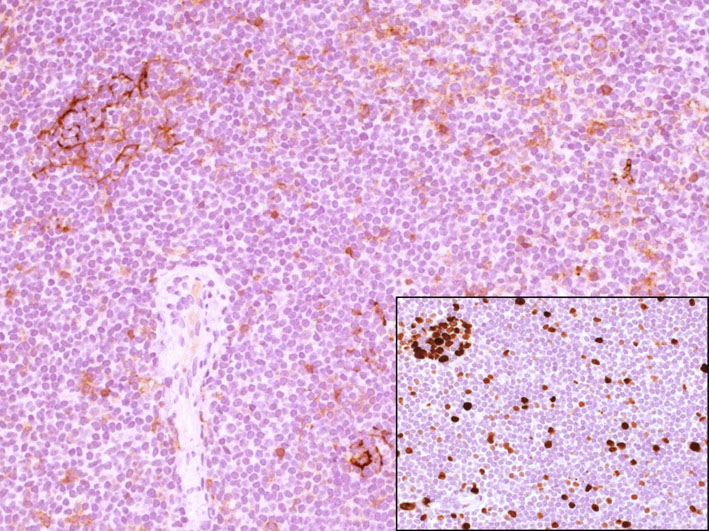
The classic immunophenotype of OAMZL includes expression of B cell markers such as CD20, CD79a and PAX5, other molecules like bcl-2 and TCL-1, variable expression of CD43, CD11c and IRTA-1. Conversely CD5, CD10, CD23, cyclin D1, bcl-6 and MUM1 are negative, with few exceptions (Swerdlow et al., 2016; Sassone et al., 2017). Staining for CD23, CD21 or CD35 highlights expanded and residual meshwork of follicular dendritic cells. Neoplastic cells usually express IgM and may also show immunoglobulin light-chain restriction. Cytoplasmic Cp-specific lipopolysaccharide can be highlighted in the tumor-associated macrophage cytoplasm by immunohistochemistry (Ferreri et al., 2004, Ponzoni et al., 2008). Plasma cell differentiation may occur and sometimes can be prominent; rarely, plasma cells may express IgG4 (Kubota et al., 2010). Differential diagnosis encompasses non-neoplastic lymphoproliferations, in particular reactive lymphoid hyperplasia and IgG4-related disease. Distinction from reactive hyperplasia relies, in borderline cases, on the demonstration of monotypic immunoglobulin and eventually on molecular studies for clonal rearrangement of the immunoglobulin heavy chain gene (IgH), detectable by PCR in 55% of OAMZL. IgG4-related disease is a systemic disease characterized by elevated serum IgG4 and infiltration of polytypic IgG4 plasma cells associated with reactive lymphoid follicles, phlebitis and fibrosis. Clinico-pathological correlation is critical for the recognition of this rare entity.
Treatment
Radiotherapy, alone or in combination with chemotherapy, is the most common therapy. Reported outcomes are excellent, with local control rates of over 95%, 5 and 10-years DFS rates of 84,65% and 78,7% and OS of 93,8% and 84,9% respectively (Yen et al., 2018). The extension of the radiation fields depends on the involved structures. The International Lymphoma Radiation Oncology Group suggested a radiation dose of 24-25 Gy provided in fractions of 1,5 to 1,8 Gy (Yahalom et al., 2015). However, radiation toxicity effects are distinct and well-known as well: early complications are more frequently represented by cutaneous and conjunctival reactions, while long-term complications are radiation cataract, retinopathy, optic neuropathy and xerophthalmia.
Data on radioimmunotherapy are limited to few, small studies, where OAMZL account for a minority of the studied cases (Sassone et al., 2017).
The use of antibiotics relies on the proven association with Cp infection. First-line doxycycline monotherapy has been demonstrated to be well tolerated in a phase II trial study, with ORR of 65%, 5-year PFS of 61% and no significant side effects (Ferreri et al., 2012). Antibiotics can also be used in Cp negative cases due to its off-target effects. Clarithromycin, in particular, displays an antitumor and immunomodulatory activity: a phase II trial in patients with relapsed/refractory OAMZLs achieved good responses with an ORR of 52% and a 2-year PFS of 56%, respectively (Ferreri et al., 2015).
Chemoimmunotherapy has been proposed as a good alternative to radiotherapy both in localized lesions and in tumors extended beyond the conjunctiva or in bilateral disease (Ma et al., 2017). However, definitive data on efficacy of this strategy are still lacking, since most trials are retrospective or considered a group of indolent lymphomas where OAMZLs account only for a minor part of the cohort: the most frequently drugs tested in this setting are chlorambucil, bendamustin (with or without Rituximab), and purine analogs (Sassone et al., 2017). A recent phase II clinical trial with rituximab, cyclophosphamide, vincristine and prednisone (R-CVP) in patients with bilateral, limited-stage OAMZL extending beyond-conjunctiva demonstrated a durable response and stressed the possibility and efficacy of a radiation-free upfront approach (93,9% CR at 2 years and 90,3% of PFS at 4 years) with severe side effects (neutropenia and hepatotoxicity) in a minority of cases (12% and 6%, respectively) (Kim et al., 2017). Data on immunotherapy alone are few, mainly focused on larger indolent NHL and extra-gastric marginal lymphomas categories: a phase II trial in 18 patients with relapsed/refractory extranodal MZL with Lenalidomide monotherapy obtained an ORR of 61% and manageable side-effects; another study using Bortezomib in patients with newly diagnosed or relapsing/refractory MALT lymphoma showed good efficacy, with an ORR of 80%, but with relevant side effects (Kiesewetter et al., 2013; Troch et al., Hematologica 2009). Finally, the management of the relapsed patients lacks of consensus guidelines as well.
Evolution
Prognosis
Note
Genes Involved and Proteins
Article Bibliography
| Pubmed ID | Last Year | Title | Authors |
|---|---|---|---|
| 27102345 | 2016 | Comprehensive genomic profiling of orbital and ocular adnexal lymphomas identifies frequent alterations in MYD88 and chromatin modifiers: new routes to targeted therapies. | Cani AK et al |
| 22024723 | 2012 | Immunoglobulin gene repertoire in ocular adnexal lymphomas: hints on the nature of the antigenic stimulation. | Dagklis A et al |
| 18690086 | 2008 | Variable association between Chlamydophila psittaci infection and ocular adnexal lymphomas: methodological biases or true geographical variations? | Decaudin D et al |
| 25935794 | 2015 | High-dose clarithromycin is an active monotherapy for patients with relapsed/refractory extranodal marginal zone lymphoma of mucosa-associated lymphoid tissue (MALT): the HD-K phase II trial. | Ferreri AJ et al |
| 17255761 | 2007 | Lymphoma of the ocular adnexa: A study of 353 cases. | Ferry JA et al |
| 27566587 | 2016 | Recurrent mutations in NF-κB pathway components, KMT2D, and NOTCH1/2 in ocular adnexal MALT-type marginal zone lymphomas. | Johansson P et al |
| 28152507 | 2017 | The mutational landscape of ocular marginal zone lymphoma identifies frequent alterations in TNFAIP3 followed by mutations in TBL1XR1 and CREBBP. | Jung H et al |
| 28939925 | 2018 | Ocular adnexal marginal zone lymphoma of mucosa-associated lymphoid tissue. | Kalogeropoulos D et al |
| 28978139 | 2017 | Frontline treatment with chemoimmunotherapy for limited-stage ocular adnexal MALT lymphoma with adverse factors: a phase II study. | Kim SY et al |
| 29469175 | 2018 | Presence of autoimmune disease affects not only risk but also survival in patients with B-cell non-Hodgkin lymphoma. | Kleinstern G et al |
| 10798640 | 2000 | Conjunctiva-associated lymphoid tissue in the human eye. | Knop N et al |
| 20980530 | 2010 | Ocular adnexal marginal zone B cell lymphoma infiltrated by IgG4-positive plasma cells. | Kubota T et al |
| 21459788 | 2011 | Genomic profiles of MALT lymphomas: variability across anatomical sites. | Kwee I et al |
| 29895584 | 2018 | Survival in B-cell primary ocular lymphoma 1997-2014: a population-based study. | Liu DL et al |
| 29113392 | 2017 | Chemotherapy alone is an alternative treatment in treating localized primary ocular adnexal lymphomas. | Ma WL et al |
| 12605966 | 2003 | Outcome and prognostic factors in orbital lymphoma: a Rare Cancer Network study on 90 consecutive patients treated with radiotherapy. | Martinet S et al |
| 28682481 | 2017 | Significant association between TNFAIP3 inactivation and biased immunoglobulin heavy chain variable region 4-34 usage in mucosa-associated lymphoid tissue lymphoma. | Moody S et al |
| 24353742 | 2011 | Descriptive epidemiology of ophthalmic and ocular adnexal non-Hodgkin's lymphoma. | Moslehi R et al |
| 16123786 | 2006 | Thyroid orbitopathy possibly predisposes to late-onset of periocular lymphoma. | Nutting CM et al |
| 18794089 | 2008 | Chlamydia infection and lymphomas: association beyond ocular adnexal lymphomas highlighted by multiple detection methods. | Ponzoni M et al |
| 28288706 | 2017 | Ocular adnexal marginal zone lymphoma: Clinical presentation, pathogenesis, diagnosis, prognosis, and treatment. | Sassone M et al |
| 12406890 | 2003 | T(14;18)(q32;q21) involving IGH and MALT1 is a frequent chromosomal aberration in MALT lymphoma. | Streubel B et al |
| 26980727 | 2016 | The 2016 revision of the World Health Organization classification of lymphoid neoplasms. | Swerdlow SH et al |
| 26120819 | 2015 | Genome-Wide Analysis of Ocular Adnexal Lymphoproliferative Disorders Using High-Resolution Single Nucleotide Polymorphism Array. | Takahashi H et al |
| 28720586 | 2017 | A MALT lymphoma prognostic index. | Thieblemont C et al |
| 17554381 | 2007 | MALT lymphoma in patients with autoimmune diseases: a comparative analysis of characteristics and clinical course. | Wöhrer S et al |
| 7965401 | 1994 | Mucosa-associated lymphoid tissue (MALT) in the human conjunctiva. | Wotherspoon AC et al |
| 25863750 | 2015 | Modern radiation therapy for extranodal lymphomas: field and dose guidelines from the International Lymphoma Radiation Oncology Group. | Yahalom J et al |
| 28712656 | 2018 | Treatments for Ocular Adnexal Lymphoma: A Report by the American Academy of Ophthalmology. | Yen MT et al |
Citation
Maurilio Ponzoni ; Lucia Bongiovanni
Ocular adnexal marginal zone lymphoma (OAMZL)
Atlas Genet Cytogenet Oncol Haematol. 2018-11-01
Online version: http://atlasgeneticsoncology.org/haematological/1778/case-report-explorer/cancer-prone-explorer/new-content/
