BCL2L1 (BCL2-like 1)
2009-12-01 Mariana Varna , Philippe Ratajczak , Philippe Bertheau , Anne Janin AffiliationU728-INSERM\\\/Paris 7 Paris Diderot, 1 avenue Claude Vellefaux, 75010 Paris, France (MV, PR); U728-INSERM\\\/Paris 7 Paris Diderot, Hopital Saint Louis-Service de Pathologie, 1 avenue Claude Vellefaux, 75010 Paris, France (PB, AJ)
Identity
HGNC
LOCATION
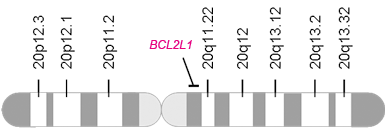
20q11.21
LOCUSID
ALIAS
BCL-XL/S,BCL2L,BCLX,Bcl-X,PPP1R52
FUSION GENES
DNA/RNA
Description
Bcl2L1 DNA contains 58394 bps (genomic size) and RNA 2575 bps. Bcl2L1, member of the Bcl-2 protein family, plays a role in the regulation of apoptosis. Two major isoforms exist due to alternative splicing of the BCL2L1 mRNA: Bcl-xS and Bcl-xL.
The bcl-x promoter contains consensus motifs for a number of transcription factors, as Sp1, AP-1, Oct-1, Ets, Rel/NF-kB, STATs, and GATA-1, in which three transcription factor families, STATs, Rel/NF-kB, and Ets family, have been demonstrated to play an important role in the regulation of bcl-x gene expression (Grillot et al., 1997). Bcl-xS has 3 exons (contains exon2b shortly than 2a), and forms a heterodimer with bcl2 to promoting apoptosis.
Bcl-xL has 4 exons (contains exon 2a) and form heterodimer with Bax, Bak and has cell death repressing activity (Tamura et al., 2009).
Bcl-xL protein can be regulated post-transcriptionally and it is mainly controlled at the gene expression level (Grad et al., 2000). Bcl-xL protects cells from apoptosis by regulating mitochondria membrane potential by interacting with pro-apoptotic members Bax or Bim and subsequently prevents the release of cytochrome C. Bcl-xL protein displays remarkable amino acid and structural homology to Bcl-2 (González-García et al., 1994).
At the post-translational level, BCL-xL is phosphorylated by SAPK/JNK after exposure to microtubule-damaging drugs (Poruchynsky et al., 1998; Basu et al., 2003). Bcl-xL resides in the nuclear envelope, extra-nuclear membranes, including the mitochondrion but also cytosol (González-García et al., 1994).
Polymorphism
In a study of 105 patients with multiple slerosis relapsing disease it was identified sequence alterations in the promoter region BCL-X gene (Kuhlmann et al., 2002).
The bcl-x promoter contains consensus motifs for a number of transcription factors, as Sp1, AP-1, Oct-1, Ets, Rel/NF-kB, STATs, and GATA-1, in which three transcription factor families, STATs, Rel/NF-kB, and Ets family, have been demonstrated to play an important role in the regulation of bcl-x gene expression (Grillot et al., 1997). Bcl-xS has 3 exons (contains exon2b shortly than 2a), and forms a heterodimer with bcl2 to promoting apoptosis.
Bcl-xL has 4 exons (contains exon 2a) and form heterodimer with Bax, Bak and has cell death repressing activity (Tamura et al., 2009).
Bcl-xL protein can be regulated post-transcriptionally and it is mainly controlled at the gene expression level (Grad et al., 2000). Bcl-xL protects cells from apoptosis by regulating mitochondria membrane potential by interacting with pro-apoptotic members Bax or Bim and subsequently prevents the release of cytochrome C. Bcl-xL protein displays remarkable amino acid and structural homology to Bcl-2 (González-García et al., 1994).
At the post-translational level, BCL-xL is phosphorylated by SAPK/JNK after exposure to microtubule-damaging drugs (Poruchynsky et al., 1998; Basu et al., 2003). Bcl-xL resides in the nuclear envelope, extra-nuclear membranes, including the mitochondrion but also cytosol (González-García et al., 1994).
Polymorphism
In a study of 105 patients with multiple slerosis relapsing disease it was identified sequence alterations in the promoter region BCL-X gene (Kuhlmann et al., 2002).
Proteins
BCL2L1 proteins
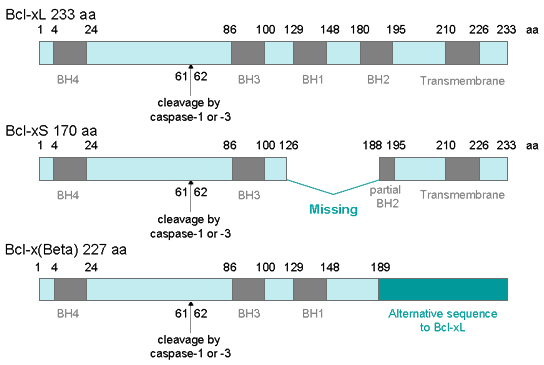
Longer isoform: Bcl-xL 233 aa
Shorter isoform: Bcl-xS 170 aa
Alternative isoform: Bcl-x(beta) 227 aa
Description
Three alternatively transcript variants, which encode distinct isoforms, have been reported. The longer isoform Bcl-xL acts as an apoptotic inhibitor and the shorter form Bcl-xS acts as an apoptotic activator (Boise et al., 1993). The last one Bcl-x(beta) differs from the longer and the shorter forms by a modification of the last 45 amino acids (Ban et al., 1998).
The BH1 and BH2 motifs are required for both heterodimerization with other Bcl-2 family members, and for repression of cell death. The BH4 motif is required for anti-apoptotic activity.
Thus, Bcl-xL forms homodimers and heterodimers with Bak (6p21.31; BCL2-antagonist/killer 1) isoform Sigma, Bax (19q13.33; BCL2-associated X protein) and Bcl2 (18q21.3; B-cell leukemia/lymphoma 2). Heterodimerization with Bax does not seem to be required for anti-apoptotic activity. Also interacts with Bad (11q13.1; BCL2-antagonist of cell death), Bbc3 (19q13.3-q13.4; BCL2 binding component 3), Siva isoform 1 (14q32.33), BCL2L11 (2q13; BCL2-like 11 (apoptosis facilitator)), BECN1 (17q21.31; Beclin-1), and PGAM5 (12q24.33; phosphoglycerate mutase family member 5).
Like Bcl-xL, Bcl-x(beta) binds to the pro-apoptotic protein Bax, suggesting a functional activity in vivo (Ban et al., 1998).
The BH1 and BH2 motifs are required for both heterodimerization with other Bcl-2 family members, and for repression of cell death. The BH4 motif is required for anti-apoptotic activity.
Thus, Bcl-xL forms homodimers and heterodimers with Bak (6p21.31; BCL2-antagonist/killer 1) isoform Sigma, Bax (19q13.33; BCL2-associated X protein) and Bcl2 (18q21.3; B-cell leukemia/lymphoma 2). Heterodimerization with Bax does not seem to be required for anti-apoptotic activity. Also interacts with Bad (11q13.1; BCL2-antagonist of cell death), Bbc3 (19q13.3-q13.4; BCL2 binding component 3), Siva isoform 1 (14q32.33), BCL2L11 (2q13; BCL2-like 11 (apoptosis facilitator)), BECN1 (17q21.31; Beclin-1), and PGAM5 (12q24.33; phosphoglycerate mutase family member 5).
Like Bcl-xL, Bcl-x(beta) binds to the pro-apoptotic protein Bax, suggesting a functional activity in vivo (Ban et al., 1998).

Bcl-xL secondary structure: Full lengh Bcl-xL protein comports 9 helix and 1 turn domains.
Expression
The expression of Bcl-xL and Bcl-xS appeared differentially regulated in human tissues. Bcl-xS is expressed at high levels in cells that undergo a high rate of turnover, such as developing lymphocytes. In contrast, Bcl-xL is found in tissues containing long-lived postmitotic cells, such as adult brain (Boise et al., 1993).
Localisation
Bcl-xL resides in the nuclear envelope, extra-nuclear membranes, including the mitochondrion but also cytosol (González-García et al., 1994).
Function
The Bcl-xL isoform is a potent inhibitor of cell death. Its association with SIVA-1 inhibits its anti-apoptotic activity (Chu et al., 2004). The binding of this isoform to the voltage-dependent anion chanel (VDAC) regulates cell death by blocking it and preventing the release of the cytochrome into the cytoplasm (Vander Heiden et al., 2001; Malia et al., 2007). In contrast to Bcl-xL isoform, the Bcl-xS isoform promotes apoptosis.
Bcl-xS induces apoptosis in a caspase- and BH3-dependent manner by a mechanism involving cytochrome c release. BAK and BAX can be involved in Bcl-xS induced apoptosis (Kim et al., 2004; Lindenboim et al., 2005).
Bcl-xL mutants correlate with their ability to form homodimers (Jeong et al., 2004).
Bcl-xS induces apoptosis in a caspase- and BH3-dependent manner by a mechanism involving cytochrome c release. BAK and BAX can be involved in Bcl-xS induced apoptosis (Kim et al., 2004; Lindenboim et al., 2005).
Bcl-xL mutants correlate with their ability to form homodimers (Jeong et al., 2004).
Mutations
Note
Few mutations are described. Thus, in 50 non-Hodgkins lymphoma cases it was found one missense mutation in a patient with diffuse large B-cell lymphoma. Sequence analysis of this case showed that AGC (Ser) was mutated to GGC (Gly) in codon 154 (Yamaguchi et al., 2002). In one case of follicular lymphoma mutation analysis revealed one synonymus mutation (Codon 109 ACA-->ACC) (Liu et al., 2006). The experimentally mutagenesis is described on: Uniprot.
Implicated in
Entity name
Antiapoptotic role
Note
BCL-xL has been shown to inhibit cell death induced by a number of apoptotic stimuli including gamma irradiation, glucocorticoids, and anti-CD3 treatment (Boise et al., 1993; Chao et al., 1995; Chao et al., 1997). Down regulating the basal level of BCL-xL by RNA interference induces apoptosis in aged human fibroblasts without further stress, indicates that Bcl-xL is an important factor in cell-death control in old fibroblasts (Rochette et al., 2008). This was described in other cell type: in hepatocellular carcinoma cells Hepg2 (Lei et al., 2006), in nasopharyngeal carcinoma cells (Liu et al., 2005) or in esophageal cancer cells (Xie et al., 2006). In colorectal carcinoma (CRC) cell lines and in tissue it was shown that Bcl-xL contribute to apoptosis resistance. Same authors demonstrated that CRC cells with reduced Bcl-xL expression were more sensitive towards oxaliplatin- irinotecan, and 5-FU while, Bcl-xL plasmid transfection decreased chemotherapeutic drug-induced apoptosis (Schulze-Bergkamen et al., 2008). In another study using pancreatic, prostate and leukemic cells treated with benzylisothiocyanate Bcl-xL was phosphorylated and in parallel an enhancement of apoptosis (Basu et al., 2008). In HepG2 cells treated with topotecan it was shown that the expression of Bcl-xL was simultaneously down-regulated with the up-regulation of Bcl-xS in cytoplasm, which could explain the induction of apoptosis (Zhang et al., 2008). Bcl-2 and Bcl-xL inhibit apoptosis induced by a variety of agents in MCF-7 cells. MCF-7 cell lines expressing Bcl-xL and Bcl-2 were protected against apoptosis induced by TNFa and doxorubicin (Fiebig et al., 2006).
PUMA (19q13.3-q13.4; p53-upregulated modulator of apoptosis) interacts with anti-apoptotic Bcl-2 and Bcl-xL and is dependent on Bax to induce apoptosis. PUMA initiates apoptosis in part by dissociating Bax and Bcl-xL, thereby promoting Bax multimerization and mitochondrial translocation (Ming et al., 2006).
PUMA (19q13.3-q13.4; p53-upregulated modulator of apoptosis) interacts with anti-apoptotic Bcl-2 and Bcl-xL and is dependent on Bax to induce apoptosis. PUMA initiates apoptosis in part by dissociating Bax and Bcl-xL, thereby promoting Bax multimerization and mitochondrial translocation (Ming et al., 2006).
Entity name
Autophagy
Note
It was shown that in normal conditions, Beclin 1 (17q21.31; autophagy related) is bound to and inhibited by Bcl-2 or the Bcl-xL. This interaction involves a BH3 domain in Beclin 1 and the BH3 binding groove of Bcl-2/Bcl-xL. But other proteins containing BH3 domains, called BH3-only proteins, can competitively disrupt the interaction between Beclin 1 and Bcl-2/Bcl-xL to induce autophagy (Levine et al., 2008). The overexpression of Bcl-xL enhances autophagic cell death when apoptotic cell death is inhibited in Bax(-/-)/Bak(-/-) double knockout cells (Kim, 2005).
Entity name
Quiescence regulation
Note
It was shown that Bcl-xL facilitate G0 quiescence by decreasing RNA content and stabilization an up-regulation of p27 protein (14q32.13; interferon, alpha-inducible protein 27) due to phosphorylation of p27 at Ser(10) by the kinase Mirk (19q13.2) (Janumyan et al., 2008). P27 protein upregulation could delay cell cycle re-entring throught inhibition of Myc (8q24) activity (Greider et al., 2002).
Entity name
Senescence
Note
In human diploid fibroblasts it was demonstrated the role of BCL-xL for pre-senescence state induction with decline of the ability of genotoxic stress to induce apoptosis. It was found that aged cells became progressively more resistant to UV-induced apoptosis with apoptosis reduction of 10-20 folds. In young cells, the level of anti-apoptotic protein BCL-xL decrease after UV irradiation while pro-apoptotic protein Bax increases. The increase in Bax tracked the level of p53 BCL-xL is itself responsible for the pre-senescence decline in the ability of a genotoxic stress to induce apoptosis. Acquired apoptosis resistance at late passage is associated with altered UVB-regulation of Bcl family members. Bcl-xL is a major contributor to UV-induced apoptosis resistance in older cells (Rochette et al., 2008).
Entity name
Human neural stem cells
Disease
Bcl-xL enhances dopaminergic neuron generation from human neural stem cells and mouse embryonic stem cells (Shim et al., 2004).
Oncogenesis
Using human cell line hNS1 cell line with v-myc (8q24; v-myc myelocytomatosis viral oncogene homolog) immortalized and non-immortalized it was found that Bcl-xL controls the balance between the generation of neurons and glia from differentiating immortalized and non-immortalized hNSCs differentiation (Liste et al., 2007).
Entity name
Cutaneous cell carcinoma
Disease
Squamous cell carcinoma, a non melanoma skin cancer, is a common malignancy in the worldwide Caucasian population. Keratocarcinoma is a common neoplasm of the skin and is typically characterised by rapid growth. These two forms are difficult to distinguish by histology.
Oncogenesis
In a series of twenty five squamous carcinoma (SCC) and sixty four keratocarcinoma (KA), stained for bcl-xL, the authors detected that the two lesions differed significantly in expression of Bcl-xL which was present in 84% of the SCC compared with only 15% in the KA (Vasiljevic et al., 2009).
Entity name
Colorectal cancers
Oncogenesis
Bcl-xL shows a strong correlation with TGF-beta1 (19q13.2, transforming growth factor, beta 1) and Bax (19q13.33; BCL2-associated X protein) in colorectal cancers especially in deeply invading cancers (pT3+pT4) instead of superficially growing tumors (pT1+pT2) (Sulkowski et al., 2009). In a study with fifty-six pair tissue samples from patients with colon cancer Bcl-xL expression was higher in cancerous tissue than in normal tissue and it was associated with the pathological grade and lymph node metastasis. Furthermore, in vitro transfection with Bcl-xL siRNA inhibited the colony formation and invasion ability of human colon cancer cell line HT29 (Zhang et al., 2008). Caco-2 colon cancer cells treated with Bcl-xL antisense oligonucleotides in combination with IR or cisplatin showed reduction of the Bcl-xL protein level by almost 50% and increase of apoptosis and reduction of cell proliferation suggesting that Bcl-xL is an important factor contributing to the treatment resistance (Wacheck et al., 2003). siRNA Bcl-xL specific could knockdown Bcl-xL protein expression and inhibit proliferation more effectively in 5-FU-resistant cells than in 5-FU-sensitive cells (Zhu et al., 2005). Bcl-xL was found correlated with Hif1 alpha (14q23.2; hypoxia inducible factor 1, alpha subunit) in moderately and poorly differentiated rectal and colonic tumors (Wincewicz et al., 2007).
Entity name
Glioblastoma
Oncogenesis
Bcl-xL mediated induction of CXCR8 in glioblastoma cells, through a nuclear factor-kappa B-dependent mechanism (Gabellini et al., 2008).
Entity name
Renal cell carcinoma
Disease
The expression of Bcl2 and/or Bcl-xL in normal tissue is low in normal kidney.
Oncogenesis
Renal cell carcinoma (RCC) expressing high levels of Bcl-xL and/or Bcl2 do not show any apoptotic cells, and conversely when the expression of these proteins was not detected, apoptosis was highly present (Gobé et al., 2002).
Entity name
Pancreatic carcinoma
Oncogenesis
A study using 25 patients showed an inverse association for the Bcl-xL score and apoptotic index. Bcl2 and Bax protein levels did not show any association with the apoptotic index and were overexpressed in most of the pancreatic cancer samples (Sharma et al., 2005).
Entity name
Prostate carcinoma
Disease
Bcl-xL protein was detected in the epithelial cells of normal prostate gland and prostate cancers.
Oncogenesis
Increased levels of Bcl-xL were found to be correlated with higher grade indicating a possible role of Bcl-xL in prostate cancer progression (Krajewski et al., 1994). Interactions of Bcl-xL with Bax (19q13.33; BCL2-associated X protein) and Bak (6p21.31; BCL2-antagonist/killer 1) were evidenced in lysates from high-grade prostate cancer tissues and Bcl-xL would exert an inhibitory effect over Bak via heterodimerization (Castilla et al., 2006) whereas blocking Bcl-xL expression in prostate cancer cells decreased cell proliferation (Vilenchik et al., 2002). These interactions may provide mechanisms for suppressing the activity of proapoptotic Bax and Bak in prostate cancer cells and that Bcl-xL expression contributes to androgen resistance and progression of prostate cancer.
Entity name
Lung carcinoma
Oncogenesis
Biopsies from 30 cases of squamous cell carcinoma of the lung in stage III were assessed for the expression of Bcl-2, Bcl-xL, TP53 (17p13; Tumor protein p53) and Bax (19q13.33; BCL2-associated X protein) at the mRNA protein levels and immunohistochemistry. The apoptotic index correlated with Bax expression but not with Bcl-2, Bcl-xL or p53 levels (Shabnam et al., 2004).
Entity name
Cervix carcinoma
Disease
Invasive squamous cell carcinoma of the cervix is mainly treated by radiation.
Oncogenesis
In 30 cases of invasive carcinoma cervix before and after 10 Gy RT it was shown an increased apoptotic cell death with the up-regulation of Bax (19q13.33; BCL2-associated X protein), and down-regulation of Bcl-xL, without any significant change in the levels of Bcl-2 (Adhya et al., 2006).
Entity name
Bladder cancer
Oncogenesis
In a study with 42 samples of bladder transitional cell carcinoma Bcl-x overexpression was observed in 45.2% but this overexpression was not correlated with recurrence or survival (Kirsh et al., 1998). In another study on 72 patients with muscle-invasive bilharzial squamous cell carcinoma of the urinary bladder, Bcl-xL overexpression was associated with tumor progression (Hameed et al., 2008).
Entity name
Hepatocellular carcinoma
Oncogenesis
In a study using 33 hepatocellular carcinomas (HCC) Bcl-xL overexpression was found in 63.6% cancer specimens (Watanabe et al., 2004). In another study, performed on 42 patients with HCC, it was shown that Bcl-xL expression was present in cancerous and non-cancerous tissue whereas elevated levels Bcl-xL were found in tumor tissue in the cytoplasm and the nuclei from two thirds of the patients (Watanabe et al., 2002). Bcl-2 and bcl-xL may play an important role in regulating the apoptosis of normal liver and HCC (Guo et al., 2002).
Entity name
Breast cancer
Oncogenesis
Most breast cancer cells overexpress Bcl-xL and Bcl-2 (Simonian et al., 1997). Increased levels of Bcl-xL expression were found in primary human breast carcinomas, mainly in undifferentiated tumors (Olopade et al., 1997; Sierra et al., 1998). Using orthotopic xenograft tumors in nude mice obtained from human breast cancer cells lines MDA-MB 435, MDA-MB 468 and MCF-7 it was observed that the overexpression of Bcl-2 or Bcl-xL influenced tumorigenicity. Overexpression of Bcl-xL was associated with the loss of apoptosis in breast cancer cells in vivo (Fernández et al., 2002).
Entity name
Soft tissue sarcomas
Oncogenesis
In a study of eighty-two soft tissue sarcomas (STS), a combined high Bad/Bcl-xL mRNA expression levels revealed a 20-fold increase and a worse prognosis (Köhler et al., 2002).
Entity name
Disease
Giant cell tumor of bone (GCTb) is a benign but locally aggressive tumor that infrequently shows metastatic spread to the lungs (Bertoni et al., 2003).
Oncogenesis
Using array comparative genomic hybridization performed on 20 frozen tumor samples of GCTb, the authors showed that the most frequent region of change identified was amplification of a 1 Mbp region at 20q11.1, which contains BCL2L1 gene. These results were confirmed by Southern blot (Smith et al., 2006).
Entity name
Non-Hodgkins lymphoma
Oncogenesis
In non-Hodgkins lymphoma, Bcl-xL is overexpressed when compared with normal B cells (Xerri et al., 1999). Rituximab (Rituxan, IDEC-C2B8) has been shown to sensitize non-Hodgkins lymphoma (NHL) cell lines to chemotherapeutic drug-induced apoptosis and selectively down-regulated Bcl-xL (Jazirehi et al., 2003). The down-regulation of Bcl-xL by Rituximab is dependant on up-regulation of Raf kinase inhibitor protein RKIP on the ERK1/ERK2 pathway (Jazirehi et al., 2004). In a study of 15 patients with reactive hyperplasia, BCL-xL was overexpressed in follicular lymphoma. No significant rise of BCL-xL expression was observed in 24 patients with T-cell lymphoma and 24 patients with a diffuse large B-cell lymphoma (Liu et al., 2006). In another study of 50 non-Hodgkins lymphoma cases Bcl-xl one missense mutations of the transcript in a patient with diffuse large B-cell lymphoma was found. Sequence analysis of this case showed that AGC (Ser) was mutated to GGC (Gly) in codon 154 with a possibly role in the tumorigenesis of non-Hodgkins lymphoma (Yamaguchi et al., 2002).
Entity name
Oncogenesis
In follicular lymphoma and primary cutaneous follicle center lymphomas, bcl-xL gene overexpression was linked to short overall survival times. In a study of 20 patients with primary cutaneous follicle center lymphomas Bcl-xL expression is significantly higher in biopsies of patients, who developed relapse or disease progression later compared with patients who did not. Higher levels of bcl-xL gene expression were significantly correlated with shorter progression-free survival. This suggesting that bcl-xL overexpression is inversely correlated with progression-free survival suggests that bcl-xL, through its anti-apoptotic effect, might contribute to tumor cell survival (Soltani-Arabshahi et al., 2009). In another study were analysed 27 samples of follicular lymphoma, bcl-xL gene overexpression was linked to short overall survival times (Zhao et al., 2004). Moreover, in follicular lymphoma, high Bcl-xL level was associated with multiple extranodal involvement, elevated lactate dehydrogenase level, high-risk international prognostic index and a short overall survival time. In one case of follicular lymphoma mutation analysis revealed one synonymus mutation (Codon 109 ACA-->ACC) (Liu et al., 2006). In a recent study of follicular lymphoma, it has been demonstrated that TRAIL was cytotoxic only against follicular lymphoma B cells. The engagement of CD40 by its ligand CD40 induces a rapid RNA and protein up-regulation of c-FLIP and Bcl-xL. The antiapoptotic signaling of CD40, which interferes with TRAIL-induced apoptosis in follicular lymphoma B cells, involves NF-kappaB-mediated induction of c-FLIP and Bcl-xL which can respectively interfere with caspase 8 activation or mitochondrial-mediated apoptosis (Travert et al., 2008).
Entity name
Chronic lymphocytic leukemia
Oncogenesis
B cell chronic lymphocytic leukemia (B-CLL) cannot be cured with conventional chemotherapy because B-CLL cells are resistant to programmed cell death and arrested in G0/G1 phase of the cell cycle. In B-CLL cells, levels of the anti-apoptotic Bcl-xL showed a positive correlation with levels of the 80 kDa regulatory component (Ku80) of the DNA-dependent protein kinase that is involved in DNA double-stranded break repair (Klein et al., 2000). It has also been demonstrated in B-CLL that CD40 stimulation enhanced the constitutive anti-apoptotic profile of B-CLL cells by upregulation of Bcl-xL. Functionally, CD40-stimulated B-CLL cells became resistant to drug-induced apoptosis (Kater et al., 2004). More recently, in 60 chronic lymphocytic leukemias (CLL) treated with ABT-737 and its orally active analog, ABT-263, revealed that the resistance occurred upstream of mitochondrial perturbation and involved de novo synthesis of the anti-apoptotic protein BCL-xL, which could be responsible for resistance to ABT-737. After therapy with ABT-737-related inhibitors, resistant CLL cells might develop in lymph nodes in vivo and that treatment strategies targeting multiple Bcl2 antiapoptotic members simultaneously may have synergistic activity (Vogler et al., 2009).
Entity name
Acute lymphoblastic leukemia (ALL)
Oncogenesis
Dexamethasone (Dex) is a glucocorticoid inducing apoptosis. Dex induced significant down-regulation of the anti-apoptotic Bcl-2 family members Bcl-2 and Bcl-xL. In 12 primary childhood ALL samples, Dex-induced apoptosis was associated with activation of Bax and down-regulation of Bcl-2 and/or Bcl-xL (Laane et al., 2007). The first study which has demonstrated a role of Bcl-xL in childhood acute lymphoblastic leukemia was published in 1997. The expression and the regulation of Bcl-2, Bcl-xl, and Bax has been correlated with p53 status and sensitivity to apoptosis in childhood acute lymphoblastic leukemia (Findley et al., 1997). The resistance to glucocorticoid treatment is often associated with treatment failure in children with acute lymphoblastic leukaemia (ALL). In 30 consecutive children with ALL treated with prednisone, Bcl-2 and Bcl-xl protein in 28 samples. Prednisone treatment induced a decrease in Bcl-2 and Bcl-xl levels in 17 and 16 of the 28 patients, respectively. A statistically significant decrease was only observed for Bcl-xl protein expression in T phenotype ALL, in the poor responder group and in patients with >20000/mm(3) white cell count (WBC) at diagnosis. This study suggested a role of Bcl-xl in the mechanisms of protection of leukemic cells from apoptosis induced by glucocorticoids (Casale et al., 2003). In a series of 62 consecutive children, only the good response to prednisone and the low intensity of Bcl-xL expression were independent significant prognostic factors (Casale et al., 2003).
Article Bibliography
| Pubmed ID | Last Year | Title | Authors |
|---|---|---|---|
| 16810067 | 2006 | Radiation therapy induced changes in apoptosis and its major regulatory proteins, Bcl-2, Bcl-XL, and Bax, in locally advanced invasive squamous cell carcinoma of the cervix. | Adhya AK et al |
| 9675101 | 1998 | Identification of a human cDNA encoding a novel Bcl-x isoform. | Ban J et al |
| 18813778 | 2008 | Dietary isothiocyanate mediated apoptosis of human cancer cells is associated with Bcl-xL phosphorylation. | Basu A et al |
| 12605278 | 2003 | Malignancy in giant cell tumor. | Bertoni F et al |
| 8358789 | 1993 | bcl-x, a bcl-2-related gene that functions as a dominant regulator of apoptotic cell death. | Boise LH et al |
| 12469194 | 2003 | Determination of the in vivo effects of prednisone on Bcl-2 family protein expression in childhood acute lymphoblastic leukemia. | Casale F et al |
| 16794010 | 2006 | Bcl-xL is overexpressed in hormone-resistant prostate cancer and promotes survival of LNCaP cells via interaction with proapoptotic Bak. | Castilla C et al |
| 9310841 | 1997 | BCL-XL-regulated apoptosis in T cell development. | Chao DT et al |
| 7650488 | 1995 | Bcl-XL and Bcl-2 repress a common pathway of cell death. | Chao DT et al |
| 14739602 | 2004 | The Siva-1 putative amphipathic helical region (SAH) is sufficient to bind to BCL-XL and sensitize cells to UV radiation induced apoptosis. | Chu F et al |
| 12209955 | 2002 | Inhibition of apoptosis in human breast cancer cells: role in tumor progression to the metastatic state. | Fernández Y et al |
| 16928273 | 2006 | Bcl-XL is qualitatively different from and ten times more effective than Bcl-2 when expressed in a breast cancer cell line. | Fiebig AA et al |
| 9108419 | 1997 | Expression and regulation of Bcl-2, Bcl-xl, and Bax correlate with p53 status and sensitivity to apoptosis in childhood acute lymphoblastic leukemia. | Findley HW et al |
| 18786178 | 2008 | Involvement of nuclear factor-kappa B in bcl-xL-induced interleukin 8 expression in glioblastoma. | Gabellini C et al |
| 12025227 | 2002 | Apoptosis and expression of Bcl-2, Bcl-XL, and Bax in renal cell carcinomas. | Gobé G et al |
| 7607090 | 1994 | bcl-XL is the major bcl-x mRNA form expressed during murine development and its product localizes to mitochondria. | González-García M et al |
| 11085453 | 2000 | Regulation of Bcl-xL: a little bit of this and a little bit of STAT. | Grad JM et al |
| 12420213 | 2002 | BCL-x(L) and BCL2 delay Myc-induced cell cycle entry through elevation of p27 and inhibition of G1 cyclin-dependent kinases. | Greider C et al |
| 9144489 | 1997 | Genomic organization, promoter region analysis, and chromosome localization of the mouse bcl-x gene. | Grillot DA et al |
| 12439925 | 2002 | Effect of bax, bcl-2 and bcl-xL on regulating apoptosis in tissues of normal liver and hepatocellular carcinoma. | Guo XZ et al |
| 18342927 | 2008 | Bcl-XL and Bcl-2 expression in bilharzial squamous cell carcinoma of the urinary bladder: which protein is prognostic? | Hameed DA et al |
| 18818203 | 2008 | G0 function of BCL2 and BCL-xL requires BAX, BAK, and p27 phosphorylation by Mirk, revealing a novel role of BAX and BAK in quiescence regulation. | Janumyan Y et al |
| 15466208 | 2004 | Inhibition of the Raf-MEK1/2-ERK1/2 signaling pathway, Bcl-xL down-regulation, and chemosensitization of non-Hodgkin's lymphoma B cells by Rituximab. | Jazirehi AR et al |
| 15131699 | 2004 | Bcl-x(L) sequesters its C-terminal membrane anchor in soluble, cytosolic homodimers. | Jeong SY et al |
| 15521917 | 2004 | CD40 stimulation of B-cell chronic lymphocytic leukaemia cells enhances the anti-apoptotic profile, but also Bid expression and cells remain susceptible to autologous cytotoxic T-lymphocyte attack. | Kater AP et al |
| 15547743 | 2004 | Methyl jasmonate induces apoptosis through induction of Bax/Bcl-XS and activation of caspase-3 via ROS production in A549 cells. | Kim JH et al |
| 15922292 | 2005 | Unknotting the roles of Bcl-2 and Bcl-xL in cell death. | Kim R et al |
| 9507882 | 1998 | Expression of bcl-2 and bcl-X in bladder cancer. | Kirsh EJ et al |
| 10637475 | 2000 | Chemosensitivity of B cell chronic lymphocytic leukemia and correlated expression of proteins regulating apoptosis, cell cycle and DNA repair. | Klein A et al |
| 12168836 | 2002 | High bad and bcl-xL gene expression and combined bad, bcl-xL, bax and bcl-2 mRNA levels: molecular predictors for survival of stage 2 soft tissue sarcoma patients. | Köhler T et al |
| 7923184 | 1994 | Immunohistochemical analysis of in vivo patterns of Bcl-X expression. | Krajewski S et al |
| 12161031 | 2002 | Investigation of bax, bcl-2, bcl-x and p53 gene polymorphisms in multiple sclerosis. | Kuhlmann T et al |
| 18024393 | 2007 | Dexamethasone-induced apoptosis in acute lymphoblastic leukemia involves differential regulation of Bcl-2 family members. | Laane E et al |
| 17033717 | 2006 | Bcl-XL small interfering RNA enhances sensitivity of Hepg2 hepatocellular carcinoma cells to 5-fluorouracil and hydroxycamptothecin. | Lei XY et al |
| 18497563 | 2008 | Bcl-2 family members: dual regulators of apoptosis and autophagy. | Levine B et al |
| 15861188 | 2005 | Bak but not Bax is essential for Bcl-xS-induced apoptosis. | Lindenboim L et al |
| 17673921 | 2007 | Bcl-XL modulates the differentiation of immortalized human neural stem cells. | Liste I et al |
| 15663904 | 2005 | RNA interference by expression of short hairpin RNAs suppresses bcl-xL gene expression in nasopharyngeal carcinoma cells. | Liu F et al |
| 17096886 | 2006 | [BCL-XL expression and mutation in non-Hodgkin's lymphoma]. | Liu YH et al |
| 17209561 | 2007 | NMR structural investigation of the mitochondrial outer membrane protein VDAC and its interaction with antiapoptotic Bcl-xL. | Malia TJ et al |
| 16608847 | 2006 | PUMA Dissociates Bax and Bcl-X(L) to induce apoptosis in colon cancer cells. | Ming L et al |
| 9263629 | 1997 | Overexpression of BCL-x protein in primary breast cancer is associated with high tumor grade and nodal metastases. | Olopade OI et al |
| 9699663 | 1998 | Bcl-xL is phosphorylated in malignant cells following microtubule disruption. | Poruchynsky MS et al |
| 18262222 | 2008 | Progressive apoptosis resistance prior to senescence and control by the anti-apoptotic protein BCL-xL. | Rochette PJ et al |
| 18609706 | 2008 | Bcl-x(L) and Myeloid cell leukaemia-1 contribute to apoptosis resistance of colorectal cancer cells. | Schulze-Bergkamen H et al |
| 15246189 | 2004 | Expression of p53 protein and the apoptotic regulatory molecules Bcl-2, Bcl-XL, and Bax in locally advanced squamous cell carcinoma of the lung. | Shabnam MS et al |
| 15841044 | 2005 | Bcl-XL protein levels determine apoptotic index in pancreatic carcinoma. | Sharma J et al |
| 14749429 | 2004 | Enhanced in vitro midbrain dopamine neuron differentiation, dopaminergic function, neurite outgrowth, and 1-methyl-4-phenylpyridium resistance in mouse embryonic stem cells overexpressing Bcl-XL. | Shim JW et al |
| 9583721 | 1998 | Expression of death-related genes and their relationship to loss of apoptosis in T1 ductal breast carcinomas. | Sierra A et al |
| 9362454 | 1997 | Bak can accelerate chemotherapy-induced cell death independently of its heterodimerization with Bcl-XL and Bcl-2. | Simonian PL et al |
| 16847944 | 2006 | 20q11.1 amplification in giant-cell tumor of bone: Array CGH, FISH, and association with outcome. | Smith LT et al |
| 19242522 | 2009 | Bcl-xL gene expression correlated with lower apoptotic cell numbers and shorter progression-free survival in PCFCL. | Soltani-Arabshahi R et al |
| 19723045 | 2009 | Transforming growth factor-beta1 and regulators of apoptosis. | Sulkowski S et al |
| 18820703 | 2009 | Polo-like kinase 1 phosphorylates and regulates Bcl-x(L) during pironetin-induced apoptosis. | Tamura Y et al |
| 19723149 | 2009 | Immunoexpression of Bcl-x in squamous cell carcinoma and keratoacanthoma: differences in pattern and correlation with pathobiology. | Tan KB et al |
| 18606651 | 2008 | CD40 ligand protects from TRAIL-induced apoptosis in follicular lymphomas through NF-kappaB activation and up-regulation of c-FLIP and Bcl-xL. | Travert M et al |
| 11259441 | 2001 | Bcl-xL promotes the open configuration of the voltage-dependent anion channel and metabolite passage through the outer mitochondrial membrane. | Vander Heiden MG et al |
| 19165861 | 2009 | The Bcl-xL inhibitor of apoptosis is preferentially expressed in cutaneous squamous cell carcinoma compared with that in keratoacanthoma. | Vasiljević N et al |
| 11929841 | 2002 | Antisense RNA down-regulation of bcl-xL Expression in prostate cancer cells leads to diminished rates of cellular proliferation and resistance to cytotoxic chemotherapeutic agents. | Vilenchik M et al |
| 19008458 | 2009 | Concurrent up-regulation of BCL-XL and BCL2A1 induces approximately 1000-fold resistance to ABT-737 in chronic lymphocytic leukemia. | Vogler M et al |
| 14520471 | 2003 | Bcl-x(L) antisense oligonucleotides radiosensitise colon cancer cells. | Wacheck V et al |
| 15179366 | 2004 | Prognostic significance of Bcl-xL in human hepatocellular carcinoma. | Watanabe J et al |
| 17558861 | 2007 | Cumulative expression of HIF-1-alpha, Bax, Bcl-xL and P53 in human colorectal cancer. | Wincewicz A et al |
| 10516756 | 1999 | Quantitative analysis detects ubiquitous expression of apoptotic regulators in B cell non-Hodgkin's lymphomas. | Xerri L et al |
| 17167836 | 2006 | Down-regulation of Bcl-XL by RNA interference suppresses cell growth and induces apoptosis in human esophageal cancer cells. | Xie YE et al |
| 11835337 | 2002 | Mutation of bcl-x gene in non-Hodgkin's lymphoma. | Yamaguchi H et al |
| 18568767 | 2008 | The expression of Bcl-XL, Bcl-XS and p27Kip1 in topotecan-induced apoptosis in hepatoblastoma HepG2 cell line. | Zhang J et al |
| 18494061 | 2008 | Significance of Bcl-xL in human colon carcinoma. | Zhang YL et al |
| 12969962 | 2004 | Prognostic significance of bcl-xL gene expression and apoptotic cell counts in follicular lymphoma. | Zhao WL et al |
| 15767554 | 2005 | Bcl-XL small interfering RNA suppresses the proliferation of 5-fluorouracil-resistant human colon cancer cells. | Zhu H et al |
Other Information
Locus ID:
NCBI: 598
MIM: 600039
HGNC: 992
Ensembl: ENSG00000171552
Variants:
dbSNP: 598
ClinVar: 598
TCGA: ENSG00000171552
COSMIC: BCL2L1
RNA/Proteins
Expression (GTEx)
Pathways
Protein levels (Protein atlas)
References
| Pubmed ID | Year | Title | Citations |
|---|---|---|---|
| 37565279 | 2024 | Assessment of Bcl-xL, TAX, and HBZ Gene Expression in Adult T cell Leukemia/Lymphoma Patients. | 0 |
| 37904054 | 2024 | ATP1A1/BCL2L1 predicts the response of myelomonocytic and monocytic acute myeloid leukemia to cardiac glycosides. | 0 |
| 37972702 | 2024 | Bcl-xL mediates interferon-beta secretion by protease-activated receptor 2 deficiency through the mitochondrial permeability transition pore in colorectal cancer metastasis. | 0 |
| 38316463 | 2024 | Genome-wide CRISPR screen reveals the synthetic lethality between BCL2L1 inhibition and radiotherapy. | 0 |
| 38325773 | 2024 | PTEN hinders the formation of scars by regulating the levels of proteins in the extracellular matrix and promoting the apoptosis of dermal fibroblasts through Bcl-xL. | 0 |
| 38383492 | 2024 | Modification of BCLX pre-mRNA splicing has antitumor efficacy alone or in combination with radiotherapy in human glioblastoma cells. | 0 |
| 38483541 | 2024 | OGDH and Bcl-xL loss causes synthetic lethality in glioblastoma. | 0 |
| 37565279 | 2024 | Assessment of Bcl-xL, TAX, and HBZ Gene Expression in Adult T cell Leukemia/Lymphoma Patients. | 0 |
| 37904054 | 2024 | ATP1A1/BCL2L1 predicts the response of myelomonocytic and monocytic acute myeloid leukemia to cardiac glycosides. | 0 |
| 37972702 | 2024 | Bcl-xL mediates interferon-beta secretion by protease-activated receptor 2 deficiency through the mitochondrial permeability transition pore in colorectal cancer metastasis. | 0 |
| 38316463 | 2024 | Genome-wide CRISPR screen reveals the synthetic lethality between BCL2L1 inhibition and radiotherapy. | 0 |
| 38325773 | 2024 | PTEN hinders the formation of scars by regulating the levels of proteins in the extracellular matrix and promoting the apoptosis of dermal fibroblasts through Bcl-xL. | 0 |
| 38383492 | 2024 | Modification of BCLX pre-mRNA splicing has antitumor efficacy alone or in combination with radiotherapy in human glioblastoma cells. | 0 |
| 38483541 | 2024 | OGDH and Bcl-xL loss causes synthetic lethality in glioblastoma. | 0 |
| 36596852 | 2023 | TPX2 prompts mitotic survival via the induction of BCL2L1 through YAP1 protein stabilization in human embryonic stem cells. | 5 |
Citation
Mariana Varna ; Philippe Ratajczak ; Philippe Bertheau ; Anne Janin
BCL2L1 (BCL2-like 1)
Atlas Genet Cytogenet Oncol Haematol. 2009-12-01
Online version: http://atlasgeneticsoncology.org/gene/129/bcl2l1
