GNAS (GNAS complex locus)
2012-10-01 Guiomar Pérez de Nanclares , Giovanna Mantovani , Eduardo Fernandez-Rebollo AffiliationIdentity
HGNC
LOCATION
20q13.32
IMAGE

LEGEND
Figure 1. Organization and imprinting of the GNAS complex locus. The general organization and imprinting patterns of the paternal (above) and maternal (below) GNAS alleles are shown, with the exons of sense transcripts (NESP55, XL, A/B, and Gαs) depicted as black boxes, the common exons 2 to 13 represented as green boxes, the five exons of the antisense transcript (AS) represented as grey boxes and the eight exons of the STX16 gene represented as orange boxes. The active sense and antisense promoters (arrows), as well as the splicing patterns of their respective paternal (blue) and maternal (pink) transcripts, are shown above and below the paternal and maternal exons, respectively. The dotted arrow for the paternal Gαs transcription indicates that the promoter is fully active in most tissues but is presumed to be silenced in some tissues, such as renal proximal tubules. Regions that are differentially methylated are represented as stars (red, methylated and white, unmethylated).
LOCUSID
ALIAS
AHO,C20orf45,GNAS1,GPSA,GSA,GSP,NESP,PITA3,POH,SCG6,SgVI
FUSION GENES
DNA/RNA
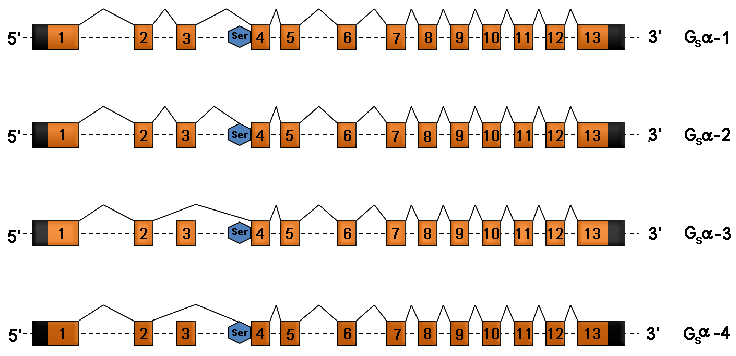
Figure 2. Gsα protein isoforms. Two long (Gsα-1 and Gsα-2) and two short (Gsα-3 and Gsα-4) forms of Gsα result from alternative splicing of exon 3. Use of an alternative splice acceptor site for exon 4 leads to insertion of an extra serine residue in Gsα-2 and Gsα-4. Introns are represented as dash lines, exons as orange boxes; UTRs as black boxes, serine residue as blue hexagons and splicing pattern as a solid line
Description
The GNAS gene spans over 20-kilobase pair and contains thirteen exons and codifies the α-subunit of the stimulatory G protein (Gsα) (Kozasa et al., 1988).
Transcription
The GNAS locus produces multiple gene products as it has four alternative first exons (NESP55 (Ischia et al., 1997), XLαs (Kehlenbach et al., 1994), A/B (Ishikawa et al., 1990; Swaroop et al., 1991) and E1-Gsα) that splice onto a common exons 2 to 13. These first alternative exons lie within CpG islands and are differently imprinted, while to increase its complexity this locus also has an antisense transcript to NESP55, referred as NESPas (Hayward and Bonthron, 2000) (Figure 1).
Exon A/B or exon 1A, located 2.5 kb centromeric from Gsα exon 1, splices onto common exons 2-13, and is methylated on the maternal allele. In this case, because there is no consensus AUG translational start site in exon A/B, it is thought that the resulting transcript is not translated (Ishikawa et al., 1990; Liu et al., 2000). It has been suggested that this region has a negative regulatory cis-acting element that suppresses the paternal Gsα allele in a tissue specific manner (i.e. renal proximal tubules) (Williamson et al., 2004; Liu et al., 2005).
XLαs alternative first exon, is located about 35 kb centromeric from Gsα exon 1, join exons 2-13 leading a transcript that encodes the extra large protein (XLαs), an isoform of Gsα with similar functions but slightly longer, and its promoter is imprinted on the maternal allele (Hayward et al., 1998b).
Finally, the farthest alternative exon (49kb centromeric from exon 1), together with the other common exons 2-13, makes the transcript encoding the protein NESP55, chromogranin-like protein that is expressed mostly in neuroendocrine tissues and only from the maternal allele, due to methylation on the paternal allele (Hayward et al., 1998b).
Regarding GNAS gene transcripts, by different splicing of exon 3 and/or use of two 5splice sites of exon 4, two long (Gsα-L) and two short (Gsα-S) transcript variants are created, which contain alternatively exon 3 and/or a CAG sequence, respectively (Figure 2) (Bray et al., 1986; Robishaw et al., 1986; Kozasa et al., 1988). It is not methylated on either allele (Kozasa et al., 1988; Hayward et al., 1998a; Peters et al., 1999; Liu et al., 2005).
Exon A/B or exon 1A, located 2.5 kb centromeric from Gsα exon 1, splices onto common exons 2-13, and is methylated on the maternal allele. In this case, because there is no consensus AUG translational start site in exon A/B, it is thought that the resulting transcript is not translated (Ishikawa et al., 1990; Liu et al., 2000). It has been suggested that this region has a negative regulatory cis-acting element that suppresses the paternal Gsα allele in a tissue specific manner (i.e. renal proximal tubules) (Williamson et al., 2004; Liu et al., 2005).
XLαs alternative first exon, is located about 35 kb centromeric from Gsα exon 1, join exons 2-13 leading a transcript that encodes the extra large protein (XLαs), an isoform of Gsα with similar functions but slightly longer, and its promoter is imprinted on the maternal allele (Hayward et al., 1998b).
Finally, the farthest alternative exon (49kb centromeric from exon 1), together with the other common exons 2-13, makes the transcript encoding the protein NESP55, chromogranin-like protein that is expressed mostly in neuroendocrine tissues and only from the maternal allele, due to methylation on the paternal allele (Hayward et al., 1998b).
Regarding GNAS gene transcripts, by different splicing of exon 3 and/or use of two 5splice sites of exon 4, two long (Gsα-L) and two short (Gsα-S) transcript variants are created, which contain alternatively exon 3 and/or a CAG sequence, respectively (Figure 2) (Bray et al., 1986; Robishaw et al., 1986; Kozasa et al., 1988). It is not methylated on either allele (Kozasa et al., 1988; Hayward et al., 1998a; Peters et al., 1999; Liu et al., 2005).
Pseudogene
No pseudogenes have been identified.
Proteins
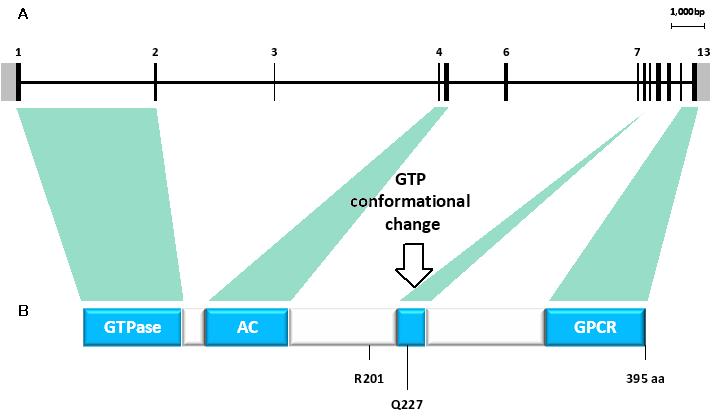
Figure 3. Schematic representation of GNAS gene and Gsα protein. (A) Schematic scaled representation of the 13 coding exons for GNAS gene (Black rectangles represent the exons, grey rectangles the untranslated regions, and the black line the intronic region). (B) Schematic representation of Gsα protein, where the blue rectangles represents the 4 different domains located in the protein (exons 1 and 2 encode for the GTPase activity domain; exons 4 and 5 for the adenylyl cyclase activity domain; exon 9 for the GTP dependent conformational change domain; and exons 12 and 13 for the G-protein coupled receptor interaction domain). The figure also shows the localization of the activating mutations in exon 8 (R201) and exon 9 (Q227).
Description
The Gsα protein has 394 aminoacids with a mass of about 46 kDa. Gα-subunits contain two domains: a GTPase domain that is involved in the binding and hydrolysis of GTP and a helical domain.
The α subunit guanine nucleotide pocket consists of five distinct, highly conserved stretches (G1-G5). The G1, G4 and G5 regions are important for the binding of GTP while the G2 and G3 regions determine the intrinsic GTPase activity of the α subunit. The GDP-bound form binds tightly to bg and is inactive, whereas the GTP-bound form dissociates from bg and serves as a regulator of effector proteins. The receptor molecules cause the activation of G proteins by affecting several steps of the GTP cycle, resulting in the facilitation of the exchange of GTP for GDP on the α subunit (Lania et al., 2001; Cherfils and Chabre, 2003).
The α subunit guanine nucleotide pocket consists of five distinct, highly conserved stretches (G1-G5). The G1, G4 and G5 regions are important for the binding of GTP while the G2 and G3 regions determine the intrinsic GTPase activity of the α subunit. The GDP-bound form binds tightly to bg and is inactive, whereas the GTP-bound form dissociates from bg and serves as a regulator of effector proteins. The receptor molecules cause the activation of G proteins by affecting several steps of the GTP cycle, resulting in the facilitation of the exchange of GTP for GDP on the α subunit (Lania et al., 2001; Cherfils and Chabre, 2003).
Expression
GNAS is biallelically expressed in most tissues studied (Hayward et al., 1998a; Hayward et al., 1998b; Zheng et al., 2001; Mantovani et al., 2004); however, in some tissues (thyroid, renal proximal tubule, pituitary and ovaries) primarily maternal expression is observed leading to a parental-of-origin effect (Davies and Hughes, 1993; Campbell et al., 1994; Hayward et al., 2001; Weinstein, 2001; Mantovani et al., 2002; Germain-Lee et al., 2002; Liu et al., 2003) (Yu et al., 1998).
Localisation
Cytoplasmatic membrane-associated
Function
Heterotrimeric G proteins are membrane bound GTPases that are linked to seven-transmembrane domain receptors (Kleuss and Krause, 2003). Each G protein contains an alpha-, beta- and gamma-subunit and is bound to GDP in the "off" state (Olate and Allende, 1991). Ligand-receptor binding results in detachment of the G protein, switching it to an "on" state and permitting Gα activation of second messenger signalling cascades (Cabrera-Vera et al., 2003). Gsα mediates the simulation of adenylate cyclase regulated by various peptide hormones (PTH, TSH, gonadotropins, ACTH, GHRH, ADH, glucagon, calcitonin, among others) (Spiegel, 1999; Spiegel and Weinstein, 2004). Gsα-subunits contain two domains: a GTPase domain that is involved in the binding and hydrolysis of GTP and a helical domain that buries the GTP within the core of the protein (Cabrera-Vera et al., 2003).
Exon 5 is thought to codify the highly conserved domain of Gsa that interacts with adenylate cyclase, while exon 13 is responsible for the interaction with the receptor (Pennington, 1994).
Exon 5 is thought to codify the highly conserved domain of Gsa that interacts with adenylate cyclase, while exon 13 is responsible for the interaction with the receptor (Pennington, 1994).
Homology
There are several types of Gα proteins; Gsα, Gqα, Gi/oα and G12/13α (Riobo and Manning, 2005). Members of Gsα bind directly to adenylyl cyclase and stimulate its activity, whereas their effects on ion channel activity are restricted to selected cell types; Gi/oα are involved in adenylyl cyclase inhibition, ion channel modulation and phosphatase activation. Finally, G12/13α family is implicated in processes of determination and cell proliferation. Subunits of the Gq/11 class are putative mediators of phospholipase C activation (Landis et al., 1989; Lania et al., 2001).
Mutations
Note
Both germinal and somatic, activating and inactivating, genetic and epigenetic alterations have been described at GNAS locus associated with different entities.
Activating mutations: Mutations at Arg201 or Gln227 inhibits the GTPase activity, maintaining Gsα in its active form. The mutant Gsα protein carrying these activating mutations is termed the gsp oncogene (Landis et al., 1989).
In McCune-Albright syndrome, the somatic mutation at Arg201, leading to its change into cysteine or histidine (even serine or glycine), occurs in early embryogenesis, resulting in widespread tissue distribution of abnormalities. The post zygotic mutation is responsible for the mosaic pattern of tissue distribution and the extreme variability of clinical changes (Weinstein et al., 1991).
Endocrine and non-endocrine tumors: Somatic mutations of Arg201 or Gln227 have been identified in human growth hormone-secreting pituitary adenomas, (Landis et al., 1989; Landis et al., 1990), ACTH-secreting pituitary adenomas (Williamson et al., 1995; Riminucci et al., 2002), nonfunctioning pituitary tumors (Tordjman et al., 1993), thyroid tumors (Suarez et al., 1991), Leydig cell tumor (Libe et al., 2012), ovarian granulosa cell tumors (Kalfa et al., 2006a), renal cell carcinoma (Kalfa et al., 2006b), hepatocellular carcinoma (Nault et al., 2012) and myelodysplastic syndromes (Bejar et al., 2011). The mutation at codon 201 (Arg into Cys or His) is more frequent that the mutation at 227 (Gln into Arg, His, Lys or Leu).
Fibrous dysplasia of the bone: Fibrous dysplasia (FD) is a benign intramedullary osteofibrous lesion that may involve either one (monostotic FD) or several (polyostotic FD) bones. FD may occur in isolation or as part of the McCune-Albright syndrome or within Mazabrauds syndrome. Some cases of FD have been found to have a somatic GNAS mutation, mainly R201C and R201H (Riminucci et al., 1997), though R201S (Candeliere et al., 1997) and Q227L (Idowu et al., 2007) has also been reported.
Inactivating mutations: The first reports of germ-line inactivating Gsα mutations were reported in 1990 (Patten et al., 1990; Weinstein et al., 1990). Latter on, many different mutations have been described in literature and summarized in the Human Gene Mutation Database at the Institute of Medical Genetics in Cardiff (www.hgmd.cf.ac.uk) as a cause of a hormonal disorder coupled to Gsα activity characterized by PTH renal resistance called Pseudohypoparathyroidism (PHP).
Mutation types include translation initiation mutations, amino acid substitutions, nonsense mutations, inversions, splice site mutations, insertions or deletions (even intragenic or encompassing the whole gene). Mutations are distributed throughout the Gsα coding region. Although each mutation is usually associated to a single kindred, a mutational hot-spot involving 20% of all mutations so far described has been identified within exon 7 (Weinstein et al., 1992; Yu et al., 1995; Yokoyama et al., 1996; Ahmed et al., 1998; Mantovani et al., 2000; Aldred and Trembath, 2000). It is a 4 bp deletion which coincides with a defined consensus sequence for arrest of DNA polymerase a, a region known to be prone to sporadic deletion mutations (Krawczak and Cooper, 1991; Yu et al., 1995). In most cases it has been found as a de novo mutation, thus representing a recurring new mutation rather than a founder effect.
As mentioned above, in some tissues paternal GNAS allele is silenced, leading to a parental-of-origin effect. In case of maternally inherited mutation, AHO is associated with end-organ resistance to the Gsα-mediated action of different hormones, primarily PTH, TSH, gonadotropin, and GHRH. AHO with endocrinopathy is then termed pseudohypoparathyroidism type Ia (PHP-Ia; MIM: 103580) or pseudohypoparathyroidism type Ic (PHP-Ic; MIM: 612462). In contrast, AHO due to paternally inherited mutation transmission lacks biochemical evidence of hormone resistance and is designated as pseudopseudohypoparathyroidism (PPHP; MIM 612463) (Davies and Hughes, 1993; Campbell et al., 1994; Weinstein, 2001; Weinstein et al., 2004) (see below for further details).
An intriguing missense mutation (Iiri et al., 1994; Nakamoto et al., 1996) localized within the highly conserved G5 region of the Gsα, has been identified in two unrelated males who presented with AHO, PTH resistance and testotoxicosis (Iiri et al., 1994). This substitution (A366S) leads to constitutive activation of adenylyl cyclase by causing accelerated release of GDP, thus increasing the fraction of active GTP-bound Gsα. However, while this mutant protein is stable at the reduced temperature of the testis, it is thermolabile at 37°C, resulting in reduced Gsα activity in almost tissues and AHO phenotype.
Progressive Osseous Heteroplasia (POH; MIM: 166350) is defined by cutaneous ossification, characteristically presenting during childhood, that progresses to involve subcutaneous and deep connective tissues, including muscle and fascia, in the absence of multiple features of Albright hereditary osteodystrophy (AHO) or hormone resistance (Kaplan et al., 1994). Most cases of POH are caused by heterozygous paternally-inherited inactivating mutations of GNAS (Shore et al., 2002; Adegbite et al., 2008).
Epigenetic alterations: Loss of methylation at GNAS exon A/B, sometimes combined with epigenetic defects at other GNAS differentially methylated regions has been associated with pseudohypoparathyroidism type Ib (PHP-Ib; MIM: 603233). The familial form of the disease has been shown to be mostly associated with an exon A/B-only methylation defect and a heterozygous 3-kb or 4.4-kb deletion mutation within the closely linked STX16 gene (Bastepe et al., 2003; Linglart et al., 2005), although four families of AD-PHP-Ib associated with NESP55 and NESPas deletions have also been described, the latter leading to the loss of all maternal GNAS imprints (Bastepe et al., 2005; Chillambhi et al., 2010; Richard et al., 2012). The exon A/B region is known as an imprinting control region and is believed to be critical for the tissue-specific imprinting of Gsα in the renal proximal tubules (Weinstein et al., 2001). The sporadic form of PHP-Ib show complete loss of methylation at the NESPas, XLαs and A/B regions, and no other changes in cis- or trans-acting elements have been found to explain this loss of methylation. In the scientific literature six cases have been described in which there is an association between the complete loss of methylation and partial or complete paternal isodisomy of chromosome 20q covering the GNAS locus (Bastepe et al., 2001; Bastepe et al., 2010; Fernandez-Rebollo et al., 2010). And on the other hand, it has been recently published a new trait of inheritance, an autosomal recessive form, explaining the molecular mechanism underlying the sporadic PHP-Ib in five families (Fernandez-Rebollo et al., 2011).
Activating mutations: Mutations at Arg201 or Gln227 inhibits the GTPase activity, maintaining Gsα in its active form. The mutant Gsα protein carrying these activating mutations is termed the gsp oncogene (Landis et al., 1989).
In McCune-Albright syndrome, the somatic mutation at Arg201, leading to its change into cysteine or histidine (even serine or glycine), occurs in early embryogenesis, resulting in widespread tissue distribution of abnormalities. The post zygotic mutation is responsible for the mosaic pattern of tissue distribution and the extreme variability of clinical changes (Weinstein et al., 1991).
Endocrine and non-endocrine tumors: Somatic mutations of Arg201 or Gln227 have been identified in human growth hormone-secreting pituitary adenomas, (Landis et al., 1989; Landis et al., 1990), ACTH-secreting pituitary adenomas (Williamson et al., 1995; Riminucci et al., 2002), nonfunctioning pituitary tumors (Tordjman et al., 1993), thyroid tumors (Suarez et al., 1991), Leydig cell tumor (Libe et al., 2012), ovarian granulosa cell tumors (Kalfa et al., 2006a), renal cell carcinoma (Kalfa et al., 2006b), hepatocellular carcinoma (Nault et al., 2012) and myelodysplastic syndromes (Bejar et al., 2011). The mutation at codon 201 (Arg into Cys or His) is more frequent that the mutation at 227 (Gln into Arg, His, Lys or Leu).
Fibrous dysplasia of the bone: Fibrous dysplasia (FD) is a benign intramedullary osteofibrous lesion that may involve either one (monostotic FD) or several (polyostotic FD) bones. FD may occur in isolation or as part of the McCune-Albright syndrome or within Mazabrauds syndrome. Some cases of FD have been found to have a somatic GNAS mutation, mainly R201C and R201H (Riminucci et al., 1997), though R201S (Candeliere et al., 1997) and Q227L (Idowu et al., 2007) has also been reported.
Inactivating mutations: The first reports of germ-line inactivating Gsα mutations were reported in 1990 (Patten et al., 1990; Weinstein et al., 1990). Latter on, many different mutations have been described in literature and summarized in the Human Gene Mutation Database at the Institute of Medical Genetics in Cardiff (www.hgmd.cf.ac.uk) as a cause of a hormonal disorder coupled to Gsα activity characterized by PTH renal resistance called Pseudohypoparathyroidism (PHP).
Mutation types include translation initiation mutations, amino acid substitutions, nonsense mutations, inversions, splice site mutations, insertions or deletions (even intragenic or encompassing the whole gene). Mutations are distributed throughout the Gsα coding region. Although each mutation is usually associated to a single kindred, a mutational hot-spot involving 20% of all mutations so far described has been identified within exon 7 (Weinstein et al., 1992; Yu et al., 1995; Yokoyama et al., 1996; Ahmed et al., 1998; Mantovani et al., 2000; Aldred and Trembath, 2000). It is a 4 bp deletion which coincides with a defined consensus sequence for arrest of DNA polymerase a, a region known to be prone to sporadic deletion mutations (Krawczak and Cooper, 1991; Yu et al., 1995). In most cases it has been found as a de novo mutation, thus representing a recurring new mutation rather than a founder effect.
As mentioned above, in some tissues paternal GNAS allele is silenced, leading to a parental-of-origin effect. In case of maternally inherited mutation, AHO is associated with end-organ resistance to the Gsα-mediated action of different hormones, primarily PTH, TSH, gonadotropin, and GHRH. AHO with endocrinopathy is then termed pseudohypoparathyroidism type Ia (PHP-Ia; MIM: 103580) or pseudohypoparathyroidism type Ic (PHP-Ic; MIM: 612462). In contrast, AHO due to paternally inherited mutation transmission lacks biochemical evidence of hormone resistance and is designated as pseudopseudohypoparathyroidism (PPHP; MIM 612463) (Davies and Hughes, 1993; Campbell et al., 1994; Weinstein, 2001; Weinstein et al., 2004) (see below for further details).
An intriguing missense mutation (Iiri et al., 1994; Nakamoto et al., 1996) localized within the highly conserved G5 region of the Gsα, has been identified in two unrelated males who presented with AHO, PTH resistance and testotoxicosis (Iiri et al., 1994). This substitution (A366S) leads to constitutive activation of adenylyl cyclase by causing accelerated release of GDP, thus increasing the fraction of active GTP-bound Gsα. However, while this mutant protein is stable at the reduced temperature of the testis, it is thermolabile at 37°C, resulting in reduced Gsα activity in almost tissues and AHO phenotype.
Progressive Osseous Heteroplasia (POH; MIM: 166350) is defined by cutaneous ossification, characteristically presenting during childhood, that progresses to involve subcutaneous and deep connective tissues, including muscle and fascia, in the absence of multiple features of Albright hereditary osteodystrophy (AHO) or hormone resistance (Kaplan et al., 1994). Most cases of POH are caused by heterozygous paternally-inherited inactivating mutations of GNAS (Shore et al., 2002; Adegbite et al., 2008).
Epigenetic alterations: Loss of methylation at GNAS exon A/B, sometimes combined with epigenetic defects at other GNAS differentially methylated regions has been associated with pseudohypoparathyroidism type Ib (PHP-Ib; MIM: 603233). The familial form of the disease has been shown to be mostly associated with an exon A/B-only methylation defect and a heterozygous 3-kb or 4.4-kb deletion mutation within the closely linked STX16 gene (Bastepe et al., 2003; Linglart et al., 2005), although four families of AD-PHP-Ib associated with NESP55 and NESPas deletions have also been described, the latter leading to the loss of all maternal GNAS imprints (Bastepe et al., 2005; Chillambhi et al., 2010; Richard et al., 2012). The exon A/B region is known as an imprinting control region and is believed to be critical for the tissue-specific imprinting of Gsα in the renal proximal tubules (Weinstein et al., 2001). The sporadic form of PHP-Ib show complete loss of methylation at the NESPas, XLαs and A/B regions, and no other changes in cis- or trans-acting elements have been found to explain this loss of methylation. In the scientific literature six cases have been described in which there is an association between the complete loss of methylation and partial or complete paternal isodisomy of chromosome 20q covering the GNAS locus (Bastepe et al., 2001; Bastepe et al., 2010; Fernandez-Rebollo et al., 2010). And on the other hand, it has been recently published a new trait of inheritance, an autosomal recessive form, explaining the molecular mechanism underlying the sporadic PHP-Ib in five families (Fernandez-Rebollo et al., 2011).
Implicated in
Entity name
Note
The McCune-Albright syndrome (MAS) is a rare, sporadic disease characterized by a classical triad of clinical signs: polyostotic fibrous dysplasia (FD), skin hyperpigmentation (cafe-au-lait spots) and endocrine dysfunction. The major endocrine disorders include autonomous hyperfunction of several endocrine glands, such as gonads, thyroid, pituitary and adrenal cortex, i.e. glands sensitive to trophic agents acting through cAMP dependent pathway. Moreover, increasing data drive the attention to non-endocrine affections, including hepatobiliary dysfunction and cardiac disease, which are probably important risk factors for early death.
As mutation detection rates may vary considerably according to the type of tissue analyzed and the detection method used, sensitive and specific molecular methods must be used to look for the mutation from all available affected tissues and from easily accessible tissues, particularly in the presence of atypical and monosymptomatic forms of MAS (Weinstein, 2006; Chapurlat and Orcel, 2008).
As mutation detection rates may vary considerably according to the type of tissue analyzed and the detection method used, sensitive and specific molecular methods must be used to look for the mutation from all available affected tissues and from easily accessible tissues, particularly in the presence of atypical and monosymptomatic forms of MAS (Weinstein, 2006; Chapurlat and Orcel, 2008).
Prognosis
The prognosis depends on the severity of each individual endocrine and non-endocrine manifestation and on the age at which each affection appears.
Bisphosphonates are used in the treatment of FD to relieve bone pain and improve lytic lesions, but they are still under clinical evaluation. Calcium, vitamin D and phosphorus supplements may be useful in some patients. Surgery is also helpful to prevent and treat fracture and deformities.
Bisphosphonates are used in the treatment of FD to relieve bone pain and improve lytic lesions, but they are still under clinical evaluation. Calcium, vitamin D and phosphorus supplements may be useful in some patients. Surgery is also helpful to prevent and treat fracture and deformities.
Oncogenesis
Postzygotic, somatic mutations at Arginine 201 of the GNAS gene that results in cellular mosaicism, thus leading to a broad spectrum of clinical manifestations.
Entity name
Mazabraud syndrome
Note
Very rare association of fibrous dysplasia and myxomas of the soft tissues (Biagini et al., 1987; Dreizin et al., 2012).
Entity name
Various endocrine and non-endocrine tumors
Note
Growth hormone-secreting pituitary adenomas (Landis et al., 1989; Landis et al., 1990), ACTH-secreting pituitary adenomas (Williamson et al., 1995; Riminucci et al., 2002), nonfunctioning pituitary tumors (Tordjman et al., 1993), thyroid tumors (Suarez et al., 1991), Leydig cell tumor (Libe et al., 2012), ovarian granulosa cell tumors (Kalfa et al., 2006a), ACTH-independent macronodular adrenal hyperplasia (AIMAH) (Fragoso et al., 2003), renal cell carcinoma (Kalfa et al., 2006b), hepatocellular carcinoma (Nault et al., 2012) and myelodysplastic syndromes (Bejar et al., 2011).
Activating GNAS mutations are a common feature of the above-mentioned endocrine tumors with a maximum frequency in growth hormone-secreting pituitary adenomas (about 30-40%) (Landis et al., 1989), while the same mutations have been only occasionally reported in the other cited tumors.
Activating GNAS mutations are a common feature of the above-mentioned endocrine tumors with a maximum frequency in growth hormone-secreting pituitary adenomas (about 30-40%) (Landis et al., 1989), while the same mutations have been only occasionally reported in the other cited tumors.
Oncogenesis
Activating mutations of the α subunit of the stimulatory G protein (Gsα) gene (the gsp oncogene) leading to amino acid substitution of either residue Arg201 or Gln227. These two residues are catalytically important for GTPase activity, their mutation thus causing constitutive activation by disrupting the signalling turn-off mechanism. Growth and hormone release in many endocrine glands are stimulated by trophic hormones that activate Gsα-cAMP pathways, therefore GNAS activating mutations affect those glands sensitive to trophic agents acting through the cAMP-dependent pathway, leading to autonomous hyperfunction in addition to tumorigenesis.
Entity name
Pseudohypoparathyroidism
Note
Pseudohypoparathyroidism (PHP) is a term applied to a heterogeneous group of disorders whose common feature is end-organ resistance to parathyroid hormone (PTH) (Mantovani, 2011).
PTH resistance, the most clinically evident abnormality, usually develops over the first years of life, with hyperphosphatemia and elevated PTH generally preceding hypocalcemia. Renal function is conserved through life and so seems to be bone mineral density.
- elevated PTH levels
- hyperphosphatemia
- absence of hypercalciuria or impaired renal function
- reduced calcemic and phosphaturic response to injected exogenous PTH
PTH resistance, the most clinically evident abnormality, usually develops over the first years of life, with hyperphosphatemia and elevated PTH generally preceding hypocalcemia. Renal function is conserved through life and so seems to be bone mineral density.
- elevated PTH levels
- hyperphosphatemia
- absence of hypercalciuria or impaired renal function
- reduced calcemic and phosphaturic response to injected exogenous PTH
Disease
PHP-Ia: in addition to PTH resistance, is characterized by resistance to other hormones, including TSH, gonadotrophins and GHRH. It is associated with Albrights hereditary osteodystrophy (AHO), which includes short stature, obesity, round facies, subcutaneous ossifications, brachydactyly, and other skeletal anomalies. Some patients have mental retardation. Laboratory studies show a decreased cAMP response to infused PTH and defects in activity of the erythrocyte Gs protein (Mantovani, 2011).
Pseudo-PHP (PPHP): is characterized by the physical findings of AHO without hormone resistance. Laboratory studies show a defect in Gs protein activity in erythrocytes (Weinstein et al., 2001).
PHP-Ib: is characterized clinically by isolated renal PTH resistance. Patients usually lack the physical characteristics of AHO and typically show no other endocrine abnormalities, although resistance to TSH has been reported. However, patients may rarely show some features of AHO. Laboratory studies show a decreased cAMP response to infused PTH and, most recently reported, sometimes defects in Gs protein activity similarly to PHP-Ia patients (Zazo et al., 2011; Mantovani et al., 2012).
Progressive Osseous Heteroplasia (POH): is characterized by ectopic dermal ossification beginning in infancy, followed by increasing and extensive bone formation in deep muscle and fascia. These patients typically do not show any endocrine abnormality (Shore et al., 2002; Shore and Kaplan, 2010).
Pseudo-PHP (PPHP): is characterized by the physical findings of AHO without hormone resistance. Laboratory studies show a defect in Gs protein activity in erythrocytes (Weinstein et al., 2001).
PHP-Ib: is characterized clinically by isolated renal PTH resistance. Patients usually lack the physical characteristics of AHO and typically show no other endocrine abnormalities, although resistance to TSH has been reported. However, patients may rarely show some features of AHO. Laboratory studies show a decreased cAMP response to infused PTH and, most recently reported, sometimes defects in Gs protein activity similarly to PHP-Ia patients (Zazo et al., 2011; Mantovani et al., 2012).
Progressive Osseous Heteroplasia (POH): is characterized by ectopic dermal ossification beginning in infancy, followed by increasing and extensive bone formation in deep muscle and fascia. These patients typically do not show any endocrine abnormality (Shore et al., 2002; Shore and Kaplan, 2010).
Prognosis
In general, PHP patients should be monitored annually for both blood biochemistries (PTH, calcium, phosphate, TSH) and urinary calcium excretion. Particular attention must be given in children to height, growth velocity and pubertal development. Increasing evidences suggest that, independently of growth curve, children should be screened with appropriate provocative tests for GH deficiency in order to eventually start treatment as soon as possible. Weight and BMI should be checked in order to start dietary/exercise intervention when appropriate. Careful physical examination and, when necessary, specific psychological investigations should be performed annually in order to detect and follow the presence/evolution of specific AHO features (in particular heterotopic ossifications and mental retardation). Initial screening should include radiological evaluation of brachydactyly.
The long-term therapy of hypocalcemia, in order to maintain normocalcemia, is with active vitamin D metabolites, preferentially calcitriol, with or without oral calcium supplementation. Patients should be also routinely screened and eventually treated for any associated endocrinopathy, in particular hypothyroidism and hypogonadism. Levothyroxine and sex hormones should be given following the same criteria, doses and follow-up as in any other form of hypothyroidism or hypogonadism.
There are no specific treatments for the various manifestations of AHO, even if subcutaneous ossifications may be surgically removed when particularly large or bothersome.
While prognosis of correctly treated hormone disturbances is very good, POH may end up with deeply invalidating lesions.
The long-term therapy of hypocalcemia, in order to maintain normocalcemia, is with active vitamin D metabolites, preferentially calcitriol, with or without oral calcium supplementation. Patients should be also routinely screened and eventually treated for any associated endocrinopathy, in particular hypothyroidism and hypogonadism. Levothyroxine and sex hormones should be given following the same criteria, doses and follow-up as in any other form of hypothyroidism or hypogonadism.
There are no specific treatments for the various manifestations of AHO, even if subcutaneous ossifications may be surgically removed when particularly large or bothersome.
While prognosis of correctly treated hormone disturbances is very good, POH may end up with deeply invalidating lesions.
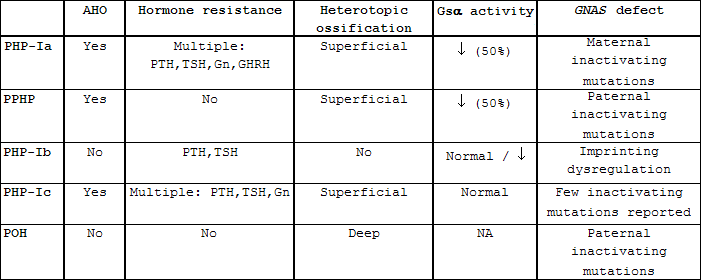
Table1. Legend: PHP, pseudohypoparathyroidism; PPHP, Pseudo-pseudohypoparathyroidism; AHO, Albright hereditary osteodystrophy; POH, Progressive Osseous Heteroplasia; Gn, gonadotropins; NA, not available.
Article Bibliography
| Pubmed ID | Last Year | Title | Authors |
|---|---|---|---|
| 18553568 | 2008 | Diagnostic and mutational spectrum of progressive osseous heteroplasia (POH) and other forms of GNAS-based heterotopic ossification. | Adegbite NS et al |
| 9876352 | 1998 | GNAS1 mutational analysis in pseudohypoparathyroidism. | Ahmed SF et al |
| 10980525 | 2000 | Activating and inactivating mutations in the human GNAS1 gene. | Aldred MA et al |
| 20965295 | 2011 | Paternal uniparental isodisomy of the entire chromosome 20 as a molecular cause of pseudohypoparathyroidism type Ib (PHP-Ib). | Bastepe M et al |
| 15592469 | 2005 | Deletion of the NESP55 differentially methylated region causes loss of maternal GNAS imprints and pseudohypoparathyroidism type Ib. | Bastepe M et al |
| 11294659 | 2001 | Paternal uniparental isodisomy of chromosome 20q--and the resulting changes in GNAS1 methylation--as a plausible cause of pseudohypoparathyroidism. | Bastepe M et al |
| 21714648 | 2011 | Clinical effect of point mutations in myelodysplastic syndromes. | Bejar R et al |
| 3319954 | 1987 | The Mazabraud syndrome: case report and review of the literature. | Biagini R et al |
| 3024154 | 1986 | Human cDNA clones for four species of G alpha s signal transduction protein. | Bray P et al |
| 14671004 | 2003 | Insights into G protein structure, function, and regulation. | Cabrera-Vera TM et al |
| 7815417 | 1994 | Parental origin of transcription from the human GNAS1 gene. | Campbell R et al |
| 9267696 | 1997 | Polymerase chain reaction-based technique for the selective enrichment and analysis of mosaic arg201 mutations in G alpha s from patients with fibrous dysplasia of bone. | Candeliere GA et al |
| 18328981 | 2008 | Fibrous dysplasia of bone and McCune-Albright syndrome. | Chapurlat RD et al |
| 12517447 | 2003 | Activation of G-protein Galpha subunits by receptors through Galpha-Gbeta and Galpha-Ggamma interactions. | Cherfils J et al |
| 20444925 | 2010 | Deletion of the noncoding GNAS antisense transcript causes pseudohypoparathyroidism type Ib and biparental defects of GNAS methylation in cis. | Chillambhi S et al |
| 8383205 | 1993 | Imprinting in Albright's hereditary osteodystrophy. | Davies SJ et al |
| 22893885 | 2012 | Mazabraud syndrome. | Dreizin D et al |
| 21523828 | 2011 | Exclusion of the GNAS locus in PHP-Ib patients with broad GNAS methylation changes: evidence for an autosomal recessive form of PHP-Ib? | Fernández-Rebollo E et al |
| 12727968 | 2003 | Cushing's syndrome secondary to adrenocorticotropin-independent macronodular adrenocortical hyperplasia due to activating mutations of GNAS1 gene. | Fragoso MC et al |
| 1674732 | 1991 | Genetic mapping of the Gs-alpha subunit gene (GNAS1) to the distal long arm of chromosome 20 using a polymorphism detected by denaturing gradient gel electrophoresis. | Gejman PV et al |
| 12147228 | 2002 | Paternal imprinting of Galpha(s) in the human thyroid as the basis of TSH resistance in pseudohypoparathyroidism type 1a. | Germain-Lee EL et al |
| 11254676 | 2001 | Imprinting of the G(s)alpha gene GNAS1 in the pathogenesis of acromegaly. | Hayward BE et al |
| 17493233 | 2007 | A sensitive mutation-specific screening technique for GNAS1 mutations in cases of fibrous dysplasia: the first report of a codon 227 mutation in bone. | Idowu BD et al |
| 8072545 | 1994 | Rapid GDP release from Gs alpha in patients with gain and loss of endocrine function. | Iiri T et al |
| 9111083 | 1997 | Molecular cloning and characterization of NESP55, a novel chromogranin-like precursor of a peptide with 5-HT1B receptor antagonist activity. | Ischia R et al |
| 2111318 | 1990 | Alternative promoter and 5' exon generate a novel Gs alpha mRNA. | Ishikawa Y et al |
| 16507630 | 2006 | Activating mutations of the stimulatory g protein in juvenile ovarian granulosa cell tumors: a new prognostic factor? | Kalfa N et al |
| 16890646 | 2006 | Activating mutations of Gsalpha in kidney cancer. | Kalfa N et al |
| 8126048 | 1994 | Progressive osseous heteroplasia: a distinct developmental disorder of heterotopic ossification. Two new case reports and follow-up of three previously reported cases. | Kaplan FS et al |
| 7997272 | 1994 | XL alpha s is a new type of G protein. | Kehlenbach RH et al |
| 12574119 | 2003 | Galpha(s) is palmitoylated at the N-terminal glycine. | Kleuss C et al |
| 3127824 | 1988 | Isolation and characterization of the human Gs alpha gene. | Kozasa T et al |
| 2016084 | 1991 | Gene deletions causing human genetic disease: mechanisms of mutagenesis and the role of the local DNA sequence environment. | Krawczak M et al |
| 2121775 | 1990 | Clinical characteristics of acromegalic patients whose pituitary tumors contain mutant Gs protein. | Landis CA et al |
| 2549426 | 1989 | GTPase inhibiting mutations activate the alpha chain of Gs and stimulate adenylyl cyclase in human pituitary tumours. | Landis CA et al |
| 11720871 | 2001 | G protein mutations in endocrine diseases. | Lania A et al |
| 8882812 | 1995 | Stage-specific and cell type-specific aspects of genomic imprinting effects in mammals. | Latham KE et al |
| 22016347 | 2012 | A rare cause of hypertestosteronemia in a 68-year-old patient: a Leydig cell tumor due to a somatic GNAS (guanine nucleotide-binding protein, alpha-stimulating activity polypeptide 1)-activating mutation. | Libé R et al |
| 15800843 | 2005 | A novel STX16 deletion in autosomal dominant pseudohypoparathyroidism type Ib redefines the boundaries of a cis-acting imprinting control element of GNAS. | Linglart A et al |
| 15811946 | 2005 | Identification of the control region for tissue-specific imprinting of the stimulatory G protein alpha-subunit. | Liu J et al |
| 12970307 | 2003 | The stimulatory G protein alpha-subunit Gs alpha is imprinted in human thyroid glands: implications for thyroid function in pseudohypoparathyroidism types 1A and 1B. | Liu J et al |
| 11067869 | 2000 | A GNAS1 imprinting defect in pseudohypoparathyroidism type IB. | Liu J et al |
| 22674477 | 2012 | GNAS epigenetic defects and pseudohypoparathyroidism: time for a new classification? | Mantovani G et al |
| 21816789 | 2011 | Clinical review: Pseudohypoparathyroidism: diagnosis and treatment. | Mantovani G et al |
| 8809352 | 1996 | Concurrent hormone resistance (pseudohypoparathyroidism type Ia) and hormone independence (testotoxicosis) caused by a unique mutation in the G alpha s gene. | Nakamoto JM et al |
| 21835143 | 2012 | GNAS-activating mutations define a rare subgroup of inflammatory liver tumors characterized by STAT3 activation. | Nault JC et al |
| 1792242 | 1991 | Structure and function of G proteins. | Olate J et al |
| 2109828 | 1990 | Mutation in the gene encoding the stimulatory G protein of adenylate cyclase in Albright's hereditary osteodystrophy. | Patten JL et al |
| 8528903 | 1994 | GTP-binding proteins. 1: heterotrimeric G proteins. | Pennington SR et al |
| 10097123 | 1999 | A cluster of oppositely imprinted transcripts at the Gnas locus in the distal imprinting region of mouse chromosome 2. | Peters J et al |
| 11253064 | 2001 | Genomic imprinting: parental influence on the genome. | Reik W et al |
| 22378814 | 2012 | A new deletion ablating NESP55 causes loss of maternal imprint of A/B GNAS and autosomal dominant pseudohypoparathyroidism type Ib. | Richard N et al |
| 11836449 | 2002 | An R201H activating mutation of the GNAS1 (Gsalpha) gene in a corticotroph pituitary adenoma. | Riminucci M et al |
| 15749160 | 2005 | Receptors coupled to heterotrimeric G proteins of the G12 family. | Riobo NA et al |
| 3015900 | 1986 | Molecular basis for two forms of the G protein that stimulates adenylate cyclase. | Robishaw JD et al |
| 11784876 | 2002 | Paternally inherited inactivating mutations of the GNAS1 gene in progressive osseous heteroplasia. | Shore EM et al |
| 20703219 | 2010 | Inherited human diseases of heterotopic bone formation. | Shore EM et al |
| 9853826 | 1998 | Imprinting. | Solter D et al |
| 14746508 | 2004 | Inherited diseases involving g proteins and g protein-coupled receptors. | Spiegel AM et al |
| 10698594 | 1999 | Hormone resistance caused by mutations in G proteins and G protein-coupled receptors. | Spiegel AM et al |
| 1903197 | 1991 | gsp mutations in human thyroid tumours. | Suarez HG et al |
| 1716359 | 1991 | Differential expression of novel Gs alpha signal transduction protein cDNA species. | Swaroop A et al |
| 21488135 | 2011 | Functional characterization of GNAS mutations found in patients with pseudohypoparathyroidism type Ic defines a new subgroup of pseudohypoparathyroidism affecting selectively Gsα-receptor interaction. | Thiele S et al |
| 8396579 | 1993 | Activating mutations of the Gs alpha-gene in nonfunctioning pituitary tumors. | Tordjman K et al |
| 17229000 | 2006 | G(s)alpha mutations in fibrous dysplasia and McCune-Albright syndrome. | Weinstein LS et al |
| 15273687 | 2004 | A cis-acting control region is required exclusively for the tissue-specific imprinting of Gnas. | Williamson CM et al |
| 7737262 | 1995 | G-protein mutations in human pituitary adrenocorticotrophic hormone-secreting adenomas. | Williamson EA et al |
| 8862504 | 1996 | A 4-base pair deletion mutation of Gs alpha gene in a Japanese patient with pseudohypoparathyroidism. | Yokoyama M et al |
| 9671744 | 1998 | Variable and tissue-specific hormone resistance in heterotrimeric Gs protein alpha-subunit (Gsalpha) knockout mice is due to tissue-specific imprinting of the gsalpha gene. | Yu S et al |
| 21351142 | 2011 | Gsα activity is reduced in erythrocyte membranes of patients with psedohypoparathyroidism due to epigenetic alterations at the GNAS locus. | Zazo C et al |
| 11600515 | 2001 | Galphas transcripts are biallelically expressed in the human kidney cortex: implications for pseudohypoparathyroidism type 1b. | Zheng H et al |
Other Information
Locus ID:
NCBI: 2778
MIM: 139320
HGNC: 4392
Ensembl: ENSG00000087460
Variants:
dbSNP: 2778
ClinVar: 2778
TCGA: ENSG00000087460
COSMIC: GNAS
RNA/Proteins
Expression (GTEx)
Pathways
Protein levels (Protein atlas)
PharmGKB
| Entity ID | Name | Type | Evidence | Association | PK | PD | PMIDs |
|---|---|---|---|---|---|---|---|
| PA164741137 | ADCY3 | Gene | Pathway | associated | 20938371 | ||
| PA24560 | ADCY1 | Gene | Pathway | associated | 19741567 | ||
| PA24561 | ADCY2 | Gene | Pathway | associated | 19741567 | ||
| PA24562 | ADCY4 | Gene | Pathway | associated | |||
| PA24563 | ADCY5 | Gene | Pathway | associated | |||
| PA27 | ADCY6 | Gene | Pathway | associated | |||
| PA28 | ADCY7 | Gene | Pathway | associated | |||
| PA285 | PTGDR | Gene | Pathway | associated | 20938371 | ||
| PA287 | PTGER2 | Gene | Pathway | associated | 20938371 | ||
| PA29 | ADCY8 | Gene | Pathway | associated | |||
| PA291 | PTGIR | Gene | Pathway | associated | 20938371 | ||
| PA29457 | HRH2 | Gene | Pathway | associated | |||
| PA29557 | HTR4 | Gene | Pathway | associated | 19741567 | ||
| PA29560 | HTR6 | Gene | Pathway | associated | 19741567 | ||
| PA29561 | HTR7 | Gene | Pathway | associated | 19741567 | ||
| PA30 | ADCY9 | Gene | Pathway | associated | |||
| PA34361 | RGS1 | Gene | Pathway | associated | |||
| PA39 | ADRB2 | Gene | Pathway | associated | |||
| PA449381 | dobutamine | Chemical | ClinicalAnnotation | associated | PD | 19542315 |
References
| Pubmed ID | Year | Title | Citations |
|---|---|---|---|
| 37828397 | 2024 | The mystery of transient pregnancy-induced cushing's syndrome: a case report and literature review highlighting GNAS somatic mutations and LHCGR overexpression. | 0 |
| 38097740 | 2024 | Compartment-specific multiomic profiling identifies SRC and GNAS as candidate drivers of epithelial-to-mesenchymal transition in ovarian carcinosarcoma. | 1 |
| 38245923 | 2024 | DNA methylation landscape reveals GNAS as a decitabine-responsive marker in patients with acute myeloid leukemia. | 0 |
| 38290008 | 2024 | GNAS AS2 methylation status enables mechanism-based categorization of pseudohypoparathyroidism type 1B. | 0 |
| 38319157 | 2024 | GNAS mutation inhibits growth and induces phosphodiesterase 4D expression in colorectal cancer cell lines. | 0 |
| 38319286 | 2024 | Oncogenic GNAS Uses PKA-Dependent and Independent Mechanisms to Induce Cell Proliferation in Human Pancreatic Ductal and Acinar Organoids. | 0 |
| 38375634 | 2024 | Gsα Regulates Macrophage Foam Cell Formation During Atherosclerosis. | 0 |
| 38480881 | 2024 | Time-resolved cryo-EM of G-protein activation by a GPCR. | 6 |
| 38664677 | 2024 | Identification of a novel GNAS mutation in a family with pseudohypoparathyroidism type 1A. | 0 |
| 37828397 | 2024 | The mystery of transient pregnancy-induced cushing's syndrome: a case report and literature review highlighting GNAS somatic mutations and LHCGR overexpression. | 0 |
| 38097740 | 2024 | Compartment-specific multiomic profiling identifies SRC and GNAS as candidate drivers of epithelial-to-mesenchymal transition in ovarian carcinosarcoma. | 1 |
| 38245923 | 2024 | DNA methylation landscape reveals GNAS as a decitabine-responsive marker in patients with acute myeloid leukemia. | 0 |
| 38290008 | 2024 | GNAS AS2 methylation status enables mechanism-based categorization of pseudohypoparathyroidism type 1B. | 0 |
| 38319157 | 2024 | GNAS mutation inhibits growth and induces phosphodiesterase 4D expression in colorectal cancer cell lines. | 0 |
| 38319286 | 2024 | Oncogenic GNAS Uses PKA-Dependent and Independent Mechanisms to Induce Cell Proliferation in Human Pancreatic Ductal and Acinar Organoids. | 0 |
Citation
Guiomar Pérez de Nanclares ; Giovanna Mantovani ; Eduardo Fernandez-Rebollo
GNAS (GNAS complex locus)
Atlas Genet Cytogenet Oncol Haematol. 2012-10-01
Online version: http://atlasgeneticsoncology.org/gene/40727
