PDCD5 (programmed cell death 5)
2014-10-01 Yingyu Chen , Ge Li AffiliationKey Laboratory of Medical Immunology, Ministry of Health, Peking University Health Science Center, Beijing, 100191, China
Abstract
Programmed Cell Death 5 (PDCD5) was originally identified as an apoptosis-accelerating molecule that was widely expressed and well-conserved in the process of evolution. It has significant homology to the corresponding proteins of species ranging from yeast to mice gene. PDCD5 can accelerate apoptosis in different type of cells in response to different stimuli, and can also induce different types of cell death, including paraptosis-like cell death. In cells undergoing apoptosis, PDCD5 rapidly translocates from the cytoplasm to the nucleus before phosphatidylserine is externalized and genomic DNA undergoes fragmentation. PDCD5 interacts with TIP60 and TP53 and plays an important positive role in TIP60-P53 signaling pathway. PDCD5 also participates in immune regulation through regulating the level of FOXP3 protein and percentage of regulatory T cells. Dysfunction of PDCD5 was associated in many diseases including different tumors, rheumatoid arthritis and presbycusis, etc.
DNA/RNA
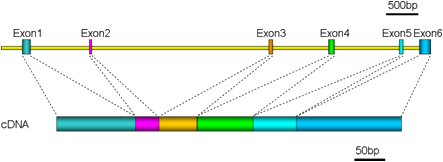
Description
Transcription
Pseudogene
Proteins
Description
Expression
Localisation
Function
Homology
Mutations
Germinal
Somatic
Implicated in
PDCD5 may make significance to inhibit tumor malignant transformation and progress. Recombinant human PDCD5 (rhPDCD5) has been shown to enter a variety of cells by clathrin-independent endocytosis and exert biological activities. RhPDCD5 could enhance cell death of tumor cells and enhance the sensitivity to chemotherapeutic, such as cisplatin (Chen et al., 2010b; Shi et al., 2010; Wang et al., 2013c).
Article Bibliography
| Pubmed ID | Last Year | Title | Authors |
|---|---|---|---|
| 20349137 | 2010 | Recombinant human PDCD5 sensitizes chondrosarcomas to cisplatin chemotherapy in vitro and in vivo. | Chen C et al |
| 23638963 | 2013 | The involvement of programmed cell death 5 (PDCD5) in the regulation of apoptosis in cerebral ischemia/reperfusion injury. | Chen CH et al |
| 11741587 | 2001 | Nuclear translocation of PDCD5 (TFAR19): an early signal for apoptosis? | Chen Y et al |
| 20120772 | 2009 | Reduced expression of programmed cell death 5 protein in tissue of human prostate cancer. | Du YJ et al |
| 24469044 | 2015 | The von Hippel-Lindau tumor suppressor regulates programmed cell death 5-mediated degradation of Mdm2. | Essers PB et al |
| 23807738 | 2013 | PDCD5 expression predicts a favorable outcome in patients with hepatocellular carcinoma. | Fu DZ et al |
| 22965478 | 2012 | The clinical significance of reduced programmed cell death 5 expression in human gastrointestinal stromal tumors. | Gao F et al |
| 24614334 | 2014 | Autophagic effect of programmed cell death 5 (PDCD5) after focal cerebral ischemic reperfusion injury in rats. | Jiang Z et al |
| 18695908 | 2008 | Reduced expression of PDCD5 is associated with high-grade astrocytic gliomas. | Li H et al |
| 24509810 | 2014 | Pretreatment of mice with oligonucleotide prop5 protects them from influenza virus infections. | Li K et al |
| 9920759 | 1999 | TFAR19, a novel apoptosis-related gene cloned from human leukemia cell line TF-1, could enhance apoptosis of some tumor cells induced by growth factor withdrawal. | Liu H et al |
| 16361542 | 2005 | Two single-nucleotide polymorphisms with linkage disequilibrium in the human programmed cell death 5 gene 5' regulatory region affect promoter activity and the susceptibility of chronic myelogenous leukemia in Chinese population. | Ma X et al |
| 19616514 | 2009 | Programmed cell death protein 5 (PDCD5) is phosphorylated by CK2 in vitro and in 293T cells. | Salvi M et al |
| 20398626 | 2010 | Potent antitumor activities of recombinant human PDCD5 protein in combination with chemotherapy drugs in K562 cells. | Shi L et al |
| 16549820 | 2006 | Association of the PDCD5 locus with lung cancer risk and prognosis in smokers. | Spinola M et al |
| 24375412 | 2014 | Programmed cell death protein 5 interacts with the cytosolic chaperonin containing tailless complex polypeptide 1 (CCT) to regulate β-tubulin folding. | Tracy CM et al |
| 23327497 | 2013 | Plasma and synovial fluid programmed cell death 5 (PDCD5) levels are inversely associated with TNF-α and disease activity in patients with rheumatoid arthritis. | Wang J et al |
| 23324280 | 2013 | Programmed cell death 5 correlates with disease activity and interleukin-17 in serum and synovial fluid of rheumatoid arthritis patients. | Wang JF et al |
| 24219296 | 2013 | Recombinant human PDCD5 protein enhances chemosensitivity of breast cancer in vitro and in vivo. | Wang L et al |
| 17468978 | 2007 | Involvement of PDCD5 in the regulation of apoptosis in fibroblast-like synoviocytes of rheumatoid arthritis. | Wang N et al |
| 15020679 | 2004 | An alternative form of paraptosis-like cell death, triggered by TAJ/TROY and enhanced by PDCD5 overexpression. | Wang Y et al |
| 25178696 | 2015 | Anti-inflammatory effects of recombinant human PDCD5 (rhPDCD5) in a rat collagen-induced model of arthritis. | Xiao J et al |
| 24012345 | 2013 | PDCD5 negatively regulates autoimmunity by upregulating FOXP3(+) regulatory T cells and suppressing Th17 and Th1 responses. | Xiao J et al |
| 24265335 | 2013 | Expression and clinical significance of the programmed cell death 5 gene and protein in laryngeal squamous cell carcinoma. | Xu F et al |
| 19308289 | 2009 | PDCD5 interacts with Tip60 and functions as a cooperator in acetyltransferase activity and DNA damage-induced apoptosis. | Xu L et al |
| 22914926 | 2012 | PDCD5 interacts with p53 and functions as a positive regulator in the p53 pathway. | Xu L et al |
| 25109624 | 2014 | Expression of programmed cell death 5 protein inhibits progression of lung carcinoma in vitro and in vivo via the mitochondrial apoptotic pathway. | Xu S et al |
| 23322062 | 2013 | Down-regulation of programmed cell death 5 by insulin-like growth factor 1 in osteoarthritis chondrocytes. | Yi C et al |
| 21165576 | 2011 | Clinical and prognostic significance of lost or decreased PDCD5 expression in human epithelial ovarian carcinomas. | Zhang X et al |
Other Information
Locus ID:
NCBI: 9141
MIM: 604583
HGNC: 8764
Ensembl: ENSG00000105185
Variants:
dbSNP: 9141
ClinVar: 9141
TCGA: ENSG00000105185
COSMIC: PDCD5
RNA/Proteins
Expression (GTEx)
Protein levels (Protein atlas)
References
| Pubmed ID | Year | Title | Citations |
|---|---|---|---|
| 36827466 | 2023 | Cancer-testis non-coding RNA LEF1-AS1 regulates the nuclear translocation of PDCD5 and suppresses its interaction with p53 signaling: a novel target for immunotherapy in esophageal squamous cell carcinoma. | 2 |
| 36827466 | 2023 | Cancer-testis non-coding RNA LEF1-AS1 regulates the nuclear translocation of PDCD5 and suppresses its interaction with p53 signaling: a novel target for immunotherapy in esophageal squamous cell carcinoma. | 2 |
| 36266728 | 2022 | PDCD5 inhibits progression of renal cell carcinoma by promoting T cell immunity: with the involvement of the HDAC3/microRNA-195-5p/SGK1. | 1 |
| 36266728 | 2022 | PDCD5 inhibits progression of renal cell carcinoma by promoting T cell immunity: with the involvement of the HDAC3/microRNA-195-5p/SGK1. | 1 |
| 34011956 | 2021 | Club cell-specific role of programmed cell death 5 in pulmonary fibrosis. | 9 |
| 34011956 | 2021 | Club cell-specific role of programmed cell death 5 in pulmonary fibrosis. | 9 |
| 33215428 | 2020 | Prognostic potentials of miRNA-19a-3p and PDCD5 in nasopharynx carcinoma. | 1 |
| 33215428 | 2020 | Prognostic potentials of miRNA-19a-3p and PDCD5 in nasopharynx carcinoma. | 1 |
| 31244936 | 2019 | Lgr5-mediated p53 Repression through PDCD5 leads to doxorubicin resistance in Hepatocellular Carcinoma. | 27 |
| 31244936 | 2019 | Lgr5-mediated p53 Repression through PDCD5 leads to doxorubicin resistance in Hepatocellular Carcinoma. | 27 |
| 29588416 | 2018 | Programmed cell death 5 suppresses AKT-mediated cytoprotection of endothelium. | 7 |
| 29734189 | 2018 | Downregulated PITX1 Modulated by MiR-19a-3p Promotes Cell Malignancy and Predicts a Poor Prognosis of Gastric Cancer by Affecting Transcriptionally Activated PDCD5. | 23 |
| 29921407 | 2018 | The importance of expressing PDCD4 and PDCD5 anti-oncogenes in glioma. | 1 |
| 29588416 | 2018 | Programmed cell death 5 suppresses AKT-mediated cytoprotection of endothelium. | 7 |
| 29734189 | 2018 | Downregulated PITX1 Modulated by MiR-19a-3p Promotes Cell Malignancy and Predicts a Poor Prognosis of Gastric Cancer by Affecting Transcriptionally Activated PDCD5. | 23 |
Citation
Yingyu Chen ; Ge Li
PDCD5 (programmed cell death 5)
Atlas Genet Cytogenet Oncol Haematol. 2014-10-01
Online version: http://atlasgeneticsoncology.org/gene/41676/pdcd5-(programmed-cell-death-5)
