EMP3 (epithelial membrane protein 3)
2014-11-01 Marta Mellai , Davide Schiffer AffiliationCentro Ricerche di Neuro-Bio-Oncologia \\\/ Fondazione Policlinico di Monza \\\/ Consorzio di Neuroscienze, Universita di Pavia, Via Pietro Micca 29, 13100, Vercelli (Italy)

Abstract
Epithelial membrane protein 3 (EMP3) has recently been proposed as a candidate tumor suppressor gene (TSG) for some kinds of solid tumors. EMP3 down-regulation has been explained by its epigenetic silencing through aberrant hypermethylation of the promoter region.
DNA/RNA
Note
Functionally, the PMP22 gene family may control cell proliferation, cell differentiation and cell death. Remarkable, mutations in the PMP22 gene are responsible for various hereditary peripheral neuropathies in both humans and mice (Leal et al., 2001).
The human EMP3 gene maps on chromosome 19q13.33 (Lieher et al., 1999). The homologous gene in mouse maps on chromosome 7 (Ben-Porath et al., 1998).
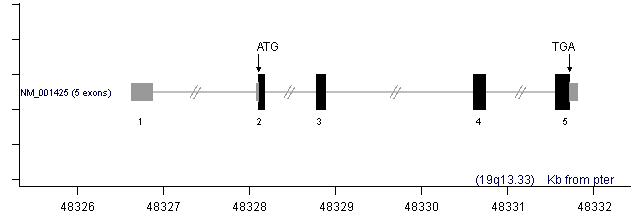
Description
The 5-UTR region contains a CpG island (62 CpG dimers) localized around the transcription start site (from -13 to +241 bp) (GenBank reference sequence NM_001425) (Alaminos et al., 2005). Regulatory transcription factor binding sites in the promoter region are COUP-TF1, STAT1, Bach2, Rel4, HNF-4alpha1, E47, AREB6, RORalpha1, HEN1 and COUP-TF.
Transcription
Pseudogene
Proteins
Note
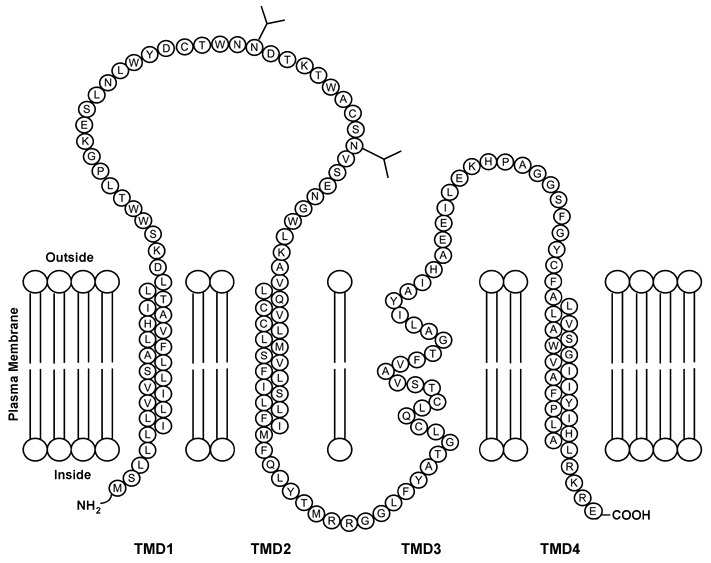
Description
Expression
Localisation
Function
On the basis of its sequence similarity to EMP1, it may be involved in the regulation of cell proliferation (Bolin et al., 1997).
The higher expression levels in fetal brain, lung and kidney compared to the respective adult counterparts suggest a role in the developmental regulation, especially in neuronal development (Bolin et al., 1997).
It may control the regulation of cell growth, differentiation and death, since its overexpression results in cell blebbing in embryonic kidney cell cultures and in the activation of the apoptosis pathway (Wilson et al., 2002).
In peripheral nervous system, it may regulate Schwann cell proliferation after injury and cell-cell interactions in active myelination (Bolin et al., 1997).
It may have possible roles in hematopoietic system (Bolin et al., 1997).
Homology
The PMP22 gene family probably evolved as result of a chromosome duplication event and divergence (Ben-Porath et al., 1998). Paralogs are PMP22, EMP1 and EMP2. Seventy-four organisms have orthologues with the human EMP3 gene.
Mutations
Note
Eighteen human genomic variants from 12 studies described, three of which (nsv531627, nsv531628 and nsv531629, all copy number gains) with pathogenic clinical significance since associated to global developmental delay and seizure (Miller et al., 2010; Kaminsky et al., 2011).
In mouse, a single nucleotide polymorphism (SNP) is responsible for the reciprocal H4 minor histocompatibility alloantigens in the MHC-bound peptide derived from EMP3 and presented by the MHC class I molecule. The C>T nucleotide change results in the amino acid substitution from Thr (H4a, SGTVYIHL) to Ile (H4b, SGIVYIHL) in the minimal antigenic epitope SGIVYIHL (SYL8) derived from H4(b) (Yadav et al., 2003; Luedtke et al., 2003)
Germinal
Somatic
Implicated in
In contrast, it is a rare event in sporadic (7.1%) and adult VHL-associated (6.1%) phaeochromocytomas (Margetts et al., 2008).
Aberrant hypermethylation correlates with reduced mRNA expression and lack of EMP3 protein expression. It is strongly associated with IDH1/IDH2 somatic mutations in astrocytic and oligodendroglial tumors and inversely correlated with EGFR gene amplification. In oligodendrogliomas, it is also associated with loss of the 19q13.3 locus and with total 1p/19q co-deletion (Tews et al., 2006; Mellai et al., 2013), with prognostic significance on patient overall survival (Kunitz et al., 2007; Mellai et al., 2013).
The EMP3 gene belongs to the glioma CpG island methylator phenotype (G-CIMP) (Noushmehr et al., 2010), that identifies a distinct molecular glioma subclass, prevalent in low-grade tumors and associated with IDH1/2 mutations and with improved patient survival (Laffaire et al., 2011).
No tumor-specific mutations identified on 132 glioma patients, except for the SNPs rs4893 (p.Ile125Val, exon 5) and rs11671746 (3-UTR) in four patients (Kunitz et al., 2007).
By MS-PCR, EMP3 hypermethylation occurs occasionally in primary tumor tissue (36.5%) without association with mRNA expression levels. In breast cancer cell lines, EMP3 mRNA is frequently repressed in both invasive (70%) and non-invasive phenotype (75%). Promoter hypermethylation may explain mRNA repression in almost all the non-invasive phenotype and in only a part of the invasive phenotype (Evtimova et al., 2003).
In lung cell lines, EMP3 is repressed with partial CpG hypermethylation in 11.1% of cases (Fumoto et al, 2009a).
Article Bibliography
| Pubmed ID | Last Year | Title | Authors |
|---|---|---|---|
| 15805250 | 2005 | EMP3, a myelin-related gene located in the critical 19q13.3 region, is epigenetically silenced and exhibits features of a candidate tumor suppressor in glioma and neuroblastoma. | Alaminos M et al |
| 9615230 | 1998 | Chromosomal mapping of Tmp (Emp1), Xmp (Emp2), and Ymp (Emp3), genes encoding membrane proteins related to Pmp22. | Ben-Porath I et al |
| 9204931 | 1997 | HNMP-1: a novel hematopoietic and neural membrane protein differentially regulated in neural development and injury. | Bolin LM et al |
| 15583422 | 2004 | Analysis of candidate genes for prostate cancer. | Burmester JK et al |
| 19861460 | 2009 | Genomic and expression profiling of glioblastoma stem cell-like spheroid cultures identifies novel tumor-relevant genes associated with survival. | Ernst A et al |
| 14654713 | 2003 | Identification of genes associated with the invasive status of human mammary carcinoma cell lines by transcriptional profiling. | Evtimova V et al |
| 18823699 | 2009 | EMP3 as a tumor suppressor gene for esophageal squamous cell carcinoma. | Fumoto S et al |
| 19466912 | 2009 | EMP3 as a candidate tumor suppressor gene for solid tumors. | Fumoto S et al |
| 10697408 | 2000 | The peripheral myelin protein 22 and epithelial membrane protein family. | Jetten AM et al |
| 21844811 | 2011 | An evidence-based approach to establish the functional and clinical significance of copy number variants in intellectual and developmental disabilities. | Kaminsky EB et al |
| 17610521 | 2007 | DNA hypermethylation and aberrant expression of the EMP3 gene at 19q13.3 in Human Gliomas. | Kunitz A et al |
| 20926426 | 2011 | Methylation profiling identifies 2 groups of gliomas according to their tumorigenesis. | Laffaire J et al |
| 11112660 | 2001 | A second locus for an axonal form of autosomal recessive Charcot-Marie-Tooth disease maps to chromosome 19q13.3. | Leal A et al |
| 17187361 | 2007 | EMP3 overexpression is associated with oligodendroglial tumors retaining chromosome arms 1p and 19q. | Li KK et al |
| 10331954 | 1999 | Regional localization of the human epithelial membrane protein genes 1, 2, and 3 (EMP1, EMP2, EMP3) to 12p12.3, 16p13.2, and 19q13.3. | Liehr T et al |
| 12845499 | 2003 | A single nucleotide polymorphism in the Emp3 gene defines the H4 minor histocompatibility antigen. | Luedtke B et al |
| 12730682 | 2003 | cDNA microarray analysis of genes associated with ERBB2 (HER2/neu) overexpression in human mammary luminal epithelial cells. | Mackay A et al |
| 18499731 | 2008 | Evaluation of a functional epigenetic approach to identify promoter region methylation in phaeochromocytoma and neuroblastoma. | Margetts CD et al |
| 24083241 | 2013 | Promoter hypermethylation of the EMP3 gene in a series of 229 human gliomas. | Mellai M et al |
| 20466091 | 2010 | Consensus statement: chromosomal microarray is a first-tier clinical diagnostic test for individuals with developmental disabilities or congenital anomalies. | Miller DT et al |
| 16015083 | 2005 | Altered expression of CLC, DSG3, EMP3, S100A2, and SLPI in corneal epithelium from keratoconus patients. | Nielsen K et al |
| 20399149 | 2010 | Identification of a CpG island methylator phenotype that defines a distinct subgroup of glioma. | Noushmehr H et al |
| 873722 | 1977 | The normal and abnormal human corneal epithelial surface: a scanning electron microscope study. | Pfister RR et al |
| 8917086 | 1996 | Epithelial membrane protein-2 and epithelial membrane protein-3: two novel members of the peripheral myelin protein 22 gene family. | Taylor V et al |
| 7499407 | 1995 | Epithelial membrane protein-1, peripheral myelin protein 22, and lens membrane protein 20 define a novel gene family. | Taylor V et al |
| 16550607 | 2006 | Identification of novel oligodendroglioma-associated candidate tumor suppressor genes in 1p36 and 19q13 using microarray-based expression profiling. | Tews B et al |
| 24333112 | 2014 | Potential significance of EMP3 in patients with upper urinary tract urothelial carcinoma: crosstalk with ErbB2-PI3K-Akt pathway. | Wang YW et al |
| 12107182 | 2002 | Epithelial membrane proteins induce membrane blebbing and interact with the P2X7 receptor C terminus. | Wilson HL et al |
| 23920144 | 2013 | Epithelial membrane protein 3 is frequently shown as promoter methylation and functions as a tumor suppressor gene in non-small cell lung cancer. | Xue Q et al |
| 12734360 | 2003 | The H4b minor histocompatibility antigen is caused by a combination of genetically determined and posttranslational modifications. | Yadav R et al |
| 19270820 | 2009 | EMP3 overexpression in primary breast carcinomas is not associated with epigenetic aberrations. | Zhou W et al |
Other Information
Locus ID:
NCBI: 2014
MIM: 602335
HGNC: 3335
Ensembl: ENSG00000142227
Variants:
dbSNP: 2014
ClinVar: 2014
TCGA: ENSG00000142227
COSMIC: EMP3
RNA/Proteins
Expression (GTEx)
References
| Pubmed ID | Year | Title | Citations |
|---|---|---|---|
| 38229014 | 2024 | EMP3 as a prognostic biomarker correlates with EMT in GBM. | 2 |
| 38229014 | 2024 | EMP3 as a prognostic biomarker correlates with EMT in GBM. | 2 |
| 37936247 | 2023 | EMP3 sustains oncogenic EGFR/CDK2 signaling by restricting receptor degradation in glioblastoma. | 0 |
| 37936247 | 2023 | EMP3 sustains oncogenic EGFR/CDK2 signaling by restricting receptor degradation in glioblastoma. | 0 |
| 34617578 | 2022 | Expression of epithelial membrane protein (EMP) 1, EMP 2, and EMP 3 in thyroid cancer. | 0 |
| 36789459 | 2022 | Yes, MAM: how the cancer-related EMP3 protein became a regulator of erythropoiesis and the key protein underlying a new blood group system. | 0 |
| 34617578 | 2022 | Expression of epithelial membrane protein (EMP) 1, EMP 2, and EMP 3 in thyroid cancer. | 0 |
| 36789459 | 2022 | Yes, MAM: how the cancer-related EMP3 protein became a regulator of erythropoiesis and the key protein underlying a new blood group system. | 0 |
| 33964937 | 2021 | EMP3 mediates glioblastoma-associated macrophage infiltration to drive T cell exclusion. | 24 |
| 34067658 | 2021 | The Multifunctional Role of EMP3 in the Regulation of Membrane Receptors Associated with IDH-Wild-Type Glioblastoma. | 5 |
| 34268874 | 2021 | Establishment of a nomogram with EMP3 for predicting clinical outcomes in patients with glioma: A bi-center study. | 6 |
| 34476496 | 2021 | Epithelial membrane protein 3 regulates lung cancer stem cells via the TGF‑β signaling pathway. | 6 |
| 34511602 | 2021 | EMP3 negatively modulates breast cancer cell DNA replication, DNA damage repair, and stem-like properties. | 10 |
| 34856762 | 2021 | Identification of candidate biomarker EMP3 and its prognostic potential in clear cell renal cell carcinoma. | 5 |
| 33964937 | 2021 | EMP3 mediates glioblastoma-associated macrophage infiltration to drive T cell exclusion. | 24 |
Citation
Marta Mellai ; Davide Schiffer
EMP3 (epithelial membrane protein 3)
Atlas Genet Cytogenet Oncol Haematol. 2014-11-01
Online version: http://atlasgeneticsoncology.org/gene/44238/emp3-(epithelial-membrane-protein-3)
