FABP5 (fatty acid binding protein 5 (psoriasis-associated))
2014-08-01 Erin Balcom , Rong-Zong Liu , Stanley Poon , Roseline Godbout AffiliationDepartment of Oncology, University of Alberta, Cross Cancer Institute, 11560 University Avenue, Edmonton, Alberta, T6G 1Z2 Canada
Abstract
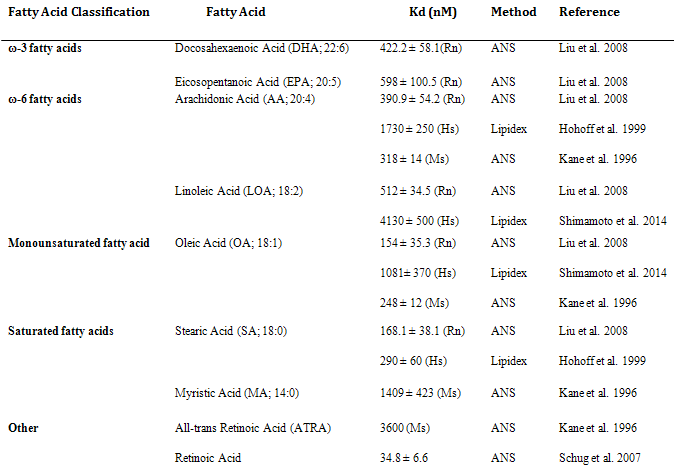
The FABP5 gene encodes a member of the fatty acid binding protein family which is also known as epidermal or cutaneous FABP. Overexpression of FABP5 is associated with a number of cancers including breast and prostate cancers, as well as psychiatric disorders and diabetes. FABP5 can bind retinoic acid as well as polyunsaturated and saturated fatty acids. Transport of FABP5 ligands such as arachidonic acid and retinoic acid to the nucleus is believed to activate the nuclear receptor peroxisome proliferator-activated receptor beta\/delta (PPARβ\/δ).
DNA/RNA
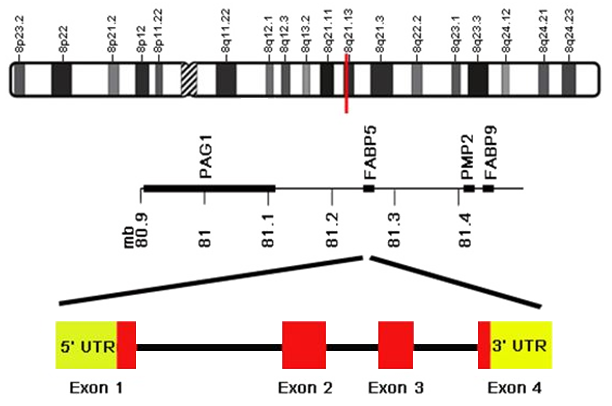
Description
Ten SNPs have been validated in the coding region of FABP5, 7 missense and 3 synonymous (not affecting the amino acid sequence). Two SNPs in the regulatory region of FABP5 have been identified in association with type 2 diabetes mellitus (T2DM): rs454550 showed significant association with T2DM in a non-Hispanic White sample, and a newly reported SNP at genomic position 82354416 was associated with T2DM in both non-Hispanic White and African sample populations (Bu et al., 2011). A missense 340G>C (Gly114Arg) SNP in the coding region of FABP5 has been linked to autism (Maekawa et al., 2010). FABP5 SNPs are described at the following site (http://www.ncbi.nlm.nih.gov/snp).
Transcription
Based on Expressed Sequence Tag (EST) data, FABP5 RNA is present in a wide range of human tissues, with highest levels in the uterus, pharynx, bone, and heart. FABP5 transcripts have been identified in normal mammalian cells, including adipocytes, tongue epithelia, lens (Wen et al., 1995), developing retina, lung and mammary gland epithelia (Zimmerman and Veerkamp, 2002), macrophages, kidney, liver, and skeletal muscle (Smathers and Petersen, 2011). Immunohistochemistry has confirmed the presence of FABP5 in endothelial cells of the placenta, heart, small intestine, and renal medulla (Masouyé et al., 1997).
Nerve growth factor (NGF) positively regulates FABP5 expression in PC12 cells (pheochromocytoma of rat adrenal medulla) through a MEK-dependent pathway (Liu et al., 2008). FABP5 is a known target of c-Myc (Coller et al., 2000), and epithelial cell adhesion molecule epCAM has been demonstrated to upregulate FABP5 expression, presumably via induction of c-Myc (Münz et al., 2005). The promoter region of FABP5 contains two cognate response elements (CREs) to transcription factor NF-κB (Kannan-Thulasiraman et al., 2010). Epidermal growth factor receptor (EGFR) activation directly increases FABP5 expression through the ERK and phosphatidylinositol-3-kinase cascades and subsequent activation of NF-κB (Kannan-Thulasiraman et al., 2010). Ligands of peroxisome proliferator-activated receptors (PPARs) have been shown to influence FABP5 expression: PPARα and PPARγ agonists upregulate FABP5 expression, whereas PPARβ activation decreases FABP5 expression (Hyder et al., 2010). In contrast to FABP7, mRNA length for FABP5 does not vary throughout the body, limiting the likelihood of post-transcriptional modification (Zimmerman and Veerkamp, 2002).
Pseudogene
Predicted pseudogenes are listed here: http://www.ncbi.nlm.nih.gov/gene/?Term=related_functional_gene_2171%5Bgroup%5D.
Proteins
Description
Expression
The expression of FABP5 during mammalian neurogenesis has been investigated using rodent models, with similar results obtained in mouse and rat. FABP5 transcripts are detected in mid-term embryonic rat brain, peaking at birth and gradually decreasing from P1 to P21, with expression virtually undetectable in the adult brain (Owada et al., 2002), except during regeneration in response to neuronal injury (Allen et al., 2001). FABP5 is critical in post-natal hippocampal dentate gyrus neurogenesis in mice (Matsumata et al., 2012).
Localisation
Function
FABP5 expression during development is associated with neurite outgrowth (Allen et al., 2001), with an important role in post-natal hippocampal dentate gyrus neurogenesis through nuclear transport of RA to activate PPARβ/δ (Matsumata et al., 2012). The hippocampi of FABP5-null mice contain excess neuronal progenitors and are deficient in mature neurons (Yu et al., 2012). FABP5 knockout mice do not have a brain phenotype, perhaps as a result of compensation by other FABP members.
FABP5 has been shown to facilitate nociception in mice through transport of adandamide (AEA), an anti-nociceptive lipid that is hydrolyzed into AA within the cell. FABP5 knockout mice accumulate AEA, which results in PPARβ/δ inactivation (Yu et al., 2014). Pharmacological inhibition of FABP5 reduces inflammatory, visceral, and neuropathic pain in mice (Kaczocha et al., 2014).
FABP5 knockout mice exhibit reduced basal transepithelial water loss (TEWL) and delayed recovery in TEWL upon disruption of the lipid barrier, suggesting that FABP5 plays a critical role in maintenance of the water permeability barrier of the skin (Owada et al., 2002).
Several cell types in the immune system, including macrophages, thymic epithelial cells, and subsets of lymphocytes express FABP5, and animal studies indicate that FABP5 plays a role in immune regulation (Grau et al., 2003; Adachi et al., 2012). Production of cytokines IL-7 and IL-18 is increased in stromal cells over-expressing FABP5 (Adachi et al., 2012), while ablation of FABP5 results in increased macrophage and neutrophil infiltration during influenza A infection (Gally et al., 2013). Lung epithelial cells initially downregulate FABP5 expression during the onset of the anti-viral response, and recover pre-infection levels upon attenuation of inflammation. Deficiency in FABP5 correlates with increased oxidative damage and lipid peroxidation over the course of infection, indicating that FABP5 is required for the prevention of tissue damage resulting from excessive inflammation (Gally et al., 2013).
Homology
Mutations
Note
Implicated in
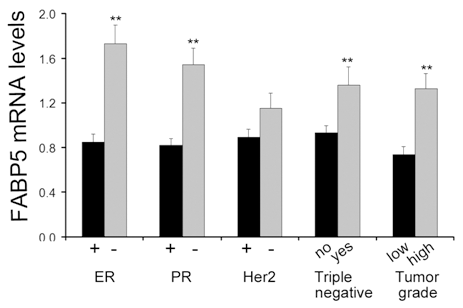
Manipulation of FABP5 levels in human breast cancer cell lines and cell lines generated from breast cancer mouse models demonstrates a correlation between FABP5 levels and response to RA treatment (Schug et al., 2007; Schug et al., 2008; Liu et al., 2011). It has been hypothesized that FABP5 confers resistance to RA therapy through competition with CRABP2 for RA, with FABP5 promoting proliferation and survival through activation of PPARβ and CRABP2 inhibiting proliferation through activation of the nuclear retinoic acid receptor (RAR) (Schug et al., 2007; Schug et al., 2008; Liu et al., 2011).
Drug-resistant adenocarcinoma of the pancreas is associated with high levels of FABP5, with FABP5 proposed to facilitate the sequestration and removal of cytotoxic drugs in these tumors (Sinha et al., 1999). In keeping with other types of cancers, a high ratio of FABP5 to CRABP2 in pancreatic ductal adenocarcinoma cell lines correlates with poor response to RA, whereas CRABP2 expression in the absence of FABP5 correlates with growth inhibition in the presence of RA (Gupta et al., 2012).
A number of RA signaling proteins, including FABP5, are highly expressed in high-grade astrocytomas, with FABP5 expression correlating with an undifferentiated tumor phenotype (Campos et al., 2011). The ratio of FABP5 to CRABP2 was found to correlate with survival time in grade IV astrocytoma patients, with a high FABP5 to CRABP2 ratio associated with shorter term survival (Barbus et al., 2011).
Article Bibliography
| Pubmed ID | Last Year | Title | Authors |
|---|---|---|---|
| 22585040 | 2012 | Fatty acid-binding protein 4 (FABP4) and FABP5 modulate cytokine production in the mouse thymic epithelial cells. | Adachi Y et al |
| 12743598 | 2003 | High-level expression of cutaneous fatty acid-binding protein in prostatic carcinomas and its effect on tumorigenicity. | Adamson J et al |
| 11746357 | 2001 | Induction and axonal localization of epithelial/epidermal fatty acid-binding protein in retinal ganglion cells are associated with axon development and regeneration. | Allen GW et al |
| 24692551 | 2014 | Structural basis for ligand regulation of the fatty acid-binding protein 5, peroxisome proliferator-activated receptor β/δ (FABP5-PPARβ/δ) signaling pathway. | Armstrong EH et al |
| 21474828 | 2011 | Macrophage Mal1 deficiency suppresses atherosclerosis in low-density lipoprotein receptor-null mice by activating peroxisome proliferator-activated receptor-γ-regulated genes. | Babaev VR et al |
| 20920650 | 2010 | Relation of plasma fatty acid binding proteins 4 and 5 with the metabolic syndrome, inflammation and coronary calcium in patients with type-2 diabetes mellitus. | Bagheri R et al |
| 21346226 | 2011 | Differential retinoic acid signaling in tumors of long- and short-term glioblastoma survivors. | Barbus S et al |
| 7931318 | 1994 | Cloning and characterization of a cDNA encoding a novel fatty acid binding protein from rat brain. | Bennett E et al |
| 21288588 | 2011 | Polymorphisms in fatty acid binding protein 5 show association with type 2 diabetes. | Bu L et al |
| 21514413 | 2011 | Aberrant expression of retinoic acid signaling molecules influences patient survival in astrocytic gliomas. | Campos B et al |
| 10737792 | 2000 | Expression analysis with oligonucleotide microarrays reveals that MYC regulates genes involved in growth, cell cycle, signaling, and adhesion. | Coller HA et al |
| 23528210 | 2013 | E-FABP induces differentiation in normal human keratinocytes and modulates the differentiation process in psoriatic keratinocytes in vitro. | Dallaglio K et al |
| 20040021 | 2010 | Fatty-acid-binding protein 5 promotes cell proliferation and invasion in oral squamous cell carcinoma. | Fang LY et al |
| 8161459 | 1994 | Brain lipid-binding protein (BLBP): a novel signaling system in the developing mammalian CNS. | Feng L et al |
| 24189640 | 2014 | The expression of C-FABP and PPARγ and their prognostic significance in prostate cancer. | Forootan FS et al |
| 15751005 | 2005 | Proteomic study of human hepatocellular carcinoma using two-dimensional difference gel electrophoresis with saturation cysteine dye. | Fujii K et al |
| 23624787 | 2013 | FABP5 deficiency enhances susceptibility to H1N1 influenza A virus-induced lung inflammation. | Gally F et al |
| 7916696 | 1993 | Identification and characterization of transcripts present at elevated levels in the undifferentiated chick retina. | Godbout R et al |
| 12640310 | 2003 | Induction of epidermal fatty acid binding protein in intravascular monocytes of renal allografts. | Grau V et al |
| 22010213 | 2012 | Molecular determinants of retinoic acid sensitivity in pancreatic cancer. | Gupta S et al |
| 12049637 | 2002 | Solution structure and backbone dynamics of human epidermal-type fatty acid-binding protein (E-FABP). | Gutiérrez-González LH et al |
| 19602232 | 2009 | Identification of potential therapeutic targets in human head & neck squamous cell carcinoma. | Han J et al |
| 21099311 | 2010 | Expression of fatty acid binding proteins 3 and 5 genes in rat pancreatic islets and INS-1E cells: regulation by fatty acids and glucose. | Hyder A et al |
| 24278421 | 2013 | Circulating levels of fatty acid-binding protein family and metabolic phenotype in the general population. | Ishimura S et al |
| 11389060 | 2001 | Human cutaneous fatty acid-binding protein induces metastasis by up-regulating the expression of vascular endothelial growth factor gene in rat Rama 37 model cells. | Jing C et al |
| 24705380 | 2014 | Inhibition of fatty acid binding proteins elevates brain anandamide levels and produces analgesia. | Kaczocha M et al |
| 20424164 | 2010 | Fatty acid-binding protein 5 and PPARbeta/delta are critical mediators of epidermal growth factor receptor-induced carcinoma cell growth. | Kannan-Thulasiraman P et al |
| 23722546 | 2013 | Genetic ablation of the fatty acid-binding protein FABP5 suppresses HER2-induced mammary tumorigenesis. | Levi L et al |
| 18513372 | 2008 | Expression of E-FABP in PC12 cells increases neurite extension during differentiation: involvement of n-3 and n-6 fatty acids. | Liu JW et al |
| 21356353 | 2011 | Association of FABP5 expression with poor survival in triple-negative breast cancer: implication for retinoic acid therapy. | Liu RZ et al |
| 20563994 | 2010 | Fatty acid binding proteins in brain development and disease. | Liu RZ et al |
| 1512466 | 1992 | Molecular cloning and expression of a novel keratinocyte protein (psoriasis-associated fatty acid-binding protein [PA-FABP]) that is highly up-regulated in psoriatic skin and that shares similarity to fatty acid-binding proteins. | Madsen P et al |
| 16054052 | 2005 | Adipocyte/macrophage fatty acid binding proteins control integrated metabolic responses in obesity and diabetes. | Maeda K et al |
| 20057506 | 2010 | Polymorphism screening of brain-expressed FABP7, 5 and 3 genes and association studies in autism and schizophrenia in Japanese subjects. | Maekawa M et al |
| 9285630 | 1997 | Endothelial cells of the human microvasculature express epidermal fatty acid-binding protein. | Masouyé I et al |
| 22581784 | 2012 | The effects of Fabp7 and Fabp5 on postnatal hippocampal neurogenesis in the mouse. | Matsumata M et al |
| 23039948 | 2012 | Epidermal-type FABP is a predictive marker of clinical response to systemic treatment and ultraviolet therapy in psoriatic skin lesions. | Miyake T et al |
| 18360704 | 2008 | Expression of cutaneous fatty acid-binding protein (C-FABP) in prostate cancer: potential prognostic marker and target for tumourigenicity-suppression. | Morgan EA et al |
| 15922867 | 2005 | The tumour-associated antigen EpCAM upregulates the fatty acid binding protein E-FABP. | Münz M et al |
| 10965032 | 2000 | Disulfide bonds in rat cutaneous fatty acid-binding protein. | Odani S et al |
| 24649302 | 2014 | Differential expression of fatty acid-binding proteins and pathological implications in the progression of tongue carcinoma. | Ohyama Y et al |
| 11874481 | 2002 | Altered water barrier function in epidermal-type fatty acid binding protein-deficient mice. | Owada Y et al |
| 19894759 | 2010 | Profiling protein markers associated with lymph node metastasis in prostate cancer by DIGE-based proteomics analysis. | Pang J et al |
| 24531463 | 2014 | Crystallographic study of FABP5 as an intracellular endocannabinoid transporter. | Sanson B et al |
| 2806261 | 1989 | Fatty-acid-binding protein from bovine brain. Amino acid sequence and some properties. | Schoentgen F et al |
| 18495924 | 2008 | Overcoming retinoic acid-resistance of mammary carcinomas by diverting retinoic acid from PPARbeta/delta to RAR. | Schug TT et al |
| 25027319 | 2014 | Functional characterization of FABP3, 5 and 7 gene variants identified in schizophrenia and autism spectrum disorder and mouse behavioral studies. | Shimamoto C et al |
| 10546833 | 1999 | Increased expression of epidermal fatty acid binding protein, cofilin, and 14-3-3-sigma (stratifin) detected by two-dimensional gel electrophoresis, mass spectrometry and microsequencing of drug-resistant human adenocarcinoma of the pancreas. | Sinha P et al |
| 21504868 | 2011 | The human fatty acid-binding protein family: evolutionary divergences and functions. | Smathers RL et al |
| 11751632 | 2001 | Critical roles of PPAR beta/delta in keratinocyte response to inflammation. | Tan NS et al |
| 7607553 | 1995 | Lens epithelial cell mRNA, II. Expression of a mRNA encoding a lipid-binding protein in rat lens epithelial cells. | Wen Y et al |
| 24644281 | 2014 | Fatty acid-binding protein 5 (FABP5) regulates cognitive function both by decreasing anandamide levels and by activating the nuclear receptor peroxisome proliferator-activated receptor β/δ (PPARβ/δ) in the brain. | Yu S et al |
| 12222958 | 2002 | New insights into the structure and function of fatty acid-binding proteins. | Zimmerman AW et al |
Other Information
Locus ID:
NCBI: 2171
MIM: 605168
HGNC: 3560
Ensembl: ENSG00000164687
Variants:
dbSNP: 2171
ClinVar: 2171
TCGA: ENSG00000164687
COSMIC: FABP5
RNA/Proteins
| Gene ID | Transcript ID | Uniprot |
|---|---|---|
| ENSG00000164687 | ENST00000297258 | Q01469 |
| ENSG00000164687 | ENST00000297258 | E7DVW5 |
| ENSG00000164687 | ENST00000396359 | I6L8B7 |
Expression (GTEx)
Pathways
Protein levels (Protein atlas)
References
| Pubmed ID | Year | Title | Citations |
|---|---|---|---|
| 38035977 | 2024 | Fatty acid binding protein 5 inhibition attenuates pronociceptive cytokine/chemokine expression and suppresses osteoarthritis pain: A comparative human and rat study. | 0 |
| 38373971 | 2024 | High levels of fatty acid-binding protein 5 excessively enhances fatty acid synthesis and proliferation of granulosa cells in polycystic ovary syndrome. | 0 |
| 38755308 | 2024 | TRIM45 facilitates NASH-progressed HCC by promoting fatty acid synthesis via catalyzing FABP5 ubiquitylation. | 0 |
| 38777142 | 2024 | Fatty acid binding to the human transport proteins FABP3, FABP4, and FABP5 from a Ligand's perspective. | 0 |
| 38900831 | 2024 | FABP5-binding lipids regulate autophagy in differentiated SH-SY5Y cells. | 0 |
| 38965292 | 2024 | Concomitant decrease of E- and A-FABP expression predicts worse survival in urothelial bladder cancer patients. | 0 |
| 38035977 | 2024 | Fatty acid binding protein 5 inhibition attenuates pronociceptive cytokine/chemokine expression and suppresses osteoarthritis pain: A comparative human and rat study. | 0 |
| 38373971 | 2024 | High levels of fatty acid-binding protein 5 excessively enhances fatty acid synthesis and proliferation of granulosa cells in polycystic ovary syndrome. | 0 |
| 38755308 | 2024 | TRIM45 facilitates NASH-progressed HCC by promoting fatty acid synthesis via catalyzing FABP5 ubiquitylation. | 0 |
| 38777142 | 2024 | Fatty acid binding to the human transport proteins FABP3, FABP4, and FABP5 from a Ligand's perspective. | 0 |
| 38900831 | 2024 | FABP5-binding lipids regulate autophagy in differentiated SH-SY5Y cells. | 0 |
| 38965292 | 2024 | Concomitant decrease of E- and A-FABP expression predicts worse survival in urothelial bladder cancer patients. | 0 |
| 36373560 | 2023 | The effect of dietary carbohydrate restriction and aerobic exercise on retinol binding protein 4 (RBP4) and fatty acid binding protein 5 (FABP5) in middle-aged men with metabolic syndrome. | 0 |
| 36481733 | 2023 | Fatty acid-binding proteins 3 and 5 are involved in the initiation of mitochondrial damage in ischemic neurons. | 6 |
| 36651331 | 2023 | Molecular mechanisms on how FABP5 inhibitors promote apoptosis-induction sensitivity of prostate cancer cells. | 4 |
Citation
Erin Balcom ; Rong-Zong Liu ; Stanley Poon ; Roseline Godbout
FABP5 (fatty acid binding protein 5 (psoriasis-associated))
Atlas Genet Cytogenet Oncol Haematol. 2014-08-01
Online version: http://atlasgeneticsoncology.org/gene/49862/fabp5-(fatty-acid-binding-protein-5-(psoriasis-associated))
