Myeloid/lymphoid neoplasms with eosinophilia and rearrangement of PDGFRA, PDGFRB, or FGFR1, or with PCM1-JAK2: Overview 2019
2019-07-01 Sheng Xiao AffiliationAbstract
Review on the group of myeloid/lymphoid neoplasms with eosinophilia and rearrangement of PDGFRA, PDGFRB, or FGFR1, or with PCM1-JAK2 defined by the WHO 2016.
Clinics and Pathology
Disease
Eosinophilia is defined as a peripheral blood eosinophil count > 0.5x10⁹/L, with > 1.5x10⁹/L of eosinophil count sometimes referred to as hypereosinophlia. Eosinophilia is a common clinical phenotype associated with various conditions including allergies, infections, medications, autoimmune disorders and malignancies. Although malignancy-related eosinophilia is rare, it is an important clinical sign of these tumors, which require early diagnosis and clinical intervention. Figure 1 summaries the initial workup of patients with eosinophilia. , (2) Myeloid/lymphoid neoplasms with PDGFRB rearrangement
, (3) Myeloid/lymphoid neoplasms with FGFR1 rearrangement
, (4) Provisional entity: Myeloid/lymphoid neoplasms with PCM1/JAK2
, (3) Myeloid/lymphoid neoplasms with FGFR1 rearrangement
, (4) Provisional entity: Myeloid/lymphoid neoplasms with PCM1/JAK2
Phenotype stem cell origin
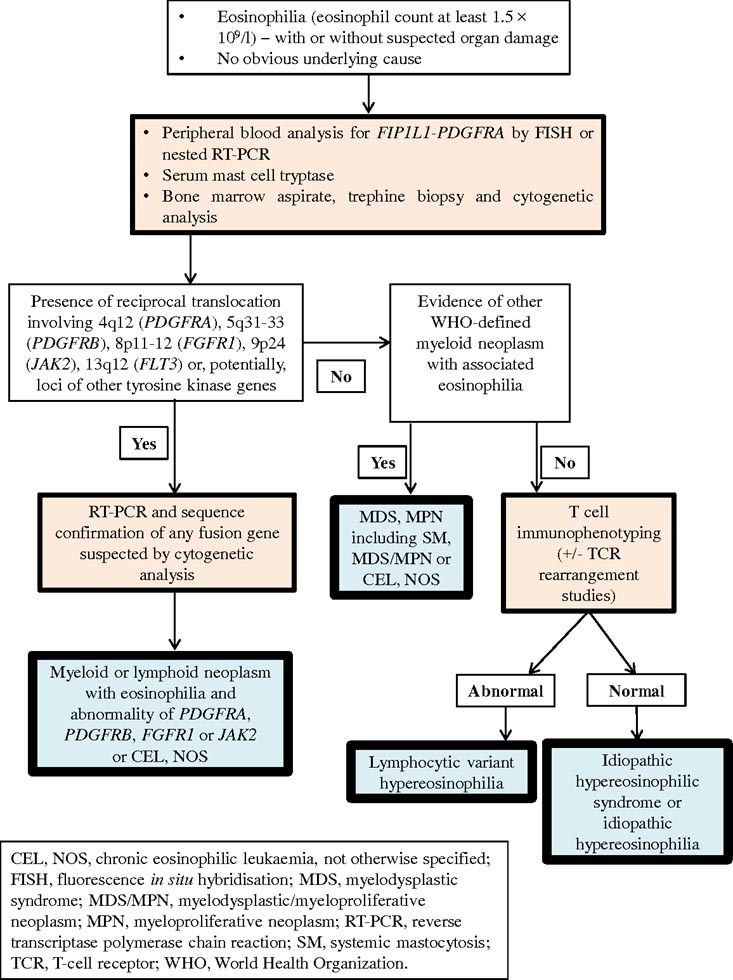
Figure 1. Testing algorithm for possible haematological neoplasms with clonal eosinophilia. Courtesy of the British Committee for Standards in Haematology
Treatment
This group of patients can be treated with tyrosine kinase inhibitors. While patients with PDGFRA or PDGFRB rearrangement are highly sensitive to Imatinib, PCM1-JAK2 patients had varying responses to JAK2 inhibitor Ruxolitinib, which can induce complete remission, although the duration is often limited. FGFR1 inhibitors have not been very successful in treating tumors with FGFR1 rearrangement. PKC412 was effective in a patient with progressive myeloproliferative disorder with (8;13) (Chen et al., 2004); however, subsequent studies with the FGFR1 inhibitor ponatinib were less successful. Novel FGFR1 inhibitors are currently being tested in clinical trials for solid tumors with FGFR1 activation. Recently a new FGFR family kinase inhibitor INCB054828 induced complete resolution of eosinophilia as well as complete hematologic, cytogenetic and molecular remission in a patient with FGFR1 rearranged MPN (Verstovsek et al., 2018).
Note
The fusion partner genes for PDGFRA, PDGFRB, or FGFR1 have been steadily accumulating and are updated below in Tables.
Table 1: PDGFRA fusion partners, chromosome locations, detection methods and references
Table 1: PDGFRA fusion partners, chromosome locations, detection methods and references
Gene name | Rearrangements | Detection methods | References | |||||||||||||||||||||||||||||||||||||||||||||||||||||||||||||||||||||||||||||||||||||||||||||||||||||||||||||||||||||||||||||||||||||||||||||||||||||||||||||||||||||||||||||||||||||||||||||||||||||||||||||||||||||||||||||
Karyotype | FISH | RT-PCR | NGS | |||||||||||||||||||||||||||||||||||||||||||||||||||||||||||||||||||||||||||||||||||||||||||||||||||||||||||||||||||||||||||||||||||||||||||||||||||||||||||||||||||||||||||||||||||||||||||||||||||||||||||||||||||||||||||||
Genes Involved and ProteinsArticle Bibliography
CitationSheng Xiao Myeloid/lymphoid neoplasms with eosinophilia and rearrangement of PDGFRA, PDGFRB, or FGFR1, or with PCM1-JAK2: Overview 2019 Atlas Genet Cytogenet Oncol Haematol. 2019-07-01 | ||||||||||||||||||||||||||||||||||||||||||||||||||||||||||||||||||||||||||||||||||||||||||||||||||||||||||||||||||||||||||||||||||||||||||||||||||||||||||||||||||||||||||||||||||||||||||||||||||||||||||||||||||||||||||||||||
