Fallopian tube tumors: an overview
2013-03-01 Roland Gregor Stein , Joachim Diessner , Arnd Hönig , Jörg Wischhusen , Johannes Dietl Affiliation1.Wurzburg University Hospital, Department of Obstetrics, Gynecology, Josef-Schneider-Str. 4, 97080 Wurzburg, Germany
Summary
Note
This article shall give an overview of different tumors occurring in the fallopian tube. Though being a very rare location of primary or exclusive tumor manifestation, the fallopian tube is now receiving increased attention in gynecological oncology since considerable evidence suggests that it represents the site-of-origin of many (if not most) serous pelvic carcinomas (Folkins et al., 2009; Dietl and Wischhusen, 2011; Dietl et al., 2011; Seidman et al., 2011; Vang et al., 2013).
Disease definition
A tumor is classified as primary fallopian tube tumor when it is either restricted to this anatomical structure, or when the fallopian tube is most affected whereas co-locations such as ovary and uterus show lesser involvement or a different histology (Alvarado-Cabrero et al., 2003; Folkins et al., 2009). As recent data indicate that the fallopian tube is the site-of-origin of serous pelvic carcinomas (Folkins et al., 2009; Dietl and Wischhusen, 2011; Dietl et al., 2011; Seidman et al., 2011; Vang et al., 2013), histological assessment of the respective involvement of ovaries and fallopian tubes may not be sufficient to distinguish between advanced stages of fallopian tube and ovarian carcinomas (Kosary and Trimble, 2002). Inevitably, the considerable overlap between ovarian and fallopian tube carcinomas warrants some coverage of ovarian cancer in this context. Nevertheless, as ovarian carcinomas constitute a well-accepted clinical entity (irrespective of their potential origin from the fallopian tube) they shall largely be dealt with in a separate place.
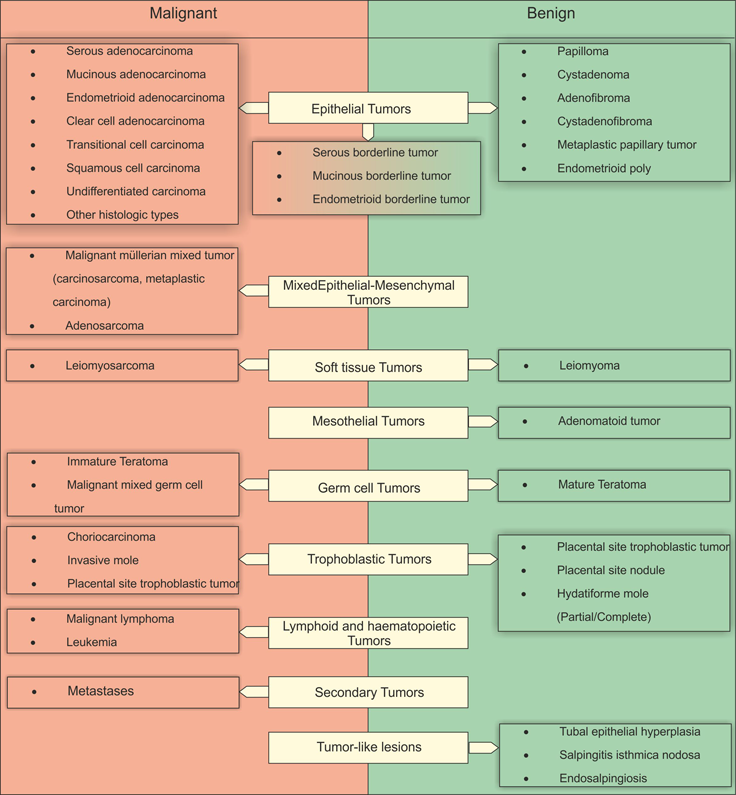
Classification
Note
Classification
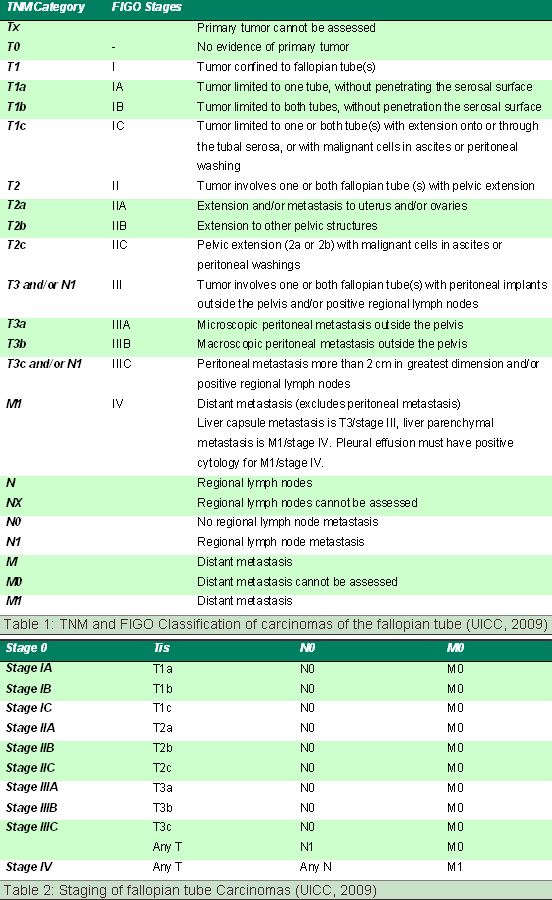
Malignant tumors of the fallopian tube are classified according to the "Union International contre le cancer" (UICC) and the "Fédération internationale de Gynécologie et dObstétrique" (FIGO, Table 1 and 2). The TNM classification is based on clinical and pathological findings whereas the FIGO classification requires a surgical staging (UICC, 2009; AJCC, 2010).
According to the TNM classification, the carcinomas of the fallopian tube approximate different stages (Table 2).
Clinics and Pathology
Etiology
Epidemiology
Clinics
Patients with benign tumors of the fallopian tube are often asymptomatic or report local pain. The tumors are incidentally found during operations for other indications (Etoh et al., 2012). Benign tumors can abet tubal torsions (Alvarado-Cabrero et al., 2003). Especially papillomas can obstruct the fallopian tube (Gisser, 1986). Obstruction of the fallopian tube can cause infertility (Heller et al., 1991; Heatley, 2001).
Primary fallopian tube carcinomas most frequently occur between the fourth and sixth decade of life with a mean patient age of 55 years (Boutselis and Thompson, 1971; Sedlis, 1978). Stewart et al. found an incidence rate of 0.41 per 100000 women with highest incidence rates in women aged 65-69 in a study including 3051 cases of primary fallopian tube carcinomas (Stewart et al., 2007). Symptoms are very diffuse, the Latzko triad of symptoms - intermittent profuse serosanginous vaginal discharge, colicky pain relieved by discharge, abdominal or pelvic mass - is reported in only 15% of all patients (Ajithkumar et al., 2005). 5% of the patients show a hydrops tubae profluens. Fallopian tube carcinomas are diagnosed at earlier stages than epithelial ovarian cancers (Peters et al., 1988; Rose et al., 1990; Gadducci et al., 2001; Pectasides et al., 2006). 10-36% show positive PAP smear tests with intermittent detection of abnormal, suspicious or poorly differentiated cells or glands (Ajithkumar et al., 2005).
In 80% of the advanced stages, peritoneal metastases occur (Levite et al., 2001). Also haematogenous or transluminal metastases were found (Yoonessi, 1979). Bilateral tubal involvement has been described in 10-27% of fallopian tube carcinomas (Schiller and Silverberg, 1971; Hirai et al., 1989; Rose et al., 1990; Alvarado-Cabrero et al., 1999; Rosen et al., 1999; Gadducci et al., 2001).
The higher rate of lymph node metastases in comparison to ovarian cancer should be considered, as staging of fallopian tube carcinomas is surgical. Compared to epithelial ovarian cancer, fallopian tube carcinomas show a higher rate of retroperitoneal and distant metastases (Yoonessi, 1979; McMurray et al., 1986; Maxson et al., 1987; Asmussen et al., 1988; Peters et al., 1988; Gadducci et al., 2001). Para-aortic lymph node metastases were detected in 33% of patients (Tamimi and Figge, 1981). Another study revealed 42-59% lymph node metastases in routine lymphonodectomy with equal involvement of para-aortic and pelvic lymph nodes (Ajithkumar et al., 2005). If routine lymphonodectomy is not performed, a surgical understaging may occur. Overall, 20-25% of patients with fallopian tube carcinomas showed FIGO stage I, 20% stage II, 45-50% stage III and 5-10% stage IV (Ajithkumar et al., 2005).
Ectopic β-HCG-production was reported in two cases of serous or undifferentiated fallopian tube carcinomas (Carapeto et al., 1978; Alvarado-Cabrero et al., 1999). These tumors contained syncytiotrophoblast-like cells. Case reports about renin-producing or alpha fetoprotein (AFP)-producing tumors have been published (Aoyama al., 1996; Zabernigg et al., 1997).
Fallopian tube carcinomas show frequent expression of CA-125 (Puls et al., 1993). Hence, >80% of the patients show elevated CA-125 serum levels (McMurray et al., 1986; Ajithkumar et al., 2005) that correlate significantly with disease-free and overall survival (Rosen et al., 1999; Ajithkumar et al., 2005). Adenomyomas can also cause elevated CA-125 levels and small volumes of serous ascites. With some limitations, CA-125 may thus be considered as suitable tumor marker for use in cancers of the fallopian tube (Baekelandt et al., 2000). The average lead time of increasing CA-125 levels versus clinical or radiological diagnosis of recurrence is three months with a range from 0.5 to 7 months (Ajithkumar et al., 2005).
Fallopian tube carcinomas can cause paraneoplastic symptoms. For example, a paraneoplastic cerebellar degeneration (PCD) with Anti-Yo antibodies is associated with fallopian tube carcinomas (Levite et al., 2001; Tanaka et al., 2005; Selby et al., 2011).
Pathology
Benign tumors are often solid and clearly delimited. They arise at the intraluminal or serosal surface of the fallopian tube.
Papillomas show fibrovascular stacks with epithelial lining. They can obstruct the fallopian tube (Gisser, 1986).
Adenofibromas and cystadenofibromas occur between the third and eighth decade. They remain asymptomatic and are diagnosed incidentally during other operations (Zheng et al., 1996). Macroscopically, these tumors grow to 0.5-3cm and can be intraluminal or at the serosa surface as well as at the fimbriae. They show a stromal and a papillary structured fraction (Alvarado-Cabrero et al., 2003). In fallopian tubes resected post partum, few metaplastic papillary tumors were detected (Saffos et al., 1980; Keeney and Thrasher, 1988; Bartnik et al., 1989). These tumors consist of papillae lined by epithelium displaying patterns of a serous borderline tumor. The cells can be positive for intracellular mucin (Alvarado-Cabrero et al., 2003).
Adenomyomas consist of bundle-like growing leiomyoma cells and sometimes endometrial tissue remnants.
Endometrioid polyps occur in the interstitial part of the tube attached to the intratubal epithelium and sometimes cause infertility (Heller et al., 1991; Heatley, 2001).
Cystadenofibromas can show vimentin-cytokeratin-coexpression. Further, diffuse apical epithelial membrane antigen (EMA) immunoreactivity occurs. Gürbüz et al. suggest that tumors are derived from embryonic remnants of the Müllerian duct (Gürbüz and Ozkara, 2003).
Borderline tumors of the fallopian tube occur very rarely and can show serous, mucinous or endometrioid differentiations. Histological features resemble those in borderline tumors of the ovary (Alvarado-Cabrero et al., 1997). Mucinous tumors of the fallopian tube can be associated with pseudomyxoma peritonei (McCarthy and Aga, 1988), other mucinous lesions or Peutz-Jeghers-Syndrome (Seidman, 1994). There are also reports about adenofibroma with borderline malignancy. The prognosis seems to be favorable (Zheng et al., 1996; Alvarado-Cabrero et al., 1997).
Precursor lesions: Intraepithelial carcinoma
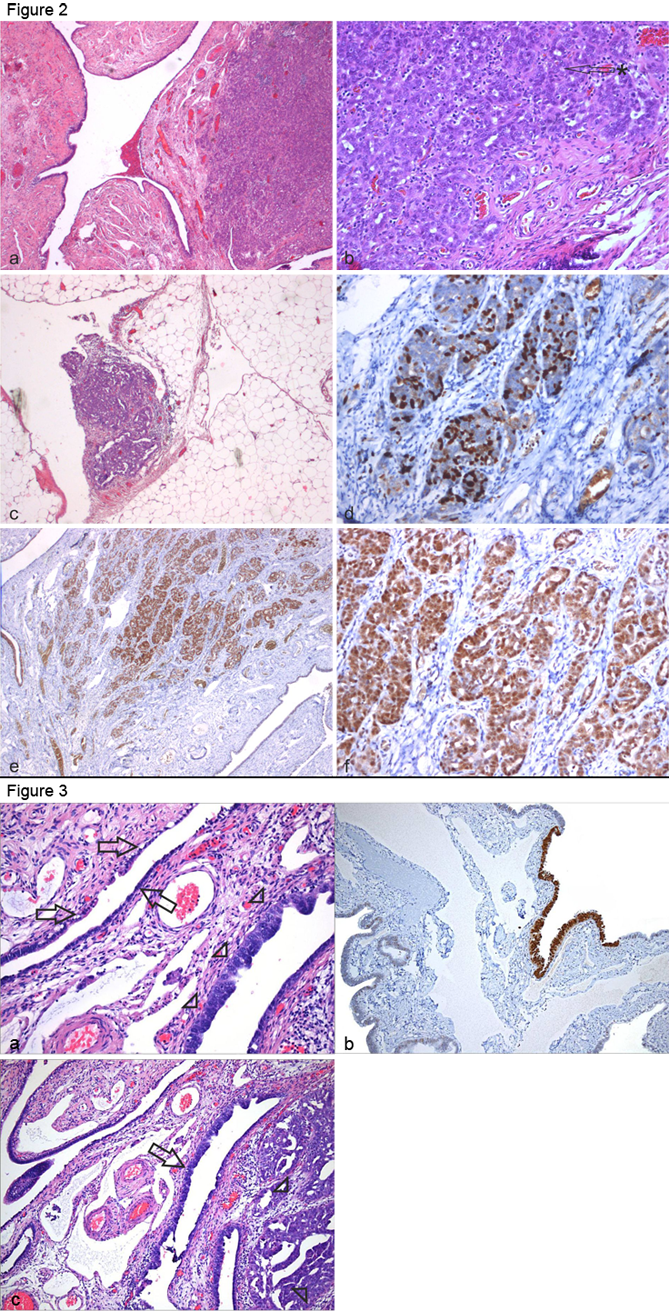
Non-invasive carcinomas of the fallopian tube were formerly known as "carcinoma in situ". This term should be abandoned as it implies restricted local tumor formation. Intraepithelial carcinoma cells can, however, form implants on the ovarian surface and the peritoneum. Recent publications highlight the fallopian tube as likely site-of-origin of primary pelvic serous carcinomas detected in the fallopian tube, the ovary or the peritoneum (Folkins et al., 2009; Dietl and Wischhusen, 2011; Dietl et al., 2011; Seidman et al., 2011; Vang et al., 2013). Serous tubal intraepithelial carcinomas (STIC) as well as endometrioid intraepithelial carcinomas (EIC) are thus considered as precursor lesions (Ambros et al., 1995; Carlson et al., 2008). This hypothesis is supported by findings from Colgan et al. who found a high frequency of pre-cancerous lesions in fallopian tubes from patients with BRCA gene mutations (Colgan, 2003). Lee and colleagues could detect mutant p53-signatures predominantly in epithelial cells at the fimbriated ends of fallopian tubes from patients with BRCA1 and 2 mutations. Moreover, the same signatures were also found in corresponding ovarian cancer tissues (Lee et al., 2007). Interestingly, Li-Fraumeni-Syndrome - which is associated with p53 mutations and generally increased risk for serous carcinomas - does not correlate with a higher incidence of PPSC, especially fallopian tube carcinomas. Thus, it seems that other mutations e.g. those affecting BRCA are required to drive PPSC development (Xian et al., 2010). Kim and colleagues could prove by histology that serous epithelial cancers develop in the fallopian tubes of Dicer-PTEN-double-knockout mice. By histology and pathological behavior these tumors showed characteristic traits of serous epithelial ovarian cancer, even though oophorectomy was not protective. Instead, tumor development could be prevented by salpingectomy (Kim et al., 2012). Furthermore, in prophylactic salpingo-oophorectomy specimen, occult carcinomas are more frequent in the fallopian tube than the ovary (Vang, 2011). While carrying the potential of invasiveness, the STIC cells grow sparing the tubal stroma. Figure 3 focusses on the STIC with its distinct cellular alterations such as polymorphic nuclei, multilayer epithelium and atypic mitoses. Figure 3d also shows an invasive fallopian tube carcinoma with an adjoining STIC.
In clinical studies, a frequent coexistence of pelvic serous carcinoma and tubal intraepithelial carcinomas was found in unselected (Przybycin et al., 2010) and BRCA mutated patients (Kindelberger et al., 2007). Shortening of telomeres is another early event in PPSC development and already detectable in the STIC (Kuhn et al., 2010).
As the post-reproductive fallopian tube lacks physiological functions and also causes complications such as hydrosalpinx, Dietl et al. suggested combined hysterosalpingectomy instead of simple hystercectomy or salpingectomy as a recommendable method for sterilization in clinical routine (Dietl and Wischhusen, 2011; Dietl et al., 2011).
Invasive carcinoma
All tumor subtypes in the ovaries are also known in the fallopian tube, with serous carcinomas being most frequent. In a series of 105 fallopian tube carcinomas Alvarado-Cabrero et al. found the following distribution of different histologies: About 50% were serous, 25% endometrioid, 20% transitional cell or undifferentiated carcinomas and 5% were of other subtypes (Alvarado-Cabrero et al., 1999).
Serous adenocarcinomas are generally invasive with 50% G3 tumors (Alvarado-Cabrero et al., 1999). Sometimes immune cell invasion disguises the tumor as salpingitis (Cheung et al., 1994).
Mucinous adenocarcinomas, a very rare entity, are often associated with other mucinous carcinomas of the female genital tract or the appendix (Seidman, 1994).
Endometrioid adenocarcinomas are very often non-invasive or superficially invasive and show a favorable prognosis (Navani et al., 1996). A part of those tumors displays characteristics of the wolffian adnexal tumor (Daya et al., 1992; Navani et al., 1996).
Clear cell adenocarcinomas account for 2-10% of all fallopian tube carcinomas (Voet and Lifshitz, 1982; Hellstrom et al., 1994; Alvarado-Cabrero et al., 1999).
Transitional cell carcinomas are rare in the genital tract. Still, the frequency between 11 and 43% of all fallopian tube carcinomas makes it an important locus-specific entity (Uehira et al., 1993; Alvarado-Cabrerog et al., 1999).
Undifferentiated carcinomas lack any patterns of squamous cells or glandular cells but instead contain multinuclear giant cells (Alvarado-Cabrero et al., 1999).
Lacy et al. reported immunohistochemical positivity for c-erbB-2 (HER-2/neu) overexpression in 26% and p53 positivity in 61% of all cases in a cohort of 43 patients with fallopian tube carcinoma. There was not significant correlation with survival (Lacy et al., 1995). Ovarian cancer in comparison also shows c-erbB-2 (HER-2/neu) positivity in about 29% of all cases (Lanitis et al., 2012). Others, in contrast, described a correlation between p53 immunohistochemical positivity and shorter survival (Zheng et al., 1997; Rosen et al., 2000). FIGO stages, however, did not correlate with survival in this same cohort of 63 patients (Rosen et al., 2000). Zheng et al. investigated the correlating immunohistochemistry and polymerase chain reaction-single-strand conformation polymorphism (PCR-SSCP) for p53 in 52 cases of fallopian tube carcinoma and 10 normal fallopian tubes and found that p53 alterations already occur at early stages suggesting a role in early tumor progression (Zheng et al., 1997). Chung and colleagues found that survival neither correlated with immunohistochemical p53 positivity nor with cMyc overexpression (which occured in 61%). However, the statistical power of this study was limited by the small cohort of 18 patients (Chung et al., 2000). Hence, it did not challenge larger studies which proposed that p53 might have an important role especially in familial BRCA-associated cases of fallopian tube carcinomas. Figure 2 shows different pathohistological aspects of a serous adenocarcinoma of the fallopian tube.
Mixed epithelial-mesenchymal tumors
The least common site for malignant Müllerian mixed tumor (carcinosarcoma, metaplastic carcinoma) is the fallopian tube accounting for only 4% of all cases. The prognosis of these mostly postmenopausal patients is poor (Hanjani et al., 1980).
In the literature, only one adenosarcoma has been described in the fallopian tube (Gollard et al., 1995).
Soft tissue tumors
Leiomyosarcomas are very rare as only 37 cases have been reported in 100 years (Jacoby et al., 1993).
Mesothelial tumors
Adenomatoid tumors mostly occur in middle-aged or elderly women (Inoue et al., 2001). In most cases, they remain asymptomatic but can also occlude the lumen. Often, they show gland-like structures with a lining of flat to cuboidal cells (Stephenson and Mills, 1986).
Germ cell tumors
Until 2003, 50 cases of mature or immature teratoma were reported (Alvarado-Cabrero et al., 2003). For malignant mixed germ cell tumors of the fallopian tube, only one single case was published (Li et al., 1999).
Trophoblastic tumors
Only about 4% of choriocarcinomas occur in the fallopian tube (Dekel et al., 1986). About 40% of these go along with adnexal tumors (Ober and Maier, 1981).
In the fallopian tube, hydatiform moles can histologically correspond to a complete, partial or invasive mole (Alvarado-Cabrero et al., 2003).
Placental site nodules as non-neoplastic proliferation of intermediate trophoblast can occur (Alvarado-Cabrero et al., 2003). Intermediate trophoblast tumors can be either benign or malignant (Kurman et al., 1976). Only one case of malignant placental site trophoblastic tumor has been reported in the fallopian tube (Su et al., 1999).
Lymphoid and haematopoietic tumors
Malignant lymphoma and leukemia mostly show an involvement of the ipsilateral ovary (Osborne and Robboy, 1983). 25% of patients with ovary lymphomas had a Burkitt-lymphoma or Burkitt-like lymphoma or a diffuse large-cell lymphoma.
Metastatic tumors
For 89% of secondary tumors in the fallopian tube, the primary tumor was assigned to be of ovarian origin (Woodruff and Julian, 1969). Considering the ongoing paradigm shift which proposes that serous ovarian carcinomas likely originate from the fallopian tube, these figures have to be reconsidered. Many of these tumors may have originated from the fimbriated end of the fallopian tube with a secondary manifestation in the ovary.
Treatment
Radiotherapy: Although radiotherapy for fallopian tube carcinomas could be considered, it is inferior to adjuvant platin compounds containing chemotherapy. Neither irradiation nor intraperitoneal instillation of radioisotopes could prevent relapse (Asmussen et al., 1988). A second look operation with pathological complete remission (pCR) is a predictor for longer survival. 50% of patients with surgical complete remission will ultimately relapse. Thus, second-look operations are not generally beneficial and hence no routine treatment (Takeshima and Hasumi, 2000).
Adjuvant chemotherapy: Baekeland et al. found a 70% response rate to adjuvant platinum-containing chemotherapy in platinum-naive patients with median response duration of 12.5 months. They further suggested to refrain from postoperative radiation therapy due to its low efficacy and high rate of complications (Baekelandt et al., 2000). Kosary et al. gave the general recommendation to treat women with fallopian tube carcinomas like women with epithelial ovarian cancer, i.e. by surgical staging and debulking followed by adjuvant chemotherapy (Kosary and Trimble, 2002). In addition to platinum-based chemotherapy, also paclitaxel is becoming more and more important in the treatment of advanced fallopian tube tumors (Takeshima and Hasumi, 2000). Patients with early stages as IA and IB might not need adjuvant chemotherapy. For all higher stages, adjuvant combined chemotherapy is requested. Two randomized controlled trials (International Collaborative Ovarian Neoplasm 1 (ICON1) and Adjuvant Chemotherapy In Ovarian Neoplasm (ACTION)) compared platinum based adjuvant chemotherapy and mere observation after early stage ovarian cancer surgery and reported 5 year overall survival rates of 74% without and 82% with adjuvant platinum based chemotherapy (Trimbos et al., 2003). This could hint at a survival benefit being associated with adjuvant chemotherapy also for early stage fallopian tube carcinomas. Cisplatin based chemotherapy yielded response rates between 53 and 92 % (Deppe et al., 1980; Raju et al., 1981; McMurray et al., 1986; Maxson et al., 1987; Peters et al., 1988; King et al., 1989; Muntz et al., 1989; Barakat et al., 1993; Pectasides et al., 1994). Several studies also included Paclitaxel in the first line therapy (McMurray et al., 1986; Maxson et al., 1987; Muntz et al., 1991; Ben-Hur et al., 1999; Gemignani et al., 2001). For relapse therapy, data from epithelial ovarian cancer in platinum-pretreated patients also highlights the role of Paclitaxel (Tresukosol et al., 1995; Baekelandt et al., 2000; Ichikawa et al., 2000; Gemignani et al., 2001).
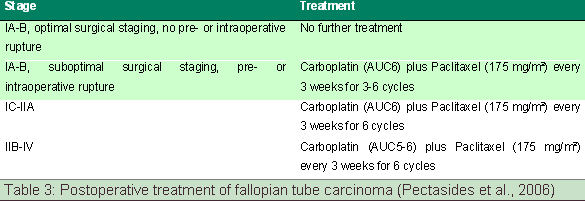
After review of the literature and according to the U.S. guidelines, Pectasides and colleagues suggested an adjuvant standard treatment shown in table 3 (Pectasides et al., 2006).
For the treatment of relapse, platinum-sensitive tumors (relapse after more than 6 months) receive a reinduction with platinum with or without Paclitaxel, whereas patients with platinum-refractory (relapse during therapy) or platinum-resistant tumors (relapse
Prognosis
Fallopian tube carcinoma patients show an overall survival of 30-50% which is slightly better than the reported 25-40% for epithelial ovarian cancer (Momtazee and Kempson, 1968; Baekelandt et al., 1993; Barakat et al., 1993; Woolas et al., 1994; Alvarado-Cabrero et al., 1999; Piura and Rabinovich, 2000). The general 5-year survival rate is about 65% (Sedlis, 1978; Deppe et al., 1980; Inal et al., 2004). Kosary and colleagues found in a cohort of 416 women with fallopian tube carcinoma 5 year-survival rates of 95% for stage I (n=102), 75% for stage II (n=29), 69% for stage III (n= 52) and 45% for stage IV (n=151) (Kosary and Trimble, 2002).
Genetics
Note
Thus, genetic evaluation should become part of the diagnostics for patients with fallopian tube carcinomas. In risk patients, prophylactic oophorectomy should be accompanied by salpingectomy (Aziz et al., 2001). And whether salpingectomy without oophorectomy is sufficient treatment will be analyzed in the clinical trials yet to come.
Jongsma and colleagues reported frequent loss of heterozygosity (LOH) on chromosome 13 in BRCA1-associated cases of fallopian tube carcinomas indicating that these areas may contain putative tumor suppressor genes (Jongsma et al., 2002).
Different authors (see above) found that immunohistochemical or PCR-based positivity for p53 alterations correlates with shorter survival (Hellstrom et al., 1994; Zheng et al., 1997; Rosen et al., 2000).
Genes Involved and Proteins
Gene name
Location
Dna rna description
Protein description
There are five different protein isoforms. Isoform 1 is the biggest with 1863 amino acids and 220 kDa. The highest expression of BRCA1 is found in the ovaries, thymus and testes.
Gene name
Location
Dna rna description
Protein description
Gene name
Location
Note
Dna rna description
Protein description
Gene name
Location
Note
Dna rna description
Protein description
Based on a cohort of 43 patients with fallopian tube carcinoma, Lacy et al. reported immunohistochemical positivity for c-erbB-2 (HER-2/neu) overexpression in 26% and p53 positivity in 61% of all cases. They could not find any correlation with survival (Lacy et al., 1995).
Gene name
Location
Note
Dna rna description
Protein description
Examining a cohort of 43 patients with fallopian tube carcinoma, Lacy et al. found immunohistochemical positivity for c-erbB-2 (HER-2/neu) overexpression in 26% and p53 positivity in 61% of these tumors, but no significant correlation with survival (Lacy et al., 1995). Others, however, described p53 immunohistochemical positivity to be associated with shorter survival (Zheng et al., 1997; Rosen et al., 2000) whereas FIGO stages were not predictive for the outcome in this cohort of 63 patients (Rosen et al., 2000). Using 52 cases of fallopian tube carcinoma and 10 normal fallopian tubes, Zheng et al. investigated the p53 status based on immunohistochemistry and polymerase chain reaction-single-strand conformation polymorphisms (PCR-SSCP) and suggested that p53 alterations play a role in early tumor progression as they are not restricted to late stages (Zheng et al., 1997). Chung and colleagues found that survival neither correlated with immunohistochemical p53 positivity nor with cMyc overexpression (which occured in 61%). However, the statistical power of this study was limited by the small cohort of 18 patients (Chung et al., 2000).
Gene name
Location
Dna rna description
Protein description
To be Noted
Note
Article Bibliography
| Pubmed ID | Last Year | Title | Authors |
|---|---|---|---|
| 22529265 | 2012 | OCEANS: a randomized, double-blind, placebo-controlled phase III trial of chemotherapy with or without bevacizumab in patients with platinum-sensitive recurrent epithelial ovarian, primary peritoneal, or fallopian tube cancer. | Aghajanian C et al |
| 15795632 | 2005 | Primary fallopian tube carcinoma. | Ajithkumar TV et al |
| 7590702 | 1995 | Endometrial intraepithelial carcinoma: a distinctive lesion specifically associated with tumors displaying serous differentiation. | Ambros RA et al |
| 9288765 | 1997 | Fine mapping of a genetic locus for Peutz-Jeghers syndrome on chromosome 19p. | Amos CI et al |
| 8910638 | 1996 | alpha-Fetoprotein-producing (hepatoid) carcinoma of the fallopian tube. | Aoyama T et al |
| 3371742 | 1988 | Primary adenocarcinoma localized to the fallopian tubes: report on 33 cases. | Asmussen M et al |
| 11263928 | 2001 | A genetic epidemiological study of carcinoma of the fallopian tube. | Aziz S et al |
| 11066048 | 2000 | Carcinoma of the fallopian tube. | Baekelandt M et al |
| 8414320 | 1993 | Second-look laparotomy in carcinoma of the fallopian tube. | Barakat RR et al |
| 2469407 | 1989 | Metaplastic papillary tumor of the fallopian tube. Case report, immunohistochemical features, and review of the literature. | Bartnik J et al |
| 9779711 | 1998 | Topotecan for the treatment of advanced epithelial ovarian cancer: an open-label phase II study in patients treated after prior chemotherapy that contained cisplatin or carboplatin and paclitaxel. | Bookman MA et al |
| 5096363 | 1971 | Clinical aspects of primary carcinoma of the Fallopian tube: a clinical study of 14 cases. | Boutselis JG et al |
| 33091 | 1978 | Ectopic pregnancy coexisting with a primary carcinoma of the Fallopian tube: a case report. | Carapeto R et al |
| 18757330 | 2008 | Serous tubal intraepithelial carcinoma: its potential role in primary peritoneal serous carcinoma and serous cancer prevention. | Carlson JW et al |
| 7943533 | 1994 | Pseudocarcinomatous hyperplasia of the fallopian tube associated with salpingitis. A report of 14 cases. | Cheung AN et al |
| 10629373 | 2000 | Overexpression of p53 and HER-2/neu and c-myc in primary fallopian tube carcinoma. | Chung TK et al |
| 12649664 | 2003 | Challenges in the early diagnosis and staging of Fallopian-tube carcinomas associated with BRCA mutations. | Colgan TJ et al |
| 1582746 | 1992 | Endometrioid carcinoma of the fallopian tube resembling an adnexal tumor of probable wolffian origin: a report of six cases. | Daya D et al |
| 3960415 | 1986 | Primary choriocarcinoma of the fallopian tube. Report of a case with survival and postoperative delivery. Review of the literature. | Dekel A et al |
| 11293157 | 2001 | Clues to the pathogenesis of fallopian tube carcinoma: a morphological and immunohistochemical case control study. | Demopoulos RI et al |
| 7191548 | 1980 | Combination chemotherapy for advanced carcinoma of the fallopian tube. | Deppe G et al |
| 21849300 | 2011 | The post-reproductive Fallopian tube: better removed? | Dietl J et al |
| 22380532 | 2012 | Primary adenomyoma of the fallopian tube mimicking tubal malignant tumor. | Etoh T et al |
| 19237187 | 2009 | Precursors to pelvic serous carcinoma and their clinical implications. | Folkins AK et al |
| 8533757 | 1995 | Novel inherited mutations and variable expressivity of BRCA1 alleles, including the founder mutation 185delAG in Ashkenazi Jewish families. | Friedman LS et al |
| 11330942 | 2001 | Analysis of treatment failures and survival of patients with fallopian tube carcinoma: a cooperation task force (CTF) study. | Gadducci A et al |
| 11136563 | 2001 | Paclitaxel-based chemotherapy in carcinoma of the fallopian tube. | Gemignani ML et al |
| 3587280 | 1987 | Increased risk of cancer in the Peutz-Jeghers syndrome. | Giardiello FM et al |
| 3721698 | 1986 | Obstructing fallopian tube papilloma. | Gisser SD et al |
| 8522267 | 1995 | Two unusual presentations of müllerian adenosarcoma: case reports, literature review, and treatment considerations. | Gollard R et al |
| 10963637 | 2000 | Phase II study of liposomal doxorubicin in platinum- and paclitaxel-refractory epithelial ovarian cancer. | Gordon AN et al |
| 12778000 | 2003 | Immunohistochemical profile of serous papillary cystadenofibroma of the fallopian tube: a clue of paramesonephritic origin. | Gürbüz Y et al |
| 6247252 | 1980 | Malignant mixed Mullerian tumor of the fallopian tube. Report of a case and review of literature. | Hanjani P et al |
| 10749023 | 2000 | Clear cell carcinoma of the fimbria of the fallopian tube in a BRCA1 carrier undergoing prophylactic surgery. | Hartley A et al |
| 11827429 | 2001 | Polyp of the fallopian tube. | Heatley MK et al |
| 2008008 | 1991 | Adenomatous polyp of the fallopian tube. A case report. | Heller DS et al |
| 11578443 | 1994 | DNA-ploidy and mutant p53 overexpression in primary fallopian tube cancer. | Hellström AC et al |
| 195869 | 1977 | Primary carcinoma of the fallopian tube: difficulties of diagnosis and treatment. | Henderson SR et al |
| 2737521 | 1989 | Clinical study of primary carcinoma of the fallopian tube: experience with 15 cases. | Hirai Y et al |
| 9626225 | 1998 | Randomized phase II study of two schedules of topotecan in previously treated patients with ovarian cancer: a National Cancer Institute of Canada Clinical Trials Group study. | Hoskins P et al |
| 10739714 | 2000 | Metachronous carcinoma of the vulva and fallopian tube. | Ichikawa Y et al |
| 15304152 | 2004 | Fallopian tube malignancies: experience of Social Security Agency Aegean Maternity Hospital. | Inal MM et al |
| 11328538 | 2001 | Tubal ectopic pregnancy associated with an adenomatoid tumor. | Inoue T et al |
| 8112653 | 1993 | Primary leiomyosarcoma of the fallopian tube. | Jacoby AF et al |
| 15398245 | 1949 | Generalized intestinal polyposis and melanin spots of the oral mucosa, lips and digits; a syndrome of diagnostic significance. | JEGHERS H et al |
| 12354934 | 2002 | Molecular evidence for putative tumour suppressor genes on chromosome 13q specific to BRCA1 related ovarian and fallopian tube cancer. | Jongsma AP et al |
| 3350619 | 1988 | Metaplastic papillary tumor of the fallopian tube: a case report with ultrastructure. | Keeney GL et al |
| 22331912 | 2012 | High-grade serous ovarian cancer arises from fallopian tube in a mouse model. | Kim J et al |
| 17255760 | 2007 | Intraepithelial carcinoma of the fimbria and pelvic serous carcinoma: Evidence for a causal relationship. | Kindelberger DW et al |
| 2722062 | 1989 | Fallopian tube carcinoma: a clinicopathological study of 17 cases. | King A et al |
| 11825669 | 2002 | Tumor progression, histologic grading and DNA-ploidy as predictive factors of lymphogenous metastasis in primary carcinoma of the Fallopian tube. | Klein M et al |
| 10660090 | 1999 | Lymphadenectomy in primary carcinoma of the Fallopian tube. | Klein M et al |
| 12144827 | 2002 | Treatment and survival for women with Fallopian tube carcinoma: a population-based study. | Kosary C et al |
| 20431479 | 2010 | Shortened telomeres in serous tubal intraepithelial carcinoma: an early event in ovarian high-grade serous carcinogenesis. | Kuhn E et al |
| 182351 | 1976 | Trophoblastic pseudotumor of the uterus: an exaggerated form of "syncytial endometritis" simulating a malignant tumor. | Kurman RJ et al |
| 7773939 | 1995 | c-erbB-2 and p53 expression in fallopian tube carcinoma. | Lacy MQ et al |
| 23189165 | 2012 | Primary human ovarian epithelial cancer cells broadly express HER2 at immunologically-detectable levels. | Lanitis E et al |
| 17117391 | 2007 | A candidate precursor to serous carcinoma that originates in the distal fallopian tube. | Lee Y et al |
| 11328418 | 2001 | Paraneoplastic cerebellar degeneration heralding fallopian tube adenocarcinoma. | Levite R et al |
| 10202679 | 1999 | Mixed malignant germ cell tumor of the fallopian tube. | Li S et al |
| 3557196 | 1987 | Primary carcinoma of the fallopian tube: evidence for activity of cisplatin combination therapy. | Maxson WZ et al |
| 3169690 | 1988 | A fallopian tube lesion of borderline malignancy associated with pseudo-myxoma peritonei. | McCarthy JH et al |
| 21876548 | 2012 | Regulation of LKB1 expression by sex hormones in adipocytes. | McInnes KJ et al |
| 3756822 | 1986 | Carcinoma of the fallopian tube. Management and sites of failure. | McMurray EH et al |
| 5742479 | 1968 | Primary adenocarcinoma of the fallopian tube. | Momtazee S et al |
| 9060537 | 1997 | Phase II study of liposomal doxorubicin in refractory ovarian cancer: antitumor activity and toxicity modification by liposomal encapsulation. | Muggia FM et al |
| 2013452 | 1991 | Combination chemotherapy in advanced adenocarcinoma of the fallopian tube. | Muntz HG et al |
| 8946874 | 1996 | Endometrioid carcinoma of the fallopian tube: a clinicopathologic analysis of 26 cases. | Navani SS et al |
| 7035113 | 1981 | Gestational choriocarcinoma of the fallopian tube. | Ober WB et al |
| 6627208 | 1983 | Lymphomas or leukemia presenting as ovarian tumors. An analysis of 42 cases. | Osborne BM et al |
| 16951394 | 2006 | Fallopian tube carcinoma: a review. | Pectasides D et al |
| 3357664 | 1988 | Prognostic features of carcinoma of the fallopian tube. | Peters WA 3rd et al |
| 18546620 | 2008 | Ovarian carcinogenesis: an alternative hypothesis. | Piek JM et al |
| 10869791 | 2000 | Primary carcinoma of the fallopian tube: study of 11 cases. | Piura B et al |
| 20861711 | 2010 | Are all pelvic (nonuterine) serous carcinomas of tubal origin? | Przybycin CG et al |
| 8462903 | 1993 | Immunohistochemical staining for CA-125 in fallopian tube carcinomas. | Puls LE et al |
| 7295603 | 1981 | Primary carcinoma of the fallopian tube. Report of 22 cases. | Raju KS et al |
| 12594821 | 2003 | Sociodemographic determinants of incidence of primary fallopian tube carcinoma, Finland 1953-97. | Riska A et al |
| 2249208 | 1990 | Fallopian tube cancer. The Roswell Park experience. | Rose PG et al |
| 8353051 | 1993 | Primary carcinoma of the fallopian tube--a retrospective analysis of 115 patients. Austrian Cooperative Study Group for Fallopian Tube Carcinoma. | Rosen A et al |
| 10840153 | 2000 | p53 expression in fallopian tube carcinomas. | Rosen AC et al |
| 10026026 | 1999 | Management and prognosis of primary fallopian tube carcinoma. Austrian Cooperative Study Group for Fallopian Tube Carcinoma. | Rosen AC et al |
| 2807017 | 1989 | Incidence of malignant fallopian tube tumors. | Rosenblatt KA et al |
| 7405904 | 1980 | Metaplastic papillary tumor of the fallopian tube--a distinctive lesion of pregnancy. | Saffos RO et al |
| 5566359 | 1971 | Staging and prognosis in primary carcinoma of the fallopian tube. | Schiller HM et al |
| 11214613 | 2000 | Primary carcinoma of the fallopian tube. A report of 19 cases with literature review. | Schneider C et al |
| 644422 | 1978 | Carcinoma of the fallopian tube. | Sedlis A et al |
| 21159368 | 2011 | "Primary peritoneal" high-grade serous carcinoma is very likely metastatic from serous tubal intraepithelial carcinoma: assessing the new paradigm of ovarian and pelvic serous carcinogenesis and its implications for screening for ovarian cancer. | Seidman JD et al |
| 7977943 | 1994 | Mucinous lesions of the fallopian tube. A report of seven cases. | Seidman JD et al |
| 21979588 | 2011 | Anti-Yo antibody associated with occult fallopian tube carcinoma. | Selby KJ et al |
| 3517266 | 1986 | Adenomatoid tumours: an immunohistochemical and ultrastructural appraisal of their histogenesis. | Stephenson TJ et al |
| 17961642 | 2007 | The incidence of primary fallopian tube cancer in the United States. | Stewart SL et al |
| 10329055 | 1999 | Pregnancy with primary tubal placental site trophoblastic tumor--A case report and literature review. | Su YN et al |
| 10985612 | 2000 | Treatment of fallopian tube cancer. Review of the literature. | Takeshima N et al |
| 7282787 | 1981 | Adenocarcinoma of the uterine tube: potential for lymph node metastases. | Tamimi HK et al |
| 16126258 | 2005 | Paraneoplastic cerebellar degeneration with fallopian tube adenocarcinoma. | Tanaka Y et al |
| 7759076 | 1995 | Linkage analysis of 26 Canadian breast and breast-ovarian cancer families. | Tonin P et al |
| 8898735 | 1996 | Frequency of recurrent BRCA1 and BRCA2 mutations in Ashkenazi Jewish breast cancer families. | Tonin P et al |
| 7622116 | 1995 | Primary fallopian tube adenocarcinoma: clinical complete response after salvage treatment with high-dose paclitaxel. | Tresukosol D et al |
| 12529343 | 2003 | International Collaborative Ovarian Neoplasm trial 1 and Adjuvant ChemoTherapy In Ovarian Neoplasm trial: two parallel randomized phase III trials of adjuvant chemotherapy in patients with early-stage ovarian carcinoma. | Trimbos JB et al |
| 8402462 | 1993 | Transitional cell carcinoma pattern in primary carcinoma of the fallopian tube. | Uehira K et al |
| 23240669 | 2013 | Fallopian tube precursors of ovarian low- and high-grade serous neoplasms. | Vang R et al |
| 11576282 | 1998 | Survival of patients with primary fallopian tube carcinoma. | Vaughan MM et al |
| 7185764 | 1982 | Primary clear cell adenocarcinoma of the fallopian tube: light microscopic and ultrastructural findings. | Voet RL et al |
| 22836511 | 2012 | Final overall survival results of phase III GCIG CALYPSO trial of pegylated liposomal doxorubicin and carboplatin vs paclitaxel and carboplatin in platinum-sensitive ovarian cancer patients. | Wagner U et al |
| 5765964 | 1969 | Multiple malignancy in the upper genital canal. | Woodruff JD et al |
| 11578438 | 1994 | What is the true incidence of primary fallopian tube carcinoma? | Woolas R et al |
| 19834951 | 2010 | The Li-Fraumeni syndrome (LFS): a model for the initiation of p53 signatures in the distal Fallopian tube. | Xian W et al |
| 471364 | 1979 | Carcinoma of the fallopian tube. | Yoonessi M et al |
| 9389939 | 1997 | An unusual case of a renin-producing tumour of the fallopian tube. | Zabernigg A et al |
| 8995545 | 1997 | Early occurrence and prognostic significance of p53 alteration in primary carcinoma of the fallopian tube. | Zheng W et al |
| 8540606 | 1996 | Borderline papillary serous tumour of the fallopian tube. | Zheng W et al |
| 10620440 | 2000 | Molecular evidence linking primary cancer of the fallopian tube to BRCA1 germline mutations. | Zweemer RP et al |
Citation
Roland Gregor Stein ; Joachim Diessner ; Arnd Hönig ; Jörg Wischhusen ; Johannes Dietl
Fallopian tube tumors: an overview
Atlas Genet Cytogenet Oncol Haematol. 2013-03-01
Online version: http://atlasgeneticsoncology.org/solid-tumor/5279/fallopian-tube-tumors-an-overview
