STRN (striatin, calmodulin binding protein)
2008-05-01 Jean-Loup Huret AffiliationGenetics, Dept Medical Information, University of Poitiers; CHU Poitiers Hospital, F-86021 Poitiers, France
Identity
HGNC
LOCATION
2p22.2
LOCUSID
ALIAS
PPP2R6A,SG2NA,STRN1
FUSION GENES
DNA/RNA
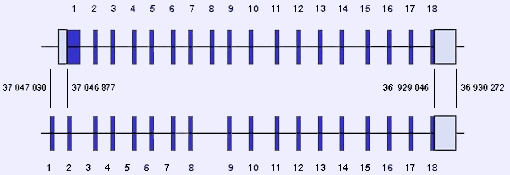
Figure 1: STRIATIN - STRN (2p12.2) DNA structure - isoforms I and II.
Description
The gene spans 118.144 Kb on minus strand (starts at 36 928 976 bp from pter, and ends at: 37 047 119).
Transcription
Alternative splicing (see Figure 1): exon 1 of isoform I is truncated in isoform II (136 bases missing), and preceeded by another exon in 5 (81 bases); exon 8 of isoform I (111 bases) is missing in isoform II, according to Ensembl.
Proteins
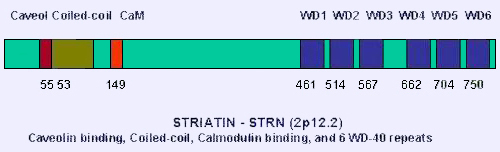
Figure 2: The domains of STRN. Isoform I is shown; amino acids are numbered according to Swiss-Prot description.
Description
780 amino acids (aa), 86.13 KDa (isoform I) and 731 amino acids, 80.76 KDa (isoform II). Striatin contains a high number of domains mediating protein-protein interactions. Domains:
aa 55-63 : Caveolin-binding; aa 53-120 : Coiled-coil; aa 149-166 : Calmodulin-binding; aa 461-500 : WD 1; aa 514-553 : WD 2; aa 567-606 : WD 3; aa 662-701 : WD 4; aa 704-743 : WD 5; aa 750-779 : WD 6 (30 aa only) (Isoform I, according to Swiss-Prot).
- Caveolin-binding domain: To bind caveolin, a caveolin-binding consensus is necessary: ΦXΦXXXXΦ, ΦXXXXΦXXΦ or ΦXΦXXXXΦXXΦ (Φ corresponding to aromatic amino acid) (Couet et al., 1997). Striatin contains the caveolin-binding consensus motif: LHFIQHEWARF, and binds directly caveolin-1 (Gaillard et al., 2001).
- Coiled-coil domain: Coiled-coil domains allow homo- and hetero-oligomerization. Oligomerization of striatin members is an obligatory step for the correct routing of the striatin family members to the dendritic spines (Gaillard et al., 2006).
- Ca2+ -calmodulin binding domain: Striatin binds calmodulin in a calcium-dependent manner. Ca2+ has a pleiotropic effect in cells. In dendritic spines, it plays a crucial role in the induction of most forms of synaptic potentiation and depression. Members of the striatin family could act as Ca2+ sensors in protein complexes, able to drive the delocalization of these complexes in different submembranous micro-domain according to the Ca2+ fluctuations (Benoist et al., 2006).
- WD-repeats (tryptophan-aspartate repeats): tend to form a propeller structure, stable platform that reversibly interacts with several proteins. The WD-repeat domain enables proteins to establish multiple protein-protein interactions. Striatin possesses at least 6 WD-repeats (eight were reported previously).
aa 55-63 : Caveolin-binding; aa 53-120 : Coiled-coil; aa 149-166 : Calmodulin-binding; aa 461-500 : WD 1; aa 514-553 : WD 2; aa 567-606 : WD 3; aa 662-701 : WD 4; aa 704-743 : WD 5; aa 750-779 : WD 6 (30 aa only) (Isoform I, according to Swiss-Prot).
- Caveolin-binding domain: To bind caveolin, a caveolin-binding consensus is necessary: ΦXΦXXXXΦ, ΦXXXXΦXXΦ or ΦXΦXXXXΦXXΦ (Φ corresponding to aromatic amino acid) (Couet et al., 1997). Striatin contains the caveolin-binding consensus motif: LHFIQHEWARF, and binds directly caveolin-1 (Gaillard et al., 2001).
- Coiled-coil domain: Coiled-coil domains allow homo- and hetero-oligomerization. Oligomerization of striatin members is an obligatory step for the correct routing of the striatin family members to the dendritic spines (Gaillard et al., 2006).
- Ca2+ -calmodulin binding domain: Striatin binds calmodulin in a calcium-dependent manner. Ca2+ has a pleiotropic effect in cells. In dendritic spines, it plays a crucial role in the induction of most forms of synaptic potentiation and depression. Members of the striatin family could act as Ca2+ sensors in protein complexes, able to drive the delocalization of these complexes in different submembranous micro-domain according to the Ca2+ fluctuations (Benoist et al., 2006).
- WD-repeats (tryptophan-aspartate repeats): tend to form a propeller structure, stable platform that reversibly interacts with several proteins. The WD-repeat domain enables proteins to establish multiple protein-protein interactions. Striatin possesses at least 6 WD-repeats (eight were reported previously).
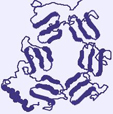
Figure 3: WD-repeats propeller structure.
Expression
Widely expressed (heart, various digestive organs, kidney, and others (Breitman et al., 2008)), but mainly in the nervous system. All members of the striatin family are expressed in the central nervous system and in the peripheral nervous system (Blondeau et al., 2003). Striatin is found in dendrites, on the post-synaptic side, in the post-synaptic densities of neuronal dendritic spines, particularly in the striatum.
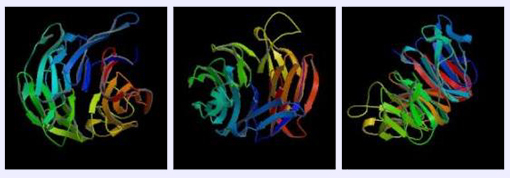
Figure 4: ModBase predicted comparative 3D structure (Front / Top / Side). Reproduced courtesy UCSC Genome Browser website.
Localisation
Found in the cytosol, and also found associated with membranes.
Function
Striatin, like other striatin family members, binds many proteins, and forms multi-protein complexes. Striatin family members are scaffolding proteins involved in signaling and trafficking in a Ca2+ dependant manner, exhibiting a dual role in endocytic process and signaling.
- Relation with caveolins: striatin directly binds caveolin-1 (Gaillard et al., 2001), a palmitoylated protein involved in caveolae and lipid rafts. Caveolins are scaffolding proteins, the main components of caveolae. Caveolae start as plasma membrane pits and form vesicles in the cytoplasm. Caveolae represent one mode of endocytosis (a clathrin independent mode of endocytosis). Caveolins also have the capacity to bind cholesterol, and are involved in signal transduction processes by directly interacting with a great number of signaling proteins such as nitric oxide synthases, G-proteins, protein tyrosine kinases, and H-Ras (Krajewska et al., 2004). Caveolin-1 is concentrated within dendritic spines of synapses in activity.
- Role in synaptic transmission: striatin down regulation in embryonic motoneurones results in the arrest of dendritic growth, but not in axon growth impairement (Bartoli et al., 1999).
Members of the striatin family have been shown to interact with phocein, a protein involved in clathrin- and dynamin-dependent membrane dynamics (Baillat et al., 2001, Haeberle et al., 2006). Phocein has been implicated in vesicular trafficking, acting in particular in the endocytic process in Purkinje cell dendritic spines (Bailly et al., 2007).
The coiled-coil domain of the striatin family members seems crucial for homo- and hetero-oligomerization of these proteins. Striatin family members are often co-expressed in the neurons. The coiled-coil domain also plays an essential role in the targeting of STRN3 within spines (Gaillard et al., 2006).
- Role in the "non-genomic" estrogen-mediated activation of downstream signaling pathways: in vascular endothelial cells, estrogen receptor (ER) alpha is targeted by striatin (or by STRN3, there is a controversy in this) to a module in membrane caveolae that enables estrogen to activate the mitogen-activated protein kinase (MAPK) and phosphatidylinositol 3 (PI3K)-Akt kinase pathways, and endothelial NO synthase (eNOS). Striatin (or STRN3) directly binds ER alpha and anchors ER alpha to the membrane and organizes the ER alpha-eNOS membrane signaling complex (Lu et al., 2004) (Note: estrogens also act in a "genomic manner", as transcrition factors, regulating gene expression).
- Cell lines: In NIH3T3 cells, striatin and STRN3 form stable complexes with protein phosphatase 2A (PP2A), a multifunctional serine/threonine phosphatase, critical to many cellular processes (Moreno et al., 2000), including presence in the b-catenin degradation complex, leading to degradation of b-catenin and inhibition of Wnt signaling, but also F-actin binding and regulation and aPKC (a member of the Par complex) regulation.
In HEK293Tcells, striatin binds APC (Breitman et al., 2008). APC is a a multi-function protein e.g.: negative WNT signaling pathway regulation, preventing transcription of Wnt target genes; modulation of the actin cytoskeleton and influence on cell adhesion and cell motility, binding to microtubules inducing stabilization of their ends; interaction with the disks large homologs, which are scaffolding proteins. The APC armadillo repeat domain binds the WD-repeats of striatin and both proteins co-localize at epithelial cell to cell junctions and seem to play a role in junctional organization, since their depletion resulted in a F-actin network fragmentation.
- Neurones and epithelial cells: it may be possible that Striatin and APC (and perhaps PP2A) are involved in the Par complex (PAR-3, PAR-6 and aPKC), a protein complex crucial for neurite, as well as for epithelial cell, polarization (Breitman et al., 2008).
- Relation with caveolins: striatin directly binds caveolin-1 (Gaillard et al., 2001), a palmitoylated protein involved in caveolae and lipid rafts. Caveolins are scaffolding proteins, the main components of caveolae. Caveolae start as plasma membrane pits and form vesicles in the cytoplasm. Caveolae represent one mode of endocytosis (a clathrin independent mode of endocytosis). Caveolins also have the capacity to bind cholesterol, and are involved in signal transduction processes by directly interacting with a great number of signaling proteins such as nitric oxide synthases, G-proteins, protein tyrosine kinases, and H-Ras (Krajewska et al., 2004). Caveolin-1 is concentrated within dendritic spines of synapses in activity.
- Role in synaptic transmission: striatin down regulation in embryonic motoneurones results in the arrest of dendritic growth, but not in axon growth impairement (Bartoli et al., 1999).
Members of the striatin family have been shown to interact with phocein, a protein involved in clathrin- and dynamin-dependent membrane dynamics (Baillat et al., 2001, Haeberle et al., 2006). Phocein has been implicated in vesicular trafficking, acting in particular in the endocytic process in Purkinje cell dendritic spines (Bailly et al., 2007).
The coiled-coil domain of the striatin family members seems crucial for homo- and hetero-oligomerization of these proteins. Striatin family members are often co-expressed in the neurons. The coiled-coil domain also plays an essential role in the targeting of STRN3 within spines (Gaillard et al., 2006).
- Role in the "non-genomic" estrogen-mediated activation of downstream signaling pathways: in vascular endothelial cells, estrogen receptor (ER) alpha is targeted by striatin (or by STRN3, there is a controversy in this) to a module in membrane caveolae that enables estrogen to activate the mitogen-activated protein kinase (MAPK) and phosphatidylinositol 3 (PI3K)-Akt kinase pathways, and endothelial NO synthase (eNOS). Striatin (or STRN3) directly binds ER alpha and anchors ER alpha to the membrane and organizes the ER alpha-eNOS membrane signaling complex (Lu et al., 2004) (Note: estrogens also act in a "genomic manner", as transcrition factors, regulating gene expression).
- Cell lines: In NIH3T3 cells, striatin and STRN3 form stable complexes with protein phosphatase 2A (PP2A), a multifunctional serine/threonine phosphatase, critical to many cellular processes (Moreno et al., 2000), including presence in the b-catenin degradation complex, leading to degradation of b-catenin and inhibition of Wnt signaling, but also F-actin binding and regulation and aPKC (a member of the Par complex) regulation.
In HEK293Tcells, striatin binds APC (Breitman et al., 2008). APC is a a multi-function protein e.g.: negative WNT signaling pathway regulation, preventing transcription of Wnt target genes; modulation of the actin cytoskeleton and influence on cell adhesion and cell motility, binding to microtubules inducing stabilization of their ends; interaction with the disks large homologs, which are scaffolding proteins. The APC armadillo repeat domain binds the WD-repeats of striatin and both proteins co-localize at epithelial cell to cell junctions and seem to play a role in junctional organization, since their depletion resulted in a F-actin network fragmentation.
- Neurones and epithelial cells: it may be possible that Striatin and APC (and perhaps PP2A) are involved in the Par complex (PAR-3, PAR-6 and aPKC), a protein complex crucial for neurite, as well as for epithelial cell, polarization (Breitman et al., 2008).
Homology
Other members of the striatin family, i.e.: STRN3 (SG2NA) (14q12) and STRN4 (zinedin) (19q13.2), are 80% and 75% homologous to STRN.
Implicated in
Entity name
Fusion protein
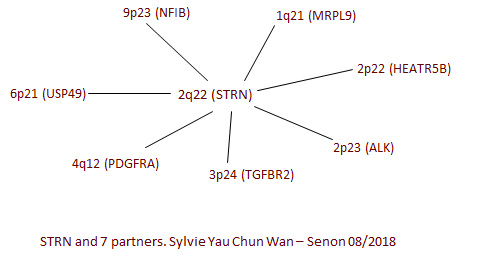
The N-term STRN - C-term PDGFRA fusion protein retains the caveolin-binding domain, the coiled-coil domain, and the calmodulin-binding domain, but not the WD-repeats of STRN, fused to a truncated WW-like domain and the kinase domain of PDGFRA; the coiled-coil domain from STRN may act as a dimerization motif that could constitutively activate PDGFRA tyrosine kinase.
Breakpoints
Article Bibliography
| Pubmed ID | Last Year | Title | Authors |
|---|---|---|---|
| 11251078 | 2001 | Molecular cloning and characterization of phocein, a protein found from the Golgi complex to dendritic spines. | Baillat G et al |
| 17853115 | 2007 | Phocein: A potential actor in vesicular trafficking at Purkinje cell dendritic spines. | Bailly YJ et al |
| 10413453 | 1999 | Down-regulation of striatin, a neuronal calmodulin-binding protein, impairs rat locomotor activity. | Bartoli M et al |
| 16460920 | 2006 | The striatin family: a new signaling platform in dendritic spines. | Benoist M et al |
| 12610732 | 2003 | Expression and distribution of phocein and members of the striatin family in neurones of rat peripheral ganglia. | Blondeau C et al |
| 18502210 | 2008 | The armadillo repeat domain of the APC tumor suppressor protein interacts with Striatin family members. | Breitman M et al |
| 9045678 | 1997 | Identification of peptide and protein ligands for the caveolin-scaffolding domain. Implications for the interaction of caveolin with caveolae-associated proteins. | Couet J et al |
| 17555450 | 2007 | Two novel imatinib-responsive PDGFRA fusion genes in chronic eosinophilic leukaemia. | Curtis CE et al |
| 16445688 | 2006 | Targeting of proteins of the striatin family to dendritic spines: role of the coiled-coil domain. | Gaillard S et al |
| 16440294 | 2006 | Immunogold localization of phocein in dendritic spines. | Haeberlé AM et al |
| 15213803 | 2004 | Caveolins: structure and function in signal transduction. | Krajewska WM et al |
| 15569929 | 2004 | Striatin assembles a membrane signaling complex necessary for rapid, nongenomic activation of endothelial NO synthase by estrogen receptor alpha. | Lu Q et al |
| 10681496 | 2000 | WD40 repeat proteins striatin and S/G(2) nuclear autoantigen are members of a novel family of calmodulin-binding proteins that associate with protein phosphatase 2A. | Moreno CS et al |
Other Information
Locus ID:
NCBI: 6801
MIM: 614765
HGNC: 11424
Ensembl: ENSG00000115808
Variants:
dbSNP: 6801
ClinVar: 6801
TCGA: ENSG00000115808
COSMIC: STRN
RNA/Proteins
| Gene ID | Transcript ID | Uniprot |
|---|---|---|
| ENSG00000115808 | ENST00000263918 | O43815 |
| ENSG00000115808 | ENST00000379213 | O43815 |
Expression (GTEx)
Protein levels (Protein atlas)
References
| Pubmed ID | Year | Title | Citations |
|---|---|---|---|
| 38018471 | 2024 | Striatin Gene Variants Are Associated With Salt Sensitivity of Blood Pressure by Mechanisms That Differ in Women and Men. | 0 |
| 38018471 | 2024 | Striatin Gene Variants Are Associated With Salt Sensitivity of Blood Pressure by Mechanisms That Differ in Women and Men. | 0 |
| 36602306 | 2023 | Phosphorylation of Influenza A Virus Matrix Protein 1 at Threonine 108 Controls Its Multimerization State and Functional Association with the STRIPAK Complex. | 3 |
| 37147942 | 2023 | Placental expression of striatin & endothelial nitric oxide synthase in women with & without pre-eclampsia. | 0 |
| 36602306 | 2023 | Phosphorylation of Influenza A Virus Matrix Protein 1 at Threonine 108 Controls Its Multimerization State and Functional Association with the STRIPAK Complex. | 3 |
| 37147942 | 2023 | Placental expression of striatin & endothelial nitric oxide synthase in women with & without pre-eclampsia. | 0 |
| 33904521 | 2021 | Striatin genotype-based, mineralocorticoid receptor antagonist-driven clinical trial: study rationale and design. | 1 |
| 34592149 | 2021 | ULK1 phosphorylation of striatin activates protein phosphatase 2A and autophagy. | 9 |
| 33904521 | 2021 | Striatin genotype-based, mineralocorticoid receptor antagonist-driven clinical trial: study rationale and design. | 1 |
| 34592149 | 2021 | ULK1 phosphorylation of striatin activates protein phosphatase 2A and autophagy. | 9 |
| 30520818 | 2019 | Novel NTRK3 Fusions in Fibrosarcomas of Adults. | 19 |
| 30520818 | 2019 | Novel NTRK3 Fusions in Fibrosarcomas of Adults. | 19 |
| 29046324 | 2018 | ETV6-NTRK3 and STRN-ALK kinase fusions are recurrent events in papillary thyroid cancer of adult population. | 24 |
| 29165687 | 2018 | Investigation of the Relationship Between Radiation Dose and Gene Mutations and Fusions in Post-Chernobyl Thyroid Cancer. | 31 |
| 30138337 | 2018 | 17β-estradiol upregulates striatin protein levels via Akt pathway in human umbilical vein endothelial cells. | 5 |
Citation
Jean-Loup Huret
STRN (striatin, calmodulin binding protein)
Atlas Genet Cytogenet Oncol Haematol. 2008-05-01
Online version: http://atlasgeneticsoncology.org/gene/44243/strn
