Ataxia telangiectasia (A-T)
2016-10-01 Yossi Shiloh AffiliationThe David and Inez Myers Chair in Cancer Research, Department of Human Molecular Genetics and Biochemistry, Sackler School of Medicine, Tel Aviv University, Tel Aviv, Israel; [email protected]
Abstract
Review on Ataxia telangiectasia, with data on clinics, and the gene involved.
Identity
Name
Alias
Note
Inheritance
The primary cause of all variants of the disease is mutations in the autosomal gene ATM (A-T, mutated) at 11q22-23 (Gatti RA et al., 1988; Savitsky K et al., 1995a), which encodes the ATM protein (Savitsky K et al., 1995b; Ziv Y et al., 1997) a multi-functional protein kinase (Shiloh Y et al., 2013; Shiloh Y, 2014; Guleria A et al., 2016; Ditch S et al., 2012).
Omim
Mesh
Orphanet
Umls
Clinics
Note
The cellular phenotype of A-T represents genome instability, deficient DNA damage response (DDR), and elevated oxidative stress, in addition to a premature senescence component (Shiloh Y et al., 1982). A-T patients show a striking sensitivity to the cytotoxic effect of ionizing radiation (Gotoff SP et al., 1967; Morgan JL et al., 1968). Cells from A-T patients exhibit marked chromosomal instability and sensitivity to ionizing radiations and radiomimetic chemicals (Taylor AM, 1978; Taylor AM et al., 1975; Taylor AM et al., 1979; Shiloh Y et al., 1982; Shiloh Y et al., 1983; Djuzenova CS et al., 1999). This acute sensitivity results from a profound defect in the cellular response to DNA double-strand breaks (DSBs), whose chief mobilizer is the ATM protein. It is important to note, however, that A-T cells are also moderately sensitive to a wide array of other DNA damaging agents suggesting that these cells cope less efficiently with many other DNA lesions besides DSBs.
Phenotype and clinics
Neoplastic risk
Evolution
Prognosis
Cytogenetics
Note
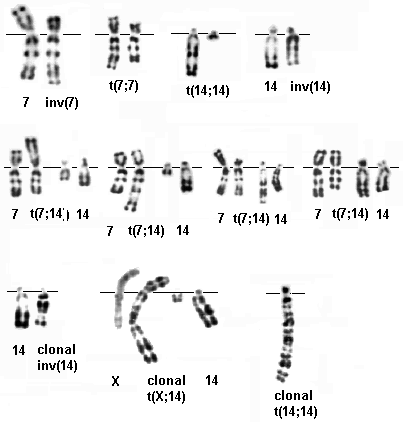
Lymphocyte cultures from A-T patients often contain clonal translocations that mainly involve the loci of the T-cell receptor and immunoglobulin heavy-chain genes (Butterworth SV et al., 1986; Kennaugh AA et al., 1986; Taylor AM et al., 1986; Heppell A et al., 1988; Kojis TL et al., 1991), pointing to a defect in the maturation of these genes via V(D)J and class-switch recombination in the adaptive immune system. Such clones usually herald the onset of malignancy and expand as malignancy progresses. Cultured A-T cell strains exhibit elevated rates of chromosome end associations and reduced telomere length (Pandita TK et al., 1995; Smilenov LB et al., 1999; Wood LD et al., 2001; Metcalfe JA et al., 1996; Vaziri H, 1997). A-T fibroblast strains exhibit similar growth properties to wild-type cells at early passage levels but senesce prematurely (Shiloh Y et al., 1982).
Inborn condition
Acquired condition
Other Findings
Note
Genes involved and Proteins
Dna description
Description
Localisation
Function
Germinal
Patients with the severe form of A-T are homozygous or compound heterozygous for null ATM alleles. The corresponding mutations usually lead to truncation of the ATM protein and subsequently to its loss due to instability of the truncated derivatives; a smaller portion of the mutations create amino acid substitutions that abolish ATMs catalytic activity (Taylor AM et al., 2015; Gilad S et al., 1996; Sandoval N et al., 1999; Barone G et al., 2009) (see also http:\/\/chromium.liacs.nl\/LOVD2\/home.php?select_db=ATM).
Careful inspection of the neurological symptoms of A-T patients reveals variability in their age of onset and rate of progression among patients with different combinations of null ATM alleles (Taylor AM et al., 2015; Crawford TO et al., 2000; Alterman N et al., 2007). Thus, despite the identical outcome in terms of ATM function, additional genes may affect the most cardinal symptom of A-T. Other, milder types of ATM mutations further extend this variability, and account for forms of the disease with extremely variable severity and age of onset of symptoms. The corresponding ATM genotypes are combinations of hypomorphic alleles or combinations of null and hypomorphic ones. Many of the latter are leaky splicing mutations and others are missense mutations, eventually yielding low amounts of active ATM (Taylor AM et al., 2015; Alterman N et al., 2007; Soresina A et al., 2008; Verhagen MM et al., 2009; Silvestri G et al., 2010; Saunders-Pullman R et al., 2012; Verhagen MM et al., 2012; Worth PF et al., 2013; Claes K et al., 2013; Méneret A et al., 2014; Nakamura K et al., 2014; Gilad S et al., 1998).
To be noted
Note
Article Bibliography
| Pubmed ID | Last Year | Title | Authors |
|---|---|---|---|
| 25937285 | 2015 | ATM couples replication stress and metabolic reprogramming during cellular senescence. | Aird KM et al |
| 23626666 | 2013 | ATM deficiency results in accumulation of DNA-topoisomerase I covalent intermediates in neural cells. | Alagoz M et al |
| 23460185 | 2013 | mTOR signaling for biological control and cancer. | Alayev A et al |
| 20890104 | 2010 | Differential localization of ATM is correlated with activation of distinct downstream signaling pathways. | Alexander A et al |
| 23374339 | 2013 | Mechanisms of programmed DNA lesions and genomic instability in the immune system. | Alt FW et al |
| 17632790 | 2007 | Ataxia-telangiectasia: mild neurological presentation despite null ATM mutation and severe cellular phenotype. | Alterman N et al |
| 17606465 | 2007 | Intrinsic mitochondrial dysfunction in ATM-deficient lymphoblastoid cells. | Ambrose M et al |
| 26581520 | 2015 | Complex interactions between the DNA-damage response and mammalian telomeres. | Arnoult N et al |
| 26979625 | 2016 | ATM and ATR signaling at a glance. | Awasthi P et al |
| 13542097 | 1958 | Ataxia-telangiectasia; a familial syndrome of progressive cerebellar ataxia, oculocutaneous telangiectasia and frequent pulmonary infection. | BODER E et al |
| 12556884 | 2003 | DNA damage activates ATM through intermolecular autophosphorylation and dimer dissociation. | Bakkenist CJ et al |
| 25460276 | 2014 | PIKKs--the solenoid nest where partners and kinases meet. | Baretić D et al |
| 6810166 | 1982 | Hypersensitivity of ataxia telangiectasia skin fibroblasts to DNA alkylating agents. | Barfknecht TR et al |
| 10449794 | 1999 | Loss of the ataxia-telangiectasia gene product causes oxidative damage in target organs. | Barlow C et al |
| 19431188 | 2009 | Modeling ATM mutant proteins from missense changes confirms retained kinase activity. | Barone G et al |
| 12509294 | 2002 | ATM deficiency and oxidative stress: a new dimension of defective response to DNA damage. | Barzilai A et al |
| 26519467 | 2015 | The current state of eukaryotic DNA base damage and repair. | Bauer NC et al |
| 21570395 | 2011 | Beyond ATM: the protein kinase landscape of the DNA damage response. | Bensimon A et al |
| 26621971 | 2015 | ERS statement on the multidisciplinary respiratory management of ataxia telangiectasia. | Bhatt JM et al |
| 21533982 | 2011 | ATM protein kinase: the linchpin of cellular defenses to stress. | Bhatti S et al |
| 8638204 | 1996 | Insulin-resistant diabetes mellitus in a black woman with ataxia-telangiectasia. | Blevins LS Jr et al |
| 2415689 | 1985 | Ataxia-telangiectasia: an overview. | Boder E et al |
| 23313097 | 2013 | Programmed induction of DNA double strand breaks during meiosis: setting up communication between DNA and the chromosome structure. | Borde V et al |
| 3488948 | 1986 | A subpopulation of t(2;14)(p11;q32) cells in ataxia telangiectasia B lymphocytes. | Butterworth SV et al |
| 22649200 | 2012 | Classical ataxia telangiectasia patients have a congenitally aged immune system with high expression of CD95. | Carney EF et al |
| 22920291 | 2012 | Playing the end game: DNA double-strand break repair pathway choice. | Chapman JR et al |
| 22155347 | 2012 | New insights into the roles of ATM and DNA-PKcs in the cellular response to oxidative stress. | Chen BP et al |
| 26300260 | 2015 | MacroH2A1 and ATM Play Opposing Roles in Paracrine Senescence and the Senescence-Associated Secretory Phenotype. | Chen H et al |
| 14673010 | 2003 | Oxidative stress is responsible for deficient survival and dendritogenesis in purkinje neurons from ataxia-telangiectasia mutated mutant mice. | Chen P et al |
| 22941977 | 2013 | Ataxia telangiectasia mutated impacts insulin-like growth factor 1 signalling in skeletal muscle. | Ching JK et al |
| 15279807 | 2004 | Ataxia-telangiectasia, an evolving phenotype. | Chun HH et al |
| 23632773 | 2013 | Variant ataxia telangiectasia: clinical and molecular findings and evaluation of radiosensitive phenotypes in a patient and relatives. | Claes K et al |
| 23317514 | 2013 | mTOR in aging, metabolism, and cancer. | Cornu M et al |
| 21157431 | 2011 | ATM activates the pentose phosphate pathway promoting anti-oxidant defence and DNA repair. | Cosentino C et al |
| 9874856 | 1998 | Ataxia telangiectasia. | Crawford TO et al |
| 10751267 | 2000 | Quantitative neurologic assessment of ataxia-telangiectasia. | Crawford TO et al |
| 23851492 | 2014 | ATM signalling and cancer. | Cremona CA et al |
| 23011031 | 2013 | Reducing mitochondrial ROS improves disease-related pathology in a mouse model of ataxia-telangiectasia. | D'Souza AD et al |
| 25520329 | 2014 | Deficiency of ataxia telangiectasia mutated kinase delays inflammatory response in the heart following myocardial infarction. | Daniel LL et al |
| 24680878 | 2014 | DNA-PK: a dynamic enzyme in a versatile DSB repair pathway. | Davis AJ et al |
| 22079189 | 2012 | The ATM protein kinase and cellular redox signaling: beyond the DNA damage response. | Ditch S et al |
| 10378512 | 1999 | Identification of ataxia telangiectasia heterozygotes, a cancer-prone population, using the single-cell gel electrophoresis (Comet) assay. | Djuzenova CS et al |
| 25228584 | 2014 | The role of double-strand break repair pathways at functional and dysfunctional telomeres. | Doksani Y et al |
| 17786248 | 2007 | Ataxia-telangiectasia mutated kinase regulates ribonucleotide reductase and mitochondrial homeostasis. | Eaton JS et al |
| 25538885 | 2014 | Linear growth and endocrine function in children with ataxia telangiectasia. | Ehlayel M et al |
| 22324461 | 2012 | Mechanisms of replication fork protection: a safeguard for genome stability. | Errico A et al |
| 25687661 | 2015 | ATM protein kinase signaling, type 2 diabetes and cardiovascular disease. | Espach Y et al |
| 21459046 | 2011 | Premature ageing of the immune system underlies immunodeficiency in ataxia telangiectasia. | Exley AR et al |
| 12796033 | 2003 | Loss of atm sensitises p53-deficient cells to topoisomerase poisons and antimetabolites. | Fedier A et al |
| 24358288 | 2013 | Deficiency of ataxia telangiectasia mutated kinase modulates cardiac remodeling following myocardial infarction: involvement in fibrosis and apoptosis. | Foster CR et al |
| 21404020 | 2011 | Ataxia telangiectasia mutated kinase plays a protective role in β-adrenergic receptor-stimulated cardiac myocyte apoptosis and myocardial remodeling. | Foster CR et al |
| 22179422 | 2012 | Lack of ataxia telangiectasia mutated kinase induces structural and functional changes in the heart: role in β-adrenergic receptor-stimulated apoptosis. | Foster CR et al |
| 18431490 | 2008 | Etoposide induces ATM-dependent mitochondrial biogenesis through AMPK activation. | Fu X et al |
| 11466609 | 2001 | Spontaneously immortalized cell lines obtained from adult Atm null mice retain sensitivity to ionizing radiation and exhibit a mutational pattern suggestive of oxidative stress. | Gage BM et al |
| 11313957 | 2001 | Ataxia-telangiectasia: chronic activation of damage-responsive functions is reduced by alpha-lipoic acid. | Gatei M et al |
| 7712635 | 1995 | Ataxia-telangiectasia. | Gatti RA et al |
| 3200306 | 1988 | Localization of an ataxia-telangiectasia gene to chromosome 11q22-23. | Gatti RA et al |
| 6213343 | 1982 | Ataxia-Telangiectasia: a multiparameter analysis of eight families. | Gatti RA et al |
| 3864937 | 1985 | Cerebellar pathology in ataxia-telangiectasia: the significance of basket cells. | Gatti RA et al |
| 9497252 | 1998 | Genotype-phenotype relationships in ataxia-telangiectasia and variants. | Gilad S et al |
| 8845835 | 1996 | Predominance of null mutations in ataxia-telangiectasia. | Gilad S et al |
| 23953933 | 2013 | Interplays between ATM/Tel1 and ATR/Mec1 in sensing and signaling DNA double-strand breaks. | Gobbini E et al |
| 21460853 | 2011 | ATM-dependent IGF-1 induction regulates secretory clusterin expression after DNA damage and in genetic instability. | Goetz EM et al |
| 23721719 | 2013 | The repair and signaling responses to DNA double-strand breaks. | Goodarzi AA et al |
| 6072741 | 1967 | Ataxia telangiectasia. Neoplasia, untoward response to x-irradiation, and tuberous sclerosis. | Gotoff SP et al |
| 23360865 | 2013 | Dermatologic manifestations of ataxia-telangiectasia syndrome. | Greenberger S et al |
| 26777338 | 2016 | ATM kinase: Much more than a DNA damage responsive protein. | Guleria A et al |
| 21150274 | 2010 | ATM activation in the presence of oxidative stress. | Guo Z et al |
| 20966255 | 2010 | ATM activation by oxidative stress. | Guo Z et al |
| 25692705 | 2015 | DNA damage primes the type I interferon system via the cytosolic DNA sensor STING to promote anti-microbial innate immunity. | Härtlova A et al |
| 18534819 | 2008 | ATM protein kinase mediates full activation of Akt and regulates glucose transporter 4 translocation by insulin in muscle cells. | Halaby MJ et al |
| 12376469 | 2002 | Deficiency in the repair of UV-induced DNA damage in human skin fibroblasts compromised for the ATM gene. | Hannan MA et al |
| 7438293 | 1980 | DNA repair in lymphoblastoid cell lines established from human genetic disorders. | Henderson EE et al |
| 2970426 | 1988 | Breakage of the T cell receptor alpha chain locus in non malignant clones from patients with ataxia telangiectasia. | Heppell A et al |
| 23707635 | 2013 | ATM and the epigenetics of the neuronal genome. | Herrup K et al |
| 23680599 | 2013 | The role of ATM and DNA damage in neurons: upstream and downstream connections. | Herrup K et al |
| 180416 | 1976 | Chemical mutagen hypersensitivity in ataxia telangiectasia. | Hoar DI et al |
| 24097900 | 2013 | Repair of strand breaks by homologous recombination. | Jasin M et al |
| 6172195 | 1982 | Abnormal regulation of DNA replication and increased lethality in ataxia telangiectasia cells exposed to carcinogenic agents. | Jaspers NG et al |
| 20003097 | 2010 | Role of ataxia telangiectasia mutated in insulin signalling of muscle-derived cell lines and mouse soleus. | Jeong I et al |
| 25550082 | 2015 | The DNA-dependent protein kinase: A multifunctional protein kinase with roles in DNA double strand break repair and mitosis. | Jette N et al |
| 26510954 | 2015 | Alteration in 5-hydroxymethylcytosine-mediated epigenetic regulation leads to Purkinje cell vulnerability in ATM deficiency. | Jiang D et al |
| 23708966 | 2013 | KAT5 tyrosine phosphorylation couples chromatin sensing to ATM signalling. | Kaidi A et al |
| 11280737 | 2001 | Increased oxidative stress in ataxia telangiectasia evidenced by alterations in redox state of brains from Atm-deficient mice. | Kamsler A et al |
| 26404840 | 2015 | The DNA damage response induces inflammation and senescence by inhibiting autophagy of GATA4. | Kang C et al |
| 24793032 | 2014 | Aberrant topoisomerase-1 DNA lesions are pathogenic in neurodegenerative genome instability syndromes. | Katyal S et al |
| 3488254 | 1986 | The chromosome breakpoint at 14q32 in an ataxia telangiectasia t(14;14) T cell clone is different from the 14q32 breakpoint in Burkitts and an inv(14) T cell lymphoma. | Kennaugh AA et al |
| 25775545 | 2015 | ATM prevents DSB formation by coordinating SSB repair and cell cycle progression. | Khoronenkova SV et al |
| 1756458 | 1991 | The cytogenetics of ataxia telangiectasia. | Kojis TL et al |
| 16858402 | 2006 | Involvement of novel autophosphorylation sites in ATM activation. | Kozlov SV et al |
| 26699800 | 2016 | Reactive Oxygen Species (ROS)-Activated ATM-Dependent Phosphorylation of Cytoplasmic Substrates Identified by Large-Scale Phosphoproteomics Screen. | Kozlov SV et al |
| 21467295 | 2011 | ATM is a redox sensor linking genome stability and carbon metabolism. | Krüger A et al |
| 22002603 | 2011 | ATM controls meiotic double-strand-break formation. | Lange J et al |
| 18813293 | 2008 | Ataxia-telangiectasia: from a rare disorder to a paradigm for cell signalling and cancer. | Lavin MF et al |
| 24933654 | 2014 | Direct activation of ATM by resveratrol under oxidizing conditions. | Lee JH et al |
| 17341604 | 2006 | Ataxia-telangiectasia-mutated-dependent activation of Ku in human fibroblasts exposed to hydrogen peroxide. | Lee JH et al |
| 11278277 | 2001 | Role of ATM in oxidative stress-mediated c-Jun phosphorylation in response to ionizing radiation and CdCl2. | Lee SA et al |
| 10657830 | 2000 | Oropharyngeal dysphagia and aspiration in patients with ataxia-telangiectasia. | Lefton-Greif MA et al |
| 16158199 | 2004 | Genome instability in ataxia telangiectasia (A-T) families: camptothecin-induced damage to replicating DNA discriminates between obligate A-T heterozygotes, A-T homozygotes and controls. | Leonard JC et al |
| 22466704 | 2012 | Nuclear accumulation of HDAC4 in ATM deficiency promotes neurodegeneration in ataxia telangiectasia. | Li J et al |
| 24162653 | 2013 | EZH2-mediated H3K27 trimethylation mediates neurodegeneration in ataxia-telangiectasia. | Li J et al |
| 23886747 | 2014 | Cerebral abnormalities in adults with ataxia-telangiectasia. | Lin DD et al |
| 16189515 | 2005 | ATM deficiency induces oxidative stress and endoplasmic reticulum stress in astrocytes. | Liu N et al |
| 11037863 | 2000 | Lymphoid malignancy as a presenting sign of ataxia-telangiectasia. | Loeb DM et al |
| 19464237 | 2009 | Common mechanisms of PIKK regulation. | Lovejoy CA et al |
| 23936845 | 2013 | Chromosome instability and oxidative stress markers in patients with ataxia telangiectasia and their parents. | Ludwig LB et al |
| 24937130 | 2014 | ATM regulates insulin-like growth factor 1-secretory clusterin (IGF-1-sCLU) expression that protects cells against senescence. | Luo X et al |
| 25122203 | 2014 | The pleiotropic movement disorders phenotype of adult ataxia-telangiectasia. | Méneret A et al |
| 24003211 | 2013 | DNA damage sensing by the ATM and ATR kinases. | Maréchal A et al |
| 17525332 | 2007 | ATM and ATR substrate analysis reveals extensive protein networks responsive to DNA damage. | Matsuoka S et al |
| 21292994 | 2011 | Iron loading and oxidative stress in the Atm-/- mouse liver. | McDonald CJ et al |
| 26851119 | 2016 | Serum Interleukin-6 Levels and Pulmonary Function in Ataxia-Telangiectasia. | McGrath-Morrow SA et al |
| 22035194 | 2012 | ATM and the molecular pathogenesis of ataxia telangiectasia. | McKinnon PJ et al |
| 20705925 | 2010 | DNA damage links mitochondrial dysfunction to atherosclerosis and the metabolic syndrome. | Mercer JR et al |
| 22210379 | 2012 | The mitochondria-targeted antioxidant MitoQ decreases features of the metabolic syndrome in ATM+/-/ApoE-/- mice. | Mercer JR et al |
| 8673136 | 1996 | Accelerated telomere shortening in ataxia telangiectasia. | Metcalfe JA et al |
| 17356010 | 2007 | Impaired insulin secretion in a mouse model of ataxia telangiectasia. | Miles PD et al |
| 2507129 | 1989 | Hypersensitivity to cell killing and faulty repair of 1-beta-D-arabinofuranosylcytosine-detectable sites in human (ataxia-telangiectasia) fibroblasts treated with 4-nitroquinoline 1-oxide. | Mirzayans R et al |
| 5687489 | 1968 | Radiation reaction in ataxia telangiectasia. | Morgan JL et al |
| 3943665 | 1986 | Diabetes mellitus in ataxia-telangiectasia, Fanconi anemia, xeroderma pigmentosum, common variable immune deficiency, and severe combined immune deficiency families. | Morrell D et al |
| 17478428 | 2007 | A proteomic analysis of ataxia telangiectasia-mutated (ATM)/ATM-Rad3-related (ATR) substrates identifies the ubiquitin-proteasome system as a regulator for DNA damage checkpoints. | Mu JJ et al |
| 10199897 | 1999 | Malignancies in pediatric patients with ataxia telangiectasia. | Murphy RC et al |
| 25077176 | 2014 | A-TWinnipeg: Pathogenesis of rare ATM missense mutation c.6200C>A with decreased protein expression and downstream signaling, early-onset dystonia, cancer, and life-threatening radiotoxicity. | Nakamura K et al |
| 26891003 | 2016 | Endocrine abnormalities in ataxia telangiectasia: findings from a national cohort. | Nissenkorn A et al |
| 15069401 | 2004 | Immunodeficiency and infections in ataxia-telangiectasia. | Nowak-Wegrzyn A et al |
| 11208881 | 2001 | Cancer in patients with ataxia-telangiectasia and in their relatives in the nordic countries. | Olsen JH et al |
| 7606935 | 1995 | Chromosome end associations, telomeres and telomerase activity in ataxia telangiectasia cells. | Pandita TK et al |
| 24002223 | 2013 | Push back to respond better: regulatory inhibition of the DNA double-strand break response. | Panier S et al |
| 1256588 | 1976 | Defective excision repair of gamma-ray-damaged DNA in human (ataxia telangiectasia) fibroblasts. | Paterson MC et al |
| 25580527 | 2015 | Mechanisms of ATM Activation. | Paull TT et al |
| 11172010 | 2001 | ATM-dependent expression of the insulin-like growth factor-I receptor in a pathway regulating radiation response. | Peretz S et al |
| 21827897 | 2012 | Ataxia-telangiectasia. | Perlman SL et al |
| 9199932 | 1997 | Ataxia-telangiectasia locus: sequence analysis of 184 kb of human genomic DNA containing the entire ATM gene. | Platzer M et al |
| 21363960 | 2011 | Dynamics of DNA damage response proteins at DNA breaks: a focus on protein modifications. | Polo SE et al |
| 26645295 | 2015 | Body composition, muscle strength and hormonal status in patients with ataxia telangiectasia: a cohort study. | Pommerening H et al |
| 24582502 | 2014 | Non-homologous end joining: emerging themes and unanswered questions. | Radhakrishnan SK et al |
| 5951880 | 1966 | Cutaneous manifestations of ataxia-telangiectasia. | Reed WB et al |
| 12215213 | 2002 | Elevated oxidative stress in patients with ataxia telangiectasia. | Reichenbach J et al |
| 15289318 | 2004 | Effect of N-acetyl cysteine on oxidative DNA damage and the frequency of DNA deletions in atm-deficient mice. | Reliene R et al |
| 17182831 | 2007 | Antioxidants suppress lymphoma and increase longevity in Atm-deficient mice. | Reliene R et al |
| 9338105 | 1997 | The ATM gene and protein: possible roles in genome surveillance, checkpoint controls and cellular defence against oxidative stress. | Rotman G et al |
| 14444443 | 1960 | Progressive ataxia in childhood with particular reference to ataxia-telangiectasia. | SEDGWICK RP et al |
| 10575419 | 1999 | Oligo-/monoclonal gammopathy and hypergammaglobulinemia in ataxia-telangiectasia. A study of 90 patients. | Sadighi Akha AA et al |
| 22345219 | 2012 | Variant ataxia-telangiectasia presenting as primary-appearing dystonia in Canadian Mennonites. | Saunders-Pullman R et al |
| 8589678 | 1995 | The complete sequence of the coding region of the ATM gene reveals similarity to cell cycle regulators in different species. | Savitsky K et al |
| 4192270 | 1970 | An unusual form of diabetes mellitus in ataxia telangiectasia. | Schalch DS et al |
| 24845678 | 2014 | ROS function in redox signaling and oxidative stress. | Schieber M et al |
| 17084711 | 2006 | ATM-dependent suppression of stress signaling reduces vascular disease in metabolic syndrome. | Schneider JG et al |
| 7357564 | 1980 | Decreased DNA repair synthesis and defective colony-forming ability of ataxia telangiectasia fibroblast cell strains treated with N-methyl-N'-nitro-N-nitrosoguanidine. | Scudiero DA et al |
| 21637298 | 2011 | ATM-mediated phosphorylation of polynucleotide kinase/phosphatase is required for effective DNA double-strand break repair. | Segal-Raz H et al |
| 21669554 | 2011 | ATM protects against oxidative stress induced by oxidized low-density lipoprotein. | Semlitsch M et al |
| 24342190 | 2014 | Intrinsic mitochondrial DNA repair defects in Ataxia Telangiectasia. | Sharma NK et al |
| 24630811 | 2014 | DNA double-strand break repair in a cellular context. | Shibata A et al |
| 25218947 | 2014 | ATM: expanding roles as a chief guardian of genome stability. | Shiloh Y et al |
| 3982447 | 1985 | Cells from patients with ataxia telangiectasia are abnormally sensitive to the cytotoxic effect of a tumor promoter, phorbol-12-myristate-13-acetate. | Shiloh Y et al |
| 23486281 | 2013 | The ATM protein kinase: regulating the cellular response to genotoxic stress, and more. | Shiloh Y et al |
| 20480175 | 2010 | Homozygosity for c 6325T>G transition in the ATM gene causes an atypical, late-onset variant form of ataxia-telangiectasia. | Silvestri G et al |
| 23813586 | 2013 | DNA damage response: three levels of DNA repair regulation. | Sirbu BM et al |
| 9400992 | 1997 | Influence of ATM function on telomere metabolism. | Smilenov LB et al |
| 2563396 | 1989 | Enhanced sensitivity to camptothecin in ataxia-telangiectasia cells and its relationship with the expression of DNA topoisomerase I. | Smith PJ et al |
| 6776412 | 1980 | Defective DNA repair and increased lethality in ataxia telangiectasia cells exposed to 4-nitroquinoline-1-oxide. | Smith PJ et al |
| 18504682 | 2008 | Different clinical and immunological presentation of ataxia-telangiectasia within the same family. | Soresina A et al |
| 11173867 | 2000 | Mutagen sensitivity of human lymphoblastoid cells with a BRCA1 mutation in comparison to ataxia telangiectasia heterozygote cells. | Speit G et al |
| 11085839 | 2000 | Mortality rates among carriers of ataxia-telangiectasia mutant alleles. | Su Y et al |
| 17923702 | 2007 | DNA damage-induced acetylation of lysine 3016 of ATM activates ATM kinase activity. | Sun Y et al |
| 6133091 | 1983 | Cancer and cardiac deaths in obligatory ataxia-telangiectasia heterozygotes. | Swift M et al |
| 10781820 | 2000 | Protective roles for ATM in cellular response to oxidative stress. | Takao N et al |
| 672922 | 1978 | Unrepaired DNA strand breaks in irradiated ataxia telangiectasia lymphocytes suggested from cytogenetic observations. | Taylor AM et al |
| 3485581 | 1986 | Clonal evolution of T-cell chronic lymphocytic leukaemia in a patient with ataxia telangiectasia. | Taylor AM et al |
| 7152604 | 1982 | Malignancy, DNA damage and chromosomal aberrations in ataxia telangiectasia. | Taylor AM et al |
| 1196376 | 1975 | Ataxia telangiectasia: a human mutation with abnormal radiation sensitivity. | Taylor AM et al |
| 25040471 | 2015 | Ataxia telangiectasia: more variation at clinical and cellular levels. | Taylor AM et al |
| 85479 | 1979 | Unusual sensitivity of ataxia telangiectasia cells to bleomycin. | Taylor AM et al |
| 7067035 | 1982 | The response of a variety of human fibroblast cell strains to the lethal effects of alkylating agents. | Teo IA et al |
| 22743550 | 2012 | Recognition, signaling, and repair of DNA double-strand breaks produced by ionizing radiation in mammalian cells: the molecular choreography. | Thompson LH et al |
| 22536249 | 2012 | Pexophagy: the selective degradation of peroxisomes. | Till A et al |
| 23878245 | 2013 | Reactive nitrogen species regulate autophagy through ATM-AMPK-TSC2-mediated suppression of mTORC1. | Tripathi DN et al |
| 8660985 | 1996 | Genomic Organization of the ATM gene. | Uziel T et al |
| 22617444 | 2012 | A new role for ATM: regulating mitochondrial function and mitophagy. | Valentin-Vega YA et al |
| 9467855 | 1997 | Critical telomere shortening regulated by the ataxia-telangiectasia gene acts as a DNA damage signal leading to activation of p53 protein and limited life-span of human diploid fibroblasts. A review. | Vaziri H et al |
| 22213089 | 2012 | Presence of ATM protein and residual kinase activity correlates with the phenotype in ataxia-telangiectasia: a genotype-phenotype study. | Verhagen MM et al |
| 15546863 | 2005 | Full activation of PKB/Akt in response to insulin or ionizing radiation is mediated through ATM. | Viniegra JG et al |
| 3864938 | 1985 | Sequence of cellular events in cerebellar ontogeny relevant to expression of neuronal abnormalities in ataxia-telangiectasia. | Vinters HV et al |
| 25060036 | 2014 | Growth retardation and growth hormone deficiency in patients with Ataxia telangiectasia. | Voss S et al |
| 24780558 | 2014 | Base excision repair: a critical player in many games. | Wallace SS et al |
| 7925323 | 1994 | Response of fibroblast cultures from ataxia-telangiectasia patients to reactive oxygen species generated during inflammatory reactions. | Ward AJ et al |
| 10567403 | 1999 | Localization of a portion of extranuclear ATM to peroxisomes. | Watters D et al |
| 12631440 | 2003 | Oxidative stress in ataxia telangiectasia. | Watters DJ et al |
| 2933491 | 1985 | Lymphocyte subpopulations in ataxia-telangiectasia. | Weaver M et al |
| 23732473 | 2013 | DNA repair at telomeres: keeping the ends intact. | Webb CJ et al |
| 26594831 | 2016 | Liver Disease in Pediatric Patients With Ataxia Telangiectasia: A Novel Report. | Weiss B et al |
| 11313956 | 2001 | Characterization of ataxia telangiectasia fibroblasts with extended life-span through telomerase expression. | Wood LD et al |
| 23143971 | 2013 | Very mild presentation in adult with classical cellular phenotype of ataxia telangiectasia. | Worth PF et al |
| 15863839 | 2005 | Heterozygous mutation of ataxia-telangiectasia mutated gene aggravates hypercholesterolemia in apoE-deficient mice. | Wu D et al |
| 8814333 | 1996 | Reduced telomere length in ataxia-telangiectasia fibroblasts. | Xia SJ et al |
| 23356578 | 2013 | Role of SMG-1-mediated Upf1 phosphorylation in mammalian nonsense-mediated mRNA decay. | Yamashita A et al |
| 11146653 | 2000 | Participation of ATM in insulin signalling through phosphorylation of eIF-4E-binding protein 1. | Yang DQ et al |
| 2208088 | 1990 | Response of fibroblast cultures from ataxia-telangiectasia patients to oxidative stress. | Yi M et al |
| 23955302 | 2013 | A tuberous sclerosis complex signalling node at the peroxisome regulates mTORC1 and autophagy in response to ROS. | Zhang J et al |
| 26344566 | 2015 | ATM functions at the peroxisome to induce pexophagy in response to ROS. | Zhang J et al |
| 8760308 | 1996 | Induction of p53 and increased sensitivity to cisplatin in ataxia-telangiectasia cells. | Zhang N et al |
| 16150740 | 2005 | Impaired genomic stability and increased oxidative stress exacerbate different features of Ataxia-telangiectasia. | Ziv S et al |
| 9244351 | 1997 | Recombinant ATM protein complements the cellular A-T phenotype. | Ziv Y et al |
| 21824916 | 2011 | Phosphorylation of polynucleotide kinase/ phosphatase by DNA-dependent protein kinase and ataxia-telangiectasia mutated regulates its association with sites of DNA damage. | Zolner AE et al |
External Links
Citation
Yossi Shiloh
Ataxia telangiectasia (A-T)
Atlas Genet Cytogenet Oncol Haematol. 2016-10-01
Online version: http://atlasgeneticsoncology.org/cancer-prone-disease/10003/ataxia-telangiectasia-(a-t)
Historical Card
2002-10-01 Ataxia telangiectasia (A-T) by Nancy Uhrhammer,Jacques-Olivier Bay,Richard A Gatti Affiliation
1999-10-01 Ataxia telangiectasia (A-T) by Nancy Uhrhammer,Jacques-Olivier Bay,Richard A Gatti Affiliation
1998-04-01 Ataxia telangiectasia (A-T) by Jean-Loup Huret Affiliation
