SSX2 (synovial sarcoma, X breakpoint 2)
2013-05-01 Josiane Eid , Christina Garcia , Andrea Frump AffiliationDepartment of Cancer Biology, Vanderbilt University Medical Center, Nashville, TN 37232, USA
Identity
DNA/RNA
Note
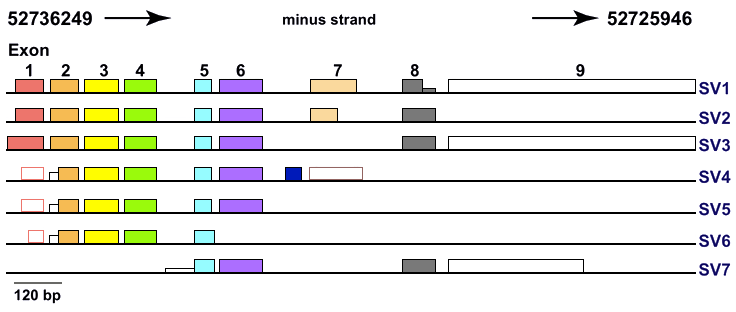
Description
Transcription
Proteins
Note
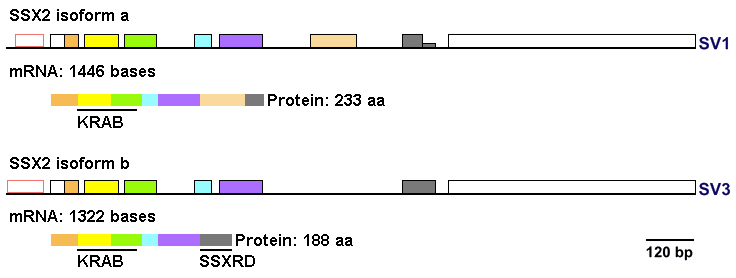
Description
Expression
Localisation
Function
Active studies are beginning to yield insights into SSX2 biological functions. Recent evidence demonstrated a regulatory role for SSX2 in nuclear receptor signaling and cancer cell invasion (Chen et al., 2012). A similar SSX2 effect on stem cell migration was reported previously (Cronwright et al., 2005).
Homology
Implicated in
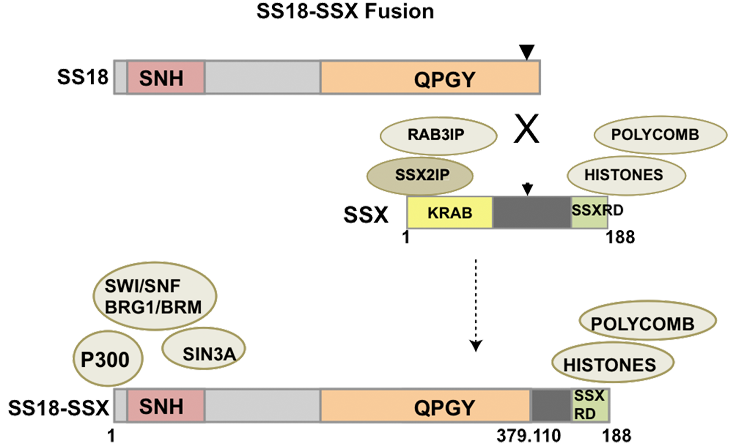
Synovial sarcoma is characterized by a unique chromosomal translocation event, t(X;18)(p11.2;q11.2) that involves a break in the SS18 gene on chromosome 18 and another in a SSX gene on the X chromosome. When fusion occurs at the breakpoints, it generates a hybrid gene, SS18-SSX, which encodes a potent oncogene. SS18-SSX is thought to initiate tumorigenesis and contribute to the development of synovial sarcoma (Ladanyi, 2001; Przybyl et al., 2012).
The t(X;18) tanslocation is the hallmark of synovial sarcomas. SS18-SSX is present in over 95% of SS cases. Its presence in human tumors is therefore of considerable diagnostic value and is usually detected using FISH, RT-PCR, qPCR or real time PCR (Amary et al., 2007; Ten Heuvel et al., 2008).
Of the nine members of the SSX family, the SSX1 and SSX2 gene loci are the most frequent sites of breakage in SS, and occasionally SSX4. The break in SSX occurs at the beginning of exon 6. According to cDNA sequence data, the SSX2 component contained in the SS18-SSX2 oncogene consists of exons 6 and 8. They represent the last 78 amino acids of SSX2 isoform b. This region lacks the KRAB repressive domain but retains the SSXRD region (Crew et al., 1995; de Leeuw et al., 1995; Wei et al., 2003).
SS presents in two distinct morphologies, monophasic, populated by spindle tumor cells, and biphasic with an additional glandular epithelial component. Several studies have demonstrated a strong correlation between the translocation subtype, tumor morphology and the clinical course of the disease. While the majority of SS18-SSX2 containing tumors were found to be monophasic, SS18-SSX1 was mostly detected in the biphasic tumors and was associated with a shorter metastasis-free period and a worse prognosis (Kawai et al., 1998; Antonescu et al., 2000; Ladanyi et al., 2002; Fernebro et al., 2006). However, the notion of the SS18-SSX subtype as a prognostic parameter influencing disease progression is still controversial due to contradictory data from later studies (Guillou et al., 2004; Ladanyi, 2005).
The molecular function of SS18-SSX is key to cancer development (dos Santos et al., 2001; de Bruijn et al., 2007; Przybyl et al., 2012). Fusion of SSX1/2 to SS18 results in the disruption of SS18 and its associated chromatin-remodeling/coactivator complexes (SWI/SNF, p300) normal function in gene expression (de Bruijn et al., 2006). SSX affinity for developmental genes controlled by Polycomb leads to the deregulation of such genes by SS18-SSX1/2 (Barco et al., 2009; Su et al., 2012). Deregulation of expression programs by SS18-SSX1/2 results in a series of biological events implicated in synovial sarcoma pathogenesis. These events likely include reprogramming of stem cell differentiation (Garcia et al., 2012), and untimely activation of oncogenic pathways such as IGF2 (Sun et al., 2006), Wnt (Horvai et al., 2006; Pretto et al., 2006; Bozzi et al., 2008), FGF (Ishibe et al., 2005; Garcia et al., 2012), and ephrin (Barco et al., 2007), as well as reactivation of the anti-apoptotic pathway and the bcl-2 oncogene (Mancuso et al., 2000, Jones et al., 2013).
SS18-SSX2 variants are rare. One was described by Fligman et al (1995). It contains an additional 126 bp segment proximal to SSX2 Exon 6, where the break occurred in Exon 5 while maintaining the frame. Another SS18-SSX2 variant includes 50 additional base pairs of SSX2 Exon 5 (Otsuka et al., 2006).
Immunotherapy:
The high immunogenicity of CT antigens and their tissue-restricted expression make them optimal targets for tumor immunotherapy and vaccine development. SSX2 is a major tumor antigen. Due to SSX2 wide expression in cancer, a single anti-SSX2 therapy will potentially benefit multiple diseases. Immunodominant SSX2-derived peptides that elicit adequate T-cell responses have been identified, and initial reports have described their successful use in vivo (Wagner et al., 2003; Ayyoub et al., 2004a; Ayyoub et al., 2004b; Neumann et al., 2004; Ayyoub et al., 2005; Kyyamova et al., 2006; Huang et al., 2007; Neumann et al., 2011; Smith and McNeel, 2011). Since the majority of tumors express more than one CT antigen, attempts at generating polyvalent T cells directed against multiple epitopes for simultaneous antigen recognition are ongoing (Gerdemann et al., 2011; Smith et al., 2011). Notably, CT antigen-specific cytotoxic T lymphocytes were able to recognize and destroy chemoresistant lymphoma cells expressing the cognate antigens (Shafer et al., 2010). Finally, CT antigen directed immunotherapy could potentially become a valuable addition to chemotherapy for effective treatment of cancer.
Article Bibliography
| Pubmed ID | Last Year | Title | Authors |
|---|---|---|---|
| 17334349 | 2007 | Detection of SS18-SSX fusion transcripts in formalin-fixed paraffin-embedded neoplasms: analysis of conventional RT-PCR, qRT-PCR and dual color FISH as diagnostic tools for synovial sarcoma. | Amary MF et al |
| 10718206 | 2000 | Strong association of SYT-SSX fusion type and morphologic epithelial differentiation in synovial sarcoma. | Antonescu CR et al |
| 16929165 | 2006 | Expression of cancer-testis antigens as possible targets for antigen-specific immunotherapy in head and neck squamous cell carcinoma. | Atanackovic D et al |
| 15085202 | 2004 | An immunodominant SSX-2-derived epitope recognized by CD4+ T cells in association with HLA-DR. | Ayyoub M et al |
| 15596411 | 2005 | Distinct but overlapping T helper epitopes in the 37-58 region of SSX-2. | Ayyoub M et al |
| 19337376 | 2009 | The synovial sarcoma-associated SYT-SSX2 oncogene antagonizes the polycomb complex protein Bmi1. | Barco R et al |
| 17686994 | 2007 | The synovial sarcoma SYT-SSX2 oncogene remodels the cytoskeleton through activation of the ephrin pathway. | Barco R et al |
| 18633459 | 2008 | Molecular characterization of synovial sarcoma in children and adolescents: evidence of akt activation. | Bozzi F et al |
| 17904521 | 2007 | SSX2IP: an emerging role in cancer. | Breslin A et al |
| 15661935 | 2005 | Naturally acquired MAGE-A10- and SSX-2-specific CD8+ T cell responses in patients with hepatocellular carcinoma. | Bricard G et al |
| 11179834 | 2001 | Expressions of cancer-testis antigens in human hepatocellular carcinomas. | Chen CH et al |
| 22344619 | 2012 | Cancer/testis antigen SSX2 enhances invasiveness in MCF-7 cells by repressing ERα signaling. | Chen L et al |
| 14611804 | 2003 | Identification and characterization of mouse SSX genes: a multigene family on the X chromosome with restricted cancer/testis expression. | Chen YT et al |
| 22016418 | 2011 | Chromosome X-encoded cancer/testis antigens show distinctive expression patterns in developing gonads and in testicular seminoma. | Chen YT et al |
| 12521124 | 2002 | Expression of SSX-2 and SSX-4 genes in neuroblastoma. | Chi SN et al |
| 22287745 | 2012 | The expression of MAGE and SSX, and correlation of COX2, VEGF, and survivin in colorectal cancer. | Choi J et al |
| 12094374 | 2002 | Expression of SSX genes in the neoplastic cells of Hodgkin's lymphoma. | Colleoni GW et al |
| 7539744 | 1995 | Fusion of SYT to two genes, SSX1 and SSX2, encoding proteins with homology to the Kruppel-associated box in human synovial sarcoma. | Crew AJ et al |
| 15781633 | 2005 | Cancer/testis antigen expression in human mesenchymal stem cells: down-regulation of SSX impairs cell migration and matrix metalloproteinase 2 expression. | Cronwright G et al |
| 15854347 | 2005 | [Expression of SSX2 gene in human urologic neoplasms]. | Du P et al |
| 17929270 | 2007 | Inducible expression of a prostate cancer-testis antigen, SSX-2, following treatment with a DNA methylation inhibitor. | Dubovsky JA et al |
| 16152617 | 2006 | Gene expression profiles relate to SS18/SSX fusion type in synovial sarcoma. | Fernebro J et al |
| 18440800 | 2008 | Synovial sarcoma of children and adolescents: the prognostic role of axial sites. | Ferrari A et al |
| 7495284 | 1995 | Molecular diagnosis of synovial sarcoma and characterization of a variant SYT-SSX2 fusion transcript. | Fligman I et al |
| 21996728 | 2012 | Reprogramming of mesenchymal stem cells by the synovial sarcoma-associated oncogene SYT-SSX2. | Garcia CB et al |
| 21915103 | 2011 | Cytotoxic T lymphocytes simultaneously targeting multiple tumor-associated antigens to treat EBV negative lymphoma. | Gerdemann U et al |
| 15364967 | 2004 | Histologic grade, but not SYT-SSX fusion type, is an important prognostic factor in patients with synovial sarcoma: a multicenter, retrospective analysis. | Guillou L et al |
| 16299236 | 2005 | Cancer-testis genes are coordinately expressed and are markers of poor outcome in non-small cell lung cancer. | Gure AO et al |
| 9378559 | 1997 | SSX: a multigene family with several members transcribed in normal testis and human cancer. | Gure AO et al |
| 12216073 | 2002 | The SSX gene family: characterization of 9 complete genes. | Güre AO et al |
| 17418413 | 2007 | A conditional mouse model of synovial sarcoma: insights into a myogenic origin. | Haldar M et al |
| 16740029 | 2006 | Beta-catenin nuclear expression correlates with cyclin D1 expression in primary and metastatic synovial sarcoma: a tissue microarray study. | Horvai AE et al |
| 17931884 | 2007 | Expression and purification of the cancer antigen SSX2: a potential cancer vaccine. | Huang CJ et al |
| 15814652 | 2005 | Disruption of fibroblast growth factor signal pathway inhibits the growth of synovial sarcomas: potential application of signal inhibitors to molecular target therapy. | Ishibe T et al |
| 22797074 | 2013 | SS18-SSX2 and the mitochondrial apoptosis pathway in mouse and human synovial sarcomas. | Jones KB et al |
| 11734557 | 2002 | SYT associates with human SNF/SWI complexes and the C-terminal region of its fusion partner SSX1 targets histones. | Kato H et al |
| 9428816 | 1998 | SYT-SSX gene fusion as a determinant of morphology and prognosis in synovial sarcoma. | Kawai A et al |
| 16837900 | 2006 | Expression of SSX2 tumor antigen in baculovirus expression system and its application for screening of blood serum of melanoma patients. | Kyyamova RG et al |
| 11782370 | 2002 | Impact of SYT-SSX fusion type on the clinical behavior of synovial sarcoma: a multi-institutional retrospective study of 243 patients. | Ladanyi M et al |
| 15908683 | 2005 | Correlates of SYT-SSX fusion type in synovial sarcoma: getting more complex but also more interesting? | Ladanyi M et al |
| 23452395 | 2013 | SSX2IP promotes metastasis and chemotherapeutic resistance of hepatocellular carcinoma. | Li P et al |
| 9788446 | 1998 | A KRAB-related domain and a novel transcription repression domain in proteins encoded by SSX genes that are disrupted in human sarcomas. | Lim FL et al |
| 21706474 | 2011 | OCT2, SSX and SAGE1 reveal the phenotypic heterogeneity of spermatocytic seminoma reflecting distinct subpopulations of spermatogonia. | Lim J et al |
| 22432085 | 2012 | Cancer-testis antigens: the current status on antigen regulation and potential clinical use. | Lim SH et al |
| 10879732 | 2000 | Analysis of SYT-SSX fusion transcripts and bcl-2 expression and phosphorylation status in synovial sarcoma. | Mancuso T et al |
| 11531257 | 2001 | Expression of multiple cancer-testis antigen genes in gastrointestinal and breast carcinomas. | Mashino K et al |
| 11920629 | 2002 | Expression of SSX genes in human osteosarcomas. | Naka N et al |
| 20518020 | 2010 | Synovial sarcoma is a stem cell malignancy. | Naka N et al |
| 21630107 | 2011 | A peptide epitope derived from the cancer testis antigen HOM-MEL-40/SSX2 capable of inducing CD4⁺ and CD8⁺ T-cell as well as B-cell responses. | Neumann F et al |
| 15382048 | 2004 | Identification of an HLA-DR-restricted peptide epitope with a promiscuous binding pattern derived from the cancer testis antigen HOM-MEL-40/SSX2. | Neumann F et al |
| 12681366 | 2003 | Expression of serologically identified tumor antigens in acute leukemias. | Niemeyer P et al |
| 16682293 | 2006 | A variant of the SYT-SSX2 fusion gene in a case of synovial sarcoma. | Otsuka S et al |
| 16462762 | 2006 | The synovial sarcoma translocation protein SYT-SSX2 recruits beta-catenin to the nucleus and associates with it in an active complex. | Pretto D et al |
| 22550415 | 2012 | Downstream and intermediate interactions of synovial sarcoma-associated fusion oncoproteins and their implication for targeted therapy. | Przybyl J et al |
| 12124339 | 2002 | Cancer-related serological recognition of human colon cancer: identification of potential diagnostic and immunotherapeutic targets. | Scanlan MJ et al |
| 20367572 | 2010 | Antigen-specific cytotoxic T lymphocytes can target chemoresistant side-population tumor cells in Hodgkin lymphoma. | Shafer JA et al |
| 16034368 | 2005 | Cancer/testis antigens, gametogenesis and cancer. | Simpson AJ et al |
| 21880588 | 2011 | Expression and immunotherapeutic targeting of the SSX family of cancer-testis antigens in prostate cancer. | Smith HA et al |
| 21904219 | 2011 | Vaccines targeting the cancer-testis antigen SSX-2 elicit HLA-A2 epitope-specific cytolytic T cells. | Smith HA et al |
| 10348348 | 1999 | SSX and the synovial-sarcoma-specific chimaeric protein SYT-SSX co-localize with the human Polycomb group complex. | Soulez M et al |
| 22439931 | 2012 | Deconstruction of the SS18-SSX fusion oncoprotein complex: insights into disease etiology and therapeutics. | Su L et al |
| 16247461 | 2006 | IGF2 is critical for tumorigenesis by synovial sarcoma oncoprotein SYT-SSX1. | Sun Y et al |
| 16224274 | 2005 | SSX cancer testis antigens are expressed in most multiple myeloma patients: co-expression of SSX1, 2, 4, and 5 correlates with adverse prognosis and high frequencies of SSX-positive PCs. | Taylor BJ et al |
| 18301245 | 2008 | Diagnostic accuracy of FISH and RT-PCR in 50 routinely processed synovial sarcomas. | Ten Heuvel SE et al |
| 9639388 | 1998 | Expression of SSX genes in human tumors. | Türeci O et al |
| 8840996 | 1996 | The SSX-2 gene, which is involved in the t(X;18) translocation of synovial sarcomas, codes for the human tumor antigen HOM-MEL-40. | Türeci O et al |
| 16428478 | 2006 | Expression of synovial sarcoma X (SSX) antigens in epithelial ovarian cancer and identification of SSX-4 epitopes recognized by CD4+ T cells. | Valmori D et al |
| 14677925 | 2003 | Identification of an HLA-A*02 restricted immunogenic peptide derived from the cancer testis antigen HOM-MEL-40/SSX2. | Wagner C et al |
| 12687023 | 2003 | Characteristic sequence motifs located at the genomic breakpoints of the translocation t(X;18) in synovial sarcomas. | Wei Y et al |
| 16546222 | 2006 | Expression of cancer-testis antigen (CTA) in tumor tissues and peripheral blood of Chinese patients with hepatocellular carcinoma. | Wu LQ et al |
| 17667940 | 2008 | The C terminus of the synovial sarcoma-associated SSX proteins interacts with the LIM homeobox protein LHX4. | de Bruijn DR et al |
| 7655467 | 1995 | Identification of two alternative fusion genes, SYT-SSX1 and SYT-SSX2, in t(X;18)(p11.2;q11.2)-positive synovial sarcomas. | de Leeuw B et al |
| 11107170 | 2001 | Molecular mechanisms underlying human synovial sarcoma development. | dos Santos NR et al |
Other Information
Locus ID:
NCBI: 6757
MIM: 300192
HGNC: 11336
Ensembl: ENSG00000241476
Variants:
dbSNP: 6757
ClinVar: 6757
TCGA: ENSG00000241476
COSMIC: SSX2
RNA/Proteins
| Gene ID | Transcript ID | Uniprot |
|---|---|---|
| ENSG00000241476 | ENST00000336777 | Q16385 |
| ENSG00000241476 | ENST00000337502 | Q16385 |
Expression (GTEx)
Pathways
| Pathway | Source | External ID |
|---|---|---|
| Transcriptional misregulation in cancer | KEGG | ko05202 |
| Transcriptional misregulation in cancer | KEGG | hsa05202 |
Protein levels (Protein atlas)
References
| Pubmed ID | Year | Title | Citations |
|---|---|---|---|
| 31695025 | 2019 | A functional genetic screen identifies the Mediator complex as essential for SSX2-induced senescence. | 3 |
| 31695025 | 2019 | A functional genetic screen identifies the Mediator complex as essential for SSX2-induced senescence. | 3 |
| 30005870 | 2018 | Rab3IP interacts with SSX2 and enhances the invasiveness of gastric cancer cells. | 6 |
| 30005870 | 2018 | Rab3IP interacts with SSX2 and enhances the invasiveness of gastric cancer cells. | 6 |
| 26947017 | 2016 | The impact of chromosomal translocation locus and fusion oncogene coding sequence in synovial sarcomagenesis. | 26 |
| 27276714 | 2016 | SSX2 regulates focal adhesion but does not drive the epithelial to mesenchymal transition in prostate cancer. | 7 |
| 26947017 | 2016 | The impact of chromosomal translocation locus and fusion oncogene coding sequence in synovial sarcomagenesis. | 26 |
| 27276714 | 2016 | SSX2 regulates focal adhesion but does not drive the epithelial to mesenchymal transition in prostate cancer. | 7 |
| 25363656 | 2015 | Ectopic expression of cancer/testis antigen SSX2 induces DNA damage and promotes genomic instability. | 23 |
| 25363656 | 2015 | Ectopic expression of cancer/testis antigen SSX2 induces DNA damage and promotes genomic instability. | 23 |
| 24166495 | 2014 | SS18-SSX fusion protein-induced Wnt/β-catenin signaling is a therapeutic target in synovial sarcoma. | 41 |
| 24645645 | 2014 | SSX2-4 expression in early-stage non-small cell lung cancer. | 15 |
| 24681846 | 2014 | Development of a T cell receptor targeting an HLA-A*0201 restricted epitope from the cancer-testis antigen SSX2 for adoptive immunotherapy of cancer. | 11 |
| 25078248 | 2014 | Functional autoantibodies against SSX-2 and NY-ESO-1 in multiple myeloma patients after allogeneic stem cell transplantation. | 7 |
| 24166495 | 2014 | SS18-SSX fusion protein-induced Wnt/β-catenin signaling is a therapeutic target in synovial sarcoma. | 41 |
Citation
Josiane Eid ; Christina Garcia ; Andrea Frump
SSX2 (synovial sarcoma, X breakpoint 2)
Atlas Genet Cytogenet Oncol Haematol. 2013-05-01
Online version: http://atlasgeneticsoncology.org/gene/42406
Historical Card
2008-04-01 SSX2 (synovial sarcoma, X breakpoint 2) by Josiane Eid,Christina Garcia,Andrea Frump Affiliation
