FZD5 (frizzled class receptor 5)
2018-06-01 Ilaria Esposito AffiliationDepartment of Health Sciences, University of Milan, via A. Di Rudinò, 8 20142, Milan (Italy);[email protected]
Identity

Abstract
The Wnt signalling pathways are ways of signalling that transduce signals into cells through cell surface receptors; they are three different type of pathways and all of these are activated by binding a Wnt-protein ligand to a Frizzled family receptor. Frizzled is a family of G-protein coupled receptor proteins that works as receptor in the Wnt signalling pathway; when activated, Frizzled works activating the Dishevelled protein inside the cell, to transduce the signal. Frizzled-5 (FZD5) is part of this family and it is encoded by the FZD5 gene (located on the chr2, 2q33.3). Like all Frizzled members, FZD5 has an amino-terminal cysteine-rich domain (CRD) which allows the Wnt binding, seven-transmembrane domains and a cytoplasmic tail containing the PDZ domain binding motif at the carboxy-terminus. FZD5 shows an important role in development and it seems to be overexpressed in several types of cancer. FZD5 preferably binds WNT3A, WNT5A, WNT7A and WNT10B, activating both canonical and non-canonical pathways.
DNA/RNA
Note
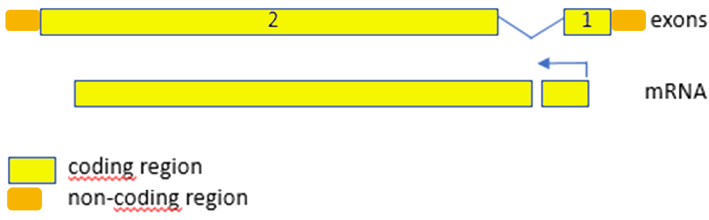
Description
Transcription
Proteins

Description
The secondary structure of FZD5 protein is composed by a large domain, the FZ domain, and two motifs, the Lys-Thr-X-X-X-Trp motif, and the PDZ-binding motif. The FZ domain (from aa 28 to aa 150) is an intracellular domain of about 120 amino acids, located close to the N-terminal end, first identified in the alpha-1 chain of mouse type XVIII collagen (Rehn and Pihlajaniemi, 1995). The FZ domain, also known as CRD (cysteine rich domain) contains 10 conserved cysteines, and its crystal structure shows predominance of α -helix with disulphide bonds. Its presence is widely demonstrated to be involved in Wnt signalling (Povelones et al., 2005). The C-terminal cytoplasmic Lys-Thr-X-X-X-Trp motif (from aa 525 to aa 530) is located two amino acids after the seventh TM and frizzled receptors with point mutations into this motif lose their capacity to activate Wnt/β-catenin signalling (Umbhauer et al., 2000). The PDZ domain (from aa 583 to aa 585) is a structural domain found in the signalling proteins and it plays a role in transport, ion channel signalling and transduction system, that typically recognize the extreme C-terminal end of the target proteins (Lee and Zheng, 2010).
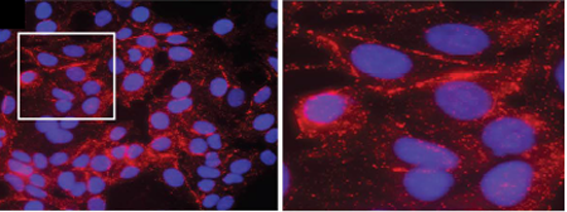
Expression
Localisation
Function
Homology
Mutations
Germinal
Somatic
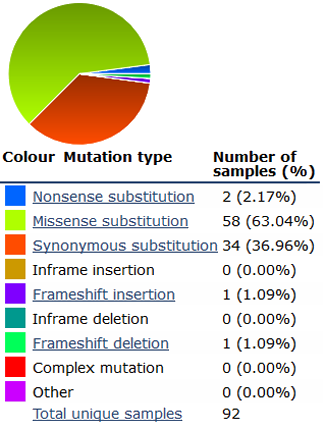
Implicated in
The Wnt receptor FZD5 mediates both canonical and non-canonical signalling in the development of the eye, depending on the organism. Recently, has been reported an ultra-rare frameshift mutation in FZD5, in zebrafish, that creates the A219Xfs*49 mutant transcript as result of a truncated FZD5 protein without the seven-transmembrane domain. This mutation converts FZD5 from a membrane-bound receptor to a secreted FZD antagonist that give dominant-negative effect to the WNT signalling. As result, retinal neuroblasts exhibit apical junction defects, leading to microphthalmia and coloboma. Liu et al., also shows that the effects on the eye were similar when both FZD5-wt and FZD5-mut were overexpressed, suggesting a key role of dosage in ocular development (Liu et al., 2016).
Article Bibliography
| Pubmed ID | Last Year | Title | Authors |
|---|---|---|---|
| 25240054 | 2014 | Monocyte-secreted Wnt5a interacts with FZD5 in microvascular endothelial cells and induces angiogenesis through tissue factor signaling. | Arderiu G et al |
| 27709494 | 2017 | Identification of Noncanonical Wnt Receptors Required for Wnt-3a-Induced Early Differentiation of Human Neural Stem Cells. | Bengoa-Vergniory N et al |
| 26730270 | 2015 | Induction of CXC chemokines in human mesenchymal stem cells by stimulation with secreted frizzled-related proteins through non-canonical Wnt signaling. | Bischoff DS et al |
| 23907728 | 2014 | The low-abundance transcriptome reveals novel biomarkers, specific intracellular pathways and targetable genes associated with advanced gastric cancer. | Bizama C et al |
| 26121572 | 2015 | ARID3B Directly Regulates Ovarian Cancer Promoting Genes. | Bobbs A et al |
| 18489003 | 2008 | Investigation of Frizzled-5 during embryonic neural development in mouse. | Burns CJ et al |
| 18230341 | 2008 | Wnt7a interaction with Fzd5 and detection of signaling activation using a split eGFP. | Carmon KS et al |
| 26432042 | 2016 | Wnt signalling in gynaecological cancers: A future target for personalised medicine? | Ford CE et al |
| 27192435 | 2016 | Wnt Signaling Alteration in the Spinal Cord of Amyotrophic Lateral Sclerosis Transgenic Mice: Special Focus on Frizzled-5 Cellular Expression Pattern. | González-Fernández C et al |
| 9054360 | 1997 | A member of the Frizzled protein family mediating axis induction by Wnt-5A. | He X et al |
| 11092808 | 2001 | Mouse Wnt receptor gene Fzd5 is essential for yolk sac and placental angiogenesis. | Ishikawa T et al |
| 23847203 | 2013 | Inactivating mutations of RNF43 confer Wnt dependency in pancreatic ductal adenocarcinoma. | Jiang X et al |
| 27853307 | 2016 | Intronless WNT10B-short variant underlies new recurrent allele-specific rearrangement in acute myeloid leukaemia. | Lazzaroni F et al |
| 20509869 | 2010 | PDZ domains and their binding partners: structure, specificity, and modification. | Lee HJ et al |
| 26908622 | 2016 | A secreted WNT-ligand-binding domain of FZD5 generated by a frameshift mutation causes autosomal dominant coloboma. | Liu C et al |
| 23337955 | 2013 | Analysis of differentially expressed genes and microRNAs in alcoholic liver disease. | Liu Y et al |
| 25861751 | 2015 | miR-124 represses FZD5 to attenuate P-glycoprotein-mediated chemo-resistance in renal cell carcinoma. | Long QZ et al |
| 22069131 | 2011 | Canonical and noncanonical Wnt pathways: a comparison between endometrial cancer type I and atrophic endometrium in Brazil. | Menezes Mde P et al |
| 16085697 | 2005 | Genetic evidence that Drosophila frizzled controls planar cell polarity and Armadillo signaling by a common mechanism. | Povelones M et al |
| 7876242 | 1995 | Identification of three N-terminal ends of type XVIII collagen chains and tissue-specific differences in the expression of the corresponding transcripts. The longest form contains a novel motif homologous to rat and Drosophila frizzled proteins. | Rehn M et al |
| 11408929 | 2001 | Molecular cloning and characterization of human Frizzled-5 gene on chromosome 2q33.3-q34 region. | Saitoh T et al |
| 24205342 | 2013 | Frizzled-5 receptor is involved in neuronal polarity and morphogenesis of hippocampal neurons. | Slater PG et al |
| 27869803 | 2017 | Genome-wide CRISPR screens reveal a Wnt-FZD5 signaling circuit as a druggable vulnerability of RNF43-mutant pancreatic tumors. | Steinhart Z et al |
| 19643732 | 2009 | A coated vesicle-associated kinase of 104 kDa (CVAK104) induces lysosomal degradation of frizzled 5 (Fzd5). | Terabayashi T et al |
| 21344486 | 2011 | Expression profile of WNT molecules in prostate cancer and its regulation by aminobisphosphonates. | Thiele S et al |
| 22833265 | 2013 | Frizzled homolog proteins, microRNAs and Wnt signaling in cancer. | Ueno K et al |
| 10990458 | 2000 | The C-terminal cytoplasmic Lys-thr-X-X-X-Trp motif in frizzled receptors mediates Wnt/beta-catenin signalling. | Umbhauer M et al |
| 24778153 | 2014 | Somatic mutation as a mechanism of Wnt/β-catenin pathway activation in CLL. | Wang L et al |
| 16890161 | 2006 | Caveolin is necessary for Wnt-3a-dependent internalization of LRP6 and accumulation of beta-catenin. | Yamamoto H et al |
| 26202350 | 2015 | Wnt/β-Catenin and Wnt5a/Ca Pathways Regulate Proliferation and Apoptosis of Keratinocytes in Psoriasis Lesions. | Zhang Y et al |
Citation
Ilaria Esposito
FZD5 (frizzled class receptor 5)
Atlas Genet Cytogenet Oncol Haematol. 2018-06-01
Online version: http://atlasgeneticsoncology.org/gene/47614/fzd5-(frizzled-class-receptor-5)
