DGKA (diacylglycerol kinase, alpha 80kDa)
2013-12-01 Isabel Merida , Antonia Avila-Flores AffiliationDepartment of Immunology, Oncology, National Center for Biotechnology (CNB\\\/CSIC). Darwin 3, Campus Autonoma\\\/CSIC, Madrid 28049, Spain
Identity
HGNC
LOCATION
12q13.2
LOCUSID
ALIAS
DAGK,DAGK1,DGK-alpha
FUSION GENES
DNA/RNA
Note
DGKA gene is highly expressed in thymus, spleen, testis and lung (Sanjuan et al., 2001). DGKA displays alternative splicing; numerous splice variants are predicted, including truncated forms of the protein as well as RNAs with introns retained (Martínez-Moreno et al., 2012). The expression of some of these transcripts might be related to certain pathologies (Batista et al., 2013).
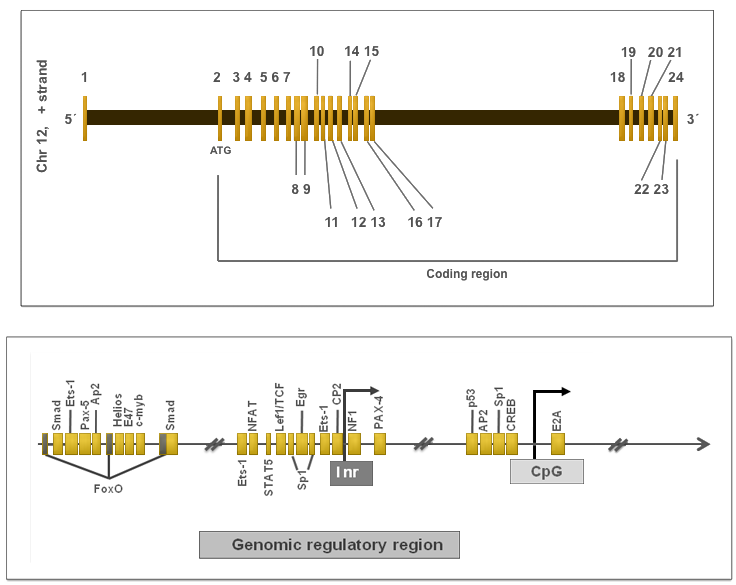
Figure 1. The DGKA gene is located at chromosome 12. It contains 24 exons and the translation initiator ATG is located at Exon 2.
Figure 2. Putative regulatory elements in the DGKA gene. Transcription initiation sites are indicated (arrows). The +1 position was assigned in the Inr element. Putative binding sites for transcription factors are indicated by rectangles; FoxO sites are gray (Adapted from Martinez-Moreno et al., 2012).
Transcription
The DGKA gene encodes a protein of 80 KDa. Presence of regulatory regions in the gene was early suggested to restrain the expression of DGKA to certain tissues (Fujikawa et al., 1993). DGKA gene displays alternative use of promoter regions, in homology with the mouse gene at least two alternative promoters likely exist. The regulatory gene region contain several binding motifs for transcription factors including FoxO, p53, Egr, Smad, etc, which allow the coupling of DGKA expression with several signaling pathways. Identification of DGKA as a gene regulated by FoxO has contributed to explain its transcriptional downregulation in response to antigen stimulation and interleukin 2 (IL2) (Martinez-Moreno et al., 2012).
Proteins
Note
The protein encoded by the DGKA gene (2.7.1.107) belongs to the eukaryotic diacylglycerol kinase family. It attenuates the second messenger diacylglycerol, that activates C1-containing proteins like members of the classical and novel PKCs, PKD, RasGRP and chimaerin families. It also produces phosphatidic acid, another lipid mediator that participates in the resynthesis of phosphatidylinositols and activates different proteins like mTOR or atypical PKCs.
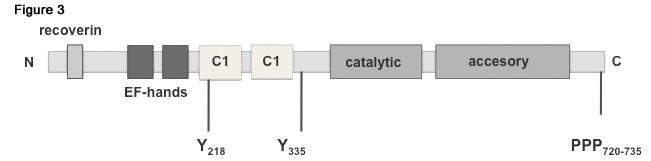
Figure 3. Distribution of conserved and specific regions in DGKA. C1, conserved protein kinase C-type 1 regions. Y218, Tyrosine phosphorylated by c-Abl. Y335, Tyrosine phosphorylated by Src and Lck. PPP Pro-rich region proposed to interact with Src.
Description
-The diacylglycerol kinases (DGK) are a family of signaling proteins that modulate diacylglycerol levels by catalyzing its conversion to phosphatidic acid (Merida et al., 2008). DGK belongs to a superfamily that also includes the recently identified bacterial DgkB as well as the sphingosine kinase (SPK) and ceramide kinase (CERK) families. Proteins in this superfamily share a common catalytic domain (DAGKc: Pfam00781).
-In addition to the catalytic region, all DGK family members have at least two protein kinase C-like type 1 (C1) domains that, except for the first C1 domain in DGKB and DGKG, lack the key residues that define a canonical phorbol ester/DAG-binding C1 domain (Shindo et al., 2003).
- Mammals express ten DGK isoforms grouped into five subtypes; each DGK subtype has distinct regulatory motifs that suggest the existence of diverse regulatory mechanisms and/or participation in different signaling complexes.
- Diacylglycerol Kinase alpha (DGKA) together with the beta (DGKB) and gamma (DGKG) isoforms represent the type I DGK, whose signature is the presence at the N-terminal region of a recoverin-like domain (RVH) and a tandem of EF hand motifs, characteristic of Ca2+-binding proteins.
-In addition to the catalytic region, all DGK family members have at least two protein kinase C-like type 1 (C1) domains that, except for the first C1 domain in DGKB and DGKG, lack the key residues that define a canonical phorbol ester/DAG-binding C1 domain (Shindo et al., 2003).
- Mammals express ten DGK isoforms grouped into five subtypes; each DGK subtype has distinct regulatory motifs that suggest the existence of diverse regulatory mechanisms and/or participation in different signaling complexes.
- Diacylglycerol Kinase alpha (DGKA) together with the beta (DGKB) and gamma (DGKG) isoforms represent the type I DGK, whose signature is the presence at the N-terminal region of a recoverin-like domain (RVH) and a tandem of EF hand motifs, characteristic of Ca2+-binding proteins.
Expression
- DGKA is the only DGK isoform particularly enriched in the thymus and peripheral T lymphocytes. DGKA levels are tightly coupled to the differentiation and proliferation state of T lymphocytes. Quiescent, naïve T lymphocytes express high levels of DGKA that decrease rapidly in response to antigenic and IL2-derived signals (Martinez-Moreno et al., 2012). DGKA was identified as an anergy-induced gene (Macian et al., 2002). Anergy represents an unresponsive state in T cells that is vital in immune system homeostasis and constitutes a means for avoiding response to self and thus, for preventing autoimmunity. Tumors also induce anergic-non responsive states in T cells. In agreement with this finding, DGKA-overexpressing lymphocytes are "anergic" and no longer respond to antigenic stimuli (Zha et al., 2006). On the contrary, T cells from DGKA deficient mice are resistant to anergy induction (Olenchock et al., 2006).
- Recent studies have characterized miR-297 as a highly cytotoxic microRNA expressed in glioblastoma, with minimal cytotoxicity to normal astrocytes. DGKA is shown to be a miR-297 target with a critical role in miR-297 toxicity. These studies identify miR-297 as a novel and physiologic regulator of cancer cell survival, largely through targeting of DGKA (Kefas et al., 2013).
- Recent studies have characterized miR-297 as a highly cytotoxic microRNA expressed in glioblastoma, with minimal cytotoxicity to normal astrocytes. DGKA is shown to be a miR-297 target with a critical role in miR-297 toxicity. These studies identify miR-297 as a novel and physiologic regulator of cancer cell survival, largely through targeting of DGKA (Kefas et al., 2013).
Localisation
- DGKA is a cytosolic enzyme that translocates to the membrane to phosphorylate diacylglycerol. The N-terminal region of DGKA, encompassing the Ca2+ regulatory elements has a negative regulatory role in enzyme activation and receptor-induced membrane localization, as shown by enhanced activity and constitutive plasma membrane localization of a mutant lacking this region (Sanjuan et al., 2001). In addition to Ca2+ generation, activation of Tyr kinases is required for membrane stabilization of DGKA (Sanjuan et al., 2001). Tyr335 in the human sequence, located at the hinge between the C1 and the catalytic domains, was recently identified as an Lck-dependent DGKA phosphorylation site in T lymphocytes (Merino et al., 2008).
- Membrane localization of DGKA in non-T cells requires Src-family tyrosine kinase activity and involves the association of DGKA with Src via a proline-rich sequence (Baldanzi et al., 2008). DGKA membrane localization and activation is required for cell motility, proliferation and angiogenesis, acting as a rheostat that sets the thresholds required for growth factor-induced migratory signals.
- Recent reports have suggested nuclear localization for DGKA following serum starvation and demonstrated that DGKA relocates back to the cytosol in response to serum re-addition. Serum-induced export requires c-Abl mediated Tyr-218 phosphorylation (Matsubara et al., 2012).
- Membrane localization of DGKA in non-T cells requires Src-family tyrosine kinase activity and involves the association of DGKA with Src via a proline-rich sequence (Baldanzi et al., 2008). DGKA membrane localization and activation is required for cell motility, proliferation and angiogenesis, acting as a rheostat that sets the thresholds required for growth factor-induced migratory signals.
- Recent reports have suggested nuclear localization for DGKA following serum starvation and demonstrated that DGKA relocates back to the cytosol in response to serum re-addition. Serum-induced export requires c-Abl mediated Tyr-218 phosphorylation (Matsubara et al., 2012).
Function
- The best characterized function for DGKA as a negative modulator of diacylglycerol-based signaling has been demonstrated in T lymphocytes. DGKA acts as a "switch-off" signal for Ras activation, mediated by localization to the membrane of Ras-GRP1 a GDP-exchanger for Ras with a DAG-binding domain (Sanjuan et al., 2001; Sanjuan et al., 2003).
- Contrary to its negative contribution to T cell responses, high DGKA expression in tumors appears to have a positive role in neoplastic transformation. DGKA-dependent PA generation contributes to melanoma survival through activation of the NFKB pathway (Yanagisawa et al., 2007).
- DGKA mediated PA generation has been reported to participate in tumor migration and invasion. Generation of PA downstream of DGKA is essential to facilitate the Rab coupling protein (RCP)- mediated integrin recycling that is required for tumor cell invasion (Rainiero et al., 2012).
- Contrary to its negative contribution to T cell responses, high DGKA expression in tumors appears to have a positive role in neoplastic transformation. DGKA-dependent PA generation contributes to melanoma survival through activation of the NFKB pathway (Yanagisawa et al., 2007).
- DGKA mediated PA generation has been reported to participate in tumor migration and invasion. Generation of PA downstream of DGKA is essential to facilitate the Rab coupling protein (RCP)- mediated integrin recycling that is required for tumor cell invasion (Rainiero et al., 2012).
Mutations
Note
V379I mutation in DGKA identified as a putative driver mutation for pancreatic cancer.
Implicated in
Entity name
Lymphoma
Note
DGKA was found to be constitutively activated in nucleophosmin/anaplastic lymphoma kinase (NPM / ALK) fusion in malignant lymphomas, where inhibition of DGKA significantly reduced tumor growth (Bacchiocchi et al., 2005).
Entity name
Melanoma
Note
Entity name
Hepatocellular carcinoma
Note
DGKA is absent in hepatocytes but it is expressed in different hepatocellular carcinoma cell lines. DGKA is found expressed in cancerous tissue but not in the adjacent non-cancerous hepatocytes. High DGKA expression associates with high Ki67 expression and a high rate of HCC recurrence (p=0.033) following surgery. In multivariate analyses, high DGKA expression is found as an independent factor for determining HCC recurrence after surgery (Takeishi et al., 2012).
Entity name
Pancreatic carcinoma
Note
Using CHASM (Cancer-specific High-throughput Annotation of Somatic Mutations) V379I mutation in DGKA was found as a putative driver mutation for pancreatic cancer (Carter et al., 2010).
Entity name
Glioblastoma
Note
Recent studies have described DGKA as an important component of malignant transformation in glioblastoma (Dominguez et al., 2013). Impaired DGKA activity through siRNA targeting or the use of small-molecule inhibitors induced caspase-mediated apoptosis in glioblastoma cells, but lacked toxicity in noncancerous cells.
Entity name
Lung cancer
Note
Survival trees in a study involving the expression profiles of 3588 genes in 211 lung adenocarcinoma patients identified DGKA as a marker for good survival in a group of advanced-stage patients with remarkably good survival outcome (Berrar et al., 2005).
Entity name
Note
Studies have reported DGKA inhibition by the adaptor protein SAP (Baldanzi et al., 2011). Loss-of-function SAP mutations cause X-linked lymphoproliferative disease (XLP), an immune disorder characterized by a deregulated immune response to Epstein-Barr virus, susceptibility to lymphoma and defective antibody production. Impaired regulation of DGKA activity in SAP-deficient lymphocytes may contribute to their defective TCR-induced responses, suggesting that pharmacological inhibition of DGKA could be useful in the treatment of certain manifestations of XLP.
Entity name
CD8 tumor infiltrates
Note
DGKA was found to be more highly expressed in CD8-tumor infiltrates T cells (TILs) in renal carcinoma that in circulating CD8 cells (Prinz et al., 2012). Low dose treatment of TILs with IL2 reduced DGKA protein levels, improved stimulation-induced ERK and AKT phosphorylation, and increased the number of degranulating CD8-TILs. DGKA inhibition could be a novel strategy to enhance anti-tumor CD8 T cells response and may help prevent inactivation of adoptively transferred T cells improving therapeutic efficacy.
Entity name
Localized aggressive periodontitis (LAP)
Note
Localized aggressive periodontitis (LAP) is a familial disorder characterized by destruction of the supporting structures of dentition. Microarray and kinetic-PCR analysis revealed diminished RNA expression of DGKA in neutrophils from LAP patients compared with asymptomatic individuals (Gronert et al., 2004).
Article Bibliography
| Pubmed ID | Last Year | Title | Authors |
|---|---|---|---|
| 15928040 | 2005 | Activation of alpha-diacylglycerol kinase is critical for the mitogenic properties of anaplastic lymphoma kinase. | Bacchiocchi R et al |
| 22048771 | 2011 | SAP-mediated inhibition of diacylglycerol kinase α regulates TCR-induced diacylglycerol signaling. | Baldanzi G et al |
| 24171497 | 2014 | Alternative splicing generates a diacylglycerol kinase α transcript that acts as a dominant-negative modulator of superoxide production in localized aggressive periodontitis. | Batista EL Jr et al |
| 15952876 | 2005 | Survival trees for analyzing clinical outcome in lung adenocarcinomas based on gene expression profiles: identification of neogenin and diacylglycerol kinase alpha expression as critical factors. | Berrar D et al |
| 20581473 | 2010 | Prioritization of driver mutations in pancreatic cancer using cancer-specific high-throughput annotation of somatic mutations (CHASM). | Carter H et al |
| 23558954 | 2013 | Diacylglycerol kinase α is a critical signaling node and novel therapeutic target in glioblastoma and other cancers. | Dominguez CL et al |
| 8396913 | 1993 | Isolation and characterization of the human diacylglycerol kinase gene. | Fujikawa K et al |
| 14734770 | 2004 | A molecular defect in intracellular lipid signaling in human neutrophils in localized aggressive periodontal tissue damage. | Gronert K et al |
| 24158111 | 2013 | A miR-297/hypoxia/DGK-α axis regulating glioblastoma survival. | Kefas B et al |
| 12086671 | 2002 | Transcriptional mechanisms underlying lymphocyte tolerance. | Macián F et al |
| 22890845 | 2012 | FoxO-dependent regulation of diacylglycerol kinase α gene expression. | Martínez-Moreno M et al |
| 22199356 | 2012 | c-Abl tyrosine kinase regulates serum-induced nuclear export of diacylglycerol kinase α by phosphorylation at Tyr-218. | Matsubara T et al |
| 18062770 | 2008 | Diacylglycerol kinases: at the hub of cell signalling. | Mérida I et al |
| 18424699 | 2008 | Lck-dependent tyrosine phosphorylation of diacylglycerol kinase alpha regulates its membrane association in T cells. | Merino E et al |
| 17028587 | 2006 | Disruption of diacylglycerol metabolism impairs the induction of T cell anergy. | Olenchock BA et al |
| 22573804 | 2012 | High DGK-α and disabled MAPK pathways cause dysfunction of human tumor-infiltrating CD8+ T cells that is reversible by pharmacologic intervention. | Prinz PU et al |
| 22270919 | 2012 | Diacylglycerol kinase α controls RCP-dependent integrin trafficking to promote invasive migration. | Rainero E et al |
| 12626538 | 2003 | T cell activation in vivo targets diacylglycerol kinase alpha to the membrane: a novel mechanism for Ras attenuation. | Sanjuán MA et al |
| 12621060 | 2003 | Synthesis and phorbol ester binding of the cysteine-rich domains of diacylglycerol kinase (DGK) isozymes. DGKgamma and DGKbeta are new targets of tumor-promoting phorbol esters. | Shindo M et al |
| 22425622 | 2012 | Diacylglycerol kinase alpha enhances hepatocellular carcinoma progression by activation of Ras-Raf-MEK-ERK pathway. | Takeishi K et al |
| 17276726 | 2007 | Diacylglycerol kinase alpha suppresses tumor necrosis factor-alpha-induced apoptosis of human melanoma cells through NF-kappaB activation. | Yanagisawa K et al |
| 17028589 | 2006 | T cell anergy is reversed by active Ras and is regulated by diacylglycerol kinase-alpha. | Zha Y et al |
Other Information
Locus ID:
NCBI: 1606
MIM: 125855
HGNC: 2849
Ensembl: ENSG00000065357
Variants:
dbSNP: 1606
ClinVar: 1606
TCGA: ENSG00000065357
COSMIC: DGKA
RNA/Proteins
Expression (GTEx)
Pathways
Protein levels (Protein atlas)
References
| Pubmed ID | Year | Title | Citations |
|---|---|---|---|
| 38143235 | 2024 | Multiomics analysis reveals metabolic subtypes and identifies diacylglycerol kinase α (DGKA) as a potential therapeutic target for intrahepatic cholangiocarcinoma. | 2 |
| 38387281 | 2024 | Tumor-associated macrophage (TAM)-secreted CCL22 confers cisplatin resistance of esophageal squamous cell carcinoma (ESCC) cells via regulating the activity of diacylglycerol kinase α (DGKα)/NOX4 axis. | 0 |
| 38716625 | 2024 | Diacylglycerol kinase alpha is a proliferation marker of intrahepatic cholangiocarcinoma associated with the prognosis. | 1 |
| 38143235 | 2024 | Multiomics analysis reveals metabolic subtypes and identifies diacylglycerol kinase α (DGKA) as a potential therapeutic target for intrahepatic cholangiocarcinoma. | 2 |
| 38387281 | 2024 | Tumor-associated macrophage (TAM)-secreted CCL22 confers cisplatin resistance of esophageal squamous cell carcinoma (ESCC) cells via regulating the activity of diacylglycerol kinase α (DGKα)/NOX4 axis. | 0 |
| 38716625 | 2024 | Diacylglycerol kinase alpha is a proliferation marker of intrahepatic cholangiocarcinoma associated with the prognosis. | 1 |
| 36965165 | 2023 | Targeting diacylglycerol kinase α impairs lung tumorigenesis by inhibiting cyclin D3. | 1 |
| 36965165 | 2023 | Targeting diacylglycerol kinase α impairs lung tumorigenesis by inhibiting cyclin D3. | 1 |
| 35131384 | 2022 | DGKA interacts with SRC/FAK to promote the metastasis of non-small cell lung cancer. | 10 |
| 35131384 | 2022 | DGKA interacts with SRC/FAK to promote the metastasis of non-small cell lung cancer. | 10 |
| 33608256 | 2021 | DGKA Mediates Resistance to PD-1 Blockade. | 10 |
| 34293268 | 2021 | Diacylglycerol Kinase Inhibition Reduces Airway Contraction by Negative Feedback Regulation of Gq-Signaling. | 7 |
| 33608256 | 2021 | DGKA Mediates Resistance to PD-1 Blockade. | 10 |
| 34293268 | 2021 | Diacylglycerol Kinase Inhibition Reduces Airway Contraction by Negative Feedback Regulation of Gq-Signaling. | 7 |
| 32341033 | 2020 | DGKA Provides Platinum Resistance in Ovarian Cancer Through Activation of c-JUN-WEE1 Signaling. | 22 |
Citation
Isabel Merida ; Antonia Avila-Flores
DGKA (diacylglycerol kinase, alpha 80kDa)
Atlas Genet Cytogenet Oncol Haematol. 2013-12-01
Online version: http://atlasgeneticsoncology.org/gene/40299/dgka-(diacylglycerol-kinase-alpha-80kda)
