Head and Neck: Paraganglioma: an overview
2015-05-01 Audrey Rousseau , Cécile Badoual Affiliation1.Université dAngers, Département de Pathologie Cellulaire et Tissulaire, CHU Angers, 4, rue Larrey, 49100 Angers (AR); Université René Descartes Paris 5, Service dAnatomie Pathologique, Hôpital Européen Georges Pompidou, 20, rue Leblanc, 75015 Paris (CB) France
Summary
Note
The sympathetic paraganglia are encountered along the axis of the trunk (pre- and para-vertebral sympathetic chains) and in the pelvic floor. The parasympathetic paraganglia are found almost exclusively in the head and neck along the branches of the glossopharyngeal and vagus nerves (Barnes et al., 2005). Most extra-adrenal paragangliomas are encountered above the clavicles. Paragangliomas of the head and neck (HNPG) are found primarily at the bifurcation of the common carotid artery, in the middle ear temporal bone, along the course of the vagus nerve, and, exceptionally, in the orbit, nasal cavity, paranasal sinuses, nasopharynx, larynx, trachea, and thyroid (Barnes et al., 2005). The carotid bodies comprise the largest compact collection of paraganglia in this anatomic distribution, and although uncommon, carotid body paragangliomas (CBP) are the most common paragangliomas of the head and neck region (Lack, 2007; Barnes et al., 2005).
Only head and neck paragangliomas will be discussed in this review.
Abstract
Review on Head and Neck paragangliomas, with data on clinics, and the genes involved.
Clinics and Pathology
Embryonic origin
Etiology
Epidemiology
Clinics
Carotid body paraganglioma occurs on average in the fifth decade of life with a roughly equal sex distribution. A female predilection has been noted by some, most notably in series of CBP occurring at high altitude (Lack, 2007). CBP usually presents as a slowly growing asymptomatic mass located deep to the sternocleidomastoid muscle just below the angle of the mandible. It may cause pain, hoarseness, dysphagia, headache, bruit or thrill (Barnes et al., 2005). The patient may present with Horners syndrome due to involvement of the cervical sympathetic chain and rarely, with carotid sinus syndrome (bradycardia, syncopal episodes). Hypertension due to catecholamine secretion is exceptional. The lesion may be mistaken for an enlarged salivary gland or lymph node, a branchial cleft cyst or rarely, a carotid aneurysm. The tumor may be bilateral, especially in the familial setting. In the latter, about one third of the patients have synchronous or metachronous bilateral tumors; multicentric paragangliomas may occur outside the head and neck region. CBP has been described in Carneys triad (extra-adrenal paraganglioma, gastrointestinal stromal tumor (GIST), and pulmonary chondroma) (Carney, 2009).
Jugulotympanic paraganglioma
Jugulotympanic paraganglioma (JTP) may arise from the glomus jugulare (paraganglia located in the vicinity of the jugular bulb, jugular paraganglioma) or, less frequently, from the glomus tympanicum (paraganglia located near the middle ear surface of the promontory/medial promontory wall of the middle ear, tympanic paraganglioma) (Lack, 2007). However, in large jugulotympanic neoplasms, it may not be possible to precise the exact site of origin. JTP develops in adults in the 5th to 6th decade of life (age range 13-85 years) (Lack, 2007). Solitary JTP arises predominantly in females whereas familial cases occur mostly in men. In one large series of sporadic JTP, the female to male ratio was 6 to 1 with a mean age of 55 years (Brown, 1985).
Tympanic paraganglioma is usually confined to the middle ear cavity. It may cause tinnitus or aural pulsations, and conduction type hearing loss due to involvement of the ossicles. Large tympanic paraganglioma may fill the middle ear cavity. Patients may display ear fullness or pain, otorrhea, chronic otitis media, vertigo/dizziness, and rarely, facial palsy (Lack, 2007; Barnes et al., 2005). On examination, a red vascular or bluish mass may be seen behind a bulging tympanic membrane or protruding through it into the external ear canal. Biopsy of the mass often results in severe bleeding. Similarly, patients with jugular paraganglioma may suffer from conductive type hearing loss, tinnitus, ear pain, facial palsy, and hemorrhage (Lack, 2007; Barnes et al. 2005). The lesion may extend within the petrous bone and intracranially, occasionally simulating a middle cranial fossa or cerebellopontine angle tumor. The jugular foramen syndrome results in paresis of cranial nerves IX to XII due to compression.
JTP (especially hereditary forms) may be bilateral and coexist with CBP, which may also be bilateral, or with pheochromocytoma.
Vagal paraganglioma
Vagal paraganglioma (VP) arises from paraganglia found within or adjacent to the vagus nerve in the vicinity of the ganglion nodosum. VP usually presents as a slowly growing asymptomatic mass at the angle of the mandible or as a bulge in the lateral oropharyngeal wall. Cranial nerve deficits are observed in one third to two thirds of patients at the time of diagnosis. Vagus nerve palsy causes ipsilateral vocal cord dysfunction, hoarseness, or dysphagia (Lack, 2007; Barnes et al., 2005). Large tumors may compress other cranial nerves (IX, XI, and XII) in the jugular foramen resulting in dysphagia, atrophy of the tongue, and shoulder weakness. Ipsilateral Horners syndrome may occur following cervical sympathetic chain impairment. Functional VP with catecholamine-induced hypertension is uncommon. Handling of such lesion during surgical removal may induce wide fluctuations in systemic blood pressure.
Laryngeal paraganglioma
Laryngeal paraganglioma (LP) is a rare tumor derived either from the superior or inferior paraganglia of the larynx. The vast majority of LP arises in the supraglottic space and presents as a submucosal mass in the region of the aryepiglottic fold/false vocal cord (Lack, 2007). Only 15% occurs in the subglottis and 3% in the glottis. The right side of the larynx is more often involved than the left (ratio 2.3:1). Median age at diagnosis is 44 years (5-83 years). LP is three times more common in women than in men. The major symptom is hoarseness variably associated with dysphagia, dyspnea, stridor, dysphonia, sore throat, coughing, haemoptysis, foreign body sensation, and otalgia (Lack, 2007; Barnes et al., 2005).
Rare intrasellar and parasellar paragangliomas have been reported (Lack, 2007).
Paragangliomas are usually solitary, particularly in adults, but two or more separate tumors may be present. Occasional examples of paragangliomatosis have been reported (Karasov et al., 1982). When multiple, the tumors may appear synchronously or asynchronously. In case of additional paragangliomas, it is usually a carotid body or less frequently, a jugulotympanic tumor.
Imaging
On imaging, paraganglioma appears as a homogeneous, hypervascular, well-defined soft tissue mass. A heterogeneous enhancement may be observed if hemorrhage or thrombosis has occurred. Large tumors may erode the surrounding bone (e.g. labyrinth, jugular foramen). On magnetic resonance imaging (MRI), the tumor appears as a well-defined hypointense mass with areas of signal void on T1-weighted sequences. On T2-weighted images, the signal is usually hyperintense. MRI provides high resolution but is less sensitive compared to CT scan for identifying bone erosion or destruction (Lack, 2007; Barnes et al., 2005). On angiography, there is direct involvement of the carotid bifurcation in CBP with a lyre-like widening of the common artery bifurcation in lateral views. Vagal paragangliomas are located well above the carotid bifurcation and typically displace both external and internal carotid arteries anteromedially (Lack, 2007).
Octreotide scintigraphy helps confirm the neuroendocrine nature of the neoplasm and detect occult paragangliomas. The role of functional imaging procedures in the diagnosis of HNPG has increased in the last 10 to 15 years (Hensen et al., 2013). 123I-meta-iodobenzyl-guanidine (123I-MIBG) or 111In-pentetreotide scintigraphy is useful when in doubt of the diagnosis and in whole-body screening for functional paraganglial tumors, particularly in familial settings (Chen et al., 2010). The 18F-fluorodeoxyglucose-PET (18F-FDG-PET) is also useful in screening for multiple tumors and in detecting metastases (Chen et al., 2010).
Malignant paraganglioma
The diagnosis of malignant paraganglioma usually depends upon the demonstration of metastases to sites such as regional lymph nodes, liver, lung, or bone (i.e. paraganglial cells in non-neuroendocrine tissue). Aggressive local growth, large tumor size, encirclement of carotid vessels, incorporation of nerves, or invasion near the base of the skull also suggests malignancy, although definitive evidence is provided by metastases (Lack, 2007). Most head and neck paragangliomas are benign tumors. Parasympathetic paragangliomas (head and neck region), in contrast to their sympathetic counterparts (trunk, pelvis), are more often familial and less likely to be malignant. Malignant paragangliomas, as their benign counterparts, mainly arise from the carotid body, in the middle ear (jugulotympanic tumors), along the course of the vagus nerve, and exceptionally in the orbit, nasal cavity, paranasal sinuses, nasopharynx, larynx, trachea, and thyroid (Barnes et al., 2005). Malignancy rates up to 10% in HNPG have been reported but those rates vary from study to study. According to one study, 2-13% of CBP are malignant (Barnes and Taylor, 1990). Between 6% and 19% of vagal tumors have been reported to be malignant. For other head and neck locations, malignancy concerns less than 10% of PG (for example, 2 to 4% for JTP) (Lee et al., 2002). The highest malignancy rate was reported for nasal and paranasal PG (24%), followed by vagal (10%), jugulotympanic (5.1%), carotid body (1.41%), and laryngeal PG (1.36%) (Rinaldo et al., 2004). Sporadic (non-familial) CBP are more likely to be malignant than those that are familial (12% versus 2.5%). Malignant paraganglioma may develop in adults at any age (20-80 years old). The median age at first diagnosis in the US National Cancer Data Base was 44 years (Lee et al., 2002). In another series, the mean age was 35 years at diagnosis with 53% of patients being older than 40 (Moskovic et al., 2010). The sex ratio was approximately 1:1 in the cohort reported by Lee et al. (2004). In the series reported by Moskovic et al. (2010), 69% of the patients were males.
Multicentric paragangliomas must be distinguished from true metastases. Most metastases are present at diagnosis or less than 5 years after initial presentation. However, some may be apparent 10 to 20 years after the diagnosis of the primary tumor.
Pathology
Carotid body paraganglioma usually measures between 2 and 6 cm in diameter. It appears firm, rubbery, well circumscribed and surrounded by a thin fibrous capsule. On cut surface, the appearance is heterogeneous with yellow, tan, pink, red or brown areas. Fibrosis and hemorrhage may be observed. The tumor may encase large blood vessels such as the external carotid. Jugulotympanic paraganglioma often appears as an irregular reddish mass. In jugular paraganglioma, the petrous temporal bone and the middle ear space may be replaced by tumor tissue as far as the tympanic membrane (Lack, 2007; Barnes et al., 2005). Vagal paraganglioma is oval or round and abuts directly onto the skull base. It usually ranges from 2 to 6 cm in diameter and is firm, well circumscribed and surrounded by a thin fibrous capsule. In a few instances, it may be poorly defined and locally infiltrative. It presents with a variegated appearance on cut surface or may be uniformly homogeneous. A portion of one or more large nerves, usually the vagus, is often attached (Lack, 2007; Barnes et al., 2005).
On macroscopic examination, malignant paragangliomas do not significantly differ from benign paragangliomas (except for the occasional presence of lymph node metastases). Malignant paragangliomas typically present as firm, reddish lesions. A fibrous capsule may be seen, but in most instances, the tumor is locally infiltrative. On cut surface, a variegated appearance is noted with yellow-brown, tan-pink, and/or red (hemorrhagic) areas (Lack, 2007; Barnes et al., 2005).
Microscopic examination
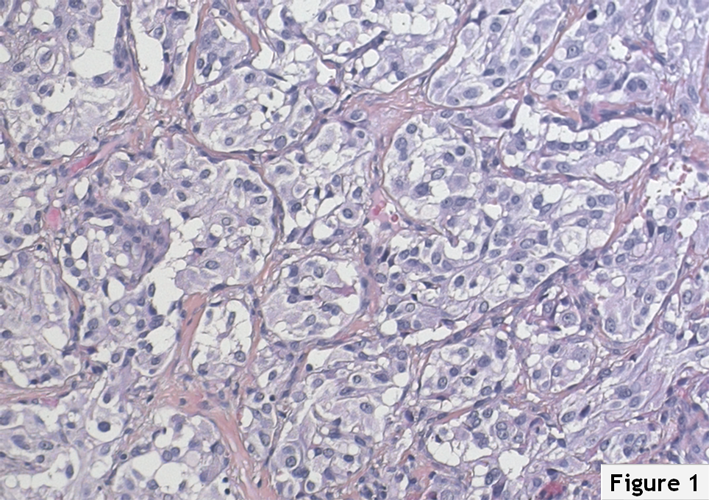
Paraganglioma is a neuroendocrine neoplasm composed of chief and sustentacular cells arranged in a characteristic nesting ("Zellballen") pattern (Lack, 2007; Barnes et al., 2005). The chief cells, which are more numerous than the sustentacular cells, display a relatively uniform alveolar arrangement. The sustentacular cells are flattened cells located at the periphery of the Zellballen and are impossible to identify in routinely stained sections. A prominent capillary network is present between the clusters of neoplastic cells. CBP harbors a higher density of chief cells compared to normal carotid body paraganglia. Neoplastic chief cells usually have an abundant, finely granular, eosinophilic cytoplasm containing neurosecretory granules (filled with catecholamines). The sustentacular cells are devoid of such granules. Cell borders may be well-defined with polygonal or angular contours. Vacuolar cytoplasmic changes may be seen. Nuclei may be round to oval with pseudoinclusions. Nuclear pleomorphism, hyperchromasia, and occasional mitotic figures are not indicative of malignancy (Lack, 2007; Barnes et al., 2005). Paraganglioma is often well-demarcated, surrounded by a fibrous capsule. Areas of capsule deficiency should not be regarded as true capsular invasion. Some paragangliomas display areas of hemorrhage or fibrosis. In CBP, the tumor may involve the adventitia of the carotid. Remnants of the normal carotid body may be seen.
Compared to other paragangliomas, JTP tend to more vascular and cell nests are less uniform and frequently smaller. Some JTP present with marked sclerosis (Lack, 2007; Barnes et al., 2005).
Malignant paraganglioma
As already mentioned, a tumor is considered malignant only if there is metastasis to regional lymph nodes or to more distant sites, such as the lungs or bones. There are no accepted histopathological or immunohistochemical criteria for the diagnosis of malignancy in PG. Local compression and erosion of surrounding structures are generally not accepted as a sign of malignancy. Nuclear pleomorphism, mitoses, necrosis, vascular or perineural invasion are not reliable prognostic factors in paragangliomas; the same is true for the Ki-67 proliferation index (Barnes et al., 2005).
Immunohistochemistry
The chief cells express synaptophysin, chromogranin A, and neuron-specific enolase. They do not express cytokeratin or S100 protein. Conversely, sustentacular cells express S100 protein as well as GFAP (glial fibrillary acidic protein). Immunostaining for S100 protein shows elongated, stellate or dendritic sustentacular cells at the periphery of the Zellballen (Lack, 2007; Barnes et al., 2005). According to some, biologically aggressive paragangliomas might have a reduced number of sustentacular cells (and express fewer neuropeptides) compared to benign lesions (Barnes et al., 2005).
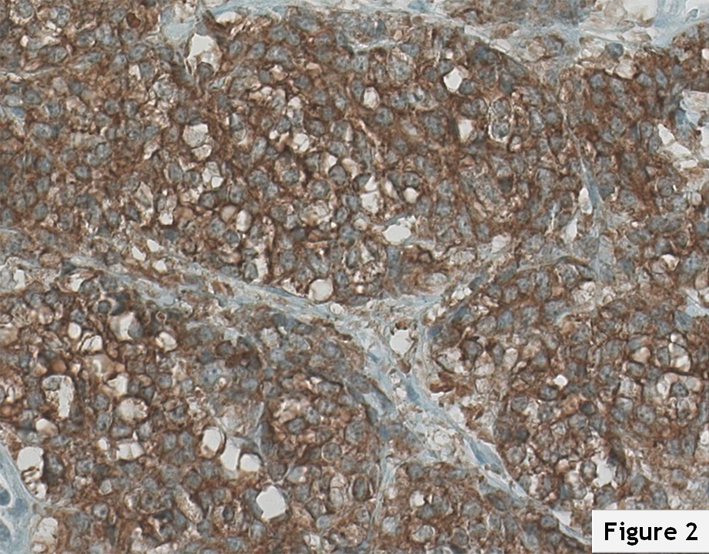
n normal paraganglia, the chief cells express SDH subunit B. In case of an SDH mutation (whatever the SDH subunit involved), as seen in some hereditary paraganglial tumors (see below), the staining for SDHB in neoplastic chief cells will be weaker or abolished. The sustentacular cells will still display positive staining, serving as an internal control. The SDHB staining will be retained in other hereditary tumor syndromes (e.g. von Hippel-Lindau or Multiple Endocrine Neoplasia type 2 (MEN2) syndrome) (see below). Such an immunostaining may guide the geneticist to which gene is involved in the disease pathogenesis.
Differential diagnosis
Differential diagnosis includes carcinoid tumor, medullary thyroid carcinoma, anaplastic carcinoma, metastatic melanoma and renal cell carcinoma (Barnes et al., 2005). The differential diagnosis of JTP comprises middle ear adenoma/adenomatous neoplasm, meningioma, hemangiopericytoma, and metastatic renal cell carcinoma. Meningioma involving the jugular foramen can mimic the more common JTP. Schwannoma can also involve the jugular foramen (Barnes et al., 2005).
Treatment
In CBP, surgery may require sacrifice of branches of the carotid artery. The recurrence rate is between 0 and 10% and may reflect partial resection and subsequent tumor re-growth. JTP can be locally aggressive neoplasms that destroy bone and extend intracranially, and they may recur (or persist) locally. Regional and distant metastases are uncommon. Radiation therapy, and in some cases surgery, offers a high rate of cure for localized neoplasms. Options for treatment of VP include surgery, radiation therapy, and in selected cases, observation (Moskovic et al., 2010). In most cases, the vagus nerve (and sometimes other cranial nerves) has to be sacrificed. Radiation therapy may be used in case of bilateral tumor. Eight per cent of vagal paragangliomas recurs after surgery, often reflecting inadequate excision.
Because malignant paragangliomas are rare, the survival rate is only available from small case series. In one study, the 5-year overall survival was 59.5% (Lee et al., 2002). In case of metastases confined to regional lymph nodes, the 5-year survival rate was 76.8% but decreased to 11.8% for patients with distant metastases (Lee et al., 2002). Adjuvant radiation therapy seems the most appropriate treatment in case of metastatic regional lymph nodes (Lee et al., 2002; Moskovic et al., 2010). Bone metastases occur frequently in JTP whereas CBP present with both bone and lung metastases (Moskovic et al., 2010).
Genetics
Note
Hereditary paragangliomas of the head and neck (HNPG) have been described in association with mutations of at least 10 different genes (Boedeker et al., 2013; Dahia, 2014). Mutations of the genes succinate dehydrogenase subunit D (SDHD), succinate dehydrogenase complex assembly factor 2 (SDHAF2, formerly known as SDH5), SDHC, and SDHB are the cause of paraganglioma syndromes (PGL) 1, 2, 3, and 4, respectively. These genes (as well as the SDHA gene, see below) encode subunits or cofactors of succinate dehydrogenase, which functions as the mitochondrial complex II (Baysal et al., 2000). The latter plays a key role in the mitochondrial respiratory chain as well as the tricarboxylic acid cycle (Boedeker et al., 2013; Dahia, 2014). Complete and selective loss of SDH enzymatic activity is observed in all SDHx-mutant PG regardless of the SDH gene involved. PGL1, 3, and 4 account for 90% of hereditary HNPG
Succinate dehydrogenase subunit A (SDHA), von Hippel-Lindau (VHL), and transmembrane protein 127 (TMEM127) gene mutations have also been associated with HNPG development (Boedeker et al., 2013; Dahia, 2014). HNPG in patients with rearranged during transfection (RET), neurofibromatosis type 1 (NF1), and MYC-associated factor X (MAX) gene mutations have been described in rare instances (Boedeker et al., 2013; Dahia, 2014).
Genes Involved and Proteins
Gene name
Location
Note
PGL1 families exhibit a peculiar inheritance pattern with a distinct "parent-of-origin dependent effect." (van der Mey et al., 1989). Although SDHD mutations (SDHD gene on chromosome 11q23.1) can be inherited both via the maternal and paternal lines, paraganglial tumors almost never develop after maternal transmission of the mutation (Boedeker et al., 2013). As maternally derived SDHD mutation carriers will still pass the mutation to their offspring in 50% of cases, PGL1 can seem to skip generations, which may in part explain the occurrence of SDHD germline mutations in apparently nonfamilial cases. This virtually exclusive paternal inheritance of disease is consistent with maternal imprinting of the disease gene (van der Mey et al., 1989). The fact that this inheritance pattern is also found in PGL2 families (linked to the SDHAF2 gene, located on 11q13), but not in PGL3 or PGL4 families, suggests that other genes on chromosome 11 are involved. In SDHD-linked paraganglial tumors, the whole maternal copy of chromosome 11 has been found selectively lost (Hensen et al., 2004). Thus, a second paternally imprinted tumor suppressor gene located elsewhere on chromosome 11 may play a decisive role in tumorigenesis, at least in PGL1 and PGL2. In the very few instances of maternal transmission of the disease in PGL1 families, not only was the SDHD or SDHAF2 gene affected but also was the 11p15 region (Pigny et al., 2008; Yeap et al., 2011). This putative tumor suppressor gene has yet to be identified.
Gene name
Location
Note
Gene name
Location
Note
Gene name
Location
Note
In one study, identification of SDHB mutation was the only risk factor for mortality. The 5-year survival probability was 36% for patients with SDHB mutation versus 67% for patients without SDHB mutation with a median survival time of 42 months for PGL4 patients versus 244 months for SDHB-wild type patients (Amar et al., 2007). SDHB mutations follow an autosomal dominant trait of inheritance. Tumor penetrance is somewhat lower than that seen in SDHD mutation carriers. The age-related tumor penetrance in PGL4 was in one study 29% at age 30 rising to 45% at age 40 (Benn et al., 2006).
Patients with PGL develop HNPG and pheochromocytomas at a significantly younger age than patients with sporadic paraganglial tumors (Boedeker et al., 2013). The age at first manifestation of a paraganglial tumor was 36.2 years in the PGL group compared to 50 years in the group with sporadic tumors (p < 0.0001) (Myssiorek et al., 2008). Multiple paraganglial tumors were also significantly more frequent in SDHx mutation carriers. Finally, patients with PGL also had a significantly higher risk for the development of malignant paraganglial tumors.
PGL1, 3, and 4 are not only associated with paraganglial tumors but also with hereditary renal cell carcinoma (Ricketts et al., 2012; Paik et al., 2014). PGL4 patients have an increased risk of developing papillary thyroid carcinoma, neuroblastoma, and breast cancer (Fishbein and Nathanson, 2012). Pituitary adenomas have been reported in PGL1 syndrome (Xekouki et al., 2012).
Gene name
Location
Note
Gene name
Location
Note
Gene name
Location
Note
Gene name
Location
Note
Gene name
Location
Note
Gene name
Location
Note
To be Noted
Note
Approximately one third of all patients with apparently sporadic HNPG suffer from mutations in one of the genes SDHD, SDHB, or SDHC (Boedeker et al. 2013). Recommendations on genetic screening are to test all patients presenting with paraganglioma before age 50, as well as those with malignant, multiple, or familial tumors (Pacak et al., 2007). Neumann et al. (2009) screened 598 patients with apparently sporadic HNPG for mutations of those 3 genes. Mutations were found in 183 patients (30.6%) with 94 SDHD, 63 SDHB, and 26 SDHC gene mutations and no patient presenting with more than one mutation (Neumann et al., 2009). The authors defined six first step predictors: positive family history, previous pheochromocytoma, multiple HNPG, manifestation of first tumor before age 40, and male sex, as well as malignant HNPG (Neumann et al., 2009). A step-by-step approach could be used even though next-generation sequencing will reduce costs and probably allow for up-front screening for all the genes known to be involved in PG (McInerney-Leo et al., 2014). In the mean time, clinical parameters will help to decide which gene(s) should be tested first. Some authors recommend that all patients diagnosed with PG undergo genetic testing (Fishbein et al., 2013). In the study by Fishbein et al. (2013), the patients with mutation in the VHL, NF1, or RET gene did not have a known family history before presentation in 30˜70 % of cases. It is important to refer the patients to the medical genetics department for counseling and deciding which gene(s) to test first. In case of positive family history for paraganglial tumors, the mutation detection rate was 90% (Fishbein et al., 2013).
All mutation carriers should undergo a clinical and radiologic screening after the genetic diagnosis has been established. The only exception may be children of female SDHD and SDHAF2 mutation carriers. In addition to a thorough physical examination, the following procedures should be considered: MRI with contrast medium of the head and neck, the thorax, and the abdomen; catecholamines or metanephrines in plasma or 24- hour urine, and functional imaging in some cases (Boedeker et al., 2013). The percentage of patients with SDHB and SDHD who develop a tumor during the first 2 decades of life is rather high. In the study by Burnichon et al. (2009), 21 of 242 SDHB and SDHD mutation carriers (8.7%) developed a tumor by age 18. The authors therefore suggested beginning examinations in patients with SDHB and SDHD at age 6. Myssiorek et al. (2008) recommend to commence screening at age 10.
Article Bibliography
| Pubmed ID | Last Year | Title | Authors |
|---|---|---|---|
| 22452945 | 2012 | MAX mutations cause hereditary and sporadic pheochromocytoma and paraganglioma. | Burnichon N et al |
| 2317327 | 1990 | Carotid body paragangliomas. A clinicopathologic and DNA analysis of 13 tumors. | Barnes L et al |
| 23291190 | 2013 | Mitochondrial complex II and genomic imprinting in inheritance of paraganglioma tumors. | Baysal BE et al |
| 16317055 | 2006 | Clinical presentation and penetrance of pheochromocytoma/paraganglioma syndromes. | Benn DE et al |
| 2983157 | 1985 | Glomus jugulare tumors revisited: a ten-year statistical follow-up of 231 cases. | Brown JS et al |
| 26071763 | 2015 | Coexistence of paraganglioma/pheochromocytoma and papillary thyroid carcinoma: a four-case series analysis. | Bugalho MJ et al |
| 19454582 | 2009 | The succinate dehydrogenase genetic testing in a large prospective series of patients with paragangliomas. | Burnichon N et al |
| 19723753 | 2009 | Carney triad: a syndrome featuring paraganglionic, adrenocortical, and possibly other endocrine tumors. | Carney JA et al |
| 20664475 | 2010 | The North American Neuroendocrine Tumor Society consensus guideline for the diagnosis and management of neuroendocrine tumors: pheochromocytoma, paraganglioma, and medullary thyroid cancer. | Chen H et al |
| 23743562 | 2014 | MAX mutations status in Swedish patients with pheochromocytoma and paraganglioma tumours. | Crona J et al |
| 24442145 | 2014 | Pheochromocytoma and paraganglioma pathogenesis: learning from genetic heterogeneity. | Dahia PL et al |
| 22429592 | 2012 | Pheochromocytoma and paraganglioma: understanding the complexities of the genetic background. | Fishbein L et al |
| 22544211 | 2012 | Succinate dehydrogenase (SDH) and mitochondrial driven neoplasia. | Gill AJ et al |
| 25130111 | 2014 | Coexistence of gastrointestinal stromal tumors (GISTs) and pheochromocytoma in three cases of neurofibromatosis type 1 (NF1) with a review of the literature. | Gorgel A et al |
| 22948026 | 2013 | High prevalence of occult paragangliomas in asymptomatic carriers of SDHD and SDHB gene mutations. | Heesterman BL et al |
| 21082267 | 2011 | Recent advances in the genetics of SDH-related paraganglioma and pheochromocytoma. | Hensen EF et al |
| 15064708 | 2004 | Somatic loss of maternal chromosome 11 causes parent-of-origin-dependent inheritance in SDHD-linked paraganglioma and phaeochromocytoma families. | Hensen EF et al |
| 26067997 | 2015 | Models of parent-of-origin tumorigenesis in hereditary paraganglioma. | Hoekstra AS et al |
| 6213823 | 1982 | Paragangliomatosis with numerous catecholamine-producing tumors. | Karasov RS et al |
| 16892081 | 2006 | Succinate dehydrogenase and fumarate hydratase: linking mitochondrial dysfunction and cancer. | King A et al |
| 21752896 | 2011 | SDHA immunohistochemistry detects germline SDHA gene mutations in apparently sporadic paragangliomas and pheochromocytomas. | Korpershoek E et al |
| 11857306 | 2002 | National Cancer Data Base report on malignant paragangliomas of the head and neck. | Lee JH et al |
| 26079334 | 2015 | Papilledema and Vision Loss Caused by Jugular Paragangliomas. | Lertakyamanee P et al |
| 25883647 | 2015 | Profiling of somatic mutations in phaeochromocytoma and paraganglioma by targeted next generation sequencing analysis. | Luchetti A et al |
| 24102379 | 2014 | Whole exome sequencing is an efficient and sensitive method for detection of germline mutations in patients with phaeochromcytomas and paragangliomas. | McInerney-Leo AM et al |
| 20863367 | 2010 | Malignant head and neck paragangliomas: is there an optimal treatment strategy? | Moskovic DJ et al |
| 21613359 | 2011 | Germline mutations of the TMEM127 gene in patients with paraganglioma of head and neck and extraadrenal abdominal sites. | Neumann HP et al |
| 17237836 | 2007 | Pheochromocytoma: recommendations for clinical practice from the First International Symposium. October 2005. | Pacak K et al |
| 24395865 | 2014 | Renal carcinoma associated with succinate dehydrogenase B mutation: a new and unique subtype of renal carcinoma. | Paik JY et al |
| 23822988 | 2013 | Clinical relevance of phenotype/genotype correlations in the diagnosis and therapy of pheochromocytomas/paragangliomas. | Parenti G et al |
| 19522823 | 2009 | SDH mutations in tumorigenesis and inherited endocrine tumours: lesson from the phaeochromocytoma-paraganglioma syndromes. | Pasini B et al |
| 21284840 | 2011 | Long-term follow-up after en bloc resection and reconstruction of a solitary paraganglioma metastasis in the first lumbar vertebral body: a case report. | Richter A et al |
| 23083876 | 2012 | Succinate dehydrogenase kidney cancer: an aggressive example of the Warburg effect in cancer. | Ricketts CJ et al |
| 24903423 | 2014 | Hereditary Pheochromocytoma. | Santos P et al |
| 24652566 | 2014 | Cervical sympathetic chain paraganglioma: a report of 2 cases and a literature review. | Seth R et al |
| 22041710 | 2011 | Genetics and clinical characteristics of hereditary pheochromocytomas and paragangliomas. | Welander J et al |
| 22170724 | 2012 | Succinate dehydrogenase (SDH) D subunit (SDHD) inactivation in a growth-hormone-producing pituitary tumor: a new association for SDH? | Xekouki P et al |
| 21937622 | 2011 | Molecular analysis of pheochromocytoma after maternal transmission of SDHD mutation elucidates mechanism of parent-of-origin effect. | Yeap PM et al |
| 23099648 | 2012 | Risk of malignant paraganglioma in SDHB-mutation and SDHD-mutation carriers: a systematic review and meta-analysis. | van Hulsteijn LT et al |
| 2574254 | 1989 | Genomic imprinting in hereditary glomus tumours: evidence for new genetic theory. | van der Mey AG et al |
Citation
Audrey Rousseau ; Cécile Badoual
Head and Neck: Paraganglioma: an overview
Atlas Genet Cytogenet Oncol Haematol. 2015-05-01
Online version: http://atlasgeneticsoncology.org/solid-tumor/6202/head-and-neck-paraganglioma-an-overview
