DNA/RNA
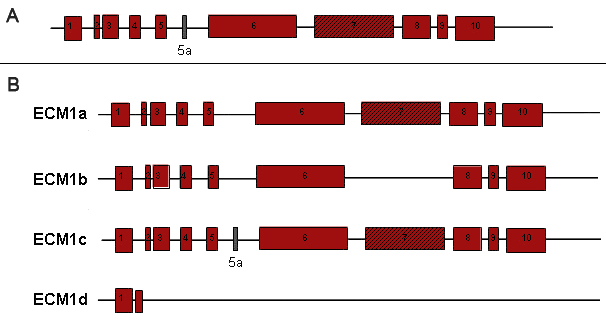
A. ECM1 DNA. B. ECM1 transcripts.
Description
The gene was initially described as having 10 exons. Afterwards an alternative spliced exon 5a was detected (Johnson et al., 1997).
Transcription
Four transcripts are described of which three transcripts have been identified by Northern blot analysis and 1 by PCR (Smits et al., 2000).
ECM1a (lacks exon 5a, 1.8 kb); ECM1b (exon 5a and exon 7 are missing, 1.4 kb); ECM1c (contains exon 5a, 1.85 kb); ECM1d (splice variant in which 71 bp of the 3 end of intron 1 are transcribed, resulting in a truncated 57 aa protein, only detected by PCR, DQ010946).
ECM1a (lacks exon 5a, 1.8 kb); ECM1b (exon 5a and exon 7 are missing, 1.4 kb); ECM1c (contains exon 5a, 1.85 kb); ECM1d (splice variant in which 71 bp of the 3 end of intron 1 are transcribed, resulting in a truncated 57 aa protein, only detected by PCR, DQ010946).
Proteins
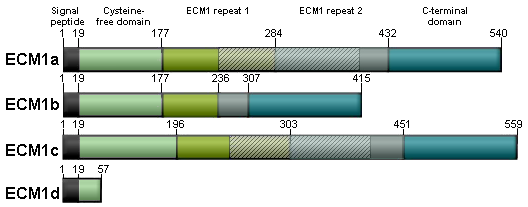
Schematic representation of ECM1 and its four splice variants. ECM1 protein is divided in a signal sequence (19 aa) (black box) and four different domains based on the presence or absence of cysteines: an N-terminal cysteine-free domain (white box), two tandem repeats (green and gray box), and a C-terminal region (blue box). ECM1c differs from ECM1a containing 19 aa encoded by exon 5a, ECM1b results from an alternative trancript caused by splicing out exon 7 (shaded black). ECM1d encodes a truncated protein composed of 57 aa containing exon 1, exon 2 and a part of exon 3.
Expression
ECM1a is widely expressed in liver, small intestines, lung, ovary, prostate, testis, skeletal muscle, pancreas, kidney, placenta, heart, basal keratinocytes, dermal blood vessels, and adnexal epithelia including hair follicles and sweat glands (Smits et al., 1997). ECM1 overexpression has also been identified in corneal epithelium (Turner et al., 2007) and epididymal tissue. In the latter, it has been proposed as a potential biomarker to distinguish obstructive from non-obstructive azoospermia based on the analysis of levels of the protein in seminal fluid (Drabovich et al., 2013).
ECM1b is detectable in tonsils and the spinous and granular layers of the epidermis.
ECM1c is expressed in the basal layer of the epidermis. ECM1 expression in human skin is regulated by age and ultraviolet light exposure and as such, may be a cutaneous stress response (Sander et al., 2006).
Important remark: ECM1 antibodies available to detect ECM1 protein are not able to discriminate between ECM1a and ECM1c.
ECM1d: expression pattern is not known yet.
ECM1b is detectable in tonsils and the spinous and granular layers of the epidermis.
ECM1c is expressed in the basal layer of the epidermis. ECM1 expression in human skin is regulated by age and ultraviolet light exposure and as such, may be a cutaneous stress response (Sander et al., 2006).
Important remark: ECM1 antibodies available to detect ECM1 protein are not able to discriminate between ECM1a and ECM1c.
ECM1d: expression pattern is not known yet.
Localisation
Ultrastructurally, ECM1a/c is a basement membrane protein in human skin and is part of network-like suprastructures containing perlecan (Mongiat et al., 2003), collagen type IV and laminin 332 as constituents.
Function
The exact biological function of ECM1 is not elucidated yet, but evidence for its involvement in important biophysiological processes, like skin differentiation, endochondral bone formation and angiogenesis have now emerged. ECM1 inhibits the hypertrophy of chondrocytes as well as mineralization of the matrix and endochondral bone formation. In the broader context of skin biology, ECM1 appears to have many functions and particular a biological super-glue action has been hypothesized. ECM1 also appears to have a role in regulating migration of type 2 helper T cells (Li et al., 2011).
Homology
Homology and protein-protein interactions: a computationally predicted three-dimensional structure of ECM1a is depicted below.
Based on the third serum albumin domain ECM1a protein can be divided into four domains. The first domain containing alpha-helices (alphaD1) and three serum albumin subdomain-like domains (SASDL 2-4), each of three sequences comparable with a complete subdomain of the third serum albumin domain. AlphaD1 exits only of Alpha-helices, whereas SASDL2 and -3 are capable of binding most of the extracellular matrix proteins identified so far (collagen type IV, laminin 332, fibronectin, perlecan, fibulin 1C/D, fibulin-3 and MMP-9) (Sercu et al., 2009; Sercu et al., 2008; Fujimoto et al., 2005). Other cDNA clones known to react with ECM1 fragments in (yeast two-hybrid asays) include legumain, human insulin-like growth factor, epidermal growth factor, human chorionic somatomammotropin, human alpha 2 hemoglobin, NADH dehydrogenase and ubiquinone (Fujimoto et al., 2006).
ECM1 also binds COMP (cartilage oligometric matrix protein) both in vitro and in vivo via the COMP EGF domain (Kong et al., 2010). In addition, ECM1 also binds the type II transmembrane protein PLSCR1 (phospholipid scramblase 1) via its tandem repeat region (Merregaert et al., 2010).
Based on the third serum albumin domain ECM1a protein can be divided into four domains. The first domain containing alpha-helices (alphaD1) and three serum albumin subdomain-like domains (SASDL 2-4), each of three sequences comparable with a complete subdomain of the third serum albumin domain. AlphaD1 exits only of Alpha-helices, whereas SASDL2 and -3 are capable of binding most of the extracellular matrix proteins identified so far (collagen type IV, laminin 332, fibronectin, perlecan, fibulin 1C/D, fibulin-3 and MMP-9) (Sercu et al., 2009; Sercu et al., 2008; Fujimoto et al., 2005). Other cDNA clones known to react with ECM1 fragments in (yeast two-hybrid asays) include legumain, human insulin-like growth factor, epidermal growth factor, human chorionic somatomammotropin, human alpha 2 hemoglobin, NADH dehydrogenase and ubiquinone (Fujimoto et al., 2006).
ECM1 also binds COMP (cartilage oligometric matrix protein) both in vitro and in vivo via the COMP EGF domain (Kong et al., 2010). In addition, ECM1 also binds the type II transmembrane protein PLSCR1 (phospholipid scramblase 1) via its tandem repeat region (Merregaert et al., 2010).
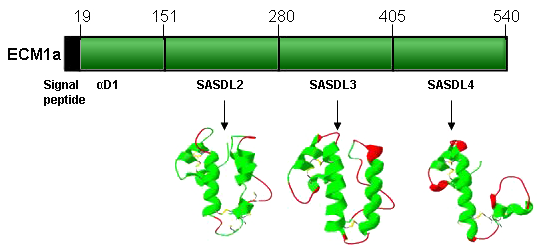
Computationally predicted three-dimensional structure of ECM1a.
Mutations
Note
Mutations were described in lipoid proteinosis (LiP; OMIN#247100), also known as hyalinosis cutis et mucosae or Urbach-Wiethe disease. This is a rare, autosomal recessive disorder characterized by generalized thickening of skin, mucosae, and certain viscera. Histologically, there is widespread deposition of hyaline (glycoprotein) material and disruption/reduplication of basement membrane. Classic features include beaded eyelid papules and laryngeal infiltration leading to hoarseness. More than 40 distinct missense, nonsense, splice site, small and large deletions and insertions have been reported, as summarized in Table 1. Approximately 50% of the mutations cluster to exon 6 and 7 of the gene. Examining the immunostaining pattern of skin biopsies using anti-ECM1 antibody can be used for the rapid diagnosis of LiP (Chan et al., 2004c).
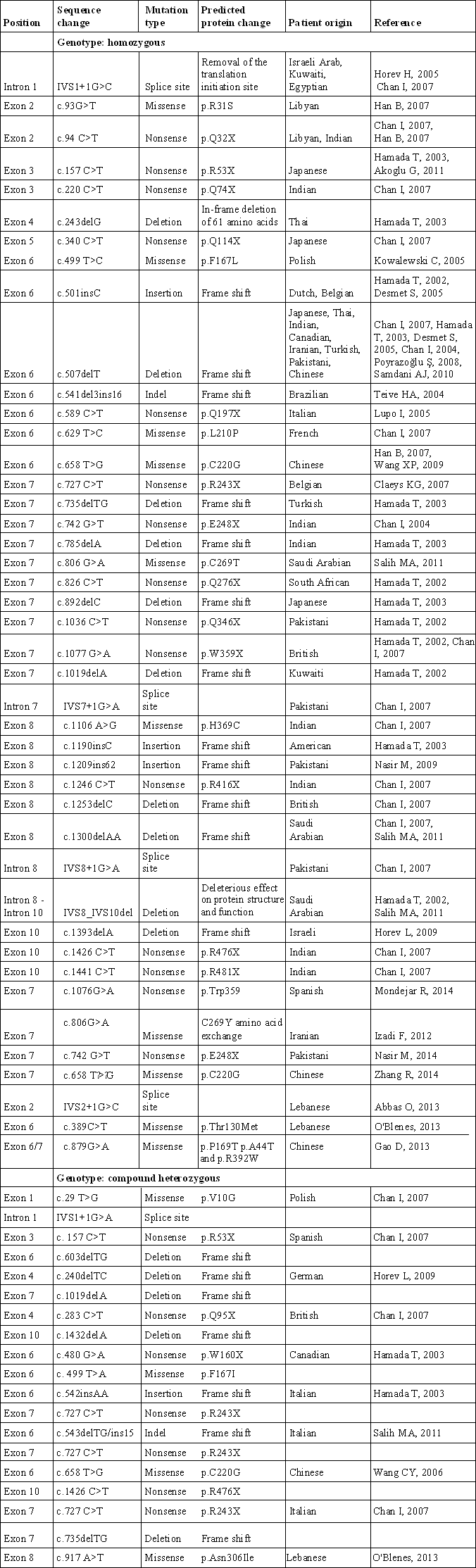
Table 1. Summary of ECM1 mutations in lipoid proteinosis.
Implicated in
Entity name
Various cancers
Note
A survey of ECM1 expression in different tumors indicated that ECM1, although not tumor specific, is significantly elevated in many malignant epithelial tumors that gave rise to metastases (Wang et al., 2003). ECM1 overexpression has been described in cancers of the breast, thyroid (Lal et al., 2008; Kebebew et al., 2005; Pauws et al., 2004) and head and neck squamous cell carcinomas (HNSCC), specifically, laryngeal carcinomas. Other carcinomas with increased ECM1 expression include hepatocellular carcinoma, cholangiocarcinomas, cutaneous melanoma cell lines (Lal et al., 2013) and gastric carcinomas (Wu et al., 2014).
In addition, ECM1 upregulation has been associated with poor prognosis and metastases in breast (Lal et al., 2009), laryngeal (Gu et al., 2013; Han et al., 2006), hepatocellular (Chen et al., 2011), gastric and cholangiocarcinomas (Xiong et al., 2012). ECM1 expression also appears to be a predictor of primary uveal melanoma metastasis in a study using microarray expression (Onken et al., 2010).
Together with the observation that human recombinant ECM1 stimulates proliferation of cultured endothelial cells and promotes blood vessel formation in the chorioallantoic membrane of chicken embryos suggest that ECM1 is a possible trigger for angiogenesis, tumor progression and malignancies (Han et al., 2001). ECM1 has been correlated with elevated lymphatic and microvessel density in laryngeal (Han et al., 2006) and gastric tumors (Wu et al., 2014) and also correlated with estrogen responsiveness in breast cancer. In the latter ECM1 expression also correlates with VEGF-C suggesting that they may have a synergistic effect on lymphangiogenesis and facilitation of lymphatic metastases (Wu et al., 2012). In cholangiocarcinomas, ECM1 expression is also correlated with expression the tumor marker CA19-9, MMP-9 and the estrogen receptor (Xiong et al., 2012).
ECM1 also appears to play a role in the migration, invasion and attachment properties of cancer cells, as seen in studies of cholangiocarcinoma and melanoma cell lines (Xiong et al., 2012; Lal et al., 2013).
Overexpression of ECM1 in cancer cells appears to be mediated by the Akt/NF-κB signaling axis (Xiong et al., 2012). ECM1 expression is also partly regulated by transcription factor AP2C (TFAP2C) in melanoma cells, and its effect is mediated by direct interaction with the ECM1 promoter (Lal et al., 2013).
In addition, ECM1 upregulation has been associated with poor prognosis and metastases in breast (Lal et al., 2009), laryngeal (Gu et al., 2013; Han et al., 2006), hepatocellular (Chen et al., 2011), gastric and cholangiocarcinomas (Xiong et al., 2012). ECM1 expression also appears to be a predictor of primary uveal melanoma metastasis in a study using microarray expression (Onken et al., 2010).
Together with the observation that human recombinant ECM1 stimulates proliferation of cultured endothelial cells and promotes blood vessel formation in the chorioallantoic membrane of chicken embryos suggest that ECM1 is a possible trigger for angiogenesis, tumor progression and malignancies (Han et al., 2001). ECM1 has been correlated with elevated lymphatic and microvessel density in laryngeal (Han et al., 2006) and gastric tumors (Wu et al., 2014) and also correlated with estrogen responsiveness in breast cancer. In the latter ECM1 expression also correlates with VEGF-C suggesting that they may have a synergistic effect on lymphangiogenesis and facilitation of lymphatic metastases (Wu et al., 2012). In cholangiocarcinomas, ECM1 expression is also correlated with expression the tumor marker CA19-9, MMP-9 and the estrogen receptor (Xiong et al., 2012).
ECM1 also appears to play a role in the migration, invasion and attachment properties of cancer cells, as seen in studies of cholangiocarcinoma and melanoma cell lines (Xiong et al., 2012; Lal et al., 2013).
Overexpression of ECM1 in cancer cells appears to be mediated by the Akt/NF-κB signaling axis (Xiong et al., 2012). ECM1 expression is also partly regulated by transcription factor AP2C (TFAP2C) in melanoma cells, and its effect is mediated by direct interaction with the ECM1 promoter (Lal et al., 2013).
Entity name
Lipoid proteinosis
Disease
Lipoid proteinosis, also known as hyalinosis cutis et mucosae or Urbach-Wiethe disease.
Lipoid proteinosis is a rare autosomal recessive genodermatosis characterized by the deposition of an amorphous hyaline material in the skin, mucosa, and viscera. Papular infiltration of the margin of the lids producing itchy eyes, and infiltration in the tongue and its frenulum, in the larynx leading to hoarseness, and in the skin (e.g., elbows and axilla) are characteristic (Hamada et al., 2003; Hamada et al., 2002).
Lipoid proteinosis is a rare autosomal recessive genodermatosis characterized by the deposition of an amorphous hyaline material in the skin, mucosa, and viscera. Papular infiltration of the margin of the lids producing itchy eyes, and infiltration in the tongue and its frenulum, in the larynx leading to hoarseness, and in the skin (e.g., elbows and axilla) are characteristic (Hamada et al., 2003; Hamada et al., 2002).
Entity name
Lichen sclerosus et atrophicus
Disease
Lichen sclerosus (LS) is a chronic inflammatory skin disorder of unknown etiology that results in white plaques with epidermal atrophy. It has both genital and extragenital presentations. HLA-subtype susceptibility and high rates of other autoimmune disorders suggest that autoantibodies to specific mucocutaneous antigens may be involved in the etiology of lichen sclerosus. The similarities with lipoid proteinosis, which results from mutations in the ECM1 gene, suggested that this protein may be an autoantigen in lichen sclerosus. Indeed, circulating auto-antibodies to ECM1 were found in the sera of 67% of lichen sclerosus patients (Oyama et al., 2003; Oyama et al., 2004).
In conclusion lipoid proteinosis and lichen sclerosus are immunogenetic counterparts targeting ECM1.
In conclusion lipoid proteinosis and lichen sclerosus are immunogenetic counterparts targeting ECM1.
Entity name
Ulcerative colitis
Note
A nonsynonymous SNP (rs11205387) has been associated with ulcerative colitis (Fisher et al., 2008). ECM1 variation was not associated with Crohns disease (Anderson et al., 2009). Incorporation of the analysis of ECM1 genetic variants into a diagnostic algorithm including serological and inflammatory markers resulted in improved accuracy in identifying inflammatory bowel disease and in particular, differentiating between ulcerative colitis and Crohns disease (Plevy et al., 2013).
Article Bibliography
| Pubmed ID | Last Year | Title | Authors |
|---|---|---|---|
| 23789600 | 2013 | A novel splice-site ECM1 gene mutation in a Lebanese girl with lipoid proteinosis. | Abbas O et al |
| 20666665 | 2011 | Clinical and histopathological response to acitretin therapy in lipoid proteinosis. | Akoglu G et al |
| 19068216 | 2009 | Investigation of Crohn's disease risk loci in ulcerative colitis further defines their molecular relationship. | Anderson CA et al |
| 15377379 | 2004 | An Indian child with lipoid proteinosis resulting from a recurrent frameshift mutation (507delT) in the extracellular matrix protein 1 gene. | Chan I et al |
| 17927570 | 2007 | The molecular basis of lipoid proteinosis: mutations in extracellular matrix protein 1. | Chan I et al |
| 15628326 | 2004 | Molecular basis of lipoid proteinosis in two Indian siblings. | Chan I et al |
| 15265527 | 2004 | Rapid diagnosis of lipoid proteinosis using an anti-extracellular matrix protein 1 (ECM1) antibody. | Chan I et al |
| 21128013 | 2011 | Extracellular matrix protein 1, a novel prognostic factor, is associated with metastatic potential of hepatocellular carcinoma. | Chen H et al |
| 17403608 | 2007 | Epilepsy and migraine in a patient with Urbach-Wiethe disease. | Claeys KG et al |
| 16172042 | 2005 | Clinical and molecular abnormalities in lipoid proteinosis. | Desmet S et al |
| 24259048 | 2013 | Differential diagnosis of azoospermia with proteomic biomarkers ECM1 and TEX101 quantified in seminal plasma. | Drabovich AP et al |
| 18438406 | 2008 | Genetic determinants of ulcerative colitis include the ECM1 locus and five loci implicated in Crohn's disease. | Fisher SA et al |
| 16512877 | 2006 | Extracellular matrix protein 1 inhibits the activity of matrix metalloproteinase 9 through high-affinity protein/protein interactions. | Fujimoto N et al |
| 23682690 | 2013 | Identification of a novel splicing mutation of ECM1 in a rare lipoid proteinosis family. | Gao D et al |
| 23696932 | 2013 | Correlation of ECM1 expression level with the pathogenesis and metastasis of laryngeal carcinoma. | Gu M et al |
| 11929856 | 2002 | Lipoid proteinosis maps to 1q21 and is caused by mutations in the extracellular matrix protein 1 gene (ECM1). | Hamada T et al |
| 12603844 | 2003 | Extracellular matrix protein 1 gene (ECM1) mutations in lipoid proteinosis and genotype-phenotype correlation. | Hamada T et al |
| 17721643 | 2007 | Homozygous missense mutation in the ECM1 gene in Chinese siblings with lipoid proteinosis. | Han B et al |
| 16646403 | 2006 | [The relationship between ECM1 and the angiogenesis and metastasis of laryngeal carcinoma]. | Han Z et al |
| 11292659 | 2001 | Extracellular matrix protein 1 (ECM1) has angiogenic properties and is expressed by breast tumor cells. | Han Z et al |
| 16274456 | 2005 | A novel splice-site mutation in ECM-1 gene in a consanguineous family with lipoid proteinosis. | Horev L et al |
| 19734986 | 2009 | Lipoid proteinosis: identification of two novel mutations in the human ECM-1 gene and lack of genotype-phenotype correlation. | Horev L et al |
| 23212332 | 2012 | A novel missense mutation in exon 7 of the ECM1 gene in an Iranian lipoid proteinosis patient. | Izadi F et al |
| 9501329 | 1997 | Characterization of the human extracellular matrix protein 1 gene on chromosome 1q21. | Johnson MR et al |
| 16135921 | 2005 | ECM1 and TMPRSS4 are diagnostic markers of malignant thyroid neoplasms and improve the accuracy of fine needle aspiration biopsy. | Kebebew E et al |
| 20138147 | 2010 | Interaction between cartilage oligomeric matrix protein and extracellular matrix protein 1 mediates endochondral bone growth. | Kong L et al |
| 15927815 | 2005 | Three-dimensional imaging reveals major changes in skin microvasculature in lipoid proteinosis and lichen sclerosus. | Kowalewski C et al |
| 24023917 | 2013 | Human Melanoma cells over-express extracellular matrix 1 (ECM1) which is regulated by TFAP2C. | Lal G et al |
| 19521735 | 2009 | Extracellular matrix 1 (ECM1) expression is a novel prognostic marker for poor long-term survival in breast cancer: a Hospital-based Cohort Study in Iowa. | Lal G et al |
| 18374945 | 2008 | ECM1 expression in thyroid tumors--a comparison of real-time RT-PCR and IHC. | Lal G et al |
| 21217760 | 2011 | ECM1 controls T(H)2 cell egress from lymph nodes through re-expression of S1P(1). | Li Z et al |
| 16225617 | 2005 | A novel mutation of the extracellular matrix protein 1 gene (ECM1) in a patient with lipoid proteinosis (Urbach-Wiethe disease) from Sicily. | Lupo I et al |
| 20870722 | 2010 | Phospholipid scramblase 1 is secreted by a lipid raft-dependent pathway and interacts with the extracellular matrix protein 1 in the dermal epidermal junction zone of human skin. | Merregaert J et al |
| 24465266 | 2014 | Clinical and molecular study of the extracellular matrix protein 1 gene in a spanish family with lipoid proteinosis. | Mondejar R et al |
| 12604605 | 2003 | Perlecan protein core interacts with extracellular matrix protein 1 (ECM1), a glycoprotein involved in bone formation and angiogenesis. | Mongiat M et al |
| 21791056 | 2011 | Molecular analysis of lipoid proteinosis: identification of a novel nonsense mutation in the ECM1 gene in a Pakistani family. | Nasir M et al |
| 24413997 | 2014 | Identification of recurrent c.742G>T nonsense mutation in ECM1 in Pakistani families suffering from lipoid proteinosis. | Nasir M et al |
| 20413675 | 2010 | An accurate, clinically feasible multi-gene expression assay for predicting metastasis in uveal melanoma. | Onken MD et al |
| 15173881 | 2004 | Development of antigen-specific ELISA for circulating autoantibodies to extracellular matrix protein 1 in lichen sclerosus. | Oyama N et al |
| 14715705 | 2004 | Genes differentially expressed in thyroid carcinoma identified by comparison of SAGE expression profiles. | Pauws E et al |
| 23518807 | 2013 | Combined serological, genetic, and inflammatory markers differentiate non-IBD, Crohn's disease, and ulcerative colitis patients. | Plevy S et al |
| 21318070 | 2008 | Severe short stature: an unusual finding in lipoid proteinosis. | Poyrazoğlu Ş et al |
| 21349189 | 2011 | Molecular and neurological characterizations of three Saudi families with lipoid proteinosis. | Salih MA et al |
| 21886756 | 2010 | Homozygous frame shift mutation in ECM1 gene in two siblings with lipoid proteinosis. | Samdani AJ et al |
| 16433788 | 2006 | Expression of extracellular matrix protein 1 (ECM1) in human skin is decreased by age and increased upon ultraviolet exposure. | Sander CS et al |
| 19275936 | 2009 | ECM1 interacts with fibulin-3 and the beta 3 chain of laminin 332 through its serum albumin subdomain-like 2 domain. | Sercu S et al |
| 18200062 | 2008 | Interaction of extracellular matrix protein 1 with extracellular matrix components: ECM1 is a basement membrane protein of the skin. | Sercu S et al |
| 9367673 | 1997 | The human extracellular matrix gene 1 (ECM1): genomic structure, cDNA cloning, expression pattern, and chromosomal localization. | Smits P et al |
| 10733679 | 2000 | Differentiation-dependent alternative splicing and expression of the extracellular matrix protein 1 gene in human keratinocytes. | Smits P et al |
| 15596773 | 2004 | Generalized dystonia and striatal calcifications with lipoid proteinosis. | Teive HA et al |
| 17460260 | 2007 | Comparative analysis of human conjunctival and corneal epithelial gene expression with oligonucleotide microarrays. | Turner HC et al |
| 16882193 | 2006 | New compound heterozygous mutations in a Chinese family with lipoid proteinosis. | Wang CY et al |
| 14550953 | 2003 | Extracellular matrix protein 1 (ECM1) is over-expressed in malignant epithelial tumors. | Wang L et al |
| 19368610 | 2009 | A Chinese family with lipoid proteinosis resulting from a homozygous missense mutation in the extracellular matrix protein 1 gene. | Wang XP et al |
| 24779890 | 2014 | Extracellular matrix protein 1 is correlated to carcinogenesis and lymphatic metastasis of human gastric cancer. | Wu Q et al |
| 22284579 | 2012 | Expression and clinical significance of extracellular matrix protein 1 and vascular endothelial growth factor-C in lymphatic metastasis of human breast cancer. | Wu QW et al |
| 22489696 | 2012 | Overexpression of ECM1 contributes to migration and invasion in cholangiocarcinoma cell. | Xiong GP et al |
| 24708644 | 2014 | Treatment of lipoid proteinosis due to the p.C220G mutation in ECM1, a major allele in Chinese patients. | Zhang R et al |
Other Information
Locus ID:
NCBI: 1893
MIM: 602201
HGNC: 3153
Ensembl: ENSG00000143369
Variants:
dbSNP: 1893
ClinVar: 1893
TCGA: ENSG00000143369
COSMIC: ECM1
RNA/Proteins
| Gene ID | Transcript ID | Uniprot |
|---|---|---|
| ENSG00000143369 | ENST00000346569 | Q16610 |
| ENSG00000143369 | ENST00000369047 | Q16610 |
| ENSG00000143369 | ENST00000369047 | A0A140VJI7 |
| ENSG00000143369 | ENST00000369049 | Q16610 |
Expression (GTEx)
Pathways
Protein levels (Protein atlas)
References
| Pubmed ID | Year | Title | Citations |
|---|---|---|---|
| 37992590 | 2024 | ECM1 promotes migration and invasion in endometriosis. | 1 |
| 38039715 | 2024 | Downregulation of extracellular matrix protein 1 effectively ameliorates osteoarthritis progression in vivo. | 0 |
| 38172938 | 2024 | TET2-mediated ECM1 hypomethylation promotes the neovascularization in active proliferative diabetic retinopathy. | 1 |
| 38613239 | 2024 | ECM1 and KRT6A are involved in tumor progression and chemoresistance in the effect of dexamethasone on pancreatic cancer. | 1 |
| 38849014 | 2024 | Remodeling of tumor microenvironment by extracellular matrix protein 1a differentially regulates ovarian cancer metastasis. | 0 |
| 37992590 | 2024 | ECM1 promotes migration and invasion in endometriosis. | 1 |
| 38039715 | 2024 | Downregulation of extracellular matrix protein 1 effectively ameliorates osteoarthritis progression in vivo. | 0 |
| 38172938 | 2024 | TET2-mediated ECM1 hypomethylation promotes the neovascularization in active proliferative diabetic retinopathy. | 1 |
| 38613239 | 2024 | ECM1 and KRT6A are involved in tumor progression and chemoresistance in the effect of dexamethasone on pancreatic cancer. | 1 |
| 38849014 | 2024 | Remodeling of tumor microenvironment by extracellular matrix protein 1a differentially regulates ovarian cancer metastasis. | 0 |
| 36670503 | 2023 | Lipoid proteinosis: Novel ECM1 pathogenic variants and intrafamilial variability in four unrelated Arab families. | 0 |
| 36670503 | 2023 | Lipoid proteinosis: Novel ECM1 pathogenic variants and intrafamilial variability in four unrelated Arab families. | 0 |
| 34816866 | 2022 | 4D-quantitative proteomics signature of asthenozoospermia and identification of extracellular matrix protein 1 as a novel biomarker for sperm motility. | 5 |
| 36299684 | 2022 | Associations between Extracellular Matrix Protein 1 Gene Polymorphism and Progression of Liver Disease. | 0 |
| 34816866 | 2022 | 4D-quantitative proteomics signature of asthenozoospermia and identification of extracellular matrix protein 1 as a novel biomarker for sperm motility. | 5 |
Citation
Piedad C Gomez-Contreras ; Geeta Lal
ECM1 (extracellular matrix protein 1)
Atlas Genet Cytogenet Oncol Haematol. 2014-09-01
Online version: http://atlasgeneticsoncology.org/gene/40398/ecm1
Historical Card
2009-10-01 ECM1 (extracellular matrix protein 1) by Joseph Merregaert,Wim Van Hul Affiliation
Laboratory of Molecular Biotechnology, Department of Biomedical Sciences, University of Antwerp, Universiteitsplein 1, 2610 Wilrijk\\\/Antwerp, Belgium
