EGFR (Epidermal Growth Factor Receptor)
2019-12-01 Ayca Circir Hatil , Esra Cicek , Merve Oyken , A.Elif Erson-Bensan AffiliationDepartment of Biological Sciences, Middle East Technical University, Ankara\\\/TURKEY, [email protected]; [email protected]; [email protected]; [email protected]
Identity

Abstract
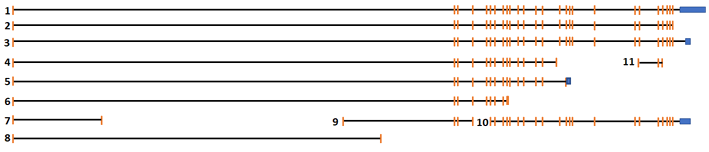
ERBB family member epidermal receptor tyrosine kinase (EGFR) is composed of 28 exons and 27 introns. EGFR codes for 11 transcripts and 8 of them are protein coding. EGFR is a transmembrane glycoprotein that can be activated by several different ligands such as epidermal growth factor (EGF), transforming growth factor-alpha (TGFA), heparin-binding EGF-like growth factor (HBEGF), betacellulin (BTC), amphiregulin (AREG), epiregulin (EREG), and epigen (EPGN) (Singh, 2016). Ligand binding induces the dimerization of EGFR and autophosphorylation followed by a cascade of downstream phosphorylation events (Capuani et al., 2015). EGFR activation plays a key role in cell survival, proliferation, migration and differentiation (Purba, 2017).
DNA/RNA
Description
Transcription
Pseudogene
Proteins

Description
Localisation
Function
In canonical EGFR signaling pathway, activation with ligand binding is a well characterized function of EGFR. With ligand binding, trans-autophosphorylation takes place between on tyrosine residues, which triggers the downstream signaling cascades (Maruyama, 2014). Conformational changes of C-terminal tail also trigger the components of endocytosis pathway and leads to EGFR internalization. EGFR, without ligand, can also be endocytosed with a rate 10-fold lower than the ligand induced ones (Sigismund, 2018).
When EGFR is induced with ligand binding on plasma membrane, it is not only phosphorylated, but also ubiquitinated at lysine residues on the cytoplasmic kinase domain by E3 ubiquitin ligase Cbl complex including GRB2 adaptor protein. Concentration of EGF is the regulator of EGFR ubiquitination. At the beginning of internalization of EGFR, ubiquitination drives the non-clathrin endocytosis pathway, at later stages it steers EGFR to lysosomal degradation (Sigismund, 2013 and Sigismund, 2005).
Fate of EGFR depends also on the type of ligand. After internalization, some of its ligands, like TGFA and EREG (epiregulin), dissociates from EGFR in the milder acidic environment of endosome and drives recycling of EGFR to plasma membrane. In contrast, ligands (like EGF) which are not affected from the acidity of endosome, favors the passage of majority of EGFR from early to late endosomes to be degraded by the lysosome (Ebner, 1991). Additionally, HBEGF (heparin-binding EGF-like growth factor) and BTC (betacellulin) drives all EGF receptors to lysosomal degradation (Sigismund, 2018; Roepstorff et al., 2009; Ebner and Derync, 1991).
Ligand induced EGFR activation in turn activates downstream signaling pathways, named as, RAS/MAPK pathway, PI3K/AKT pathway and PLC/Protein kinase C cascade. Activation of these pathways with canonical EGFR signaling controls the crucial functions of cells such as survival, proliferation, differentiation and migration (Scaltriti and Baselga, 2006). In addition, activation of EGFR regulates other important metabolic functions such as autophagy in response to cellular or environmental stress via non-canonical signaling. Dealing with stress conditions with the action of non-canonical EGFR signal is preferred in cancer cells to provide advantage for survival and drug resistance (Tan et al., 2015; Henson, Chen and Gibson, 2017).
EGFR is expressed in many organs is involved in diverse roles including proliferation (Buchon et al., 2010), survival (Crossman, Streichan and Vincent, 2018), embryogenesis (Lusk, Lam and Tolwinski, 2017) differentiation during development and maintenance of cellular physiology (Dumstrei et al., 1998).
During lung development, EGFR is critical in type II pneumocyte maturity. Inhibition of EGFR gives rise to immature type II pneumocytes and alveolar deficiency (Inamura, 2018; Kothe et al., 2018)
In heart development, EGFR takes role in differentiation of cardiac valves (Barrick et al., 2009; Qi, 2015)
Surviving mice among the EGFR deficient group showed valvular deficiency and further survived mice experienced aortic valve thickening, aortic stenosis and heart deficit (Makki et al., 2013)
Expression of EGFR also correlates with the level of neurogenesis in rodents and EGFR activity controls the proliferation and survival of neuronal cells and their proper migration (Puehringer et al., 2014). Moreover, EGFR mutant mice showed substantial neurodegenerative damage in the frontal cortex, olfactory bulb, thalamus and irregular migration in mutant mice brains (Sibilia et al., 1998)
EGFR null mice have abnormal primary endochondral ossification and malformation of osteoclasts (Wang et al., 2009).
EGFR-/- mice models show massive abnormality in epithelial development in which newborns had open eyes, whiskers were curly, and they died within 8 days after birth due to the epithelial disorder in skin, lung and gastrointestinal tract (Miettinen et al., 1995).
EGFR is expressed normally in the outer sheath of the root and its expression decreases when follicular growth is completed. Impaired downregulation of EGFR in hair growth arrest the hair growing cycle at anagen phase and prevent beginning of catagen phase (Mak and Chan, 2003). The importance of EGFR signaling in fur development and maintenance of hair follicle integrity and differentiation were shown in EGFR null mice models. Deregulation of keratin synthesis, dysregulated differentiation of follicle bulb, cuticle disorder and improper integration of hair fibers were observed in EGFR null mice (Hansen et al., 1997)
EGFR signaling and its downstream pathways are also important in skin homeostasis. Activation of EGFR-ERK pathway has a critical role in healing of skin damages, while EGFR-PI3K/AKT pathway is critical to inhibits initiation of apoptosis under UV stress (Peus et al., 2000). Additionally, for keratinocyte migration during healing of skin wounds, necessary amount of collagenase-1 production is provided by the activation of EGFR by autocrine manner (Pilcher et al., 1999). In case of skin lesion, released cytokines from leukocytes activates keratinocytes, which in turn release several chemokines like CXCLs, and ILs. EGFR is responsible from the regulation of chemokine release from keratinocytes, which sets a crosstalk between skin inflammation and EGFR signaling (Pastore et al., 2008).
Even though the mechanism of transport of EGFR to nucleus is still not clear, EGFR also functions in nucleus as transcriptional co-activator of cell cycle related genes like CCND1 (cyclin D1) and MYC. Additionally; EGFR nuclear signaling is stimulated by EGF and stress factors like H2O2, UV, ionizing radiation and drugs (Wee and Wang, 2017).
Homology
Mutations
Somatic
Distribution of totally 512 mutations: 412 missense mutations, 42 truncating mutations (including nonsense, nonstop, frameshift deletion, frameshift insertion, splice site mutations), 33 in-frame mutations (in-frame deletions and in-frame insertions) and 30 other mutations.
Non-small cell lung cancer (NSCLC): Very common (85-90%) and classical mutations frequently seen in NSCLC are L858R point mutation in exon 21 and residual deletions of exon 19. Additionally, insertions in exon 20 is related with the resistance against therapeutic EGFR inhibitors like Afatinib, Erlotinib and Gefitinib. H773-V774insX, D770-N771insX and V769-D770insX are the insertions of exon 20 with higher incidence (Vyse and Huang, 2019). T790M point mutation on tyrosine kinase domain of EGFR is accepted as a drug resistance marker of NSCLC and this mutation typically coexist with L858R mutation (Denis et al., 2015; Li et al., 2018). In general, substitution in leucine to arginine at position 858 in tyrosine kinase domain of EGFR is well known activating mutation. With this mutation, autoinhibitory conformation of EGFR is suppressed and the receptor becomes active even without ligand binding (Wee and Wang, 2017).
Glioblastoma (GBM): Point mutations of EGFR are common in GBM. Deletions observed in GBM are N-terminal deletion of EGFR (EGFRvI), exon 14-15 deletion (EGFRvII that is oncogenic), exon 2-4 deletion (EGFRvII, which is oncogenic), exon 25-27 deletion (EGFRvIV), exon 25-28 deletion (EGFRvV). R108K, A289V, A289D, A289T and G598D are point mutations in EGFR seen in 24% of GBM cases (Larysz, 2011; An et al., 2018).
Breast cancer: 11.4% of 70 paraffin tumor samples randomly selected from among 653 triple negative breast cancer (TNBC) patients showed EGFR mutations. These mutations were deletions in exon 19, missense substitutions of exon 21 and inversions in EGFR sequence (Teng et al., 2011). Another study showed 28.3% of 180 patients had EGFR mutations. Thirty patients had exon 19 deletions, 21 of them showed exon 21 mutations (Ma et al., 2017). Additionally, 50% of TNBC cases were characterized by EGFR overexpression, which is correlated with poor prognosis, less differentiation and increased tumor size. Percentage of EGFR overexpression in TNBC is quite high when compared to other subtypes of breast cancer (Masuda et al., 2012).
Esophageal cancer: Although it is rare, G to A substitution was observed in esophageal cancer. 40-70% of esophageal squamous cell carcinoma shows overexpression and increased gene copy number of EGFR (Anvari, Anvari and Toosi, 2014)
Head and Neck squamous cell carcinoma (HNSCC): Among 47 HNSCC cases, 21% of EGFR mutations is L861Q point mutation in exon 21, 19% of them is insertion in exon 20 and 17% of them included exon 19 deletions (Vatte et al., 2017). Additionally, with 41.5, exon 19 had the highest percentage of tyrosine kinase domain (TKD) mutations. 32.1 %, 17 % and 9.4 % are distribution of TKD mutations in exon 20, exon 21 and exon 18, respectively. Among all EGFR mutations, 73% of them was exon 18-21 missense mutations, 22% was exon 19 deletions and 5% was exon 20 insertion mutations (Perisanidis, 2017)
Gastric cancer: Exon 19 and exon 21 EGFR mutations were identified in gastric cancer in addition to single nucleotide polymorphisms Q787Q (37.9%). In addition, Y801C, L858R and G863D point mutations were revealed for the first time in gastric cancer samples (Liu et al., 2011).
Endometrial cancer: Samples taken from 28 woman with endometrial cancer showed three different mutations in separate patients. L688F and E690K were in exon 18 and K754E in exon 19, which is in contrast to others responsive to lapatinib treatment (Leslie et al., 2013; Reyes et al., 2014)
Colorectal cancer: EGFR mutation status of 13 patients among 35 male and 23 female patients at different stages of colorectal cancer showed exon 20 mutation but not exons 18,19 and 21 mutations (Oh et al., 2011). S492R EGFR ectodomain mutation also increases the mutation rate and mABCH12 was suggested to prevent the effect of mutated EGFR (Dong et al., 2019).
Prostate cancer: Studies revealed the overexpression, amplification and mutation of EGFR in prostate cancer (Guerin et al., 2010).
Testicular cancer: From 110 testicular germ cell tumors 209 distinct components were obtained and analyzed for EGFR expression. Among those components, 28% of 83 seminomas, 11% of 27 embryonal carcinomas, 88% of 8 choriocarcinomas and 44% of 18 yolk sac tumors showed EGFR overexpression. Additionally, among them, some of the samples showed amplification and high copy number of EGFR, which is also in correlation with overexpression of EGFR according to IHC studies (Miyai et al., 2010).
Implicated in
Hypermethylation of EGFR promoter region in analyzed tumor samples indicates the possible use of this methylation status as a maker for gastric cancer (Weng et al., 2015).
Mutations in Presenilin (PS) proteins PSEN1 and PSEN2 cause dramatic severity in early-onset of AD. PSEN1 controls the cell-specific transcription of EGFR in neural cells. PSEN1 null (PS1(-/-)) cortical neurons showed decreased level of EGFR related survival signaling, until exogenous EGFR rescues the signaling phenotype. Interestingly, while overexpression of PSEN1 upregulates the transcriptional level of EGFR, downregulation of it reduces the EGFR mRNA level (Bruban et al., 2015).
EGFR has critical role in APBA2 (amyloid β42) induced memory loss in AD. Studies on APP /PSEN1 double transgenic mice had high levels of active EGFR level. Inhibition of EGFR activity reversed the action of APP/PSEN1 related impairment of memory in mice. Similarly, in fruit flies, upregulation of EGFR elevated the memory loss while pharmaceutical inhibition of EGFR rescued memory loss in Aβ42 expressing fruit flies (Wang et al., 2012).
Immuneperoxidase staining showed higher level of EGFR immune reactivity in both pathologically confirmed AD brain samples and in normal aging brain samples with neuritic plaques (Birecree et al., 1988).
Article Bibliography
| Pubmed ID | Last Year | Title | Authors |
|---|---|---|---|
| 29321659 | 2018 | Epidermal growth factor receptor and EGFRvIII in glioblastoma: signaling pathways and targeted therapies. | An Z et al |
| 22957020 | 2012 | An in vivo C. elegans model system for screening EGFR-inhibiting anti-cancer drugs. | Bae YK et al |
| 19448146 | 2009 | Reduced EGFR causes abnormal valvular differentiation leading to calcific aortic stenosis and left ventricular hypertrophy in C57BL/6J but not 129S1/SvImJ mice. | Barrick CJ et al |
| 22263017 | 2010 | Epidermal growth factor receptor (EGFR) in lung cancer: an overview and update. | Bethune G et al |
| 3049945 | 1988 | Immunoreactive epidermal growth factor receptors in neuritic plaques from patients with Alzheimer's disease. | Birecree E et al |
| 21946538 | 2011 | Epidermal growth factor receptor promotes glomerular injury and renal failure in rapidly progressive crescentic glomerulonephritis. | Bollée G et al |
| 21389969 | 2011 | Warfarin-related nephropathy occurs in patients with and without chronic kidney disease and is associated with an increased mortality rate. | Brodsky SV et al |
| 25985800 | 2015 | Presenilin 1 is necessary for neuronal, but not glial, EGFR expression and neuroprotection via γ-secretase-independent transcriptional mechanisms. | Bruban J et al |
| 21176204 | 2010 | Drosophila EGFR pathway coordinates stem cell proliferation and gut remodeling following infection. | Buchon N et al |
| 26264748 | 2015 | Quantitative analysis reveals how EGFR activation and downregulation are coupled in normal but not in cancer cells. | Capuani F et al |
| 30931940 | 2019 | Identification of serum metabolites associating with chronic kidney disease progression and anti-fibrotic effect of 5-methoxytryptophan. | Chen DQ et al |
| 20635406 | 2010 | Congenital insensitivity to pain: novel SCN9A missense and in-frame deletion mutations. | Cox JJ et al |
| 30379844 | 2018 | EGFR signaling coordinates patterning with cell survival during Drosophila epidermal development. | Crossman SH et al |
| 25668228 | 2015 | EGFR T790M resistance mutation in non small-cell lung carcinoma. | Denis MG et al |
| 30671888 | 2019 | Growth suppression of colorectal cancer expressing S492R EGFR by monoclonal antibody CH12. | Dong Q et al |
| 7653531 | 1995 | Abnormal polarization of EGF receptors and autocrine stimulation of cyst epithelial growth in human ADPKD. | Du J et al |
| 9693145 | 1998 | EGFR signaling is required for the differentiation and maintenance of neural progenitors along the dorsal midline of the Drosophila embryonic head. | Dumstrei K et al |
| 1777504 | 1991 | Epidermal growth factor and transforming growth factor-alpha: differential intracellular routing and processing of ligand-receptor complexes. | Ebner R et al |
| 25996283 | 2015 | EGFR promoter exhibits dynamic histone modifications and binding of ASH2L and P300 in human germinal matrix and gliomas. | Erfani P et al |
| 22467748 | 2012 | Epidermal growth factor: a new therapeutic target in glomerular disease. | Flamant M et al |
| 18584214 | 2009 | Chronic allograft nephropathy. | Fletcher JT et al |
| 19680293 | 2009 | Activating and resistance mutations of EGFR in non-small-cell lung cancer: role in clinical response to EGFR tyrosine kinase inhibitors. | Gazdar AF et al |
| 27713352 | 2010 | EGFR Targeting in Hormone-Refractory Prostate Cancer: Current Appraisal and Prospects for Treatment. | Guérin O et al |
| 9176390 | 1997 | Genetically null mice reveal a central role for epidermal growth factor receptor in the differentiation of the hair follicle and normal hair development. | Hansen LA et al |
| 27374915 | 2016 | The epidermal growth factor receptor pathway in chronic kidney diseases. | Harskamp LR et al |
| 28338617 | 2017 | EGFR Family Members' Regulation of Autophagy Is at a Crossroads of Cell Survival and Death in Cancer. | Henson E et al |
| 29690599 | 2018 | Clinicopathological Characteristics and Mutations Driving Development of Early Lung Adenocarcinoma: Tumor Initiation and Progression. | Inamura K et al |
| 25553239 | 2015 | Treatment of painful diabetic neuropathy. | Javed S et al |
| 25295006 | 2014 | Epoxyeicosatrienoic acid analog attenuates angiotensin II hypertension and kidney injury. | Khan AH et al |
| 27152724 | 2016 | Epidermal Growth Factor Receptor in Prostate Cancer Derived Exosomes. | Kharmate G et al |
| 29228748 | 2017 | The role of anti-EGFR agents in the first-line treatment of advanced esophago-gastric adenocarcinoma: a meta-analysis. | Kim BJ et al |
| 30005089 | 2018 | Epidermal growth factor receptor inhibition with Gefitinib does not alter lung responses to mechanical ventilation in fetal, preterm lambs. | Kothe TB et al |
| 21455841 | 2011 | Epidermal growth factor receptor gene expression in high grade gliomas. | Larysz D et al |
| 22885469 | 2012 | Lapatinib and potential prognostic value of EGFR mutations in a Gynecologic Oncology Group phase II trial of persistent or recurrent endometrial cancer. | Leslie KK et al |
| 26505339 | 2015 | Relationship of EGFR DNA methylation with the severity of non-small cell lung cancer. | Li J et al |
| 21436633 | 2011 | Epidermal growth factor receptor mutation in gastric cancer. | Liu Z et al |
| 28178204 | 2017 | Epidermal Growth Factor Pathway Signaling in Drosophila Embryogenesis: Tools for Understanding Cancer. | Lusk JB et al |
| 12714603 | 2003 | Epidermal growth factor as a biologic switch in hair growth cycle. | Mak KK et al |
| 24758840 | 2014 | Mechanisms of activation of receptor tyrosine kinases: monomers or dimers. | Maruyama IN et al |
| 23073759 | 2012 | Role of epidermal growth factor receptor in breast cancer. | Masuda H et al |
| 7630400 | 1995 | Epithelial immaturity and multiorgan failure in mice lacking epidermal growth factor receptor. | Miettinen PJ et al |
| 17369752 | 2006 | Epigenetic inactivation of EGFR by CpG island hypermethylation in cancer. | Montero AJ et al |
| 28643125 | 2018 | The role of PRMT1 in EGFR methylation and signaling in MDA-MB-468 triple-negative breast cancer cells. | Nakai K et al |
| 21829767 | 2011 | Epidermal growth factor receptor mutations in colorectal cancer patients. | Oh BY et al |
| 26345914 | 2015 | Study of the methylation patterns of the EGFR gene promoter in non-small cell lung cancer. | Pan ZY et al |
| 18049451 | 2008 | The epidermal growth factor receptor system in skin repair and inflammation. | Pastore S et al |
| 28064216 | 2017 | Prevalence of EGFR Tyrosine Kinase Domain Mutations in Head and Neck Squamous Cell Carcinoma: Cohort Study and Systematic Review. | Perisanidis C et al |
| 10911738 | 2000 | UVB-induced epidermal growth factor receptor phosphorylation is critical for downstream signaling and keratinocyte survival. | Peus D et al |
| 23416450 | 2013 | EGF transactivation of Trk receptors regulates the migration of newborn cortical neurons. | Puehringer D et al |
| 28574446 | 2017 | Activation of the EGF Receptor by Ligand Binding and Oncogenic Mutations: The "Rotation Model". | Purba ER et al |
| 26623080 | 2015 | Aortic regurgitation and heart valve disease in mice. | Qi YF et al |
| 24403167 | 2014 | Comprehensive profiling of EGFR/HER receptors for personalized treatment of gynecologic cancers. | Reyes HD et al |
| 19531065 | 2009 | Differential effects of EGFR ligands on endocytic sorting of the receptor. | Roepstorff K et al |
| 28102297 | 2017 | WHSC1L1-mediated EGFR mono-methylation enhances the cytoplasmic and nuclear oncogenic activity of EGFR in head and neck cancer. | Saloura V et al |
| 17000658 | 2006 | The epidermal growth factor receptor pathway: a model for targeted therapy. | Scaltriti M et al |
| 9450997 | 1998 | A strain-independent postnatal neurodegeneration in mice lacking the EGF receptor. | Sibilia M et al |
| 15701692 | 2005 | Clathrin-independent endocytosis of ubiquitinated cargos. | Sigismund S et al |
| 27635238 | 2016 | EGF receptor ligands: recent advances. | Singh B et al |
| 28352168 | 2017 | Positive correlation of airway resistance and serum asymmetric dimethylarginine level in COPD patients with systemic markers of low-grade inflammation. | Tajti G et al |
| 24628925 | 2014 | Genomic convergence and network analysis approach to identify candidate genes in Alzheimer's disease. | Talwar P et al |
| 25594178 | 2015 | A kinase-independent role for EGF receptor in autophagy initiation. | Tan X et al |
| 21457545 | 2011 | Mutations in the epidermal growth factor receptor (EGFR) gene in triple negative breast cancer: possible implications for targeted therapy. | Teng YH et al |
| 30854234 | 2019 | Targeting EGFR exon 20 insertion mutations in non-small cell lung cancer. | Vyse S et al |
| 28521408 | 2017 | High expression of EGFR predicts poor survival in patients with resected T3 stage gastric adenocarcinoma and promotes cancer cell survival. | Wang D et al |
| 25243790 | 2015 | Epigenetic changes of EGFR have an important role in BRAF inhibitor-resistant cutaneous melanomas. | Wang J et al |
| 15456762 | 2004 | Epidermal growth factor receptor-deficient mice have delayed primary endochondral ossification because of defective osteoclast recruitment. | Wang K et al |
| 23019586 | 2012 | Epidermal growth factor receptor is a preferred target for treating amyloid-β-induced memory loss. | Wang L et al |
| 28513565 | 2017 | Epidermal Growth Factor Receptor Cell Proliferation Signaling Pathways. | Wee P et al |
| 25959250 | 2015 | Hypermethylated Epidermal growth factor receptor (EGFR) promoter is associated with gastric cancer. | Weng X et al |
| 16618565 | 2006 | Renal expression of epidermal growth factor and transforming growth factor-beta1 in children with congenital hydronephrosis. | Yang Y et al |
Citation
Ayca Circir Hatil ; Esra Cicek ; Merve Oyken ; A.Elif Erson-Bensan
EGFR (Epidermal Growth Factor Receptor)
Atlas Genet Cytogenet Oncol Haematol. 2019-12-01
Online version: http://atlasgeneticsoncology.org/gene/147
