YEATS4 (YEATS domain containing 4)
2017-09-01 Ivan H. Still , Brenda Lauffart AffiliationDept. of Biological Sciences, Arkansas Tech University, 1701 N Boulder Ave, Russellville, AR 72801, USA; [email protected]
Identity

Abstract
This entry reviews the structure, function and clinical significance of YEATS4, a gene originally identified from an amplicon on 12p15 found in a glioblastoma cell line and originally named glioma-amplified sequence (GAS41). The gene is amplified in several other cancers and translocations or rearrangements of chromosome 12 with breakpoints in YEATS4 are noted in such cancers as glioblastoma, lung cancer and soft tissue sarcomas. Several frameshift and one nonsense mutations have also been detected in cancer. As the YEATS4 protein is involved in chromatin modeling, transcriptional regulation and mitotic regulation, such aberrations are likely to deregulate cellular mechanisms involved in the normal control of cellular proliferation and cell death.
DNA/RNA

Description
Proteins
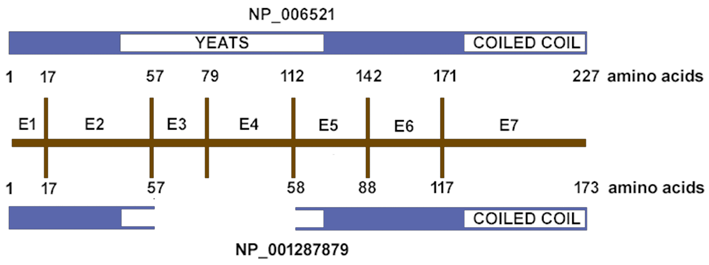
Description
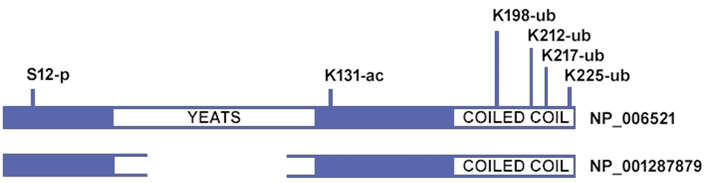
Expression
Localisation
Function
Further evidence for a function of YEATS4 in transcription has come from direct interactions with transcription factor TFAP2A (AP-2) (Ding et al., 2006), and the C-terminal region of the myc family members MYCN and MYC (Piccinni et al., 2011), identified by affinity capture techniques such as yeast two-hybrid analysis, GST-pull down and coimmunoprecipitation. The β-catenin gene (CTNNB1) is regulated by binding of YEATS4 to its promoter, either via these transcription factors, or in combination with the chromatin modeling complexes discussed above (Ji et al., 2017; Jixiang et al., 2017). Downstream targets of β-catenin such as CCND1 (Cyclin D1), CDK4, CDK6 and c-Myc, and the apoptotic proteins BCL2 and BAX also respond to overexpression and decreased expression of YEATS4 in gastric cancer and pancreatic cancer (Ji et al., 2017; Jixiang et al., 2017).
As noted above, the Tip60 and SCRAP complex play roles in double-stranded DNA repair. However, YEATS4 is involved in the regulation of DNA repair independent of these complexes. YEATS4 overexpression results in destabilization of TP53, with downregulation of YEATS4 leading to stabilization of p53 with concomitant upregulation of p53 target genes such as CDKN1A (p21), and induction of senescence and apoptosis (Llanos et al., 2006; Park et al., 2006; Pikor et al., 2013; Tao et al., 2015). Furthermore, overexpression of YEATS4 increases resistance of normal bronchial epithelial cells to the platinum drug cisplatin and p53- MDM2 interaction inhibitor, nutlin (Pikor et al., 2013). Mechanistically, YEATS4 acts with PP2Cβ to dephosphorylate ser-366 on p53, and can decrease cell death due to UV-induced DNA damage (Park et al., 2011). Thus, overexpression of YEATS4 may contribute to the cancers described below in part by overcoming the tumor suppressor properties of p53.
Additional functions of YEATS4 in nuclear architecture and regulation of mitotic spindle assembly were uncovered shortly after its discovery. Harborth et al., (2000) performed yeast two-hybrid analysis to identify proteins that bind to the C-terminus (amino acids 1048-2115) of NUMA1 (NuMA). Further mapping indicated that YEATS4 bound via its coiled coil domain to the C-terminal region of the coiled-coil rod domain of NuMA (amino acids 1048-1700). This interaction was confirmed independently by co-immunoprecipitation, Dot Overlay Assays, Surface Plasmon Resonance, and by a separate study (Munnia et al., 2001). Later studies showed that interaction between NuMA and YEATS4 was cell-cycle regulated with the interaction being low in G1 to S, increasing in S phase and being maximal at G2/M (Schmitt et al., 2012). NuMA is a nuclear matrix protein that relocalizes to and anchors microtubules to the spindle poles (reviewed in Haren et al., 2009). Manipulation of the expression of YEATS4 and NuMA via expression plasmids and siRNA results in an increased rate of spindle defects leading to multipolar spindles and misaligned chromosomes (Schmitt et al., 2012). Additional interactions of YEATS4 with CEP162 (Munnia et al., 2001), and TACC1 - TACC2 - TACC3 (Lauffart et al., 2002; Lauffart et al., 2003), proteins with known roles in centrosomal dynamics during mitosis (Gergley et al., 2000a,b; Leon et al., 2006), have also been identified. However, even these YEATS4-interacting proteins have been implicated in transcriptional regulation. For instance, during interphase NuMA binds to and acts as a transcriptional coregulator of p53 upon DNA-damage (Endo et al., 2013; Ohata et al., 2013); CEP162 associates with predominantly nuclear localized KAT14 lysine acetyltransferase (Gupta et al., 2015; Wang et al., 2008); and the TACC proteins bind to nuclear localized histone acetyltransferases (Gangisetty et al., 2004), nuclear hormone receptors (Vettaikkorumakankauv et al., 2008; Guyot et al., 2010; Hein et al., 2015; Huttlin et al., 2017) and other transcription factors (Sadek et al., 2000; Simpson et al., 2004); Bargo et al., 2010), and coregulate their transcriptional targets.
YEATS4 has been found in complexes with a further 108 proteins by high-throughput analysis via affinity purification-mass spectrometry (Li et al., 2015; Huttlin et al., 2015; Huttlin et al., 2017). Many of these interactions support the proposed functions of YEATS4 in the TIP60 and SCRAP complexes, transcriptional regulation, and mitotic regulation. For instance, additional transcription factors of relevance to cancer, such as FOS, Fox family members, and the myc partner MAX have been identified as YEATS4-binding factors (Li et al., 2015).
Homology
Mutations
Somatic
| Position (AA) | Mutation (CDS) | Mutation (Amino Acid) | Mutation Type | Cancer type |
| 2 | c.6C>G | p.F2L | s.m. | Rectal adenocarcinoma |
| 8 | c.22T>C | p.F8L | s.m. | Hepatocellular carcinoma |
| 10 | c.28C>T | p.P10S | s.m. | Stomach adenocarcinoma |
| 21 | c.63C>T# | p.I21I | s.s | Malignant melanoma |
| 22 | c.66T>G# | p.V22V | s.s | Clear cell renal cell carcinoma |
| 35 | c.103G>A | p.G35R | s.m. | Thyroid carcinoma |
| 43 | c.127C>T | p.H43Y | s.m. | Malignant melanoma |
| 43 | c.124delG | p.H43fs*9 | d.fs. | Lung adenocarcinoma |
| 52 | c.156A>G | p.K52K | s.s. | Stomach adenocarcinoma |
| 58 | c.172G>C | p.D58H | s.m. | Lung adenocarcinoma |
| 75 | c.224G>A | p.G75D | s.m. | Colon |
| 78 | c.234A>G | p.L78L | s.s | Lung carcinoma |
| 93 | c.279G>T | p.W93C | s.m. | Primitive neuroectodermal tumour - medulloblastoma |
| 95 | c.284A>C | p.E95A | s.m. | Papillary renal cell carcinoma |
| 97 | c.289G>A | p.E97K | s.m. | Rectal Adenocarcinoma |
| 100 | c.300C>G | p.I100M | s.m. | Pancreatic ductal carcinoma |
| 110 | c.328A>G | p.R110G | s.m. | Malignant melanoma |
| 111 | c.333T>C# | p.P111P | s.s | Adenocarcinoma of Large intestine |
| 125 | c.375C>A | p.T125T | s.s | Malignant melanoma |
| 133 | c.398C>G | p.T133R | s.m. | Clear cell renal cell carcinoma |
| 136 | c.407C>T | p.S136L | s.m. | Malignant melanoma |
| 141 | c.421G>T | p.E141* | s.n. | Endometrioid carcinoma |
| 147 | c.438delC | p.P147fs*4 | d.fs. | Breast Ductal carcinoma |
| 150 | c.449T>C | p.M150T | s.m. | Pancreas Ductal carcinoma |
| 151 | c.453G>A | p.M151I | s.m. | Liver neoplasm |
| 154 | c.461T>C | p.L154S | s.m. | Head neck Squamous cell carcinoma |
| 159 | c.475C>T# | p.R159C | s.m. | Malignant melanoma |
| 162 | c.485C>T | p.T162I | s.m. | Papillary renal cell carcinoma |
| 163 | c.489A>C | p.L163F | s.m. | Breast Carcinoma |
| 166 | c.498T>C# | p.Y166Y | s.s. | Head neck Squamous cell carcinoma |
| 170 | c.509C>G | p.T170R | s.m. | Basal (triple-negative) carcinoma |
| 174 | c.521A>C | p.E174A | s.m. | Breast Phyllodes tumour |
| 180 | c.539G>C | p.R180T | s.m. | Lung Adenocarcinoma |
| 192 | c.575T>C | p.F192S | s.m. | Stomach Intestinal adenocarcinoma |
| 207 | c.619A>T | p.T207S | s.m. | Central nervous system Oligodendroglioma |
| 207 | c.619delA | p.T207fs*2 | d.fs. | Endometrium Serous carcinoma |
| 208 | c.624A>G | p.I208M | s.m. | Hepatocellular carcinoma |
| 224 | c.671C>T | p.A224V | s.m. | Breast Ductal carcinoma |
| 228 | c.680_681insA# | p.*228fs? | i.fs. | Breast Carcinoma |
Table 1: Sequence variations tabulated from COSMIC v81 (accessed 7/25/2017). KEY: d.fs. - deletion leading to frameshift; i.fs. - insertion leading to frameshift; s.m. - missense substitutions; s.s. - silent substitution; s.n. - nonsense substitution; # variants recorded as single nucleotide polymorphisms. Cells in green denote variations located in the YEATS domain, and cells in blue denote variations located in the C-terminal coiled coil domain.
Implicated in
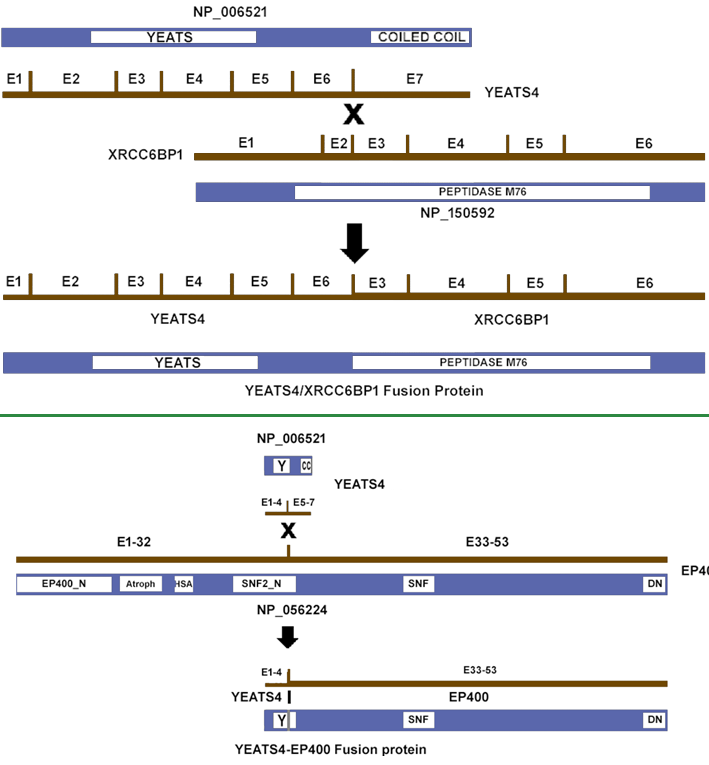
Four genomic rearrangements involving YEATS4 have been noted in glioblastoma. Frattini et al. (2013) performed RNA-sequencing of 161 primary GBM and 24 short-term glioma sphere cultures. These authors detected a single rearrangement t(12;12)(q14.1;q15), resulting in a fusion between YEATS4 and XRCC6BP1 (X-ray repair cross-complementation group 6 binding protein 1). XRCC6BP1 (AKA ATP23) is involved in double-stranded DNA break repair (Fischer et al., 2013) and, based on homology via its metalloprotease domain, is suggested to be important in the biosynthesis of mitochondrial ATPase (Zeng et al., 2007). The detected transcript indicates that the fusion protein contains the YEATS domain fused to the majority of the peptidase M76 domain of XRCC6BP1 (missing 20 amino acids at the N-terminus) (Fig. 6).
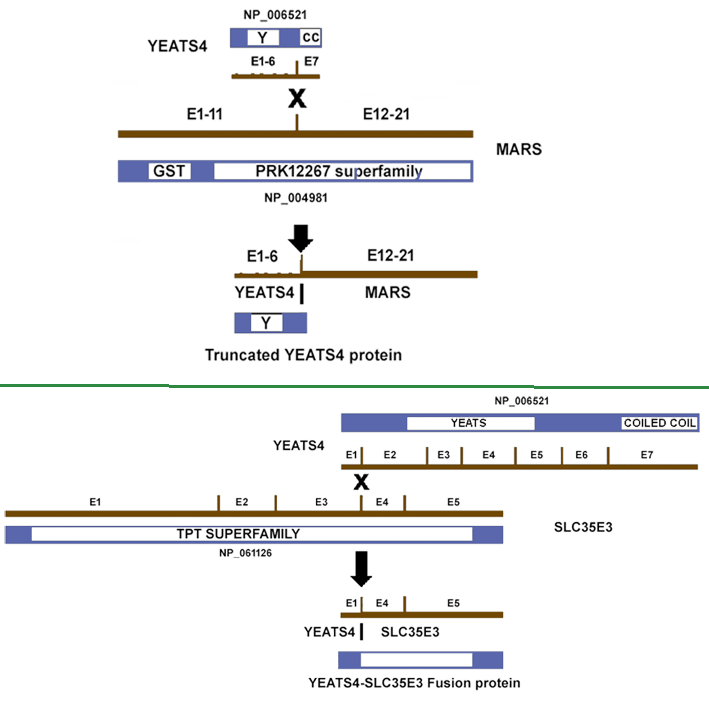
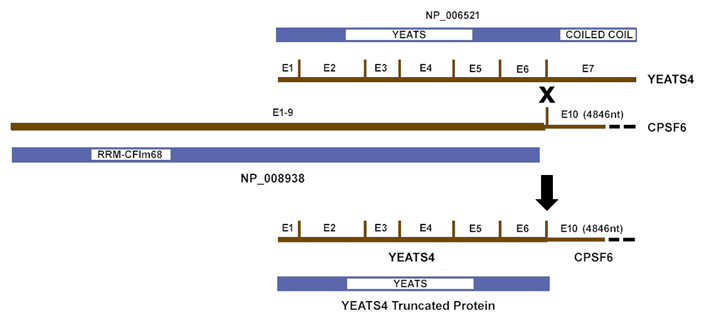
One rearrangement involving YEATS4 was detected in a study of 95 rectal adenocarcinomas by RNA-seq analysis and recorded in the TUMOR FUSION GENE DATA PORTAL. The rearrangement is identical to that observed in hepatocellular adenocarcinoma, fusing YEATS4 exon 6 to the final (noncoding exon) of CPSF6 (Fig. 11). Thus, the predicted fusion protein contains a truncated YEATS4 coding sequence contain the YEATS domain, but lacking the C-terminal coiled coil domain.
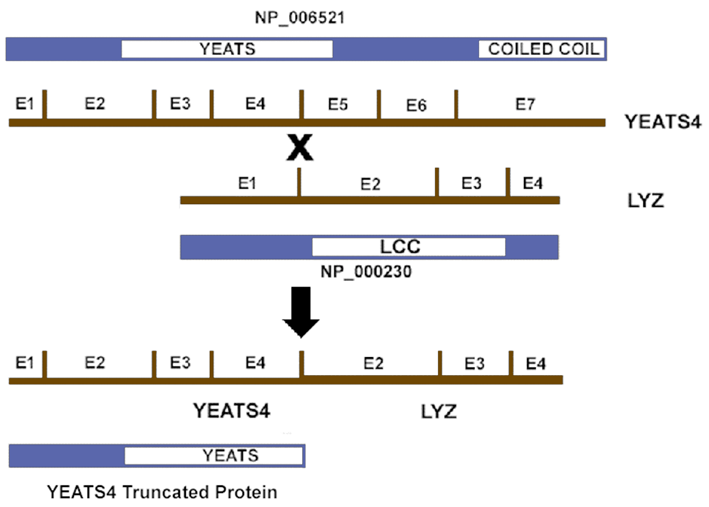
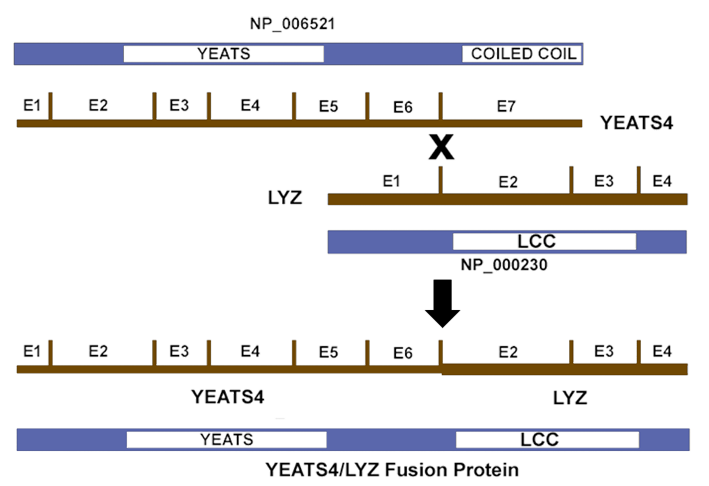
One case of a t(12;12)(q15;q15) fusing exon 6 of YEATS4 to exon 2 of the human lysozyme gene (LYZ) was identified from 414 cases in the Tumor Fusion Gene Data Portal. The resulting fusion protein contains the YEATS domain and the hydrolytic catalytic cleft of lysozyme. This rearrangement is identical to that detected in liver hepatocarcinoma cancer (see Fig. 10).
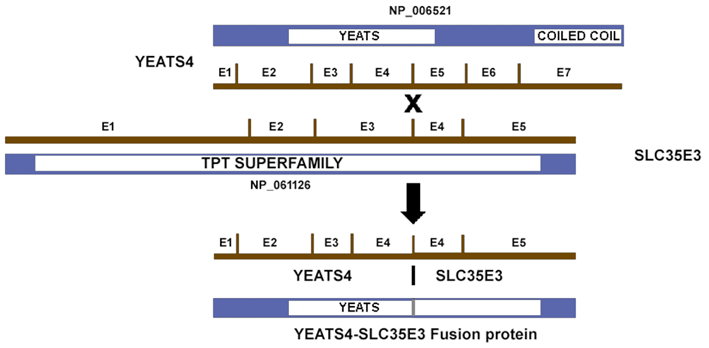
The TUMOR FUSION GENE DATA PORTAL (2017) reports one case of a t(12;12)(q15;q15) from 541 Lung adenocarcinomas, involving YEATS4 and SLC35E3. The rearrangement fuses YEATS4 (exon 4) to exon 4 of SLC35E3 resulting in part of the YEATS domain to 65 amino acids of the triose phosphate transporter domain (Fig. 12).
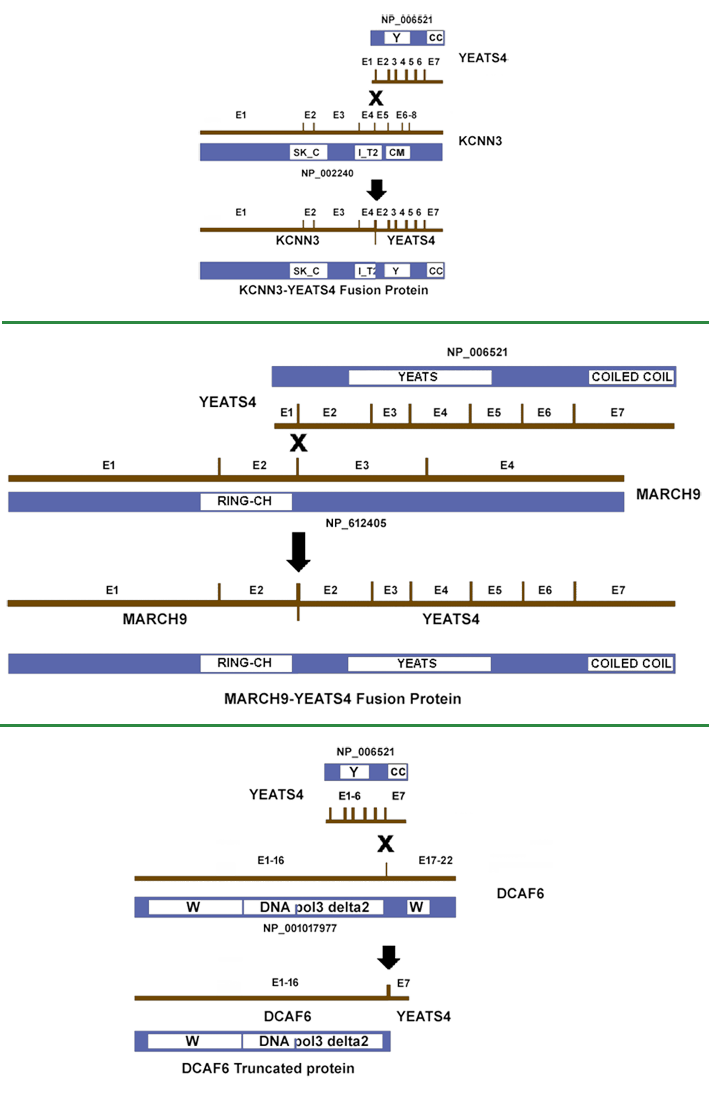
One case t(1;12)(q21.3;q15) fuses the exon 4 of KCNN3 (potassium calcium-activated channel subfamily N member 3)(based on transcript NM_002249) in-frame to exon 2 of YEATS4. The fusion protein would be 740 amino acids long and contain the calcium-activated SK potassium channel domain and part of the ion channel domain (pfam03530 and pfam07885) from KCNN3 and the YEATS4 YEATS domain and coiled coil domain (Fig. 13).
In a different tumor, another in-frame fusion occurs between exon 2 of MARCH9 on 12q14.1 and exon 2 of YEATS4 (Fig. 14). MARCH9 is a member of the MARCH family of membrane-bound E3 ubiquitin ligases. The fusion protein product is 380 amino acids long, containing the C4HC3 zinc-finger like RING domain and the YEATS4 YEATS domain and coiled coil domain.
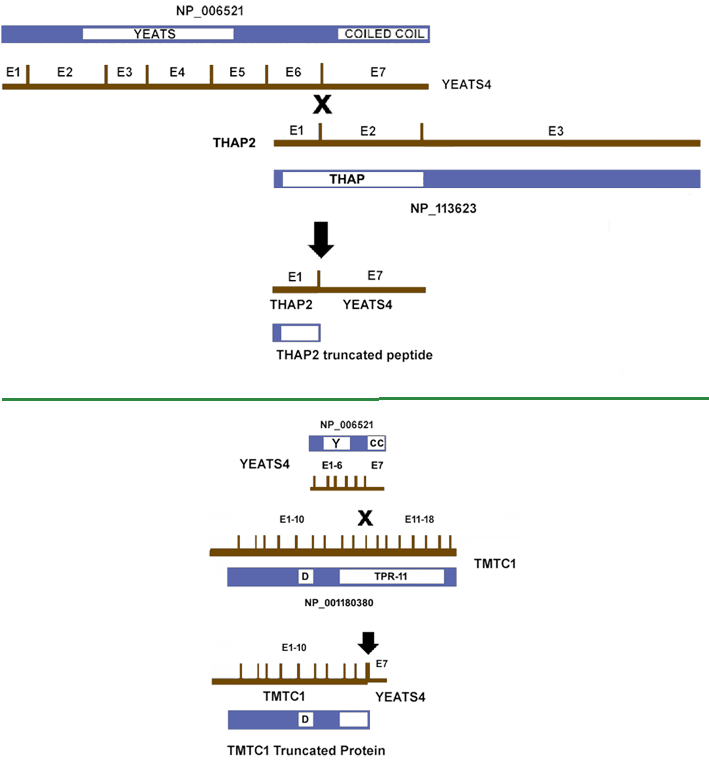
The other three translocations observed fuse YEATS4 exon 7 out of frame 3-prime to its fusion partner, suggesting that these rearrangements produce a truncated protein lacking any YEATS4 components. One case of t(1;12)(q24.2;q15) fuses exon 16 of a coactivator of ligand-dependent nuclear receptors, DCAF6, to exon 7 of YEATS4 (Fig. 15). A truncated protein would contain the WD40 and cl26247 (DNA polymerase III, delta subunit) domains involved in transcriptional regulation, but miss the final 200 amino acids of the coactivator. A single t(12;12)(q21.1;q15) fuses exon 1 of the THAP domain containing, apoptosis associated protein 2 ( THAP2) out-of-frame to exon 7 of YEATS4. The "fusion protein would also be truncated, and only contain the first 24 amino acids of the THAP2 protein, and 5 amino acids encoded out of frame from exon 7 of YEATS4 (Fig. 16). The last case noted was an out of frame fusion between exon 10 of TMTC1 and exon 7 of YEATS4 t(12;12)(p11.22;q15). If the truncated 564 amino acid fusion protein is produced, it would lack the C-terminal tetratricopeptide repeats of TMTC1 (Fig. 17).
Article Bibliography
| Pubmed ID | Last Year | Title | Authors |
|---|---|---|---|
| 18212047 | 2008 | Eaf1 is the platform for NuA4 molecular assembly that evolutionarily links chromatin acetylation to ATP-dependent exchange of histone H2A variants. | Auger A et al |
| 27899578 | 2017 | COSMIC: somatic cancer genetics at high-resolution. | Forbes SA et al |
| 20804727 | 2010 | Transforming acidic coiled-coil protein-3 (Tacc3) acts as a negative regulator of Notch signaling through binding to CDC10/Ankyrin repeats. | Bargo S et al |
| 20601955 | 2010 | Subtype-specific genomic alterations define new targets for soft-tissue sarcoma therapy. | Barretina J et al |
| 25862836 | 2015 | Characterization of the 12q amplicons in lipomatous soft tissue tumors by multiplex ligation-dependent probe amplification-based copy number analysis. | Creytens D et al |
| 11756182 | 2002 | The MLL fusion partner AF10 binds GAS41, a protein that interacts with the human SWI/SNF complex. | Debernardi S et al |
| 16698963 | 2006 | GAS41 interacts with transcription factor AP-2beta and stimulates AP-2beta-mediated transactivation. | Ding X et al |
| 22350108 | 2013 | Association of chromosome 12 locus with antihypertensive response to hydrochlorothiazide may involve differential YEATS4 expression. | Duarte JD et al |
| 25970244 | 2015 | Genome-wide identification of zero nucleotide recursive splicing in Drosophila. | Duff MO et al |
| 23828576 | 2013 | Nuclear mitotic apparatus protein, NuMA, modulates p53-mediated transcription in cancer cells. | Endo A et al |
| 24309898 | 2014 | Analysis of the human tissue-specific expression by genome-wide integration of transcriptomics and antibody-based proteomics. | Fagerberg L et al |
| 9302258 | 1997 | Cloning of a novel transcription factor-like gene amplified in human glioma including astrocytoma grade I. | Fischer U et al |
| 23670597 | 2013 | Glioma-amplified sequence KUB3 influences double-strand break repair after ionizing radiation. | Fischer U et al |
| 23917401 | 2013 | The integrated landscape of driver genomic alterations in glioblastoma. | Frattini V et al |
| 14767476 | 2004 | The transforming acidic coiled coil proteins interact with nuclear histone acetyltransferases. | Gangisetty O et al |
| 11121038 | 2000 | The TACC domain identifies a family of centrosomal proteins that can interact with microtubules. | Gergely F et al |
| 26638075 | 2015 | A Dynamic Protein Interaction Landscape of the Human Centrosome-Cilium Interface. | Gupta GD et al |
| 20078863 | 2010 | The transforming acidic coiled coil (TACC1) protein modulates the transcriptional activity of the nuclear receptors TR and RAR. | Guyot R et al |
| 10913114 | 2000 | GAS41, a highly conserved protein in eukaryotic nuclei, binds to NuMA. | Harborth J et al |
| 19400937 | 2009 | NuMA is required for proper spindle assembly and chromosome alignment in prometaphase. | Haren L et al |
| 26496610 | 2015 | A human interactome in three quantitative dimensions organized by stoichiometries and abundances. | Hein MY et al |
| 20618999 | 2010 | The YEATS family member GAS41 interacts with the general transcription factor TFIIF. | Heisel S et al |
| 25514926 | 2015 | PhosphoSitePlus, 2014: mutations, PTMs and recalibrations. | Hornbeck PV et al |
| 2851444 | 1988 | Cytotoxicity of 4-hydroxyanisole and tyrosinase activity in variant cell lines of B16 melanoma. | Thody AJ et al |
| 18214854 | 2008 | HMGA2 is the partner of MDM2 in well-differentiated and dedifferentiated liposarcomas whereas CDK4 belongs to a distinct inconsistent amplicon. | Italiano A et al |
| 28251887 | 2017 | YEATS Domain Containing 4 Promotes Gastric Cancer Cell Proliferation and Mediates Tumor Progression via Activating the Wnt/β-Catenin Signaling Pathway. | Ji S et al |
| 28445953 | 2017 | YEATS4 promotes the tumorigenesis of pancreatic cancer by activating beta-catenin/TCF signaling. | Jixiang C et al |
| 1262039 | 1976 | The urinary drop spectrometer--an electrooptical instrument for urological analysis based on the external urine stream. | Ritter RC et al |
| 12917332 | 2003 | Yaf9, a novel NuA4 histone acetyltransferase subunit, is required for the cellular response to spindle stress in yeast. | Le Masson I et al |
| 27255164 | 2016 | Genomewide copy number analysis of Müllerian adenosarcoma identified chromosomal instability in the aggressive subgroup. | Lee JC et al |
| 16302001 | 2006 | QN1/KIAA1009: a new essential protein for chromosome segregation and mitotic spindle assembly. | Leon A et al |
| 25609649 | 2015 | Proteomic analyses reveal distinct chromatin-associated and soluble transcription factor complexes. | Li X et al |
| 16929179 | 2006 | A high-throughput loss-of-function screening identifies novel p53 regulators. | Llanos S et al |
| 11521196 | 2001 | Expression, cellular distribution and protein binding of the glioma amplified sequence (GAS41), a highly conserved putative transcription factor. | Munnia A et al |
| 23589328 | 2013 | NuMA is required for the selective induction of p53 target genes. | Ohata H et al |
| 16705155 | 2006 | GAS41 is required for repression of the p53 tumor suppressor pathway during normal cellular proliferation. | Park JH et al |
| 21317290 | 2011 | The GAS41-PP2Cbeta complex dephosphorylates p53 at serine 366 and regulates its stability. | Park JH et al |
| 22068108 | 2011 | Direct interaction of Gas41 and Myc encoded by amplified genes in nervous system tumours. | Piccinni E et al |
| 24170126 | 2013 | YEATS4 is a novel oncogene amplified in non-small cell lung cancer that regulates the p53 pathway. | Pikor LA et al |
| 15068665 | 2004 | ONCOMINE: a cancer microarray database and integrated data-mining platform. | Rhodes DR et al |
| 11025203 | 2000 | Isolation and characterization of AINT: a novel ARNT interacting protein expressed during murine embryonic development. | Sadek CM et al |
| 22619067 | 2012 | GAS41 amplification results in overexpression of a new spindle pole protein. | Schmitt J et al |
| 20657183 | 2010 | Reading chromatin: insights from yeast into YEATS domain structure and function. | Schulze JM et al |
| 24261984 | 2013 | Exploration of the gene fusion landscape of glioblastoma using transcriptome sequencing and copy number data. | Shah N et al |
| 15234987 | 2004 | A classic zinc finger from friend of GATA mediates an interaction with the coiled-coil of transforming acidic coiled-coil 3. | Simpson RJ et al |
| 26045900 | 2015 | Knockdown of YEATS4 inhibits colorectal cancer cell proliferation and induces apoptosis. | Tao K et al |
| 18838386 | 2008 | Human ATAC Is a GCN5/PCAF-containing acetylase complex with a novel NC2-like histone fold module that interacts with the TATA-binding protein. | Wang YL et al |
| 25500544 | 2015 | The landscape and therapeutic relevance of cancer-associated transcript fusions. | Yoshihara K et al |
| 17135290 | 2007 | The metalloprotease encoded by ATP23 has a dual function in processing and assembly of subunit 6 of mitochondrial ATPase. | Zeng X et al |
| 23796897 | 2013 | A survey of intragenic breakpoints in glioblastoma identifies a distinct subset associated with poor survival. | Zheng S et al |
Other Information
Locus ID:
NCBI: 8089
MIM: 602116
HGNC: 24859
Ensembl: ENSG00000127337
Variants:
dbSNP: 8089
ClinVar: 8089
TCGA: ENSG00000127337
COSMIC: YEATS4
RNA/Proteins
| Gene ID | Transcript ID | Uniprot |
|---|---|---|
| ENSG00000127337 | ENST00000247843 | O95619 |
| ENSG00000127337 | ENST00000548020 | F8W0J4 |
| ENSG00000127337 | ENST00000549685 | F8VTR4 |
| ENSG00000127337 | ENST00000552955 | F8W1B9 |
Expression (GTEx)
Pathways
PharmGKB
| Entity ID | Name | Type | Evidence | Association | PK | PD | PMIDs |
|---|---|---|---|---|---|---|---|
| PA444552 | Hypertension | Disease | ClinicalAnnotation | associated | PK | PD | |
| PA447288 | Essential hypertension | Disease | ClinicalAnnotation | associated | PK | PD | |
| PA449899 | hydrochlorothiazide | Chemical | ClinicalAnnotation | associated | PK | PD |
References
| Pubmed ID | Year | Title | Citations |
|---|---|---|---|
| 35503594 | 2022 | GAS41 mediates proliferation and GEM chemoresistance via H2A.Z.2 and Notch1 in pancreatic cancer. | 7 |
| 35503594 | 2022 | GAS41 mediates proliferation and GEM chemoresistance via H2A.Z.2 and Notch1 in pancreatic cancer. | 7 |
| 29437725 | 2018 | Recognition of histone acetylation by the GAS41 YEATS domain promotes H2A.Z deposition in non-small cell lung cancer. | 54 |
| 29463709 | 2018 | Identification of the YEATS domain of GAS41 as a pH-dependent reader of histone succinylation. | 35 |
| 30071723 | 2018 | GAS41 Recognizes Diacetylated Histone H3 through a Bivalent Binding Mode. | 20 |
| 29437725 | 2018 | Recognition of histone acetylation by the GAS41 YEATS domain promotes H2A.Z deposition in non-small cell lung cancer. | 54 |
| 29463709 | 2018 | Identification of the YEATS domain of GAS41 as a pH-dependent reader of histone succinylation. | 35 |
| 30071723 | 2018 | GAS41 Recognizes Diacetylated Histone H3 through a Bivalent Binding Mode. | 20 |
| 28251887 | 2017 | YEATS Domain Containing 4 Promotes Gastric Cancer Cell Proliferation and Mediates Tumor Progression via Activating the Wnt/β-Catenin Signaling Pathway. | 13 |
| 28445953 | 2017 | YEATS4 promotes the tumorigenesis of pancreatic cancer by activating beta-catenin/TCF signaling. | 9 |
| 28251887 | 2017 | YEATS Domain Containing 4 Promotes Gastric Cancer Cell Proliferation and Mediates Tumor Progression via Activating the Wnt/β-Catenin Signaling Pathway. | 13 |
| 28445953 | 2017 | YEATS4 promotes the tumorigenesis of pancreatic cancer by activating beta-catenin/TCF signaling. | 9 |
| 27467502 | 2016 | Regulation of Cell Proliferation and Migration by miR-203 via GAS41/miR-10b Axis in Human Glioblastoma Cells. | 9 |
| 27779719 | 2016 | Downregulation of YEATS4 by miR-218 sensitizes colorectal cancer cells to L-OHP-induced cell apoptosis by inhibiting cytoprotective autophagy. | 12 |
| 27467502 | 2016 | Regulation of Cell Proliferation and Migration by miR-203 via GAS41/miR-10b Axis in Human Glioblastoma Cells. | 9 |
Citation
Ivan H. Still ; Brenda Lauffart
YEATS4 (YEATS domain containing 4)
Atlas Genet Cytogenet Oncol Haematol. 2017-09-01
Online version: http://atlasgeneticsoncology.org/gene/40686/yeats4-(yeats-domain-containing-4)
