IL23A (interleukin 23, alpha subunit p19)
2010-05-01 Norimitsu Inoue AffiliationDepartment of Molecular Genetics, Osaka Medical Center for Cancer, Cardiovascular Diseases, Osaka, Osaka 537-8511, Japan
DNA/RNA
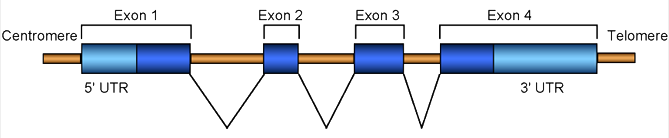
Description
Transcription
Pseudogene
Proteins
Note
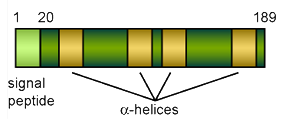
Description
Expression
Function
Implicated in
The expression of IL-23A mRNA is significantly elevated in various human cancers, such as melanoma, colon, ovarian, head and neck, lung, breast, and stomach cancers, when compared with adjacent normal tissues (Langowski et al., 2006). IL-23 upregulation is also observed in sera from multiple myeloma patients (Prabhala et al., 2010). A deficiency of IL23A promotes increased infiltration of cytotoxic T cells into the transformed tissue and mediates resistance to chemically induced tumors. IL-23 facilitates the induction of inflammation and angiogenesis in the tumor microenvironment and inhibits CD8+ T cells infiltration, thereby promoting tumor incidence and growth (Langowski et al., 2006; Langowski et al., 2007; Martin-Orozco and Dong, 2009). It has been suggested that IL-23 also suppresses carcinogenesis and metastasis in mouse models, where it acts independently of IL-17A (Teng et al., 2010). Stat3 signaling shifts the balance between IL-23 and IL-12 toward IL-23 in the tumor microenvironment (Kortylewski et al., 2009). In tumor-associated regulatory T cells, IL-23-activated Stat3 induces the upregulation of Foxp3 and IL-10.
Anti-tumor effects
In several mouse tumor models, IL-23 overexpression in tumors (Overwijk et al., 2006) or intratumoral injection of IL-23-introduced DCs (Hu et al., 2006) has been shown to induce tumoral infiltration of CD8+ T cells and to inhibit tumor growth. Systemic administration of IL-23 also suppresses the growth of a pre-existing tumor in mice (Kaiga et al., 2007).
Article Bibliography
| Pubmed ID | Last Year | Title | Authors |
|---|---|---|---|
| 18976050 | 2009 | IL-23 and autoimmunity: new insights into the pathogenesis of inflammatory bowel disease. | Abraham C et al |
| 20393462 | 2010 | Innate lymphoid cells drive interleukin-23-dependent innate intestinal pathology. | Buonocore S et al |
| 18084185 | 2008 | How microorganisms tip the balance between interleukin-12 family members. | Goriely S et al |
| 16951206 | 2006 | Induction of potent antitumor immunity by intratumoral injection of interleukin 23-transduced dendritic cells. | Hu J et al |
| 15999093 | 2005 | New IL-12-family members: IL-23 and IL-27, cytokines with divergent functions. | Hunter CA et al |
| 17548592 | 2007 | Systemic administration of IL-23 induces potent antitumor immunity primarily mediated through Th1-type response in association with the endogenously expressed IL-12. | Kaiga T et al |
| 17291186 | 2007 | Discovery and biology of IL-23 and IL-27: related but functionally distinct regulators of inflammation. | Kastelein RA et al |
| 19132915 | 2009 | IL-17 and Th17 Cells. | Korn T et al |
| 19185846 | 2009 | Regulation of the IL-23 and IL-12 balance by Stat3 signaling in the tumor microenvironment. | Kortylewski M et al |
| 17395538 | 2007 | Swords into plowshares: IL-23 repurposes tumor immune surveillance. | Langowski JL et al |
| 17450144 | 2007 | Syk- and CARD9-dependent coupling of innate immunity to the induction of T helper cells that produce interleukin 17. | LeibundGut-Landmann S et al |
| 19513943 | 2009 | The IL-17/IL-23 axis of inflammation in cancer: friend or foe? | Martin-Orozco N et al |
| 11114383 | 2000 | Novel p19 protein engages IL-12p40 to form a cytokine, IL-23, with biological activities similar as well as distinct from IL-12. | Oppmann B et al |
| 16621986 | 2006 | Immunological and antitumor effects of IL-23 as a cancer vaccine adjuvant. | Overwijk WW et al |
| 12023369 | 2002 | A receptor for the heterodimeric cytokine IL-23 is composed of IL-12Rbeta1 and a novel cytokine receptor subunit, IL-23R. | Parham C et al |
| 20395418 | 2010 | Elevated IL-17 produced by TH17 cells promotes myeloma cell growth and inhibits immune function in multiple myeloma. | Prabhala RH et al |
| 18390697 | 2008 | Cutting edge: NKT cells constitutively express IL-23 receptor and RORgammat and rapidly produce IL-17 upon receptor ligation in an IL-6-independent fashion. | Rachitskaya AV et al |
| 15486065 | 2005 | Extracellular nucleotide signaling by P2 receptors inhibits IL-12 and enhances IL-23 expression in human dendritic cells: a novel role for the cAMP pathway. | Schnurr M et al |
| 15180965 | 2004 | Prostaglandin E2 induces IL-23 production in bone marrow-derived dendritic cells. | Sheibanie AF et al |
| 18490716 | 2008 | Tumor-secreted lactic acid promotes IL-23/IL-17 proinflammatory pathway. | Shime H et al |
| 19682929 | 2009 | Interleukin-1 and IL-23 induce innate IL-17 production from gammadelta T cells, amplifying Th17 responses and autoimmunity. | Sutton CE et al |
| 19114665 | 2009 | Lymphoid tissue inducer-like cells are an innate source of IL-17 and IL-22. | Takatori H et al |
| 20404142 | 2010 | IL-23 suppresses innate immune response independently of IL-17A during carcinogenesis and metastasis. | Teng MW et al |
| 19465928 | 2009 | Prostaglandin E2-EP4 signaling promotes immune inflammation through Th1 cell differentiation and Th17 cell expansion. | Yao C et al |
| 20082850 | 2010 | Association of interleukin-23 receptor gene polymorphisms with risk of ovarian cancer. | Zhang Z et al |
Other Information
Locus ID:
NCBI: 51561
MIM: 605580
HGNC: 15488
Ensembl: ENSG00000110944
Variants:
dbSNP: 51561
ClinVar: 51561
TCGA: ENSG00000110944
COSMIC: IL23A
RNA/Proteins
| Gene ID | Transcript ID | Uniprot |
|---|---|---|
| ENSG00000110944 | ENST00000228534 | Q9NPF7 |
Expression (GTEx)
Pathways
Protein levels (Protein atlas)
PharmGKB
| Entity ID | Name | Type | Evidence | Association | PK | PD | PMIDs |
|---|---|---|---|---|---|---|---|
| PA166048654 | ustekinumab | Chemical | LabelAnnotation | associated |
References
| Pubmed ID | Year | Title | Citations |
|---|---|---|---|
| 37964584 | 2024 | Serum concentrations of 25-OH vitamin D and the pro-inflammatory interleukins IL-17, IL-23, and IL-18 in patients with plaque psoriasis. | 0 |
| 38374693 | 2024 | Differential requirement for IL-2 and IL-23 in the differentiation and effector functions of Th17/ILC3-like cells in a human T cell line. | 0 |
| 38466035 | 2024 | The Dysregulated IL-23/TH17 Axis in Endometriosis Pathophysiology. | 0 |
| 38516774 | 2024 | miRNA‑21 promotes the progression of acute liver failure via the KLF6/autophagy/IL‑23 signaling pathway. | 0 |
| 38608446 | 2024 | Decreased HMGCS1 inhibits proliferation and inflammatory response of keratinocytes and ameliorates imiquimod-induced psoriasis via the STAT3/IL-23 axis. | 0 |
| 38686385 | 2024 | IL-23 past, present, and future: a roadmap to advancing IL-23 science and therapy. | 0 |
| 38867048 | 2024 | CTLA-4-expressing ILC3s restrain interleukin-23-mediated inflammation. | 0 |
| 37964584 | 2024 | Serum concentrations of 25-OH vitamin D and the pro-inflammatory interleukins IL-17, IL-23, and IL-18 in patients with plaque psoriasis. | 0 |
| 38374693 | 2024 | Differential requirement for IL-2 and IL-23 in the differentiation and effector functions of Th17/ILC3-like cells in a human T cell line. | 0 |
| 38466035 | 2024 | The Dysregulated IL-23/TH17 Axis in Endometriosis Pathophysiology. | 0 |
| 38516774 | 2024 | miRNA‑21 promotes the progression of acute liver failure via the KLF6/autophagy/IL‑23 signaling pathway. | 0 |
| 38608446 | 2024 | Decreased HMGCS1 inhibits proliferation and inflammatory response of keratinocytes and ameliorates imiquimod-induced psoriasis via the STAT3/IL-23 axis. | 0 |
| 38686385 | 2024 | IL-23 past, present, and future: a roadmap to advancing IL-23 science and therapy. | 0 |
| 38867048 | 2024 | CTLA-4-expressing ILC3s restrain interleukin-23-mediated inflammation. | 0 |
| 36370169 | 2023 | Elevated expression of interleukin-27, IL-35, and decreased IL-12 in patients with thyroid-associated ophthalmopathy. | 1 |
Citation
Norimitsu Inoue
IL23A (interleukin 23, alpha subunit p19)
Atlas Genet Cytogenet Oncol Haematol. 2010-05-01
Online version: http://atlasgeneticsoncology.org/gene/44517/il23a
