BCL2 (B-Cell Leukemia/Lymphoma 2)
2017-12-01 Anwar N Mohamed AffiliationCytogenetics Laboratory, Pathology Department, Detroit Medical Center, Wayne State University School of Medicine, Detroit, MI USA; [email protected]
Identity

Abstract
BCL2 is the milestone of apoptosis-regulatory genes. It contributes to tumorigenesis by blocking programmed cell death as such, promoting cell survival. The aberrant expression of BCL2 gene is strongly associated with resistance to chemotherapy and radiation. This review outlines the structure, function, and role of BCL2 gene in cancer.
DNA/RNA
Description
Proteins
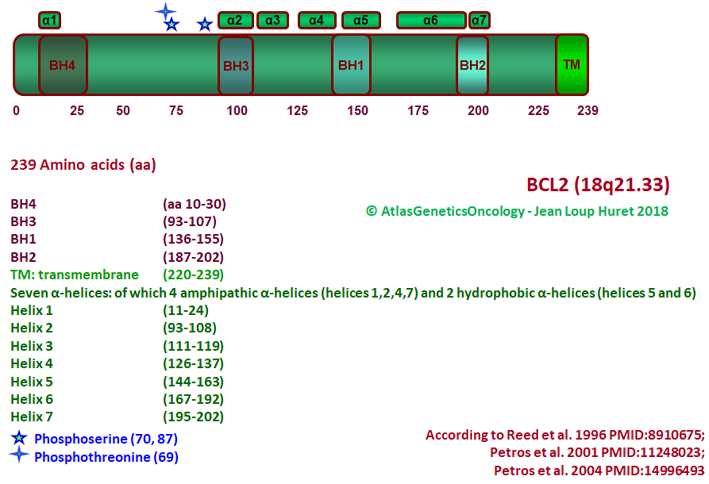
Description
Expression
Function
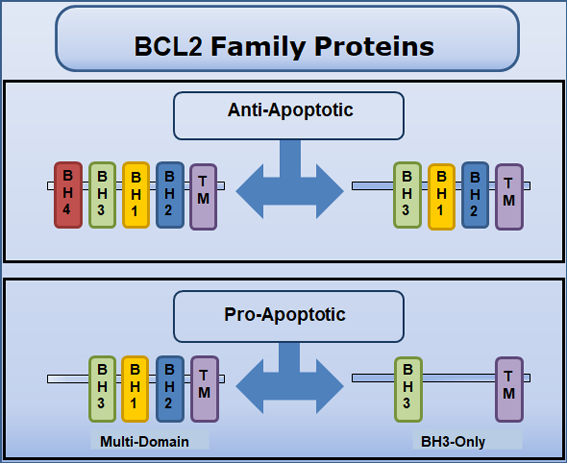
The BCL2 family is a prototype of a large family of evolutionarily related proteins that share a high degree of homology although they exert different functions. This family consists of 25 pro-apoptotic and anti-apoptotic members which interact to maintain a balance between newly forming cells and old dying cells. These proteins are localized to the membrane of mitochondria and endoplasmic reticulum, operating as guardians of these organelles (Thomadaki 2006, Reed 2008, Aki etal 2014)). BCL2 family proteins play central roles in cell death regulation and can regulate diverse cell death mechanisms including apoptosis, necrosis and autophagy. They are the key regulators of the mitochondrial pathway of apoptosis. This pathway is required for normal embryonic development and for preventing cancer. These proteins control the permeabilization of the mitochondrial outer membrane (MOM) that releases cytochrome c and other apoptotic factors into the cytosol. BCL2 family proteins share up to four BCL2 homology domains (BH1, BH2, BH3, & BH4) and are generally divided into two categories, anti-apoptotic and pro-apoptotic proteins based on their intracellular function and sequence homology. The anti-apoptotic proteins, BCL2, BCL2L1 (BCL-XL), BCL2L2 (BCL-W), MCL1, BCL2A1 (A1/BFL-1), share homology within four domains (BH1-4). These proteins form a characteristic helical bundle fold, which is critical for their ability to bind to the pro-apoptotic BCL2 family members and thereby exert their antiapoptotic function. The pro-apoptotic proteins such as BAX, BAK1, and BOK share BH1-3 domains whereas other pro-apoptotic proteins, such as BCL2L11 (BIM), BAD, and BID, contain only the BH3 domain and are known as BH3-only proteins (Figure 3). In normal situations, the BH3-only proteins are inactive or exist at low levels in the cell. However, in the presence of apoptotic stimuli the BH-only proteins become activated by post-translational modifications or their expression are increased. The stimulation of BH3-only proteins induces BAX-BAK oligomerization. After their oligomerization, BAX and BAK directly cause MOM permeabilization, a critical step in apoptosis (Aki et al 2014). The role of anti-apoptotic BCL2 proteins is to neutralize pro-apoptotic BH3-only proteins and thus inhibit their effect on BAX-BAK activity and MOM permeabilization. The balance between pro-survival and pro-death BCL-2 proteins is a major factor in determining if cells undergo apoptosis in response to cell stress.
Control of Proliferation by BCL2
Although BCL2-family proteins are key players in the control of mitochondria-based apoptosis, they can also control cell proliferation. High levels of BCL2 protein were reported to be associated with a lower proliferative capacity of human lymphoma, suggesting a negative control on proliferation. The anti-proliferative effect of BCL2 acts mainly at the level of the G0/G1 phase of the cell cycle. Deletions and point mutations in the BCL2 gene show that in some cases the anti-proliferative activity of BCL2 can be dissociated from its anti-apoptotic function (Bonnefoy et al, 2004). This indicates that the effect of BCL2 on cell cycle progression can be a direct effect and not only a consequence of its anti-apoptotic activity. BCL2 appears to mediate its anti-proliferative effect by acting on both signal transduction pathways ( NFAT, ERK) and on specific cell cycle regulators. In addition, BCL2 cooperated with MYC to promote proliferation of B-cell precursors.
Implicated in
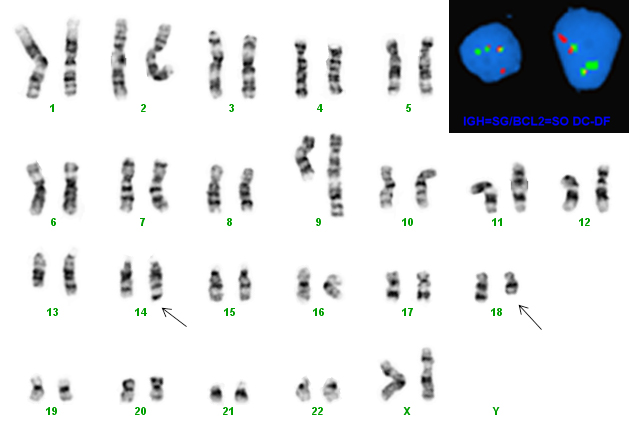
The t(14;18)(q32;q21) constitutes the most common chromosomal translocation in human lymphomas, being present in over 85% of follicular lymphoma (FL) and in up to 30% of diffuse large B-cell lymphoma (DLBCL). BCL2 is normally located on chromosome 18q21.33 in a telomere to centromere orientation. The molecular consequence of the t(14;18) juxtaposes of the BCL2 gene next to IGH locus on the der(14) chromosome, in the same transcriptional orientation as the IGH gene. The breakpoints on chromosome 18 are clustered with 50-60% fall within a 2.8 kb major breakpoint region (MBR), located in the untranslated 3? UTR of the BCL2 gene, and another 25% falls in the minor cluster region (MCR) (Bakhshi 1987, Willis and Dyer 2000). Others cluster within a third, intermediate cluster region midway between the MBR and MCR while other breakpoints have been described scattered through this region. In rare variant translocations involving the IG light chain loci, t(2;18)(p12;q21) and t(18;22)(q21;q11.2), the breakpoints are located in the 5? noncoding region of the BCL2 gene. The breakpoints on chromosome 14 occur most commonly just 5? of IGH JH segments within sequences that typically show evidence of exonucleolytic "nibbling", N-bp additions, and D segment addition, events that occur normally during attempted V(D)J recombination. Less commonly, IGH breakpoints may occur at sites 3? of the JH segments, or rarely even in IG switch regions. BCL2 mRNA expression is up-regulated in the translocated allele through the action of IGH E[] enhancer sequences, which are highly active in germinal center B cells. In the cases of rearrangements falling in the MBR, a BCL2/IGH fusion mRNA transcript is produced whereas rearrangements in the MCR lead to increased levels of a normal BCL2 mRNA (Aster and longtine 2002). The t(14;18) translocation or its variants does not interrupt the protein-encoding region of BCL2 gene so that the normal and the translocated alleles produce the same-sized, 26-kd protein, a member of a family of proteins involved in the regulation of apoptosis. The somatic hypermutation mechanism associated with the IGH gene often induces mutations in the BCL2 gene which may further dysregulate its expression and can also lead to point mutations in the coding regions of the BCL2 protein (Seto 1988, Tanaka et al 1992). Therefore, a subset of t(14;18) positive lymphomas do not express intact BCL2 protein due to somatic mutations of the gene.
The majority of follicular lymphomas in adults depend on BCL2 overexpression which is almost always the result of t(14;18) translocation or its variants. BCL2 overexpression sustains cell survival but is not sufficient for FL development, thus other genetic lesions or epigenetic events are required. This is supported by the observation that BCL2 transgenic mice develop polyclonal hyperplasia of mature, long lived non-dividing B cells. With time, a fraction of BCL2 transgenic mice develops aggressive, clonal large cell lymphomas, which have acquired additional genetic lesions (McDonnell et al 1988).
Fluorescence in situ hybridization (FISH) is widely used in clinical laboratories to detect BCL2 gene rearrangement in fresh tissue and paraffin embedded tissue sections using dual color translocation DNA probes (Figure 4). BCL2 protein expression by immuno-histochemistry represents a rapid and inexpensive method to identify BCL2 overexpression. In normal tissue, BCL2 antibodies react with B-cells in the mantle zone, as well as some T-cells. Because BCL2 expression is down-regulated in normal germinal centers, the presence of BCL2 protein can help to distinguish follicular lymphomas from reactive follicular hyperplasia. However, positive cells increase considerably in follicular lymphoma, as well as many other forms of cancer. In some cases, the presence or absence of BCL2 staining in biopsies may be significant for the patients prognosis or likelihood of relapse.
BCL2 is upregulated in almost 50% of all human cancers, consistent with its role as an apoptotic regulator (Cory et al, 2003, Yip and Reed, 2008, Reed 2008). The majority of small cell lymphoma such as chronic lymphocytic leukemia (CLL), marginal cell lymphoma, and mantle cell lymphoma, over-express BCL2, although less than 5% of those patients have detectable BCL2 gene rearrangement (Hanada et al, 1993). Increased expression of BCL2 is also found in nearly all patients with acute lymphocytic leukemia and frequently in acute myeloid leukemia (Yip and Reed 2008). Most of adult FL cases have overexpression of BCL2 protein however; the pediatric type FL is negative for BCL2 expression. Approximately 30% of DLBCL patients are categorized as having relatively high BCL2 expression (Monni et al, 1997). BCL2 may also play a role in non-hematologic tumors, and inappropriate expression has been observed in solid tumors such as prostate, breast, and small cell and non-small cell lung cancers. In small cell lung cancer, high BCL2 expression in >90% of patients have been reported (Hellemans et al 1995, Jiang et al 1995, Anagnostou et al 2010, Henriksen et al 1995). Ovarian, neuroblastoma, bladder, colorectal, and some head and neck cancers have all exhibited high expression of BCL2.
Small-Molecule Protein Inhibitors (SMIs)
Besides chromosomal translocations as a key mechanism for activation of the BCL2 gene in lymphoma, overexpression as a result BCL2 amplification has been demonstrated in non-Hodgkins lymphomas and small cell lung cancers (Monni O, 1997). Other contributing mechanisms are deletion of endogenous microRNAs (miRs) such as MIR195, MIR24-2 and MIR-365B that normally repress BCL2 gene expression (Cimmino et al., 2005), This mechanism has been documented in CLL, where the genes encoding MIR15 and miR16 become deleted or inactivated by mutations in >70% of these leukemia. Gene hypomethylation is an alternative mechanism implying altered epigenetic regulation of BCL2 is in some malignancies (Hanada et al, 1993). In addition, tumor associated viruses, such as Epstein-Barr virus (EBV) and human herpes virus 8 (HHV8 or Kaposis sarcoma-associated herpes virus), encode proteins that are homologues of BCL2, and provoke similar anti-apoptotic functions (Henderson et al, 1993).
Expression of BCL2 and Prognosis
Multiple studies have shown that high levels of BCL2 gene expression is a negative risk factor correlated with severity of malignancy. Elevated expression of BCL2 in AML was shown to be associated with poor clinical response to chemotherapy (Campos et al, 2005). BCL2 expression correlates negatively with overall survival within a specific subgroup of DLBCL (Iqbal et al, 2006). Additionally, several studies have demonstrated a correlation between elevated BCL2 expression and poor prognosis in melanoma, breast, prostate, small cell lung, colorectal and bladder cancers (Anagnostou et al, 2010). Further studies have proven that higher BCL2 expression leads to resistance to chemotherapy and radiation (Reed 2008, Review).
Some cancers, particularly non-Hodgkin lymphoma, are dependent on BCL2 for survival. BCL2 is also involved in the development of resistance to chemotherapeutic agents, further stressing the importance of targeting the BCL2 gene in cancer therapeutics. Numerous approaches have been developed to block or modulate the production of BCL2 at the RNA level, at the protein level, or at the DNA level. From a clinical perspective, treatment with novel, potent BCL2 inhibitors either alone or in combination with conventional therapies hold significant promise for providing beneficial clinical outcomes. The BCL2 targeted drug has the potential to enhance cell killing when used alone or in combination with traditional cytotoxic agents, which may lead to greater efficacy and reduce toxicity of chemotherapy (Ebrahim et al 2016, Delbridge et al, 2016).
DNA interference (DNAi)
Antisense technology involves the use of a sequence that is complementary to a specific mRNA which inhibits its expression and subsequently induces a blockade in the transfer of genetic information from DNA to protein. Oblimersen sodium, an example of ASO agent, is an 18-base antisense phosphorothioate oligonucleotide compound designed to specifically target the first six codons of the human BCL2 mRNA sequence, resulting in degradation of BCL2 mRNA and a subsequent decrease in BCL2 protein translation and intracellular concentration (Herbst et al, 2004). Oblimersen has been evaluated for suitability of the treatment of a number of cancers, including small cell lung cancer, prostate cancer, renal cell carcinoma, as well as non-Hodgkin lymphomas. This compound is already well advanced in clinical trials for the treatment of refractory CLL, multiple myeloma and melanoma. Studies showed that treatment with Oblimersen alone resulted in some long-term disease-free survival, while combination therapy with cyclophosphamide resulted in long-term disease-free survival with no histological or molecular evidence of lymphoma. Of note, treatment with antisense oligonucleotides lowers the concentration of other chemotherapies required for treatment, decreasing side effects and toxicity.
Small-molecule inhibitors (SMIs) are a group of drugs designed to mimic BH3-only proteins to inhibit the action of anti-apoptotic BCL2 proteins. They compete with pro-apoptotic BCL2 to occupy BH3 docking grooves on the surfaces of anti-apoptotic family members, thus functioning as valuable anti-neoplastic drugs. One such drug is Obatoclax (GX15-070) D, a new experimental pan inhibitor of BCL2-family proteins, particularly to MCL1, as many hematologic malignancies depend on this protein for survival. Obatoclax can induce oligomerization of BAK in the mitochondria, interrupting its function, and activate caspases leading to cell death and cell cycle arrest. Obatoclax was shown to overcome drug resistance and potentiate the efficacy of traditional chemotherapeutic agents.
DNAi therapeutic drugs, such as PNT2258, are a class of nucleic acid-based therapy that contain sequences designed against noncoding, non-transcribed regions of genomic DNA upstream of gene transcription initiation sites, thus effectively blocking its transcription. DNAi can interact with genomic DNA leading to an apoptotic cell death cascade by gene silencing. This approach is aimed at blocking BCL2 gene transcription. Evaluations of this technology in preclinical and early clinical studies are very encouraging and strongly support further development of DNAi as cancer therapeutics.
Article Bibliography
| Pubmed ID | Last Year | Title | Authors |
|---|---|---|---|
| 24768714 | 2014 | A dual role for the anti-apoptotic Bcl-2 protein in cancer: mitochondria versus endoplasmic reticulum. | Akl H et al |
| 20459695 | 2010 | High expression of BCL-2 predicts favorable outcome in non-small cell lung cancer patients with non squamous histology. | Anagnostou VK et al |
| 11891173 | 2002 | Detection of BCL2 rearrangements in follicular lymphoma. | Aster JC et al |
| 3924412 | 1985 | Cloning the chromosomal breakpoint of t(14;18) human lymphomas: clustering around JH on chromosome 14 and near a transcriptional unit on 18. | Bakhshi A et al |
| 3104914 | 1987 | Mechanism of the t(14;18) chromosomal translocation: structural analysis of both derivative 14 and 18 reciprocal partners. | Bakhshi A et al |
| 14996500 | 2004 | Control of proliferation by Bcl-2 family members. | Bonnefoy-Berard N et al |
| 7684624 | 1993 | High expression of bcl-2 protein in acute myeloid leukemia cells is associated with poor response to chemotherapy. | Campos L et al |
| 2651903 | 1989 | The bcl-2 candidate proto-oncogene product is a 24-kilodalton integral-membrane protein highly expressed in lymphoid cell lines and lymphomas carrying the t(14;18) translocation. | Chen-Levy Z et al |
| 16166262 | 2005 | miR-15 and miR-16 induce apoptosis by targeting BCL2. | Cimmino A et al |
| 2875799 | 1986 | Cloning and structural analysis of cDNAs for bcl-2 and a hybrid bcl-2/immunoglobulin transcript resulting from the t(14;18) translocation. | Cleary ML et al |
| 26822577 | 2016 | Thirty years of BCL-2: translating cell death discoveries into novel cancer therapies. | Delbridge AR et al |
| 27043233 | 2016 | Hematologic malignancies: newer strategies to counter the BCL-2 protein. | Ebrahim AS et al |
| 8104532 | 1993 | bcl-2 gene hypomethylation and high-level expression in B-cell chronic lymphocytic leukemia. | Hanada M et al |
| 7640218 | 1995 | Prognostic value of bcl-2 expression in invasive breast cancer. | Hellemans P et al |
| 8397406 | 1993 | Epstein-Barr virus-coded BHRF1 protein, a viral homologue of Bcl-2, protects human B cells from programmed cell death. | Henderson S et al |
| 7577491 | 1995 | Expression and prognostic significance of Bcl-2 in ovarian tumours. | Henriksen R et al |
| 15217967 | 2004 | Oblimersen sodium (Genasense bcl-2 antisense oligonucleotide): a rational therapeutic to enhance apoptosis in therapy of lung cancer. | Herbst RS et al |
| 16418494 | 2006 | BCL2 expression is a prognostic marker for the activated B-cell-like type of diffuse large B-cell lymphoma. | Iqbal J et al |
| 7490679 | 1995 | Expression of bcl-2 oncogene protein is prevalent in small cell lung carcinomas. | Jiang SX et al |
| 19641503 | 2008 | BH3-only proteins in apoptosis and beyond: an overview. | Lomonosova E et al |
| 2649247 | 1989 | bcl-2-immunoglobulin transgenic mice demonstrate extended B cell survival and follicular lymphoproliferation. | McDonnell TJ et al |
| 9242549 | 1997 | BCL2 overexpression associated with chromosomal amplification in diffuse large B-cell lymphoma. | Monni O et al |
| 18362212 | 2008 | Bcl-2-family proteins and hematologic malignancies: history and future prospects. | Reed JC et al |
| 2834197 | 1988 | Alternative promoters and exons, somatic mutation and deregulation of the Bcl-2-Ig fusion gene in lymphoma. | Seto M et al |
| 21863020 | 2011 | Deciphering the rules of programmed cell death to improve therapy of cancer and other diseases. | Strasser A et al |
| 1339299 | 1992 | Frequent incidence of somatic mutations in translocated BCL2 oncogenes of non-Hodgkin's lymphomas. | Tanaka S et al |
| 16531274 | 2006 | BCL2 family of apoptosis-related genes: functions and clinical implications in cancer. | Thomadaki H et al |
| 3523487 | 1986 | Analysis of the structure, transcripts, and protein products of bcl-2, the gene involved in human follicular lymphoma. | Tsujimoto Y et al |
| 3262202 | 1988 | Bcl-2 gene promotes haemopoietic cell survival and cooperates with c-myc to immortalize pre-B cells. | Vaux DL et al |
| 10910891 | 2000 | The role of immunoglobulin translocations in the pathogenesis of B-cell malignancies. | Willis TG et al |
| 18955968 | 2008 | Bcl-2 family proteins and cancer. | Yip KW et al |
Other Information
Locus ID:
NCBI: 596
MIM: 151430
HGNC: 990
Ensembl: ENSG00000171791
Variants:
dbSNP: 596
ClinVar: 596
TCGA: ENSG00000171791
COSMIC: BCL2
RNA/Proteins
Expression (GTEx)
Pathways
Protein levels (Protein atlas)
PharmGKB
| Entity ID | Name | Type | Evidence | Association | PK | PD | PMIDs |
|---|---|---|---|---|---|---|---|
| PA444445 | Hepatitis C | Disease | ClinicalAnnotation | associated | PD | 21159314 | |
| PA445204 | Ovarian Neoplasms | Disease | ClinicalAnnotation | associated | PD | 23963862 | |
| PA448803 | carboplatin | Chemical | ClinicalAnnotation | associated | PD | 23963862 | |
| PA449383 | docetaxel | Chemical | ClinicalAnnotation | associated | PD | 23963862 | |
| PA450761 | paclitaxel | Chemical | ClinicalAnnotation | associated | PD | 23963862 | |
| PA451241 | ribavirin | Chemical | ClinicalAnnotation | associated | PD | 21159314 | |
| PA451879 | vincristine | Chemical | Pathway | associated | |||
| PA451999 | interferons | Chemical | ClinicalAnnotation | associated | PD | 21159314 |
References
| Pubmed ID | Year | Title | Citations |
|---|---|---|---|
| 37584295 | 2024 | Ubiquitin-proteasome pathway-mediated regulation of the Bcl-2 family: effects and therapeutic approaches. | 0 |
| 37729611 | 2024 | Integrated epigenetic and transcriptional single-cell analysis of t(11;14) multiple myeloma and its BCL2 dependency. | 1 |
| 37774735 | 2024 | Impact of BCL-2 Expression on Course of Disease in Neuroblastoma. | 0 |
| 37897298 | 2024 | Alternative genetic alterations of MYC, BCL2, and/or BCL6 in high-grade B-cell lymphoma (HGBL) and diffuse large B-cell lymphoma (DLBCL): Can we identify different prognostic subgroups? | 0 |
| 38037859 | 2024 | m6A-related lncRNAs as potential biomarkers and the lncRNA ELFN1-AS1/miR-182-5p/BCL-2 regulatory axis in diffuse large B-cell lymphoma. | 1 |
| 38039509 | 2024 | Impact of MYC and BCL2 double expression on outcomes in primary CNS lymphoma: a UK multicenter analysis. | 0 |
| 38100125 | 2024 | 14-3-3-η interacts with BCL-2 to protect human endothelial progenitor cells from ox-LDL-triggered damage. | 0 |
| 38101156 | 2024 | The significance of concurrent MYC and BCL2 expression in Egyptian patients with diffuse large B-cell NHL. | 0 |
| 38108593 | 2024 | Genetic variants in BCL-2 family genes influence the risk of non-syndromic cleft lip with or without cleft palate. | 0 |
| 38241555 | 2024 | Value of Bax and Bcl2 expression in peripheral blood mononuclear cells for clinical prognosis of patients with chronic heart failure. | 0 |
| 38250761 | 2024 | GPX4 inhibits apoptosis of thyroid cancer cells through regulating the FKBP8/Bcl-2 axis. | 0 |
| 38296629 | 2024 | Histone lysine demethylase KDM5B facilitates proliferation and suppresses apoptosis in human acute myeloid leukemia cells through the miR-140-3p/BCL2 axis. | 0 |
| 38479005 | 2024 | Combinatorial Inhibition of Complement Factor D and BCL2 for Early-Onset Colorectal Cancer. | 0 |
| 38528641 | 2024 | Low expression of miR-182 caused by DNA hypermethylation accelerates acute lymphocyte leukemia development by targeting PBX3 and BCL2: miR-182 promoter methylation is a predictive marker for hypomethylation agents + BCL2 inhibitor venetoclax. | 0 |
| 38562920 | 2024 | Reduced expressions of apoptosis-related proteins TRAIL, Bcl-2, and TNFR1 in NK cells of juvenile-onset systemic lupus erythematosus patients: relations with disease activity, nephritis, and neuropsychiatric involvement. | 0 |
Citation
Anwar N Mohamed
BCL2 (B-Cell Leukemia/Lymphoma 2)
Atlas Genet Cytogenet Oncol Haematol. 2017-12-01
Online version: http://atlasgeneticsoncology.org/gene/49/bcl2-%28b-cell-leukemia-lymphoma-2%29
Historical Card
1998-05-01 BCL2 (B-Cell Leukemia/Lymphoma 2) by Jean-Loup Huret Affiliation
