INPP4B (Inositol Polyphosphate-4-Phosphate Type II B)
2017-04-01 Hasan Huseyin Kazan , Ufuk Gunduz AffiliationDepartment of Biological Sciences, Middle East Technical University, Ankara, [email protected] ((HHK); Department of Biological Sciences, Middle East Technical University, Ankara, Turkey; [email protected] (UG)
Identity
HGNC
LOCATION
4q31.21; Start: 142,023,160 bp End: 142,847,432 bp; 824.273 bases; Orientation: Minus strand
IMAGE

LEGEND
Local order of INPP4B. Local order is shown together with leading and subsequent genes on chromosome 4. The direction of arrows indicates transcriptional directions on the chromosome and arrow sizes approximate gene sizes.
LOCUSID
ALIAS
-
Abstract
Review on INPP4B, with data on DNA, on the protein encoded, and where the gene is implicated.
DNA/RNA
Note
Human INPP4B gene is about 824 kb, localized at 4q31.1 and minus oriented. There are 27 exons of human INPP4B; the first four exons and a part of exon 5 form 5 untranslated region (UTR). A huge part of exon 27 constitutes 3 UTR (Croft et al., 2017). Mouse Inpp4b consists of 25 exons with the size of 45 to 1340 nucleotides. Two of those exons are 5 untranslated. The entire mouse Inpp4b gene is 600 kb. Gene locus is remarkably conserved between human and mouse (Ferron and Vacher, 2006).

Numbers and illustrative sizes of exons of human INPP4B. Red boxes are the coding region and black boxes are the non-coding ones. Data adapted from Croft et al., 2017.
Transcription
In murine studies, an alternative-spliced form of cDNA, which was called Inpp4bαs and did not include exon 5 compared to Inpp4bα, was identified (Ferron and Vacher, 2006).
There are three identified transcript variants of human INPP4B. Variant 1 has 27 exons; variant 2 and 3 have 26. Transcript variant 1 of human INPP4B is 4.590 bp; variant 2 is 8.984 bp and variant 3 is 9.083 bp (NCBI, NM_001331040.1; NM_001101669.2; NM_003866.3). Variant 1 and 2 encode the same isoform but their 5 untranslated region (UTR) differ from each other. Variant 3 contains an alternative 3 coding region and a novel 3 UTR compared to variant 1 (NCBI, 2017). Recently, Croft et al. isolated a novel variant of INPP4B, called INNP4B-S. This variant was shown to include an extra 27 bp from the sequence between exon 15 and 16, called exon 15A. Also, exons 20-24 were illustrated to be spliced compared to previous variants (Croft et al., 2017). ).
In murine studies, transcription start site of Inpp4b was shown to be tissue specific (Ferron and Vacher, 2006). In human colon cancer cell lines, ETS1 was shown to regulate the expression of INPP4B by directly binding to promoter region of the gene (Guo et al., 2016).
There are three identified transcript variants of human INPP4B. Variant 1 has 27 exons; variant 2 and 3 have 26. Transcript variant 1 of human INPP4B is 4.590 bp; variant 2 is 8.984 bp and variant 3 is 9.083 bp (NCBI, NM_001331040.1; NM_001101669.2; NM_003866.3). Variant 1 and 2 encode the same isoform but their 5 untranslated region (UTR) differ from each other. Variant 3 contains an alternative 3 coding region and a novel 3 UTR compared to variant 1 (NCBI, 2017). Recently, Croft et al. isolated a novel variant of INPP4B, called INNP4B-S. This variant was shown to include an extra 27 bp from the sequence between exon 15 and 16, called exon 15A. Also, exons 20-24 were illustrated to be spliced compared to previous variants (Croft et al., 2017). ).
In murine studies, transcription start site of Inpp4b was shown to be tissue specific (Ferron and Vacher, 2006). In human colon cancer cell lines, ETS1 was shown to regulate the expression of INPP4B by directly binding to promoter region of the gene (Guo et al., 2016).
Proteins
Note
There are two isoforms of INPP4B protein, called INPP4Bα and INPP4Bβ (Billclif and Lowe, 2014). Mouse Inpp4bα cDNA encodes a 927 amino acid protein while Inpp4bβ cDNA encodes a 941 amino acid protein with a molecular weight of ~105 kDa which is the same with that of human INPP4B protein (Uniprot: O15327). INPP4B consists of an N-terminal C2-lipid binding domain, Nervy Homology 2 (NHR2) domain and a C-terminal dual phosphatase domain including a conserved Cys(X)5Arg motif. NHR2 is responsible for oligomerization and protein-protein interaction (Agoulnik et al., 2011).
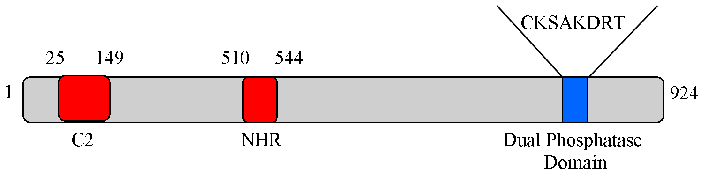
Illustration of INPP4B protein. INPP4B protein consists of C2-lipid binding domain, Nervy Homology 2 (NHR2) domain and C-terminal dual phosphatase domain where conserved Cys(X)5Arg motif locates. Data adapted from Agoulnik et al., 2011.
Expression
Inpp4bα has a broad tissue expression with higher levels in brain, skeletal muscle, lung, spleen, testis and thymus. Nevertheless, Inpp4bβ has a limited expression in brain, small intestine, skeletal muscle and heart (Ferron and Vacher, 2006).
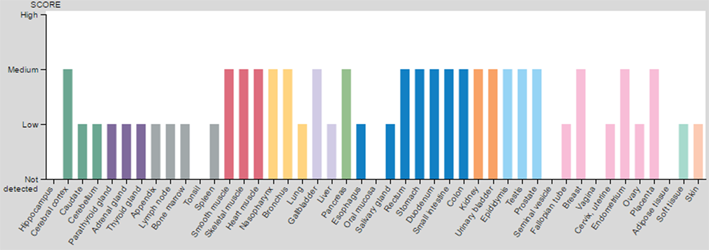
Expression profile of INPP4B in the tissues. INPP4B is moderately expressed in a numerous tissues including brain, muscles, pancreas, intestines, kidney, testis, prostate, breast and endometrium. Data taken from The Human Protein Atlas (http://www.proteinatlas.org) in April, 2017.
Localisation
Alpha form of INPP4B and INPP4B-S localize in cytoplasm while beta form mainly localize in Golgi apparatus (Ferron and Vacher, 2006; Billcliff and Lowe, 2014; Croft et al., 2017).
Function
Inositol polyphosphate 4-phosphate type II (INPP4B) is an enzyme responsible for phosphoinositide homeostasis. The major substrate for INPP4B is phophatidylinositol 3,4-biphosphate (PI(3,4)P2). PI(3,4)P2 is dephospharylated by INPP4B on D4 position and converted to phophatidylinositol 3-phosphate (PI(3)P). Those are critical secondary messengers in cells. Also, the substrate of INPP4B, PI(3,4)P2 is necessary for the activation of AKT. Thus, INPP4B is a negative regulator of PI3K/AKT signaling pathway. AKT is a potent driver of tumorigenic cell growth. Hence, INPP4B was at first proposed as a tumor suppressor protein. However, INPP4B was illustrated to activate serum glucocorticoid-regulated kinase 3 ( SGK3), which also promotes cellular proliferation and growth, via production of PI(3)P and in turn could be oncogenic (Chi et al., 2015; Guo et al., 2016). INPP4B was also demonstrated to have a role in nerve conduction velocity (Lemcke et al., 2014) and regulation of osteoclast differentiation (Ferron et al., 2011; Vacher, 2013). Moreover, INPP4B was shown to dephosphorylate phosphotyrosine analogs, paranitrophenyl phosphate (pNPP) and 6,8-difluoro-4-methylumbelliferyl (DifMUP), pointing that INPP4B has a protein tyrosine phosphatase activity (Lopez et al., 2013).
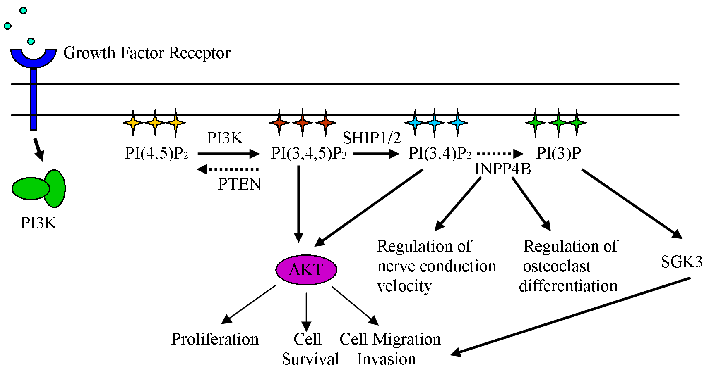
Functions of INPP4B protein. INPP4B dephosphorylates PI(3,4)P2 to PI(3)P. PI(3,4)P2 is a secondary messenger which is important for activation of AKT to promote cell proliferation, survival, migration and invasion. Thus, INPP4B proposed as a tumor suppressor. However, the product of INPP4B, PI(3)P was shown to trigger activation of SGK3 which also promotes those phenotypes. So, INPP4B was further proved to be oncogenic. Besides, INPP4B is fundamental for the regulation of nerve conduction velocity and osteoclast differentiation. Data adapted from Chew et al., 2015b.
Homology
Human and mouse INPP4B proteins share 96% identity. All mammalian INPP4B proteins include a Cys(X)5Arg phosphatase catalytic site and a conserved C2 domain (Ferron and Vacher, 2006). C2 lipid binding domain of INPP4B is 91% identical between human and mouse (Agoulnik et al., 2011).
Mutations
Note
The C-terminal lipid phosphatase domain contains C 842KSAKDRT (aa 842-849) motif which is conserved between type I and II phosphatases. Mutation of cysteine at position 842 to alanine in this motif causes INPP4B to unable to dephosphorylate phosphatidylinositols (Agoulnik et al., 2011). Also, K846M mutation resulted in loss of lipid phosphatase activity without affecting protein phosphatase activity and D847E mutation caused to loss of protein phosphatase activity and decrease in lipid phosphatase activity (Lopez et al., 2013). In a case study where samples from patients with gastric cancer (GC) and colorectal cancer (CRC) were used, an A7 repeat at the 25th exon of INPP4B was analyzed. An identical frameshift mutation, through deletion of one base, in the A7 repeat region was identified in two CRCs (2/79: 2.5%) and one GC (1/34: 2.9%) patient (Choi et al., 2016).
Implicated in
Top note
When firstly identified, INPP4B was proposed as a tumor suppressor especially when PTEN was deficient (Gewinner et al., 2009; Kofuji et al., 2015; Vo and Fruman, 2015); however, some studies proved that it could promote carcinogenesis.
Entity name
Melanoma
Note
Chi et al. showed that INPP4B is upregulated in melanoma cell lines and human tissues. Even though INPP4B was shown to negatively regulate PI3K/AKT signaling and thus, it was thought to be tumor suppressor, INPP4B was demonstrated to be an oncogenic driver through activation of serum glucocorticoid-regulated kinase 3 (SGK3) and independently of AKT. INPP4B downregulation inhibited cell proliferation and tumor growth in xenograft while its overexpression caused enhanced cell proliferation and anchorage-independent growth of melanocytes (Chi et al., 2015). On the other hand, INPP4B expression was inversely correlated with tumor progression in melanocytic neoplasms (Perez-Lorenzo et al., 2014).
Entity name
Colon Cancer
Note
INPP4B was demonstrated to be oncogenic and upregulated in human colon cancer cells and tissue. Silencing of INPP4B blocked the activation of AKT and SGK3, and inhibited cell proliferation and tumor growth in xenograft. Overexpression of INPP4B resulted in anchorage-independent growth of normal colon epithelial cells. Also, INPP4B was illustrated to dephosphorylate PTEN in colon cancer cells (Guo et al., 2016).
Entity name
Thyroid Cancer
Note
Chew et al. showed loss of Innp4b in Pten heterozygous mice leaded to follicular thyroid carcinoma. INPP4B was also demonstrated to inhibit PI3K-C2 Endometrial Cancer α-mediated AKT2 activation in early endosomes in thyroid cancer cells (Chew et al., 2015). INPP4B was downregulated in human thyroid cancer cell lines and samples (Chew et al., 2015; Kofuji et al., 2015).
Entity name
Endometrial Cancer
Note
INPP4B was demonstrated to be downregulated in samples from patients with endometrial cancer (Kofuji et al., 2015).
Entity name
Prostate Cancer
Note
Hodgson et al. showed that activation of androgen receptor induced the expression of INPP4B via activation of corepressor, NCOR1, which regulates agonist-bound androgen receptor activity, and decreased the activation of AKT in prostate cancer cell lines. Also, INPP4B expression was shown to be down-regulated in samples from androgen-dependent prostate cancer (Hodgson et al., 2011). Same group also showed that de novo expression of INPP4B suppressed the invasion in vitro and in vivo in human prostate carcinoma cells due to that INPP4B regulated a wide range of genes associated with cell adhesion, extracellular matrix and cytoskeleton. It also inhibited metastases thanks to downregulating metastases-related BIRC5, phosphorylated PKC, expression of PKC in androgen-dependent and -independent manner and PTGS2 (COX-2). Moreover, de novo expressed INPP4B inhibited proinflammatory cytokine CXCL8 (IL-8) and induced PAK6 owing to downregulating PKC (Hodgson et al., 2014). In another study, overexpression of INPP4B in prostate cancer cell line, PC3, inhibited cell proliferation and decreased the levels of phosphorylated AKT (p-AKT), bringing about G1 arrest. Combination of INPP4B overexpression with PARP inhibitor, which arrested the cells in G2/M with an increase in p-AKT level, decreased the p-AKT levels and further inhibited the cell proliferation, suggesting that those combinations could be helpful for treatment of prostate cancer (Ding et al., 2014). INPP4B was also demonstrated to associate with the resistance to chemotherapeutics in prostate cancer. In docetaxel-resistant prostate cancer cell lines, INPP4B was shown to be downregulated. Overexpression of INPP4B resensitized the resistant cell lines towards docetaxel via inhibiting PI3K/AKT activation and expression of the mesenchymal markers fibronectin, N-cadherin, and vimentin, and upregulating the expression level of the epithelial maker E-cadherin (Chen et al., 2016).
Entity name
Breast Cancer
Note
INPP4B was shown to be expressed in non-proliferative estrogen receptor (ER)-positive cells in normal breast tissue and ER-positive breast cancer cell lines. Nevertheless, ER-negative breast cancer cell lines did not express INPP4B. As a generalization, INPP4B expression was not seen in phosphatase and tensin homolog (PTEN)-null tumors. Down-regulation of INPP4B in ER-positive breast cancer cell lines increased AKT activation, cell proliferation and xenograft tumor growth while overexpression of INPP4B in ER-negative cell lines decreased the activated AKT and anchorage-independent growth (Fedele et al., 2010). Similarly, in triple negative breast cancer cell line, MDA-MB-231, stably overexpression of INPP4B inhibited cell proliferation and arrested the cell cycle at G1 phase through decreasing the level of phosphorylated AKT. By the combinational therapy approach, INPP4B expression was shown to increase the efficacy of poly-(adenosine diphosphate ribose) polymerase (PARP) inhibitor, AG014699 which is a DNA-damaging agent, arresting cell cycle at G2/M transition but could activate PI3K/AKT pathway (Sun et al., 2014). In a review article, Bertucci and Mitchell reported that INPP4B expression was lost in 84% of basal-like breast cancer; INPP4B loss of heterozygosity (LOH) occurs in 55% of triple negative and basal-like cancers, and 60% of BRCA1 mutant tumors as previously shown by Gewinner et al. (Gewinner et al., 2009; Bertucci and Mitchell, 2013). Similarly, INPP4B LOH was observed in 18.1% of Japanese breast cancer patients. Moreover, INPP4B LOH was significantly correlated with estrogen receptor (ER) and progesterone receptor (PR) negativity, higher nuclear grade, PTEN LOH and poorer prognosis (Tokunaga et al., 2016). In a case study where breast cancer samples from 43 patients were used, INPP4B expression was absent or low for 18% of cases. Low expression INPP4B was associated with larger tumor size and higher nuclear grade (Sueta et al., 2014). In another study, INPP4B was shown to prevent AKT activation but trigger the activation of SGK3, which was overexpressed and hyperactivated in breast cancer and caused to proliferation, invasive migration and tumorigenesis in breast cancer in vitro and in vivo models, via production of PI(3)P (Gasser et al., 2014).
Entity name
Acute Myeloid Leukemia (AML)
Note
Dzneladze et al. showed that high levels of INPP4B in AML patients had poor response to induction therapy, shorter event-free survival and shorter overall survival. In cell culture, overexpression of INPP4B increased the colony formation potential, resulted in resistance to daunorubicin and ionizing radiation and supported phosphatase-dependent and AKT-independent proliferation. Hence, the researchers proposed INPP4B as an independent prognostic marker in AML (Dzneladze et al., 2015). Similarly, INPP4B was shown to be overexpressed in samples from patients with AML in another study. Overexpression of INPP4B in patients with AML resulted in reduced response to chemotherapy, early relapse and poor overall survival as figured out by Dzneladze et al. Moreover, overexpression of an inert variant of INPP4B, which did not display phosphatase activity, did not affect the resistance phenotype in vitro. However, silencing of INPP4B sensitized the AML cell lines towards chemotherapeutics, pointing a phosphoinositide phosphatase function-independent involvement of INPP4B in drug resistance in AML (Rijal et al., 2015).
Entity name
Laryngeal Cancer
Note
In laryngeal cancer cell line, HEp-2, INPP4B expression was triggered by hypoxia and irradiation. Also, INPP4B overexpression enhanced aerobic glycolysis. It was demonstrated that one of the glycolysis-regulatory gene, hexokinase-2 (HK2) was regulated by INPP4B via AKT-mTOR pathway in this cell line. Silencing of both INPP4B and HK2 sensitized the radioresistant cells toward radiation and chemotherapeutic agents (Min et al., 2013). Moreover, INPP4B was demonstrated to be a marker of radioresistance in HEp-2 cells. INPP4B was shown to be overexpressed in radioresistant HEp-2 cells and that radiation or anticancer drug treatment induced INPP4B expression which was blocked by inhibition of extracellular signal-regulated kinase (ERK). INPP4B overexpression increased the resistance towards radiation and anticancer drugs and depletion of INPP4B re-sensitized the cells (Kim et al., 2012).
Entity name
Nasopharyngeal Carcinoma (NPC)
Note
NPC is a viral-associated neoplasm where Epstein-Bar virus latent proteins affect multiple signaling cascades. Yuen et al. showed that INPP4B was downregulated in NPC cell lines compared to normal nasopharyngeal epithelial cell lines. The downregulation was demonstrated to become as a result of hypermethylation of the 5CpG island of INPP4B (Yuen et al., 2014).
Entity name
Lung Cancer
Note
In a case study where samples were obtained from 180 patients with non-small cell lung cancer subtypes, squamous cell carcinoma (SSC) or adenocarcinoma (ADCA), the ratio of INPP4B copy number was determined as 15% ≤1 copies, 62% 2 copies, and 23% ≥3 copies. Also, 47% displayed loss of loss of INPP4B expression which showed a strong correlation with SCC compared to ADCA (Stjernstrom et al., 2014). In another study, MIR937 which targeted INPP4B by directly binding to 3 UTR of INPP4B was upregulated in lung cancer cell line. Overexpression of miR-937 promoted anchorage-dependent and -independent growth while downregulation prevented these effects. Overexpression of miR-937 was shown to knockdown INPP4B which was proposed as the reason for increased growth rate in lung cancer cell lines (Zhang et al., 2016).
Entity name
Bladder Cancer
Note
Hsu et al. developed ESR1 (estrogen receptor-α, ERα)--knockout mice to see the effect of ERα in bladder carcinogenesis. They showed that ERα reduced the carcinogen-induced malignant transformation ability. Moreover, ESR1 was demonstrated to control AKT activity via controlling the expression of INPP4B (Hsu et al., 2014).
Entity name
Ovarian Cancer; Ovarian Teratomas (OTs) in particular
Note
Teratoma is a class of tumors that are composed of ecto-, meso- and endodermal tissues which are all foreign to the site of the origin. OTs are pathogenically activated non-ovulated germ cells-derived ovary tumors that exhibit disorganized pattern of cellular differentiation. Carriers of Rous sarcoma virus (RSV) Tgkd transgene are susceptible to teratomas. Tgkd transgene was demonstrated to be inserted into intergenic region of Inpp4b and Il15. This insertion was shown to affect Inpp4b expression and dysregulation of Akt pathway, promoting progression of ovarian teratomas (Balakrishnan and Chaillet, 2013). In ovarian cancer cells, INPP4B was illustrated to form a complex with BRCA1 and ATR which are the members of DNA repair mechanism. Loss of INPP4B, which was seen in 40% of patients with ovarian cancer studied, disrupted in BRCA1, ATM and ATR protein stabilities, resulting in DNA defects and sensitized the cells towards inhibitors of PARP, a nuclear enzyme sensing DNA single strand breaks and required for base excision repair (Ip et al., 2014).
Entity name
Hepatocellular Carcinoma
Note
In hepatocellular carcinoma cell lines, MIR765 which directly targeted INPP4B was shown to be upregulated. Upregulation of miR-765 and in turn downregulation of INPP4B increased upregulation of p-AKT, CCND1 (Cyclin D1), and downregulation of p- FOXO3, p21 expression; thus it increased cellular proliferation and tumorigenicity. Downregulation of miR-765 rescued the phenotype in these cell lines via upregulation of INPP4B (Xie et al., 2016).
Entity name
Osteoporosis
Disease
Osteoporosis is a genetic disease where bone mass is reduced because of dysregulation of osteoclast differentiation and maturation. Ferron et al. proposed Inpp4bα as a regulator of osteoclastogenesis. Inpp4bα was detected to be expressed from early osteoclast differentiation to activation. Moreover, phosphotase-inactivate Inpp4bα triggered the osteoclast activation. Inpp4bα was shown to control intracellular calcium level modulating NFATC1, which is a preosteoclast promoting transcription factor regulating osteoclast maturation, nuclear translocation and activation. Inpp4b-deficient mice displayed increased osteoclast differentiation rate, bringing about decreased bone mass and osteoporosis, and human INPP4B was proposed as a susceptibility locus for osteoporosis. Overall, Inpp4bα was regarded as a negative regulator of osteoclast differentiation (Ferron et al., 2011; Vacher, 2013).
Entity name
Multiple Sclerosis (MS)
Disease
MS is a neurodegenerative and neuroinflammatory disease causing impairment of nerve conduction. In a genomic study, INPP4B was shown to regulate nerve conduction velocity. Moreover, an INPP4B polymorphism (rs13102150) was associated with MS cohorts (Lemcke et al., 2014).
Article Bibliography
| Pubmed ID | Last Year | Title | Authors |
|---|---|---|---|
| 21487159 | 2011 | INPP4B: the new kid on the PI3K block. | Agoulnik IU et al |
| 23078915 | 2013 | Role of the inositol polyphosphate-4-phosphatase type II Inpp4b in the generation of ovarian teratomas. | Balakrishnan A et al |
| 23551093 | 2013 | Phosphoinositide 3-kinase and INPP4B in human breast cancer. | Bertucci MC et al |
| 24966051 | 2014 | Inositol lipid phosphatases in membrane trafficking and human disease. | Billcliff PG et al |
| 27318090 | 2016 | INPP4B reverses docetaxel resistance and epithelial-to-mesenchymal transition via the PI3K/Akt signaling pathway in prostate cancer. | Chen H et al |
| 26700619 | 2016 | Endosome and INPP4B. | Chew CL et al |
| 26573229 | 2015 | INPP4B is upregulated and functions as an oncogenic driver through SGK3 in a subset of melanomas. | Chi MN et al |
| 27068714 | 2016 | Inactivating Frameshift Mutation of INPP4B Encoding a PI3K Pathway Phosphatase in Gastric and Colorectal Cancers. | Choi EJ et al |
| 28189677 | 2017 | Functional identification of a novel transcript variant of INPP4B in human colon and breast cancer cells. | Croft A et al |
| 24837011 | 2014 | Effects of INPP4B gene transfection combined with PARP inhibitor on castration therapy-resistant prostate cancer cell line, PC3. | Ding H et al |
| 25736236 | 2015 | INPP4B overexpression is associated with poor clinical outcome and therapy resistance in acute myeloid leukemia. | Dzneladze I et al |
| 21127264 | 2010 | Inositol polyphosphate 4-phosphatase II regulates PI3K/Akt signaling and is lost in human basal-like breast cancers. | Fedele CG et al |
| 21982707 | 2011 | Inositol polyphosphate 4-phosphatase B as a regulator of bone mass in mice and humans. | Ferron M et al |
| 16631325 | 2006 | Characterization of the murine Inpp4b gene and identification of a novel isoform. | Ferron M et al |
| 19647222 | 2009 | Evidence that inositol polyphosphate 4-phosphatase type II is a tumor suppressor that inhibits PI3K signaling. | Gewinner C et al |
| 26411369 | 2016 | INPP4B is an oncogenic regulator in human colon cancer. | Guo ST et al |
| 21224358 | 2011 | Decreased expression and androgen regulation of the tumor suppressor gene INPP4B in prostate cancer. | Hodgson MC et al |
| 25277204 | 2014 | Estrogen receptor alpha prevents bladder cancer via INPP4B inhibited akt pathway in vitro and in vivo. | Hsu I et al |
| 25868852 | 2015 | Loss of INPP4B causes a DNA repair defect through loss of BRCA1, ATM and ATR and can be targeted with PARP inhibitor treatment. | Ip LR et al |
| 22895072 | 2012 | Identification of inositol polyphosphate 4-phosphatase type II as a novel tumor resistance biomarker in human laryngeal cancer HEp-2 cells. | Kim JS et al |
| 25883023 | 2015 | INPP4B Is a PtdIns(3,4,5)P3 Phosphatase That Can Act as a Tumor Suppressor. | Kofuji S et al |
| 25129256 | 2014 | Nerve conduction velocity is regulated by the inositol polyphosphate-4-phosphatase II gene. | Lemcke S et al |
| 25883022 | 2015 | In Vivo Role of INPP4B in Tumor and Metastasis Suppression through Regulation of PI3K-AKT Signaling at Endosomes. | Li Chew C et al |
| 24070612 | 2013 | Determinants of the tumor suppressor INPP4B protein and lipid phosphatase activities. | Lopez SM et al |
| 24051093 | 2013 | INPP4B-mediated tumor resistance is associated with modulation of glucose metabolism via hexokinase 2 regulation in laryngeal cancer cells. | Min JW et al |
| 24288008 | 2014 | A tumor suppressor function for the lipid phosphatase INPP4B in melanocytic neoplasms. | Perez-Lorenzo R et al |
| 25736313 | 2015 | Inositol polyphosphate 4-phosphatase II (INPP4B) is associated with chemoresistance and poor outcome in AML. | Rijal S et al |
| 24500884 | 2014 | Alterations of INPP4B, PIK3CA and pAkt of the PI3K pathway are associated with squamous cell carcinoma of the lung. | Stjernström A et al |
| 25542038 | 2014 | An integrative analysis of PIK3CA mutation, PTEN, and INPP4B expression in terms of trastuzumab efficacy in HER2-positive breast cancer. | Sueta A et al |
| 24420152 | 2014 | INPP4B overexpression enhances the antitumor efficacy of PARP inhibitor AG014699 in MDA-MB-231 triple-negative breast cancer cells. | Sun Y et al |
| 26577950 | 2016 | Biological and clinical significance of loss of heterozygosity at the INPP4B gene locus in Japanese breast cancer. | Tokunaga E et al |
| 23551105 | 2013 | Inpp4b is a novel negative modulator of osteoclast differentiation and a prognostic locus for human osteoporosis. | Vacher J et al |
| 26152921 | 2015 | INPP4B Is a Tumor Suppressor in the Context of PTEN Deficiency. | Vo TT et al |
| 27062697 | 2016 | Mir-765 promotes cell proliferation by downregulating INPP4B expression in human hepatocellular carcinoma. | Xie BH et al |
| 25126743 | 2014 | Epigenetic inactivation of inositol polyphosphate 4-phosphatase B (INPP4B), a regulator of PI3K/AKT signaling pathway in EBV-associated nasopharyngeal carcinoma. | Yuen JW et al |
| 27179609 | 2016 | miR-937 contributes to the lung cancer cell proliferation by targeting INPP4B. | Zhang L et al |
Other Information
Locus ID:
NCBI: 8821
MIM: 607494
HGNC: 6075
Ensembl: ENSG00000109452
Variants:
dbSNP: 8821
ClinVar: 8821
TCGA: ENSG00000109452
COSMIC: INPP4B
RNA/Proteins
Expression (GTEx)
Pathways
Protein levels (Protein atlas)
References
| Pubmed ID | Year | Title | Citations |
|---|---|---|---|
| 38246071 | 2024 | Investigating the multifaceted cooperation of autophagy, PI3K/AKT signaling pathways, and INPP4B gene in de novo acute myeloid leukemia patients. | 1 |
| 38246071 | 2024 | Investigating the multifaceted cooperation of autophagy, PI3K/AKT signaling pathways, and INPP4B gene in de novo acute myeloid leukemia patients. | 1 |
| 37389566 | 2023 | Regulation of B-1 cell numbers and B cell-mediated antibody production by Inpp4b. | 1 |
| 37389566 | 2023 | Regulation of B-1 cell numbers and B cell-mediated antibody production by Inpp4b. | 1 |
| 33879096 | 2021 | Expression and functional characterization of INPP4B in gallbladder cancer patients and gallbladder cancer cells. | 5 |
| 34035258 | 2021 | INPP4B promotes PI3Kα-dependent late endosome formation and Wnt/β-catenin signaling in breast cancer. | 20 |
| 34216856 | 2021 | The INPP4B paradox: Like PTEN, but different. | 8 |
| 33879096 | 2021 | Expression and functional characterization of INPP4B in gallbladder cancer patients and gallbladder cancer cells. | 5 |
| 34035258 | 2021 | INPP4B promotes PI3Kα-dependent late endosome formation and Wnt/β-catenin signaling in breast cancer. | 20 |
| 34216856 | 2021 | The INPP4B paradox: Like PTEN, but different. | 8 |
| 31179504 | 2020 | INPP4B exerts a dual function in the stemness of colorectal cancer stem-like cells through regulating Sox2 and Nanog expression. | 11 |
| 31872854 | 2020 | Genetic interactions between INPP4B and RAD50 is prognostic of breast cancer survival. | 2 |
| 31913757 | 2020 | TGFβ receptor endocytosis and Smad signaling require synaptojanin1, PI3K-C2α-, and INPP4B-mediated phosphoinositide conversions. | 12 |
| 31968218 | 2020 | Exosomes derived from human bone marrow mesenchymal stem cells transfer miR-222-3p to suppress acute myeloid leukemia cell proliferation by targeting IRF2/INPP4B. | 33 |
| 32115737 | 2020 | IRF2-INPP4B axis inhibits apoptosis of acute myeloid leukaemia cells via regulating T helper 1/2 cell differentiation. | 1 |
Citation
Hasan Huseyin Kazan ; Ufuk Gunduz
INPP4B (Inositol Polyphosphate-4-Phosphate Type II B)
Atlas Genet Cytogenet Oncol Haematol. 2017-04-01
Online version: http://atlasgeneticsoncology.org/gene/43320/inpp4b-(inositol-polyphosphate-4-phosphate-type-ii-b)
