Identity
LOCATION
11p15.1
IMAGE

LEGEND
Figure 1. Genomic location of TPH1 gene (Chromosome 11 - NC_000011.10 Reference GRCh38.p13 Primary Assembly)
LOCUSID
ALIAS
TPRH,TRPH
FUSION GENES
Abstract
Tryptophan hydroxylase 1 gene (TPH1) encodes a rate-limiting enzyme in the biosynthesis of the monoamine neurotransmitter serotonin. TPH1 is expressed in peripheral tissues such as the heart, lung, kidney, duodenum and adrenal gland, as well as in female reproductive tissues. The mutations in this gene have been associated with various diseases with high risk, including, schizophrenia, somatic anxiety, anger-related features, bipolar disorder, suicidal behavior, and several addictions.
DNA/RNA
Description
The gene spans a region of 29 kilobases (kb) and consists of 11 exons.
Transcription
The gene has 4 transcripts (Table 1).
Table 1. Transcripts of the human TPH1 gene (Ensemble, GRCh38: CM000673.2).
Single nucleotide polymorphisms (SNPs) found in the human TPH1 gene were given in Table 2.
Table 2. Single nucleotide polymorphisms (SNPs) of the human TPH1 gene (Lai et al. 2005).
The genotypic and allelic distribution of the TPH1 gene is listed in Table 3.
Table 3. The genotypic and allelic distribution of the TPH1 gene (Lai et al. 2005).
N indicates the matched normal controls, P indicates the bipolar patients.
1 represents the major allele and 2 the minor allele
Table 1. Transcripts of the human TPH1 gene (Ensemble, GRCh38: CM000673.2).
| Name | Transcript ID | bp | Protein | Translation ID | Biotype | CCDS | UniProt | RefSeq Match | Flags |
| TPH1-201 | ENST00000250018.6 | 5325 | 444aa | ENSP00000250018.2 | Protein coding | CCDS7829 | P17752 | - | TSL:1GENCODE basicAPPRIS P1 |
| TPH1-204 | ENST00000528338.1 | 556 | 165aa | ENSP00000436081.1 | Protein coding | - | E9PR49 | - | CDS 3 incompleteTSL:3 |
| TPH1-202 | ENST00000417164.5 | 1138 | 206aa | ENSP00000403831.1 | Nonsense mediated decay | - | E7EMX4 | - | TSL:1 |
| TPH1-203 | ENST00000525406.1 | 461 | No protein | - | lncRNA | - | - | - | TSL:5 |
Single nucleotide polymorphisms (SNPs) found in the human TPH1 gene were given in Table 2.
Table 2. Single nucleotide polymorphisms (SNPs) of the human TPH1 gene (Lai et al. 2005).
| SNP name (Genomic localization) | Position in the gene | SNP ID | PCR primers and short-extension probe |
| 5flankingSNP1 (T-1721G) | 5 flanking region | SNP000574351 | F: 5-ctgttcttttggtgtcctc-3 |
| R:5-gctcctggcacttaacata-3 | |||
| P: 5-taatttctttcatgagtattttatagtt | |||
| 5flankingSNP2 (A-1067G) | 5 flanking region | SNP000574353 | F: 5-ctgttcttttggtgtcctc-3 |
| R: 5-gctcctggcacttaacata-3 | |||
| P: 5-ttttttgctgagtatggatgtactttaaagctcagga | |||
| 5flankingSNP3 (G-347T) | 5 flanking region | SNP000574354 | F: 5-cgataataggcgttatcttg-3 |
| R: 5-ctcaatctctgcgtgtatct-3 | |||
| P: 5-tcaggactgggctattaaatagcccagaagcacagaga | |||
| in1SNP1 (T3804A) | Intron 1 (exon 1c) | rs623580 | F: 5-taattatcctccctccaagt-3 R: 5-cttacccattcaattaccac-3 |
| P: 5-agagtatgggcgacgttgtccta | |||
| in2SNP1 (G7465A) | Intron 2 | rs684302 | F: 5-tgctcttatatgtcttttcaagt-3 |
| R: 5-gagagatggagcaaaacac-3 | |||
| P: 5-ttaaataaaatacctgtatgtcttcttccatca | |||
| in3SNP1 (A12517C) | Intron 3 | rs211105 | F: 5-tcaggaaaacagaagggta-3 |
| R: 5-ggtaaattgccctatttctaa-3 | |||
| P: 5-aggtggcaaagacaaatgatttctaagatcttttccatcggc | |||
| in6SNP1 (C18626G) | Intron 6 | rs2237907 | F: 5-gggaagaaattatgtaagtgg-3 |
| R: 5-gaaatgttccatatctgtgc-3 | |||
| P: 5-ttgtaatgcacacaaaactgaaagctgatctcttagggtctggagc | |||
| in7SNP1 (A20004C)d | Intron 7 | rs1800532 | CF: 5-acccacctacactttcctc-3 CR: 5-taattgacaacctattaggttc-3 |
| AR: 5-agcacatgtgaagcatttag-3 | |||
| AF: 5-cctatgctcagaatagcagctct-3 | |||
| 3UTRSNP1 (C27224T) | 3 UTR | rs2108977 | F: 5-cacttgaatatcacagtccatc-3 |
| R: 5-gcttacagtagatttccttgc-3 | |||
| P: 5-tacatttgatggtaaatagatgctagctaatct | |||
| 3UTRSNP2 (A27237G) | 3 UTR | New | F: 5-cacttgaatatcacagtccatc-3 |
| R: 5-gcttacagtagatttccttgc-3 | |||
| P: 5-aactataaatcagataatcaata |
The genotypic and allelic distribution of the TPH1 gene is listed in Table 3.
Table 3. The genotypic and allelic distribution of the TPH1 gene (Lai et al. 2005).
| Marker | Group (Total Number) | Genotype (frequency) | Allele (frequency) | |||||||
| 1-1 | 1-2 | 2-2 | χ2 | p value | 1 | 2 | χ2 | p value | ||
| T-1721G | N(94) | 54(.57) | 37(.39) | 3(.03) | 2.72 | 0.248 | 145(.77) | 43(.23) | 0.36 | 0.548 |
| P(92) | 53(.58) | 31(.34) | 8(.09) | 137(.75) | 47(.26) | |||||
| A-1067G | N(90) | 53(.59) | 34(.38) | 3(.03) | 1.62 | 0.446 | 140(.78) | 40(.22) | 0.74 | 0.389 |
| P(92) | 51(.55) | 34(.37) | 7(.08) | 136(.74) | 48(.26) | |||||
| G-347T | N(102) | 58(.57) | 43(.42) | 1(.01) | 0.048 | 0.976 | 159(.78) | 45(.22) | 0.037 | 0.847 |
| P(94) | 52(.55) | 41(.44) | 1(.01) | 145(.77) | 43(.23) | |||||
| T3804A | N(101) | 56(.55) | 38(.38) | 7(.07) | 2.17 | 0.304 | 152(.74) | 52(.26) | 0.015 | 0.946 |
| P(96) | 49(.51) | 44(.46) | 3(.03) | 142(.74) | 50(.26) | |||||
| G7465A | N(100) | 31(.31) | 43(.43) | 26(.26) | 0.46 | 0.793 | 105(.53) | 95(.48) | 0.439 | 0.508 |
| P(74) | 25(.34) | 33(.45) | 16(.22) | 83(.56) | 65(.44) | |||||
| A12517C | N(101) | 58(.57) | 39(.39) | 4(.04) | 0.232 | 0.890 | 155(.77) | 47(.23) | 0.207 | 0.649 |
| P(96) | 58(.60) | 35(.37) | 3(.03) | 151(.79) | 41(.21) | |||||
| C18626G | N(100) | 28(.28) | 47(.47) | 25(.25) | 1.24 | 0.538 | 103(.52) | 97(.49) | 0.392 | 0.531 |
| P(71) | 25(.35) | 28(.39) | 18(.25) | 78(.55) | 64(.45) | |||||
| A20004C | N(102) | 40(.39) | 45(.44) | 17(.17) | 1.726 | 0.422 | 125(.61) | 79(.39) | 1 795 | 0.18 |
| P(89) | 29(.32) | 39(.44) | 21(.24) | 97(.54) | 81(.46) | |||||
| C27224T | N(95) | 31(.33) | 49(.52) | 15(.16) | 3.58 | 0.167 | 111(.58) | 79(.42) | 2.13 | 0.144 |
| P(80) | 23(.29) | 35(.44) | 22(.28) | 81(.51) | 79(.49) | |||||
| A27237G | N(95) | 49(.52) | 40(.42) | 6(.06) | 0.57 | 0.751 | 138(.73) | 52(.27) | 0.677 | 0.411 |
| P(78) | 37(.47) | 34(.44) | 7(.09) | 107(.69) | 49(.34) | |||||
N indicates the matched normal controls, P indicates the bipolar patients.
1 represents the major allele and 2 the minor allele
Proteins
Description
Size: 444 amino acids; Molecular mass: 50985 Da; Cofactor: Fe (2+); Xref=ChEBI:CHEBI:29033; Quaternary structure: Homotetramer
Protein properties for TPH1 Gene: TPH1 is a rate-limiting enzyme in the biosynthesis of serotonin. It catalyzes the biotin-dependent monooxygenation of tryptophan to 5-hydroxytryptophan (5HTP), then decarboxylates to form the neurotransmitter serotonin. The gene is localized on the human chromosome 11p15.3-p14, is about 29 kb long and contains 11 exons (Craig et al. 1991). Jonsson et al. (1997) identified single nucleotide polymorphisms (SNPs) A218C (rs1800532) and A779C (rs1799913) in intron 7 of the TPH1 gene. Mutations in this gene have been associated with high risk for various diseases and disorders such as schizophrenia, somatic anxiety, anger-related features, bipolar disorder, suicidal behavior, and several addictions (https://www.ncbi.nlm.nih.gov/gene).
Protein properties for TPH1 Gene: TPH1 is a rate-limiting enzyme in the biosynthesis of serotonin. It catalyzes the biotin-dependent monooxygenation of tryptophan to 5-hydroxytryptophan (5HTP), then decarboxylates to form the neurotransmitter serotonin. The gene is localized on the human chromosome 11p15.3-p14, is about 29 kb long and contains 11 exons (Craig et al. 1991). Jonsson et al. (1997) identified single nucleotide polymorphisms (SNPs) A218C (rs1800532) and A779C (rs1799913) in intron 7 of the TPH1 gene. Mutations in this gene have been associated with high risk for various diseases and disorders such as schizophrenia, somatic anxiety, anger-related features, bipolar disorder, suicidal behavior, and several addictions (https://www.ncbi.nlm.nih.gov/gene).
Expression
TPH1 gene is expressed in peripheral tissues such as heart, lung, kidney, duodenum and adrenal gland and female reproductive tissues (http://www.proteinatlas.org).
Function
Remarkably, about 90% of the total serotonin of the human body is found in neuroendocrine enterochromaffin cells (EC) in the human gastrointestinal (GI) tract, where it is used to regulate bowel movements (Lukiw and Rogaev, 2017). The mouse mammary glands stimulated by prolactin (176760) express the genes necessary for serotonin biosynthesis, including TPH1 (Matsuda et al. 2004). The TPH1 mRNA increased during pregnancy and lactation, and serotonin was detected in breast epithelium and milk. It has been observed that serotonin suppresses beta-casein (115460) expression and causes contraction of breast alveoli. Accordingly, Matsuda et al. (2004) concluded that autocrine-paracrine serotonin signaling is an important regulator of breast homeostasis and early evolution (Matsuda et al. 2004).
The liver is an organ that can regenerate its volume after major tissue loss. Lesurtel et al. (2006) showed that mouse thrombocytopenia leads to the inhibition of cellular proliferation in the liver (Lesurtel et al. 2006). Thrombocytes are the main carriers of serotonin in the blood. In thrombocytopenic mice, a serotonin agonist has been observed to regenerate liver proliferation (Gershon and Tack, 2007). The expression of HT2A (182135) and HT2B (601122) serotonin receptor subtypes has been observed to increase in the liver after hepatectomy. Antagonists of these receptors have been shown to inhibit liver regeneration. Liver regeneration has also been disrupted in mice lacking TPH1, the rate-limiting enzyme for the synthesis of peripheral serotonin. Since thrombocytes contain most of the circulating serotonin, and serotonin is released by thrombocyte aggregation, inactivation of TPH1 function is assumed to lead to severe blood clotting defects (Gershon and Tack, 2007).
Loss- and gain-of-function mutations in mouse low-density lipoprotein receptor-related protein 5 ( LRP5) gene affected bone formation, leading to osteoporosis and increased bone mass, respectively. Yadav et al. (2008) described the TPH1 as the most over-expressed gene in LRP5 - / - mice and concluded that LRP5 suppresses bone formation by inhibiting serotonin production (Yadav et al. 2008). Enterochromaffin cells (EC) synthesize intestinal serotonin (5HT). LRP5 controls 5HT synthesis by negatively regulating TPH1 expression in these cells. When 5HT is released in the blood, it negatively regulates bone formation during bone remodeling process (Ducy and Karsenty, 2010).
Since 5HT is produced in the gut, its effects on the intestinal microbiota are inevitable. There is a significant difference in the composition of the gut microbiota depending on whether the TPH1 is knocked out and whether the progenitors are heterozygous or homozygous for this gene. Besides, there is evidence that 5HT directly modulates the growth of commensal bacteria (Kwon et al. 2019). The combination of microbial and host gastrointestinal metabolism of tryptophan is likely an important factor in the systemic availability of tryptophan, as well as levels of indoles, kynurenine and local 5HT (Roager and Licht, 2018). The possible mechanisms for microbial regulation of tryptophan and 5HT release are shown in Figure 2 (Gheorghe et al. 2019).
The liver is an organ that can regenerate its volume after major tissue loss. Lesurtel et al. (2006) showed that mouse thrombocytopenia leads to the inhibition of cellular proliferation in the liver (Lesurtel et al. 2006). Thrombocytes are the main carriers of serotonin in the blood. In thrombocytopenic mice, a serotonin agonist has been observed to regenerate liver proliferation (Gershon and Tack, 2007). The expression of HT2A (182135) and HT2B (601122) serotonin receptor subtypes has been observed to increase in the liver after hepatectomy. Antagonists of these receptors have been shown to inhibit liver regeneration. Liver regeneration has also been disrupted in mice lacking TPH1, the rate-limiting enzyme for the synthesis of peripheral serotonin. Since thrombocytes contain most of the circulating serotonin, and serotonin is released by thrombocyte aggregation, inactivation of TPH1 function is assumed to lead to severe blood clotting defects (Gershon and Tack, 2007).
Loss- and gain-of-function mutations in mouse low-density lipoprotein receptor-related protein 5 ( LRP5) gene affected bone formation, leading to osteoporosis and increased bone mass, respectively. Yadav et al. (2008) described the TPH1 as the most over-expressed gene in LRP5 - / - mice and concluded that LRP5 suppresses bone formation by inhibiting serotonin production (Yadav et al. 2008). Enterochromaffin cells (EC) synthesize intestinal serotonin (5HT). LRP5 controls 5HT synthesis by negatively regulating TPH1 expression in these cells. When 5HT is released in the blood, it negatively regulates bone formation during bone remodeling process (Ducy and Karsenty, 2010).
Since 5HT is produced in the gut, its effects on the intestinal microbiota are inevitable. There is a significant difference in the composition of the gut microbiota depending on whether the TPH1 is knocked out and whether the progenitors are heterozygous or homozygous for this gene. Besides, there is evidence that 5HT directly modulates the growth of commensal bacteria (Kwon et al. 2019). The combination of microbial and host gastrointestinal metabolism of tryptophan is likely an important factor in the systemic availability of tryptophan, as well as levels of indoles, kynurenine and local 5HT (Roager and Licht, 2018). The possible mechanisms for microbial regulation of tryptophan and 5HT release are shown in Figure 2 (Gheorghe et al. 2019).
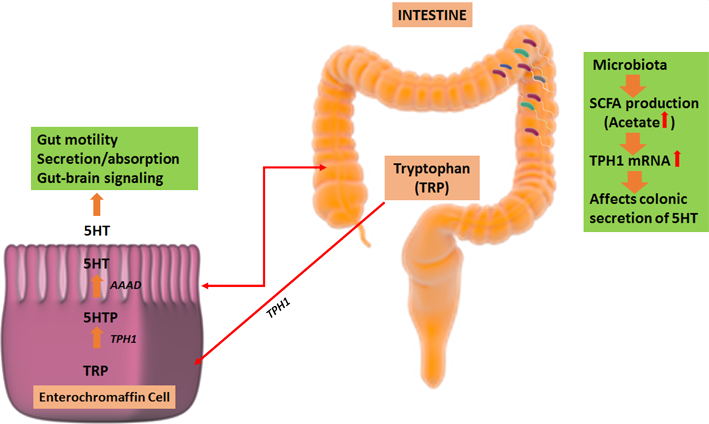
Figure 2. The possible mechanisms for microbial regulation of tryptophan and 5HT release (Simplified from Gheorghe et al. 2019).
Mutations
Note
The main mutations in the human TPH1 gene were given in Table 4.
Table 4. Mutations of the human TPH1 gene (http://www.hgmd.cf.ac.uk).
Table 4. Mutations of the human TPH1 gene (http://www.hgmd.cf.ac.uk).
| Missense/nonsense mutation | ||||||||
| Accession | HGMD codon change | HGMD amino acid change | HGVS (nucleotide) | HGVS (protein) | Variant class | Phenotype | Reference | Source |
| CM109141 | AAA-CAA | Lys54Gln | c.160A>C | p.K54Q | Disease-causing mutations (DM) | Attention deficit hyperactivity disorder | Halmøy (2010) Arch Gen Psychiatry 67:1033 | PubMed 20921119 |
| CM109142 | CGT-TGT | Arg142Cys | c.424C>T | p.R142C | Disease-causing mutations (DM) | Attention deficit hyperactivity disorder | Halmøy (2010) Arch Gen Psychiatry 67:1033 | PubMed 20921119 |
| CM109143 | CGA-TGA | Arg145Term | c.433C>T | p.R145* | Disease-causing mutations (DM) | Attention deficit hyperactivity disorder | Halmøy (2010) Arch Gen Psychiatry 67:1033 | PubMed 20921119 |
| CM109149 | GTA-ATA | Val177Ile | c.529G>A | p.V177I | Disease-causing mutations (DM) ? | Attention deficit hyperactivity disorder | Halmøy (2010) Arch Gen Psychiatry 67:1033 | PubMed 20921119 |
| CM109145 | CTC-ATC | Leu274Ile | c.820C>A | p.L274I | Disease-causing mutations (DM) | Attention deficit hyperactivity disorder | Halmøy (2010) Arch Gen Psychiatry 67:1033 | PubMed 20921119 |
| CM109146 | GCT-ACT | Ala300Thr | c.898G>A | p.A300T | Disease-causing mutations (DM) | Attention deficit hyperactivity disorder | Halmøy (2010) Arch Gen Psychiatry 67:1033 | PubMed 20921119 |
| CM187494 | CGT-CAT | Arg395His | c.1184G>A | p.R395H | Disease-causing mutations (DM) ? | Mood dysregulation disorder | Ungar (2018) Am J Med Genet A 176:1432 | PubMed 29696773 |
| CM109144 | ATC-AAC | Ile410Asn | c.1229T>A | p.I410N | Disease-causing mutations (DM) | Attention deficit hyperactivity disorder | Halmøy (2010) Arch Gen Psychiatry 67:1033 | PubMed 20921119 |
| Splicing mutation | ||||||||
| Accession | HGMD codon change | HGMD amino acid change | HGVS(nucleotide) | HGVS (dbSNP number) | Variant class | Phenotype | Reference | Source |
| CS034323 | IVS6 ds C-A +221 | not yet available | c.803+221C>A | rs1800532 | Disease-associated polymorphisms (DP) | Depression, association with | Tsai (1999) Neuroreport 10:3773 | PubMed 10716208 |
| Regulatory mutation | ||||||||
| Accession | HGMD codon change | HGMD amino acid change | HGVS (nucleotide) | HGVS (dbSNP number) | Variant class | Phenotype | Reference | Source |
| CR1314899 | GGGCTATTAAATAGCCCA GAAGCACAGAGA(T-G)GT GTGGGAGGTGGGGGGATT CTTGCTTTGG -5854 relative to initiation codon | not yet available | not yet available | rs7130929 | Disease-associated polymorphisms (DP) | Irritable bowel syndrome, diarrhoea predominant, association with | Grasberger(2013) Am J Gastroenterol 108:1766 | PubMed 24060757 |
| Small deletion | ||||||||
| Accession | HGMD codon change | HGMD amino acid change | HGVS | HGVS (dbSNP number) | Variant class | Phenotype | Reference | Source |
| CD166898 | CAGATACATGactTCAGTTCTTA non-coding region | not yet available | c.*1342_*1344delACT | rs60273374 | Disease-causing mutations (DM) ? | Attention deficit hyperactivity disorder, persistent | Demontis (2016) J Am Acad Child Adolesc Psychiatry 55:521 | PubMed 27238071 |
Implicated in
Entity name
Breast Cancer
Note
TPH1 was analyzed in histological samples to learn about the possible relationship between changing 5HT synthesis and human breast cancer progression. TPH1 is evenly distributed in the epithelial stroma in normal breast tissue and epithelial TPH1 is markedly stained. Compared to healthy breast cell lines, TPH1 staining intensity increased significantly in cancerous cell lines (Pai et al. 2009).
Entity name
Alzheimers disease (AD)
Note
It was observed that the amount of serotonin increased 4 times in raphe cell bodies and decreased 0.4-fold in amygdala synaptic ends in Alzheimers disease (AD) cases compared to controls. As a result of the accumulation of oxidative metabolites of serotonin and reduced transport of TPH to the axon terminals, TPH and its products are accumulated in the perikarya of raphe neurons, which may lead to the degeneration of serotonergic neurons in AD (Lukiw and Rogaev, 2017). In one study, fifty percent of patients showed agitation/aggression in response to the NPI screening question. A significant relationship was observed between agitation/aggression in male subjects carrying the C allele of the TPH1 gene. A218C polymorphism in this gene is linked to aggression and irritability in men. Given this, it was concluded that the agitated and aggressive behavior in AD is associated with the polymorphic variation in the TPH1 gene in men. According to these results, TPH (TPH1, chr11p15.1, and TPH2, chr12q21.1) gene is considered as one of the six genes frequently seen in AD and aggression (Lukiw and Rogaev, 2017).
Entity name
Suicidal behavior (SB)
Note
Three polymorphisms of the TPH1 gene, a potential GATA transcription factor binding site A218C, A779C located in intron 7, and A6526G located in the promoter region, were studied in patients with suicide attempts (Mirkovic et al. 2016). The A allele of A218C was found to be more common in suicide attempts than in patients who did not attempt suicide (Mirkovic et al. 2016). AA genotypes in the intron 7 and promoter region were associated with increased suicide attempts (Galfalvy et al. 2009). A relationship between the C allele of A218C and suicidal behavior (SB) was found only in people over 65 years of age (Stefulj et al. 2006). A significant relationship between suicide risk and AA218C SNP allele has been reported in Caucasian populations (Bellivier et al. 2004). There is a strong relationship between SB and A779C / A218C polymorphisms in both European and Asian populations (Mirkovic et al. 2016). The prevalence of TPH1 A218C polymorphism was evaluated in a Turkish population and a significant relationship was found between the A allele and SB (Beden et al. 2016). It was shown that not only the AA genotype but also the CC genotype was significantly associated with suicide risk and depression (Zalsman et al. 2001). On the other hand, some studies have reported that A218C genotypes are not related to the suicide attempt. A multi-center case-control study and meta-analysis showed that the A218/A779 locus increased sensitivity to schizophrenia and contributed to psychiatric disorders characterized by high suicide rates rather than affecting suicide (Beden et al. 2016). Although it was not associated with SB, there was a significant relationship between bipolar disorder (BPD) and small alleles of A218C in individuals with psychiatric disorders (Beden et al. 2016).
Entity name
Schizophrenia
Note
A study conducted with 837 Scandinavian schizophrenic patients and 1473 healthy individuals revealed that three of the five SNPs tested are associated with schizophrenia sensitivity including A218C and A779C polymorphisms (Saetre et al. 2010). However, it has been shown that there is no difference in the allele frequencies of these loci among people who have attempted suicide at least once and have no history of a suicide attempt (Saetre et al. 2010). Although TPH1 is expressed mainly in peripheral tissues, its variants have been reported to be frequently associated with psychiatric disorders. The TPH1 gene, shown in Figure 3, is a strong candidate gene for schizophrenia (Halmøy et al. 2010).
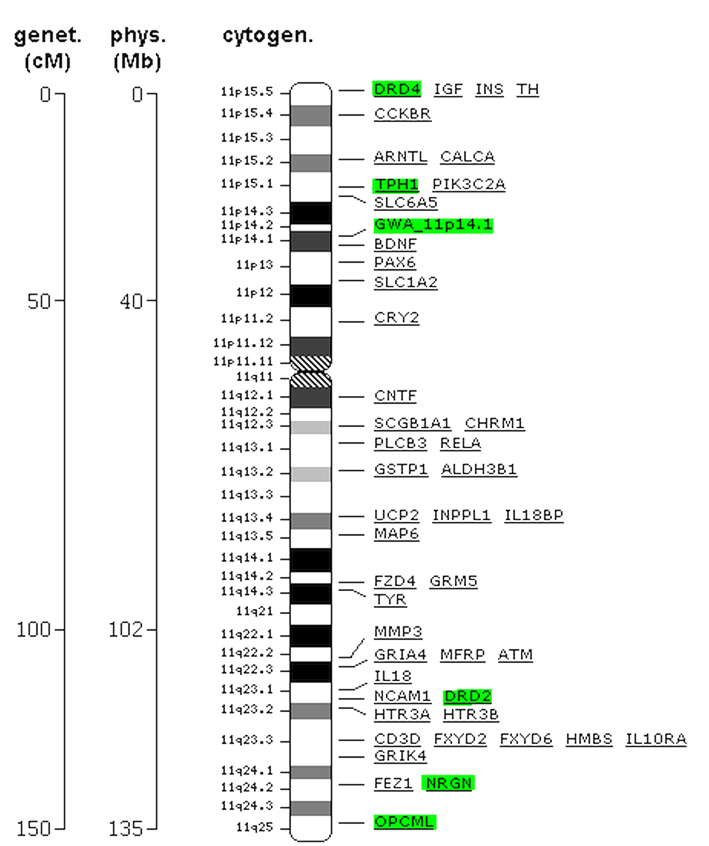
Figure 3. Representation of TPH1 and other Schizophrenia-associated candidate genes (green-colored) located on Chromosome 11 (http://www.szgene.org/chromo.asp?c=11).
Entity name
Aggressive Behavior
Note
The A218C and A779C SNPs (usually called U/top and L/bottom alleles) found in the intron of the TPH1 gene are associated with different aggression evaluated by interview and self-reporting questionnaires (Rujescu et al. 2002). Lower cerebrospinal fluid (CSF) 5-Hydroxyindoleacetic acid (5-HIAA) levels were observed in healthy men with the U allele (Jonsson et al. 1997), while the lowest CSF 5-HIAA levels were observed in LL carriers diagnosed with antisocial alcoholism (Nielsen et al. 1994). Both U and L alleles were thought to be associated with different types of aggressiveness (Quadros et al. 2010). Individuals with a UU allele have been shown to have more aggressive hostility but slightly lower neurotic hostility (New et al. 1998). Individuals with a UU allele have been shown to have more aggressive hostility but slightly lower neurotic hostility (New et al. 1998). A higher level of impulsivity was found in tests that focused on neurotic hostility for LL homozygous individuals (Hennig et al. 2005). Genetic studies show that the polymorphism in both alleles (L and U) of the TPH1 gene is associated with human aggression, but each allele is associated with a different type of aggression (Quadros et al. 2010).
Entity name
Major depressive disorder (MDD)
Note
The frequency of TPH1 C allele and CC homozygous in patients with Major depressive disorder (MDD) was higher than healthy individuals with the same genotype. According to the results of the verbal aggression and aggression questionnaire, TPH1 CC homozygotes in the MDD group scored significantly higher than the A carrier genotypes. It has been revealed that there is a relationship between the frequency of this polymorphism, aggression, and MDD (Frodl, 2016).
Vitamin D activates a series of processes that are critical for maintaining normal healthy neurons, also preventing the onset of depression. Where vitamin D enters the nucleus, it joins with the retinoid X receptor (RXR) and then binds to the vitamin D response element (VDRE) found on a large number of genes. Eventually, Ca2+ homeostasis is maintained by inducing the expression of the calcium-binding proteins (calbindin and parvalbumin), SLC8A1 (Na2+/Ca2+ exchanger1 NCX1) and cell membrane Ca2+ ATPase (PMCA) pump (ATP2B1 to 4 genes). Besides, vitamin D regulates Ca2+ levels by reducing the expression of the voltage-dependent calcium channel CaV1.2. In this case, TPH1 is suppressed and serotonin formation is controlled by increasing the TPH2 level. Reduced expression of inflammatory cytokines diminishes inflammation as well (Figure 4). By binding to its receptor ( VDR), vitamin D also regulates the expression of many mitochondrial proteins that maintain mitochondrial respiration (Berridge, 2017).
Vitamin D activates a series of processes that are critical for maintaining normal healthy neurons, also preventing the onset of depression. Where vitamin D enters the nucleus, it joins with the retinoid X receptor (RXR) and then binds to the vitamin D response element (VDRE) found on a large number of genes. Eventually, Ca2+ homeostasis is maintained by inducing the expression of the calcium-binding proteins (calbindin and parvalbumin), SLC8A1 (Na2+/Ca2+ exchanger1 NCX1) and cell membrane Ca2+ ATPase (PMCA) pump (ATP2B1 to 4 genes). Besides, vitamin D regulates Ca2+ levels by reducing the expression of the voltage-dependent calcium channel CaV1.2. In this case, TPH1 is suppressed and serotonin formation is controlled by increasing the TPH2 level. Reduced expression of inflammatory cytokines diminishes inflammation as well (Figure 4). By binding to its receptor ( VDR), vitamin D also regulates the expression of many mitochondrial proteins that maintain mitochondrial respiration (Berridge, 2017).
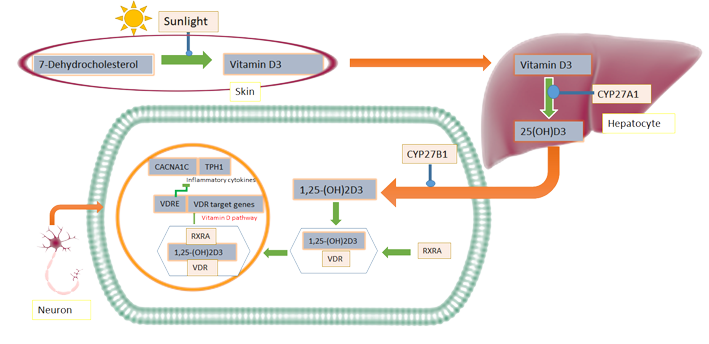
Figure 4. Vitamin D signaling affecting TPH1 expression in depression (Simplified from https://www.wikipathways.org/index.php/Pathway:WP4698).
Entity name
Somatoform Disorders
Note
Genes in the serotonergic hypofunction and serotonergic pathway were thought to be associated with symptoms of somatoform disorders (Frodl, 2016). This hypothesis has been studied using a variety of serotonin-related gene polymorphisms to determine whether the undifferentiated somatoform disorder is associated with specific serotonin-related gene pathways. 102 patients with the undifferentiated somatoform disorder and 133 healthy individuals were examined. It was emphasized that patients with undifferentiated somatoform disorder had a higher frequency of TPH1 (A218C) C-allele than healthy controls, but this difference was not significant after Bonferroni correction. These findings indicate that serotonin-related gene pathways are unlikely to be genetic risk factors for the undifferentiated somatoform disorder (Frodl, 2016).
Entity name
Middle Insomnia
Note
A study found a relationship between TPH1 and middle insomnia. The serotonergic pathway plays an important role in the regulation of circadian rhythm, sleep, and wakefulness. Serotonergic axon release is high during wakefulness, decreases during non-rapid eye movement (NREM) sleep, and is absent during rapid eye movement (REM) sleep (Ursin R, 2002). TPH activity is most abundant in brain raphe, gut, and pineal gland where N-acetyltransferase converts serotonin to melatonin (Patel et al. 2004). Therefore, the polymorphism of TPH1 may affect the synthesis of serotonin and melatonin, so that depressed patients with this polymorphism are more prone to middle insomnia (Myung et al. 2012).
Entity name
Bipolar Disorder (BPD)
Note
Emotional disorders (MDD and BPD) and alcohol dependence are common psychiatric disorders. Nine studies involving 1951 cases and 2161 control subjects were conducted to investigate the relationship between TPH1 A218C polymorphism and BPD risk (Chen et al. 2012). Of these, 4 studies with 416 cases and 596 control subjects were conducted in Asians, whereas 5 studies with 1535 cases and 1565 controls were conducted in Caucasians. A nominally significant relationship was observed in the homozygous model of Asian populations and homozygous and recessive models of Caucasian populations. It was found that the relationship between this polymorphism and the risk of BPD and alcohol dependence varies according to ethnicity, and the 218A variant homozygous genotype is an important risk factor for BPD and alcohol dependence in the Caucasians (Chen et al. 2012). A significant relationship has been reported between A218C polymorphism of TPH1 intron 7 and BPD in the French population (Lai et al. 2005). There was a positive relationship between BD and TPH1 polymorphism (rs1800532) in CC genotype, but no relation was found between other genotypes and alleles (Hormozi et al. 2019).
Entity name
Inflammation, Crohns Disease (CD), and Inflammatory Bowel Disease (IBD)
Note
TPH1 catalyzes serotonin biosynthesis in EC, the main source of 5HT (Shajib et al. 2019). The secreted 5HT regulates gut functions through a variety of 5HT receptor (5HTR) families. In inflammatory bowel disease (IBD), the mucosal 5HT signal is altered, including upregulated EC cell numbers and 5HT levels. The two major forms of IBD are Crohns disease (CD) and ulcerative colitis (UC) which are described by long-lasting and recurrent inflammatory lesions throughout the digestive tract (Shajib et al. 2019). Through TPH1, EC produces 5HT from dietary tryptophan (Shajib and Khan et al. 2015). This 5HT can then be released into the intestinal lumen and surrounding tissue that can enter the bloodstream through the dense capillary bed of lamina propria (Shajib et al. 2019).
5HT has been evaluated in IBD and animal colitis models. TPH1-deficient mice have reduced 5HT content in the gut and low inflammatory cytokine production has been observed (Ghia et al. 2009). Besides, pharmacological blocking of peripheral 5HT synthesis reduced the severity of both chemical and infection-related gut inflammation. In colon biopsy samples from CD patients, TPH1, HTR3A, mucosal HTR4, and HTR7 expressions were upregulated, whereas serotonin transporter (5HTT) expression was downregulated in inflammation. Besides, colonic TPH1 expression was found to be significantly higher in inflamed areas compared to non-inflamed areas and controls (Shajib et al. 2019). Other important factors such as gut microbiota, may also affect host 5HT production in IBD. The role of gut microbiota in 5-HT production, via the regulation of TPH1, has been shown (Yano et al. 2015). The increase in TPH1 expression was thought to be associated with dysbiosis observed in IBD. In particular, a study showed that a 5HT increase due to 5HTT deficiency was associated with dysbiosis. As a result, CD and inflammation are associated with increasing the mucosal 5HT signal, characterized by the upregulation of TPH1 expression and downregulation of 5HTT expression (Shajib et al. 2019). Furthermore, high expression of IL13, a cytokine associated with increased 5HT production, is noteworthy. Increased 5HT availability due to its increased production and impaired clearance is thought to play an important role in maintaining intestinal inflammation and associated symptoms (Shajib et al. 2019).
5HT has been evaluated in IBD and animal colitis models. TPH1-deficient mice have reduced 5HT content in the gut and low inflammatory cytokine production has been observed (Ghia et al. 2009). Besides, pharmacological blocking of peripheral 5HT synthesis reduced the severity of both chemical and infection-related gut inflammation. In colon biopsy samples from CD patients, TPH1, HTR3A, mucosal HTR4, and HTR7 expressions were upregulated, whereas serotonin transporter (5HTT) expression was downregulated in inflammation. Besides, colonic TPH1 expression was found to be significantly higher in inflamed areas compared to non-inflamed areas and controls (Shajib et al. 2019). Other important factors such as gut microbiota, may also affect host 5HT production in IBD. The role of gut microbiota in 5-HT production, via the regulation of TPH1, has been shown (Yano et al. 2015). The increase in TPH1 expression was thought to be associated with dysbiosis observed in IBD. In particular, a study showed that a 5HT increase due to 5HTT deficiency was associated with dysbiosis. As a result, CD and inflammation are associated with increasing the mucosal 5HT signal, characterized by the upregulation of TPH1 expression and downregulation of 5HTT expression (Shajib et al. 2019). Furthermore, high expression of IL13, a cytokine associated with increased 5HT production, is noteworthy. Increased 5HT availability due to its increased production and impaired clearance is thought to play an important role in maintaining intestinal inflammation and associated symptoms (Shajib et al. 2019).
Article Bibliography
| Pubmed ID | Last Year | Title | Authors |
|---|---|---|---|
| 27497328 | 2016 | TPH1 A218 allele is associated with suicidal behavior in Turkish population. | Beden O et al |
| 14681922 | 2004 | Association between the TPH gene A218C polymorphism and suicidal behavior: a meta-analysis. | Bellivier F et al |
| 28202503 | 2017 | Vitamin D and Depression: Cellular and Regulatory Mechanisms. | Berridge MJ et al |
| 21601290 | 2012 | Association between the TPH1 A218C polymorphism and risk of mood disorders and alcohol dependence: evidence from the current studies. | Chen D et al |
| 2055111 | 1991 | Localization of human tryptophan hydroxylase (TPH) to chromosome 11p15.3----p14 by in situ hybridization. | Craig SP et al |
| 27238071 | 2016 | Whole-Exome Sequencing Reveals Increased Burden of Rare Functional and Disruptive Variants in Candidate Risk Genes in Individuals With Persistent Attention-Deficit/Hyperactivity Disorder. | Demontis D et al |
| 20921133 | 2010 | The two faces of serotonin in bone biology. | Ducy P et al |
| 27719836 | 2016 | Do (epi)genetics impact the brain in functional neurologic disorders? | Frodl T et al |
| 17241888 | 2007 | The serotonin signaling system: from basic understanding to drug development for functional GI disorders. | Gershon MD et al |
| 31610413 | 2019 | Focus on the essentials: tryptophan metabolism and the microbiome-gut-brain axis. | Gheorghe CE et al |
| 19706294 | 2009 | Serotonin has a key role in pathogenesis of experimental colitis. | Ghia JE et al |
| 24060757 | 2013 | Identification of a functional TPH1 polymorphism associated with irritable bowel syndrome bowel habit subtypes. | Grasberger H et al |
| 20921119 | 2010 | Attention-deficit/hyperactivity disorder symptoms in offspring of mothers with impaired serotonin production. | Halmøy A et al |
| 15727508 | 2005 | Two types of aggression are differentially related to serotonergic activity and the A779C TPH polymorphism. | Hennig J et al |
| 9477008 | 1997 | Tryptophan hydroxylase and catechol-O-methyltransferase gene polymorphisms: relationships to monoamine metabolite concentrations in CSF of healthy volunteers. | Jönsson EG et al |
| 30716420 | 2019 | Modulation of Gut Microbiota Composition by Serotonin Signaling Influences Intestinal Immune Response and Susceptibility to Colitis. | Kwon YH et al |
| 15799788 | 2005 | Polymorphism screening and haplotype analysis of the tryptophan hydroxylase gene (TPH1) and association with bipolar affective disorder in Taiwan. | Lai TJ et al |
| 16601191 | 2006 | Platelet-derived serotonin mediates liver regeneration. | Lesurtel M et al |
| 28443016 | 2017 | Genetics of Aggression in Alzheimer's Disease (AD). | Lukiw WJ et al |
| 9326831 | 1997 | Possible association of a polymorphism of the tryptophan hydroxylase gene with suicidal behavior in depressed patients. | Mann JJ et al |
| 14960274 | 2004 | Serotonin regulates mammary gland development via an autocrine-paracrine loop. | Matsuda M et al |
| 27721799 | 2016 | Genetic Association Studies of Suicidal Behavior: A Review of the Past 10 Years, Progress, Limitations, and Future Directions. | Mirkovic B et al |
| 22429480 | 2012 | Genetic association study of individual symptoms in depression. | Myung W et al |
| 9514581 | 1998 | Tryptophan hydroxylase genotype is associated with impulsive-aggression measures: a preliminary study. | New AS et al |
| 7506517 | 1994 | Suicidality and 5-hydroxyindoleacetic acid concentration associated with a tryptophan hydroxylase polymorphism. | Nielsen DA et al |
| 19903352 | 2009 | Altered serotonin physiology in human breast cancers favors paradoxical growth and cell survival. | Pai VP et al |
| 14960297 | 2004 | Robust and tissue-specific expression of TPH2 versus TPH1 in rat raphe and pineal gland. | Patel PD et al |
| 30120222 | 2018 | Microbial tryptophan catabolites in health and disease. | Roager HM et al |
| 12399958 | 2002 | Association of anger-related traits with SNPs in the TPH gene. | Rujescu D et al |
| 19526457 | 2010 | The tryptophan hydroxylase 1 (TPH1) gene, schizophrenia susceptibility, and suicidal behavior: a multi-centre case-control study and meta-analysis. | Saetre P et al |
| 31294376 | 2019 | Characterization of Serotonin Signaling Components in Patients with Inflammatory Bowel Disease. | Shajib MS et al |
| 25439045 | 2015 | The role of serotonin and its receptors in activation of immune responses and inflammation. | Shajib MS et al |
| 16389591 | 2006 | TPH gene polymorphism and aging: indication of combined effect on the predisposition to violent suicide. | Stefulj J et al |
| 10716208 | 1999 | Tryptophan hydroxylase gene polymorphism (A218C) and suicidal behaviors. | Tsai SJ et al |
| 29696773 | 2018 | Complex phenotype of dyskeratosis congenita and mood dysregulation with novel homozygous RTEL1 and TPH1 variants. | Ungar RA et al |
| 12531142 | 2002 | Serotonin and sleep. | Ursin R et al |
| 19041748 | 2008 | Lrp5 controls bone formation by inhibiting serotonin synthesis in the duodenum. | Yadav VK et al |
| 25860609 | 2015 | Indigenous bacteria from the gut microbiota regulate host serotonin biosynthesis. | Yano JM et al |
| 11449398 | 2001 | Case control and family-based studies of tryptophan hydroxylase gene A218C polymorphism and suicidality in adolescents. | Zalsman G et al |
Citation
Rafig Gurbanov ; Sevinç Karaçam
TPH1 (tryptophan hydroxylase 1)
Atlas Genet Cytogenet Oncol Haematol. 2020-03-01
Online version: http://atlasgeneticsoncology.org/gene/51272/tph1-%28tryptophan-hydroxylase-1%29
