Identity

Abstract
EXT1 is an endoplasmic reticulum-resident type II transmembrane protein with glycosyltransferase activity, involved in chain elongation of heparan sulfate. Heparan sulfate proteoglycans bind a large number of extracellular proteins, regulating membrane signaling, consequently playing a critical role in cell determination, differentiation, and migration. Germline mutations in EXT1 are responsible for hereditary multiple exostoses (osteochondromas), and EXT1 deletion is also found in tricho-rhino-phalangeal syndrome type II (also called Langer-Giedion syndrome), a contiguous gene deletion syndrome. We also review EXT1 alterations in various cancers.
DNA/RNA
Description
Transcription
Proteins
Note
Description
Other sites according to Prosite
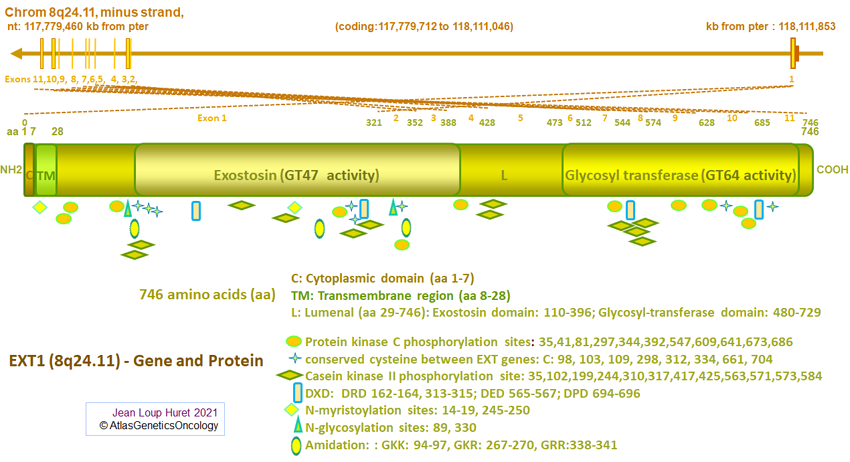
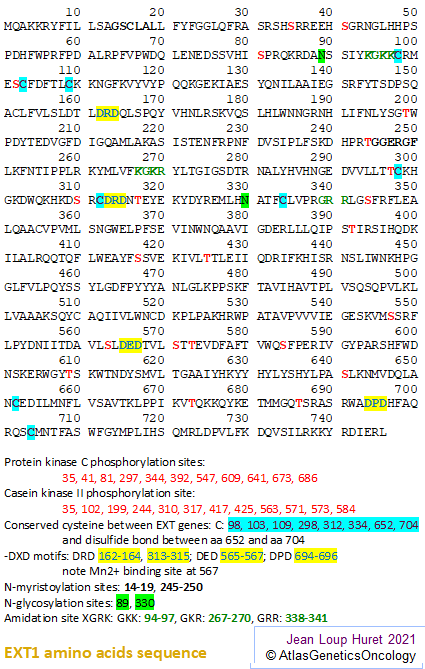
- Protein kinase C phosphorylation sites: aa 35, 41, 81, 297, 344, 392, 547, 609, 641, 673, 686
- Casein kinase II phosphorylation site: aa 35, 102,1 99, 244, 310, 317, 417, 425, 563, 571, 573, 584
- conserved cysteine between EXT genes: C: aa 98, 103, 109, 298, 312, 334, 652, 704 and disulfide bond between aa 652 and aa 704
- DXD motifs: DRD aa 162-164, 313-315; DED aa 565-567; DPD aa 694-696 (The DXD motif is a short conserved motif found in many families of glycosyltransferases, that requires divalent cations (InterPro); note manganese binding site at aa 567. The GlcNAc transferase shows a preference for Mn2+ over Ca2+ or Mg2+. The GlcNAc transferase reaction (see below) proceeds across a pH range of 5-8, whereas the GlcA transferase reaction showed an optimum at pH 5.5-6.5 (Wei et al., 2000).
- N-myristoylation sites (role in membrane targeting): aa 14-19, 245-250
- N-glycosylation sites: aa 89, 330
- Amidation site XGRK (protects from proteolysis): GKK: aa 94-97, GKR: aa 267-270, GRR: aa 338-341
Exostosins family members contain:
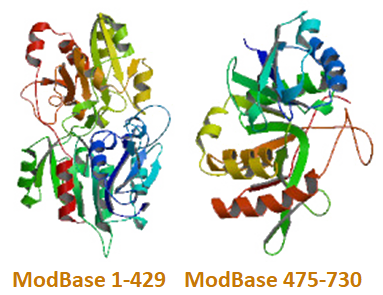
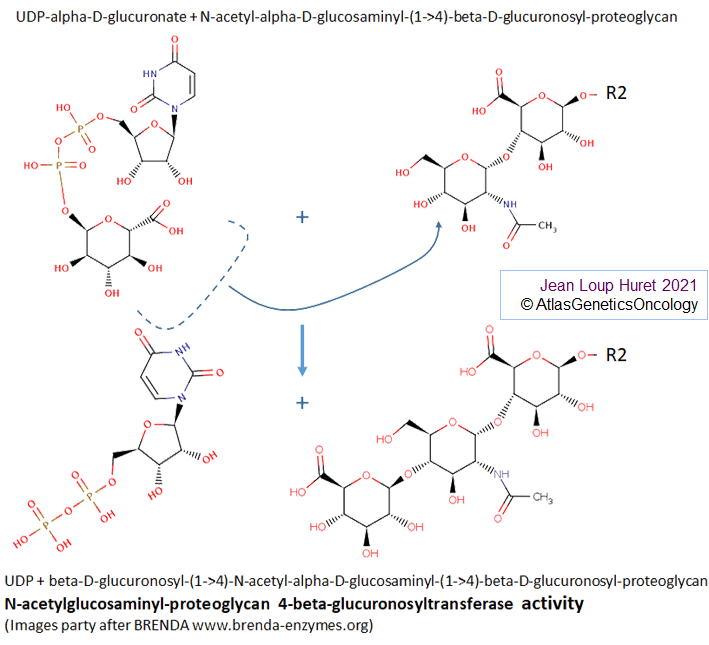
- a glucuronyl-transferase domain ("Exostosin" domain (aa 110-396 in the case of EXT1), and therefore EXT1 belongs to the "GT47" glucuronyl (GlcA) family of GT (glycosyltransferases) (corresponding to EC 2.4.1.225), and
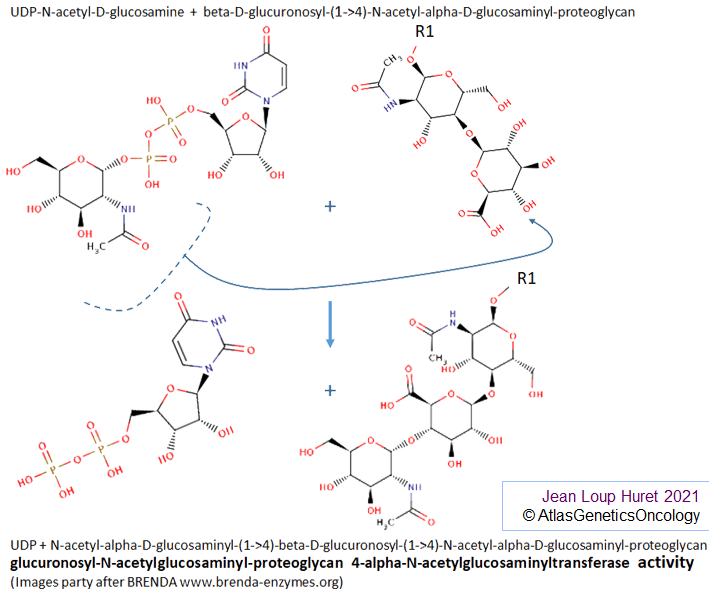
- an acetylglucosaminyl-transferase domain ("Glycosyl transferase" domain (aa 480-729 in the case of EXT1)), and therefore EXT1 also belongs to the "GT64" glucosaminyl (GlcNAc: glucosamine (GlcN), acetylated) family of glycosyltransferases (corresponding to EC 2.4.1.224) (see below Figures 5, 6 and 7).
Expression
Ext1-/- embryonic stem cells failed to commit to lineage differentiation in mice (Kraushaar et al., 2010). EXT1 is expressed during early embryogenesis (embryonic portion of the ectoderm, parietal and visceral endoderm, and the trophoblastic cells) and can be detected in all tissues in adult mice. EXT1 homozygous mutants mice fail to gastrulate (Lin et al., 2000), and knockdown of Ext1 causes gastrulation defects in Xenopus (Shieh et al., 2014). EXT1 mutant embryos fail to form mesoderm. Indian hedgehog, an important regulator of developmental processes, is expressed during gastrulation, and hedgehog and downstream BMPs (bone morphogenetic proteins), also markers for mesoderm differentiation, were reduced.
Ext1 and Ext2 were concomitantly expressed in hypertrophic chondrocytes of forelimb bones from 1-day-old neonatal mouse, but down-regulated in maturing chondrocytes of developing cartilage from 21-day-old mouse (Kobayashi et al., 2000). In developing foetal tooth, staining was detected in ameloblasts and in the basal lamina. In mature tooth, EXT1 was expressed in odontoblasts and the predentin but not in the dentin (Pääkkönen et al., 2017).
Proper expression of Ext1 is required for cardiogenesis in the mouse. FGF signaling is altered upon Ext1 deletion. FGF signaling controls cell proliferation of cardiac progenitors Ext1 is crucial for outflow tract formation in distinct progenitor cells, and heparan sulfate (HS) modulates FGF signaling during early heart development (Zhang et al., 2015).
Ext1-/- causes severe axon guidance errors, indicating that heparan sulfate proteoglycans (see below) are important regulators of axon guidance. This resulted in defective brain morphogenesis in the embryonic mouse (Inatani and Yamaguchi, 2003). Development of the central nervous system proceeds through patterning of the neural tube, generation of neurons and their migration, extension of axons and dendrites and formation of synapses. Heparan sulfate is functionally involved in various aspects of neural development (Yamaguchi et al., 2010). Genetic alteration of heparan sulfate proteoglycans synthesis results in abnormal brain phenotypes in mice. Knockdown of Ext1 in nestin-positive (nestin: neuroectodermal stem cell marker) neural stem cells resulted in defects in neural patterning and cortical neurogenesis. Ext1-deficient neural stem cells exhibited reduced proliferation in response to FGF2 and FGF8 (Wade et al., 2014).
Ext1-/- mice exhibited altered dendritic cell homing (Bao et al., 2010).
Localisation
Function
EXT1 and EXT2 form a hetero-oligomeric complex in vivo. The enzyme complex encoded by the EXT1 and EXT2 acts as bifunctional glycosyltransferases (Lind et al., 1998):
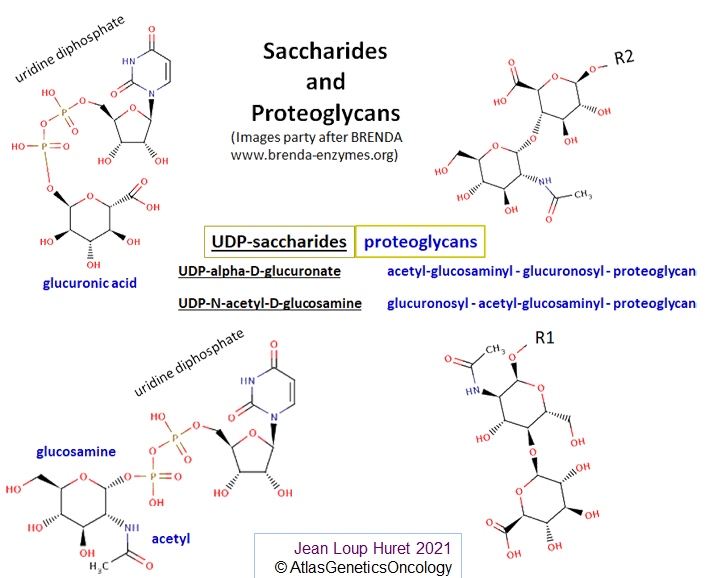
1- N-acetylglucosaminyl-proteoglycan 4-beta-glucuronosyltransferase activity (EC 2.4.1.225) and
2- glucuronosyl-N-acetylglucosaminyl-proteoglycan 4-alpha-N-acetylglucosaminyltransferase activity (EC 2.4.1.224), see Figure 6 and 7) (see Lind et al., 1998).
In EXT1, the N-terminal domain with GT47 activity adds GlcA residues, and the C-terminal domain with GT64 activity adds GlcNAc residues to the long glycosaminoglycans chains (proteoglycans=protein+glycosaminoglycan).
Table 1: Enzyme Nomenclature, activity, and protein domains
| IUBMB Entry | Enzyme | Saccharide involved | Protein domains | Enzymatic activity |
| EC 2.4.1.225 | glucuronosyltransferase | glucuronic acid (GlcA) | N-terminal domain: GT47 family | GT47 adds GlcA residues |
| EC 2.4.1.224 | glucosaminyltransferase | glucosamine (GlcN)) | C-terminal domain: GT64 family | GT64 adds GlcNAc residues |
IUBMB Enzyme Nomenclature: https://www.qmul.ac.uk/sbcs/iubmb/
Carbohydrate-Active enZYmes Database: http://www.cazy.org/GT47.html and http://www.cazy.org/GT64.html :
The long heparan synthases are made of two domains. The N-terminal domain, which adds b-1,4-GlcA residues, belongs to family GT47 while the C-terminal domain, which adds a-1,4-GlcNAc residues, belongs to family GT64.
Heparan sulfate proteoglycans (HSPGs) have a critical role in cell determination, differentiation, and migration by regulating membrane signalings and growth factors. Heparan sulfate proteoglycans have been implicated in regulating the distribution and receptor binding of several members of FGF, Wnt, transforming growth factor beta (TGFB), and Hedgehog families (Koziel et al., 2004).
Ext1 mutant mice die around embryonic day 14. The mutation mainly affected heparan sulfate chain length. Embryonic fibroblasts with homozygous Ext1 mutation produced shorter heparan sulfate chains (Yamada et al., 2004). Overexpression of EXT1 resulted in increased heparan sulfate chain length, which was even more pronounced in cells coexpressing EXT2, whereas overexpression of EXT2 alone had no detectable effect on heparan sulfate chain elongation (Busse et al., 2007).
The expression of heparanase ( HPSE), an endoglycosidase that cleaves heparan sulfate proteoglycans, was enhanced in Ext-1-knockdown cells (Wang et al., 2013).
Hedgehog proteins bind heparan sulfate and EXT1 is therefore required for Hedgehog signaling. BMP2 and BMP4 are also downstream targets of Hedgehog signaling (Lin et al., 2000). Decreased Ext1 was shown to reduce the level of Wnt and Bmp4 signaling in Xenopus. Ext1-dependent synthesis of heparan sulfate proteoglycans is critical for Wnt and BMP signaling (Shieh et al., 2014).
Cell surface heparin sulfate is also known to mediate the binding of FGFs and their FGFRs. Ext1-/- results in impaired FGF signaling and aberrant differentiation commitment in embryonic stem cells (Kraushaar et al., 2010). TGFBR2 and EXT1 enhanced chemosensitivity to interferon-alpha/5-fluorouracil (IFN-α /5-FU) on advanced hepatocellular carcinoma by accelerating apoptosis. EXT1 overexpression enhanced endoplasmic reticulum stress response/signaling pathway leading to autophagy and apoptosis. Ext1 mutant fibroblasts displayed reduced ability to attach to collagen I and to contract collagen lattices, decreased phosphorylation of MAPK3 / MAPK1 (so called ERK1/2) in response to FGF2 stimulation. Cell proliferation induced by FGF2 and FGF10 is reduced in Ext1 mutant fibroblasts. (Osterholm et al., 2009).
NREP (also called P311 or C5ORF13) is down regulated in EXT1-mutated fibroblasts. The Ext1 mutation leads to a heparan sulfate defect resulting in low efficiency of the interaction between TGFB1 and its receptor, which results in disturbed Smad phosphorylation and less autoinduction of TGFB1 and less TGFB1 expression (Katta et al., 2018).
Calcitonin related polypeptides were significantly increased in patients with osteochondroma and EXT1 gene mutation. Calcitonin related polypeptides can arrest the cell cycle in G0/G1 phase, thereby inhibiting cell proliferation (Wu et al., 2018).
EXT1 was identified as a common interactor of NOTCH1 and FBXW7, regulating the NOTCH pathway in an FBXW7-dependend manner: depletion of EXT1 using small interfering RNA increased NOTCH transactivation activity; two important NOTCH1-target genes, HES1 and MYC had increased mRNA expression (Daakour et al., 2016). EXT1, down-regulated by MIR665, promotes cell apoptosis via MAPK3/MAPK1 (ERK1/2) signaling pathway in acute lymphoblastic leukemia (Liu et al., 2019). Overexpression of EXT2 enhanced the heparan sulfate sulfotransferase NDST1 expression, EXT1 had opposite effects (Prestoe et al., 2008).
Homology
Mutations
Germinal
Implicated in
Table 2: EXT1 alterations in various cancers Main data from TCGA PanCan studies, according to BioPortal (rounded numbers; too small data were discarded).
Ext1 knock-down decreases canonical Wnt signaling activation during chondrogenesis in cultured chondrogenic mouse cells and Ext1 overexpression enhances canonical Wnt signaling activation. Activation of Wnt signaling using a GSK3 inhibitor resulted in a down-regulation of Ext1 expression. Conversely, a Wnt inhibitor up-regulated Ext1 expression. This suggest the existence of a regulatory loop between EXT1 and Wnt signaling during chondrogenesis (Wang et al., 2019).
EXT1 accounts for 45%-65% of HME-causing mutations, and EXT2 for 30%. Mutations in EXT1 are distributed over all the 11 exons. Inactivating mutations (nonsense, frame shift, and splice-site mutations) represent the majority of multiple osteochondromas causing mutations. Mutations and variants are reported in the online Multiple Osteochondromas Mutation Database at http://medgen.ua.ac.be/LOVD (Jennes et al., 2009). A germline mutation combined with loss of the remaining wild type allele support the Knudsons two hit model for tumor suppressor genes in osteochondroma development. These results indicate that in cartilaginous cells of the growth plate, inactivation of both copies of the EXT1-gene is required for osteochondroma formation in hereditary cases (Bovée 2002).
Compound heterozygous Ext1+/-;Ext2+/- mutant mice develop multiple osteochondromas (Zak et al., 2011).
EXT genes and heparan sulfate are needed to establish and maintain perichondriums phenotype and border function, restrain pro-chondrogenic signaling (hedgehog and BMP signaling) and restrict chondrogenesis. Normal EXT expression and heparan sulfate levels restrain BMP signaling and promote FGF signaling, a major anti-chondrogenic pathway expressed in various non-cartilaginous tissues including perichondrium. Loss of EXT expression and/or heparan sulfate level promote BMP signaling and impair FGF signaling, inducing osteochondroma development (Huegel et al., 2013; Pacifici 2018; note: see Figure 2 in Pacifici 2018).
Osteochondromas originate in proliferating chondrocytes. Postnatal inactivation of Ext1 generates osteochondromas in mice and homozygous loss of ext1 is required for osteochondromagenesis (Jones et al., 2009). Loss of heterozygosity of EXT1 is common in solitary osteochondroma. Ext1 +/- or Ext2 +/- mutant mice were found to be largely normal. In multiple osteochondroma-related osteochondroma (see above), additional identified genetic changes include LOH and aneuploidy. LOH causes loss of the remaining wild-type allele, resulting in EXT1 or EXT2-null cells. Homozygous EXT1 deletions were present only in the cartilage cap of osteochondroma (Hameetman et al., 2007; Wilpshaar and Bovée, 2018).
Among the 522 patients with lung adenocarcinoma from The Cancer Genome Atlas (TCGA) database, 6.4% had deletions in EXT1. However, a 9-gene signature ( HMMR, B4GALT1, SLC16A3, ANGPTL4, EXT1, GPC1, RBCK1, SOD1, and AGRN) has been identified as an independent prognostic factor and associated with metastasis (Zhang et al., 2019).
Activity of the heparan sulfate biosynthetic system was decreased by 1.5-2-fold in gliomas Grade II-III and by 1.5-2-fold in glioblastoma multiforme compared with the para-tumorous brain tissue. The most significant contribution to the overall inhibition of the system was due to down-regulation of the expression of genes responsible for elongation of the heparan sulfate chains (exostosin glycosyltransferases EXT1 and EXT2) and its sulfation (Ushakov et al., 2017).
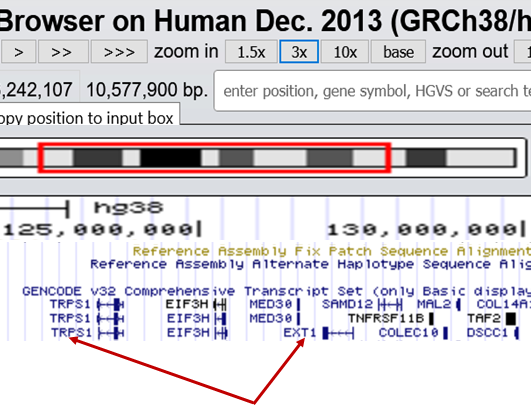
Two unrelated boys presented with hereditary multiple exostoses and autism associated with mental retardation. A deletion 1742delTGT-G in exon 9 of EXT1, causing a frameshift, was detected in one case, and a deletion 2093delTT in exon 11 of EXT1, causing transcription termination, was detected in the other case. The authors pointed that EXT1 is expressed in the brain, and that both EXT1 and EXT2 are required for the biosynthesis of heparan sulfate, which also has activity in the brain (Li et al., 2002).
A patient presented with Langer-Giedion syndrome and high-functioning autism. The karyotype found a microdeletion in mosaic 46,XY/46,XY,del(8)(q24.1q24.3) (Miyuru and Shehan 2018).
A meta-analysis of genome-wide association studies of over 16,000 individuals with autism spectrum disorder identified a significant association of ASD with EXT1 (Autism Spectrum Disorders Working Group of The Psychiatric Genomics Consortium, 2017).
A case of familial nephropathy in which a steroid-sensitive nephrotic syndrome and multiple exostoses due to mutation of EXT1 has been described. There was a glomerular basement membrane deposition of fibrillar collagen. (Roberts and Gleadle, 2008).
Breakpoints
Note
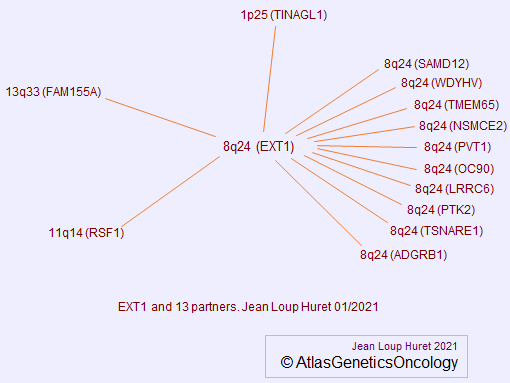
| EXT1 partner gene | Partner location (bp) EXT1 location: 117794490 -118111826 | Translocation | Cancer type |
| TINAGL1 | t(1:8)(p35;q24) | Breast carcinoma | |
| RSF1 | t(8;11)(q24;q14) | Breast carcinoma | |
| FAM155A | t(8;13)(q24;q33) | Bladder urothelial carcinoma | |
| SAMD12 | 118377988-118621945 | (8q24) | Breast carcinoma Head and Neck squamous cell carcinoma Ovarian adenocarcinoma Stomach adenocarcinoma |
| WDYHV1 | 123416725-123442240 | (8q24) | Bladder urothelial carcinoma |
| TMEM65 | 124310918-124372699 | (8q24) | Lung squamous cell carcinoma |
| NSMCE2 | 125091860-125367120 | (8q24) | Sarcoma |
| PVT1 | 127794533-128101253 | (8q24) | Lung squamous cell carcinoma |
| OC90 | 132024216 -132059382 | (8q24) | Lung adenocarcinoma |
| LRRC6 | 132570419-132675617 | (8q24) | Breast carcinoma |
| PTK2 | 140657900-141001282 | (8q24) | Ovarian serous cystadenocarcinoma |
| TSNARE1 | 142212080-142403182 | (8q24) | Esophageal carcinoma |
| ADGRB1 | 142449649-142545007 | (8q24) | Low grade glioma |
References: Yoshihara et al., 2015; Gao et al., 2018; Calabrese et al., 2020.
Article Bibliography
| Reference Number | Pubmed ID | Last Year | Title | Authors |
|---|---|---|---|---|
| 1 | 28540026 | 2017 | Meta-analysis of GWAS of over 16,000 individuals with autism spectrum disorder highlights a novel locus at 10q24.32 and a significant overlap with schizophrenia. | |
| 2 | 32025019 | 2020 | Genomic basis for RNA alterations in cancer. | Calabrese C et al |
| 3 | 22848466 | 2012 | Fibroblast EXT1-levels influence tumor cell proliferation and migration in composite spheroids. | Österholm C et al |
| 4 | 21093315 | 2010 | Endothelial heparan sulfate controls chemokine presentation in recruitment of lymphocytes and dendritic cells to lymph nodes. | Bao X et al |
| 5 | 9665133 | 1998 | Tout-velu is a Drosophila homologue of the putative tumour suppressor EXT-1 and is needed for Hh diffusion. | Bellaiche Y et al |
| 6 | 19298595 | 2009 | Expression of genes encoding for proteins involved in heparan sulphate and chondroitin sulphate chain synthesis and modification in normal and malignant plasma cells. | Bret C et al |
| 7 | 17761672 | 2007 | Contribution of EXT1, EXT2, and EXTL3 to heparan sulfate chain elongation. | Busse M et al |
| 8 | 29538090 | 2018 | High-functioning autism in a Sri Lankan youth with Langer-Giedion syndrome. | Chandradasa M et al |
| 9 | 27616605 | 2016 | Assessing the general population frequency of rare coding variants in the EXT1 and EXT2 genes previously implicated in hereditary multiple exostoses. | Cousminer DL et al |
| 10 | 31853203 | 2019 | Hereditary Multiple Exostoses: Current Insights. | D'Arienzo A et al |
| 11 | 27229929 | 2016 | Systematic interactome mapping of acute lymphoblastic leukemia cancer gene products reveals EXT-1 tumor suppressor as a Notch1 and FBWX7 common interactor. | Daakour S et al |
| 12 | 30278583 | 2018 | Increased EXT1 gene copy number correlates with increased mRNA level predicts short disease-free survival in hepatocellular carcinoma without vascular invasion. | Dong S et al |
| 13 | 29617662 | 2018 | Driver Fusions and Their Implications in the Development and Treatment of Human Cancers. | Gao Q et al |
| 14 | 22637207 | 2012 | Pain, physical and social functioning, and quality of life in individuals with multiple hereditary exostoses in The Netherlands: a national cohort study. | Goud AL et al |
| 15 | 17341731 | 2007 | The role of EXT1 in nonhereditary osteochondroma: identification of homozygous deletions. | Hameetman L et al |
| 16 | 15777636 | 2005 | EXT1 regulates chondrocyte proliferation and differentiation during endochondral bone development. | Hilton MJ et al |
| 17 | 23458899 | 2013 | Perichondrium phenotype and border function are regulated by Ext1 and heparan sulfate in developing long bones: a mechanism likely deranged in Hereditary Multiple Exostoses. | Huegel J et al |
| 18 | 14605369 | 2003 | Mammalian brain morphogenesis and midline axon guidance require heparan sulfate. | Inatani M et al |
| 19 | 22411800 | 2012 | Autism-like socio-communicative deficits and stereotypies in mice lacking heparan sulfate. | Irie F et al |
| 20 | 19810120 | 2009 | Multiple osteochondromas: mutation update and description of the multiple osteochondromas mutation database (MOdb). | Jennes I et al |
| 21 | 20080592 | 2010 | A mouse model of osteochondromagenesis from clonal inactivation of Ext1 in chondrocytes. | Jones KB et al |
| 22 | 22025563 | 2011 | Selectin ligand sialyl-Lewis x antigen drives metastasis of hormone-dependent breast cancers. | Julien S et al |
| 23 | 29580921 | 2018 | Potential role for Ext1-dependent heparan sulfate in regulating P311 gene expression in A549 carcinoma cells. | Katta K et al |
| 24 | 24018821 | 2014 | Increase of exostosin 1 in plasma as a potential biomarker for opisthorchiasis-associated cholangiocarcinoma. | Khoontawad J et al |
| 25 | 10679296 | 2000 | Association of EXT1 and EXT2, hereditary multiple exostoses gene products, in Golgi apparatus. | Kobayashi S et al |
| 26 | 15177029 | 2004 | Ext1-dependent heparan sulfate regulates the range of Ihh signaling during endochondral ossification. | Koziel L et al |
| 27 | 20022960 | 2010 | Heparan sulfate is required for embryonic stem cells to exit from self-renewal. | Kraushaar DC et al |
| 28 | 12032595 | 2002 | Association of autism in two patients with hereditary multiple exostoses caused by novel deletion mutations of EXT1. | Li H et al |
| 29 | 10926768 | 2000 | Disruption of gastrulation and heparan sulfate biosynthesis in EXT1-deficient mice. | Lin X et al |
| 30 | 9756849 | 1998 | The putative tumor suppressors EXT1 and EXT2 are glycosyltransferases required for the biosynthesis of heparan sulfate. | Lind T et al |
| 31 | 31465316 | 2019 | EXT1, Regulated by MiR-665, Promotes Cell Apoptosis via ERK1/2 Signaling Pathway in Acute Lymphoblastic Leukemia. | Liu NW et al |
| 32 | 29050299 | 2017 | Exostosin 1 regulates cancer cell stemness in doxorubicin-resistant breast cancer cells. | Manandhar S et al |
| 33 | 20404326 | 2010 | Conditional ablation of the heparan sulfate-synthesizing enzyme Ext1 leads to dysregulation of bone morphogenic protein signaling and severe skeletal defects. | Matsumoto Y et al |
| 34 | 10639137 | 2000 | The putative tumor suppressors EXT1 and EXT2 form a stable complex that accumulates in the Golgi apparatus and catalyzes the synthesis of heparan sulfate. | McCormick C et al |
| 35 | 21185280 | 2011 | Synovial joint formation requires local Ext1 expression and heparan sulfate production in developing mouse embryo limbs and spine. | Mundy C et al |
| 36 | 33028660 | 2021 | Heparan Sulfate Synthesized by Ext1 Regulates Receptor Tyrosine Kinase Signaling and Promotes Resistance to EGFR Inhibitors in GBM. | Ohkawa Y et al |
| 37 | 20377530 | 2010 | Biosynthesis of heparan sulfate in EXT1-deficient cells. | Okada M et al |
| 38 | 19850926 | 2009 | Mutation in the heparan sulfate biosynthesis enzyme EXT1 influences growth factor signaling and fibroblast interactions with the extracellular matrix. | Osterholm C et al |
| 39 | 28448806 | 2017 | Exostosin 1 is expressed in human odontoblasts. | Pääkkönen V et al |
| 40 | 29277722 | 2018 | The pathogenic roles of heparan sulfate deficiency in hereditary multiple exostoses. | Pacifici M et al |
| 41 | 18337501 | 2008 | Heparan sulfate biosynthesis enzymes EXT1 and EXT2 affect NDST1 expression and heparan sulfate sulfation. | Presto J et al |
| 42 | 19965677 | 2010 | Targeting EXT1 reveals a crucial role for heparan sulfate in the growth of multiple myeloma. | Reijmers RM et al |
| 43 | 18216313 | 2008 | Familial nephropathy and multiple exostoses with exostosin-1 (EXT1) gene mutation. | Roberts IS et al |
| 44 | 15385438 | 2004 | Epigenetic loss of the familial tumor-suppressor gene exostosin-1 (EXT1) disrupts heparan sulfate synthesis in cancer cells. | Ropero S et al |
| 45 | 23457527 | 2013 | Identification of the genes chemosensitizing hepatocellular carcinoma cells to interferon-α/5-fluorouracil and their clinical significance. | Sakabe T et al |
| 46 | 21690215 | 2011 | Heparan sulfate proteoglycans. | Sarrazin S et al |
| 47 | 31061139 | 2019 | Exostosin 1/Exostosin 2-Associated Membranous Nephropathy. | Sethi S et al |
| 48 | 24782989 | 2014 | Transcriptional Activity of Heparan Sulfate Biosynthetic Machinery is Specifically Impaired in Benign Prostate Hyperplasia and Prostate Cancer. | Suhovskih AV et al |
| 49 | 27895739 | 2016 | Gene expression profiling of the 8q22-24 position in human breast cancer: TSPYL5, MTDH, ATAD2 and CCNE2 genes are implicated in oncogenesis, while WISP1 and EXT1 genes may predict a risk of metastasis. | Taghavi A et al |
| 50 | 29104277 | 2017 | Heparan Sulfate Biosynthetic System Is Inhibited in Human Glioma Due to EXT1/2 and HS6ST1/2 Down-Regulation. | Ushakov VS et al |
| 51 | 24447567 | 2014 | Matrix regulators in neural stem cell functions. | Wade A et al |
| 52 | 31330188 | 2019 | Exostosin-1 enhances canonical Wnt signaling activity during chondrogenic differentiation. | Wang X et al |
| 53 | 23054193 | 2013 | Involvement of Ext1 and heparanase in migration of mouse FBJ osteosarcoma cells. | Wang Y et al |
| 54 | 10864928 | 2000 | Location of the glucuronosyltransferase domain in the heparan sulfate copolymerase EXT1 by analysis of Chinese hamster ovary cell mutants. | Wei G et al |
| 55 | 30262140 | 2018 | The role of EXT1 gene mutation and its high expression of calcitonin gene-related peptide in the development of multiple exostosis. | Wu ZY et al |
| 56 | 20807644 | 2010 | Roles of heparan sulfate in mammalian brain development current views based on the findings from Ext1 conditional knockout studies. | Yamaguchi Y et al |
| 57 | 25500544 | 2015 | The landscape and therapeutic relevance of cancer-associated transcript fusions. | Yoshihara K et al |
| 58 | 21310272 | 2011 | Compound heterozygous loss of Ext1 and Ext2 is sufficient for formation of multiple exostoses in mouse ribs and long bones. | Zak BM et al |
| 59 | 31847905 | 2019 | Identification of a novel glycolysis-related gene signature for predicting metastasis and survival in patients with lung adenocarcinoma. | Zhang L et al |
| 60 | 26295701 | 2015 | Heparan Sulfate Biosynthesis Enzyme, Ext1, Contributes to Outflow Tract Development of Mouse Heart via Modulation of FGF Signaling. | Zhang R et al |
| 61 | 25644707 | 2015 | Cell cycle deregulation and mosaic loss of Ext1 drive peripheral chondrosarcomagenesis in the mouse and reveal an intrinsic cilia deficiency. | de Andrea CE et al |
Other Information
Locus ID:
NCBI: 2131
MIM: 608177
HGNC: 3512
Ensembl: ENSG00000182197
Variants:
dbSNP: 2131
ClinVar: 2131
TCGA: ENSG00000182197
COSMIC: EXT1
RNA/Proteins
| Gene ID | Transcript ID | Uniprot |
|---|---|---|
| ENSG00000182197 | ENST00000378204 | Q16394 |
| ENSG00000182197 | ENST00000436216 | H7C1H6 |
| ENSG00000182197 | ENST00000437196 | F8WF54 |
Expression (GTEx)
Pathways
Protein levels (Protein atlas)
References
| Pubmed ID | Year | Title | Citations |
|---|---|---|---|
| 38215181 | 2024 | The exostosin glycosyltransferase 1/STAT3 axis is a driver of breast cancer aggressiveness. | 1 |
| 38215181 | 2024 | The exostosin glycosyltransferase 1/STAT3 axis is a driver of breast cancer aggressiveness. | 1 |
| 36982528 | 2023 | Exostosin 1 Knockdown Induces Chemoresistance in MV3 Melanoma Cells by Upregulating JNK and MEK/ERK Signaling. | 1 |
| 38154829 | 2023 | Clinical significance of exostosin 1 in confirmed and suspected lupus membranous nephropathy. | 0 |
| 36982528 | 2023 | Exostosin 1 Knockdown Induces Chemoresistance in MV3 Melanoma Cells by Upregulating JNK and MEK/ERK Signaling. | 1 |
| 38154829 | 2023 | Clinical significance of exostosin 1 in confirmed and suspected lupus membranous nephropathy. | 0 |
| 35106951 | 2022 | Genetic and functional analyses detect an EXT1 splicing pathogenic variant in a Chinese hereditary multiple exostosis (HME) family. | 2 |
| 35194125 | 2022 | Prevalence of neural epidermal growth factor-like 1- and exostosin 1/exostosin 2-associated membranous nephropathy: a single-center retrospective study in Japan. | 14 |
| 36676722 | 2022 | Haploinsufficiency of EXT1 and Heparan Sulphate Deficiency Associated with Hereditary Multiple Exostoses in a Pakistani Family. | 0 |
| 35106951 | 2022 | Genetic and functional analyses detect an EXT1 splicing pathogenic variant in a Chinese hereditary multiple exostosis (HME) family. | 2 |
| 35194125 | 2022 | Prevalence of neural epidermal growth factor-like 1- and exostosin 1/exostosin 2-associated membranous nephropathy: a single-center retrospective study in Japan. | 14 |
| 36676722 | 2022 | Haploinsufficiency of EXT1 and Heparan Sulphate Deficiency Associated with Hereditary Multiple Exostoses in a Pakistani Family. | 0 |
| 33478971 | 2021 | In Patients with Membranous Lupus Nephritis, Exostosin-Positivity and Exostosin-Negativity Represent Two Different Phenotypes. | 34 |
| 33565239 | 2021 | EXT1 methylation promotes proliferation and migration and predicts the clinical outcome of non-small cell lung carcinoma via WNT signalling pathway. | 8 |
| 33596140 | 2021 | Identification of Novel Mutations in the EXT1 and EXT2 Genes of Chinese Patients with Hereditary Multiple Osteochondromas. | 0 |
Citation
Jean Loup Huret
EXT1 (exostosin glycosyltransferase 1)
Atlas Genet Cytogenet Oncol Haematol. 2021-01-01
Online version: http://atlasgeneticsoncology.org/gene/212/ext1
Historical Card
2002-03-01 EXT1 (exostosin glycosyltransferase 1) by Judith VMG Bovée Affiliation
2000-01-01 EXT1 (exostosin glycosyltransferase 1) by Judith VMG Bovée Affiliation
