PTK6 (protein tyrosine kinase 6)
2014-09-01 Priya S Mathur , Angela L Tyner AffiliationDepartment of Biochemistry, Molecular Genetics, University of Illinois College of Medicine, Chicago, IL 60607, USA
DNA/RNA
Description
The PTK6 gene contains 8948 bp comprising 8 coding exons.
PTK6 belongs to a small family of intracellular tyrosine kinases with conserved functional domain homology that is related to, but distinct from, the SRC family of kinases (Lee et al., 1998); reviewed in (Serfas and Tyner, 2003; Brauer and Tyner, 2010). Members of the PTK6 family are defined by a highly conserved intron-exon structure that is distinct from other major intracellular tyrosine kinase families; other family members include FRK (FYN-related kinase, also known as Rak) and SRMS (SRC-related kinase lacking C-terminal regulatory tyrosine and N-terminal myristoylation sites). The PTK6 and SRMS genes are tightly linked on human chromosome 20q13.3 (Kohmura et al., 1994; Llor et al., 1999; Serfas and Tyner, 2003).
PTK6 belongs to a small family of intracellular tyrosine kinases with conserved functional domain homology that is related to, but distinct from, the SRC family of kinases (Lee et al., 1998); reviewed in (Serfas and Tyner, 2003; Brauer and Tyner, 2010). Members of the PTK6 family are defined by a highly conserved intron-exon structure that is distinct from other major intracellular tyrosine kinase families; other family members include FRK (FYN-related kinase, also known as Rak) and SRMS (SRC-related kinase lacking C-terminal regulatory tyrosine and N-terminal myristoylation sites). The PTK6 and SRMS genes are tightly linked on human chromosome 20q13.3 (Kohmura et al., 1994; Llor et al., 1999; Serfas and Tyner, 2003).
Transcription
Alternative splicing gives rise to an RNA encoding a small protein containing the amino terminus, the SH3 domain, and a unique carboxyl terminus (isoform 2) (Mitchell et al., 1994; Brauer et al., 2011).
Proteins
Description
Isoform 1
Size: 451 amino acids; ~ 52 KDa.
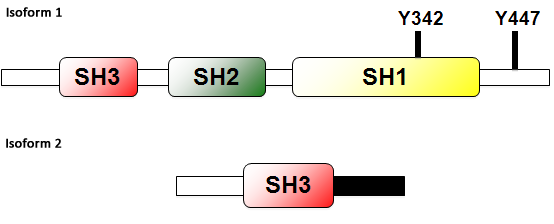
PTK6 contains SH3 and SH2 protein-protein interaction domains, an SH1 kinase domain, and a regulatory carboxy terminus. Phosphorylation of residue Y342 is required for full activation of kinase activity and activity is negatively regulated by tyrosine phosphorylation of its carboxy-terminal tyrosine residue, Y-447 (Qiu and Miller, 2002; Qiu and Miller, 2004; Qiu et al., 2005).
Isoform 2 (also known as ALT-PTK6, delta m5)
Size: 134 aa; ~15 KDa.
ALT-PTK6 is the product of an alternatively-spliced RNA that encodes a truncated protein due to a premature stop codon; alternative splicing deletes exon 2 and causes in a frameshift. The N-terminus and SH3 domain of ALT-PTK6 are identical to the full-length protein, but it has a unique C-terminus lacking the SH2 and SH1 domains and is thus catalytically inactive (Mitchell et al., 1994; Brauer et al., 2011).
Two additional PTK6 sequences, CRA_a (GenBank: EAW75262.1) and CRA_b (GenBank: EAW75263.1) that would encode larger ~59 kDa proteins have been identified by Celera Genomics, but these isoforms have not been characterized and their biological significance is not known.
Size: 451 amino acids; ~ 52 KDa.
PTK6 contains SH3 and SH2 protein-protein interaction domains, an SH1 kinase domain, and a regulatory carboxy terminus. Phosphorylation of residue Y342 is required for full activation of kinase activity and activity is negatively regulated by tyrosine phosphorylation of its carboxy-terminal tyrosine residue, Y-447 (Qiu and Miller, 2002; Qiu and Miller, 2004; Qiu et al., 2005).
Isoform 2 (also known as ALT-PTK6, delta m5)
Size: 134 aa; ~15 KDa.
ALT-PTK6 is the product of an alternatively-spliced RNA that encodes a truncated protein due to a premature stop codon; alternative splicing deletes exon 2 and causes in a frameshift. The N-terminus and SH3 domain of ALT-PTK6 are identical to the full-length protein, but it has a unique C-terminus lacking the SH2 and SH1 domains and is thus catalytically inactive (Mitchell et al., 1994; Brauer et al., 2011).
Two additional PTK6 sequences, CRA_a (GenBank: EAW75262.1) and CRA_b (GenBank: EAW75263.1) that would encode larger ~59 kDa proteins have been identified by Celera Genomics, but these isoforms have not been characterized and their biological significance is not known.
Expression
Normal Epithelium
PTK6 was first identified in cultured human melanocytes (Lee et al., 1993), breast tumor cells (Mitchell et al., 1994), and mouse small intestine (Siyanova et al., 1994). It is primarily an epithelial kinase that is first detectable in the differentiating granular layer of the skin during late embryogenesis of the mouse at E15.5 (Vasioukhin et al., 1995). In adults, PTK6 is predominantly expressed in the epithelial cells of the gastrointestinal tract (Siyanova et al., 1994; Llor et al., 1999), and skin (Vasioukhin et al., 1995; Wang et al., 2005). In regenerating tissues, such as the small intestine, colon, and skin, PTK6 expression is largely restricted to epithelial cells that are exiting the cell cycle and undergoing terminal differentiation, which are located on the villi in the small intestine, surface epithelium in the colon (Haegebarth et al., 2006), and the suprabasal layer of the skin (Vasioukhin et al., 1995; Wang et al., 2005) as well as in the oral mucosa (Petro et al., 2004). PTK6 is also expressed in the nuclei of normal epithelium of the prostate (Derry et al., 2003), and mammary gland (Peng et al., 2014). Although it is largely restricted to epithelia, PTK6 expression was also reported in activated normal T-cells (Kasprzycka et al., 2006).
Cancer
PTK6 is overexpressed in a large majority of human breast tumors and in most breast cancer cell lines (Barker et al., 1997; Harvey and Crompton, 2003; Ostrander et al., 2007). PTK6 expression is also induced in prostate tumors and cell lines (Zheng et al., 2012); relocalization of PTK6 from the nucleus to cytoplasm was reported in prostate cancer cells (Derry et al., 2003). In breast cancer cells, PTK6 expression has been shown to be mediated by hypoxia via multiple mechanisms; PTK6 protein is stabilized by HSP90 (Kang et al., 2012) and is transcriptionally upregulated by HIF-1a and HIF-2a (Regan Anderson et al., 2013), additionally PTK6 protein can be upregulated in a post-translational manner in response to hypoxia (Pires et al., 2014). PTK6 has been identified as a transcriptional target of CREB, and its expression is upregulated by p90RSK2 phosphorylation of CREB (Jin et al., 2013). PTK6 expression is modestly upregulated in primary colon tumors (Llor et al., 1999), and downregulated in metastatic colon cancer (Chen et al., 1999). In squamous cell carcinoma, PTK6 expression is reduced with increasing malignancy (Petro et al., 2004; Wang et al., 2005).
PTK6 was first identified in cultured human melanocytes (Lee et al., 1993), breast tumor cells (Mitchell et al., 1994), and mouse small intestine (Siyanova et al., 1994). It is primarily an epithelial kinase that is first detectable in the differentiating granular layer of the skin during late embryogenesis of the mouse at E15.5 (Vasioukhin et al., 1995). In adults, PTK6 is predominantly expressed in the epithelial cells of the gastrointestinal tract (Siyanova et al., 1994; Llor et al., 1999), and skin (Vasioukhin et al., 1995; Wang et al., 2005). In regenerating tissues, such as the small intestine, colon, and skin, PTK6 expression is largely restricted to epithelial cells that are exiting the cell cycle and undergoing terminal differentiation, which are located on the villi in the small intestine, surface epithelium in the colon (Haegebarth et al., 2006), and the suprabasal layer of the skin (Vasioukhin et al., 1995; Wang et al., 2005) as well as in the oral mucosa (Petro et al., 2004). PTK6 is also expressed in the nuclei of normal epithelium of the prostate (Derry et al., 2003), and mammary gland (Peng et al., 2014). Although it is largely restricted to epithelia, PTK6 expression was also reported in activated normal T-cells (Kasprzycka et al., 2006).
Cancer
PTK6 is overexpressed in a large majority of human breast tumors and in most breast cancer cell lines (Barker et al., 1997; Harvey and Crompton, 2003; Ostrander et al., 2007). PTK6 expression is also induced in prostate tumors and cell lines (Zheng et al., 2012); relocalization of PTK6 from the nucleus to cytoplasm was reported in prostate cancer cells (Derry et al., 2003). In breast cancer cells, PTK6 expression has been shown to be mediated by hypoxia via multiple mechanisms; PTK6 protein is stabilized by HSP90 (Kang et al., 2012) and is transcriptionally upregulated by HIF-1a and HIF-2a (Regan Anderson et al., 2013), additionally PTK6 protein can be upregulated in a post-translational manner in response to hypoxia (Pires et al., 2014). PTK6 has been identified as a transcriptional target of CREB, and its expression is upregulated by p90RSK2 phosphorylation of CREB (Jin et al., 2013). PTK6 expression is modestly upregulated in primary colon tumors (Llor et al., 1999), and downregulated in metastatic colon cancer (Chen et al., 1999). In squamous cell carcinoma, PTK6 expression is reduced with increasing malignancy (Petro et al., 2004; Wang et al., 2005).
Function
PTK6 is an intracellular protein tyrosine kinase that has distinct context-dependent functions in different normal and cancerous tissues based on its intracellular localization and kinase activity. Studies in breast and ovarian cancer cell lines find that PTK6 interacts with growth factor receptors EGFR (Kamalati et al., 2000) and ERBB2 (Ostrander et al., 2007; Xiang et al., 2008) to propagate growth factor-mediated signaling. PTK6 binds and phosphorylates IGF-1R (Fan et al., 2013) and promotes anchorage independent growth via interactions with IRS-4 and IGF1R (Qiu et al., 2005; Irie et al., 2010). PTK6 has also been shown to mediate Met receptor signaling, although a direct interaction has not been demonstrated (Locatelli et al., 2012). PTK6 stabilizes EGFR expression by phosphorylating ARAP1 (Arf-GAP, Rho-GAP, ankyrin repeat, and pleckstrin homology domain-containing protein 1) (Kang et al., 2010); interaction with EGFR mediates PTK6 phosphorylation of paxillin (Chen et al., 2004) and p190RhoGAP (Shen et al., 2008) in breast cancer cells as well as AKT in breast (Zhang et al., 2005) and prostate (Zheng et al., 2010) cancer cell lines to promote proliferation, invasion, and migration. PTK6 has also been shown to promote breast cancer cell migration via phosphorylation of KAP3A (Lukong and Richard, 2008) and Dok1 (Miah et al., 2014). Membrane-targeted active PTK6 in prostate cancer cell lines phosphorylates pro-oncogenic substrates BCAR1 (Zheng et al., 2012) and FAK (Zheng et al., 2013a). PTK6 phosphorylates and activates Signal Transducers and Activators of Transcription STAT3 (Liu et al., 2006) and STAT5a (Weaver and Silva, 2007) as well as the related scaffolding protein STAP2 (Mitchell et al., 2000). β-catenin has also been identified as a PTK6 substrate; when targeted to the cell membrane PTK6 can activate β-catenin, while nuclear PTK6 negatively regulates β-catenin transcriptional activity in a kinase-independent manner (Palka-Hamblin et al., 2010). PTK6 phosphorylation of the nuclear RNA-splicing factors SAM68 (Derry et al., 2000) and related SLM1 and SLM2 proteins (Haegebarth et al., 2004), as well as PSF (Lukong et al., 2009) inhibits their RNA-binding activity to promote differentiation and cell cycle arrest. PTK6 is a substrate of the PTP1B phosphatase (Fan et al., 2013).
PTK6 promotes epithelial differentiation of enterocytes in the small intestine (Haegebarth et al., 2006) and keratinocytes in skin (Vasioukhin and Tyner, 1997; Wang et al., 2005). In cultured human keratinocytes, addition of calcium promotes differentiation, which is accompanied by increased PTK6 expression and activation, and elevated levels of the epidermal differentiation markers (Vasioukhin and Tyner, 1997) dependent on PTK6 kinase activity (Wang et al., 2005). Disruption of the Ptk6 gene led to impaired intestinal differentiation and increased intestinal proliferation in mice (Haegebarth et al., 2006). When ectopically expressed, PTK6 sensitized non-transformed Rat1a fibroblasts to apoptosis (Haegebarth et al., 2005). Induction of PTK6 in intestinal crypts following total body γ-irradiation enhanced apoptosis in the murine intestinal epithelium, including in intestinal crypts, where it promotes DNA damage-induced apoptosis (Haegebarth et al., 2009). In human colon cancer cell lines and in murine colon tissue, PTK6 negatively regulates β-catenin transcriptional activity (Palka-Hamblin et al., 2010). PTK6 has a tumor-promoting role in the colon as disruption of the Ptk6 gene impaired carcinogen-induced tumorigenesis in mice (Gierut et al., 2011) and PTK6 promotes survival of colon cancer cell lines following DNA damaging treatments including γ-irradiation and chemotherapeutic drugs via STAT3 activation (Gierut et al., 2012).
Targeting PTK6 to plasma membrane enhanced proliferation, survival, migration and anchorage-independent growth in HEK293 cells, while nuclear targeting inhibited the invasive phenotype (Kim and Lee, 2009). Targeting active PTK6 to the plasma membrane in SYF (deficient for SRC, YES, and FYN) mouse embryonic fibroblasts was sufficient to transform these cells (Zheng et al., 2013a). In prostate cancer cells, targeting PTK6 to the nucleus inhibits proliferation while cytoplasmic PTK6 promotes proliferation (Brauer et al., 2010). Overexpression of membrane-targeted active PTK6 in prostate cancer cells drives epithelial-mesenchymal transition (Zheng et al., 2012) and anchorage-independent survival (Zheng et al., 2013a) as well as in vivo xenograft metastasis (Zheng et al., 2013b). Recently, PTK6 was detected in nuclei of normal mammary gland epithelium (Peng et al., 2014), and overexpression of PTK6 promotes oncogenic signaling and invasive phenotypes in breast cancer cells (Harvey and Crompton, 2003; Xiang et al., 2008; Irie et al., 2010). In human prostate and breast cancers, PTK6 is activated at the plasma membrane (Zheng et al., 2013b; Peng et al., 2014).
PTK6 promotes epithelial differentiation of enterocytes in the small intestine (Haegebarth et al., 2006) and keratinocytes in skin (Vasioukhin and Tyner, 1997; Wang et al., 2005). In cultured human keratinocytes, addition of calcium promotes differentiation, which is accompanied by increased PTK6 expression and activation, and elevated levels of the epidermal differentiation markers (Vasioukhin and Tyner, 1997) dependent on PTK6 kinase activity (Wang et al., 2005). Disruption of the Ptk6 gene led to impaired intestinal differentiation and increased intestinal proliferation in mice (Haegebarth et al., 2006). When ectopically expressed, PTK6 sensitized non-transformed Rat1a fibroblasts to apoptosis (Haegebarth et al., 2005). Induction of PTK6 in intestinal crypts following total body γ-irradiation enhanced apoptosis in the murine intestinal epithelium, including in intestinal crypts, where it promotes DNA damage-induced apoptosis (Haegebarth et al., 2009). In human colon cancer cell lines and in murine colon tissue, PTK6 negatively regulates β-catenin transcriptional activity (Palka-Hamblin et al., 2010). PTK6 has a tumor-promoting role in the colon as disruption of the Ptk6 gene impaired carcinogen-induced tumorigenesis in mice (Gierut et al., 2011) and PTK6 promotes survival of colon cancer cell lines following DNA damaging treatments including γ-irradiation and chemotherapeutic drugs via STAT3 activation (Gierut et al., 2012).
Targeting PTK6 to plasma membrane enhanced proliferation, survival, migration and anchorage-independent growth in HEK293 cells, while nuclear targeting inhibited the invasive phenotype (Kim and Lee, 2009). Targeting active PTK6 to the plasma membrane in SYF (deficient for SRC, YES, and FYN) mouse embryonic fibroblasts was sufficient to transform these cells (Zheng et al., 2013a). In prostate cancer cells, targeting PTK6 to the nucleus inhibits proliferation while cytoplasmic PTK6 promotes proliferation (Brauer et al., 2010). Overexpression of membrane-targeted active PTK6 in prostate cancer cells drives epithelial-mesenchymal transition (Zheng et al., 2012) and anchorage-independent survival (Zheng et al., 2013a) as well as in vivo xenograft metastasis (Zheng et al., 2013b). Recently, PTK6 was detected in nuclei of normal mammary gland epithelium (Peng et al., 2014), and overexpression of PTK6 promotes oncogenic signaling and invasive phenotypes in breast cancer cells (Harvey and Crompton, 2003; Xiang et al., 2008; Irie et al., 2010). In human prostate and breast cancers, PTK6 is activated at the plasma membrane (Zheng et al., 2013b; Peng et al., 2014).
Mutations
Somatic
A few PTK6 mutations have been reported in human cancers. A frameshift mutation resulting in the deletion of 58 amino acid residues (W78fsX58) has been identified in a human bladder cancer cell line and NSCLC cell line (Ruhe et al., 2007). Two point mutations have been reported in a small number of melanoma cases; W210X within the tyrosine kinase domain and a -7 intronic C>T mutation within a splice site (Prickett et al., 2009). Additional mutations have been identified by genomic sequencing (cBioPortal).
Implicated in
Entity name
Breast cancer
Note
PTK6 is overexpressed in most human breast tumors and breast cancer cell lines (Barker et al., 1997; Born et al., 2005; Ostrander et al., 2007; Irie et al., 2010). Irie and colleagues detected increased levels of PTK6 mRNA expression in HER2/ERBB2, luminal A and luminal B subtypes of breast cancer and found that high PTK6 expression correlated with reduced recurrence-free survival (Irie et al., 2010). PTK6 protein expression has prognostic significance in breast cancer (Born et al., 2005; Aubele et al., 2009), and active PTK6 protein was detected in human breast tumors but not normal human mammary gland (Peng et al., 2014). Overexpression of PTK6 promotes mammary gland cancer tumorigenesis in mouse models (Lofgren et al., 2011; Peng et al., 2013). PTK6 sustains EGFR signaling via transactivation as well as by inhibition of EGFR degradation (Kang et al., 2010; Li et al., 2012). The correlation between PTK6 and ERBB2 overexpression in invasive human ductal breast carcinomas (Born et al., 2005; Aubele et al., 2007; Ostrander et al., 2007; Xiang et al., 2008) raises the possibility that targeting PTK6 along with ERBB receptors might offer a therapeutic advantage (Harvey and Crompton, 2004; Ostrander et al., 2010). In response to HGF stimulation, PTK6 mediates Met signaling to promote breast cancer cell migration (Castro and Lange, 2010). PTK6 binds with IGF-1R to mediate IGF-1 signaling promoting anchorage-independent growth (Irie et al., 2010). PTK6 expression is upregulated by hypoxia and promotes hypoxia-mediated breast cancer progression (Aubele et al., 2009; Kang et al., 2012; Pires et al., 2014).
Entity name
Prostate cancer
Note
Elevated expression and relocalization of PTK6 have been reported in prostate cancer. Analysis of Oncomine microarray data showed that PTK6 mRNAs levels are higher in metastatic prostate tumors, and patients with high PTK6 have reduced survival (Zheng et al., 2013b). Knockdown of PTK6 in the human PC3 prostate tumor cell line inhibited xenograft tumor growth (Zheng et al., 2013). In normal prostate epithelium, PTK6 expression is nuclear and expression relocalizes to the cytoplasm and membrane in poorly-differentiated prostate tumors (Derry et al., 2003). Targeting PTK6 to the nucleus in prostate cancer cells arrests their growth while cytoplasmic PTK6 promotes proliferation (Brauer et al., 2010). In the cytoplasm, PTK6 may phosphorylate AKT on tyrosine residues to promote activation and downstream signaling (Zheng et al., 2010). Targeting active PTK6 to the plasma membrane in prostate cancer cells drives epithelial-mesenchymal transition via activation of BCAR1 (Zheng et al., 2012) and anchorage-independent survival via activation of FAK (Zheng et al., 2013a). RSK-mediated expression of PTK6 may contribute to metastasis of prostate cancer cells (Yu et al., 2014).
Entity name
Colon cancer
Note
PTK6 expression is mildly up-regulated in primary colon tumors (Llor et al., 1999), and down-regulated in metastatic colon cancer (Chen et al., 1999). Disruption of Ptk6 impairs carcinogen induced tumorigenesis in mice, suggesting a tumor-promoting role for the kinase in the colon as well (Gierut et al., 2011). In human colon cancer cell lines, PTK6 promotes cell survival following DNA damaging treatments including γ-irradiation and chemotherapeutic drugs via STAT3 activation (Gierut et al., 2012).
Entity name
Other cancers
Note
PTK6 has been implicated in several different types of human cancer, with distinct context-specific functions. As in breast and prostate cancers, PTK6 has pro-oncogenic roles in some other cancers. The Ptk6 gene is amplified and PTK6 protein is overexpressed in and may promote the development and growth of ovarian tumors (Schmandt et al., 2006). PTK6 signaling via IGF1R in ovarian cancer promotes cell growth and is inhibitted by PTP1B (Fan et al., 2013). PTK6 is also overexpressed in head and neck cancer, where it may play a role in HNSCC development and progression (Lin et al., 2004). High PTK6 expression is associated with poor prognosis and metastasis in nasopharyngeal carcinoma (Liu et al., 2013a). PTK6 expression is increased in non-small cell lung carcinoma (Fan et al., 2011) and is associated with poor prognosis (Zhao et al., 2013); PTK6 has been identified as a potential therapeutic target in NSCLC (Yauch et al., 2005; Li et al., 2010). It has also been demonstrated that knockdown of PTK6 reduces migration and invasion of pancreatic cancer cells (Ono et al., 2014). Constitutive expression of PTK6 has been reported in cutaneous T-cell lymphomas as well as in other transformed T- and B-cell populations (Kasprzycka et al., 2006).
In some cases, PTK6 may have tumor suppressor functions. It is down-regulated in human esophageal squamous cell carcinomas (ESCC); knockdown of PTK6 in human ESCC cells enhanced xenograft tumor growth (Ma et al., 2012). Low PTK6 expression correlates with poor prognosis in patients with laryngeal squamous cell carcinoma (Liu et al., 2013b). PTK6 expression is reduced with increasing malignancy in squamous cell carcinomas of the skin (Wang et al., 2005) and oral mucosa (Petro et al., 2004).
In some cases, PTK6 may have tumor suppressor functions. It is down-regulated in human esophageal squamous cell carcinomas (ESCC); knockdown of PTK6 in human ESCC cells enhanced xenograft tumor growth (Ma et al., 2012). Low PTK6 expression correlates with poor prognosis in patients with laryngeal squamous cell carcinoma (Liu et al., 2013b). PTK6 expression is reduced with increasing malignancy in squamous cell carcinomas of the skin (Wang et al., 2005) and oral mucosa (Petro et al., 2004).
Article Bibliography
| Pubmed ID | Last Year | Title | Authors |
|---|---|---|---|
| 17299391 | 2007 | PTK (protein tyrosine kinase)-6 and HER2 and 4, but not HER1 and 3 predict long-term survival in breast carcinomas. | Aubele M et al |
| 19621240 | 2009 | Overexpression of PTK6 (breast tumor kinase) protein--a prognostic factor for long-term breast cancer survival--is not due to gene amplification. | Aubele M et al |
| 9266966 | 1997 | BRK tyrosine kinase expression in a high proportion of human breast carcinomas. | Barker KT et al |
| 15685689 | 2005 | Simultaneous over-expression of the Her2/neu and PTK6 tyrosine kinases in archival invasive ductal breast carcinomas. | Born M et al |
| 20193745 | 2010 | Building a better understanding of the intracellular tyrosine kinase PTK6 - BRK by BRK. | Brauer PM et al |
| 21479203 | 2011 | The alternative splice variant of protein tyrosine kinase 6 negatively regulates growth and enhances PTK6-mediated inhibition of β-catenin. | Brauer PM et al |
| 20687930 | 2010 | Breast tumor kinase and extracellular signal-regulated kinase 5 mediate Met receptor signaling to cell migration in breast cancer cells. | Castro NE et al |
| 15572663 | 2004 | Brk activates rac1 and promotes cell migration and invasion by phosphorylating paxillin. | Chen HY et al |
| 10521789 | 1999 | Comparative tyrosine-kinase profiles in colorectal cancers: enhanced arg expression in carcinoma as compared with adenoma and normal mucosa. | Chen WS et al |
| 12833144 | 2003 | Altered localization and activity of the intracellular tyrosine kinase BRK/Sik in prostate tumor cells. | Derry JJ et al |
| 10913193 | 2000 | Sik (BRK) phosphorylates Sam68 in the nucleus and negatively regulates its RNA binding ability. | Derry JJ et al |
| 21603980 | 2011 | Detection of Brk expression in non-small cell lung cancer: clinicopathological relevance. | Fan C et al |
| 23814047 | 2013 | Protein-tyrosine phosphatase 1B antagonized signaling by insulin-like growth factor-1 receptor and kinase BRK/PTK6 in ovarian cancer cells. | Fan G et al |
| 21741923 | 2011 | Disruption of the mouse protein tyrosine kinase 6 gene prevents STAT3 activation and confers resistance to azoxymethane. | Gierut J et al |
| 22989419 | 2012 | Targeting protein tyrosine kinase 6 enhances apoptosis of colon cancer cells following DNA damage. | Gierut JJ et al |
| 19501589 | 2009 | Induction of protein tyrosine kinase 6 in mouse intestinal crypt epithelial cells promotes DNA damage-induced apoptosis. | Haegebarth A et al |
| 15075665 | 2004 | The Brk protein tyrosine kinase as a therapeutic target in cancer: opportunities and challenges. | Harvey AJ et al |
| 19304789 | 2009 | Oncogenic functions of PTK6 are enhanced by its targeting to plasma membrane but abolished by its targeting to nucleus. | Ie Kim H et al |
| 20668531 | 2010 | PTK6 regulates IGF-1-induced anchorage-independent survival. | Irie HY et al |
| 23608533 | 2013 | p90 RSK2 mediates antianoikis signals by both transcription-dependent and -independent mechanisms. | Jin L et al |
| 11114724 | 2000 | Expression of the BRK tyrosine kinase in mammary epithelial cells enhances the coupling of EGF signalling to PI 3-kinase and Akt, via erbB3 phosphorylation. | Kamalati T et al |
| 22849407 | 2012 | Hsp90 rescues PTK6 from proteasomal degradation in breast cancer cells. | Kang SA et al |
| 20554524 | 2010 | PTK6 inhibits down-regulation of EGF receptor through phosphorylation of ARAP1. | Kang SA et al |
| 16651629 | 2006 | Expression and oncogenic role of Brk (PTK6/Sik) protein tyrosine kinase in lymphocytes. | Kasprzycka M et al |
| 7935409 | 1994 | A novel nonreceptor tyrosine kinase, Srm: cloning and targeted disruption. | Kohmura N et al |
| 9749526 | 1998 | Exon-intron structure of the human PTK6 gene demonstrates that PTK6 constitutes a distinct family of non-receptor tyrosine kinase. | Lee H et al |
| 8247543 | 1993 | A survey of protein tyrosine kinase mRNAs expressed in normal human melanocytes. | Lee ST et al |
| 20190765 | 2010 | A chemical and phosphoproteomic characterization of dasatinib action in lung cancer. | Li J et al |
| 22231447 | 2012 | Brk/PTK6 sustains activated EGFR signaling through inhibiting EGFR degradation and transactivating EGFR. | Li X et al |
| 15023838 | 2004 | Identification of tyrosine kinases overexpressed in head and neck cancer. | Lin HS et al |
| 16568091 | 2006 | Identification of STAT3 as a specific substrate of breast tumor kinase. | Liu L et al |
| 23758975 | 2013 | Protein tyrosine kinase 6 is associated with nasopharyngeal carcinoma poor prognosis and metastasis. | Liu LN et al |
| 23497344 | 2013 | Low expression of PTK6/Brk predicts poor prognosis in patients with laryngeal squamous cell carcinoma. | Liu XK et al |
| 10430081 | 1999 | BRK/Sik expression in the gastrointestinal tract and in colon tumors. | Llor X et al |
| 22124844 | 2012 | Mechanisms of HGF/Met signaling to Brk and Sam68 in breast cancer progression. | Locatelli A et al |
| 21923922 | 2011 | Mammary gland specific expression of Brk/PTK6 promotes delayed involution and tumor formation associated with activation of p38 MAPK. | Lofgren KA et al |
| 19439179 | 2009 | BRK phosphorylates PSF promoting its cytoplasmic localization and cell cycle arrest. | Lukong KE et al |
| 18077133 | 2008 | Breast tumor kinase BRK requires kinesin-2 subunit KAP3A in modulation of cell migration. | Lukong KE et al |
| 22705009 | 2012 | Identification of PTK6, via RNA sequencing analysis, as a suppressor of esophageal squamous cell carcinoma. | Ma S et al |
| 24523872 | 2014 | BRK targets Dok1 for ubiquitin-mediated proteasomal degradation to promote cell proliferation and migration. | Miah S et al |
| 10980601 | 2000 | A novel adaptor-like protein which is a substrate for the non-receptor tyrosine kinase, BRK. | Mitchell PJ et al |
| 24788754 | 2014 | PTK6 promotes cancer migration and invasion in pancreatic cancer cells dependent on ERK signaling. | Ono H et al |
| 20832360 | 2010 | Brk/PTK6 signaling in normal and cancer cell models. | Ostrander JH et al |
| 20026641 | 2010 | Identification of beta-catenin as a target of the intracellular tyrosine kinase PTK6. | Palka-Hamblin HL et al |
| 24323291 | 2013 | Protein tyrosine kinase 6 regulates mammary gland tumorigenesis in mouse models. | Peng M et al |
| 15509496 | 2004 | Differential expression of the non-receptor tyrosine kinase BRK in oral squamous cell carcinoma and normal oral epithelium. | Petro BJ et al |
| 25019382 | 2014 | HIF-1α-independent hypoxia-induced rapid PTK6 stabilization is associated with increased motility and invasion. | Pires IM et al |
| 19718025 | 2009 | Analysis of the tyrosine kinome in melanoma reveals recurrent mutations in ERBB4. | Prickett TD et al |
| 14676834 | 2004 | Role of the Brk SH3 domain in substrate recognition. | Qiu H et al |
| 15870689 | 2005 | Interaction between Brk kinase and insulin receptor substrate-4. | Qiu H et al |
| 23928995 | 2013 | Breast tumor kinase (Brk/PTK6) is a mediator of hypoxia-associated breast cancer progression. | Regan Anderson TM et al |
| 18056464 | 2007 | Genetic alterations in the tyrosine kinase transcriptome of human cancer cell lines. | Ruhe JE et al |
| 16855388 | 2006 | The BRK tyrosine kinase is expressed in high-grade serous carcinoma of the ovary. | Schmandt RE et al |
| 12725532 | 2003 | Brk, Srm, Frk, and Src42A form a distinct family of intracellular Src-like tyrosine kinases. | Serfas MS et al |
| 18829532 | 2008 | Breast tumor kinase phosphorylates p190RhoGAP to regulate rho and ras and promote breast carcinoma growth, migration, and invasion. | Shen CH et al |
| 8208550 | 1994 | Tyrosine kinase gene expression in the mouse small intestine. | Siyanova EY et al |
| 9405638 | 1997 | A role for the epithelial-cell-specific tyrosine kinase Sik during keratinocyte differentiation. | Vasioukhin V et al |
| 16086737 | 2005 | Role of breast tumour kinase in the in vitro differentiation of HaCaT cells. | Wang TC et al |
| 17997837 | 2007 | Signal transducer and activator of transcription 5b: a new target of breast tumor kinase/protein tyrosine kinase 6. | Weaver AM et al |
| 18719096 | 2008 | Brk is coamplified with ErbB2 to promote proliferation in breast cancer. | Xiang B et al |
| 16361555 | 2005 | Epithelial versus mesenchymal phenotype determines in vitro sensitivity and predicts clinical activity of erlotinib in lung cancer patients. | Yauch RL et al |
| 25189355 | 2015 | RSK promotes prostate cancer progression in bone through ING3, CKAP2, and PTK6-mediated cell survival. | Yu G et al |
| 15539407 | 2005 | Regulated association of protein kinase B/Akt with breast tumor kinase. | Zhang P et al |
| 23525678 | 2013 | Expression of protein tyrosine kinase 6 (PTK6) in nonsmall cell lung cancer and their clinical and prognostic significance. | Zhao C et al |
| 22084245 | 2012 | Protein-tyrosine kinase 6 promotes peripheral adhesion complex formation and cell migration by phosphorylating p130 CRK-associated substrate. | Zheng Y et al |
| 23027128 | 2013 | Protein tyrosine kinase 6 protects cells from anoikis by directly phosphorylating focal adhesion kinase and activating AKT. | Zheng Y et al |
| 20606012 | 2010 | Protein tyrosine kinase 6 directly phosphorylates AKT and promotes AKT activation in response to epidermal growth factor. | Zheng Y et al |
| 23856248 | 2013 | PTK6 activation at the membrane regulates epithelial-mesenchymal transition in prostate cancer. | Zheng Y et al |
Other Information
Locus ID:
NCBI: 5753
MIM: 602004
HGNC: 9617
Ensembl: ENSG00000101213
Variants:
dbSNP: 5753
ClinVar: 5753
TCGA: ENSG00000101213
COSMIC: PTK6
RNA/Proteins
| Gene ID | Transcript ID | Uniprot |
|---|---|---|
| ENSG00000101213 | ENST00000217185 | Q13882 |
| ENSG00000101213 | ENST00000542869 | Q13882 |
Expression (GTEx)
Pathways
Protein levels (Protein atlas)
References
| Pubmed ID | Year | Title | Citations |
|---|---|---|---|
| 36690663 | 2023 | PTK6 inhibits autophagy to promote uveal melanoma tumorigenesis by binding to SOCS3 and regulating mTOR phosphorylation. | 6 |
| 36854171 | 2023 | Biochemical Studies of Systemic Lupus Erythematosus-Associated Mutations in Nonreceptor Tyrosine Kinases Ack1 and Brk. | 0 |
| 37216999 | 2023 | BRK confers tamoxifen-resistance in breast cancer via regulation of tyrosine phosphorylation of CDK1. | 0 |
| 36690663 | 2023 | PTK6 inhibits autophagy to promote uveal melanoma tumorigenesis by binding to SOCS3 and regulating mTOR phosphorylation. | 6 |
| 36854171 | 2023 | Biochemical Studies of Systemic Lupus Erythematosus-Associated Mutations in Nonreceptor Tyrosine Kinases Ack1 and Brk. | 0 |
| 37216999 | 2023 | BRK confers tamoxifen-resistance in breast cancer via regulation of tyrosine phosphorylation of CDK1. | 0 |
| 35227003 | 2022 | Prognostic value of protein tyrosine kinase 6 overexpression in cancers: a meta-analysis. | 0 |
| 35327957 | 2022 | Breast Tumour Kinase (Brk/PTK6) Contributes to Breast Tumour Xenograft Growth and Modulates Chemotherapeutic Responses In Vitro. | 2 |
| 35894144 | 2022 | Interference of PTK6/GAB1 signaling inhibits cell proliferation, invasion, and migration of cervical cancer cells. | 2 |
| 35227003 | 2022 | Prognostic value of protein tyrosine kinase 6 overexpression in cancers: a meta-analysis. | 0 |
| 35327957 | 2022 | Breast Tumour Kinase (Brk/PTK6) Contributes to Breast Tumour Xenograft Growth and Modulates Chemotherapeutic Responses In Vitro. | 2 |
| 35894144 | 2022 | Interference of PTK6/GAB1 signaling inhibits cell proliferation, invasion, and migration of cervical cancer cells. | 2 |
| 32956764 | 2020 | Targeting protein tyrosine kinase 6 in cancer. | 6 |
| 32956764 | 2020 | Targeting protein tyrosine kinase 6 in cancer. | 6 |
| 30651078 | 2019 | Estrogen receptor signaling regulates the expression of the breast tumor kinase in breast cancer cells. | 9 |
Citation
Priya S Mathur ; Angela L Tyner
PTK6 (protein tyrosine kinase 6)
Atlas Genet Cytogenet Oncol Haematol. 2014-09-01
Online version: http://atlasgeneticsoncology.org/gene/41900/cancer-prone-explorer/submit-meetings/gene-fusions/pdf
