CXCL10 (chemokine (C-X-C motif) ligand 10)
2012-05-01 Frank Antonicelli , Philippe Bernard AffiliationUniversite de Reims Champagne-Ardenne, Laboratoire de Dermatologie, CNRS FRE-3481, UFR medecine, Reims, France (FA); CHU de Reims, Hopital Robert Debre, Service de Dermatologie, Reims, France (PB)
Identity
HGNC
LOCATION
4q21.1
LOCUSID
ALIAS
C7,IFI10,INP10,IP-10,SCYB10,crg-2,gIP-10,mob-1
DNA/RNA
Note
CXCL10 gene, localized on the chromosome 4 at band q21, was originally described in 1985 by Luster (Luster et al., 1985). The CXCL10 cDNA arises from 4 exons encoding for a 12 kDa protein (Liu et al., 2011; Luster and Ravetch, 1987), which is widely expressed. Transcription CXCL10, also named IP-10 for Interferon-g-inducible protein 10, is induced by a large range of innate and adaptive immune stimuli that induce the production of IFN type-1 and tye-2. Inflammatory stimuli, such as TNFα, have also been shown to induce CXCL10 expression (Nestle et al., 2009; Nakae et al., 2003). The CXCL10 promoter includes response element for Interferon Regulatory Factor (IRF)1 and for many other transcription factor such as NF-κB, STAT-1, AP-1, FoxA2a, FoxF2, FHXA/FHXB-1, FHXA/FHXB-2 and CEBP (Lu et al., 2011; Clarke et al;, 2010). It was shown recently that CXCL10 promoter also contains a Gamma Activating Sequence (GAS) response element that is activated following homodimerisation of phosphorylated STAT1 (Saha et al., 2010). CXCL10 mRNA is stabilized by S100b protein binding at the 3-UTR regions (Shanmugam et al., 2006). Multiple alignment sequences of pig, human, mouse, goat and sheep of CXCL10 gene product shows 86, 74, 72, 82 and 83% of homology respectively (Yang et al., 2007).
Proteins
Description
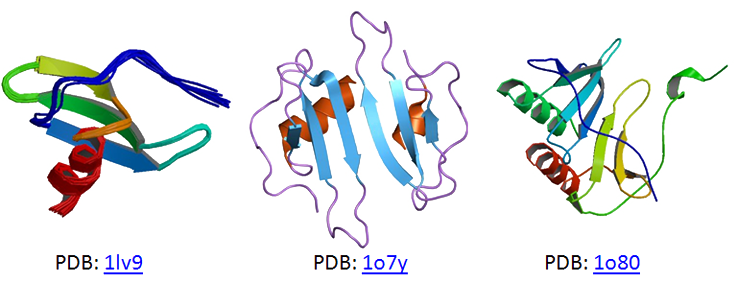
The primary translation product corresponds to a protein of 12 kDa that is then limited proteolysed in a protein of 98 amino acids mature protein of 10k Da after release of the signal peptide. The three-dimensional crystal structure of CXCL10 has been determined under different conditions, and the protein structural data have the following accession codes 1lv9, 1o7y, and 1o80 in the Protein Data Bank (Fig. 1). CXCL10 activity is bound to its structure and cleavage by MMPs and x-prolyl dipeptidyl peptidase enzymes. The C-terminal truncation leaves CXCL10 under an active form, whereas reduction of its N-terminal tail generates a dominant negative antagonist. Then determination of the balance between the agonists and the antagonist forms is of interest in monitoring the role of CXCL10 in cancer and inflammatory diseases (Casrouge et al., 2012).
Expression
CXCL10 is secreted by several cell types including T lymphocytes, neutrophils, monocytes, splenocytes, endothelial cells, fibroblasts, keratinocytes, osteoblasts, astrocytes and smooth muscle cells.
Localisation
CXCL10 is a secreted protein present in body fluids and in tissues.
Function
CXCL10 is a pleiotropic molecule that exerts several functions according to the cell type and the CXCL10 receptor isoform they express. The mature form of CXCL10 and two other members of the CXC chemokine family, CXCL9 (Mig) and CXCL11 (I-TAC), bind the CXCR3 receptor, with a higher affinity for the CXCR3A than the CXCR3B isoform. A third isoform of CXCR3 (CXCR3-alt) is always co-expressed at a very low level with CXCR3A, but its function has still not been determined ( Lo et al., 2010; Aksoy et al., 2006). According to cell types and CXCL10 receptors, several signalling pathways can be activated. Following to CXCL10 binding, CXCR3A activates Erk1/2, JNK and PI3K/AKT pathways (Liu et al., 2011; Ji et al., 2008; Maru et al., 2008; Aksoy et al., 2006; Loetscher et al., 1998), while CXCR3B stimulated the adenylyl cyclase cascade and p38/MAPK (Aksoy et al., 2006; Giuliani et al., 2006; Lazzeri and Romagnani, 2005; Romagnani et al., 2005; Kim et al., 2002).
Homology
CXCL10 has significant amino-acid homology to platelet factor-4 and beta-thromboglobulin, two chemotatic proteins released by platelet (Luster et al., 1985).
Implicated in
Entity name
Brain cancer
Note
Using mice models, it has been shown an elevated CXCL10 level upon nonsteroidal anti-inflammatory drugs is associated with enhanced cytotoxic T lymphocytes infiltration and reduced gliomagenesis (Fujita et al., 2011). Accordingly, Glioma-bearing CXCR3-deficient mice had significantly shorter median survival time and reduced numbers of tumor-infiltrated natural killer and natural killer T cells with respect to wild type mice (Liu et al., 2011). In this line, a therapy combining CXCL10 overexpression with glioma lysate-pulsed DCs revealed synergistic effect against glioma progression (Jiang et al., 2009).
Entity name
Breast cancer
Note
In vitro study demonstrated that in breast cancer cells Ras-induced overexpression of CXCL10 is mediated primarily through the Raf and phosphatidylinositol 3-kinase signaling pathways. The expression of the splice variant CXCR3-B, known to inhibit cell proliferation, is significantly down-regulated by Ras, suggesting that CXCL10-mediated breast cancer cell proliferation likely involves CXCR3-A (Datta et al., 2006). Besides, in murine breast cancer CXCL10 impairs tumor growth and metastasis formation through recruitment of natural killer (NK) cells and tumor-suppressive T lymphocytes. In such models, CXCL10 expression is controlled by PGE2 and cyclooxygenase inhibition (Bronger et al., 2012). The anti-tumoral immune response is favored by IFN-γ secreted from NK cells which promotes the production of CXCL10 from breast cancer cells, and in turn accelerates the migration of CXCR3-expressing NK cells into the tumor site. Then, activation of autologous NK cells could represent a potential therapeutic adoptive transfer (Kajitani et al., 2012).
Entity name
Colorectal cancer
Note
Colorectal cancer is a complex disease involving immune defense mechanisms. Data from 108 patients showed that in patients with prolonged disease-free survival, CXCL10 correlated with different subsets of immune cells displaying particular TCR repertoire and with high densities of T-cell subpopulations within specific tumor regions (Mlecnik et al., 2010). Conversely, CXCL10 level increased with advanced colorectal cancer, with vascular invasion and distant metastasis. Then, CXCL10 was associated with poor prognosis and liver metastasis (Toiyama et al., 2012). CXCL10 deleterious effects are triggered by TNFα-induced NF-kB transcriptional activation and can be suppressed by 3-Chloro-5,7-dimethoxyisoflavone, a synthetic isoflavone derivative (Shin et al., 2011).
Entity name
Liver cancer
Note
Among a 14-gene immune signature, CXCL10 contributes at predicting patient survival with hepatocellular carcinoma issued from two series includes, irrespectively of patient ethnicity and disease aetiology. In this study, CXCL10 correlates with markers of T helper 1 (Th1), CD8(+) T and natural killer (NK) cells, and good prognosis for patients with early disease (stages I and II), but not in late disease stages III and IV (Chew et al., 2012). Besides, use of an orthotopic liver tumor nude mice model with distant metastatic potential, adiponectin downregulates the ROCK/IP10/MMP-9 signaling pathway from tumor cell, and inhibits liver tumor growth and metastasis by reducing the formation of lamellipodia, which contribute to cell migration (Man et al., 2010). Of interest, CXCL10 level in different hepatocellular carcinoma cell lines is determined by melatonin concentration, which therefore could present relevant application for patients with hepatocellular carcinoma (Lin and Chuang, 2010). Loss of hepatocyte c-Met receptor causes a strong deregulation of chemotactic and inflammatory signaling such as CXCL10, and alters hepatic microenvironment and aggravated hepatic fibrogenesis (Marquardt et al., 2012).
Entity name
Lung cancer
Note
CXCR3 expression in CD4(+) T cells from pleural plaque and mesothelioma is significantly reduced compared with that from healthy donors, and CD4(+)CXCR3(+) T cells from mesothelioma showed an inverse correlation with its ligand CXCL10/IP10 in plasma. This suggests that CXCR3and CXCL10/IP10 may be candidates to detect and monitor the antitumor immune function in patients with lung cancer and mesothelioma (Maeda et al., 2011). In this respect, although a synergistic antitumor effect is not observed in a combined treatment using CXCL10 and CXCL11, a chimeric molecule engineered by substituting the N-terminal and N-loop region of CXCL10 with those of CXCL11 promotes regression of established tumors and remarkably prolonges survival of mice compared to these chemokines used either alone or in combination (Wang et al., 2010). In this line, a chimeric γc homeostatic cytokine, IL-7/IL-7Rα-Fc promotes afferent and efferent antitumor responses in lung cancer by increasing CXCL10 expression, tumor macrophage infiltrates, frequencies of T and NK cells, effector memory T cells and T cell cytolytic activity against parental tumor cells (Andersson et al., 2011).
Entity name
Lymphoma
Note
CXCL10 was discovered following treatment of a lymphoma cell line (U937) with IFN-γ (Luster et al., 1985). Recently, a prognostic value was attributed to this chemokine in large-cell lymphoma and myelodysplastic syndromes suggesting a deleterious pathogenic contribution of this chemokine in these diseases development (Pardanani et al., 2011). Likewise, CXCL10 has been associated with epidermotropism of cutaneous T-lymphoma cells, which could partly explain the clonal expansion of lymphocytes in the skin in the absence of systemic involvement (Sugaya, 2011).
Entity name
Melanoma
Note
The antitumoral effects of CXCL10 were demonstrated in vivo using different animal models (Antonicelli et al., 2011; Feldman et al., 2002). Notably, it was shown that suppression of melanoma growth by thalidomide was associated with up-regulation of CXCL10 in the spleen of mice (Kawamata et al., 2006). In Human, induction of IP-10/CXCL10 secretion was proposed as an immunomodulatory effect of low-dose adjuvant interferon-alpha during treatment of melanoma (Mohty et al., 2010). High level expression of CXCL10 was detected in situ in regressive human primary melanoma concomitantly with the CXCR3+ lymphocyte recruitment (Wenzel et al., 2005). A high CXCL10 concentration is also secreted by PBMC from patients with melanoma in regression compared to patients with melanoma in progression (Antonicelli et al., 2011). Besides its chemotactic activity, this chemokine interacts either directly with melanoma cells to control tumour progression (Antonicelli et al., 2011) or reduces the microvessel density (Yang and Richmond, 2004).
Entity name
Ovarian cancer
Note
Analysis of 201 ovarian cancer patients revealed that tumor-infiltrating Th17 cells are positively associated with effector cells, and are negatively associated with tumor-infiltrating regulatory T cells. The synergistic action between IL-17 and interferon-gamma, stimulate CXCL9 and CXCL10 production to recruit effector T cells and therefore contribute to protective human tumor immunity (Kryczek et al., 2009). Viral infection increases detection and elimination by immune cells. Viral infection stimulates RNA helicase retinoic acid-inducible gene-I induced CXCL10 from ovarian cancer cells and HLA class I upregulation. These cells become succeptible to apoptosis, phagocytose by monocytes and monocyte-derived dendritic cells, which in turn upregulated HLA class I/II and costimulatory molecules and released CXCL10 and IFN-alpha (Kübler et al., 2010).
Entity name
Prostate cancer
Note
In prostate cancer, CXCL10/IP10 promotes cell motility and invasiveness via PLCβ3 and µ-calpain activation. Meanwhile, CXCR3A mRNA level is upregulated while CXCR3B mRNA is downregulated in these prostate cancer specimens (Wu et al., 2012). However, in invitro study showed that CXCL10 inhibits prostate cancer cell proliferation and decreased PSA production by up-regulation of CXCR3 receptor suggesting that CXCL10 may be potentially useful in the treatment of prostate cancer (Nagpal et al., 2006). In this line, neoadjuvant hormone therapy boosts the expression CXCL10 in the glandular epithelium of normal prostate tissue, and restored the CD8(+) lymphocyte depletion occurring in prostate cancer, whereas it significantly increased the CD4(+) lymphocyte infiltrate. However, it also increased the number of T regulatory cells, and then might have no impact on disease free survival (Sorrentino et al., 2011).
Entity name
Immunity
Note
Peripheral inflammatory markers are often used as predictor of tumour development. Determination of high level of CXCL10 in peripheral liquids is therefore a marker of host immune response, especially Th1 orientated T-cells, which have been shown to be associated with a better prognosis for many cancer types including brain (Elstner et al., 2011; Okada, 2009), hepatic (Moura et al., 2009) and colorectal (Engel and Neurath, 2010) neoplasms, or melanoma (Antonicelli et al., 2011; Mohty et al., 2010). In this line, natural Killer lymphocytes endowed immunoregulatory functions by secreting IFN-γ. Therefore these cells have been successfully employed to treat patients with myeloid leukaemia and other haematological malignancies (Maghazachi, 2010). Animal model showed apparent overexpression in tissue with tumour undergoing regression reflecting an immune host response (Tosato et al., 1998). Similarly, expression of CXCL10 as determined by immunocytochemistry was increased in tumour skin frozen sections (Daliani et al., 1998). Increased CXCL10 expression at site of injury could enhance the homing of immune cells expression the CXCR3 receptor (Okada, 2009). Recruited Th1 lymphocytes may be responsible for enhanced IFN-γ and TNF-α production, which in turn stimulates CXCL10 secretion from a variety of cells, therefore creating an amplification feedback loop (Antonelli et al., 2008). This chemotactic-based amplification loop is impaired when the NH-2 terminal CXCL10 extremity is truncated (Persano et al., 2011; Proost et al., 2001). Although such sustained inflammatory and immune response is of interest to reduce tumour progression, it also may predispose or lead to autoimmune disorders (Lacotte et al., 2009; Antonelli et al., 2008; Liu et al., 2008; Luster et al., 1985).
Entity name
Angiostasis
Note
As an ELR- CXC chemokine, CXCL10 displays angiostatic effects through binding to its CXCR3B receptor subunit. This anti-angiogenic effect is processed through inhibition of proliferation and induction of apoptosis of endothelial cells (Liu et al., 2011; Feldman et al., 2006). These effects are mediated by a downstream CXCR3B activation of the p38 pathway (Petrai et al., 2008). CXCL10 also antagonizes the pro-angiogenic effects of bFGF and VEGF (Aronica et al., 2009; Sato et al., 2007). Of note, the NH-2 CXCL10 truncation impaired its signalling cascade effects with modifying its anti-angiogenic properties (Struyf et al., 2011; Proost et al., 2001). Consequently, CXCL10 level has been inversely correlated with tumour progression such as in lymphoma, squamous cells carcinoma, carcinoma, melanoma and many others tumour types. However, preclinical studies have clearly indicated that such cytostatic factor need long-term administration to display an antitumoral effect, which furthermore is only really efficient during the early phase of tumour progression (Persano et al., 2007).
Article Bibliography
| Pubmed ID | Last Year | Title | Authors |
|---|---|---|---|
| 16339779 | 2006 | CXCR3 surface expression in human airway epithelial cells: cell cycle dependence and effect on cell proliferation. | Aksoy MO et al |
| 21636553 | 2011 | Role of CXCR3 ligands in IL-7/IL-7R alpha-Fc-mediated antitumor activity in lung cancer. | Andersson A et al |
| 18708169 | 2008 | Immunopathogenesis of HCV-related endocrine manifestations in chronic hepatitis and mixed cryoglobulinemia. | Antonelli A et al |
| 21155750 | 2011 | CXCL10 reduces melanoma proliferation and invasiveness in vitro and in vivo. | Antonicelli F et al |
| 19014340 | 2009 | Antitumor/antiestrogenic effect of the chemokine interferon inducible protein 10 (IP-10) involves suppression of VEGF expression in mammary tissue. | Aronica SM et al |
| 10914483 | 2000 | CXC chemokines in angiogenesis. | Belperio JA et al |
| 22333315 | 2012 | Modulation of CXCR3 ligand secretion by prostaglandin E2 and cyclooxygenase inhibitors in human breast cancer. | Bronger H et al |
| 22132893 | 2012 | Discrimination of agonist and antagonist forms of CXCL10 in biological samples. | Casrouge A et al |
| 21930732 | 2012 | Chemokine-driven lymphocyte infiltration: an early intratumoural event determining long-term survival in resectable hepatocellular carcinoma. | Chew V et al |
| 20833730 | 2010 | TNFα and IFNγ synergistically enhance transcriptional activation of CXCL10 in human airway smooth muscle cells via STAT-1, NF-κB, and the transcriptional coactivator CREB-binding protein. | Clarke DL et al |
| 9684929 | 1998 | Tumor necrosis factor-alpha and interferon-gamma, but not HTLV-I tax, are likely factors in the epidermotropism of cutaneous T-cell lymphoma via induction of interferon-inducible protein-10. | Daliani D et al |
| 17018607 | 2006 | Ras-induced modulation of CXCL10 and its receptor splice variant CXCR3-B in MDA-MB-435 and MCF-7 cells: relevance for the development of human breast cancer. | Datta D et al |
| 20617365 | 2011 | Identification of diagnostic serum protein profiles of glioblastoma patients. | Elstner A et al |
| 20712574 | 2010 | Anticancer properties of the IL-12 family--focus on colorectal cancer. | Engel MA et al |
| 11948506 | 2002 | Retroviral gene transfer of interferon-inducible protein 10 inhibits growth of human melanoma xenografts. | Feldman AL et al |
| 16378159 | 2006 | Interferon gamma-inducible protein 10 selectively inhibits proliferation and induces apoptosis in endothelial cells. | Feldman ED et al |
| 21324923 | 2011 | COX-2 blockade suppresses gliomagenesis by inhibiting myeloid-derived suppressor cells. | Fujita M et al |
| 17082008 | 2006 | CXCR3 and its binding chemokines in myeloma cells: expression of isoforms and potential relationships with myeloma cell proliferation and survival. | Giuliani N et al |
| 18375741 | 2008 | Human type II pneumocyte chemotactic responses to CXCR3 activation are mediated by splice variant A. | Ji R et al |
| 19699331 | 2009 | Improved therapeutic efficacy using vaccination with glioma lysate-pulsed dendritic cells combined with IP-10 in murine glioma. | Jiang XB et al |
| 22261932 | 2012 | Mechanistic analysis of the antitumor efficacy of human natural killer cells against breast cancer cells. | Kajitani K et al |
| 17089043 | 2006 | Thalidomide suppresses melanoma growth by activating natural killer cells in mice. | Kawamata A et al |
| 12370271 | 2002 | Inhibition of endothelial cell survival and angiogenesis by protein kinase A. | Kim S et al |
| 19470694 | 2009 | Phenotype, distribution, generation, and functional and clinical relevance of Th17 cells in the human tumor environments. | Kryczek I et al |
| 20551064 | 2010 | Targeted activation of RNA helicase retinoic acid-inducible gene-I induces proimmunogenic apoptosis of human ovarian cancer cells. | Kübler K et al |
| 19758167 | 2009 | CXCR3, inflammation, and autoimmune diseases. | Lacotte S et al |
| 15777209 | 2005 | CXCR3-binding chemokines: novel multifunctional therapeutic targets. | Lazzeri E et al |
| 20970952 | 2010 | Pharmacologic concentrations of melatonin have diverse influence on differential expressions of angiogenic chemokine genes in different hepatocellular carcinoma cell lines. | Lin ZY et al |
| 21051441 | 2011 | Chemokine receptor CXCR3 promotes growth of glioma. | Liu C et al |
| 18418812 | 2008 | Chemokines and autoimmune thyroid diseases. | Liu C et al |
| 21802343 | 2011 | CXCL10/IP-10 in infectious diseases pathogenesis and potential therapeutic implications. | Liu M et al |
| 20228225 | 2010 | CXCR3/ligands are significantly involved in the tumorigenesis of basal cell carcinomas. | Lo BK et al |
| 9842912 | 1998 | Lymphocyte-specific chemokine receptor CXCR3: regulation, chemokine binding and gene localization. | Loetscher M et al |
| 21497908 | 2011 | Regulation of influenza A virus induced CXCL-10 gene expression requires PI3K/Akt pathway and IRF3 transcription factor. | Lu X et al |
| 2443596 | 1987 | Biochemical characterization of a gamma interferon-inducible cytokine (IP-10). | Luster AD et al |
| 3925348 | 1985 | Gamma-interferon transcriptionally regulates an early-response gene containing homology to platelet proteins. | Luster AD et al |
| 21357438 | 2011 | Decreased CXCR3 expression in CD4+ T cells exposed to asbestos or derived from asbestos-exposed patients. | Maeda M et al |
| 20369317 | 2010 | Role of chemokines in the biology of natural killer cells. | Maghazachi AA et al |
| 20103676 | 2010 | Suppression of liver tumor growth and metastasis by adiponectin in nude mice through inhibition of tumor angiogenesis and downregulation of Rho kinase/IFN-inducible protein 10/matrix metalloproteinase 9 signaling. | Man K et al |
| 22386877 | 2012 | Loss of c-Met accelerates development of liver fibrosis in response to CCl(4) exposure through deregulation of multiple molecular pathways. | Marquardt JU et al |
| 18538864 | 2008 | Chemokine production and chemokine receptor expression by human glioma cells: role of CXCL10 in tumour cell proliferation. | Maru SV et al |
| 19909745 | 2010 | Biomolecular network reconstruction identifies T-cell homing factors associated with survival in colorectal cancer. | Mlecnik B et al |
| 19450896 | 2010 | Induction of IP-10/CXCL10 secretion as an immunomodulatory effect of low-dose adjuvant interferon-alpha during treatment of melanoma. | Mohty AM et al |
| 20428640 | 2009 | Soluble inflammatory markers as predictors of hepatocellular damage and therapeutic response in chronic hepatitis C. | Moura AS et al |
| 16934957 | 2006 | Overexpression of CXCL10 in human prostate LNCaP cells activates its receptor (CXCR3) expression and inhibits cell proliferation. | Nagpal ML et al |
| 12578855 | 2003 | IL-1-induced tumor necrosis factor-alpha elicits inflammatory cell infiltration in the skin by inducing IFN-gamma-inducible protein 10 in the elicitation phase of the contact hypersensitivity response. | Nakae S et al |
| 19641206 | 2009 | Psoriasis. | Nestle FO et al |
| 19769732 | 2009 | Brain tumor immunotherapy with type-1 polarizing strategies. | Okada H et al |
| 21912394 | 2012 | IPSS-independent prognostic value of plasma CXCL10, IL-7 and IL-6 levels in myelodysplastic syndromes. | Pardanani A et al |
| 17306361 | 2007 | Anti-angiogenic gene therapy of cancer: current status and future prospects. | Persano L et al |
| 18291705 | 2008 | Activation of p38(MAPK) mediates the angiostatic effect of the chemokine receptor CXCR3-B. | Petrai I et al |
| 11739156 | 2001 | Amino-terminal truncation of CXCR3 agonists impairs receptor signaling and lymphocyte chemotaxis, while preserving antiangiogenic properties. | Proost P et al |
| 16337473 | 2005 | CXCR3-mediated opposite effects of CXCL10 and CXCL4 on TH1 or TH2 cytokine production. | Romagnani P et al |
| 20036577 | 2010 | Gene modulation and immunoregulatory roles of interferon gamma. | Saha B et al |
| 18424889 | 2007 | Expression of interferon-gamma-inducible protein 10 related to angiogenesis in uterine endometrial cancers. | Sato E et al |
| 16931519 | 2006 | Interferon-gamma-inducible protein (IP)-10 mRNA stabilized by RNA-binding proteins in monocytes treated with S100b. | Shanmugam N et al |
| 21945666 | 2011 | 3'-Chloro-5,7-dimethoxyisoflavone inhibits TNFα-induced CXCL10 gene transcription by suppressing the NF-κB pathway in HCT116 human colon cancer cells. | Shin SY et al |
| 21159885 | 2011 | Androgen deprivation boosts prostatic infiltration of cytotoxic and regulatory T lymphocytes and has no effect on disease-free survival in prostate cancer patients. | Sorrentino C et al |
| 20980681 | 2011 | Angiostatic and chemotactic activities of the CXC chemokine CXCL4L1 (platelet factor-4 variant) are mediated by CXCR3. | Struyf S et al |
| 21628851 | 2011 | Cutaneous lymphoma and chemokine. | Sugaya M et al |
| 22038159 | 2012 | Evaluation of CXCL10 as a novel serum marker for predicting liver metastasis and prognosis in colorectal cancer. | Toiyama Y et al |
| 9870254 | 1998 | Post-transplant lymphoproliferative disease (PTLD): lymphokine production and PTLD. | Tosato G et al |
| 15246056 | 2004 | Chemokine-protease interactions in cancer. | Van Damme J et al |
| 20706716 | 2010 | Integrating individual functional moieties of CXCL10 and CXCL11 into a novel chimeric chemokine leads to synergistic antitumor effects: a strategy for chemokine-based multi-target-directed cancer therapy. | Wang P et al |
| 15923172 | 2005 | Type I interferon-associated recruitment of cytotoxic lymphocytes: a common mechanism in regressive melanocytic lesions. | Wenzel J et al |
| 22236567 | 2012 | Altered CXCR3 isoform expression regulates prostate cancer cell migration and invasion. | Wu Q et al |
| 17328963 | 2007 | Molecular characterization of cDNA encoding porcine IP-10 and induction of porcine endothelial IP-10 in response to human TNF-alpha. | Yang J et al |
| 15194051 | 2004 | The angiostatic activity of interferon-inducible protein-10/CXCL10 in human melanoma depends on binding to CXCR3 but not to glycosaminoglycan. | Yang J et al |
Other Information
Locus ID:
NCBI: 3627
MIM: 147310
HGNC: 10637
Ensembl: ENSG00000169245
Variants:
dbSNP: 3627
ClinVar: 3627
TCGA: ENSG00000169245
COSMIC: CXCL10
RNA/Proteins
| Gene ID | Transcript ID | Uniprot |
|---|---|---|
| ENSG00000169245 | ENST00000306602 | P02778 |
| ENSG00000169245 | ENST00000306602 | A0A024RDA4 |
Expression (GTEx)
Pathways
PharmGKB
| Entity ID | Name | Type | Evidence | Association | PK | PD | PMIDs |
|---|---|---|---|---|---|---|---|
| PA164749390 | peginterferon alfa-2a | Chemical | ClinicalAnnotation | associated | PD | ||
| PA164784024 | peginterferon alfa-2b | Chemical | ClinicalAnnotation | associated | PD | ||
| PA446863 | Hepatitis C, Chronic | Disease | ClinicalAnnotation | associated | PD |
References
| Pubmed ID | Year | Title | Citations |
|---|---|---|---|
| 37794699 | 2024 | Plasma interferon-gamma-inducible-protein 10 level as a predictive factor of spontaneous hepatitis B surface antigen seroclearance in chronic hepatitis B patients. | 0 |
| 37937817 | 2024 | The IFN-γ-CXCL9/CXCL10-CXCR3 axis in vitiligo: Pathological mechanism and treatment. | 4 |
| 37952216 | 2024 | The CXCL10-CXCR3 axis plays an important role in Kawasaki disease. | 0 |
| 38109864 | 2024 | Association between Circulating Levels of CXCL9 and CXCL10 and Physical Frailty in Older Adults. | 0 |
| 38151286 | 2024 | CXCL10 Expression in Human Colorectal Cancer Tissue and its Correlation With Serum Levels of CXCL10. | 0 |
| 38152968 | 2024 | Proteogenomic Data Integration Reveals CXCL10 as a Potentially Downstream Causal Mediator for IL-6 Signaling on Atherosclerosis. | 2 |
| 38175171 | 2024 | Obesity-related Plasma CXCL10 Drives CX3CR1-dependent Monocytic Secretion of Macrophage Migration Inhibitory Factor. | 0 |
| 38233007 | 2024 | CXCL10 as a biomarker of interstitial lung disease in patients with rheumatoid arthritis. | 1 |
| 38308278 | 2024 | Natural carboxyterminal truncation of human CXCL10 attenuates glycosaminoglycan binding, CXCR3A signaling and lymphocyte chemotaxis, while retaining angiostatic activity. | 0 |
| 38364458 | 2024 | Circulating TNF-RII, IP-10 and HGF are associated with severity of COVID-19 in oncologic patients. | 0 |
| 38512222 | 2024 | Induction of SK-MEL-28 Invasion by Brain Cortical Cell-Conditioned Medium Through CXCL10 Signaling. | 0 |
| 38700885 | 2024 | Coinfection with respiratory syncytial virus and rhinovirus increases IFN-λ1 and CXCL10 expression in human primary bronchial epithelial cells. | 0 |
| 38763471 | 2024 | Increased CXCL10 (IP-10) is associated with advanced myeloproliferative neoplasms and its loss dampens erythrocytosis in mouse models. | 0 |
| 38822345 | 2024 | Augmentation of tumor expression of HLA-DR, CXCL9, and CXCL10 may improve olfactory neuroblastoma immunotherapeutic responses. | 0 |
| 38963029 | 2024 | Expression of ISG60 is induced by TLR3 signaling in BEAS‑2B bronchial epithelial cells: Possible involvement in CXCL10 expression. | 0 |
Citation
Frank Antonicelli ; Philippe Bernard
CXCL10 (chemokine (C-X-C motif) ligand 10)
Atlas Genet Cytogenet Oncol Haematol. 2012-05-01
Online version: http://atlasgeneticsoncology.org/gene/40218/cxcl10-(chemokine-(c-x-c-motif)-ligand-10)
