EEF1D (eukaryotic translation elongation factor 1 delta)
2019-05-01 Luigi Cristiano, MSc AffiliationAesthetic and medical biotechnologies research unit, Prestige, Terranuova Bracciolini, Italy; [email protected]; [email protected]
Abstract
Eukaryotic translation elongation factor 1 delta, alias EEF1D, is a protein-coding gene that plays a role in the elongation step of translation and considering its importance it is found frequently overexpressed in human cancer cells. This review collects the data on DNA\/RNA, on the protein encoded and on the diseases where EEF1D is involved.
DNA/RNA
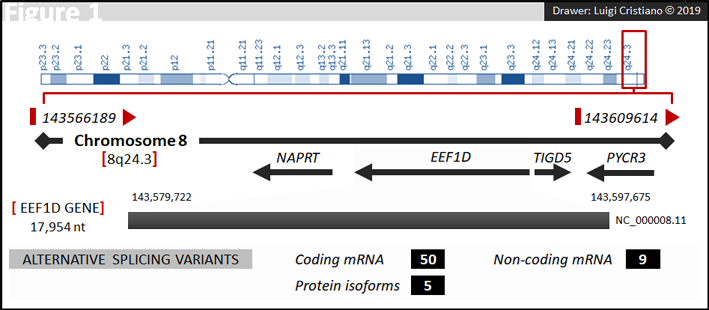
Description
Transcription
| Name | Variant | RefSeq (1) | Transcript ID | Exons | Type | Lenght (bp) | Isoform | Alias | RefSeq (2) | Lenght (aa) | MW (kDa) | pI |
| EEF1D-204 | Var.3 | NM_001130053 | ENST00000423316.6 | 9 | protein coding | 2356 | Isoform 1 | - | NP_001123525 | 647 | 71.42 | 6.02 |
| EEF1D-205 (EEF1D-001) | Var.1 | NM_032378 | ENST00000442189.6 | 10 | protein coding | 2473 | Isoform 1 | - | NP_115754 | 647 | 71.42 | 6.02 |
| EEF1D-201 | Var.6 | NM_001130057 | ENST00000317198.10 | 8 | protein coding | 1458 | Isoform 2 | - | NP_001123529 | 281 | 31.12 | 4.90 |
| EEF1D-203 | Var.5 | NM_001130055 | ENST00000419152.6 | 9 | protein coding | 1427 | Isoform 2 | - | NP_001123527 | 281 | 31.12 | 4.90 |
| EEF1D-225 (EEF1D-006) | - | - | ENST00000529272.5 | 8 | protein coding | 1311 | - | - | - | 281 | - | - |
| EEF1D-202 (EEF1D-002) | Var.9 | NM_001289950 | ENST00000395119.7 | 8 | protein coding | 1428 | Isoform 2 | - | NP_001276879 | 281 | 31.12 | 4.90 |
| Var.2 | NM_001960 | 1251 | Isoform 2 | - | NP_001951 | 281 | 31.12 | 4.90 | ||||
| EEF1D-207 (EEF1D-053) | - | - | ENST00000524624.5 | 8 | protein coding | 1084 | - | - | - | 257 | - | - |
| EEF1D-218 (EEF1D-005) | Var.8 | NM_001195203 | ENST00000526838.5 | 8 | protein coding | 1194 | Isoform 5 | - | NP_001182132 | 262 | 29.07 | 4.91 |
| EEF1D-223 (EEF1D-004) | Var.7 | NM_001130056 | ENST00000528610.5 | 7 | protein coding | 1179 | Isoform 4 | - | NP_001123528 | 257 | 28.56 | 4.81 |
| Var.10 | NM_001317743 | 1176 | Isoform 4 | - | NP_001304672 | 257 | 28.56 | 4.81 | ||||
| Var.11 | NM_001330646 | 1386 | Isoform 4 | - | NP_001317575 | 257 | 28.56 | 4.81 | ||||
| EEF1D-246 (EEF1D-007) | - | - | ENST00000532741.5 | 8 | protein coding | 2387 | - | - | - | 697 | - | - |
| EEF1D-256 | - | - | ENST00000618139.2 | 10 | protein coding | 2238 | - | - | - | 631 | - | - |
| EEF1D-232 (EEF1D-017) | - | - | ENST00000530445.5 | 5 | protein coding | 1217 | - | - | - | 166 | - | - |
| EEF1D-253 (EEF1D-048) | - | - | ENST00000534380.5 | 8 | protein coding | 1001 | - | - | - | 261 | - | - |
| EEF1D-216 (EEF1D-040) | - | - | ENST00000526710.1 | 1 | protein coding | 996 | - | - | - | 300 | - | - |
| EEF1D-239 (EEF1D-034) | - | - | ENST00000531670.5 | 3 | protein coding | 926 | - | - | - | 179 | - | - |
| EEF1D-230 (EEF1D-032) | - | - | ENST00000530191.5 | 5 | protein coding | 853 | - | - | - | 204 | - | - |
| EEF1D-247 (EEF1D-047) | - | - | ENST00000533204.5 | 7 | protein coding | 842 | - | - | - | 204 | - | - |
| EEF1D-238 (EEF1D-020) | - | - | ENST00000531621.5 | 7 | protein coding | 840 | - | - | - | 238 | - | - |
| EEF1D-208 (EEF1D-037) | - | - | ENST00000524883.1 | 2 | protein coding | 828 | - | - | - | 180 | - | - |
| EEF1D-237 (EEF1D-035) | - | - | ENST00000531281.1 | 2 | protein coding | 813 | - | - | - | 257 | - | - |
| EEF1D-244 (EEF1D-033) | - | - | ENST00000532543.1 | 2 | protein coding | 791 | - | - | - | 39 | - | - |
| EEF1D-236 (EEF1D-046) | - | - | ENST00000531218.5 | 7 | protein coding | 787 | - | - | - | 198 | - | - |
| EEF1D-215 (EEF1D-039) | - | - | ENST00000526340.5 | 6 | protein coding | 770 | - | - | - | 63 | - | - |
| EEF1D-245 (EEF1D-042) | - | - | ENST00000532596.5 | 3 | protein coding | 761 | - | - | - | 190 | - | - |
| EEF1D-248 (EEF1D-045) | - | - | ENST00000533494.5 | 7 | protein coding | 758 | - | - | - | 168 | - | - |
| EEF1D-234 (EEF1D-011) | - | - | ENST00000530616.5 | 6 | protein coding | 749 | - | - | - | 210 | - | - |
| EEF1D-249 (EEF1D-052) | - | - | ENST00000533749.5 | 5 | protein coding | 633 | - | - | - | 137 | - | - |
| EEF1D-252 (EEF1D-049) | - | - | ENST00000534377.5 | 5 | protein coding | 617 | - | - | - | 187 | - | - |
| EEF1D-233 (EEF1D-027) | - | - | ENST00000530545.5 | 3 | protein coding | 616 | - | - | - | 84 | - | - |
| EEF1D-241 (EEF1D-024) | - | - | ENST00000531931.1 | 2 | protein coding | 614 | - | - | - | 35 | - | - |
| EEF1D-210 (EEF1D-050) | - | - | ENST00000525223.1 | 2 | protein coding | 610 | - | - | - | 39 | - | - |
| EEF1D-228 (EEF1D-043) | - | - | ENST00000529832.5 | 3 | protein coding | 600 | - | - | - | 146 | - | - |
| EEF1D-231 (EEF1D-041) | - | - | ENST00000530306.5 | 3 | protein coding | 583 | - | - | - | 129 | - | - |
| EEF1D-211 (EEF1D-031) | - | - | ENST00000525261.5 | 3 | protein coding | 559 | - | - | - | 81 | - | - |
| EEF1D-220 (EEF1D-026) | - | - | ENST00000528303.5 | 4 | protein coding | 558 | - | - | - | 21 | - | - |
| EEF1D-255 (EEF1D-029) | - | - | ENST00000534804.5 | 4 | protein coding | 555 | - | - | - | 68 | - | - |
| EEF1D-222 (EEF1D-036) | - | - | ENST00000528519.1 | 2 | protein coding | 553 | - | - | - | 157 | - | - |
| EEF1D-254 (EEF1D-030) | - | - | ENST00000534475.5 | 4 | protein coding | 538 | - | - | - | 31 | - | - |
| EEF1D-214 (EEF1D-038) | - | - | ENST00000526135.5 | 3 | protein coding | 535 | - | - | - | 53 | - | - |
| EEF1D-229 (EEF1D-014) | - | - | ENST00000530109.5 | 3 | protein coding | 533 | - | - | - | 156 | - | - |
| EEF1D-242 (EEF1D-021) | - | - | ENST00000531953.5 | 3 | protein coding | 506 | - | - | - | 49 | - | - |
| EEF1D-226 (EEF1D-019) | - | - | ENST00000529516.5 | 6 | protein coding | 473 | - | - | - | 139 | - | - |
| EEF1D-227 (EEF1D-015) | - | - | ENST00000529576.5 | 3 | protein coding | 424 | - | - | - | 119 | - | - |
| EEF1D-243 (EEF1D-016) | - | - | ENST00000532400.1 | 4 | protein coding | 419 | - | - | - | 99 | - | - |
| EEF1D-213 (EEF1D-022) | - | - | ENST00000526133.1 | 2 | protein coding | 367 | - | - | - | 36 | - | - |
| EEF1D-209 (EEF1D-044) | - | - | ENST00000524900.1 | 3 | protein coding | 343 | - | - | - | 62 | - | - |
| EEF1D-221 (EEF1D-013) | - | - | ENST00000528382.1 | 3 | protein coding | 308 | - | - | - | 36 | - | - |
| EEF1D-206 | - | - | ENST00000524397.5 | 8 | nonsense md | 957 | - | - | - | - | - | - |
| EEF1D-224 | - | - | ENST00000529007.5 | 8 | nonsense md | 861 | - | - | - | - | - | - |
| EEF1D-250 | - | - | ENST00000533833.5 | 7 | nonsense md | 831 | - | - | - | - | - | - |
| EEF1D-240 | - | - | ENST00000531770.5 | 4 | processed transcript | 589 | - | - | - | - | - | - |
| EEF1D-219 | - | - | ENST00000527741.5 | 4 | retained intron | 3718 | - | - | - | - | - | - |
| EEF1D-217 | - | - | ENST00000526786.5 | 6 | retained intron | 1246 | - | - | - | - | - | - |
| EEF1D-212 | - | - | ENST00000525695.5 | 3 | retained intron | 907 | - | - | - | - | - | - |
| EEF1D-251 | - | - | ENST00000534232.5 | 6 | retained intron | 817 | - | - | - | - | - | - |
| EEF1D-235 | - | - | ENST00000530848.5 | 5 | retained intron | 688 | - | - | - | - | - | - |
Table.1 Alterative splicing variants and isoforms of EEF1D. (reworked from http://grch37.ensembl.org; ttps://www.ncbi.nlm.nih.gov; https://web.expasy.org/protparam/; https://www.uniprot.org) ncRNA = non-coding RNA; nonsense md = nonsense mediated decay; (?) = undetermined; MW = molecular weight; pI = theoretical pI
Pseudogene
Little more characterized are EEF1DP3 and EEF1DP4 pseudogenes respect the others. What is known is that these two pseudogenes are probably involved in human cancers or in other diseases. Especially EEF1DP3 was found in some genomic rearrangements with the formation of hybrid genes among which the most studied is EEF1DP3/FRY (Kim et al., 2015).
| Gene | Gene name | Gene ID | RefSeq | Locus | Location | Start | End | Lenght (nt) | Main diseases/td> | Reference |
| EEF1DP1 | EEF1D pseudogene 1 | 126037 | NC_000019.10 | Chromosome 19 | 19p13.12 | 14070325 | 14071304 | 980 | Large B-cell lymphoma (?) | - |
| Myeloid leukemia (?) | - | |||||||||
| EEF1DP2 | EEF1D pseudogene 2 | 442429 | NC_000009.12 | Chromosome 9 | 9q22.31 | 92836766 | 92837741 | 976 | Melanoma (?) | - |
| EEF1DP3 | EEF1D pseudogene 3 | 196549 | NC_000013.11 | Chromosome 13 | 13q13.1 | 31846783 | 31959584 | 112802 | Prostate carcinoma | Erho et al., 2012 |
| Breast carcinoma | Kim et al., 2015 | |||||||||
| Ankylosing spondylitis | Shahba et al., 2018 | |||||||||
| Melanoma (?) | - | |||||||||
| Non-small cell lung cancer (?) | - | |||||||||
| Multiple sclerosis (?) | - | |||||||||
| Large B-cell lymphoma cell lines (SUDHL4, Toledo, OCI-Ly3)(?) | - | |||||||||
| Lung adenocarcinoma (?) | - | |||||||||
| Epidermolysis Bullosa Simplex (?) | ||||||||||
| EEF1DP4 | EEF1D pseudogene 4 | 442325 | NC_000007.14 | Chromosome 7 | 7q11.21 | 64862951 | 64864450 | 1500 | Glioma (?) | - |
| Breast carcinoma (?) | - | |||||||||
| Primary myelofibrosis (?) | - | |||||||||
| Osteosarcoma (?) | - | |||||||||
| EEF1DP5 | EEF1D pseudogene 5 | 442258 | NC_000006.12 | Chromosome 6 | 6q22.33 | 128580065 | 128580952 | 888 | Breast carcinoma | Stefansson et al., 2011 |
| EEF1DP6 | EEF1D pseudogene 6 | 644357 | NC_000001.11 | Chromosome 1 | 1p36.32 | 4175463 | 4175899 | 437 | - | - |
| EEF1DP7 | EEF1D pseudogene 7 | 100422656 | NC_000017.11 | Chromosome 17 | 17q23.3 | 63636601 | 63637110 | 510 | - | - |
| EEF1DP8 | EEF1D pseudogene 8 | 283236 | NC_000011.10 | Chromosome 11 | 11q12.3 | 62169219 | 62169827 | 609 | - | - |
Table.2 EEF1D pseudogenes (reworked from https://www.ncbi.nlm.nih.gov/gene/1937; https://www.targetvalidation.org; https://www.ncbi.nlm.nih.gov/geoprofiles/) [ (?) ] uncertain; [ - ] no reference
Proteins
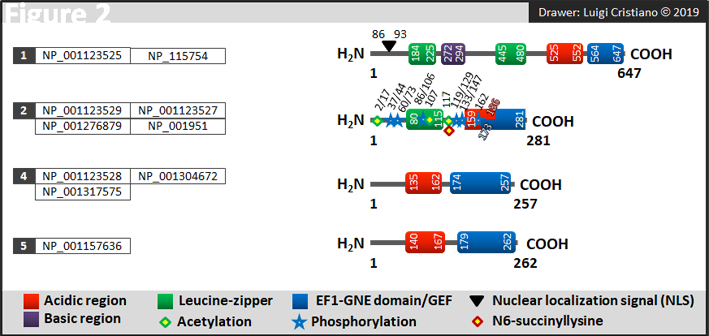
Description
There are known four isoforms produced by alternative splicing: the isoform 1 (RefSeq NP_001123525 or NP_115754), also called eEF1DL or eEF1Bdelta;L, is the longest isoform that also has been chosen as the canonical sequence and it is formed by 647 residues. It is found in the eEF1H protein complex and it shows many domains: in the carboxyl half terminal there are an acidic region and an EF-1 guanine nucleotide exchange domain (EF1-GNE domain / GEF) while in the amino half terminal there are a highly-conserved leucine-rich zipper-like region (aa 184-225), a basic region (aa 272-294) and a nuclear localization signal (NLS)(Kaitsuka et al., 2015; Kaitsuka et al., 2011; Sanders et al., 1993). The basic region seems to be involved in DNA binding while the leucine zipper region may be a protein interaction domain. However, the exact functional role of these regions is unclear (Kaitsuka et al., 2015). The N-terminal domain of eEF1D interacts with the NT-eEF1G domain of eEF1G (Cao et al., 2014; Mansilla et al., 2002; Janssen et al., 1994) but there are no interactions between eEF1D and eEF1B (Sheu and Traugh, 1997), although different interactional models were proposed (Le Sourd et al., 2006; Jiang et al.,2005; Sheu and Traugh, 1999; Minella et al., 1998).
The long isoform of eEF1D (eEF1DL) interacts with HSF1 and NFE2L2 (NRF2) proteins into the nucleus (Kaitsuka et al., 2011; https://www.genecards.org) and regulates induction of heat-shock-responsive genes, such as HSPA6, CRYAB, DNAJB1 and HO-1, through the association with the heat shock transcription factors and with a direct DNA-binding at heat shock promoter elements (HSE) (Kaitsuka et al., 2015; Kaitsuka et al., 2011; https://www.uniprot.org/uniprot/P29692).
The isoform 2, with 281 amino acids, is smaller and, as the isoform 1, it is a multi-domain protein which consists of three main domains: from the amino to carboxyl half terminal there are an N-terminal leucine zipper domain, a C-terminal acidic region and a C-terminal domain that shows GDP/GTP exchange activity (GEF)( Kaitsuka et al., 2015; Kaitsuka et al., 2011). The roles of the isoform 4 and isoform 5 are still undefined.
All isoforms have many interaction surface points with the eukaryotic translation elongation factor 1 alpha (eEF1A) protein (https://www.ncbi.nlm.nih.gov/protein/ NP_001123525) and interact with the valyl -tRNA synthetase (Val-RS)(Le Sourd et al., 2006; Bec et al., 1994).
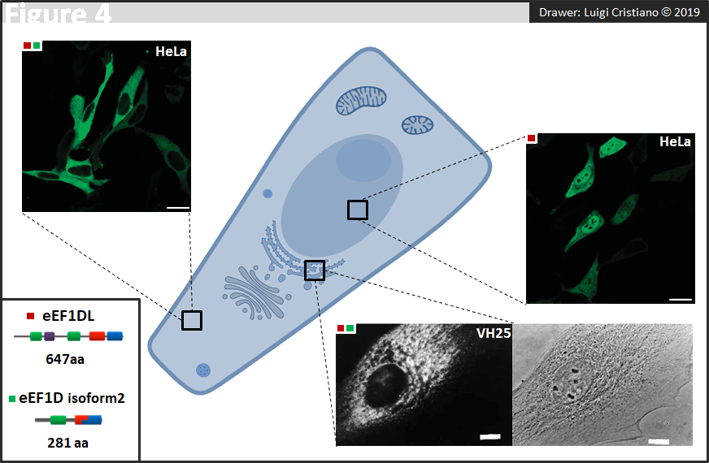
EEF1D interacts with SIAH1, an E3 ubiquitin protein ligase involved in the regulation of cell cycle, tumorigenesis and also in the initiation of neurodegenerative diseases. Is reported that the overexpression of EEF1D is linked with an increase in SIAH-1 levels due to the inhibition of its autoubiquitination and thus of its degradation (Wu et al., 2011). In addition, EEF1D is an interaction partner of kinectin that function as the membrane anchor for EEF1D on the endoplasmic reticulum (Ong et al., 2003)
Post-translational modifications. Some post-translational modifications are observed, such as phosphorylation, acetylation and succinylation (https://www.ncbi.nlm.nih.gov). eEF1D can be hyperphosphorylated and the phosphorylations are made by some protein kinases, including casein kinase 2 (Gyenis et al., 2011; Browne and Proud, 2002) and cyclin-dependent kinase 1 ( CDK1) (Kawaguchi et al., 2003). In particular, CDK1 phosphorylates EEF1D at Ser-133 (Kawaguchi et al., 2003).
In addition, eEF1D can be found hyperphosphorylated by viral protein kinases after alpha-, beta-, and gammaherpesviruses infections (Kawaguchi et al., 2003).
Expression
Localisation
Function
eEF1D shows canonical functions and multiple non-canonical roles (moonlighting roles) inside the cell.
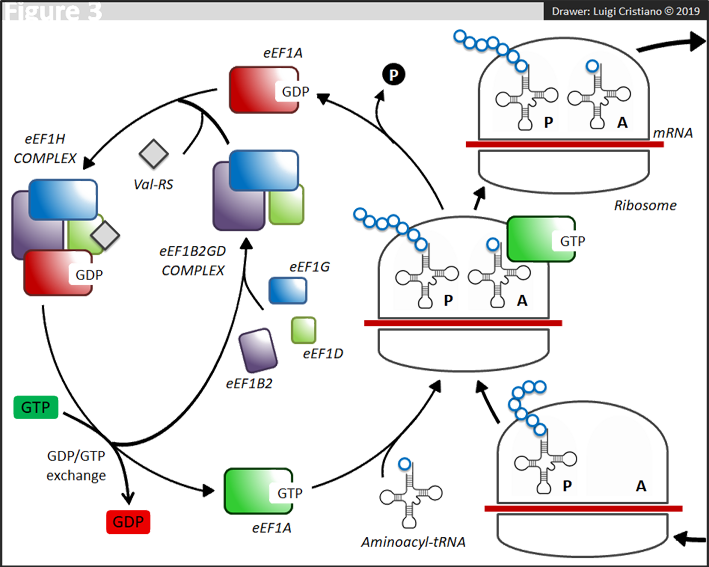
Canonical function: eEF1D binds to eEF1B and eEF1G in the eEF1BDG macromolecular complex and contributes to catalyze the exchange of GDP/GTP for eEF1A during the translation elongation cycle.
Non-canonical roles: eEF1D seems to have other functions inside the cell besides its involvement in translation. At least two other non-canonical roles have been detected, i.e. its role as a transcriptional factor and its involvement in the stress response. These roles are closely connected to each other. In fact, it was demonstrated that heat shock induces the splicing-dependent expression change from the short eEF1D isoform (isoform 2) to the eEF1DL long isoform (isoform 1)(Kaitsuka et al., 2015). The silencing of eEF1DL inhibits the stress responses suggesting its role in the modulation of stress response in the cell (Hensen et al., 2013). In fact, EEF1D is a heat shock transcription factor that can bind to the heat shock element (HSE) in the promoter of the HSPA6 and HO-1 genes and activate their transcription (Kaitsuka et al., 2011).
Homology
| Organism | Species | Symbol | DNA Identity (%) | PROT Identity (%) |
| Human | H.sapiens | EEF1D | 100 | 100 |
| Chimpanzee | P.troglodytes | EEF1D | 99.6 | 99.3 |
| Macaco | M.mulatta | EEF1D | 95.7 | 95.7 |
| Wolf | C.lupus | LOC475115 | 85.2 | 85.5 |
| Cattle | B.taurus | EEF1D | 92.1 | 88.3 |
| Mouse | M.musculus | Eef1d | 85.2 | 84.3 |
| Rat | R.norvegicus | Eef1d | 86.8 | 84.5 |
| Chicken | G.gallus | EEF1D | 57.7 | 61.6 |
| Xenopus tropicalis | X.tropicalis | eef1d | 67.8 | 69.7 |
| Zebrafish | D.rerio | eef1db | 65.8 | 66.3 |
| Fruit fly | D.melanogaster | eEF1delta | 55.6 | 57.0 |
| Mosquito (Anopheles) | A.gambiae | AgaP_AGAP004235 | 48.5 | 57.0 |
| Caenorhabditis | C.elegans | eef-1B.2 | 53.8 | 57.6 |
Table.3 EEF1D homology (reworked from ps://www.ncbi.nlm.nih.gov/homologene)
Mutations
Note
Implicated in
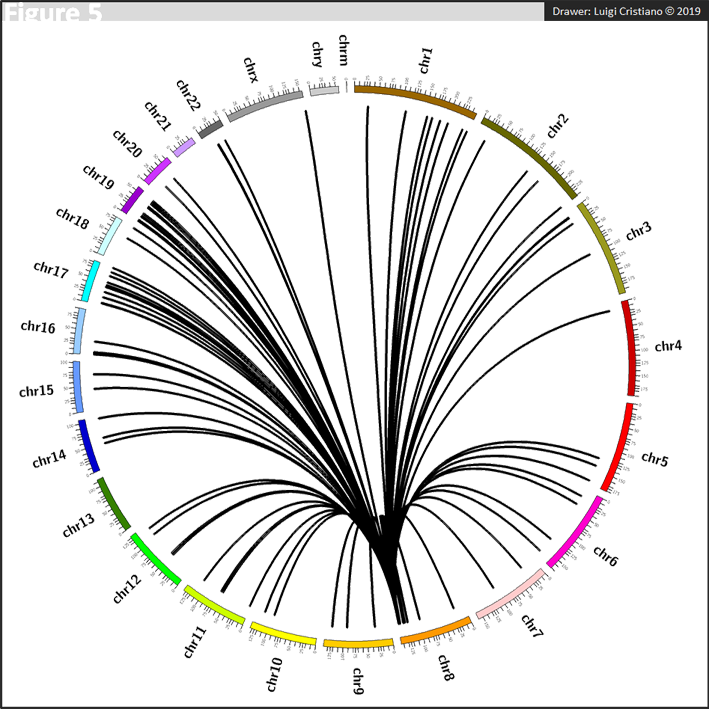
Some authors have found an EEF1D downregulation in ER+/ER- cancer cell lines and in human breast cancer samples when high levels of bone morphogenetic protein-6 ( BMP6) are expressed (Yang et al., 2007). This seems to be linked with the prevention of eEF1D-induced breast cancer metastasis. In fact, EEF1D is a candidate protein marker of human brain metastasis in primary breast tumors (Sanz-Pamplona et al., 2011; vant Veer et al., 2002). In addition, some fusion genes and genomic translocations were reported (https://fusionhub.persistent.co.in/home.html).
In addition, EEF1D was found up-regulated in human laryngeal cancer (Peyvandi et al., 2018) and was found an intrachromosomal translocation with the formation of a chimeric fusion gene between EEF1D and NAPRT1 genes in laryngeal cancer (Tao et al., 2018).
The roles of all these genomic alterations are unknown.
In particular, the t(3;8)(p25;q24) TTLL3/EEF1D brings to the formation of a transcript composed by the exons 1 to 3 of "tubulin tyrosine ligase like 3" ( TTLL3) joined with exons 2 to 7 of EEF1D (http://203.255.191.229:8080/chimerdbv31/chimerseq_link.cdb?gene_pair=TTLL3_EEF1D), while the t(8;8)(q24;q24) ZC3H3/EEF1D brings to the formation of a transcript composed by the exon 1 of "zinc finger CCCH-type containing 3" ( ZC3H3) joined with exons 4 to 7 of EEF1D (http://203.255.191.229:8080/chimerdbv31/chimerseq_link.cdb?gene_pair=ZC3H3_EEF1D). Despite what has just been said, these genomic alterations are still poorly understood.
Article Bibliography
| Pubmed ID | Last Year | Title | Authors |
|---|---|---|---|
| 27856756 | 2016 | Global analysis of somatic structural genomic alterations and their impact on gene expression in diverse human cancers. | Alaei-Mahabadi B et al |
| 26837576 | 2016 | Recurrent chimeric fusion RNAs in non-cancer tissues and cells. | Babiceanu M et al |
| 8294461 | 1994 | Reconstitution in vitro of the valyl-tRNA synthetase-elongation factor (EF) 1 beta gamma delta complex. Essential roles of the NH2-terminal extension of valyl-tRNA synthetase and of the EF-1 delta subunit in complex formation. | Bec G et al |
| 12423334 | 2002 | Regulation of peptide-chain elongation in mammalian cells. | Browne GJ et al |
| 25436608 | 2014 | Characterisation of translation elongation factor eEF1B subunit expression in mammalian cells and tissues and co-localisation with eEF1A2. | Cao Y et al |
| 29510727 | 2018 | EEF1D overexpression promotes osteosarcoma cell proliferation by facilitating Akt-mTOR and Akt-bad signaling. | Cheng DD et al |
| 16968546 | 2006 | Medulloblastoma outcome is adversely associated with overexpression of EEF1D, RPL30, and RPS20 on the long arm of chromosome 8. | De Bortoli M et al |
| 22956952 | 2012 | Transcriptome-wide detection of differentially expressed coding and non-coding transcripts and their clinical significance in prostate cancer. | Erho N et al |
| 26823560 | 2016 | EEF1D modulates proliferation and epithelial-mesenchymal transition in oral squamous cell carcinoma. | Flores IL et al |
| 21936567 | 2011 | Unbiased functional proteomics strategy for protein kinase inhibitor validation and identification of bona fide protein kinase substrates: application to identification of EEF1D as a substrate for CK2. | Gyenis L et al |
| 19602232 | 2009 | Identification of potential therapeutic targets in human head & neck squamous cell carcinoma. | Han J et al |
| 29342219 | 2018 | The expression profile and prognostic significance of eukaryotic translation elongation factors in different cancers. | Hassan MK et al |
| 29337901 | 2018 | Transcriptional-Readthrough RNAs Reflect the Phenomenon of "A Gene Contains Gene(s)" or "Gene(s) within a Gene" in the Human Genome, and Thus Are Not Chimeric RNAs. | He Y et al |
| 23321918 | 2013 | A delayed antioxidant response in heat-stressed cells expressing a non-DNA binding HSF1 mutant. | Hensen SM et al |
| 12721631 | 2003 | An expressed pseudogene regulates the messenger-RNA stability of its homologous coding gene. | Hirotsune S et al |
| 7989307 | 1994 | The subunit structure of elongation factor 1 from Artemia. Why two alpha-chains in this complex? | Janssen GM et al |
| 16229838 | 2005 | Three-dimensional reconstruction of the valyl-tRNA synthetase/elongation factor-1H complex and localization of the delta subunit. | Jiang S et al |
| 11711542 | 2002 | Oncogenic potential of mouse translation elongation factor-1 delta, a novel cadmium-responsive proto-oncogene. | Joseph P et al |
| 15224349 | 2004 | Expression profile of eukaryotic translation factors in human cancer tissues and cell lines. | Joseph P et al |
| 27112211 | 2016 | Integrating text mining, data mining, and network analysis for identifying genetic breast cancer trends. | Jurca G et al |
| 21597468 | 2011 | Transformation of eEF1Bδ into heat-shock response transcription factor by alternative splicing. | Kaitsuka T et al |
| 12551973 | 2003 | Conserved protein kinases encoded by herpesviruses and cellular protein kinase cdc2 target the same phosphorylation site in eukaryotic elongation factor 1delta. | Kawaguchi Y et al |
| 19242932 | 2009 | Proteomic analysis of multidrug-resistance mechanisms in adriamycin-resistant variants of DLKP, a squamous lung cancer cell line. | Keenan J et al |
| 26227178 | 2015 | Recurrent fusion transcripts detected by whole-transcriptome sequencing of 120 primary breast cancer samples. | Kim J et al |
| 25485619 | 2015 | A comprehensive transcriptional portrait of human cancer cell lines. | Klijn C et al |
| 16624425 | 2006 | eEF1B: At the dawn of the 21st century. | Le Sourd F et al |
| 12210501 | 2002 | Blocking the translation elongation factor-1 delta with its antisense mRNA results in a significant reversal of its oncogenic potential. | Lei YX et al |
| 26339402 | 2015 | Papillary renal cell carcinoma: a clinicopathological and whole-genome exon sequencing study. | Liu K et al |
| 11985494 | 2002 | Mapping the human translation elongation factor eEF1H complex using the yeast two-hybrid system. | Mansilla F et al |
| 30370994 | 2019 | The role of translation elongation factor eEF1 subunits in neurodevelopmental disorders. | McLachlan F et al |
| 23125841 | 2012 | Characterization of staufen1 ribonucleoproteins by mass spectrometry and biochemical analyses reveal the presence of diverse host proteins associated with human immunodeficiency virus type 1. | Milev MP et al |
| 9798784 | 1998 | Multiple phosphorylation sites and quaternary organization of guanine-nucleotide exchange complex of elongation factor-1 (EF-1betagammadelta/ValRS) control the various functions of EF-1alpha. | Minella O et al |
| 15199388 | 2004 | Clinical significance of elongation factor-1 delta mRNA expression in oesophageal carcinoma. | Ogawa K et al |
| 12773547 | 2003 | Kinectin anchors the translation elongation factor-1 delta to the endoplasmic reticulum. | Ong LL et al |
| 29755572 | 2018 | Introducing Potential Key Proteins and Pathways in Human Laryngeal Cancer: A System Biology Approach. | Peyvandi H et al |
| 18836233 | 2008 | Proteomics of chondrocytes with special reference to phosphorylation changes of proteins in stretched human chondrosarcoma cells. | Piltti J et al |
| 28097321 | 2017 | Diagnostic Yield and Novel Candidate Genes by Exome Sequencing in 152 Consanguineous Families With Neurodevelopmental Disorders. | Reuter MS et al |
| 8743958 | 1996 | Immunofluorescence studies of human fibroblasts demonstrate the presence of the complex of elongation factor-1 beta gamma delta in the endoplasmic reticulum. | Sanders J et al |
| 8334168 | 1993 | The human leucine zipper-containing guanine-nucleotide exchange protein elongation factor-1 delta. | Sanders J et al |
| 21708117 | 2011 | Expression of endoplasmic reticulum stress proteins is a candidate marker of brain metastasis in both ErbB-2+ and ErbB-2- primary breast tumors. | Sanz-Pamplona R et al |
| 24241507 | 2014 | Rare variants in LRRK1 and Parkinson's disease. | Schulte EC et al |
| 23004678 | 2013 | Comparative proteomic study for profiling differentially expressed proteins between Chinese left- and right-sided colon cancers. | Shen H et al |
| 9407120 | 1997 | Recombinant subunits of mammalian elongation factor 1 expressed in Escherichia coli. Subunit interactions, elongation activity, and phosphorylation by protein kinase CKII. | Sheu GT et al |
| 10953316 | 2000 | Enhanced expression of translation factor mRNAs in hepatocellular carcinoma. | Shuda M et al |
| 11001322 | 2000 | Identification of novel proteins associated with the development of chemoresistance in malignant melanoma using two-dimensional electrophoresis. | Sinha P et al |
| 21958427 | 2011 | Genomic and phenotypic analysis of BRCA2 mutated breast cancers reveals co-occurring changes linked to progression. | Stefansson OA et al |
| 23726144 | 2013 | Integrative analysis of copy number alteration and gene expression profiling in ovarian clear cell adenocarcinoma. | Sung CO et al |
| 29499655 | 2018 | Identification of novel enriched recurrent chimeric COL7A1-UCN2 in human laryngeal cancer samples using deep sequencing. | Tao Y et al |
| 30787422 | 2019 | Biallelic loss of EEF1D function links heat shock response pathway to autosomal recessive intellectual disability. | Ugur Iseri SA et al |
| 20964681 | 2011 | Unbalanced expression of the translation complex eEF1 subunits in human cardioesophageal carcinoma. | Veremieva M et al |
| 19997636 | 2009 | The role of copy number variation in susceptibility to amyotrophic lateral sclerosis: genome-wide association study and comparison with published loci. | Wain LV et al |
| 22927308 | 2012 | Poly-gene fusion transcripts and chromothripsis in prostate cancer. | Wu C et al |
| 21633900 | 2011 | Eukaryotic translation elongation factor 1 delta inhibits the ubiquitin ligase activity of SIAH-1. | Wu H et al |
| 17997862 | 2007 | BMP-6 promotes E-cadherin expression through repressing deltaEF1 in breast cancer cells. | Yang S et al |
| 25500544 | 2015 | The landscape and therapeutic relevance of cancer-associated transcript fusions. | Yoshihara K et al |
| 26735889 | 2016 | Identification of ovarian cancer subtype-specific network modules and candidate drivers through an integrative genomics approach. | Zhang D et al |
| 18676356 | 2008 | Biological background of pediatric medulloblastoma and ependymoma: a review from a translational research perspective. | de Bont JM et al |
| 11823860 | 2002 | Gene expression profiling predicts clinical outcome of breast cancer. | van 't Veer LJ et al |
Other Information
Locus ID:
NCBI: 1936
MIM: 130592
HGNC: 3211
Ensembl: ENSG00000104529
Variants:
dbSNP: 1936
ClinVar: 1936
TCGA: ENSG00000104529
COSMIC: EEF1D
RNA/Proteins
Expression (GTEx)
Pathways
Protein levels (Protein atlas)
References
| Pubmed ID | Year | Title | Citations |
|---|---|---|---|
| 38332912 | 2023 | Autoantibodies against eukaryotic translation elongation factor 1 delta in two patients with autoimmune cerebellar ataxia. | 0 |
| 38332912 | 2023 | Autoantibodies against eukaryotic translation elongation factor 1 delta in two patients with autoimmune cerebellar ataxia. | 0 |
| 33029523 | 2020 | EEF1D Promotes Glioma Proliferation, Migration, and Invasion through EMT and PI3K/Akt Pathway. | 10 |
| 33087462 | 2020 | Eukaryotic Translation Elongation Factor 1 Delta Inhibits the Nuclear Import of the Nucleoprotein and PA-PB1 Heterodimer of Influenza A Virus. | 16 |
| 33029523 | 2020 | EEF1D Promotes Glioma Proliferation, Migration, and Invasion through EMT and PI3K/Akt Pathway. | 10 |
| 33087462 | 2020 | Eukaryotic Translation Elongation Factor 1 Delta Inhibits the Nuclear Import of the Nucleoprotein and PA-PB1 Heterodimer of Influenza A Virus. | 16 |
| 30787422 | 2019 | Biallelic loss of EEF1D function links heat shock response pathway to autosomal recessive intellectual disability. | 6 |
| 30787422 | 2019 | Biallelic loss of EEF1D function links heat shock response pathway to autosomal recessive intellectual disability. | 6 |
| 29510727 | 2018 | EEF1D overexpression promotes osteosarcoma cell proliferation by facilitating Akt-mTOR and Akt-bad signaling. | 19 |
| 29510727 | 2018 | EEF1D overexpression promotes osteosarcoma cell proliferation by facilitating Akt-mTOR and Akt-bad signaling. | 19 |
| 26823560 | 2016 | EEF1D modulates proliferation and epithelial-mesenchymal transition in oral squamous cell carcinoma. | 19 |
| 26823560 | 2016 | EEF1D modulates proliferation and epithelial-mesenchymal transition in oral squamous cell carcinoma. | 19 |
| 21633900 | 2011 | Eukaryotic translation elongation factor 1 delta inhibits the ubiquitin ligase activity of SIAH-1. | 9 |
| 21936567 | 2011 | Unbiased functional proteomics strategy for protein kinase inhibitor validation and identification of bona fide protein kinase substrates: application to identification of EEF1D as a substrate for CK2. | 18 |
| 21633900 | 2011 | Eukaryotic translation elongation factor 1 delta inhibits the ubiquitin ligase activity of SIAH-1. | 9 |
Citation
Luigi Cristiano, MSc
EEF1D (eukaryotic translation elongation factor 1 delta)
Atlas Genet Cytogenet Oncol Haematol. 2019-05-01
Online version: http://atlasgeneticsoncology.org/gene/43240/eef1d-(eukaryotic-translation-elongation-factor-1-delta)
