MIR200C (microRNA 200c)
2014-07-01 Merve Mutlu , Özge Saatçi , Umar Raza , Erol Eyüpoglu , Emre Yurdusev , Özgür Sahin AffiliationAbstract
MicroRNAs (miRNAs) are 20-22 nucleotide long small non-coding RNAs and have a function of regulation of gene postranscriptionally via targeting mainly the 3UTRs of the genes. miR-200c is a member of miR-200 family with 4 other family members (miR-200a, miR-200b, miR-429 and miR-141) located in chromosome 12 (12q13.31) together with miR-141. miRNAs can be classified as oncomiRs and tumor suppressors according to their target gene and which tissue they are expressed. miR-200c has been shown to be a tumor suppressor in various cancer types. miR-200c has been initially shown to regulate epithelial-mesenchymal transition (EMT) by downregulating ZEB1\/2 and upregulating E-cadherin, known epithelial marker. Afterwards, it has been demonstrated that miR-200c also have other important functions in proliferation, cell cycle control, apoptosis, anoikis, invasion, and metastasis of cancer and also in other diseases. Furthermore, miR-200c is a well-established prognostic and diagnostic marker in different cancer types.
DNA/RNA
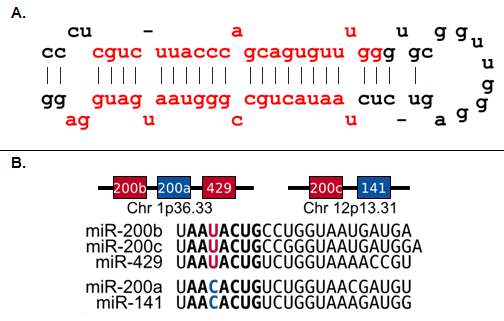
Description
Transcription
hsa-mir-200c (precursor miRNA)
Accession: MI0000650
Length: 68 bp
Sequence: 5-CCCUCGUCUUACCCAGCAGUGUUUGGGUGCGGUUGGGAGUCUCUAAUACUGCCGGGUAAUGAUGGAGG-3
hsa-miR-200c* (-5p) (mature miRNA)
Accession: MIMAT0004657
Length: 23
Sequence: 5-CGUCUUACCCAGCAGUGUUUGG-3
hsa-miR-200c-3p (mature miRNA)
Accession: MIMAT0000617
Length: 23
Sequence: 5-UAAUACUGCCGGGUAAUGAUGGA-3
Pseudogene
Proteins
Note
Mutations
Note
Implicated in
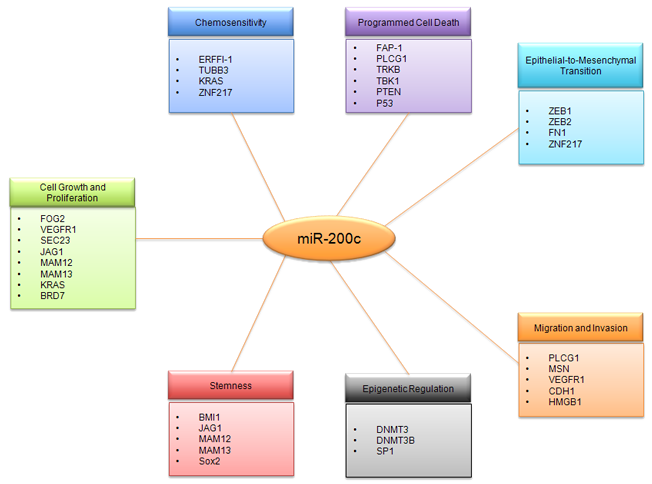
Mechanistically, miR-200c has been implicated in the regulation of epithelial-to-mesenchymal transition (EMT) in bladder cancer cells. A comparison of nine bladder cancer cell lines revealed a correlation between high expression of miR-200c (and fellow miR-200 family member miR-200b) and epithelial phenotype (Adam et al., 2009). The same study also reported that miR-200c expression reverses resistance to anti-EGFR therapy in bladder cancer cell lines through targeting ERRFI-1.
However, contradictory to these results, in another study, it was found that the levels of miR-200c was upregulated in infiltrating BUC patients as compared with non-infiltrating BUC patients (Xie et al., 2012). These results were supported in a recent study, which again demonstrated that the levels of miR-200c were significantly higher in infiltrating carcinoma than in high grade bladder tumors (Lee et al., 2014).
miR-200c was found to be downregulated in breast cancer patients that are irresponsive to neoadjuvant chemotherapy than patients who respond (Chen et al., 2013c).
miRNA microarray analysis of 43 primary tumors (10 colon, 10 bladder, 13 breast and 10 lung cancers) and matched lymph node metastases revealed that miR-200c and other miR-200 family members are downregulated in metastases compared to primary tumors (Baffa et al., 2009). Moreover, miR-200c and other miR-200 family members were shown to be underexpressed in the aggressive claudin-low subtype of breast cancer, which displays an EMT-like gene expression signature (Herschkowitz et al., 2011). In contrast, luminal breast cancers, which have a more epithelial-like phenotype and a better clinical prognosis, express high levels of miR-200c (Bockmeyer et al., 2011). Besides ZEB family, miR-200c can modify metastasis by targeting HMGB1, ZNF217 and a truncated form of VEGFR-1 (Chang et al., 2014a; Bai et al., 2014b; Mezquita et al., 2014). miR-200c was also found to be an inhibitor of tumor progression and therapy resistance by targeting KRAS and ZNF217 (Bai et al., 2014b; Kopp et al., 2014).
Re-expression of the miR-200 family in aggressive breast cancer cells was shown to inhibit experimental lung metastasis (Ahmad et al., 2011) and decreased expression of it is associated with lymph node metastases in triple negative breast cancer (Berber et al., 2014). In contrast, another study reported that miR-200c is upregulated in breast cancer patients with lymph node metastasis (Wang et al., 2013). It was also shown to promote colonization of breast cancer cells (Dykxhoorn et al., 2009). The level of miR-200c was also found to be high in patients with various cancers including breast cancer that develop poly-metastases and it was reasoned that miR-200c is aiding colonization in the late stages of metastasis by reverting EMT (Lussier et al., 2011). In in vitro assays, miR-200c suppresses migration and invasion of breast cancer cells through various mechanisms, including targeting of ZEB1/ZEB2, PLCG1, moesin and fibronectin (Korpal et al., 2008; Uhlmann et al., 2010; Howe et al., 2011; Gerhauser, 2013).
miR-200c also targets stem cell factors such as BMI1, and downregulation of miR-200c was shown to be characteristic of breast cancer stem cells (Shimono et al., 2009) and DNA methylation was found to be the cause of the repression in breast cancer stem cell like populations (Lim et al., 2013). A natural compound, resveratrol, is increasing the activity of Ago2 and as a result inhibiting breast cancer stem cell-like characteristics by increasing the activity of tumor suppressor miRNAs including miR-200c (Hagiwara et al., 2012).
Furthermore, miRNA microarray analysis revealed that miR-200c is downregulated in breast cancer cells with acquired resistance to cisplatin (Pogribny et al., 2010). It was also found to be downregulated in doxorubicin resistant MCF-7 and BT474 breast cancer cells (Chen et al., 2013c; Kopp et al., 2012). It was also associated with trastuzumab resistance, which was found to be reverse by upregulation of miR-200c through the blockage of TGF-B signaling (Bai et al., 2014b).
miR-200c is also associated with increase in radiosensitivity in breast cancer cells by inhibiting cell proliferation, and by increasing apoptosis and DNA double-strand breaks. TBK1 was found to be a direct target of miR-200c and its downregulation by miR-200c is partially responsible for increased apoptosis (Lin et al., 2013).
miR-429, a member of miR-200 family, was shown to be a prognostic marker in a hepatocellular carcinoma (HCC) tissue microarray study as it was upregulated and shown to promote liver tumor initiating cell properties by targeting Rb binding protein 4 (Li et al., 2014a).
Several studies have reported that miR-200c can repress invasion and metastasis of lung cancer cells. Firstly, low expression of miR-200c and other miR-200 family members was associated with increased metastatic potential in a syngeneic mouse model of lung adenocarcinoma, and re-expression of miR-200 family members in these cell lines prevented EMT and metastasis (Gibbons et al., 2009). Secondly, miR-200c was shown to be downregulated by promoter hypermethylation in invasive NSCLC cell lines, and re-expression of miR-200c reduced the invasive potential of these cell lines (Ceppi et al., 2010). Furthermore, microarray miRNA analysis of 43 primary tumors (10 colon, 10 bladder, 13 breast and 10 lung cancers) and matched lymph node metastases revealed that miR-200c and other miR-200 family members are downregulated in metastases compared to primary tumors (Baffa et al., 2009). Finally, low expression of miR-200c in 69 primary lung tumors was correlated with lymph node metastases (Ceppi et al., 2010).
Mechanistically, the Notch ligand Jagged2 was shown to suppress expression of miR-200 family members, resulting in induction of EMT and increased metastatic potential (Yang et al., 2011). Moreover, miR-200c and fellow miR-200 family member miR-200b target VEGFR, which also contributes to invasion and metastasis (Roybal et al., 2011).
It was demonstrated that miR-200c which is normally downregulated in lung cancer tissue, is upregulated by transfection in H460 cells resulted in higher levels of apoptotic cells in comparison with untransfected ones (Bai et al., 2014a). In addition, miR-200c enhanced the antitumor effect of reservatol (RESV). Drug sensitivity can be restored in EMT driven erlotinib (EGFR inhibitor) resistant NSCLC by using a single agent, silibinin, which fully reverses the high miR-21/low miR-200c signature and represses mesenchymal markers SNAIL, ZEB and N-Cadherin (Cufí et al., 2013). Moreover, VEGF family is an important regulator of angiogenesis and VEGFR2 has been identified as direct target of miR-200c. Ectopic miR-200c expression radio-sensitized the A549 cells by VEGF-VEGFR2 pathway leading to inhibition of its downstream pro-survival signaling and angiogenesis (Shi et al., 2013). Finally, acquired resistance to EGFR inhibitors in lung cancer cells is found to be associated with EMT (characterized by downregulation of miR-200c) and/or stem like properties (increased ALDH1A1 levels, increase of side population and self renewal capability) (Shien et al., 2013).
Diagnosis. MiR-200c along with other miR-200 family miRNAs (miR-141, miR-200a, miR-200b) has been found preferentially upregulated in epithelial ovarian cancer suggesting its role as a potential biomarker for this cancer type (Chen et al., 2013d).
Expression of miR-200c was correlated with E-Cadherin levels in 36 primary ovarian carcinomas (Park et al., 2008). The regulatory effect of miR-200c on EMT has been shown to be mediated through targeting of ZEB1 and ZEB2, which transcriptionally repress E-Cadherin (Gregory et al., 2008; Korpal et al., 2008; Park et al., 2008). In this same line of comparative study, miRNA microarray and qPCR analysis, it has been shown elevated expression level of miR-200c on ovarian carcinoma effusions (Vaksman et al., 2011).
Re-expression of miR-200c in aggressive ovarian cancer cell lines was shown to reduce their migratory capacity; however, this effect appears to be independent of E-Cadherin expression (Cochrane et al., 2010). Furthermore, forced expression of miR-200c has been reported to sensitize ovarian cancer cells to paclitaxel treatment due to downregulation of miR-200c target gene TUBB3 (Cochrane et al., 2009; Cochrane et al., 2010). Reduction in endogenous PTEN levels and upregulation of phopho-Akt levels were reported in miR-200c transfected ovarian cancer stem cells (OCSCs) (Luo et al., 2013). miR-200c was also shown to be downregulated in a subpopulation of the ovarian cancer cell line OVCAR3 expressing the cancer stem cell marker CD133 (Guo et al., 2011). In CD117+ CD44+ OCSCs, miR-200c expression has been reduced. Overexpression of miR-200c in these OCSCs upregulated E-cadherin expression, downregulated ZEB-1 and Vimentin expression in vitro. Also miR-200c upregulation showed inhibitory effect in CD117+ CD44+ OCSCs in xenograft growth and lung metastasis in nude mice (Chen et al., 2013b).
A double-negative feedback loop between ZEB family transcription factors and the miR-200 family was shown to regulate EMT in different cell systems, including pancreatic cancer cells (Burk et al., 2008). Consistently, high expression of miR-200c was shown to be associated with decreased invasive behavior in a panel of six pancreatic cancer cell lines, and miR-200c expression was correlated with E-Cadherin levels in pancreatic cancer specimens and cell lines (Yu et al., 2010). Overexpression of miR-200c in pancreatic cancer cell lines resulted in upregulation of E-Cadherin expression and reduced invasion but stimulated proliferation.
miRNA expression profiling of various stages in a mouse model of multistep tumorigenesis of the pancreas revealed that miR-200c is downregulated in metastases and metastasis-like tumors (Olson et al., 2009). Moreover, miR-200c also targets components of the Notch pathway, which is aberrantly activated in pancreatic cancer (Brabletz et al., 2011). Undifferentiated, aggressive pancreatic adenocarcinomas were shown to have higher expression of ZEB1 and Notch pathway components and lower expression of miR-200c compared to differentiated tumors.
In contrast to the studies described above, which suggest a metastasis-suppressing function for miR-200c in pancreatic cancer, a comparison of 16 pancreatic ductal adenocarcinoma cell lines found that miR-200c expression was upregulated in the highly metastatic cell lines (Mees et al., 2010). Interaction of MUC1 and ZEB1 at the promoter of miR-200c/141, results in transcriptional repression of these miRNAs leading to enhanced progression of pancreatic cancer (Mohr et al., 2013). In addition to regulation of proteins that modulate EMT in pancreatic adenocarcinoma, miR-200c has also been found to target cell surface mucins (MUC4 and MUC16), which play essential role in progression and metastasis in pancreatic adenocarcinoma (Radhakrishnan et al., 2013). In another study it was shown how metformin provokes the death of cancer stem cells in human pancreatic cancer cells (Bao et al., 2012). It was further demonstrated that metformin depleted a set of expression of cancer stem cell markers together with repression of miRNAS including miR-200c.
miR-200c negatively affects metastasis of RCC cells by upregulating E-cadherin upon ZEB1 in addition to its effective role on AKT protein. Hence, AKT-miR-200c-E-cadherin pathway may have importance in EMT within RCC. In a series of functional studies of mir-200c, it has been shown that induction of miR-200c expression by Ochratoxin A (OTA) in porcine renal proximal tubular cells attenuates Nrf2 and HO-1 expression and elevates ROS and profibrotic TGF-β expression (Stachurska et al., 2013). Furthermore, it has been demonstrated that the renal cortical content of miR-200c was increased with aging. Increased miR-200c contents were associated with reduced expression of its target, ZEB2 (Sataranatarajan et al., 2012). Finally, multidrug resistance linked proteins appears to be prominently influenced by a set of five miRNAs including mir-200c used to discriminate renal tumor from normal tissue (Wach et al., 2013).
Article Bibliography
| Pubmed ID | Last Year | Title | Authors |
|---|---|---|---|
| 19671845 | 2009 | miR-200 expression regulates epithelial-to-mesenchymal transition in bladder cancer cells and reverses resistance to epidermal growth factor receptor therapy. | Adam L et al |
| 21389093 | 2011 | Phosphoglucose isomerase/autocrine motility factor mediates epithelial-mesenchymal transition regulated by miR-200 in breast cancer cells. | Ahmad A et al |
| 20388782 | 2010 | Gemcitabine sensitivity can be induced in pancreatic cancer cells through modulation of miR-200 and miR-21 expression by curcumin or its analogue CDF. | Ali S et al |
| 24327339 | 2013 | The intestinal microbiota interferes with the microRNA response upon oral Listeria infection. | Archambaud C et al |
| 23000453 | 2012 | Differential expression of miRNAs in rhabdomyosarcoma and malignant rhabdoid tumor. | Armeanu-Ebinger S et al |
| 19593777 | 2009 | MicroRNA expression profiling of human metastatic cancers identifies cancer gene targets. | Baffa R et al |
| 24647918 | 2014 | Synergistic antitumor activity of resveratrol and miR-200c in human lung cancer. | Bai T et al |
| 24615544 | 2014 | MiR-200c suppresses TGF-β signaling and counteracts trastuzumab resistance and metastasis by targeting ZNF217 and ZEB1 in breast cancer. | Bai WD et al |
| 22086681 | 2012 | Metformin inhibits cell proliferation, migration and invasion by attenuating CSC function mediated by deregulating miRNAs in pancreatic cancer cells. | Bao B et al |
| 20619223 | 2010 | Differential diagnosis of hepatocellular carcinoma from metastatic tumors in the liver using microRNA expression. | Barshack I et al |
| 20864637 | 2010 | A diagnostic assay based on microRNA expression accurately identifies malignant pleural mesothelioma. | Benjamin H et al |
| 25013435 | 2014 | miR-205 and miR-200c: Predictive Micro RNAs for Lymph Node Metastasis in Triple Negative Breast Cancer. | Berber U et al |
| 23232598 | 2013 | High expression of microRNA-200c predicts poor clinical outcome in diffuse large B-cell lymphoma. | Berglund M et al |
| 21409395 | 2011 | MicroRNA profiles of healthy basal and luminal mammary epithelial cells are distinct and reflected in different breast cancer subtypes. | Bockmeyer CL et al |
| 21224848 | 2011 | The ZEB1/miR-200 feedback loop controls Notch signalling in cancer cells. | Brabletz S et al |
| 20498632 | 2010 | Downregulation of microRNAs directs the EMT and invasive potential of anaplastic thyroid carcinomas. | Braun J et al |
| 18483486 | 2008 | A reciprocal repression between ZEB1 and members of the miR-200 family promotes EMT and invasion in cancer cells. | Burk U et al |
| 21125666 | 2011 | Micro-RNA signature of the epithelial-mesenchymal transition in endometrial carcinosarcoma. | Castilla MÁ et al |
| 20696752 | 2010 | Loss of miR-200c expression induces an aggressive, invasive, and chemoresistant phenotype in non-small cell lung cancer. | Ceppi P et al |
| 24710933 | 2014 | miR-200c inhibits metastasis of breast cancer cells by targeting HMGB1. | Chang BP et al |
| 21336307 | 2011 | p53 regulates epithelial-mesenchymal transition and stem cell properties through modulating miRNAs. | Chang CJ et al |
| 23821457 | 2014 | MicroRNA-200c regulates the sensitivity of chemotherapy of gastric cancer SGC7901/DDP cells by directly targeting RhoE. | Chang L et al |
| 22496873 | 2012 | Differential expression of microRNAs in adipose tissue after long-term high-fat diet-induced obesity in mice. | Chartoumpekis DV et al |
| 24276755 | 2014 | miR-141 suppresses proliferation and motility of gastric cancer cells by targeting HDGF. | Chen B et al |
| 23317100 | 2013 | A novel marine drug, SZ-685C, induces apoptosis of MMQ pituitary tumor cells by downregulating miR-200c. | Chen CH et al |
| 23842108 | 2013 | MicroRNA-200c overexpression inhibits tumorigenicity and metastasis of CD117+CD44+ ovarian cancer stem cells by regulating epithelial-mesenchymal transition. | Chen D et al |
| 24682933 | 2014 | The roles of miR-200c in colon cancer and associated molecular mechanisms. | Chen J et al |
| 22407310 | 2012 | miR-200c inhibits invasion and migration in human colon cancer cells SW480/620 by targeting ZEB1. | Chen ML et al |
| 23546450 | 2013 | miRNA-200c increases the sensitivity of breast cancer cells to doxorubicin through the suppression of E-cadherin-mediated PTEN/Akt signaling. | Chen Y et al |
| 23978303 | 2013 | Candidate microRNA biomarkers in human epithelial ovarian cancer: systematic review profiling studies and experimental validation. | Chen Y et al |
| 22685266 | 2012 | miR-200c is aberrantly expressed in leiomyomas in an ethnic-dependent manner and targets ZEBs, VEGFA, TIMP2, and FBLN5. | Chuang TD et al |
| 20049172 | 2010 | Loss of miR-200c: A Marker of Aggressiveness and Chemoresistance in Female Reproductive Cancers. | Cochrane DR et al |
| 23381389 | 2013 | Downregulated microRNA-200a promotes EMT and tumor growth through the wnt/β-catenin pathway by targeting the E-cadherin repressors ZEB1/ZEB2 in gastric adenocarcinoma. | Cong N et al |
| 24394757 | 2014 | The over-expression of miR-200a in the hypothalamus of ob/ob mice is linked to leptin and insulin signaling impairment. | Crépin D et al |
| 23963283 | 2013 | Silibinin suppresses EMT-driven erlotinib resistance by reversing the high miR-21/low miR-200c signature in vivo. | Cufí S et al |
| 24375660 | 2014 | Down regulation of miR200c promotes radiation-induced thymic lymphoma by targeting BMI1. | Cui J et al |
| 24510588 | 2014 | Role of miR-200 family members in survival of colorectal cancer patients treated with fluoropyrimidines. | Diaz T et al |
| 24122292 | 2014 | A core microRNA signature associated with inducers of the epithelial-to-mesenchymal transition. | Díaz-Martín J et al |
| 23552699 | 2012 | miR-200b restoration and DNA methyltransferase inhibitor block lung metastasis of mesenchymal-phenotype hepatocellular carcinoma. | Ding W et al |
| 24120113 | 2013 | Overexpression of microRna-200c in CD44+CD133+ CSCS inhibits the cellular migratory and invasion as well as tumorigenicity in mice. | Dou J et al |
| 19787069 | 2009 | miR-200 enhances mouse breast cancer cell colonization to form distant metastases. | Dykxhoorn DM et al |
| 20957176 | 2010 | MicroRNA-200 family members differentially regulate morphological plasticity and mode of melanoma cell invasion. | Elson-Schwab I et al |
| 20595629 | 2010 | Accurate molecular classification of renal tumors using microRNA expression. | Fridman E et al |
| 21351265 | 2010 | Downregulated microRNAs in the differential diagnosis of malignant pleural mesothelioma. | Gee GV et al |
| 23657153 | 2013 | Epigenetic impact of dietary isothiocyanates in cancer chemoprevention. | Gerhauser C et al |
| 19759262 | 2009 | Contextual extracellular cues promote tumor cell EMT and metastasis by regulating miR-200 family expression. | Gibbons DL et al |
| 18376396 | 2008 | The miR-200 family and miR-205 regulate epithelial to mesenchymal transition by targeting ZEB1 and SIP1. | Gregory PA et al |
| 21109969 | 2011 | Description of the CD133+ subpopulation of the human ovarian cancer cell line OVCAR3. | Guo R et al |
| 22423322 | 2012 | Stilbene derivatives promote Ago2-dependent tumour-suppressive microRNA activity. | Hagiwara K et al |
| 21248297 | 2011 | Overexpression of miR-200c induces chemoresistance in esophageal cancers mediated through activation of the Akt signaling pathway. | Hamano R et al |
| 21464941 | 2011 | MicroRNA expression signatures of bladder cancer revealed by deep sequencing. | Han Y et al |
| 21633010 | 2012 | Comparative oncogenomics identifies breast tumors enriched in functional tumor-initiating cells. | Herschkowitz JI et al |
| 21501518 | 2011 | Targets of miR-200c mediate suppression of cell motility and anoikis resistance. | Howe EN et al |
| 24390222 | 2014 | Inhibition of ZEB1 by miR-200 characterizes Helicobacter pylori-positive gastric diffuse large B-cell lymphoma with a less aggressive behavior. | Huang WT et al |
| 24204382 | 2013 | MicroRNA-429 Modulates Hepatocellular Carcinoma Prognosis and Tumorigenesis. | Huang XY et al |
| 22735571 | 2013 | MicroRNA-200c modulates epithelial-to-mesenchymal transition (EMT) in human colorectal cancer metastasis. | Hur K et al |
| 22906125 | 2012 | Interrogation of brain miRNA and mRNA expression profiles reveals a molecular regulatory network that is perturbed by mutant huntingtin. | Jin J et al |
| 22514717 | 2012 | Prognostic significance of miR-205 in endometrial cancer. | Karaayvaz M et al |
| 22213236 | 2013 | Expression of microRNAs, miR-21, miR-31, miR-122, miR-145, miR-146a, miR-200c, miR-221, miR-222, and miR-223 in patients with hepatocellular carcinoma or intrahepatic cholangiocarcinoma and its prognostic significance. | Karakatsanis A et al |
| 24186205 | 2014 | TMPRSS2-ERG gene fusions induce prostate tumorigenesis by modulating microRNA miR-200c. | Kim J et al |
| 21518799 | 2011 | p53 regulates epithelial-mesenchymal transition through microRNAs targeting ZEB1 and ZEB2. | Kim T et al |
| 24591819 | 2014 | Differential microRNA expression signatures and cell type-specific association with Taxol resistance in ovarian cancer cells. | Kim YW et al |
| 20805998 | 2010 | Epithelial to mesenchymal transition is mechanistically linked with stem cell signatures in prostate cancer cells. | Kong D et al |
| 23209748 | 2012 | miR-200c sensitizes breast cancer cells to doxorubicin treatment by decreasing TrkB and Bmi1 expression. | Kopp F et al |
| 24368337 | 2014 | The proto-oncogene KRAS is targeted by miR-200c. | Kopp F et al |
| 18411277 | 2008 | The miR-200 family inhibits epithelial-mesenchymal transition and cancer cell migration by direct targeting of E-cadherin transcriptional repressors ZEB1 and ZEB2. | Korpal M et al |
| 18433021 | 2008 | MicroRNA profiling in hepatocellular tumors is associated with clinical features and oncogene/tumor suppressor gene mutations. | Ladeiro Y et al |
| 22766795 | 2012 | Expression of miRNAs and PTEN in endometrial specimens ranging from histologically normal to hyperplasia and endometrial adenocarcinoma. | Lee H et al |
| 24306957 | 2014 | Expression of miRNAs and ZEB1 and ZEB2 correlates with histopathological grade in papillary urothelial tumors of the urinary bladder. | Lee H et al |
| 21035172 | 2011 | The expression of the miRNA-200 family in endometrial endometrioid carcinoma. | Lee JW et al |
| 21051560 | 2011 | The miR-200 family controls beta-tubulin III expression and is associated with paclitaxel-based treatment response and progression-free survival in ovarian cancer patients. | Leskelä S et al |
| 24572141 | 2015 | Epigenetic modification of MiR-429 promotes liver tumour-initiating cell properties by targeting Rb binding protein 4. | Li L et al |
| 23065816 | 2014 | G-A variant in miR-200c binding site of EFNA1 alters susceptibility to gastric cancer. | Li Y et al |
| 19654291 | 2009 | Up-regulation of miR-200 and let-7 by natural agents leads to the reversal of epithelial-to-mesenchymal transition in gemcitabine-resistant pancreatic cancer cells. | Li Y et al |
| 23525011 | 2013 | Epigenetic modulation of the miR-200 family is associated with transition to a breast cancer stem-cell-like state. | Lim YY et al |
| 22991189 | 2013 | miR-200c enhances radiosensitivity of human breast cancer cells. | Lin J et al |
| 20420713 | 2010 | Identifying mRNA targets of microRNA dysregulated in cancer: with application to clear cell Renal Cell Carcinoma. | Liu H et al |
| 23806972 | 2013 | Targeted delivery of miR-200c/DOC to inhibit cancer stem cells and cancer cells by the gelatinases-stimuli nanoparticles. | Liu Q et al |
| 22982443 | 2012 | miR-200c inhibits melanoma progression and drug resistance through down-regulation of BMI-1. | Liu S et al |
| 21516486 | 2012 | High expression of serum miR-21 and tumor miR-200c associated with poor prognosis in patients with lung cancer. | Liu XG et al |
| 21294122 | 2011 | MicroRNA-200c attenuates tumour growth and metastasis of presumptive head and neck squamous cell carcinoma stem cells. | Lo WL et al |
| 24658157 | 2014 | Regulation of colorectal carcinoma stemness, growth, and metastasis by an miR-200c-Sox2-negative feedback loop mechanism. | Lu YX et al |
| 23869765 | 2013 | Enrichment of ovarian cancer stem-like cells is associated with epithelial to mesenchymal transition through an miRNA-activated AKT pathway. | Luo X et al |
| 22174856 | 2011 | MicroRNA expression characterizes oligometastasis(es). | Lussier YA et al |
| 21826996 | 2011 | [Differential expression of colon cancer microRNA in microarry study]. | Ma Q et al |
| 22952344 | 2012 | Circulating miRNAs as surrogate markers for circulating tumor cells and prognostic markers in metastatic breast cancer. | Madhavan D et al |
| 21345725 | 2011 | Association between miR-200c and the survival of patients with stage I epithelial ovarian cancer: a retrospective study of two independent tumour tissue collections. | Marchini S et al |
| 19569050 | 2010 | EP300--a miRNA-regulated metastasis suppressor gene in ductal adenocarcinomas of the pancreas. | Mees ST et al |
| 24709904 | 2014 | Unlocking Doors without Keys: Activation of Src by Truncated C-terminal Intracellular Receptor Tyrosine Kinases Lacking Tyrosine Kinase Activity. | Mezquita B et al |
| 22826352 | 2012 | Emerging methods for preparing iPS cells. | Miyazaki S et al |
| 21620789 | 2011 | Reprogramming of mouse and human cells to pluripotency using mature microRNAs. | Miyoshi N et al |
| 24143167 | 2013 | MUC1 regulates expression of multiple microRNAs involved in pancreatic tumor progression, including the miR-200c/141 cluster. | Mohr AM et al |
| 21059207 | 2010 | The two most common histological subtypes of malignant germ cell tumour are distinguished by global microRNA profiles, associated with differential transcription factor expression. | Murray MJ et al |
| 18925646 | 2008 | Genome-wide microRNA expression profiling in renal cell carcinoma: significant down-regulation of miR-141 and miR-200c. | Nakada C et al |
| 18451233 | 2008 | MicroRNA expression profiles in serous ovarian carcinoma. | Nam EJ et al |
| 22707408 | 2012 | Transcriptomic profiling reveals hepatic stem-like gene signatures and interplay of miR-200c and epithelial-mesenchymal transition in intrahepatic cholangiocarcinoma. | Oishi N et al |
| 19759263 | 2009 | MicroRNA dynamics in the stages of tumorigenesis correlate with hallmark capabilities of cancer. | Olson P et al |
| 22641662 | 2012 | KRAS up-regulates the expression of miR-181a, miR-200c and miR-210 in a three-dimensional-specific manner in DLD-1 colorectal cancer cells. | Ota T et al |
| 23708087 | 2013 | The microRNA-200 family targets multiple non-small cell lung cancer prognostic markers in H1299 cells and BEAS-2B cells. | Pacurari M et al |
| 18381893 | 2008 | The miR-200 family determines the epithelial phenotype of cancer cells by targeting the E-cadherin repressors ZEB1 and ZEB2. | Park SM et al |
| 22015043 | 2012 | The interactions between MicroRNA-200c and BRD7 in endometrial carcinoma. | Park YA et al |
| 20099276 | 2010 | Alterations of microRNAs and their targets are associated with acquired resistance of MCF-7 breast cancer cells to cisplatin. | Pogribny IP et al |
| 24204560 | 2013 | MicroRNA-200c modulates the expression of MUC4 and MUC16 by directly targeting their coding sequences in human pancreatic cancer. | Radhakrishnan P et al |
| 21115742 | 2011 | miR-200 Inhibits lung adenocarcinoma cell invasion and metastasis by targeting Flt1/VEGFR1. | Roybal JD et al |
| 24127332 | 2013 | A miRNA signature associated with human metastatic medullary thyroid carcinoma. | Santarpia L et al |
| 23020145 | 2012 | Molecular events in matrix protein metabolism in the aging kidney. | Sataranatarajan K et al |
| 24205206 | 2013 | MiR-200c increases the radiosensitivity of non-small-cell lung cancer cell line A549 by targeting VEGF-VEGFR2 pathway. | Shi L et al |
| 23542356 | 2013 | Acquired resistance to EGFR inhibitors is associated with a manifestation of stem cell-like properties in cancer cells. | Shien K et al |
| 19665978 | 2009 | Downregulation of miRNA-200c links breast cancer stem cells with normal stem cells. | Shimono Y et al |
| 21448356 | 2011 | miR-200 family expression is downregulated upon neoplastic progression of Barrett's esophagus. | Smith CM et al |
| 24352645 | 2014 | Integrated microRNA network analyses identify a poor-prognosis subtype of gastric cancer characterized by the miR-200 family. | Song F et al |
| 23281030 | 2013 | Cross-talk between microRNAs, nuclear factor E2-related factor 2, and heme oxygenase-1 in ochratoxin A-induced toxic effects in renal proximal tubular epithelial cells. | Stachurska A et al |
| 21899661 | 2011 | Regulation of microRNA expression by hepatocyte growth factor in human head and neck squamous cell carcinoma. | Susuki D et al |
| 21593139 | 2011 | Downregulation of Sec23A protein by miRNA-375 in prostate carcinoma. | Szczyrba J et al |
| 24424572 | 2014 | Role of miR-200c/miR-141 in the regulation of epithelial-mesenchymal transition and migration in head and neck squamous cell carcinoma. | Tamagawa S et al |
| 23838916 | 2013 | Circulating miR-200c levels significantly predict response to chemotherapy and prognosis of patients undergoing neoadjuvant chemotherapy for esophageal cancer. | Tanaka K et al |
| 23995857 | 2013 | miR-200b and miR-200c as prognostic factors and mediators of gastric cancer cell progression. | Tang H et al |
| 21363915 | 2011 | EMT and stem cell-like properties associated with miR-205 and miR-200 epigenetic silencing are early manifestations during carcinogen-induced transformation of human lung epithelial cells. | Tellez CS et al |
| 23982750 | 2014 | Serum miR-200c is a novel prognostic and metastasis-predictive biomarker in patients with colorectal cancer. | Toiyama Y et al |
| 22987275 | 2013 | Diagnostic and prognostic significance of miRNA signatures in tissues and plasma of endometrioid endometrial carcinoma patients. | Torres A et al |
| 21873159 | 2011 | Oncogenic KRAS regulates miR-200c and miR-221/222 in a 3D-specific manner in colorectal cancer cells. | Tsunoda T et al |
| 23340306 | 2013 | MicroRNA aberrances in head and neck cancer: pathogenetic and clinical significance. | Tu HF et al |
| 20514023 | 2010 | miR-200bc/429 cluster targets PLCgamma1 and differentially regulates proliferation and EGF-driven invasion than miR-200a/141 in breast cancer. | Uhlmann S et al |
| 20716115 | 2011 | miRNA profiling along tumour progression in ovarian carcinoma. | Vaksman O et al |
| 22954417 | 2012 | Circulating miR-200c as a diagnostic and prognostic biomarker for gastric cancer. | Valladares-Ayerbes M et al |
| 21224847 | 2011 | Targeting Notch signalling by the conserved miR-8/200 microRNA family in development and cancer cells. | Vallejo DM et al |
| 23799849 | 2013 | MicroRNA profiles classify papillary renal cell carcinoma subtypes. | Wach S et al |
| 22386240 | 2012 | Expression of microRNAs in the urine of patients with bladder cancer. | Wang G et al |
| 23617747 | 2013 | Overexpressions of microRNA-9 and microRNA-200c in human breast cancers are associated with lymph node metastasis. | Wang J et al |
| 23574937 | 2013 | Plasma miRNAs as biomarkers to identify patients with castration-resistant metastatic prostate cancer. | Watahiki A et al |
| 19935649 | 2009 | The EMT-activator ZEB1 promotes tumorigenicity by repressing stemness-inhibiting microRNAs. | Wellner U et al |
| 21784468 | 2011 | miRNA profiling for clear cell renal cell carcinoma: biomarker discovery and identification of potential controls and consequences of miRNA dysregulation. | White NM et al |
| 22132151 | 2011 | MicroRNA alterations and associated aberrant DNA methylation patterns across multiple sample types in oral squamous cell carcinoma. | Wiklund ED et al |
| 22194984 | 2011 | A miR-200b/200c/429-binding site polymorphism in the 3' untranslated region of the AP-2α gene is associated with cisplatin resistance. | Wu Y et al |
| 18079988 | 2006 | Prognostic Values of microRNAs in Colorectal Cancer. | Xi Y et al |
| 22886973 | 2012 | Infiltration related miRNAs in bladder urothelial carcinoma. | Xie P et al |
| 23474763 | 2014 | Targeting HPV16 E6-p300 interaction reactivates p53 and inhibits the tumorigenicity of HPV-positive head and neck squamous cell carcinoma. | Xie X et al |
| 21403400 | 2011 | The Notch ligand Jagged2 promotes lung adenocarcinoma metastasis through a miR-200-dependent pathway in mice. | Yang Y et al |
| 24135722 | 2014 | Expression profile of microRNA-200 family in hepatocellular carcinoma with bile duct tumor thrombus. | Yeh TS et al |
| 20579395 | 2010 | MicroRNA, hsa-miR-200c, is an independent prognostic factor in pancreatic cancer and its upregulation inhibits pancreatic cancer invasion but increases cell proliferation. | Yu J et al |
| 24649179 | 2013 | Plasma miR-200c and miR-18a as potential biomarkers for the detection of colorectal carcinoma. | Zhang GJ et al |
| 22964023 | 2012 | MiRNA expression analysis of cancer-associated fibroblasts and normal fibroblasts in breast cancer. | Zhao L et al |
| 21237487 | 2011 | Down-regulation of microRNAs of the miR-200 family and miR-205, and an altered expression of classic and desmosomal cadherins in spindle cell carcinoma of the head and neck--hallmark of epithelial-mesenchymal transition. | Zidar N et al |
| 22956368 | 2012 | Loss of microRNA-200a and c, and microRNA-203 expression at the invasive front of primary cutaneous melanoma is associated with increased thickness and disease progression. | van Kempen LC et al |
Other Information
Locus ID:
NCBI: 406985
MIM: 612092
HGNC: 31580
Ensembl: ENSG00000207713
miRBase:
Variants:
dbSNP: 406985
ClinVar: 406985
TCGA: ENSG00000207713
COSMIC: MIR200C
RNA/Proteins
Pathways
| Pathway | Source | External ID |
|---|---|---|
| MicroRNAs in cancer | KEGG | hsa05206 |
| MicroRNAs in cancer | KEGG | ko05206 |
References
| Pubmed ID | Year | Title | Citations |
|---|---|---|---|
| 38642666 | 2024 | IP3R1 dysregulation via mir-200c-3p/SSFA2 axis contributes to taxol resistance in head and neck cancer. | 0 |
| 38650161 | 2024 | The tumor suppressor effect of miRNA 200-c-3p on A549 non-small cell lung cancer cell line is associated with down-regulation of programmed cell death ligand 1; an immune-check point mechanism. | 0 |
| 38744773 | 2024 | IL-6 regulates epithelial ovarian cancer EMT, invasion, and metastasis by modulating Let-7c and miR-200c through the STAT3/HIF-1α pathway. | 1 |
| 38642666 | 2024 | IP3R1 dysregulation via mir-200c-3p/SSFA2 axis contributes to taxol resistance in head and neck cancer. | 0 |
| 38650161 | 2024 | The tumor suppressor effect of miRNA 200-c-3p on A549 non-small cell lung cancer cell line is associated with down-regulation of programmed cell death ligand 1; an immune-check point mechanism. | 0 |
| 38744773 | 2024 | IL-6 regulates epithelial ovarian cancer EMT, invasion, and metastasis by modulating Let-7c and miR-200c through the STAT3/HIF-1α pathway. | 1 |
| 36896567 | 2023 | circDENND4C, a novel serum marker for epithelial ovarian cancer, acts as a tumor suppressor by downregulating miR-200b/c. | 1 |
| 36896567 | 2023 | circDENND4C, a novel serum marker for epithelial ovarian cancer, acts as a tumor suppressor by downregulating miR-200b/c. | 1 |
| 33596640 | 2022 | The miR-200c/141-ZEB2-TGFβ axis is aberrant in human T-cell prolymphocytic leukemia. | 5 |
| 34625660 | 2022 | Upregulated miR-200c is associated with downregulation of the functional receptor for severe acute respiratory syndrome coronavirus 2 ACE2 in individuals with obesity. | 11 |
| 34753799 | 2022 | Human Islet MicroRNA-200c Is Elevated in Type 2 Diabetes and Targets the Transcription Factor ETV5 to Reduce Insulin Secretion. | 11 |
| 34981333 | 2022 | EMT in salivary gland tumors: the expression of microRNAs miR-155 and miR-200c is associated with clinical-pathological parameters. | 5 |
| 35028929 | 2022 | Diagnostic panel of serum miR-125b-5p, miR-182-5p, and miR-200c-3p as non-invasive biomarkers for urothelial bladder cancer. | 5 |
| 35079913 | 2022 | MicroRNA-200c-3p Negatively Regulates ATP2A2 and Promotes the Progression of Papillary Thyroid Carcinoma. | 1 |
| 35145164 | 2022 | Tissue miR-200c-3p and circulating miR-1290 as potential prognostic biomarkers for colorectal cancer. | 9 |
Citation
Merve Mutlu ; Özge Saatçi ; Umar Raza ; Erol Eyüpoglu ; Emre Yurdusev ; Özgür Sahin
MIR200C (microRNA 200c)
Atlas Genet Cytogenet Oncol Haematol. 2014-07-01
Online version: http://atlasgeneticsoncology.org/gene/51054/mir200c
Historical Card
2011-08-01 MIR200C (microRNA 200c) by Sarah Jurmeister,Stefan Uhlmann,Özgür Sahin Affiliation
