AKT1 (v-akt murine thymoma viral oncogene homolog 1)
2009-05-01 Daniela Etro , Silvia Missiroli , Francesca Buontempo , Luca Maria Neri , Silvano Capitani AffiliationDepartment of Morphology, Embryology, Human Anatomy Section, Ferrara University, 44100 Ferrara, Italy
Identity
DNA/RNA
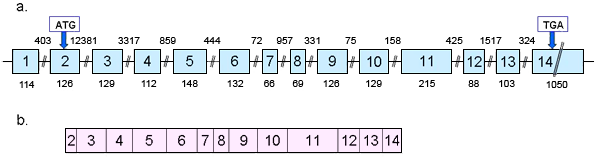
Description
Transcription
Pseudogene
Proteins
Note
Description
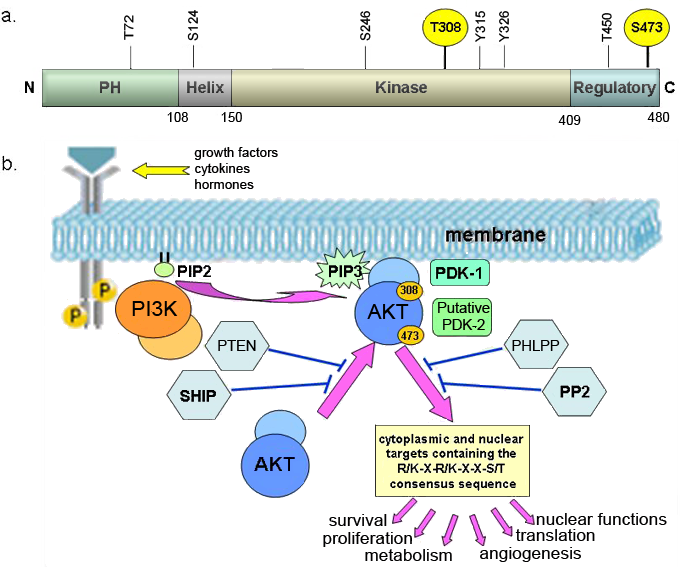
PH domain is a conserved domain of about 100 residues that occurs in a wide range of proteins involved as cytoskeletal constituents or in intracellular signaling; the structure of the PH domain consists of two perpendicular anti-parallel beta-sheets followed by a C-terminal amphipathic helix; the common fold of PH domains is electrostatically polarized. The PH domain recruits AKT to the plasma membrane by phosphoinositides binding and is required for activation.
The kinase domain has been evolutionarily conserved from Escherichia coli to Homo sapiens; conserved regions are: i) a glycine-rich stretch of residues in close proximity of a lysine amino acid (179, by similarity), involved in ATP binding; ii) an highly conserved activation loop, called T-loop, located between DFG and APE motifs, with a threonine residue important for enzyme activation; iii) a conserved aspartic acid (274, by similarity) as proton acceptor residue, important for the catalytic activity of the enzyme. The kinase domain catalyzes the transfer of the gamma-phosphoryl group from ATP to serine/threonine residues on a consensus sequence on protein substrates, resulting in a conformational change affecting protein function, cellular location or association with other proteins (Knighton et al., 1991).
The carboxyl-terminal hydrophobic regulatory domain contains several proline-rich regions that potentially serve as protein-protein interaction sites with important roles in regulation of AKT1 activity; this region contains the 473 residue important for the activation process. This domain possesses the F-X-X-F/Y-S/T-Y/F hydrophobic motif, where X is any amino acid, that is characteristic of the AGC kinase family; in mammalian AKT isoforms, this motif is identical (FPQFSY) and is thought to be very important for the enzymatic activity. The conserved SH3-domain binding motif P-X-X-P in the regulatory region is involved in the interaction between AKT1 and its upstream tyrosine kinase Src (Jiang et al., 2003).
The crystallographic structure of AKT1 has been solved (PDB ID 3CQW, 3CQU).
Activation. The serine-threonine protein kinase AKT1 is a catalytically inactive cytoplasmic protein. AKT activation occurs by means of stimulation of the growth factor receptor-associated phosphatidylinositol 3-kinase (PI3K) and is a multi-step process that involves both membrane translocation and phosphorylation. When PI3K is activated by either growth factors, cytokines or hormones, PI3K generates 3-phosphorylated phosphoinositides, i.e. phosphatidylinositol-3,4,5-trisphosphate (PIP3) and phosphatidylinositol-3,4-bisphosphate (PIP2) at the plasma membrane. Both phospholipids bind with high affinity to the PH domain, mediating membrane translocation of AKT. At the membrane, AKT1 is phosphorylated at threonine 308 by PDK1 (Andjelkovic et al., 1997; Walker et al., 1998) and at serine 473 by a second kinase identified with mTOR when bound to Rictor in the so called TORC2 complex (Santos et al., 2001; Sarbassov et al., 2005); however, it is still controversial if this second phosphorylation may occur by DNA-dependent protein kinase (Feng et al., 2004; Hill et al., 2002). Other kinases that have been reported to phosphorylate serine 473 are PKC (Kawakami et al., 2004), integrin-linked kinase (ILK) (Troussard et al., 2003; Lynch et al., 1999; Delcommenne et al., 1998), MAP kinase-activated protein kinase-2 (MK2) (Rane et al., 2001), PDK-1 (Balendran et al., 1999) or Akt itself (Toker et al., 2000). The full activation of AKT1 requires phosphorylation at both sites; threonine 308 phosphorylation increases the enzymatic activity up to 100-fold and serine 473 phosphorylation by a further 10-fold, thus both phosphorylation events enhance AKT1 activity by 1000-fold (Kumar et al., 2005; Alessi et al., 1996). The activation is rapid and specific, and it is abrogated by mutations in the AKT PH domain. Once activated, AKT1 dissociates from the membrane and phosphorylates targets in the cytoplasm and the cell nucleus.
Beside these essential activation sites, threonine 72 and serine 246 residues undergo auto-phosphorylation (Li et al., 2006), serine 124 and threonine 450 residues are constitutively phosphorylated, while tyrosine 315 and 326 in the activation loop can be phosphorylated by Src kinase, maybe regulating AKT1 activity (Chen et al., 2001).
Regulation. AKT activation is inversely regulated by phosphatases: PH domain leucine-rich repeat protein phosphatase (PHLPP) dephosphorylates the serine 473 residue of AKT1 (Brognard et al., 2007), and protein phosphatase 2 (PP2) dephosphorylates the threonine 308 residue (Gao et al., 2005). PI(3,4,5)P3 is hydrolyzed by phosphatase and tensin homolog deleted on chromosome 10 (PTEN) and Src homology domain-containing inositol phosphatases SHIP1/SHIP2. PTEN antagonizes PI3K activity by removing the phosphate at the D3 position generating PI(4,5)P2 (Maehama et al., 1998), while SHIP1/2 dephosphorylates the D5 position to produce PI(3,4)P2 (Deleris et al., 2003; Damen et al., 1996).
Expression
Localisation
Function
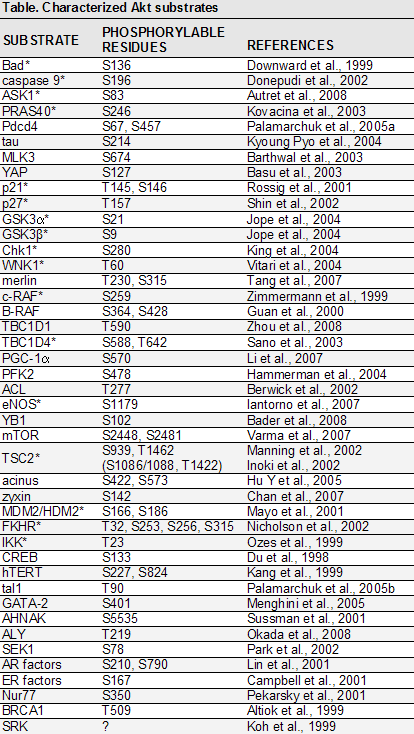
AKT exerts its kinase activity toward proteins containing the minimal consensus sequence R/K-X-R/K-X-X-S/T, where S or T are the phosphorylable residues. More subtle AKT preferences were also uncovered for other residues surrounding the phosphorylation site, such as a preference for T at -2 or a bulky hydrophobic residue at +1 (Manning et al., 2007). More than 400 different proteins containing the consensus sequence for AKT phosphorylation have been identified, also if many of them still have to be characterized (Nicholson et al., 2002; Obenauer et al., 2003). The heterogeneity of proteins potentially phosphorylated by AKT supports the key role of this kinase. Over 100 non-redundant AKT substrates are reported in the literature, of which 25% do not contain the minimal requirements for an AKT site. Around 40 substrates which mediate the pleiotropic AKT functions have been characterized (see table below).
Apoptosis inhibition. Survival factors can suppress apoptosis and enhance survival of cells by activating AKT, which inactivates components of the apoptotic machinery. AKT directly regulates apoptosis by phosphorylating and inactivating pro-apoptotic proteins such as bad, which controls release of cytochrome c from mitochondria, caspase-9, which after AKT dependent phosphorylation promotes cell survival (Donepudi et al., 2002; Downward et al., 1999; Franke et al., 2003) and apoptosis signal-regulating kinase-1 (ASK1), a mitogen-activated protein kinase involved in stress- and cytokine-induced cell death that, once phosphorylated on serine 83, reduces apoptosis (Autret et al., 2008; Datta et al., 1997; Del Peso et al., 1997; Zha et al., 1996). The pro-survival proline-rich AKT substrate of 40kDa (PRAS40) can be phosphorylated on threonine 246, attenuating its ability to inhibit mTORC1 kinase activity (Van der Haar, 2007). PRAS40 appears to protect neuronal cells from apoptosis after stroke (Kovacina et al., 2003) and has been proposed to promote cell survival in cancer cells (Huang et al., 2005).
Proliferation. AKT can stimulate cell cycle progression through the inhibitory phosphorylation of the cyclin-dependent kinase inhibitors p21 and p27 (Viglietto et al., 2002; Liang et al., 2002; Shin et al., 2002; Zhou et al., 2001; Rossig et al., 2001). The AKT dependent inhibition of GSK3 stimulates cell cycle progression by stabilizing cyclin D1 expression (Diehl et al., 1998). AKT activation can promote progression through mitosis, even in the presence of DNA damage (Kandel et al., 2002); a mechanism explaining this observation is that AKT directly phosphorylates the DNA damage checkpoint kinase Chk1 on serine 280 (King et al., 2004), blocking checkpoint function by stimulating Chk1 translocation to the cytosol. With no K protein kinase-1 (WNK1) seems to be a negative regulatory element in the insulin signaling pathway that regulates cell proliferation. AKT phosphorylates WNK1 on threonine 60 within the AKT consensus sequence (Vitari et al., 2004). The neurofibromatosis-2 (NF2) tumour-suppressor gene encodes an intracellular membrane-associated protein, called merlin, with growth-suppressive function. AKT phosphorylates merlin on threonine 230 and serine 315 residues, abolishing binding partners and leading to merlin degradation by ubiquitination (Tang et al., 2007).
Metabolism. AKT phosphorylates the GSK3alpha and GSK3beta isoforms, which are involved in metabolism regulation by decreasing glycogen synthesis and increasing glycolytic enzymes transcription (Jope et al., 2004; Kohn et al., 1996), thus relating AKT activation with high glycolysis efficiency in cancer cells (Warburg effect). AKT1 is also involved in tolerance of cells to nutrient depletion, allowing tumor progression under hypovascular conditions (Izuishi et al., 2000). The TBC1 domain family member 1 (TBC1D1), AKT substrate phosphorylated on threonine 590, may be involved in controlling GLUT1 glucose transporter expression through the mTOR/p70S6K pathway (Zhou et al., 2008). The Rab-GAP AS160 (also known as TBC1D4) has emerged as an important direct target of AKT involved in GLUT4 translocation to the plasma membrane (Sano et al., 2003). In hepatocytes, AKT can also inhibit gluconeogenesis and fatty acid oxidation through direct phosphorylation on serine 570 of PGC-1alpha (Li et al., 2007), which is a gene coactivator with FoxO1 and other transcription factors.
Angiogenesis. AKT plays important roles in angiogenesis through effects in both endothelial cells and cells producing angiogenic signals. AKT activates endothelial nitric oxide synthase (eNOS) through direct phosphorylation on the serine 1179 site, resulting in increased production of nitric oxide (NO) in vascular endothelium, which stimulates vasodilatation, vascular remodelling and angiogenesis (Iantorno et al., 2007).
Translation. A well known AKT substrate is the serine/threonine kinase mammalian target of rapamycin (mTOR), which controls the translation of several proteins important for cell cycle progression and growth (Starkman et al., 2005; Varma et al., 2007). AKT can directly phosphorylate and activate mTOR, as well as cause indirect activation of mTOR by phosphorylating two sites on the tuberous sclerosis complex 2 (TSC2) tumour suppressor protein, also called tuberin (Manning et al., 2002). mTOR forms two complexes : TORC1 , in which mTOR is bound to Raptor, and TORC2, in which mTOR is bound to Rictor. In the TORC1 complex, mTOR signals to its downstream effectors S6 kinase/ribosomal protein and 4EBP-1/eIF-4E to control protein translation. In the TORC2 complex, mTOR can phosphorylate AKT itself thus providing a positive feedback on the pathway (Sarbassov et al., 2005). The mTOR effector S6 kinase-1 (S6K1) can also regulate the pathway by inhibiting the insulin receptor substrate (IRS), thus preventing IRS proteins from activating the PI3K/AKT signaling (Harrington et al., 2004; Shah et al., 2004). The Y box-binding protein 1 (YB-1) is a DNA/RNA-binding protein through the Y-box motif in target sequences. AKT phosphorylates YB-1 on serine 102, leading to an enhancement of cap-dependent translation of multidrug resistance 1 (MDR1) gene (Bader et al., 2008).
Nuclear functions. Among the AKT substrates identified into cell nucleus, acinus is a nuclear factor required for chromatin condensation which induces resistance to caspases proteolysis and to apoptosis when phosphorylated by AKT on serine 422 and 573 (Hu et al., 2005). Phosphorylation of the murine double minute 2 (MDM2/HDM2 in humans) oncogene by AKT promotes its translocation to the nucleus, where it negatively regulates p53 function with subsequent modification of the cell cycle in relation to DNA repair mechanisms (Vousden et al., 2002; Mayo et al., 2005). Several Akt substrates are nuclear transcription factors: AKT blocks forkhead transcription factors (FKHR/FOXO1) and in particular the FoxO subfamily-mediated transcription of genes that promote apoptosis, cell cycle arrest and metabolic processes. When phosphorylated by AKT, FKHR are sequestrated in the cytoplasm thus inhibiting transcription (Nicholson et al., 2002; Datta et al., 1997). AKT can phosphorylate IKK, indirectly increasing the activity of nuclear factor kappa B (NF-kB), which stimulates the transcription of pro-survival genes and regulates the immunity response (Ozes et al., 1999; Romashkova et al., 1999; Verdu et al., 1999). The cAMP-response element binding protein (CREB) is a direct target for phosphorylation by AKT, occurring on a site that increases binding of CREB to proteins necessary for induction of genes containing cAMP responsive elements (CREs) in their promoter regions; CREB has been shown to mediate AKT-induced expression of antiapoptotic genes bcl-2 and mcl-1 (Du et al., 1998). AKT can regulate the telomerase activity necessary for DNA replication; recombinant AKT was found to enhance telomerase activity by phosphorylating the human telomerase reverse transcriptase (hTERT) subunit, which contains a consensus motif as AKT substrate. The helix-loop-helix transcription factor tal1, required for blood cell development, is specifically phosphorylated by AKT at threonine 90, causing its nuclear redistribution (Palamarchuk et al., 2005b). Insulin induces GATA2 phosphorylation on serine 401 by AKT. GATA2 transcription factor is an inhibitor of adipogenesis and activator of vascular cells. AHNAK is a protein of exceptionally large size localized into nuclei and able to shuttle between nucleus and cytoplasm; it is downregulated in several tumors (Amagai et al., 2004). It has been reported that in epithelial cells its extranuclear localization is regulated by AKT dependent phosphorylation (Sussman et al., 2001). ALY is a nuclear speckle protein implicated in mRNA export. The PI3K/AKT signaling regulates its subnuclear residency, cell proliferation, and mRNA export activities through nuclear AKT dependent phosphorylation on threonine 219 and phosphoinositide association (Okada et al., 2008). AKT specifically phosphorylates serine 350 of the Nur77 protein within its DNA-binding domain, decreasing its transcriptional activity by 50-85% and connecting the AKT axis with a nuclear receptor pathway (Pekarsky et al., 2001). The breast cancer susceptibility gene BRCA1 encodes a nuclear phosphoprotein that acts as a tumor suppressor; heregulin induces AKT-dependent phosphorylation of BRCA1, which has been implicated in altering its function (Altiok et al., 1999).
Homology
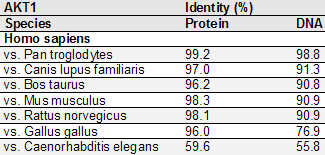
Orthologs. AKT is evolutionarily conserved in eukaryotes ranging from Caenorhabditis elegans to man. The amino acid identity between C. elegans and human AKT1 is around 60%; the mouse AKT1 is 90% homologous to human AKT1 at the nucleic acid level and 98% homologous at the amino acid level (Hanada et al., 2004; Bellacosa et al., 1993).
For details see : HomoloGene.
Also the phosphorylation sites on the AKT substrates are conserved amongst the orthologs from all mammals; this evolutionary conservation can be indicative of the relevance of the substrate toward the AKT cellular functions.
Mutations
Note
No AKT1 mutations have been collected in the COSMIC database.

Germinal
Somatic
High level amplification in breast tissues and LOH in several tissues have been reported: CONAN: Copy Number Analysis.
SNPs. 17 esonic variations (missense, synonymous and frameshift SNPs) have been described.
Moreover, statistical significance for single markers and multilocus haplotypes has been reported for the association between the AKT1 gene variants in samples of families with schizophrenia using single-nucleotide polymorphisms (Schwab et al., 2005; Emamian et al., 2004).
Point mutation. The E17K mutation occurs in the lipid-binding pocket of AKT1 PH domain. Lysine 17 alters the electrostatic interactions of the pocket and forms new hydrogen bonds with a phosphoinositide ligand. This mutation activates AKT1 by means of pathological localization to the plasma membrane, stimulates downstream signaling, transforms cells and induces leukemia in mice. The E17K mutation occurs in a small percentage of human breast, ovarian, and colorectal cancers (Carpten et al., 2007). It has been found also in squamous cell carcinoma of the lung and in prostate cancer (Malanga et al., 2008; Boormans et al., 2008). Some authors suggested that this mutation may not play a crucial role in the development of the most types of human cancers (Kim et al., 2008).
Implicated in
Hyper-activation of AKT1 has been found associated to several human cancers:
-Multiple myeloma
-Acute and chronic leukemia
-Gastro-intestinal stromal tumors
-Bile duct carcinoma
-Renal cell carcinoma
-Lymphoma
AKT signaling plays an important role in cell survival mechanisms in acute promyelocytic leukemia (APL) (Billottet et al., 2009); recent advances have defined a novel PML/PTEN/AKT/mTOR/FoxO signaling network (Ito et al., 2009). The promyelocytic leukemia protein (PML) has established activities as a potent repressor of proliferation and oncogenic transformation, a promoter of apoptosis, an inducer of senescence, and may act as angiogenesis inhibitor. PML tumour suppressor prevents cancer by inactivating phospho-AKT inside the nucleus and suppressing apoptotic rescue (Culjkovic et al., 2008).
In acute lymphoblastic leukemia (ALL) cell lines such as Jurkat T cells, PTEN is deleted thus activating the AKT pathway and promoting survival (Xu et al., 2002; Uddin et al., 2004). In addition, an activating mutation of Notch1 receptor in ALL cells is found to inhibit PTEN expression with subsequent AKT activation (Palomero et al., 2007).
Article Bibliography
| Pubmed ID | Last Year | Title | Authors |
|---|---|---|---|
| 12112531 | 2002 | Comprehensive analysis of genomic alterations in gliosarcoma and its two tissue components. | Actor B et al |
| 12097303 | 2002 | Cytokines modulate telomerase activity in a human multiple myeloma cell line. | Akiyama M et al |
| 8978681 | 1996 | Mechanism of activation of protein kinase B by insulin and IGF-1. | Alessi DR et al |
| 18846252 | 2008 | Constitutively active Akt1 expression in mouse pancreas requires S6 kinase 1 for insulinoma formation. | Alliouachene S et al |
| 10542266 | 1999 | Heregulin induces phosphorylation of BRCA1 through phosphatidylinositol 3-Kinase/AKT in breast cancer cells. | Altiok S et al |
| 15373799 | 2004 | A mystery of AHNAK/desmoyokin still goes on. | Amagai M et al |
| 9395488 | 1997 | Role of translocation in the activation and function of protein kinase B. | Andjelković M et al |
| 15922857 | 2005 | Upregulated Akt signaling adjacent to gastric cancers: implications for screening and chemoprevention. | Ang KL et al |
| 18216097 | 2008 | Early phosphatidylinositol 3-kinase/Akt pathway activation limits poliovirus-induced JNK-mediated cell death. | Autret A et al |
| 17704806 | 2008 | Phosphorylation by Akt disables the anti-oncogenic activity of YB-1. | Bader AG et al |
| 10226025 | 1999 | PDK1 acquires PDK2 activity in the presence of a synthetic peptide derived from the carboxyl terminus of PRK2. | Balendran A et al |
| 12458207 | 2003 | Negative regulation of mixed lineage kinase 3 by protein kinase B/AKT leads to cell survival. | Barthwal MK et al |
| 12535517 | 2003 | Akt phosphorylates the Yes-associated protein, YAP, to induce interaction with 14-3-3 and attenuation of p73-mediated apoptosis. | Basu S et al |
| 8437858 | 1993 | Structure, expression and chromosomal mapping of c-akt: relationship to v-akt and its implications. | Bellacosa A et al |
| 12107176 | 2002 | The identification of ATP-citrate lyase as a protein kinase B (Akt) substrate in primary adipocytes. | Berwick DC et al |
| 19176369 | 2009 | Inhibition of class I phosphoinositide 3-kinase activity impairs proliferation and triggers apoptosis in acute promyelocytic leukemia without affecting atra-induced differentiation. | Billottet C et al |
| 17132628 | 2007 | FOXO3a induces differentiation of Bcr-Abl-transformed cells through transcriptional down-regulation of Id1. | Birkenkamp KU et al |
| 11425039 | 2000 | Granulocyte/macrophage colony-stimulating factor plays an essential role in oxidized low density lipoprotein-induced macrophage proliferation. | Biwa T et al |
| 18798258 | 2008 | An activating mutation in AKT1 in human prostate cancer. | Boormans JL et al |
| 12767043 | 2003 | Threonine 308 phosphorylated form of Akt translocates to the nucleus of PC12 cells under nerve growth factor stimulation and associates with the nuclear matrix protein nucleolin. | Borgatti P et al |
| 17386267 | 2007 | PHLPP and a second isoform, PHLPP2, differentially attenuate the amplitude of Akt signaling by regulating distinct Akt isoforms. | Brognard J et al |
| 16136169 | 2005 | Compensatory PI3-kinase/Akt/mTor activation regulates imatinib resistance development. | Burchert A et al |
| 11139588 | 2001 | Phosphatidylinositol 3-kinase/AKT-mediated activation of estrogen receptor alpha: a new model for anti-estrogen resistance. | Campbell RA et al |
| 17611497 | 2007 | A transforming mutation in the pleckstrin homology domain of AKT1 in cancer. | Carpten JD et al |
| 19273108 | 2009 | Genetics, cellular biology and tumor microenvironment of melanoma. | Ch'ng S et al |
| 17572661 | 2007 | Akt phosphorylation of zyxin mediates its interaction with acinus-S and prevents acinus-triggered chromatin condensation. | Chan CB et al |
| 18701494 | 2008 | Down-regulation of phospho-Akt is a major molecular determinant of bortezomib-induced apoptosis in hepatocellular carcinoma cells. | Chen KF et al |
| 11445557 | 2001 | Regulation of Akt/PKB activation by tyrosine phosphorylation. | Chen R et al |
| 12921955 | 2003 | Constitutive phosphorylation of FKHR transcription factor as a prognostic variable in acute myeloid leukemia. | Cheong JW et al |
| 1718748 | 1991 | Molecular cloning and characterisation of a novel putative protein-serine kinase related to the cAMP-dependent and protein kinase C families. | Coffer PJ et al |
| 18204829 | 2008 | Isoform-specific defects of insulin stimulation of Akt/protein kinase B (PKB) in skeletal muscle cells from type 2 diabetic patients. | Cozzone D et al |
| 12297047 | 2002 | Regulation of myocardial contractility and cell size by distinct PI3K-PTEN signaling pathways. | Crackower MA et al |
| 19218147 | 2009 | [Akt enzyme: new therapeutic target in cancer and diabetes?]. | Cseh A et al |
| 18391071 | 2008 | The eIF4E RNA regulon promotes the Akt signaling pathway. | Culjkovic B et al |
| 15735123 | 2005 | Prognostic significance of activated Akt expression in melanoma: a clinicopathologic study of 292 cases. | Dai DL et al |
| 18339899 | 2008 | Distinct functional significance of Akt and mTOR constitutive activation in mantle cell lymphoma. | Dal Col J et al |
| 8643691 | 1996 | The 145-kDa protein induced to associate with Shc by multiple cytokines is an inositol tetraphosphate and phosphatidylinositol 3,4,5-triphosphate 5-phosphatase. | Damen JE et al |
| 9346240 | 1997 | Akt phosphorylation of BAD couples survival signals to the cell-intrinsic death machinery. | Datta SR et al |
| 9736715 | 1998 | Phosphoinositide-3-OH kinase-dependent regulation of glycogen synthase kinase 3 and protein kinase B/AKT by the integrin-linked kinase. | Delcommenne M et al |
| 12847108 | 2003 | SHIP-2 and PTEN are expressed and active in vascular smooth muscle cell nuclei, but only SHIP-2 is associated with nuclear speckles. | Déléris P et al |
| 15470037 | 2004 | The magnitude of Akt/phosphatidylinositol 3'-kinase proliferating signaling is related to CD45 expression in human myeloma cells. | Descamps G et al |
| 9832503 | 1998 | Glycogen synthase kinase-3beta regulates cyclin D1 proteolysis and subcellular localization. | Diehl JA et al |
| 12487996 | 2002 | Structure and zymogen activation of caspases. | Donepudi M et al |
| 10559890 | 1999 | How BAD phosphorylation is good for survival. | Downward J et al |
| 9829964 | 1998 | CREB is a regulatory target for the protein kinase Akt/PKB. | Du K et al |
| 15714459 | 2005 | Constitutive activation of phosphatidyl-inositide 3 kinase contributes to the survival of Hodgkin's lymphoma cells through a mechanism involving Akt kinase and mTOR. | Dutton A et al |
| 14745448 | 2004 | Convergent evidence for impaired AKT1-GSK3beta signaling in schizophrenia. | Emamian ES et al |
| 12006525 | 2002 | Dysregulation of PTEN and protein kinase B is associated with glioma histology and patient survival. | Ermoian RP et al |
| 15262962 | 2004 | Identification of a PKB/Akt hydrophobic motif Ser-473 kinase as DNA-dependent protein kinase. | Feng J et al |
| 14663477 | 2003 | PI3K/Akt and apoptosis: size matters. | Franke TF et al |
| 15304393 | 2004 | In vivo antitumor effects of the mTOR inhibitor CCI-779 against human multiple myeloma cells in a xenograft model. | Frost P et al |
| 19158829 | 2009 | The level of AKT phosphorylation on threonine 308 but not on serine 473 is associated with high-risk cytogenetics and predicts poor overall survival in acute myeloid leukaemia. | Gallay N et al |
| 15808505 | 2005 | PHLPP: a phosphatase that directly dephosphorylates Akt, promotes apoptosis, and suppresses tumor growth. | Gao T et al |
| 15703783 | 2005 | PI3-kinase/Akt is constitutively active in primary acute myeloid leukaemia cells and regulates survival and chemoresistance via NF-kappaB, Mapkinase and p53 pathways. | Grandage VL et al |
| 18798061 | 2008 | Over-expression of COX-2 induces human ovarian cancer cells (CAOV-3) viability, migration and proliferation in association with PI3-k/Akt activation. | Gu P et al |
| 10869359 | 2000 | Negative regulation of the serine/threonine kinase B-Raf by Akt. | Guan KL et al |
| 16115925 | 2005 | Proteomic analysis of apoptotic pathways reveals prognostic factors in follicular lymphoma. | Gulmann C et al |
| 11588023 | 2001 | Nuclear factor-kappaB is constitutively activated in primitive human acute myelogenous leukemia cells. | Guzman ML et al |
| 15548703 | 2004 | Lymphocyte transformation by Pim-2 is dependent on nuclear factor-kappaB activation. | Hammerman PS et al |
| 18507042 | 2008 | Characterization of Akt overexpression in MiaPaCa-2 cells: prohibitin is an Akt substrate both in vitro and in cells. | Han EK et al |
| 15023346 | 2004 | Structure, regulation and function of PKB/AKT--a major therapeutic target. | Hanada M et al |
| 15851405 | 2005 | Akt activation in renal cell carcinoma: contribution of a decreased PTEN expression and the induction of apoptosis by an Akt inhibitor. | Hara S et al |
| 15249583 | 2004 | The TSC1-2 tumor suppressor controls insulin-PI3K signaling via regulation of IRS proteins. | Harrington LS et al |
| 11593406 | 2001 | Biologic sequelae of interleukin-6 induced PI3-K/Akt signaling in multiple myeloma. | Hideshima T et al |
| 12176337 | 2002 | Identification of a plasma membrane Raft-associated PKB Ser473 kinase activity that is distinct from ILK and PDK1. | Hill MM et al |
| 11857082 | 2002 | Role of the AKT kinase in expansion of multiple myeloma clones: effects on cytokine-dependent proliferative and survival responses. | Hsu JH et al |
| 16177823 | 2005 | Akt phosphorylates acinus and inhibits its proteolytic cleavage, preventing chromatin condensation. | Hu Y et al |
| 16174443 | 2005 | Expression of proline-rich Akt-substrate PRAS40 in cell survival pathway and carcinogenesis. | Huang B et al |
| 19322669 | 2009 | Sendai viral vector mediated angiopoietin-1 gene transfer for experimental ischemic limb disease. | Huang J et al |
| 17106060 | 2007 | Ghrelin has novel vascular actions that mimic PI 3-kinase-dependent actions of insulin to stimulate production of NO from endothelial cells. | Iantorno M et al |
| 12172553 | 2002 | TSC2 is phosphorylated and inhibited by Akt and suppresses mTOR signalling. | Inoki K et al |
| 19216069 | 2009 | A novel signaling network as a critical rheostat for the biology and maintenance of the normal stem cell and the cancer-initiating cell. | Ito K et al |
| 11085546 | 2000 | Remarkable tolerance of tumor cells to nutrient deprivation: possible new biochemical target for cancer therapy. | Izuishi K et al |
| 12600984 | 2003 | Interaction between Src and a C-terminal proline-rich motif of Akt is required for Akt activation. | Jiang T et al |
| 15102436 | 2004 | The glamour and gloom of glycogen synthase kinase-3. | Jope RS et al |
| 12391152 | 2002 | Activation of Akt/protein kinase B overcomes a G(2)/m cell cycle checkpoint induced by DNA damage. | Kandel ES et al |
| 18570920 | 2008 | O-GlcNAc modulation at Akt1 Ser473 correlates with apoptosis of murine pancreatic beta cells. | Kang ES et al |
| 10224060 | 1999 | Akt protein kinase enhances human telomerase activity through phosphorylation of telomerase reverse transcriptase subunit. | Kang SS et al |
| 17230513 | 2007 | Inhibition of heat shock protein-90 modulates multiple functions required for survival of human T-cell leukemia virus type I-infected T-cell lines and adult T-cell leukemia cells. | Kawakami H et al |
| 15364915 | 2004 | Protein kinase C betaII regulates Akt phosphorylation on Ser-473 in a cell type- and stimulus-specific fashion. | Kawakami Y et al |
| 12850478 | 2003 | Involvement of Akt kinase in the action of STI571 on chronic myelogenous leukemia cells. | Kawauchi K et al |
| 15781610 | 2005 | ABL oncogenes and phosphoinositide 3-kinase: mechanism of activation and downstream effectors. | Kharas MG et al |
| 16002527 | 2005 | AKT activation promotes metastasis in a mouse model of follicular thyroid carcinoma. | Kim CS et al |
| 18779657 | 2008 | Lysophosphatidic acid induces cell migration through the selective activation of Akt1. | Kim EK et al |
| 18392055 | 2008 | Mutational analysis of oncogenic AKT E17K mutation in common solid cancers and acute leukaemias. | Kim MS et al |
| 15107605 | 2004 | Inhibition of Chk1 by activated PKB/Akt. | King FW et al |
| 1862342 | 1991 | Crystal structure of the catalytic subunit of cyclic adenosine monophosphate-dependent protein kinase. | Knighton DR et al |
| 14655756 | 2003 | Genetic alterations and aberrant expression of genes related to the phosphatidyl-inositol-3'-kinase/protein kinase B (Akt) signal transduction pathway in glioblastomas. | Knobbe CB et al |
| 10490848 | 1999 | Cloning and characterization of a nuclear S6 kinase, S6 kinase-related kinase (SRK); a novel nuclear target of Akt. | Koh H et al |
| 8940145 | 1996 | Expression of a constitutively active Akt Ser/Thr kinase in 3T3-L1 adipocytes stimulates glucose uptake and glucose transporter 4 translocation. | Kohn AD et al |
| 16763210 | 2006 | Simultaneous activation of multiple signal transduction pathways confers poor prognosis in acute myelogenous leukemia. | Kornblau SM et al |
| 12524439 | 2003 | Identification of a proline-rich Akt substrate as a 14-3-3 binding partner. | Kovacina KS et al |
| 15289328 | 2004 | Phosphorylation of Akt (Ser473) is an excellent predictor of poor clinical outcome in prostate cancer. | Kreisberg JI et al |
| 14636947 | 2003 | Akt/PKB kinase phosphorylates separately Thr212 and Ser214 of tau protein in vitro. | Ksiezak-Reding H et al |
| 16288296 | 2005 | AKT crystal structure and AKT-specific inhibitors. | Kumar CC et al |
| 15283964 | 2004 | Phosphorylation of tau at THR212 and SER214 in human neuronal and glial cultures: the role of AKT. | Kyoung Pyo H et al |
| 11359907 | 2001 | HER2 (neu) signaling increases the rate of hypoxia-inducible factor 1alpha (HIF-1alpha) synthesis: novel mechanism for HIF-1-mediated vascular endothelial growth factor expression. | Laughner E et al |
| 15814628 | 2005 | Nuclear factor-kappaB activation correlates with better prognosis and Akt activation in human gastric cancer. | Lee BL et al |
| 8978685 | 1996 | The Drosophila phosphoinositide 3-kinase Dp110 promotes cell growth. | Leevers SJ et al |
| 16549426 | 2006 | Autophosphorylation of Akt at threonine 72 and serine 246. A potential mechanism of regulation of Akt kinase activity. | Li X et al |
| 17554339 | 2007 | Akt/PKB regulates hepatic metabolism by directly inhibiting PGC-1alpha transcription coactivator. | Li X et al |
| 12244302 | 2002 | PKB/Akt phosphorylates p27, impairs nuclear import of p27 and opposes p27-mediated G1 arrest. | Liang J et al |
| 11404460 | 2001 | Akt suppresses androgen-induced apoptosis by phosphorylating and inhibiting androgen receptor. | Lin HK et al |
| 18492751 | 2008 | Highly prevalent genetic alterations in receptor tyrosine kinases and phosphatidylinositol 3-kinase/akt and mitogen-activated protein kinase pathways in anaplastic and follicular thyroid cancers. | Liu Z et al |
| 18391978 | 2008 | DNA amplification is a ubiquitous mechanism of oncogene activation in lung and other cancers. | Lockwood WW et al |
| 17928528 | 2008 | The Akt/Mcl-1 pathway plays a prominent role in mediating antiapoptotic signals downstream of the B-cell receptor in chronic lymphocytic leukemia B cells. | Longo PG et al |
| 12529653 | 2003 | Possible dominant-negative mutation of the SHIP gene in acute myeloid leukemia. | Luo JM et al |
| 10637513 | 1999 | Integrin-linked kinase regulates phosphorylation of serine 473 of protein kinase B by an indirect mechanism. | Lynch DK et al |
| 17891174 | 2008 | CD133+ HCC cancer stem cells confer chemoresistance by preferential expression of the Akt/PKB survival pathway. | Ma S et al |
| 9593664 | 1998 | The tumor suppressor, PTEN/MMAC1, dephosphorylates the lipid second messenger, phosphatidylinositol 3,4,5-trisphosphate. | Maehama T et al |
| 18256540 | 2008 | Activating E17K mutation in the gene encoding the protein kinase AKT1 in a subset of squamous cell carcinoma of the lung. | Malanga D et al |
| 15870708 | 2005 | The Akt inhibitor KP372-1 suppresses Akt activity and cell proliferation and induces apoptosis in thyroid cancer cells. | Mandal M et al |
| 17604717 | 2007 | AKT/PKB signaling: navigating downstream. | Manning BD et al |
| 16885148 | 2006 | Role of insulin, adipocyte hormones, and nutrient-sensing pathways in regulating fuel metabolism and energy homeostasis: a nutritional perspective of diabetes, obesity, and cancer. | Marshall S et al |
| 17691943 | 2007 | Targeting the phosphatidylinositol 3-kinase/Akt/mammalian target of rapamycin module for acute myelogenous leukemia therapy: from bench to bedside. | Martelli AM et al |
| 10491192 | 1999 | Molecular cloning, expression and characterization of the human serine/threonine kinase Akt-3. | Masure S et al |
| 11504915 | 2001 | A phosphatidylinositol 3-kinase/Akt pathway promotes translocation of Mdm2 from the cytoplasm to the nucleus. | Mayo LD et al |
| 15843377 | 2005 | Phosphorylation of human p53 at serine 46 determines promoter selection and whether apoptosis is attenuated or amplified. | Mayo LD et al |
| 9330584 | 1997 | Novel pharmacological approaches to the prevention and treatment of non-insulin-dependent diabetes mellitus. | Meier CA et al |
| 16839745 | 2006 | Role of PI3K and AKT specific isoforms in ovarian cancer cell migration, invasion and proliferation through the p70S6K1 pathway. | Meng Q et al |
| 15837948 | 2005 | Phosphorylation of GATA2 by Akt increases adipose tissue differentiation and reduces adipose tissue-related inflammation: a novel pathway linking obesity to atherosclerosis. | Menghini R et al |
| 18461448 | 2008 | Inhibition of Wnt and PI3K signaling modulates GSK-3beta activity and induces morphological changes in cortical neurons: role of tau phosphorylation. | Mercado-Gómez O et al |
| 15289327 | 2004 | Cytoplasmic mislocalization of p27Kip1 protein is associated with constitutive phosphorylation of Akt or protein kinase B and poor prognosis in acute myelogenous leukemia. | Min YH et al |
| 12750723 | 2003 | Constitutive phosphorylation of Akt/PKB protein in acute myeloid leukemia: its significance as a prognostic variable. | Min YH et al |
| 17960583 | 2007 | BCL-2 functions as an activator of the AKT signaling pathway in pancreatic cancer. | Mortenson MM et al |
| 15593087 | 2005 | Akt phosphorylation is a risk factor for early disease recurrence and poor prognosis in hepatocellular carcinoma. | Nakanishi K et al |
| 14678019 | 2003 | Akt/PKB activation in gastric carcinomas correlates with clinicopathologic variables and prognosis. | Nam SY et al |
| 17130464 | 2006 | Insulin-mediated phosphorylation of the proline-rich Akt substrate PRAS40 is impaired in insulin target tissues of high-fat diet-fed rats. | Nascimento EB et al |
| 11907274 | 2002 | Proliferating or differentiating stimuli act on different lipid-dependent signaling pathways in nuclei of human leukemia cells. | Neri LM et al |
| 11882383 | 2002 | The protein kinase B/Akt signalling pathway in human malignancy. | Nicholson KM et al |
| 12824383 | 2003 | Scansite 2.0: Proteome-wide prediction of cell signaling interactions using short sequence motifs. | Obenauer JC et al |
| 12774925 | 2003 | Constitutive activation of extracellular signal-regulated kinase and p38 mitogen-activated protein kinase in B-cell lymphoproliferative disorders. | Ogasawara T et al |
| 17239930 | 2007 | Cytoplasmic localization of p27 (cyclin-dependent kinase inhibitor 1B/KIP1) in colorectal cancer: inverse correlations with nuclear p27 loss, microsatellite instability, and CpG island methylator phenotype. | Ogino S et al |
| 18562279 | 2008 | Akt phosphorylation and nuclear phosphoinositide association mediate mRNA export and cell proliferation activities by ALY. | Okada M et al |
| 15900596 | 2005 | Akt phosphorylation associates with LOH of PTEN and leads to chemoresistance for gastric cancer. | Oki E et al |
| 10485710 | 1999 | NF-kappaB activation by tumour necrosis factor requires the Akt serine-threonine kinase. | Ozes ON et al |
| 15930267 | 2005 | Akt phosphorylates Tal1 oncoprotein and inhibits its repressor activity. | Palamarchuk A et al |
| 17873882 | 2007 | Mutational loss of PTEN induces resistance to NOTCH1 inhibition in T-cell leukemia. | Palomero T et al |
| 11707464 | 2002 | Akt (protein kinase B) negatively regulates SEK1 by means of protein phosphorylation. | Park HS et al |
| 11274386 | 2001 | Akt phosphorylates and regulates the orphan nuclear receptor Nur77. | Pekarsky Y et al |
| 12242656 | 2002 | Role of the phosphatidylinositol 3-kinase/Akt and mTOR/P70S6-kinase pathways in the proliferation and apoptosis in multiple myeloma. | Pene F et al |
| 12782654 | 2003 | Dwarfism, impaired skin development, skeletal muscle atrophy, delayed bone development, and impeded adipogenesis in mice lacking Akt1 and Akt2. | Peng XD et al |
| 11870534 | 2002 | Activation of AKT/PKB in breast cancer predicts a worse outcome among endocrine treated patients. | Pérez-Tenorio G et al |
| 18288129 | 2008 | Lack of the leukocyte-associated Ig-like receptor-1 expression in high-risk chronic lymphocytic leukaemia results in the absence of a negative signal regulating kinase activation and cell division. | Poggi A et al |
| 19139118 | 2009 | Synergy between phosphatidylinositol 3-kinase/Akt pathway and Bcl-xL in the control of apoptosis in adenocarcinoma cells of the lung. | Qian J et al |
| 11042204 | 2001 | p38 Kinase-dependent MAPKAPK-2 activation functions as 3-phosphoinositide-dependent kinase-2 for Akt in human neutrophils. | Rane MJ et al |
| 15374880 | 2005 | Inhibition of Akt increases p27Kip1 levels and induces cell cycle arrest in anaplastic large cell lymphoma. | Rassidakis GZ et al |
| 15918149 | 2005 | Hepatocellular carcinoma: molecular pathways and new therapeutic targets. | Roberts LR et al |
| 10485711 | 1999 | NF-kappaB is a target of AKT in anti-apoptotic PDGF signalling. | Romashkova JA et al |
| 11463845 | 2001 | Akt-dependent phosphorylation of p21(Cip1) regulates PCNA binding and proliferation of endothelial cells. | Rössig L et al |
| 16645163 | 2006 | Constitutive activation of Akt contributes to the pathogenesis and survival of mantle cell lymphoma. | Rudelius M et al |
| 15896313 | 2005 | Akt1 contains a functional leucine-rich nuclear export sequence. | Saji M et al |
| 12637568 | 2003 | Insulin-stimulated phosphorylation of a Rab GTPase-activating protein regulates GLUT4 translocation. | Sano H et al |
| 11360192 | 2001 | Constitutively active STAT5 variants induce growth and survival of hematopoietic cells through a PI 3-kinase/Akt dependent pathway. | Santos SC et al |
| 15718470 | 2005 | Phosphorylation and regulation of Akt/PKB by the rictor-mTOR complex. | Sarbassov DD et al |
| 16484592 | 2006 | Phosphatidylinositol-3-phosphate kinase pathway activation protects leukemic large granular lymphocytes from undergoing homeostatic apoptosis. | Schade AE et al |
| 19187771 | 2009 | CXCL10 impairs beta cell function and viability in diabetes through TLR4 signaling. | Schulthess FT et al |
| 16026766 | 2005 | Further evidence for association of variants in the AKT1 gene with schizophrenia in a sample of European sib-pair families. | Schwab SG et al |
| 15380067 | 2004 | Inappropriate activation of the TSC/Rheb/mTOR/S6K cassette induces IRS1/2 depletion, insulin resistance, and cell survival deficiencies. | Shah OJ et al |
| 12526086 | 2002 | Phosphorylation of glycogen synthase kinase-3beta at serine-9 by phospholipase Cgamma1 through protein kinase C in rat 3Y1 fibroblasts. | Shin SY et al |
| 9321394 | 1997 | Transformation of hematopoietic cells by BCR/ABL requires activation of a PI-3k/Akt-dependent pathway. | Skorski T et al |
| 3037531 | 1987 | Molecular cloning of the akt oncogene and its human homologues AKT1 and AKT2: amplification of AKT1 in a primary human gastric adenocarcinoma. | Staal SP et al |
| 15801908 | 2005 | IGF-I stimulation of proteoglycan synthesis by chondrocytes requires activation of the PI 3-kinase pathway but not ERK MAPK. | Starkman BG et al |
| 14737178 | 2004 | JAK/STAT, Raf/MEK/ERK, PI3K/Akt and BCR-ABL in cell cycle progression and leukemogenesis. | Steelman LS et al |
| 11535620 | 2001 | Protein kinase B phosphorylates AHNAK and regulates its subcellular localization. | Sussman J et al |
| 16278380 | 2005 | X-Linked inhibitor of apoptosis protein expression level in colorectal cancer is regulated by hepatocyte growth factor/C-met pathway via Akt signaling. | Takeuchi H et al |
| 17426258 | 2007 | Constitutive phosphoinositide 3-kinase/Akt activation represents a favorable prognostic factor in de novo acute myelogenous leukemia patients. | Tamburini J et al |
| 17891137 | 2007 | Akt phosphorylation regulates the tumour-suppressor merlin through ubiquitination and degradation. | Tang X et al |
| 12790783 | 2003 | Loss of PTEN expression followed by Akt phosphorylation is a poor prognostic factor for patients with endometrial cancer. | Terakawa N et al |
| 17317726 | 2007 | FAK association with multiple signal proteins mediates pressure-induced colon cancer cell adhesion via a Src-dependent PI3K/Akt pathway. | Thamilselvan V et al |
| 11057891 | 2000 | Cellular signaling: pivoting around PDK-1. | Toker A et al |
| 12686550 | 2003 | Conditional knock-out of integrin-linked kinase demonstrates an essential role in protein kinase B/Akt activation. | Troussard AA et al |
| 16330671 | 2006 | Evaluation of two phosphorylation sites improves the prognostic significance of Akt activation in non-small-cell lung cancer tumors. | Tsurutani J et al |
| 11118064 | 2000 | The phosphatidylinositol 3-kinase/AKT kinase pathway in multiple myeloma plasma cells: roles in cytokine-dependent survival and proliferative responses. | Tu Y et al |
| 16946303 | 2006 | Role of phosphatidylinositol 3'-kinase/AKT pathway in diffuse large B-cell lymphoma survival. | Uddin S et al |
| 17560468 | 2007 | Goiter and other iodine deficiency disorders: a systematic review of epidemiological studies to deconstruct the complex web. | Van Der Haar F et al |
| 17721885 | 2008 | Overexpression of Akt1 upregulates glycogen synthase activity and phosphorylation of mTOR in IRS-1 knockdown HepG2 cells. | Varma S et al |
| 16818631 | 2006 | Activation of mammalian target of rapamycin signaling pathway contributes to tumor cell survival in anaplastic lymphoma kinase-positive anaplastic large cell lymphoma. | Vega F et al |
| 10587646 | 1999 | Cell-autonomous regulation of cell and organ growth in Drosophila by Akt/PKB. | Verdu J et al |
| 12244303 | 2002 | Cytoplasmic relocalization and inhibition of the cyclin-dependent kinase inhibitor p27(Kip1) by PKB/Akt-mediated phosphorylation in breast cancer. | Viglietto G et al |
| 14611643 | 2004 | WNK1, the kinase mutated in an inherited high-blood-pressure syndrome, is a novel PKB (protein kinase B)/Akt substrate. | Vitari AC et al |
| 11960694 | 2002 | Activation of the p53 tumor suppressor protein. | Vousden KH et al |
| 9512493 | 1998 | Activation of protein kinase B beta and gamma isoforms by insulin in vivo and by 3-phosphoinositide-dependent protein kinase-1 in vitro: comparison with protein kinase B alpha. | Walker KS et al |
| 19293429 | 2009 | Obesity increases vascular senescence and susceptibility to ischemic injury through chronic activation of Akt and mTOR. | Wang CY et al |
| 19007436 | 2008 | The UPS in diabetes and obesity. | Wing SS et al |
| 12702506 | 2003 | Survival of acute myeloid leukemia cells requires PI3 kinase activation. | Xu Q et al |
| 12133897 | 2002 | The inducible expression of the tumor suppressor gene PTEN promotes apoptosis and decreases cell size by inhibiting the PI3K/Akt pathway in Jurkat T cells. | Xu Z et al |
| 16956580 | 2006 | Akt phosphorylation is essential for nuclear translocation and retention in NGF-stimulated PC12 cells. | Xuan Nguyen TL et al |
| 15102693 | 2004 | Prognostic significance of activated Akt expression in pancreatic ductal adenocarcinoma. | Yamamoto S et al |
| 15046607 | 2004 | Physiological functions of protein kinase B/Akt. | Yang ZZ et al |
| 19258413 | 2009 | Akt/protein kinase b and glycogen synthase kinase-3beta signaling pathway regulates cell migration through the NFAT1 transcription factor. | Yoeli-Lerner M et al |
| 8929531 | 1996 | Serine phosphorylation of death agonist BAD in response to survival factor results in binding to 14-3-3 not BCL-X(L). | Zha J et al |
| 14628071 | 2004 | Inhibition of phosphatidylinositol 3-kinase dephosphorylates BAD and promotes apoptosis in myeloid leukemias. | Zhao S et al |
| 18215134 | 2008 | Akt substrate TBC1D1 regulates GLUT1 expression through the mTOR pathway in 3T3-L1 adipocytes. | Zhou QL et al |
| 12426170 | 2001 | Expression of cyclin D1 in small cell lymphoma and its clinical implications. | Zhou XH et al |
| 17400190 | 2007 | Real-time imaging nuclear translocation of Akt1 in HCC cells. | Zhu L et al |
| 10576742 | 1999 | Phosphorylation and regulation of Raf by Akt (protein kinase B). | Zimmermann S et al |
| 11489829 | 2001 | AKT-1, -2, and -3 are expressed in both normal and tumor tissues of the lung, breast, prostate, and colon. | Zinda MJ et al |
| 9381178 | 1997 | Interleukin-3-induced phosphorylation of BAD through the protein kinase Akt. | del Peso L et al |
Other Information
Locus ID:
NCBI: 207
MIM: 164730
HGNC: 391
Ensembl: ENSG00000142208
Variants:
dbSNP: 207
ClinVar: 207
TCGA: ENSG00000142208
COSMIC: AKT1
RNA/Proteins
Expression (GTEx)
Pathways
Protein levels (Protein atlas)
PharmGKB
| Entity ID | Name | Type | Evidence | Association | PK | PD | PMIDs |
|---|---|---|---|---|---|---|---|
| PA134890823 | PIK3R5 | Gene | Pathway | associated | |||
| PA134963361 | MAFA | Gene | Pathway | associated | |||
| PA162391083 | HNF1B | Gene | Pathway | associated | |||
| PA162399173 | PDX1 | Gene | Pathway | associated | |||
| PA248 | NFKB1 | Gene | Pathway | associated | |||
| PA25236 | BAD | Gene | Pathway | associated | |||
| PA254 | NOS3 | Gene | Pathway | associated | 20124951 | ||
| PA27749 | ELK1 | Gene | Pathway | associated | |||
| PA28212 | FOS | Gene | Pathway | associated | |||
| PA29349 | HNF4A | Gene | Pathway | associated | |||
| PA296 | RELA | Gene | Pathway | associated | |||
| PA29932 | ISL1 | Gene | Pathway | associated | |||
| PA30006 | JUN | Gene | Pathway | associated | |||
| PA31353 | MYC | Gene | Pathway | associated | |||
| PA31564 | NEUROD1 | Gene | Pathway | associated | |||
| PA31600 | NFKB2 | Gene | Pathway | associated | |||
| PA33154 | PDK1 | Gene | Pathway | associated | 22336956 | ||
| PA33304 | PIK3C2A | Gene | Pathway | associated | 20124951, 28362716 | ||
| PA33305 | PIK3C2B | Gene | Pathway | associated | 20124951, 28362716 | ||
| PA33308 | PIK3CA | Gene | Pathway | associated | 28362716 | ||
| PA33309 | PIK3CB | Gene | Pathway | associated | 28362716 | ||
| PA33310 | PIK3CD | Gene | Pathway | associated | 28362716 | ||
| PA33311 | PIK3CG | Gene | Pathway | associated | 28362716 | ||
| PA33312 | PIK3R1 | Gene | Pathway | associated | 28362716 | ||
| PA33313 | PIK3R2 | Gene | Pathway | associated | 28362716 | ||
| PA33314 | PIK3R3 | Gene | Pathway | associated | 28362716 | ||
| PA337 | STAT3 | Gene | Pathway | associated | |||
| PA338 | STAT5A | Gene | Pathway | associated | |||
| PA36042 | SP1 | Gene | Pathway | associated | |||
| PA36183 | STAT1 | Gene | Pathway | associated | |||
| PA36184 | STAT2 | Gene | Pathway | associated | |||
| PA36185 | STAT4 | Gene | Pathway | associated | |||
| PA36186 | STAT5B | Gene | Pathway | associated | |||
| PA36380 | HNF1A | Gene | Pathway | associated | |||
| PA443622 | Carcinoma, Non-Small-Cell Lung | Disease | ClinicalAnnotation | associated | PD | 22901187 | |
| PA444818 | Lung Neoplasms | Disease | ClinicalAnnotation | associated | PD | ||
| PA447216 | Schizophrenia | Disease | ClinicalAnnotation | associated | PD | 18855532 | |
| PA448803 | carboplatin | Chemical | ClinicalAnnotation | associated | PD | 22901187 | |
| PA449014 | cisplatin | Chemical | ClinicalAnnotation | associated | PD | 22901187 | |
| PA451257 | risperidone | Chemical | ClinicalAnnotation | associated | PD | 18855532 |
References
| Pubmed ID | Year | Title | Citations |
|---|---|---|---|
| 37162682 | 2024 | YTHDC2 Retards Cell Proliferation and Triggers Apoptosis in Papillary Thyroid Cancer by Regulating CYLD-Mediated Inactivation of Akt Signaling. | 2 |
| 37277581 | 2024 | Upregulation of SEMP1 Contributes to Improving the Biological Functions of Trophoblast via the PI3K/AKT Pathway in Preeclampsia. | 0 |
| 37339521 | 2024 | HSPA4 regulated glioma progression via activation of AKT signaling pathway. | 1 |
| 37479901 | 2024 | Tumor-suppressive action of miR-30a-5p in lung adenocarcinoma correlates with ABL2 inhibition and PI3K/AKT pathway inactivation. | 0 |
| 37578594 | 2024 | Loss of RACK1 promotes glutamine addiction via activating AKT/mTOR/ASCT2 axis to facilitate tumor growth in gastric cancer. | 3 |
| 37642368 | 2024 | STMN1 promotes cell malignancy and bortezomib resistance of multiple myeloma cell lines via PI3K/AKT signaling. | 0 |
| 37728571 | 2024 | Spinster homolog 2 reduces malignancies of glioblastoma via PTEN/PI3K/AKT pathway. | 0 |
| 37909722 | 2024 | KIRREL promotes the proliferation of gastric cancer cells and angiogenesis through the PI3K/AKT/mTOR pathway. | 0 |
| 37937915 | 2024 | DUSP22 suppresses tumor progression by directly dephosphorylating AKT in non-small cell lung cancer. | 0 |
| 37972389 | 2024 | Extracellular vesicle-encapsulated microRNA-296-3p from cancer-associated fibroblasts promotes ovarian cancer development through regulation of the PTEN/AKT and SOCS6/STAT3 pathways. | 4 |
| 38115179 | 2024 | KLK10 promotes the progression of KRAS mutant colorectal cancer via PAR1-PDK1-AKT signaling pathway. | 0 |
| 38141889 | 2024 | SOD3 regulates FLT1 to affect bone metabolism by promoting osteogenesis and inhibiting adipogenesis through PI3K/AKT and MAPK pathways. | 0 |
| 38172081 | 2024 | IRS1 promotes thyroid cancer metastasis through EMT and PI3K/AKT pathways. | 0 |
| 38172354 | 2024 | FOXM1 transcriptional regulation of RacGAP1 activates the PI3K/AKT signaling pathway to promote the proliferation, migration, and invasion of cervical cancer cells. | 1 |
| 38185904 | 2024 | PAX2 is regulated by estrogen/progesterone through promoter methylation in endometrioid adenocarcinoma and has an important role in carcinogenesis via the AKT/mTOR signaling pathway. | 0 |
Citation
Daniela Etro ; Silvia Missiroli ; Francesca Buontempo ; Luca Maria Neri ; Silvano Capitani
AKT1 (v-akt murine thymoma viral oncogene homolog 1)
Atlas Genet Cytogenet Oncol Haematol. 2009-05-01
Online version: http://atlasgeneticsoncology.org/gene/355
